2026 Canadian wildfires
The 2026 Canadian wildfire season was a widespread weather event that burned across nine provinces and all three territories, continuing a pattern of severe fire activity in the country. The season, declared over on October 15, was marked by intense fires in regions including the Northwest Territories, British Columbia, Ontario, and Saskatchewan, leading to five fatalities and the displacement of thousands of residents. Dense smoke from fires in Northwestern Ontario degraded air quality across North America in mid-July, with Toronto recording the worst air pollution levels of any major global city on July 15. The fires resulted in significant property loss, disrupted transportation, and triggered a province-wide state of emergency in British Columbia.
Seasonal context and climate factors
The 2026 wildfire season extended a multi-year trend of severe fire activity in Canada, following the worst recorded season in 2023 and the second-worst in 2025. Climate change has contributed to conditions that foster larger, longer-lasting, and more difficult-to-extinguish fires, with Canada warming faster than many other parts of the planet due to its northerly latitude. Federal projections for 2026 anticipated an above-average season, though not one as destructive as the two preceding record years. Officials identified British Columbia, Alberta, and the Northwest Territories as facing the highest risk, with dry conditions and unrecovered soil from past droughts increasing vulnerability. In preparation, the federal government in 2025 set aside $316 million over five years to support Canada's first national aerial firefighting fleet, leasing ten aircraft from British Columbia companies for the 2026 season. The leased fleet included four airtankers, a birddog spotter plane, and five helicopters. Canadian and American wildfire fighters continued bilateral cooperation, though the U.S. Forest Service was undergoing restructuring and faced a US$37 million budget cut.
Major wildfires by region
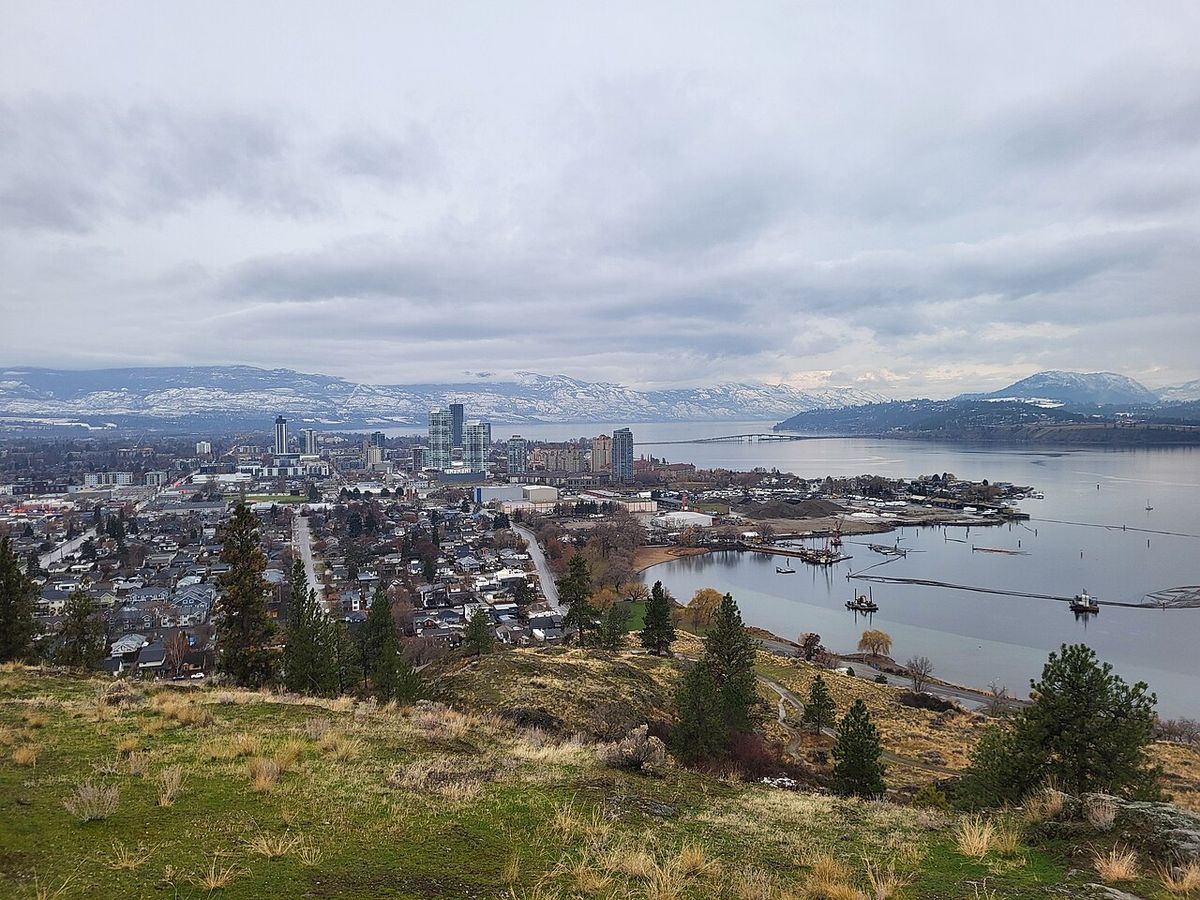
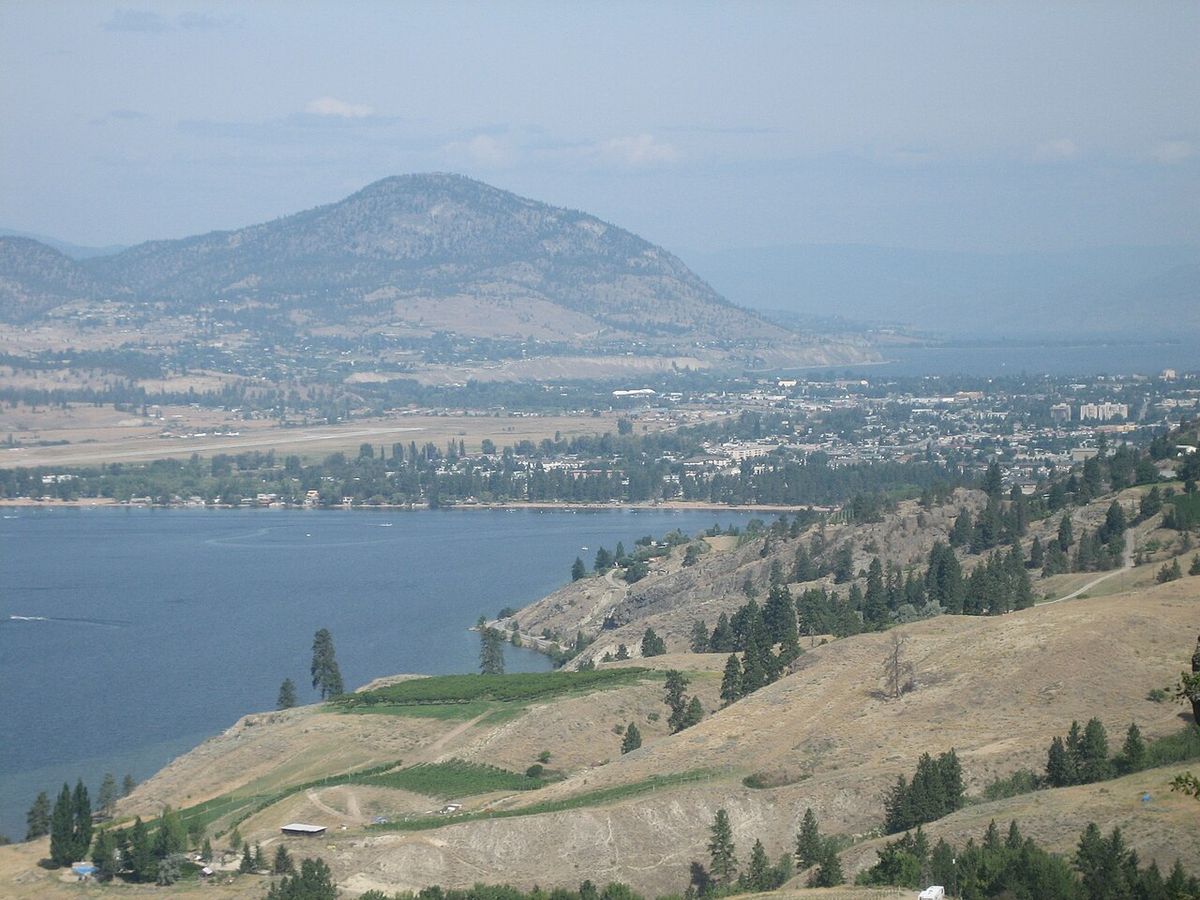
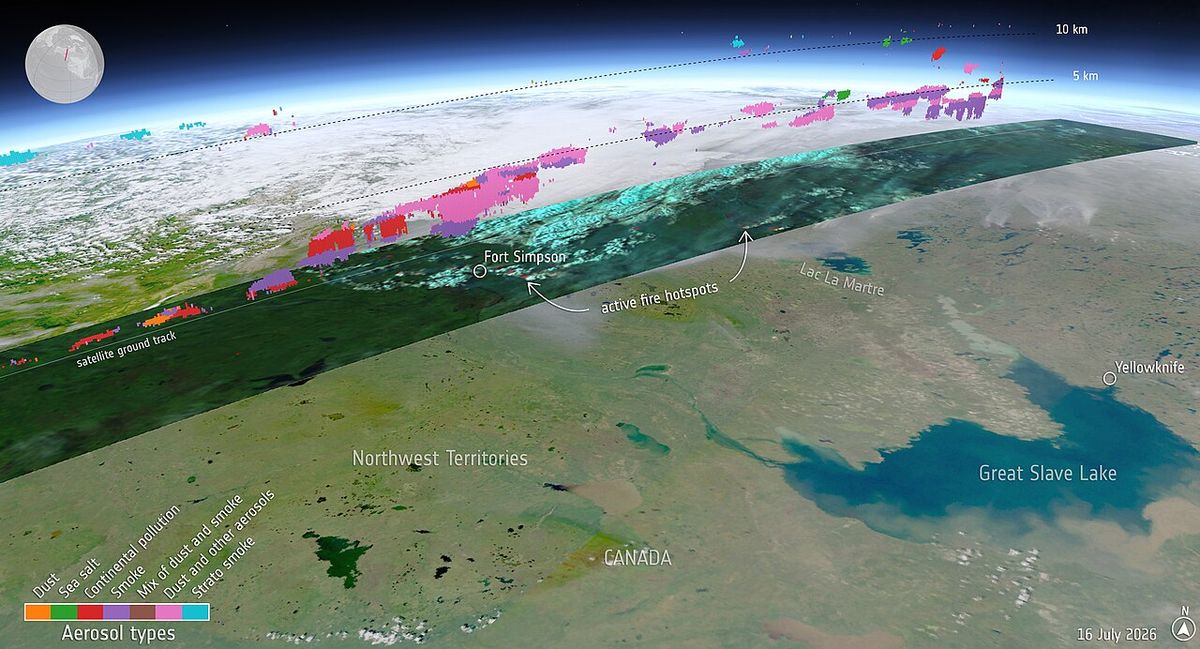
Significant wildfire activity was reported across the country, with particular intensity in Western and Northern Canada. In British Columbia, the Bald Range fire formed southwest of Okanagan Lake on August 7 around 5:30 p.m. and grew with extreme speed, described by Premier David Eby as a "bomb going off". The fire produced flames over 61 metres high and pyrocumulus clouds, forcing the immediate evacuation of all 12,000 residents of Summerland and contributing to a total of over 21,000 evacuees. Earlier, on June 16, the human-caused Kalamoir Park Fire near West Kelowna burned 8 hectares and led to tactical evacuations of about 800 people from 357 properties. In Ontario, the Thunder Bay 36 fire began on July 12 in the Wabakimi Provincial Park area from the merger of several smaller fires, eventually burning 318,813 hectares and destroying the community of Namaygoosisagagun First Nation. The Northwest Territories faced a high risk with reports of overwintering fires from the previous season in Fort Providence and Whatì as early as April. Lightning sparked four wildfires in Wood Buffalo National Park on May 22, with the largest burning 35,288 hectares by May 29. Saskatchewan's season ignited with the Lobstick Fire near Prince Albert on May 25, which grew to an estimated 19,000 hectares, crossed the North Saskatchewan River, and threatened homes, leading to evacuation alerts for Shellbrook. In Newfoundland and Labrador, a cluster of wildfires near Labrador City in late June, including the Walsh River fire which grew to 472 hectares, prompted a local state of emergency and the evacuation of approximately 120 residents.
- British Columbia: Bald Range fire (August), Kalamoir Park Fire (June), Pear Lake fire near Clinton (August).
- Ontario: Thunder Bay 36 (July), Dryden 11 near Sandbar Lake (May), Timmins 9 (May-June).
- Saskatchewan: Lobstick Fire (late May).
- Northwest Territories: Wood Buffalo National Park fires (May), fires near Norman Wells (June).
- Newfoundland and Labrador: Walsh River fire (June-July), fires near Oreway and Churchill Falls (June).
- Alberta: Thunder Lake area fire (May), fires south of Wembley (May).
- Nova Scotia: Moschelle Fire (May).
Detailed provincial and territorial accounts
Wildfire dynamics and responses varied significantly across jurisdictions. In Alberta, the season began with three small wildfires burning a total of 0.13 hectares in the Edson Forest Area from January to February. By late May, 29 wildfires had ignited in the Grande Prairie Forest Area, burning 7 hectares, and a fire advisory was issued for the Fort McMurray Forest Area. The Thunder Lake evacuation on May 28 impacted 13 properties and destroyed six buildings. In Manitoba, seven fires burned between The Pas and Cranberry Portage, with one fire near Easterville burning approximately 400 hectares. Nova Scotia's season saw the official extinguishment of the 2025 Long Lake fire on May 26, which had burned 8,500 hectares and destroyed 20 homes. The Moschelle Fire on May 21 burned approximately 1.19 hectares before being controlled. In Ontario, wildfire activity in the northwest was slow to start, with 62 fires and 280.6 hectares burned reported by May 26. The Dryden 11 fire near Sandbar Lake Provincial Park burned 168 hectares, causing evacuations and closing Highway 599 north of Ignace. The Fort Frances 4 fire burned 12.6 hectares, destroying property and killing two pets in Rainy River District. A fire in Haliburton County ignited on May 27 and remained out of control as of May 29. The Timmins 9 fire, reported May 31, grew to around 3,300 hectares and forced more than 160 residents of Mattagami First Nation to evacuate before being controlled on June 15.
Fatalities and emergency response operations
The wildfire season resulted in five deaths directly linked to fire events. On May 21, a 40-year-old firefighter died after a sudden medical emergency while battling the Moschelle Fire near Moschelle in Nova Scotia's Annapolis County. On June 24, a Buffalo Airways Rockwell Aero Commander 690 aircraft crashed during firefighting operations 50 kilometres from Fort Simpson, Northwest Territories, killing the pilot and two firefighters onboard. In British Columbia, the Penticton RCMP confirmed that an 80-year-old woman died attempting to escape the Bald Range fire in August, with the wildfire identified as the cause of death. Emergency response involved extensive interprovincial and federal coordination. The Saskatchewan Public Safety Agency managed the Lobstick Fire response, issuing a provincial fire ban after the fire crossed the North Saskatchewan River. Ontario hired an additional 68 firefighters in preparation for the season, and municipalities began public education campaigns. Nova Scotia sent firefighters to assist crews in Labrador on July 4. In Newfoundland and Labrador, suppression efforts focused on strengthening containment lines and soaking fire perimeters, with resources prioritized toward fires threatening communities like the Walsh River and De Mille Lake fires.
Continental smoke impacts and health consequences
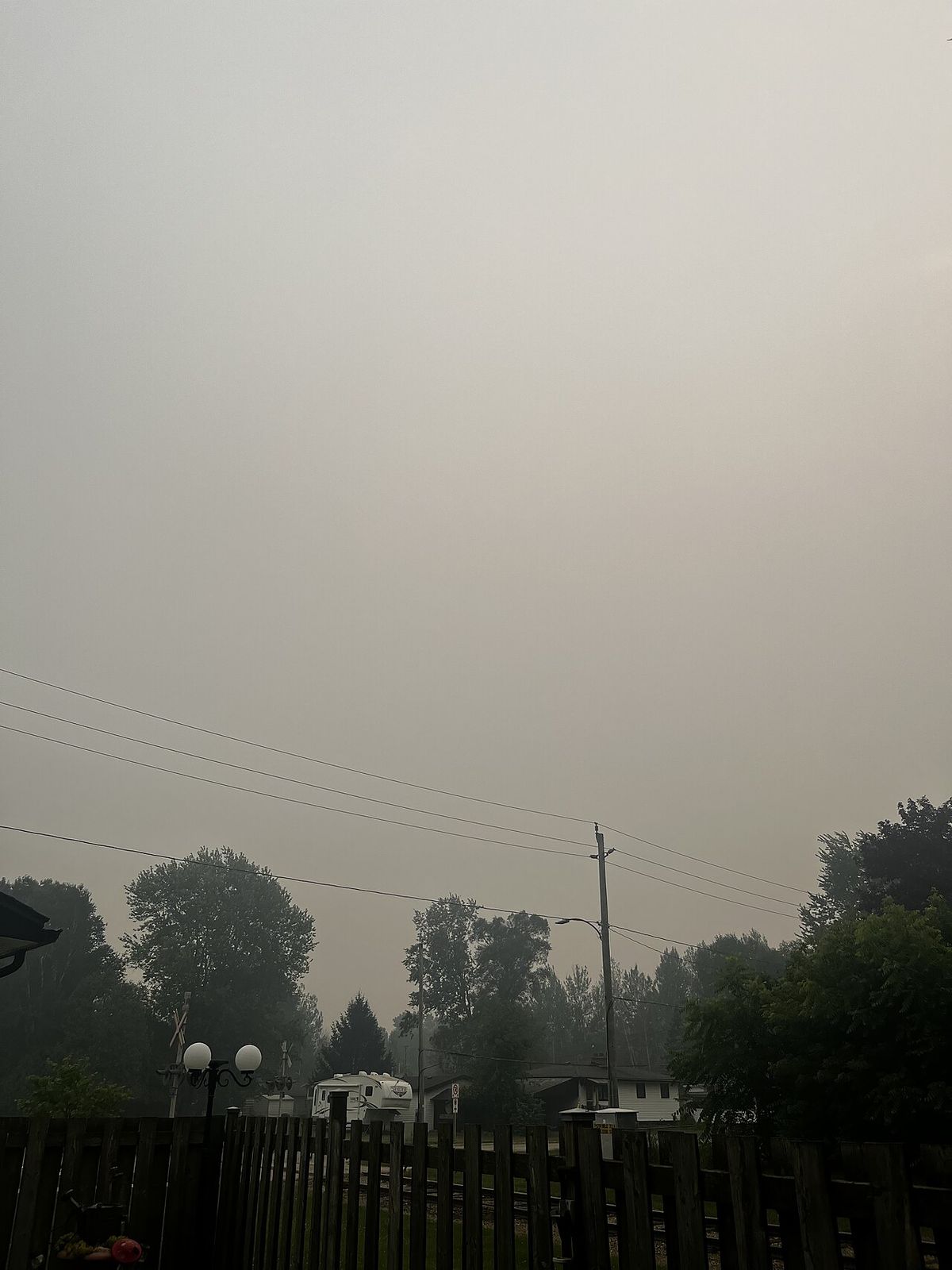
Smoke from wildfires, particularly those in Northwestern Ontario, created significant air quality issues across Canada and the United States in mid-July. On July 15, smoke drifted over southwestern Ontario, rendering Toronto's air quality the worst in the world among major cities and covering the area in a smoky orange haze, triggering an orange alert for severe weather impacts. The following day, air quality in Toronto was about five times worse, with hazardous levels recorded across the province from Thunder Bay to Toronto on the Air Quality Health Index. This event led to a documented spike in emergency department visits. Toronto General Hospital and Toronto Western Hospital received 36 visits on July 15 from patients with issues like shortness of breath, chest pain, and eye pain related to poor air quality. Several youths were treated at a camp in Muskoka Lakes for air quality-related issues, and a small number of people were transported to Sault Area Hospital for smoke inhalation. A report from the United Nations University Institute for Water, Environment and Health found that nearly 106 million people in both Canada and the United States were exposed to hazardous or unhealthy air from July 15 to 17, including 19 million in a single day. Smoke also triggered air quality alerts across the Northeastern United States and reached as far as Mexico, mostly dissipating by July 20.
| Impact Metric | Detail |
|---|---|
| Peak air quality ranking | Toronto worst globally, July 15, 2026 |
| Hospital visits (Toronto, July 15) | 36 related ER visits at two hospitals |
| Continental exposure (July 15-17) | ~106 million people in Canada and U.S. |
| Major U.S. region affected | Northeastern United States |
| Smoke dissipation in Ontario | Mostly dissipated by July 20 |
| Health symptoms reported | Shortness of breath, allergic reaction, chest pain, cough/congestion, eye pain |
Evacuations, property loss, and community effects
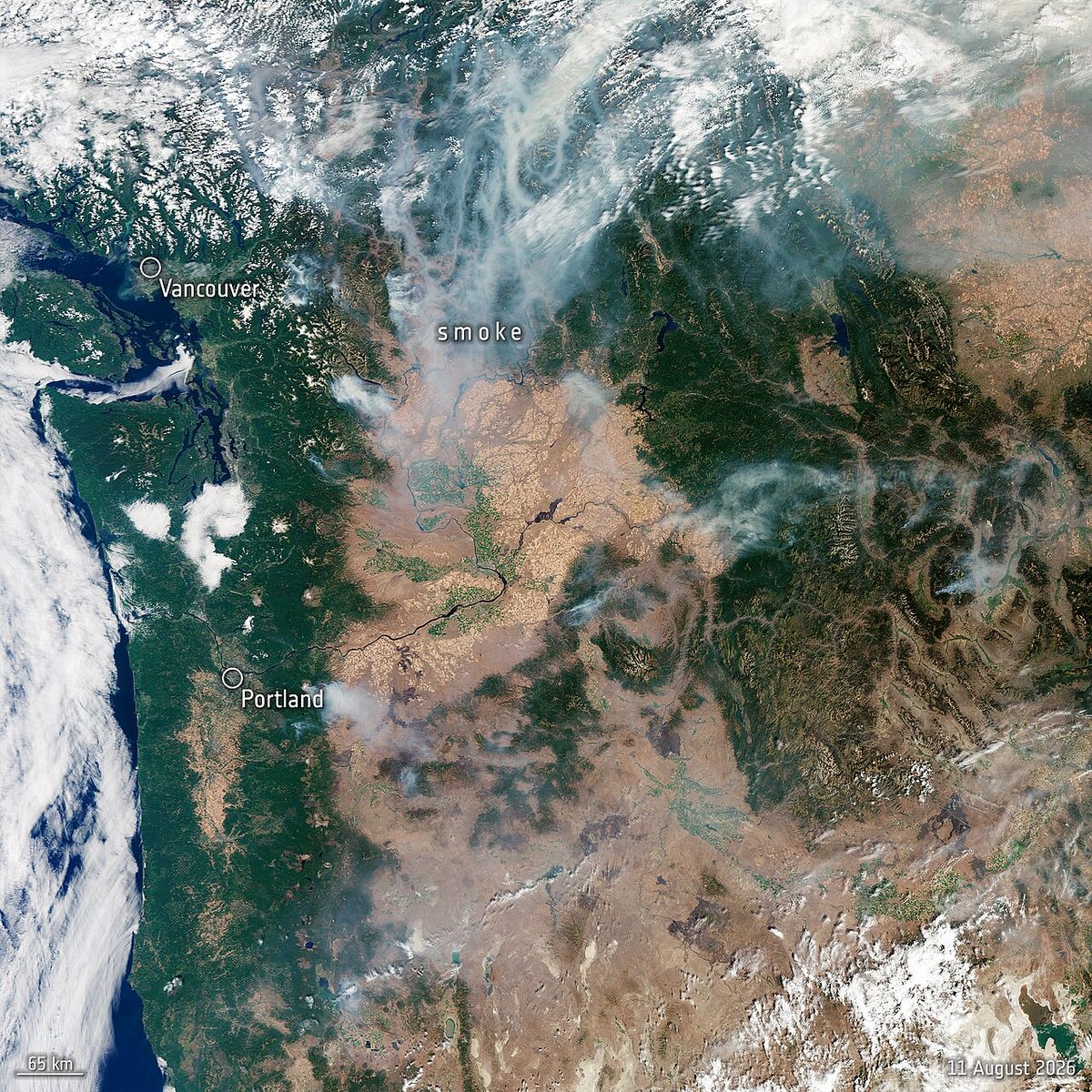
Wildfires forced the evacuation of tens of thousands of Canadians and caused substantial property damage. In Ontario, the Thunder Bay 36 fire prompted evacuation orders for Armstrong, Lac La Croix First Nation, Whitesand First Nation, Lac des Mille Lacs First Nation, and Gull Bay First Nation, in addition to destroying Namaygoosisagagun First Nation. A viral video showed CN Rail employees inside a train surrounded by flames in Armstrong, leading CN to suspend rail operations in the area. In British Columbia, the Bald Range fire required the rescue of at least 55 people by helicopter, with 10,000 evacuees sheltering in Penticton. The Pear Lake fire near Clinton destroyed structures on about 120 properties, and fires near Vernon destroyed at least 200 homes according to the Okanagan Indian Band. Fires on the west side of Okanagan Lake forced the evacuations of over 5,000 people. In Alberta, a critical alert for Thunder Lake on May 28 resulted in six buildings being destroyed across 13 impacted properties. The Northwest Territories evacuated 1,300 people from Fort Simpson and 130 from Wrigley in late June, with most taking shelter in Yellowknife. In Saskatchewan, the Lobstick Fire threatened six homes, with some families evacuated and others on standby, and video showed ash raining down from flammagenitus clouds in Prince Albert. These events caused major disruptions to daily life, local economies, and critical infrastructure.
Provincial comparisons and season conclusion
The 2026 season concluded on October 15 with varied impacts across provinces. Newfoundland and Labrador reported a 55 percent decrease in the number of wildfires by June 25 compared to the same date in 2025, with 61 fires versus 136, though the total area burned in hectares was larger. By August 10, the province had recorded 126 fires to date, compared to 243 by the same point in 2025. Ontario had experienced above-average activity in 2025 with 643 fires and over 600,000 hectares burned, setting a context for the 2026 fires like Thunder Bay 36. Saskatchewan faced severe fires in 2025 that burned 3 million hectares and evacuated over 10,000 people, while the 2026 Lobstick Fire was estimated to cause $20 to $25 million in timber losses. The Saskatchewan Public Safety Agency vice-president stated in April they expected a "normal spring" with wildfire risk coming later in the summer. The season's events, including the province-wide state of emergency in British Columbia and the continental smoke event, highlighted the ongoing scale of wildfire management challenges in Canada. First Nations leadership in Ontario criticized the provincial government's handling of the Northwestern Ontario fires, calling for a public inquiry into the wildfire response.
Infrastructure, economic, and social disruptions
Beyond direct fire damage, the wildfires caused significant disruptions to infrastructure and economic activity. In British Columbia, fires destroyed electrical infrastructure, causing power outages for thousands of residents. The Bald Range fire's rapid growth near Summerland forced the evacuation of the entire town and disrupted regional transportation and services. Extreme wind and lightning at the start of August created aggressive wildfires elsewhere in the province's south. In Ontario, the Thunder Bay 36 fire not only destroyed a First Nation community but also led to the suspension of CN Rail operations near Armstrong due to fire activity, impacting freight movement. In Saskatchewan, the Lobstick Fire prompted ranchers to move their cattle as a precaution, affecting agricultural operations. The smoke events in July led to the cancellation of public events, including Canada Day fireworks in St. John's and celebrations in Labrador City and Happy Valley-Goose Bay, reflecting the broad societal impact of the season's conditions. In Newfoundland and Labrador, the provincial government implemented a province-wide fire ban in response to raised fire danger, prohibiting all outdoor burning, which was lifted on July 17 when conditions improved.
Recovery and governmental actions
As the season progressed, regions moved into recovery and assessment phases. In Newfoundland and Labrador, the Walsh River fire was downgraded to "held" status on July 9, allowing residents and cabin owners to return home after ten days of evacuation. Labrador City lifted evacuation alerts for Walsh River, Duley Lake, Throne Lake, and the Tamarack Golf Course area on July 13. The provincial government announced additional wildfire-response investments, including seasonal water bomber deployment in Wabush, new firefighting equipment, and additional wildland firefighter positions for Labrador. In British Columbia, the province-wide state of emergency declared during the Bald Range fire crisis was a major governmental action. The federal government's $316 million, five-year commitment to a national aerial fleet represented a long-term strategic preparation. The season demonstrated the continued need for coordinated resource allocation, with firefighting resources being prioritized toward wildfires threatening communities, as stated by Newfoundland and Labrador's Forestry Minister Pleaman Forsey.
Questions about 2026 Canadian wildfires
How many people died in the 2026 Canadian wildfires?
Five people died as a result of the 2026 wildfires. Four fatalities occurred during firefighting operations, including a firefighter in Nova Scotia who suffered a medical emergency and three personnel in a plane crash in the Northwest Territories. One civilian death was an 80 year old woman who died while trying to escape the Bald Range fire in British Columbia. These tragic events highlight the dangers faced by both emergency responders and residents during severe wildfire seasons.
What was the largest wildfire in 2026?
The largest wildfire was Thunder Bay 36 in northwestern Ontario. It formed on July 12 from the merger of several smaller fires in Wabakimi Provincial Park. Satellite data reported it burned 318,813 hectares, making it one of the largest fires in Ontario's recorded history. This massive fire destroyed the community of Namaygoosisagagun First Nation and prompted evacuation orders for several other First Nations and the town of Armstrong. Its immense size contributed significantly to the regional smoke crisis.
Why was Toronto's air quality so bad in July 2026?
Toronto's air quality became the worst of any major city in the world on July 15, 2026, due to smoke from wildfires in northwestern Ontario. Over 180 active wildfires were burning in Ontario at the time, with 136 in the northwest. The smoke drifted over southwestern Ontario, creating a dense orange haze. This led to hazardous air quality levels, triggered health alerts, and caused a spike in emergency department visits for issues like shortness of breath and chest pain across the province.
Which areas had the highest wildfire risk in 2026?
British Columbia, Alberta, and the Northwest Territories were projected to face the highest wildfire risk for the 2026 season. British Columbia and the Northwest Territories were specifically noted for having the most sustained risk. This was due to factors like persistent drought conditions in BC and soil in the Northwest Territories that had not recovered from previous droughts, allowing fires to burn deeper into the ground. These regions experienced significant and destructive fires throughout the season.
What preparations were made for the 2026 wildfire season?
Key preparations for the 2026 season included a federal commitment of $316 million over five years to establish Canada's first national aerial firefighting fleet. For 2026 specifically, the government leased ten aircraft from British Columbia companies, including four airtankers and five helicopters. Provinces also took action. For example, Ontario hired an additional 68 firefighters and municipalities ran public education campaigns. These measures aimed to bolster resources following consecutive severe wildfire seasons.
Sources: Wikipedia and current public reporting, checked by the Your Space Hamilton desk. Last updated 2026-10-20.