Penticton
Penticton is a city in the Okanagan Valley of British Columbia, situated between Okanagan Lake to the north and Skaha Lake to the south. With a population of 36,885 as of the 2021 census, it serves as the seat of the Okanagan-Similkameen Regional District and is the third-largest city in the Okanagan region. The city is a major hub for tourism, agriculture, and recreation, renowned for its orchards, vineyards, warm climate, and extensive lakefront amenities. Penticton's name is derived from the Okanagan word snpintktn, often translated as "a place to stay forever," referencing the year-round flow of water through the area.
History and settlement
The Syilx (Okanagan) people of the Interior Salish group were the first inhabitants of the Penticton area, establishing a community they called Phthauntac, meaning an ideal meeting place, followed by Penticton. They settled around Skaha Lake, originally known as Dog Lake, and Okanagan Lake, with their descendants forming the Penticton Indian Band, part of the Okanagan Nation Alliance. Irish immigrant Thomas Ellis and his family arrived in 1866, becoming the first white settlers and establishing a cattle empire while planting extensive fruit orchards. Ellis developed the community further by building the Penticton Hotel in 1892 along the first road, Front Street, which featured wooden sidewalks and coal oil lamps. The arrival of sternwheelers like the SS Aberdeen on Okanagan Lake in 1892 improved transportation and shipping services to the growing settlement, and another sternwheeler, the SS Okanagan, was constructed at Okanagan Landing and launched that same year.
Penticton was incorporated as a district municipality on December 31, 1908, as the fruit industry planted by Ellis began to flourish, with residents packing apples and other fruit for worldwide distribution. The Canadian Pacific Railway developed the Incola Hotel in 1912, which operated for about 70 years, while the Kettle Valley Railway began passenger service during World War I, with its headquarters established in Penticton in 1910 before burning down in 1964. The city purchased the historic sternwheeler SS Sicamous from the CPR in 1949, and the Penticton Regional Airport was developed during World War II as an emergency landing strip, with land expropriated from the Penticton Indian Band under the War Measures Act in 1949. A provincial highway opened between Hope and Princeton in 1948, improving road access to Penticton and creating competition for the Kettle Valley Railway, whose original route has since been converted to the multi-use Kettle Valley Rail Trail, part of the Trans Canada Trail. Penticton was officially incorporated as a city on May 10, 1948, with Reeve Robert Lyon serving as its first mayor and Lord Alexander being made a freeman of the city. In 2021, the Sacred Heart Mission Church in Penticton was destroyed by fire on June 21 amid a series of church fires across Canada following the discovery of purported burials at former residential school sites, with another Catholic church burning on Osoyoos land the same day.
Geography and climate
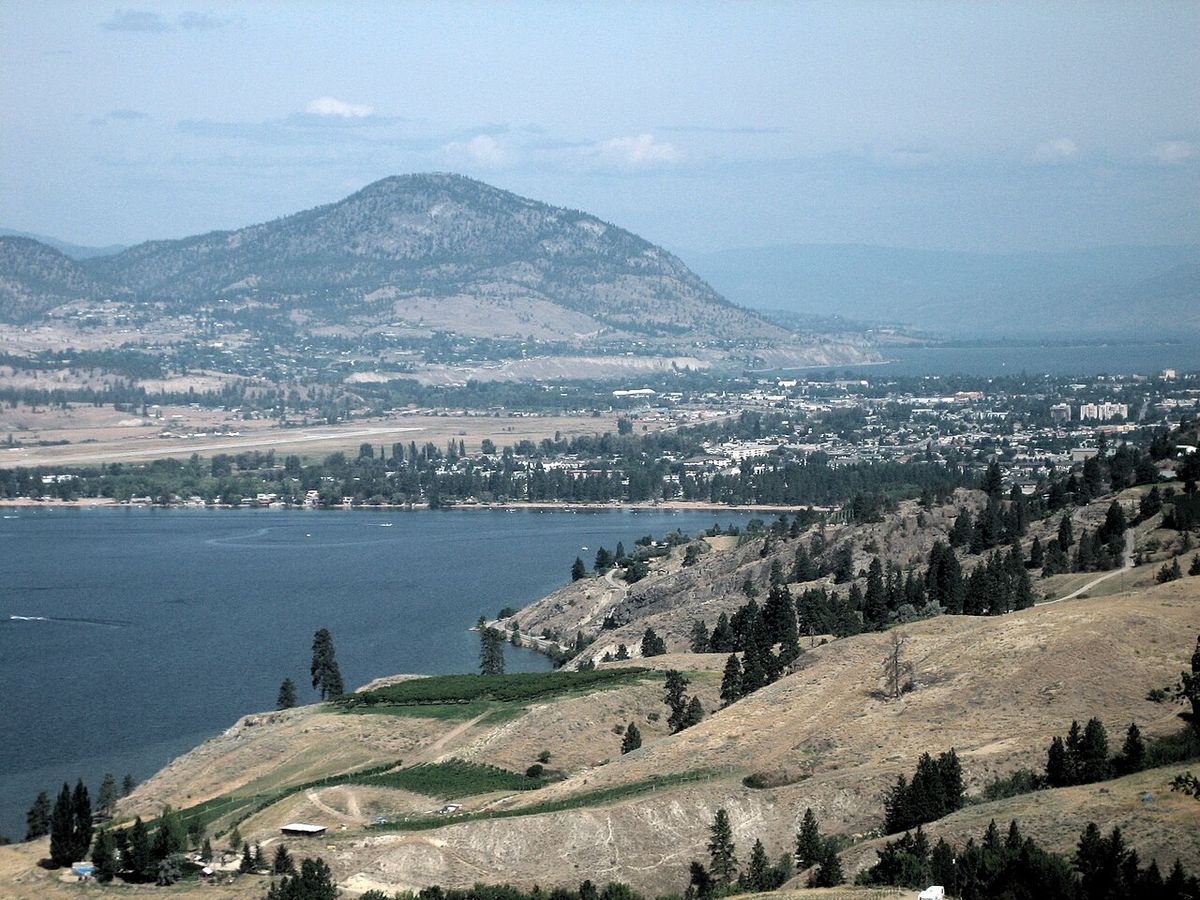
Penticton is located at 49°29′28″N 119°35′19″W, covering an area of 43.03 square kilometres between Okanagan Lake and Skaha Lake, which are part of the Okanagan River drainage system flowing into the Columbia River. The city's borders are defined by Skaha Lake Road to the south and west, Naramata Road to the east, and Highway 97 to the west, with an elevation of 385 metres above sea level and a maximum north-south distance of 7 kilometres between the two lakes. It is the largest city by area and population in the Okanagan-Similkameen Regional District, ranking as the 21st largest settlement in British Columbia and the 71st largest metropolitan area in Canada, which includes the city plus Okanagan-Similkameen Electoral Area D, based on 2011 census data. The surrounding topography includes the Okanagan Highland, an intermediary plateau-like hilly country, and the Monashee Mountains to the east, with pine and fir forests common in the high country, while Apex Mountain Resort, 33 kilometres west on the Thompson Plateau, offers ski services and features the area's tallest peak.
Penticton experiences a semi-arid climate (Köppen BSk) characterized by low precipitation, hot summer days with cool nights, and moderately cool, mostly cloudy winters. With an annual precipitation of only 346.0 millimetres, it is the fourth driest city in Canada, averaging 58.7 centimetres of snowfall per year and holding the title of the mildest winter of any non-coastal Canadian city. The city averages the second most days per year over 30 °C in Canada, after Kamloops, and has the lowest amount of fog in the country, though winter temperature inversions create persistent cloud cover from December to January, making it one of the cloudiest places in Canada during those months. Penticton receives 1,923 hours of sunshine annually, with sunshine varying from 13 percent of daylight hours in December and January to 62.6 percent in August, while afternoon mean relative humidity ranges from 36 percent in July to 69 percent in January and December. The local weather is observed at the Penticton Regional Airport by Environment and Climate Change Canada, and the city typically experiences four distinct seasons with hot summers, relatively mild winters, and little snow, though moderate stretches of below-freezing weather are common in December and January.
Demographics and community
According to the 2021 Canadian census, Penticton had a population of 36,885 living in 17,361 of its 18,457 total private dwellings, a 9.3 percent increase from its 2016 population of 33,761. With a land area of 43.03 square kilometres, it had a population density of 857.2 people per square kilometre in 2021, and the dwelling occupancy rate was 93.2 percent as of 2016. The median value of a private dwelling was $359,167 in 2016, just under the national median of $374,975, though by 2024 the median price for a single-family home had risen significantly to $750,000. The city's median age was 52.4 years in 2016, much higher than the national median of 41.2, with 29.0 percent of residents aged 65 or older compared to 16.9 percent nationally, reflecting its status as a popular retirement destination.
Ethnically, the 2021 census reported 84.3 percent of residents as white, 8.9 percent as visible minorities, and 6.8 percent as Indigenous, with the largest visible minority groups being South Asian (3.2 percent), Filipino (1.4 percent), Chinese (1.0 percent), Black (0.7 percent), and Japanese (0.5 percent). English was the first language for 86.4 percent of residents in 2016, with other common mother tongues including German (2.2 percent), Punjabi (1.8 percent), French (1.8 percent), Portuguese (0.7 percent), and Tagalog (0.6 percent). Religious affiliation in 2021 showed a majority of the population, 55.0 percent or 19,645 persons, reporting no religion, while Christianity was practised by 40.8 percent or 14,575 persons, with Catholic being the largest denomination at 15.8 percent in 2011. Other religious groups included Sikhism (750 persons or 2.1 percent), Hinduism (170 persons or 0.5 percent), Buddhism (155 persons or 0.4 percent), Islam (90 persons or 0.3 percent), Judaism (60 persons or 0.2 percent), and Indigenous Spirituality (45 persons or 0.1 percent).
Architecture and public spaces
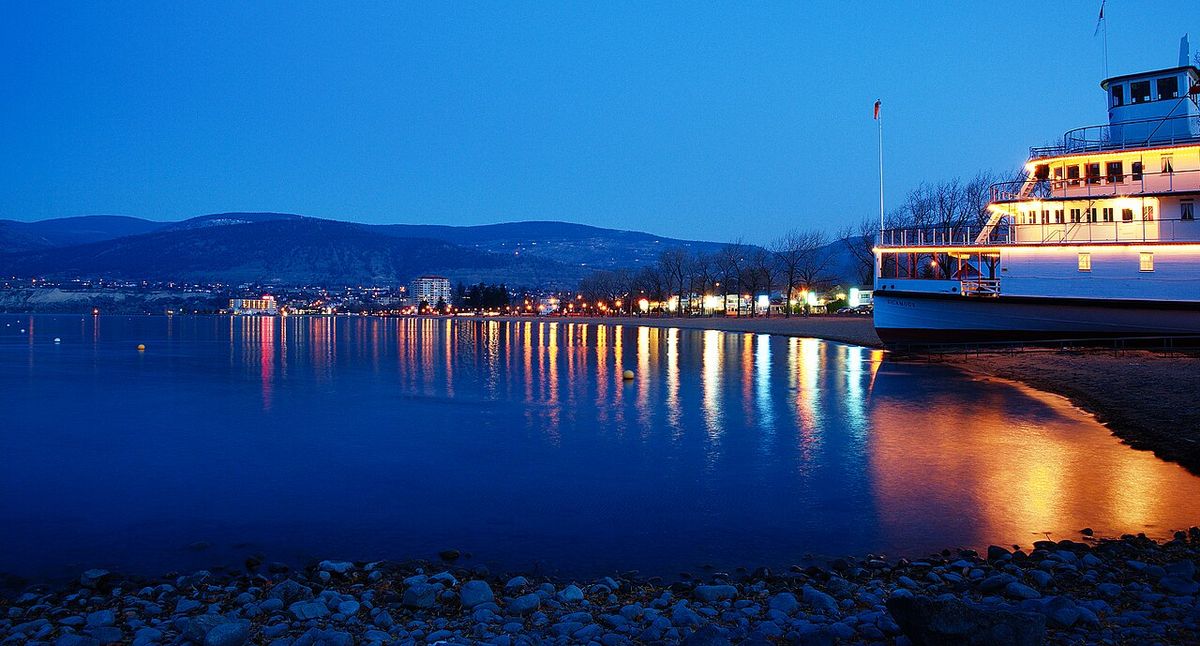
Penticton's built environment features several notable mid-rise buildings, with the tallest being the 15-storey Lakeshore residential towers, constructed of concrete and completed in 2008 in association with an engineering organization, construction company, and real estate agency. The city's second-tallest buildings, tied at ten stories each, are The Athens Creek Tower and Alysen Place, while the third-largest is the eight-floor Cherry Lane Towers, which is also a residential building. Due to its warm climate, the city has a diverse array of public spaces, from parks to hiking trails, and is home to ten public parks including Gyro Park, Lakawanna Park, Marina Way Park, Okanagan Lake Park, Penticton Youth Park, Rose Garden, Rotary Centennial Pavilion, Rotary Park, Skaha Lake Park, and Munson Mountain. There are also seven beaches situated in the city, including Okanagan Lake Beach, Skaha Lake Beach, Airport Beach, Marina Way Beach, Okanagan Lake Park Beach, Sudbury Beach, and Three Mile Beach, with the city maintaining specific policies on where dogs are allowed at parks or beaches.
The larger metropolitan area contains the Okanagan Falls Provincial Park, located in the unincorporated community of Okanagan Falls, and the city is a gateway to extensive trail networks. Other public spaces include trails, such as part of the Trans Canada Trail, and the historic Kettle Valley Railway route, which runs through Penticton and nearby Kelowna and has been converted to a multi-use recreational trail known as the Kettle Valley Rail Trail. South of the city centre on a hillside above Skaha Lake lies the Skaha Bluffs Provincial Park, a premier rock climbing area with over 1,200 documented routes, making it the second most popular rock climbing area in British Columbia after the Smoke Bluffs in Squamish. These natural and developed public spaces contribute significantly to the city's recreational appeal and quality of life for residents and visitors alike.
Education and institutions
Public education in Penticton is administered by School District 67 Okanagan Skaha, which serves Penticton and the nearby communities of Naramata, Kaleden, and Summerland from its head office in the city. The district operates schools from kindergarten through grade 12, with elementary schools covering kindergarten to grade five, middle schools for grades six to eight, and secondary schools for grades nine to twelve. As of the 2016/2017 school year, the district maintained 10 elementary schools, 3 middle schools, and 3 high schools, including Penticton Secondary School and Princess Margaret Secondary School, after closing McNicoll Park Middle School on June 30, 2016. The Conseil scolaire francophone de la Colombie-Britannique operates two Francophone schools in the city: école Entre-lacs primary school and école secondaire de Penticton, providing French-language education options.
Post-secondary and specialized education is provided by a campus of Okanagan College, which had an enrolment of 610 in 2010, and a campus of Sprott Shaw College, offering various vocational and academic programs. The Okanagan Hockey School, which has partnerships with professional teams like the Vancouver Canucks, is also based in the city, catering to aspiring hockey players. The city has three independent schools: Penticton Christian School, Holy Cross School, and Concordia Lutheran School, providing alternative educational choices. The Penticton Public Library was founded in 1909 and operated as part of the Okanagan Regional Library from 1948 until a successful referendum in 1968 made it an independent institution, serving the community's literary and informational needs.
Sports and major events
Penticton has a strong sports culture, highlighted by the Penticton Vees, a major junior ice hockey team that joined the Western Hockey League (WHL) starting with the 2025-26 season after being one of the most successful Junior A teams in Canadian history in the British Columbia Hockey League, having won the Doyle Cup and Royal Bank Cup. The Vees play their home games at the South Okanagan Events Centre (SOEC), a $73 million arena, sports complex, and convention centre approved by an 80.3 percent resident vote in September 2006 and completed in 2008. The city also hosts the Penticton Upperdek Vees, a junior ice hockey team for players with special needs founded in 2008 that plays in the Special Needs Hockey League at the SOEC, and formerly hosted the junior B Penticton Lakers of the Kootenay International Junior Hockey League, who played at the arena of the Okanagan Hockey School. Other local teams include the Penticton Pinnacles soccer team, established in 1997 and playing at Kings Park for the Pacific Coast Soccer League from May to July, the Penticton Pistoleras roller derby team part of the South Okanagan Roller Derby Association, and the Penticton Harlequins rugby team in the British Columbia Rugby Union, with many using the SOEC as their venue.
Penticton has hosted many provincial, national, and international sporting events. These events include the 2017 ITU Multisport World Championships and the 2018 Scotties Tournament of Hearts in curling. The city also hosted the 2016 BC Winter Games and the 2010 World Junior A Challenge. These events demonstrate the city's capacity as an events destination.
- 2010 British Columbia Scotties Tournament of Hearts
- 2010 World Junior A Challenge
- 2013 Continental Cup of Curling
- 2016 BC Winter Games
- 2017 International Triathlon Union Multisport World Championships
- 2018 Scotties Tournament of Hearts (Curling Canada)
Penticton organizes and hosts many annual community events and festivals. Major annual events include the Penticton Peach Festival, also known as Peachfest. Other significant festivals are the Okanagan Wine Festival and the Pentastic Hot Jazz Festival. The Peach City Beach Cruise is another major annual event. These festivals draw significant tourism to the city.
- Penticton Peach Festival (Peachfest), featuring the Miss Penticton Pageant
- Okanagan Wine Festival
- Okanagan Children's Festival
- Meadowlark Nature Festival (May long weekend)
- Fest-of-Ale BC
- Pentastic Hot Jazz Festival
- Peach City Beach Cruise
- Elvis Festival
The Ironman Canada triathlon was held in Penticton for many years. The final Penticton Ironman was held in 2024. The Super League Penticton Triathlon continues the tradition of endurance sports in the city. The Valley First Granfondo Axel Merckx Okanagan cycling event also continues this tradition.
Recreation and lifestyle
Recreational opportunities in Penticton are abundant and largely centred on its natural setting and favourable climate, offering activities for all seasons. In winter, residents and visitors can ski and snowboard at Apex Mountain Resort, located 33 kilometres west of the city on the Thompson Plateau, which provides services for all skill levels. The summer months see extensive use of Okanagan Lake and Skaha Lake for boating, fishing, swimming, and the popular activity of floating down the river channel connecting the two lakes. The area is also known for its many golf courses, hiking and biking trails like the historic Kettle Valley Railway Trail, and world-class rock climbing at Skaha Bluffs, which features over 1,200 documented climbing routes. The Penticton Community Centre, completed in 2011 at 325 Power Street, is a modern facility offering a wide range of health, fitness, and recreational programs for the community, including many options for physical activity and social engagement.
The city's parks and beaches provide ample space for picnics, sports, and relaxation, with policies in place to manage public use, including regulations for dogs in specific areas. The combination of outdoor amenities, community facilities, and a calendar full of festivals and sporting events contributes to a lifestyle that emphasizes active living and leisure, reinforcing Penticton's appeal as a place to live and visit year-round. The city's location also makes it a strategic base for exploring the wider Okanagan region, being approximately five hours by highway from both Seattle, Washington, and Vancouver, British Columbia, and about eight hours from Calgary, Alberta. This accessibility, coupled with its diverse recreational offerings, supports a thriving tourism sector and a high quality of life for its residents.
Questions about Penticton
What does the name Penticton mean?
The name Penticton is derived from the Okanagan word snpintktn. It is often translated as "a place to stay forever" or "a place where people live year-round. The name references the constant, year-round flow of the Okanagan River out of Okanagan Lake and into Skaha Lake at the city's location. Differing accounts exist, with the BC Geographical Names entry also noting translations like "place where water passes beyond" and "permanent place," with one account from the Okanagan Historical Society stating it meant the stream ran on ever, in contrast to others that dried up in summer.
What is the population of Penticton?
According to the 2021 Canadian census, Penticton had a population of 36,885 people living within the city limits in 17,361 of its 18,457 total private dwellings. The larger census agglomeration, which includes surrounding areas, had a population of 47,380. The city's population increased by 9.3 percent from the 2016 census count of 33,761. With a land area of 43.03 square kilometres, this gives Penticton a population density of 857.2 people per square kilometre, and the dwelling occupancy rate was 93.2 percent as of 2016.
What is the climate like in Penticton?
Penticton has a semi-arid climate (Köppen BSk) with hot, dry summers and moderately cool, mostly cloudy winters. It is the fourth driest city in Canada, receiving only 346.0 millimetres of annual precipitation and averaging 58.7 centimetres of snow. It holds the record for the mildest winters of any non-coastal Canadian city. Summer temperatures frequently exceed 30 °C, with the all-time high reaching 44.2 °C on June 30, 2021, while the record low is -27.6 °C, recorded on January 13, 2024. The city has the lowest amount of fog in Canada but is one of the cloudiest places in December and January due to temperature inversions.
What educational institutions are located in Penticton?
Public schooling is managed by School District 67 Okanagan Skaha, which operates multiple elementary, middle, and secondary schools, including Penticton Secondary School and Princess Margaret Secondary School, serving Penticton, Naramata, Kaleden, and Summerland. The city has a campus of Okanagan College, which had 610 enrolments in 2010, and a Sprott Shaw College campus for post-secondary education. Francophone education is provided by école Entre-lacs and école secondaire de Penticton under the Conseil scolaire francophone de la Colombie-Britannique. Specialized institutions include the Okanagan Hockey School and the independent Penticton Christian School, Holy Cross School, and Concordia Lutheran School.
What are the main sports teams in Penticton?
The main sports teams include the Penticton Vees ice hockey team, the Penticton Pinnacles soccer team, the Penticton Pistoleras roller derby team, and the Penticton Harlequins rugby team. The Penticton Vees are a major junior team in the Western Hockey League that play at the South Okanagan Events Centre, having previously been a highly successful Junior A team in the British Columbia Hockey League. The Penticton Pinnacles were established in 1997 and play in the Pacific Coast Soccer League at Kings Park. The city also formerly hosted the junior B Penticton Lakers hockey team in the Kootenay International Junior Hockey League. The Penticton Upperdek Vees are a junior ice hockey team in the Special Needs Hockey League for players with special needs, also playing at the South Okanagan Events Centre.
What major events are held in Penticton?
Major annual events in Penticton include the Penticton Peach Festival, the Okanagan Wine Festival, the Okanagan Children's Festival, the Meadowlark Nature Festival, Fest of Ale BC, the Pentastic Hot Jazz Festival, the Peach City Beach Cruise, and the Elvis Festival. The Penticton Peach Festival, commonly known as Peachfest, also features the Miss Penticton Pageant. The city has hosted significant sporting events such as the 2010 British Columbia Scotties Tournament of Hearts, the 2010 World Junior A Challenge, the 2013 Continental Cup of Curling, the 2016 BC Winter Games, the 2017 International Triathlon Union Multisport World Championships, and Curling Canada's 2018 Scotties Tournament of Hearts. Penticton was also home to the Ironman Canada race, with the final Penticton Ironman held in 2024, while events like the Super League Penticton Triathlon and the Valley First Granfondo Axel Merckx Okanagan continue.
Sources and further reading
- Penticton (Wikipedia)
- Visit Penticton: Welcome to Penticton (visitpenticton.com)
- 2026's State of the City Address (penticton.org)
Checked by the Your Space Hamilton desk. Last updated 2026-11-02.