Timmins
Timmins is a city in northeastern Ontario, Canada, situated on the Mattagami River. As the fourth-largest city in Northeastern Ontario, it serves as a vital regional service and distribution centre with an economy historically and currently anchored in natural resource extraction, particularly gold mining and forestry. The city has a significant Francophone presence, with over half of its residents bilingual in English and French. With a population of 41,145 recorded in 2021, Timmins embodies the rugged history and enduring economic spirit of Canada's north.
Early History and Indigenous Presence
Archaeological evidence confirms human habitation in the Timmins area for at least 6,500 years, beginning with nomadic peoples of the Shield Archaic culture. For centuries prior to European contact, the region was inhabited primarily by the Cree and Ojibwe peoples. The first European explorers, French traders, arrived in the late 1600s. A more sustained attempt at a European presence came in 1785 when Philip Turnor, a surveyor and cartographer for the Hudson's Bay Company, established a trading outpost at Fredrick House Lake, approximately 30 kilometres northeast of present-day downtown Timmins. This post struggled due to logistical challenges, nearby competition, and the difficulty of moving canoes on the Abitibi and Fredrick House rivers, and it was functionally abandoned in 1812 after an attack by a man named Capascoos who killed all 12 staff members and looted the building. Temporary log shelters were put in place nearby to facilitate fur trading until the post was officially closed by the Hudson's Bay Company in 1821. Treaty 9 was signed in 1906 between Anishinaabe and Omushkegowuk Cree communities and the Crown, which required the Mattagami First Nation to relocate north of Mattagami Lake and cede territory, a process that saw the reserve moved again to its present location south of the lake in the 1950s.
The Porcupine Gold Rush and Founding
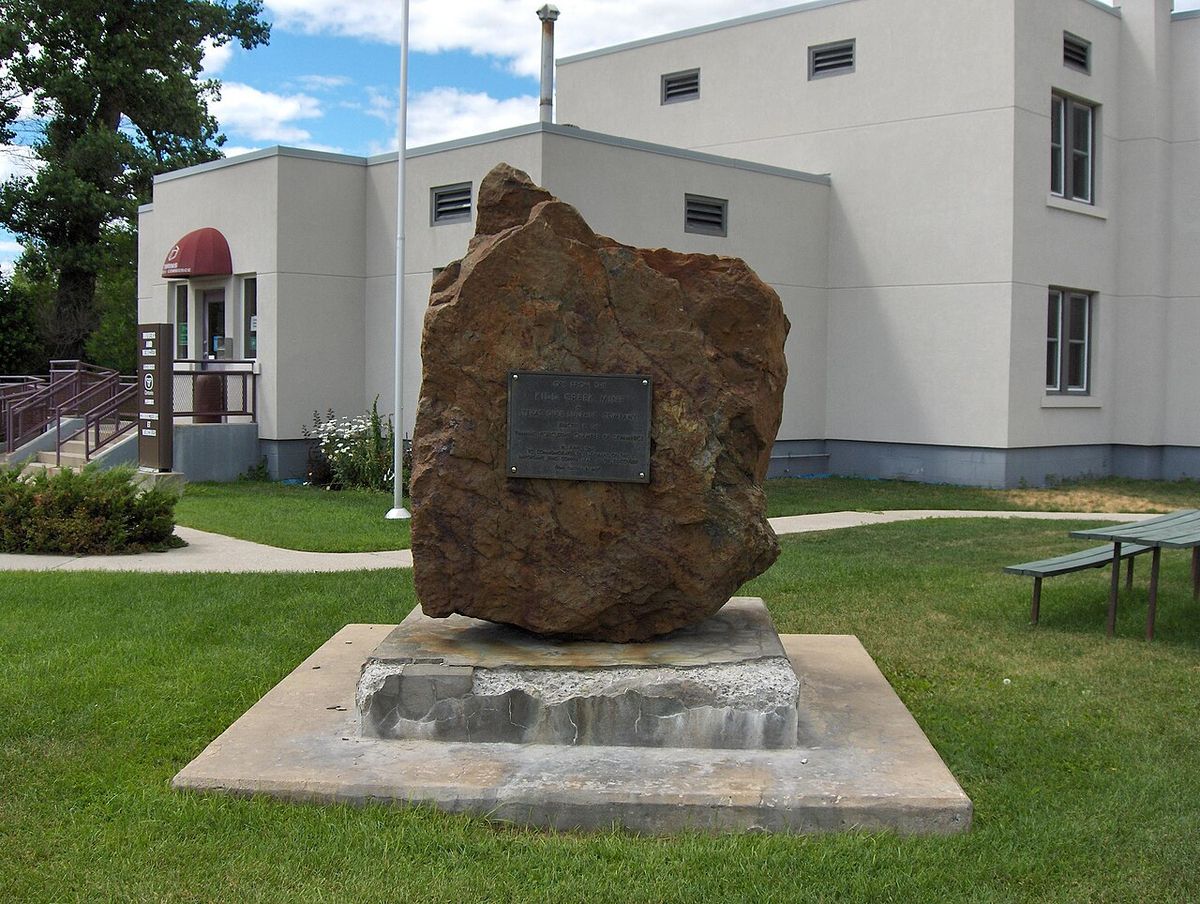
The Porcupine Gold Rush, beginning in 1909, is the foundational event in Timmins' modern history. While gold was long known to local Indigenous peoples and a few European settlers, the area's inaccessibility limited commercial interest until the Temiskaming and Northern Ontario Railway extended to Cochrane in 1907, and later the Canadian Pacific Railway expansion provided a more direct route from Toronto. Prospectors Benny Hollinger and Alex Gillies made a major discovery in 1909, stumbling upon a rich gold vein after Hollinger pulled moss from a quartz outcropping, revealing gold that looked like dripped candle wax along a vein about six feet wide. They found this near abandoned test pits dug two years earlier by Reuben D'Aigle's team, who had missed the vein despite one of their trails passing the richest part. Around the same time, Jack Wilson's team discovered the large quartz dome that became the Dome Mine after Wilson saw a piece of yellow glisten in the sunlight on a seam of schist. Entrepreneurs Noah and Henry Timmins from Mattawa arrived in 1910, purchasing shares from Hollinger and incorporating Hollinger Mines with partners Duncan McMartin, John McMartin, and Mattawa attorney David Dunlap. The settlement that grew around the Hollinger mine was named Timmins by mine manager Alphonse Paré after his uncle, Noah. Competing mining camps at Porcupine Lake, owned by Dome Mines, and Schumacher on Pearl Lake, owned by McIntyre Mines, later merged with the growing community, with historian Joe Torlone noting the combined mines acted as an influential industrial citizen rather than a single dominating company.
A popular founding myth of Timmins and the Porcupine area states that a man named Harry Preston slipped on moss and uncovered gold. Historical records contradict this claim. Harry Preston arrived in the Porcupine area as part of a team led by Jack Wilson in June 1909, where they discovered a large dome shaped quartz outcrop. The only comparable mention of moss comes from prospectors Benny Hollinger and Alex Gillies, who arrived two months later. Historians agree the expansion of the Temiskaming and Northern Ontario Railway was instrumental in triggering the Porcupine Gold Rush by making the area accessible.
Growth, Fire, and Incorporation
The nascent mining camps faced a catastrophic disaster on July 11, 1911, when the Great Porcupine Fire, a wall of flame estimated at 32 kilometres wide, swept through the area. It began as small bushfires on July 10, 1911, under unusually hot, dry conditions, and strong winds merged them into a single conflagration that destroyed the Porcupine mining camp around 3:30 p.m. and continued as far north as Cochrane. The fire killed an estimated 73 to over 200 people, with some victims drowning in lakes while fleeing and others succumbing to smoke while trapped underground in mines. Remarkably, the executives of the Dome Mine held meetings about reopening within two days, and the camp was quickly rebuilt with help from communities across Ontario. The fire also burned away the thin moss and soil layer characteristic of the Canadian Shield, revealing previously unknown veins of gold and other minerals that aided economic recovery. To house displaced residents and new arrivals, Noah Timmins planned a proper townsite, with the first residential lots selling for $5 to $10 and commercial lots for $75 to $1,000 on September 4, 1911. The Municipality of Timmins was officially incorporated on January 1, 1912, and quickly surpassed the other camps in population as migrants were attracted to the new lands for sale. The community grew rapidly, facing labour unrest like the 1912 strike by 1,200 members of the Western Federation of Miners Local 145, which, after mine operators hired gun thugs who fired on picketers and were ordered out by the provincial government, eventually won a nine-hour workday and a pay increase for the 500 miners who returned to work in July 1913. A dam built at Kenogamissi Falls in 1917 provided hydroelectric power to Timmins and the surrounding area, consequently flooding Mattagami Lake, and further enabling the town's growth.
Twentieth Century Development and Transition
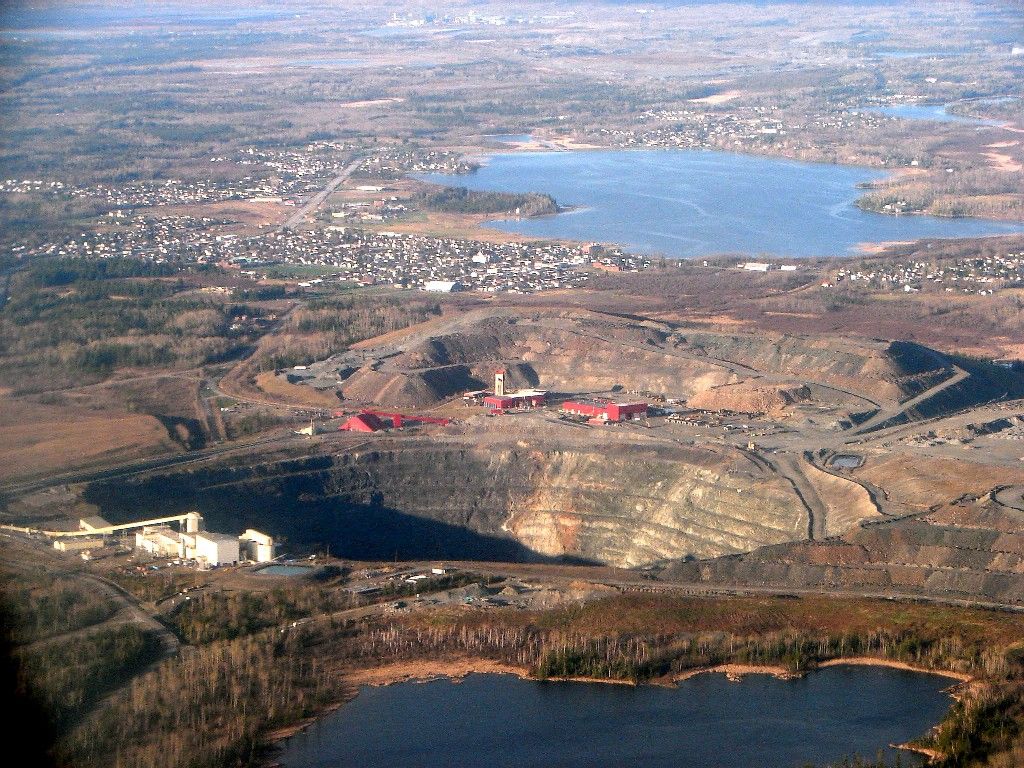
Timmins contributed significantly to both World Wars, with a recruitment campaign enlisting around 600 men from a population of less than 2,000 in the First World War, valued for their trench-digging and explosives experience. News and letters from soldiers were published in The Porcupine Advance, and major celebrations erupted upon the armistice, including an effigy of the Kaiser made by Hollinger carpenters that was displayed and burned. The city's economy remained stable during the Great Depression due to ongoing mining and lumber jobs, which were readily available. During the Second World War, about a third of the city's population enlisted, forming their own bomber squadron known as Porcupine Squadron No. 433, a heavy bomber unit of No. 6 Group RCAF based in Skipton-on-Swale, England. The local economy suffered slightly as women were prohibited by the Ontario Mining Act from working underground to replace the enlisted miners. The mid-20th century marked a transition as the original high-grade gold ore bodies were depleted, with the majority of the original mines closing by the mid-1960s. The Hollinger Mine closed in 1968 after producing nearly 20 million troy ounces of gold, followed by the McIntyre Mine in 1988 after producing about 11 million troy ounces. In 1973, an amalgamation created the modern City of Timmins, incorporating 35 townships over 3,300 square kilometres, including Porcupine, South Porcupine, and Schumacher. The Dome Mine, the last of the three original giants, operated for 107 years before closing in 2017 after producing about 17 million troy ounces. The city's role evolved into a regional service centre, though its population peaked in the mid-1990s and has seen a general decline since, with a slight increase noted in 2011. Rail service to Timmins was discontinued in 1990, though plans exist for its potential return within the next decade.
Demographics and Community Life
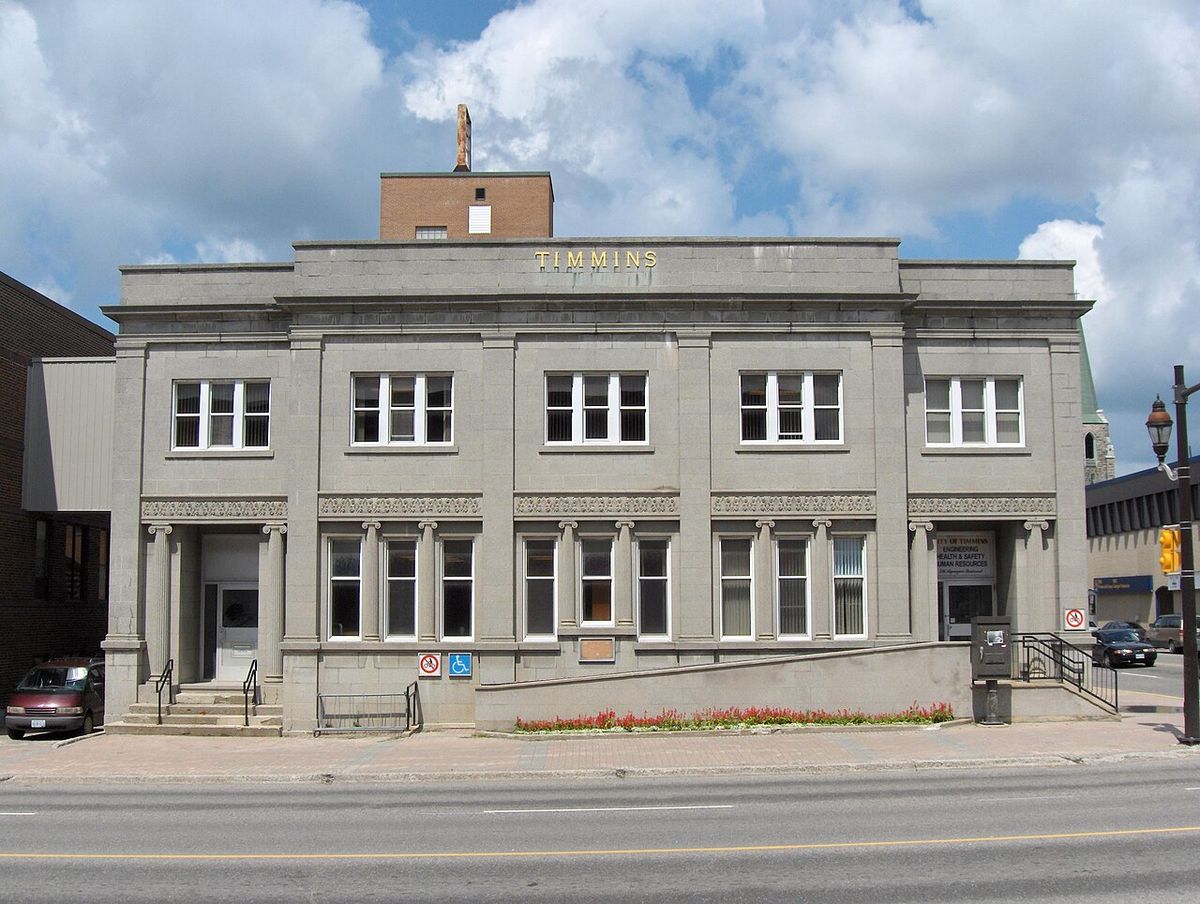
According to the 2021 Canadian census, Timmins had a population of 41,145 living in 17,886 of its 19,390 total private dwellings, a decrease of 1.5 percent from its 2016 population of 41,788. With a land area of 2,955.33 square kilometres, it has a low population density of 13.9 persons per square kilometre. The city has a strong bilingual character, with 60.26 percent of residents reporting English as their mother tongue and 34.25 percent reporting French. Over half the population, 50.8 percent, is bilingual in both official languages, while 5.49 percent reported a non-official language as their first language. Timmins also had a historic Jewish community, established officially in 1925 when about 200 Jews lived in the city, many having emigrated from Russia and Eastern Europe to work in mining. Rabbi Yaakov Schulman had arrived in 1917 to serve religious needs such as providing kosher meat. The community peaked around the 1950s with about 160 families and was known for its integrated social events, such as an annual mixed Purim ball with a beauty pageant named Malkat Ester that included both Jews and non-Jews. The synagogue and a community school were built in the 1930s, but the synagogue closed in the early 1970s as the population dwindled following a general decrease in the town's Jewish population.
Climate, Geography, and Economy
Timmins experiences a hemiboreal humid continental climate characterized by cold, snowy winters and cool summers, with late summer and autumn being among the coolest for any non-coastal major city in Canada. During the late spring and summer, temperatures can rise considerably, sometimes accompanied by high humidity and unstable air masses. It holds records for extreme temperatures, with the highest ever recorded at 39.4 °C on July 12, 1936, and the coldest at -45.6 °C on February 1, 1962. Located on the Canadian Shield near the Mattagami River, the landscape influenced both its mining history and its vulnerability to forest fires. The city's extensive land area encompasses numerous lakes and boreal forest, shaping its recreational and tourism offerings. While mining remains a pillar, Timmins' economy is diversified through forestry, tourism, and its function as a government and commercial hub for northeastern Ontario. The municipal budget for 2026 outlines the city's financial planning, with 63.4 percent of revenue derived from property taxes. Major investments are directed toward infrastructure renewal, particularly the transportation network, with a busy construction season planned for 2026 to rehabilitate roads from east to west and address aging infrastructure.
Municipal Governance and Future Plans
The city government, led by a mayor and council, is planning for future infrastructure and community needs, with its official communications channel being the City of Timmins page. The next municipal election is scheduled for October 26, 2026, with nominations open for the offices of Mayor and Councillor. Key municipal priorities for 2026 include making record investments in road work to improve the transportation network, as stated in the State of the City address. The city has launched a community-wide survey as of June 25, 2026, to help shape the future of its public transit system. On statutory holidays like Family Day (February 16, 2026), municipal services such as Service Timmins and the Provincial Offences Office are closed or unavailable. While rail service was discontinued in 1990, plans are in development for its potential return within the coming decade, which would impact the city's role as a distribution centre. The city also provides online resources like municipal webcams and a municipal 511 service for residents.
Tourism, Culture, and Attractions
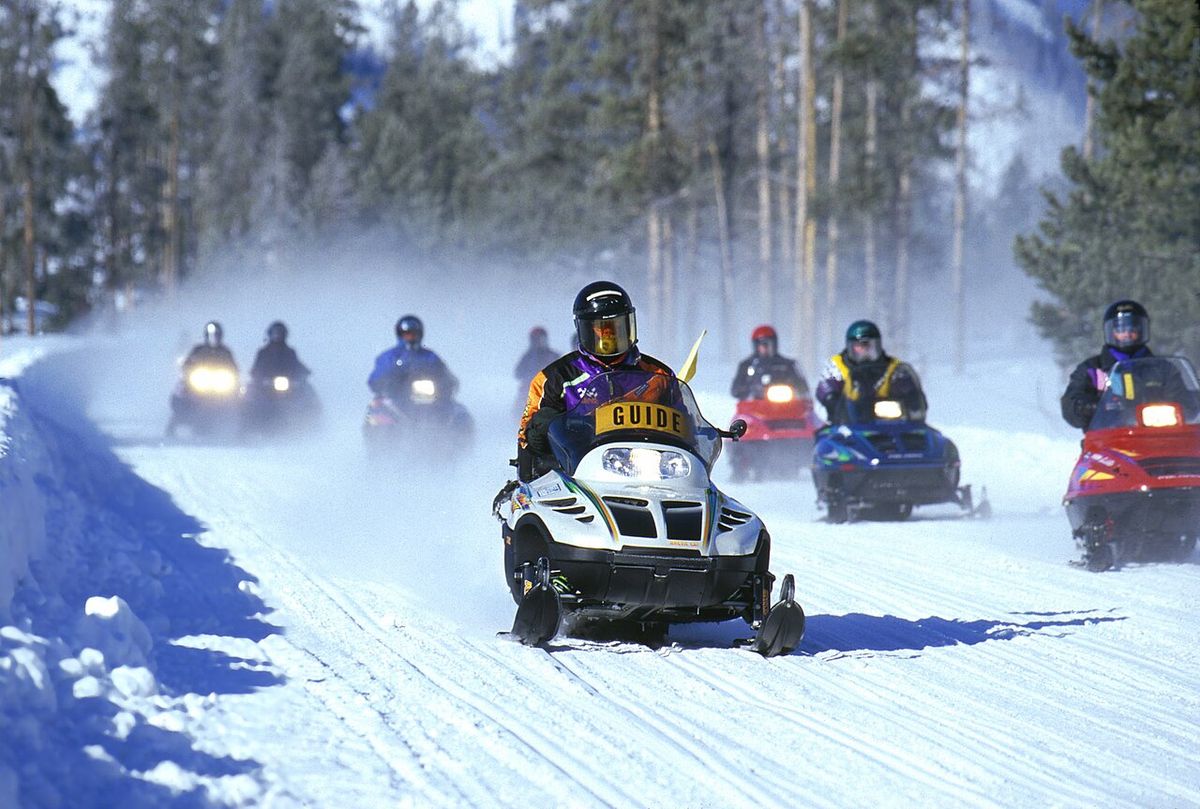
Tourism draws visitors with attractions centred on outdoor recreation and local history, contributing to the city's calendar of events which includes lively festivals and cultural celebrations that reflect the community's diverse talents. Snowmobiling is a significant economic driver, attracting tourists from all over North America to explore the extensive area trails maintained by the Timmins Snowmobile Club. Hollinger Park is a major recreational space divided into a public park area and a section with a regulation baseball diamond and two soccer fields. It has been home to the Timmins Men's Baseball League since 1985 and hosted a July 1, 1999 concert by Timmins native Shania Twain that drew an estimated 22,000 people. The city offers a variety of other attractions and facilities for residents and visitors, supported by local history that dates back over 300 years in nearby areas like Connaught. Therefore, it remains unchanged.
- The Timmins Museum and National Exhibition Centre
- Cedar Meadows Wilderness Tours
- Mount Jamieson Resort (formerly Kamiskotia Snow Resort) for skiing
- Porcupine Ski Runners Cross-Country Trails and Chalet
- Hollinger Golf Club, Spruce Needles Golf Club, and Sandy Falls Golf Club
- The McIntyre Community Building
- The Timmins Snowmobile Club
- The Pioneer Museum, located 39.5 km northeast in the community of Connaught
- La Galeruche Art Gallery located at 32 Mountjoy Street North in the Centre Culturel La Ronde
Population Trends and Census Data
The City of Timmins has a land area of 2,955.33 square kilometres. The city's population peaked in the mid 1990s. The population has been consistently declining with the exception of a slight bump in 2011. At the 2021 Canadian census, Timmins had a population of 41,145, and an estimated population of 44,819 in 2023.
The city's status as a regional service and distribution centre solidified in the mid 1990s when the population peaked. The population has been consistently declining since then. Timmins serves as a regional service and distribution centre. The city's economy is based on natural resource extraction, supported by industries related to lumbering and to the mining of gold, zinc, copper, nickel, and silver.
Questions about Timmins
What is Timmins, Ontario known for?
Timmins is historically famous for the Porcupine Gold Rush that began in 1909, which led to the establishment of major mines like Hollinger, Dome, and McIntyre. It is known as a major centre for mining and forestry in northeastern Ontario. The city is also recognized for its strong Francophone community and bilingual character, with over half the population fluent in both English and French. It is the hometown of renowned singer Shania Twain, who played a concert at Hollinger Park in 1999.
What happened in the Great Porcupine Fire?
The Great Porcupine Fire was a devastating wildfire that occurred on July 11, 1911. Sparked by small bushfires under hot, dry conditions, it merged into a wall of flame estimated at 32 kilometres wide. It destroyed the Porcupine mining camp and killed between 73 and over 200 people, with some victims drowning in lakes while fleeing and others killed by smoke in mines. The fire paradoxically aided the mining industry by burning away overburden and revealing new gold veins, and the camps were quickly rebuilt with help from across Ontario within days of the disaster.
Is Timmins a bilingual city?
Yes, Timmins has a significant bilingual population. According to the 2021 census, 34.25 percent of residents reported French as their mother tongue and 60.26 percent reported English. Importantly, 50.8 percent of the total population is bilingual, meaning they can conduct a conversation in both official languages, reflecting the city's deep Francophone heritage and cultural mix. A further 5.49 percent reported a non-official language as their first language, adding to the community's linguistic diversity.
When did the gold mines in Timmins close?
The original major gold mines closed over several decades as ore bodies were depleted. The Hollinger Mine, one of the most prolific, closed in 1968 after producing nearly 20 million troy ounces of gold. The McIntyre Mine ceased operations in 1988 after producing about 11 million troy ounces. The Dome Mine, the last of the three foundational operations, closed in 2017 after 107 years of continuous production and about 17 million troy ounces of gold, marking the end of an era for the original high-grade mines.
What is there to do in Timmins for tourists?
Tourists are drawn to Timmins for outdoor recreation and historical sites. Key attractions include the Timmins Museum, Cedar Meadows Wilderness Tours, and the Mount Jamieson ski resort. The extensive trail network is popular for snowmobiling and cross-country skiing, significantly impacting the local economy. Hollinger Park is a central recreational space that has hosted major concerts, and the Pioneer Museum offers a look at local history dating back 300 years. The city also hosts various festivals and community events throughout the year, detailed on the Tourism Timmins events calendar.
What are the current major projects or plans for Timmins?
For 2026, the City of Timmins is planning record investments in road rehabilitation and infrastructure improvements across its main transportation corridors, as part of its capital works program. The city has also launched a community-wide survey as of June 2026 to help shape the future of its public transit system. Municipal elections are scheduled for October 26, 2026. Long-term plans include the potential restoration of rail service to the city within the coming decade, and the 2026 construction season includes multiple projects to rehabilitate roads and aging infrastructure from east to west.
Sources: Wikipedia and current public reporting, checked by the Your Space Hamilton desk. Last updated 2026-10-25.