1985 Barrie tornado
The 1985 Barrie tornado was a violent F4 tornado that struck the city of Barrie, Ontario, on the afternoon of May 31, 1985. Part of a larger, multi-day outbreak across the Great Lakes region, it was one of the deadliest tornadoes in Canadian history. The tornado killed eight people, injured 155, and caused over $100 million in damage, destroying or damaging approximately 300 homes. The event, often referred to as 'Black Friday,' marked a significant moment in Canada's understanding of tornado risks and led to concrete changes in severe weather forecasting and public warning systems.
Meteorological Setup and Outbreak Context
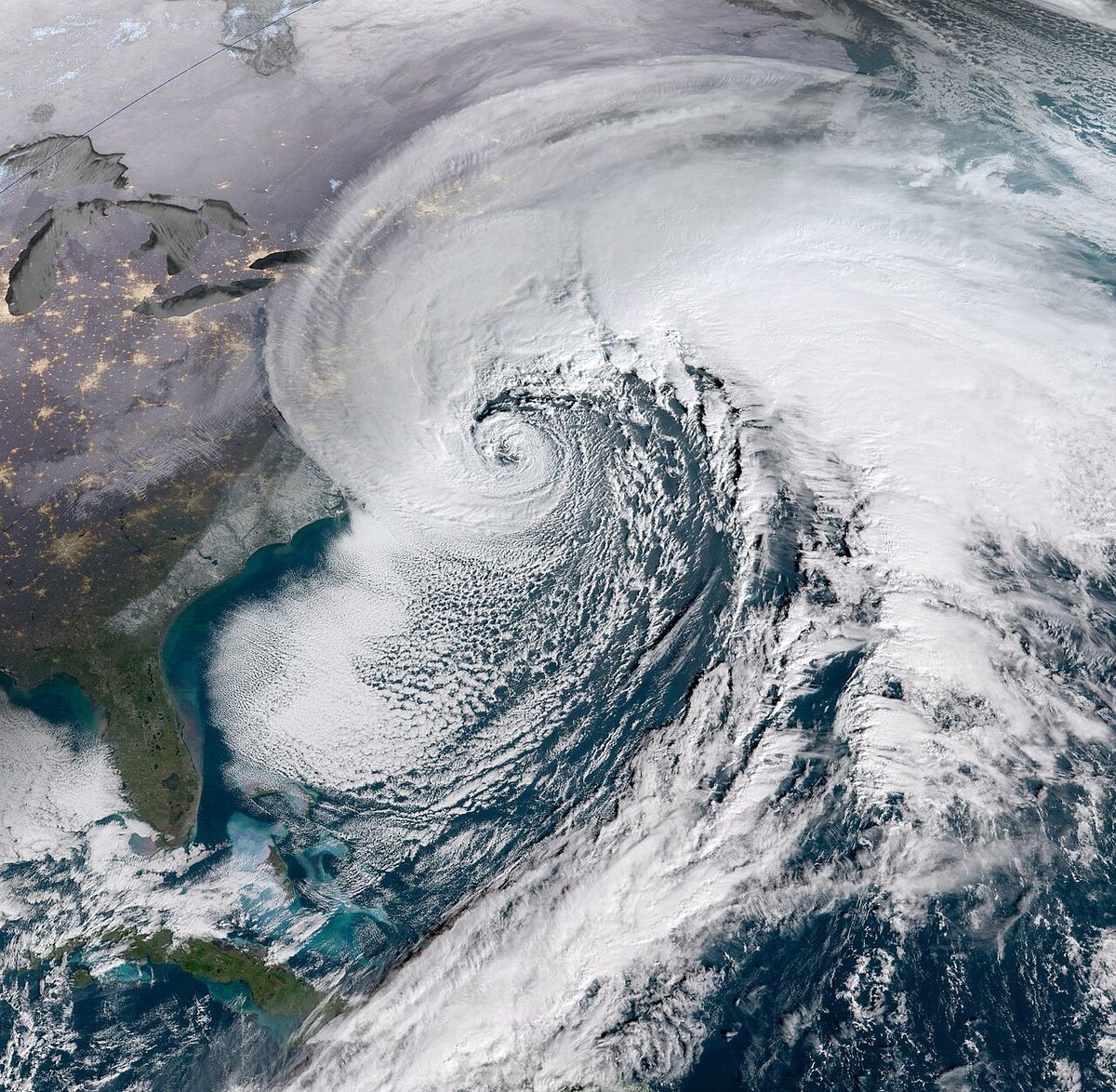
The tornado that struck Barrie was the product of an exceptionally volatile atmospheric setup over the Great Lakes. An anomalously intense low-pressure system, with a central pressure of no more than 984 millibars, was centred over Michigan's Upper Peninsula on May 31. A strong cold front extended southward from this low, while a broad warm sector of very warm and moist air pushed into southern Ontario ahead of it. Temperatures in the region reached 27 to 31 degrees Celsius, with dew points in the high teens or low twenties Celsius, creating significant atmospheric instability and a high-precipitation supercell environment. This environment was conducive to the development of severe, long-lived supercell thunderstorms. The Barrie tornado was part of a larger outbreak that spanned May 30 and 31, which spawned 14 tornadoes in southern Ontario alone and killed a total of 16 people. The outbreak also produced severe weather in the Midwestern and Northeastern United States the previous day, particularly in Iowa and Wisconsin. The Barrie storm developed from the northernmost of two devastating, cyclic supercells that formed over Ontario that afternoon, which are considered among the most prolific tornado producers in Canadian history to that date. These storms likely owed their inception, at least partially, to lake-breeze-related convergence zones.
Detailed Path and Damage Chronology
It intensified rapidly upon touchdown, first obliterating a pine tree forest plantation where 10-metre-tall trees were snapped at the 2-metre level. At this initial point, the damage path was about 600 metres wide, moving steadily towards the east-northeast. The tornado entered the southern part of Barrie shortly before 5:00 p.m., cloaked in heavy rain and dust which made it very difficult to see. Its first major impact was on a residential square block bounded by Crawford Street and Patterson Road. Extensive F3 damage occurred here, with localized F4 damage. Five people were killed in this area as some homes, not well-built, collapsed after being pushed off their foundations. Two of these fatalities were a mother and son killed when their Crawford Street home was completely levelled. Most fatalities occurred in homes with no basements, where victims suffered head and chest trauma from increased exposure to flying debris.
The tornado then struck the Molson Park industrial complex. One person died at a tire retreading facility, while at least 15 other businesses were damaged or destroyed. Steel I-beams were twisted violently out of shape, and splinters of wood were found embedded into nearby concrete walls. The tornado proceeded to cross Highway 400 at the Essa Road interchange, just missing the Barrie Racetrack to the south. The grandstand was heavily damaged and several barns nearby were destroyed. A man was killed after he was sucked out of his parked car in an adjacent lot. Several vehicles traveling on Highway 400 were tossed hundreds of metres into the ditch, their drivers escaping with only minor injuries. Highway guard rails were found wrapped around telephone poles, and many cars had puncture holes in their frames from flying debris.
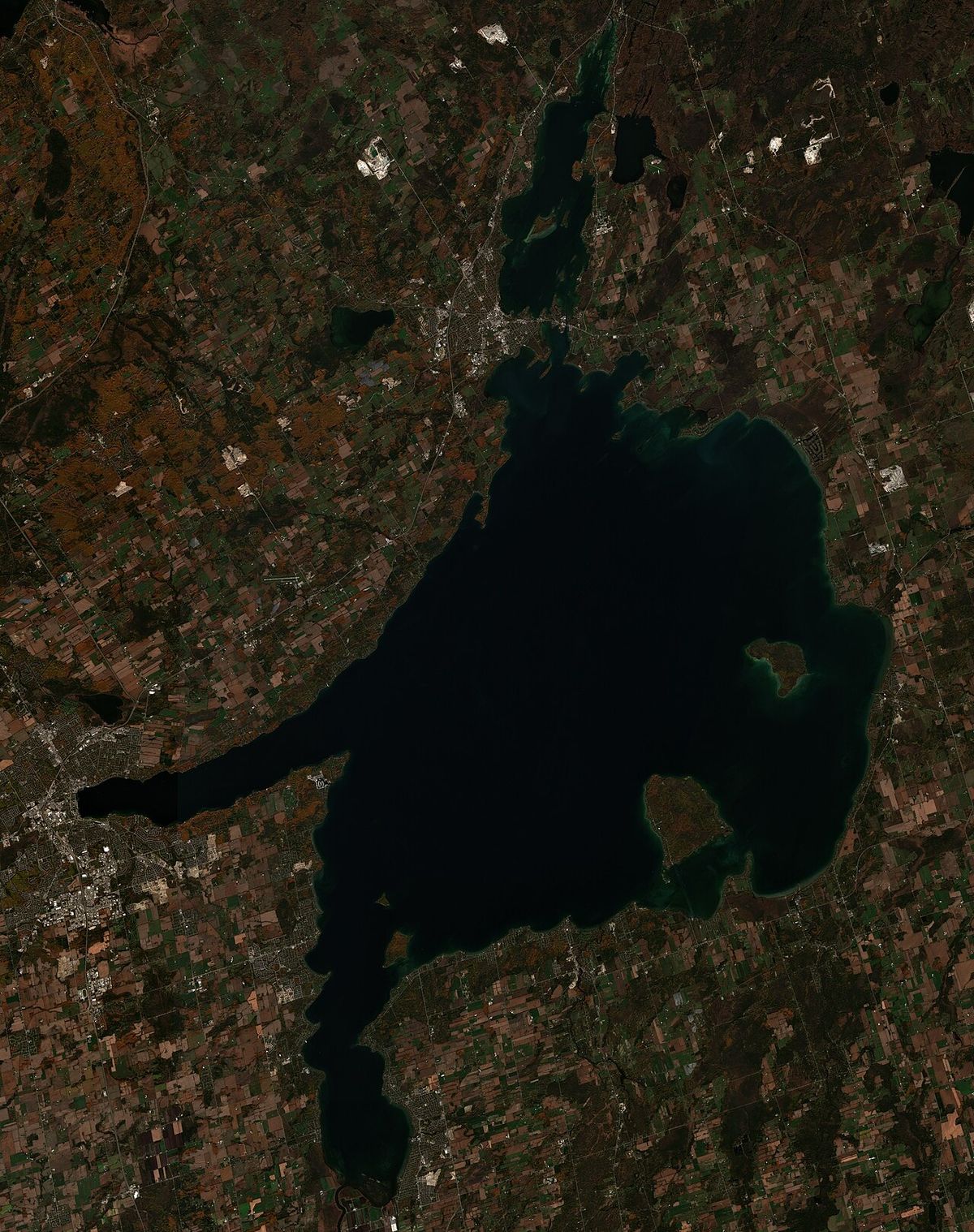
As it crossed the highway, the tornado moved into the Allandale subdivision. Many homes sustained severe damage there, with much of their upper floors missing. By this time the tornado's path had narrowed to about 300 metres. The track moved from Debra Crescent to Joanne Court with more extensive damage. Near Tower Crescent, the path narrowed to a comparatively small fifty metres. On Briar Road, homes sustained only minor damage, indicating a temporary weakening. But on the next road east, Trillium Crescent, heavy damage indicated the tornado had strengthened once again. Four warehouses near Highway 11 were ripped apart. The tornado then hit the Tollendal Woods and Minets Point area, taking out the Brentwood Marina and a nearby subdivision. A boy was killed in this area while trying to bicycle home. Over thirty boats, accompanied by their concrete moorings, were tossed into Lake Simcoe and never recovered. The tornado moved out over Kempenfelt Bay where it became a waterspout briefly before weakening out completely. It came very close to the opposite shore but no damage was reported there, though large quantities of debris from the city were later found floating in the bay.
Immediate Aftermath, Response, and Human Impact
The immediate aftermath was one of widespread shock and devastation compounded by a city-wide blackout. At approximately 4:00 p.m. EDT, about an hour before the tornado hit, all electrical power in Barrie went out. This was caused by the Grand Valley/Tottenham tornado, another storm in the same outbreak, which took out the main hydroelectric power transformers southwest of the city. Few residents had any idea of what was looming, but many people were let off work 30 to 45 minutes early due to these power outages. Meteorologists and officials later stated that had this not happened, the death toll would have undoubtedly been much higher as more people would have been in vulnerable industrial and commercial buildings. Hundreds of people were left out of work largely as a result of the massive damage sustained to the Molson Park industrial complex. Rescue operations commenced immediately amidst the debris, with emergency services and volunteers working to locate survivors and treat the 155 injured. The scale of the damage overwhelmed local resources, prompting a provincial and national response. Unofficial estimates in the immediate chaos placed the fatalities as high as 12 and injuries as high as 281, though official counts were later settled at eight and 155. The event dominated national news for days, highlighting the destructive power of tornadoes in a region previously considered less vulnerable than the traditional Tornado Alley of the central United States.
Impact on Weather Science and Preparedness Systems
The 1985 Barrie tornado served as a harsh catalyst for change in Canada's approach to severe weather. At the time, Canada's radar systems were still relatively basic, and the specific ability to forecast and track tornadoes was limited. In the decades since, meteorology has seen concrete advancements directly influenced by the lessons of that day. Environment and Climate Change Canada transitioned from conventional radar to Doppler radar, which can detect wind velocity and rotation within storms, and more recently to dual-polarization radar. This newer technology offers more precise data on storm structure and precipitation type, helping forecasters identify potentially tornado-producing systems faster and with greater accuracy. The event demonstrated the critical need for effective public warning systems. Today, alerts are disseminated through the WeatherCAN app, wireless public alerts, and media broadcasts, though challenges remain as demonstrated by the very short lead time for the 2021 Barrie EF-2 tornado. The disaster also led to improved building code discussions in some areas and a greater emphasis on public education about tornado safety, such as seeking shelter in a basement or interior room. Emergency Preparedness Meteorologist Geoff Coulson noted that forecasting tornadoes continues to be one of the most challenging jobs a weather forecaster faces anywhere in the world, but the tools available have improved substantially since 1985.
Comparison with Later Barrie Tornadoes: 2014 and 2021
Barrie has experienced several significant tornadoes since 1985, each reinforcing the city's vulnerability and providing case studies for meteorological comparison. The most direct comparison to the 1985 event is the EF-2 tornado that struck southern Barrie on July 15, 2021. While far less intense than the F4 event, the 2021 tornado still caused considerable damage, injuring 10 people and damaging about 150 homes, with 71 deemed unsafe to enter. It had a longer ground path of 12 kilometres but a similar maximum width of 600 metres. Its maximum wind speeds were 210 km/h. The meteorological setup was notably different, with the 1985 environment being far more volatile, featuring a deep upper-level trough and strong surface low driving extreme instability and wind shear. The 2021 tornado formed from a storm that developed and moved very quickly, resulting in warnings with little lead time for the initially impacted areas. These recurring events demonstrate that while forecasting has improved, the geographic and climatic factors that make the region prone to severe thunderstorms and tornadoes persist, and the public must understand the full range of alerts from watches to warnings.
Key Facts, Figures, and Damage Indicators
The 1985 Barrie tornado remains a benchmark event for its intensity and human cost. It was rated F4 on the Fujita scale, with estimated wind speeds between 330 and 400 kilometres per hour. The damage path within the city was approximately 5 kilometres long and up to 600 metres wide at its peak. The financial cost was staggering, exceeding $100 million in 1985 dollars. The human toll included eight confirmed fatalities and 155 injuries. The storm's relatively short track belied its extreme violence, as it completely levelled well-built structures and inflicted damage indicative of the highest tornado ratings. Specific damage indicators included steel I-beams twisted out of shape, concrete moorings torn from a marina and thrown into the lake, and homes pushed completely off their foundations. The following list details the sequence of major impacts and specific damage observations as the tornado moved through the city.
- Initial touchdown in Essa Township: 10-metre pine trees snapped at 2-metre height.
- Crawford Street/Patterson Road: Five fatalities. Homes levelled or pushed off foundations. F3/F4 damage.
- Molson Park Industrial Complex: One fatality. 15+ businesses damaged. Steel I-beams twisted. Wood embedded in concrete.
- Highway 400/Esse Road Interchange: One fatality (man pulled from car). Vehicles tossed hundreds of metres. Guard rails wrapped around poles. Barns destroyed.
- Tollendal Woods/Minets Point: One fatality (boy on bicycle). Brentwood Marina destroyed. 30+ boats with moorings thrown into Lake Simcoe.
- Final Stage: Tornado became a waterspout over Kempenfelt Bay. Debris found floating in bay.
Of the 605 homes in the tornado's path, approximately one-third were rendered uninhabitable. This was a direct measure of the storm's destructive force on residential infrastructure. The tornado formed from a high-precipitation supercell thunderstorm. Copious amounts of moisture led to this type of supercell. The heavy rain from this storm cloaked the tornado and made it very difficult to see. Visibility was very low for those in its path.
Changing Tornado Climatology and Research in Ontario
Research following the 1985 outbreak has contributed to a better and more detailed understanding of tornado risks in Canada. While the Windsor-to-Barrie corridor remains highly active, recent studies by initiatives like the Northern Tornadoes Project at Western University suggest a possible eastward shift in activity. Increased tornado documentation is now noted in regions east of Lake Simcoe, including the Kawartha Lakes, Haliburton, and the Ottawa Valley. Geoff Coulson noted one hypothesis is that there has been a bit of a shift eastwards in where some of these more active storms are occurring, but more data is needed to understand these trends better. The project's work, which involves detailed ground and aerial surveys, has significantly increased the verified count of tornadoes in Canada, revealing that they are more common than historically recorded. This evolving climatology points to the importance of maintaining and advancing severe weather preparedness and detection networks across a broader area of Ontario and Quebec, not just in traditional hotspots. The tornado season in Ontario typically runs from early May to late June, but as recent years have shown, severe storms can strike outside that window, requiring year-round awareness.
Commemoration, Public Memory, and Lasting Legacy
Nearly forty years later, the 1985 Barrie tornado is remembered as a defining disaster for the city and for Canadian meteorology. Annual reflections on the anniversary serve as a reminder of nature's power and the concrete importance of preparedness. The event is credited with driving substantial investments in meteorological infrastructure and public alerting systems. It also fostered a culture of weather awareness, where residents are more likely to heed severe thunderstorm watches and warnings. The stories of loss and survival continue to be shared within the community, ensuring that the lessons of 'Black Friday' are not forgotten. For many residents, later tornadoes like those in 2014 and 2021 bring immediate flashbacks to the 1985 event. The tornado's legacy is a dual one of tragedy and transformation, marking the point after which Canada began to treat the tornado threat with increased seriousness, leading to tangible improvements in technology, communication, and public safety education that continue to evolve today.
Questions about 1985 Barrie tornado
How many people died in the 1985 Barrie tornado and where did the fatalities occur?
The tornado killed eight people in Barrie. Five died in a residential area on Crawford Street and Patterson Road, including a mother and son in one levelled home. One person was killed at the Molson Park industrial complex at a tire retreading plant. One man died after being pulled from his parked car near the Highway 400 and Essa Road interchange. A boy was killed while riding his bicycle in the Tollendal Woods and Minets Point area. Official figures list 155 injuries, though initial unofficial estimates were higher.
What was the strength, size, and estimated wind speed of the tornado?
The tornado was a devastating and violent F4 tornado. Its total path length was under 10 kilometres. The damage path was about 600 metres wide when it first entered Barrie. The path narrowed to about 300 metres in the Allandale subdivision. Near Tower Crescent, the path narrowed to a comparatively small fifty metres.
How much financial damage did the tornado cause and what was destroyed?
Total damage exceeded $100 million in 1985 dollars. The tornado damaged or destroyed about 300 homes. Of the 605 homes in its path, roughly one-third were rendered uninhabitable. It devastated the Molson Park industrial complex, damaging or destroying at least 15 businesses. It also caused significant damage to the Barrie Racetrack grandstand and barns, numerous vehicles on Highway 400, and the Brentwood Marina, where over thirty boats and their concrete moorings were lost in Lake Simcoe.
Why is the outbreak called 'Black Friday' and how many tornadoes were there?
The name 'Black Friday' refers to the entire deadly tornado outbreak across southern Ontario on May 31, 1985, which killed 16 people in total from multiple tornadoes. The Barrie tornado was the most devastating single event within that outbreak. The outbreak spawned 14 tornadoes in southern Ontario that day, generated by long-lived, cyclic supercell thunderstorms. The moniker captures the darkness and tragedy of the day, which remains one of Canada's most significant tornado outbreaks.
How did the 1985 tornado directly change weather forecasting technology in Canada?
The disaster exposed major gaps in Canada's severe weather detection. It helped drive the modernization of the national radar network, leading directly to the adoption of Doppler radar, which detects rotational wind signatures, and later dual-polarization radar, which provides detailed data on storm composition. These technologies improve the ability to identify tornado-producing thunderstorms. The event also accelerated the development of more effective public alerting systems, including the dedicated WeatherCAN app, which delivers real-time alerts from Environment Canada.
What role did a power outage play in the events of May 31, 1985, in Barrie?
A widespread power outage occurred in Barrie at approximately 4:00 p.m., about an hour before the tornado hit. This was caused by a separate tornado from the same outbreak, the Grand Valley/Tottenham tornado, which knocked out the main hydroelectric transformers southwest of the city. The blackout led many employers to send workers home 30 to 45 minutes early. Officials and meteorologists have consistently stated that this inadvertent evacuation likely saved many lives, as it reduced the number of people in vulnerable industrial and commercial buildings when the F4 tornado struck the Molson Park area and crossed major highways.
Sources and further reading
- 1985 Barrie tornado (Wikipedia)
- 40 years later: Lessons from the 1985 Barrie tornado and ... (barrie360.com)
- Barrie, Ont., tornado brings flashbacks of infamous Black ... (theweathernetwork.com)
Checked by the Your Space Hamilton desk. Last updated 2026-10-27.