Caroline affair
The Caroline affair was a significant diplomatic and military incident between the United States and the United Kingdom that occurred in December 1837 during the aftermath of the failed Upper Canada Rebellion. The event centred on the destruction of the American steamboat Caroline by Canadian militia in U.S. territory, which resulted in the death of an American citizen and brought the two nations to the brink of war. Its lasting importance lies in the diplomatic correspondence it generated, which helped establish the "Caroline test," a foundational principle of anticipatory self-defence in international law. The affair was ultimately resolved through negotiations that also settled other border disputes in the Webster-Ashburton Treaty of 1842.
Background: The Upper Canada Rebellion
A reform movement, led prominently by newspaper publisher and politician William Lyon Mackenzie, sought to make the colonial government more democratic and to dismantle the oligarchic Family Compact. After repeated electoral victories and expulsions from the hostile parliament, Mackenzie abandoned peaceful reform. In early December 1837, he launched the Upper Canada Rebellion, gathering followers for an armed uprising. His forces were decisively defeated in less than an hour at the Battle of Montgomery's Tavern near Toronto on December 7. Following this rout, Mackenzie and approximately 200 to 300 supporters, many of them American sympathizers, fled across the Niagara River to Navy Island. There, they declared a provisional "Republic of Canada" and began preparing for further action against British authority. The rebels relied on support from the American side of the border, where public sentiment often favoured their anti-British cause.
To sustain their position on Navy Island, the rebels required a reliable supply line. They chartered the American-owned steamboat Caroline, a 75-foot vessel capable of carrying 45 tons. From its base at Schlosser's Landing in New York State, the Caroline made several trips in late December 1837, ferrying men, arms, and provisions to the rebel encampment. British colonial authorities, led by Lieutenant Governor Sir Francis Bond Head, viewed these activities as a direct threat. He tasked Colonel Allan MacNab, a veteran of the War of 1812 and a pillar of the Family Compact, with securing the Niagara frontier and neutralizing the rebel threat emanating from U.S. soil.
The Attack on the Caroline
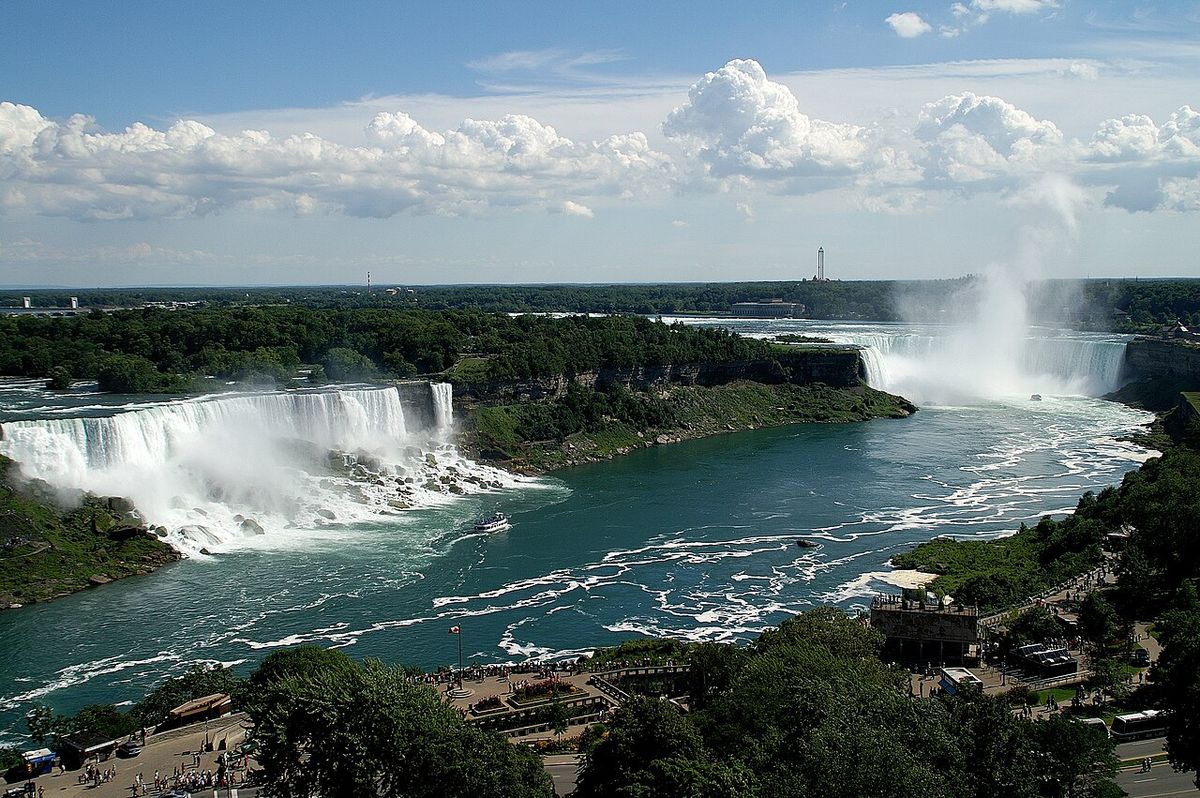
On the night of December 29, 1837, Colonel Allan MacNab ordered a raid to destroy the Caroline. He placed Royal Navy Captain Andrew Drew, a decorated veteran, in command of a small force of Canadian militiamen. The group rowed across the Niagara River in boats, intending to strike the vessel at Navy Island. Finding it absent, they proceeded to the American mainland and discovered the Caroline moored at Schlosser's Landing, under the guns of Fort Schlosser. The attack was swift and overwhelming. Drew's men boarded the steamer, surprised the crew, and after a brief skirmish, forced the occupants ashore. They then cut the ship's moorings, set it ablaze, and towed it into the strong current of the Niagara River. The burning vessel drifted downstream, illuminating the night sky, before it broke apart and sank. Contrary to dramatic contemporary accounts, it did not go over Niagara Falls fully intact.
During the confrontation, shots were fired. The only confirmed fatality was Amos Durfee, an American watchmaker from Buffalo. He was found dead on the dock at Schlosser with a gunshot wound to the head. This incendiary reporting ignited public outrage in the United States, where the raid was widely condemned as a brazen violation of American sovereignty and an act of piracy. The British and Canadian perspective was starkly different. Officials argued the Caroline was a hostile vessel engaged in piratical war against the Crown, and its destruction was a necessary act of self-defence to stop attacks being launched from neutral territory.
Immediate Aftermath and Escalating Tensions
The burning of the Caroline triggered a severe crisis in Anglo-American relations. In American border communities, there were loud calls for war with Britain. President Martin Van Buren, while protesting vehemently to the British government, was determined to avoid conflict and uphold neutrality laws. He dispatched General Winfield Scott to the frontier to restrain American citizens from launching retaliatory raids into Canada. In Canada and Britain, the raid was celebrated as a successful military operation. Colonel MacNab was knighted for his service, and the action was seen as a justified response to American complicity in the rebellion. The tensions were further inflamed in May 1838 when a group of 13 Americans, in retaliation for the Caroline, captured and burned the British merchant steamer Sir Robert Peel while it was in American waters on the St. Lawrence River.
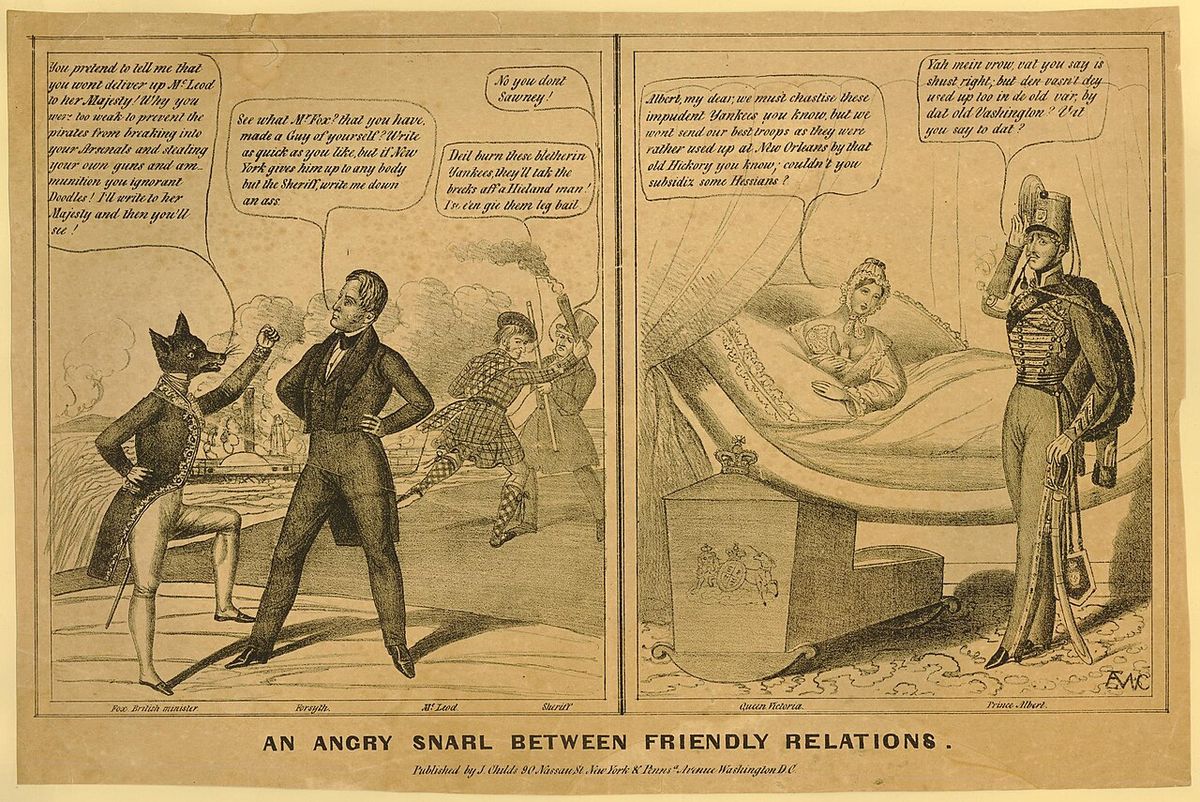
The legal fallout continued for years. In 1840, Canadian sheriff Alexander McLeod was arrested in New York State while talking openly in a tavern about his role in Durfee's death. British authorities demanded his release, arguing that as a Crown official carrying out orders, he could not be held personally liable. McLeod's trial in 1841 became an international incident, but he was acquitted after witnesses confirmed he was not present during the attack. Meanwhile, William Lyon Mackenzie, having abandoned Navy Island after sustained bombardment, continued agitating from New York. He was convicted in 1839 of violating American neutrality laws and served a year in prison. He would not return to Canada until he received a pardon in 1849.
Diplomatic Resolution and the Caroline Test
The protracted dispute over the Caroline was ultimately resolved through high-level diplomacy. U.S. Secretary of State Daniel Webster and British special minister Lord Ashburton (Alexander Baring) engaged in a series of notes in 1841 and 1842 that addressed the incident within the broader context of settling several North American border issues. Their correspondence produced the Webster-Ashburton Treaty, signed on August 9, 1842, which resolved the Caroline affair, the Aroostook War boundary dispute, and other tensions. Britain did not formally apologize for the raid but expressed regret for not providing a timely explanation, and the matter was considered closed.
More significantly, the Webster-Ashburton correspondence articulated a legal principle that would endure in international law. In outlining when a nation could lawfully use force in another state's territory, Webster set forth what became known as the "Caroline test. He stated that such an act of self-defence could only be justified when the necessity was "instant, overwhelming, and leaving no choice of means, and no moment for deliberation. This formulation established a high threshold for the doctrine of anticipatory self-defence.
Key Figures in the Affair
The Caroline affair involved several prominent individuals on both sides of the border and the Atlantic. William Lyon Mackenzie was the fiery Scottish-born reformer and rebel leader whose defeat at Montgomery's Tavern led his followers to Navy Island, setting the stage for the incident. Colonel Sir Allan Napier MacNab was the Canadian militia commander who ordered the destruction of the Caroline. He was later knighted and became a premier of the United Province of Canada. Captain Andrew Drew was the Royal Navy officer who led the raid on the Caroline. His career was later marred by disciplinary issues, and he returned to England in 1842. Amos Durfee was the American watchmaker killed during the attack. His death became a focal point of American outrage. President Martin Van Buren was the U.S. president who protested the raid but worked to calm war fever and enforce neutrality along the border.
- Secretary of State Daniel Webster: The American diplomat whose notes with Lord Ashburton resolved the crisis and formulated the Caroline test.
- Lord Ashburton (Alexander Baring): The British special envoy who negotiated the treaty bearing his name with Daniel Webster.
- Alexander McLeod: The Canadian sheriff whose arrest and trial in the U.S. created a secondary diplomatic crisis before his acquittal.
The actions of individuals like Colonel Allan MacNab, Captain Andrew Drew, and American sympathizers directly shaped the course of the Caroline affair. The diplomatic negotiations between U.S. Secretary of State Daniel Webster and British envoy Lord Ashburton addressed the incident and established a lasting legal principle. Their correspondence helped establish the principle of anticipatory self-defence in international law, known as the Caroline test. This principle set a high threshold for the use of force across borders, requiring that such action be justified only when the necessity of self-defence is instant, overwhelming, and leaving no choice of means. According to academic analysis, the Caroline test remains an accepted part of international law today, demonstrating its ongoing relevance in modern disputes concerning self-defence and state sovereignty.
Legacy and Historical Significance
The Caroline affair had a major and lasting impact that extended far beyond the immediate border crisis of 1837 to 1838. In the short term, it exacerbated the second, bloodier phase of the 1837 to 1838 rebellions, as American-based Hunter's Lodges launched cross-border raids into Canada throughout 1838. The firm enforcement of neutrality laws by President Van Buren eventually helped subdue this threat. The affair demonstrated the fragility of peace along the undefended border and highlighted the need for clear diplomatic mechanisms to resolve disputes. The successful negotiation of the Webster-Ashburton Treaty proved that such mechanisms could work, paving the way for more stable relations between the British Empire (and later Canada) and the United States.
The most important legacy is legal. The Caroline test defined by Daniel Webster became a key precedent in international law. It is routinely cited by states, legal scholars, and international tribunals when evaluating claims of self-defence, particularly in the context of pre-emptive strikes or actions taken in foreign territory. The test's criteria, necessity, immediacy, and proportionality, continue to frame modern debates on the legality of military intervention. As such, a violent border incident rooted in a colonial rebellion continues to inform the global conversation on the rules of war and state sovereignty, showing how a specific historical event can shape legal standards for generations.
Timeline of Major Events
The Caroline affair began in December 1837 during the aftermath of the failed Upper Canada Rebellion. After their defeat, rebel leader William Lyon Mackenzie and his followers fled to Navy Island in the Niagara River, where they declared a short-lived Republic of Canada and received support from American sympathizers. On the night of December 29, a Canadian force crossed into U.S. territory, drove off the crew of the American steamboat Caroline while it was moored in New York, set it on fire, and sent it over Niagara Falls, killing American Amos Durfee. The incident led to a public uproar in the United States and nearly caused a war, but it was eventually addressed through diplomatic negotiations. These negotiations were resolved alongside other disputes in the Webster-Ashburton Treaty of 1842, which formally settled the international crisis.
| Date | Event | Significance |
|---|---|---|
| Early Dec. 1837 | Upper Canada Rebellion begins. Mackenzie defeated at Montgomery's Tavern. | Rebel forces flee to the United States, regrouping on Navy Island. |
| Late Dec. 1837 | Rebels charter the steamboat Caroline to supply Navy Island from New York. | Creates the direct provocation for British colonial authorities. |
| Dec. 29, 1837 | Canadian militia under Captain Drew attack and burn the Caroline at Schlosser's Landing, NY. Amos Durfee is killed. | The central incident that sparks an international crisis. |
| May 1838 | Americans burn the British steamer Sir Robert Peel in retaliation. | Illustrates the cycle of retaliation and heightened border violence. |
| 1840 to 1841 | Arrest, trial, and acquittal of Canadian sheriff Alexander McLeod in New York. | Creates a secondary diplomatic incident over state responsibility. |
| 1841 to 1842 | Diplomatic correspondence between Daniel Webster and Lord Ashburton. | Articulates the Caroline test and paves the way for a treaty. |
| Aug. 9, 1842 | Signing of the Webster-Ashburton Treaty. | Resolves the Caroline affair and other border disputes, restoring peace. |
Questions about Caroline affair
What was the Caroline affair?
The Caroline affair was a diplomatic and military incident between the United States and the United Kingdom that began in December 1837. It originated during the aftermath of the failed Upper Canada Rebellion. Canadian militia crossed into U.S. territory to attack and destroy the American steamboat Caroline, which was supplying rebels on Navy Island. This act, which resulted in an American death, inflamed public opinion and nearly led to war, but was resolved diplomatically and influenced the development of international law.
What is the 'Caroline test' in international law?
The Caroline test is a legal principle established through correspondence between U.S. Secretary of State Daniel Webster and British minister Lord Ashburton. It sets a high threshold for the use of force across borders in anticipatory self-defence. The test states that such action is only justified when the necessity for self-defence is instant, overwhelming, and leaving no choice of means, and no moment for deliberation. This principle remains an accepted part of international law today.
How was the Caroline affair resolved?
The affair was resolved diplomatically as part of the broader Webster-Ashburton Treaty of 1842. While Britain did not formally apologize for the raid, it expressed regret for not providing a timely explanation. The treaty settled the Caroline incident alongside other lingering border disputes, such as the boundary between Maine and New Brunswick. This negotiation successfully de-escalated tensions and helped establish a more stable framework for peaceful relations between the two nations.
What happened to William Lyon Mackenzie after the affair?
After the defeat of his rebellion and the destruction of the Caroline, William Lyon Mackenzie fled to the United States. In New York, he founded a newspaper called Mackenzie's Gazette. He was later found guilty of violating United States neutrality laws and was imprisoned for a year. Mackenzie was not allowed to return to Upper Canada until 1849, when he was granted a pardon by the government.
Did the Caroline affair lead to war between the U.S. and Britain?
No, the Caroline affair did not lead to a full-scale war, although it created a severe war scare. Public outrage in the United States was intense, and border skirmishes like the burning of the British ship Sir Robert Peel increased the risk. However, both governments, particularly U.S. President Martin Van Buren, were committed to peace. Through diplomatic channels and the eventual Webster-Ashburton Treaty, they managed to de-escalate the crisis and address the underlying grievances without armed conflict.
Why did the Canadians burn the Caroline?
British colonial authorities ordered the burning of the Caroline to stop it from supplying rebels on Navy Island. The incident occurred during the aftermath of the failed Upper Canada Rebellion. Rebel leader William Lyon Mackenzie and his followers had fled to Navy Island, declared a short-lived Republic of Canada, and were using the American steamboat Caroline to transport supplies and volunteers from New York. Colonel Allan MacNab and Captain Andrew Drew led a force that crossed into US territory, seized the vessel at Schlosser's Landing, set it on fire, and sent it adrift towards Niagara Falls to eliminate this logistical support for the rebels.
Sources and further reading
- Caroline affair (Wikipedia)
- Caroline Affair (thecanadianencyclopedia.ca)
- The Burning of the Caroline (nfexchange.ca)
Checked by the Your Space Hamilton desk. Last updated 2026-10-27.