Regent Park
Regent Park is a neighbourhood in downtown Toronto, Ontario, originally built as a large public housing project in the late 1940s. Managed by Toronto Community Housing, it is undergoing a major, multi-phase revitalization to transform it into a mixed-income community. The neighbourhood is bounded by Gerrard Street East, Parliament Street, Shuter Street, and River Street. Its history as a site of social housing and its ongoing redevelopment make it a significant case study in urban planning and community building in Canada.
History and Origins
The area now known as Regent Park was part of Toronto's historic east end slum districts in the early 1900s, populated largely by poor and working-class residents of British and Irish descent alongside some European Jewish and Macedonian immigrants. Concerns over substandard housing and social problems led to plans for public housing during the Second World War. The Regent Park North project was approved in 1947, with families beginning to move in by 1949 and construction continuing into the 1950s, with the last families moving in by 1957. The separate Regent Park South development was completed in 1960, featuring high-rise towers designed by the firm Page and Steele and the spartan row house and walk-up apartments designed by architect John Edward Hoare. The original Cabbagetown neighbourhood was largely razed to make way for this housing, with the Cabbagetown name later applying to the gentrified historical area to the north and west.
Despite its intent to improve living conditions, Regent Park soon faced issues of disrepair and persistent crime, with complaints emerging by the mid-1960s. Changes to immigration policy in the 1960s brought an influx of new residents from the Caribbean, China, and Southeast Asia, shifting the area's demographic makeup. By the early 2000s, the aging infrastructure prompted the City of Toronto to develop a comprehensive plan to demolish and rebuild the neighbourhood. This revitalization plan, initiated to end the area's physical and social isolation, aimed to reintroduce street patterns and architectural styles from adjacent communities like Cabbagetown and Corktown and create a mixed-income model. The neighbourhood was initially designed as a transitional community for people experiencing financial difficulties, which contributed to a concentration of socially marginalized residents and a lack of long-term investment in the community.
Redevelopment and Revitalization
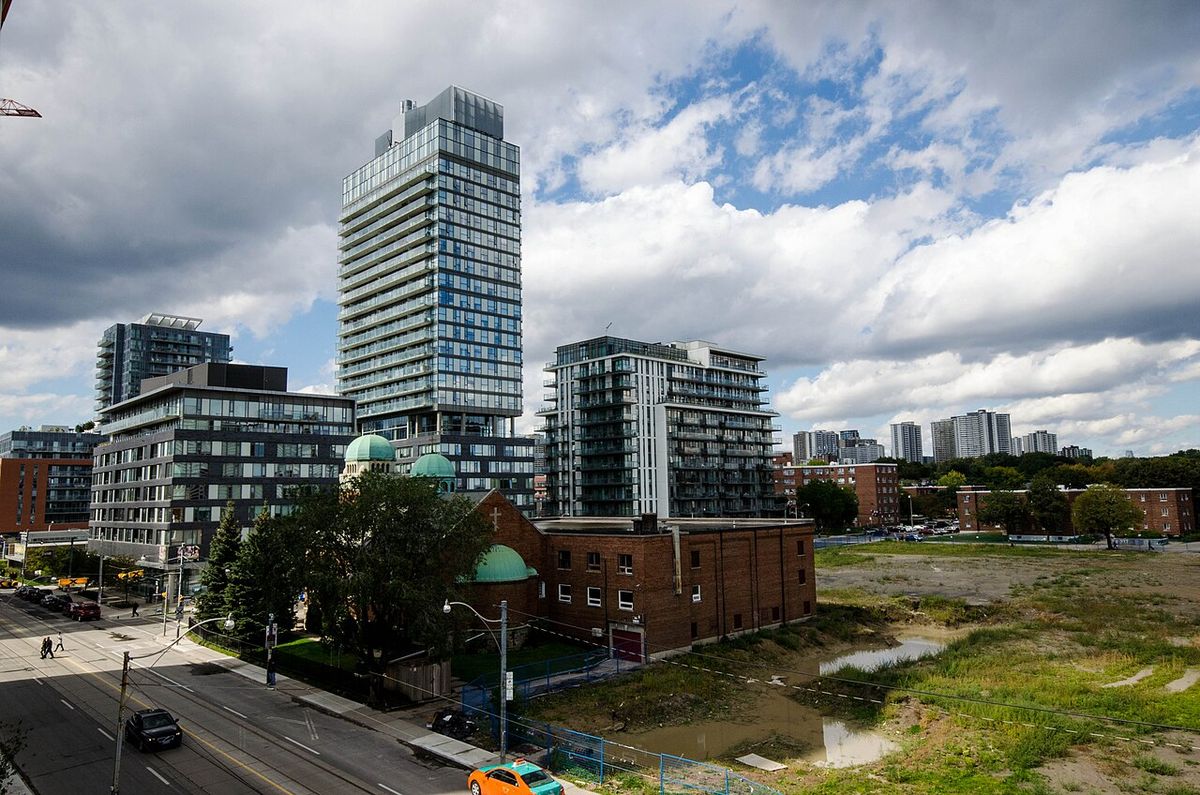
The Regent Park Revitalization Plan is a long-term project to transform the neighbourhood through five distinct phases. The first phase of demolition and rebuilding began in the fall of 2005. An architectural competition was held for the first new apartment building in support of former Mayor David Miller's Clean and Beautiful City campaign, won by Toronto-based architectsAlliance with a design featuring a modern glass point tower on a red-brick podium structure. The plan aims to double the number of housing units by adding market-rate condominiums alongside social and affordable housing, thereby creating a mixed-income community. Phase two of the revitalization was completed in 2018, with the third phase scheduled for completion by 2023 or 2024, and it includes newer or updated community facilities.
Planning for the final phases is now advanced. In 2020, Toronto Community Housing selected Tridel Builders Inc. as the development partner for Phases 4 and 5 following a competitive request for proposals. A rezoning application for these phases, developed with over 1,500 points of community engagement, was approved by Toronto City Council in July 2023, amending the 2014 Master Plan. This approval enables more TCHC-operated rent-geared-to-income or affordable housing units, additional market units, and thousands of square metres of new commercial, retail, community and cultural space, including a new Toronto Public Library branch. The master planning consultant team for Phases 4 and 5 includes Karakusevic Carson Architects, Bousfields Inc., ERA Architects, and Monumental, among others.
The redevelopment also focuses on community economic development, creating job training and employment pathways for residents. TCHC works with its developer partners, Daniels Corporation and Tridel, to connect residents with trades, apprenticeships, and other career-building initiatives. Tridel committed $26.8 million for a community economic development program for Phases 4 and 5. In the summer of 2025, the community voted on three different Community Benefits packages to decide how these funds should be invested, and in December 2025 it was announced that the community selected Package 2, which focuses on educational scholarships. The first building of Phase 4, a 26-storey tower at Gerrard Street East and Dreamers Way featuring 271 affordable homes and new indoor and outdoor community spaces, broke ground in 2025.
Demographics and Socioeconomic Profile
Regent Park has long been one of Toronto's lower-income neighbourhoods, with a higher concentration of visible minorities, refugees, immigrants, and Indigenous people compared to surrounding areas. It has experienced a higher rate of violence, crime, drug abuse and social ills compared to many other Toronto communities. Census data shows a significant shift in the ethnic composition and income structure over recent decades. In 2001, the largest visible minority groups were Black (22%) and South Asian (21.8%), with Europeans at 19.5%, Chinese at 14.1%, Southeast Asian at 10.6%, and Latin American at 3.4%. By the 2016 census, Europeans had become the largest group at 28%, followed by South Asian (25.7%), Black (13.6%), Chinese (12.5%), and Southeast Asian (3.7%).
The neighbourhood's median household income was $42,369 in 2016, notably lower than the Toronto average of $65,829. However, this represented an increase from $22,268 in 2011. The proportion of residents earning less than $20,000 annually has decreased significantly, from 61.1% in 2006 to 40.4% in 2011, and further to 35.2% in 2016. Conversely, the percentage earning over $60,000 tripled in that period, representing 25.6% of the population in 2011. The poverty rate in Regent Park was 44.4% in 2016, a substantial drop from a high of 73% in 1996 but still more than double the citywide average of 20.2%. These changes are attributed to the revitalization, which has increased the total number of residential units and attracted higher-income residents, potentially displacing some low-income households. The neighbourhood also has a higher percentage of households without any income (5.9%) compared to the Toronto average (4.7%).
Community Life and Institutions
A strong network of community organizations supports life in Regent Park. The Christian Resource Centre, operating since 1965, provides healthy meals, free clothing, showers, laundry facilities, housing supports, drop-in services, and life skills and food skills programs. It also operates the only not-for-profit social housing in the area and hosts the annual Taste of Regent Park in the Big Park, a pay-what-you-can community catered meal with local vendors and live entertainment. The Regent Park Focus Youth Media Arts Centre uses media technology as a tool to employ young people, enhance resiliency, bridge information gaps, increase civic engagement, promote health and effect positive change. The Regent Park Community Health Centre runs a Community Development program addressing education and income as the two principal social determinants of health.
Cultural associations like the Regent Park Tamil Cultural Association aim to promote intra and inter cultural development and exchange and to foster a healthier community. The Regent Park Neighbourhood Association advocates for tenant rights and community development, running initiatives like the Empowered Tenants project, powered by the Department of Justice Canada, to increase legal knowledge and access to justice for residents. The association strongly supports a citywide expansion of Social Development Plans based on the Regent Park experience. Major community events include the Regent Park Summer Jam, a festival held in June at 620 Dundas Street East featuring live entertainment, and the weekly Taste of Regent Park market running on Wednesdays from July to September, with events scheduled into September 2026.
- Christian Resource Centre (CRC): Offers essential services and housing support since 1965, hosts Taste of Regent Park.
- Regent Park Focus Youth Media Arts Centre: Uses media for youth employment, civic engagement, and community change.
- Regent Park Community Health Centre: Promotes health through Community Development program focused on education and income.
- Regent Park Neighbourhood Association (RPNA): Runs Empowered Tenants project, advocates for Social Development Plans.
- Taste of Regent Park: Annual and weekly summer community event with food, vendors, and entertainment.
- Regent Park Summer Jam: Annual festival in June celebrating community spirit with partners like TCHC, police, and fire services.
- Regent Park Tamil Cultural Association: Fosters cultural development and exchange within the community.
New community spaces continue to be developed in Regent Park. An application process is open until September 20, 2026, for organizations to offer programs in a forthcoming community space. The Salvation Army has been highly active in promoting a positive sense of community and community representation. Various other community groups are also active in pursuing a higher quality of life for residents.
Government and Tenant Participation
For electoral purposes, Regent Park is located within the federal riding of Toronto Centre and the City of Toronto's Ward 28. In 2002, Toronto City Councillors recognized the need for increased tenant participation in housing management, leading the Toronto Community Housing Corporation to initiate the Tenant Participation System. The first TPS election was held in 2003, with tenant representatives volunteering to represent a constant number of adjacent units. This formal mechanism to give tenants a voice in day-to-day management had positive impacts, such as directly resulting in improved lighting in Regent Park based on representative requests. However, the system designed for all of Toronto's housing communities required adaptation to better meet the specific local conditions and needs of Regent Park residents.
The relationship between some residents and police was reported as confrontational as late as 2001. Toronto Police Service 51 Division is responsible for the community, having moved from a location at 30 Regent Street to its current station at 51 Parliament Street. Toronto Fire Services station 325 is located at 475 Dundas Street East. Paramedic services are provided by Toronto Emergency Medical Services Station 40, an Advanced and Basic Life Support station at 58 Richmond Street East. The Regent Park Neighbourhood Association's Empowered Tenants project actively engages tenants to increase access to legal knowledge and justice, with outcomes from town halls and workshops being shared in a report to the federal government.
Education and Public Services
Regent Park is served by several educational institutions and public services. The Toronto Public Library's Parliament branch, at the corner of Gerrard and Parliament streets, houses a special local history archive on Regent Park. The nearby Riverdale branch is located at Gerrard Street and Broadview Avenue. The Children's Book Bank, a small nonprofit at 350 Berkeley Street, provides free books and literacy support. For early learning, the Regent Park Child Care Centre operates out of St Bartholomew's Church, caring for infants and toddlers.
For public education, four school boards serve Toronto, but only the English-language boards operate schools in Regent Park. The Toronto District School Board operates Nelson Mandela Park Public School on Shuter Street, which first opened in 1853 as Park Public School. The current building was constructed between 1914 and 1917, and the school was renamed in 2001 after a merger and in honour of Nelson Mandela. It serves Junior Kindergarten to Grade 8. Lord Dufferin Public School is located on Parliament Street. The former Regent Park/Duke of York Junior Public School on Regent Street, which opened in 1958 and merged with another school in the late 1970s, was demolished in 2015, with a new Toronto Catholic District School Board school planned for the site. The French-language school boards, Conseil scolaire Viamonde and Conseil scolaire catholique MonAvenir, do not operate schools in the neighbourhood.
Transportation and Access
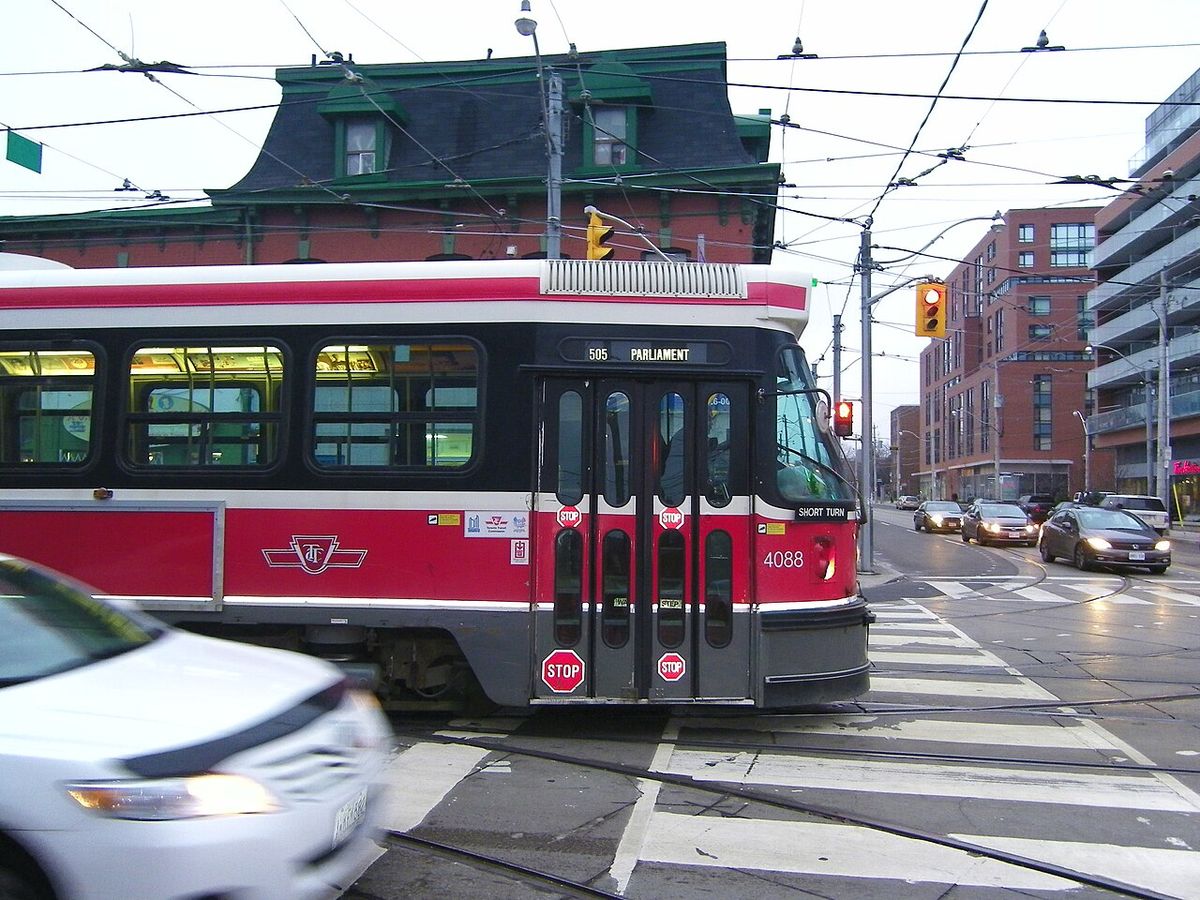
Regent Park is well-served by public transit, providing strong connections to downtown Toronto and beyond. Several Toronto Transit Commission streetcar routes run along its borders, including the 501 Queen, 505 Dundas, and 506 Carlton lines, offering quick access to the Yonge subway line. The 65 Parliament bus route provides a north-south connection and access to the Bloor-Danforth subway line. The Don Valley Parkway, a major highway, runs just to the east of the neighbourhood, facilitating road travel out of the core. This transit network supports the revitalization goal of better integrating Regent Park with the wider city and is part of what makes it a bike-friendly neighbourhood with easy access to amenities, shops, and highways.
In Culture and Academic Study
Regent Park has been a frequent subject of academic research and cultural representation, viewed as a pilot Canadian social re-engineering effort. Scholar and activist Dr. Sean Purdy has written extensively on its history, including his thesis "'Ripped Off' By the System: Housing Policy, Poverty and Territorial Stigmatization in Regent Park Housing Project, 1951 to 1991" and articles on tenant organizing and media framing of the neighbourhood. The revitalization plan is studied to establish best practices and benchmarks, though scholars caution against repeating past shortcomings. Academic literature on the neighbourhood includes Martine August's 2014 work "Challenging the Rhetoric of Stigmatization: The Benefits of Concentrated Poverty in Toronto's Regent Park" and Kevin Gosine and Faisal Islam's 2014 article on community and urban schooling. Additional scholarly work includes Luisa Veronis's exploration of the borders between Regent Park and Cabbagetown.
The neighbourhood has been depicted in several documentaries. These include the National Film Board's Farewell Oak Street by Grant McLean, Invisible City by Hubert Davis, Return to Regent Park by Bay Weyman, and A Way Out by Christene Browne. Regent Park has also attracted the attention of various social science scholars and media. Notable residents include rapper Smoke Dawg and poet and musician Mustafa Ahmed, also known as Mustafa the Poet.
- Key Academic Works: Sean Purdy's historical analyses (2004, 2005). Martine August on poverty (2014). Kevin Gosine & Faisal Islam on community (2014). Luisa Veronis on neighbourhood borders.
- Documentaries: Farewell Oak Street (Grant McLean), Invisible City (Hubert Davis), Return to Regent Park (Bay Weyman), A Way Out (Christene Browne).
- In Popular Culture: Setting for the play Kim's Convenience.
- Notable Residents: Mustafa the Poet, Ahmed Hussen MP, Smoke Dawg, Glen Metropolit, Point Blank, Puffy L'z.
Questions about Regent Park
What is the Regent Park Revitalization Plan?
The Regent Park Revitalization Plan is a long-term project to demolish and rebuild Toronto's oldest public housing neighbourhood. Launched in 2005, it unfolds over five phases and aims to transform the area into a mixed-income community. The plan doubles the number of housing units by adding market-rate condominiums alongside rent-geared-to-income and affordable rental units. It also restores street grids, adds new community facilities, retail spaces, and parks, and is designed to end the neighbourhood's physical and social isolation from the rest of the city. The federal and local governments view the plan as a means to establish best practices for social housing renewal.
Who manages Regent Park?
Regent Park is owned and managed by Toronto Community Housing Corporation, the public housing authority for the City of Toronto. It is designated as Community Housing Unit 27 within TCHC's portfolio, and its manager is Ade Davies. For the redevelopment, TCHC has partnered with private developers. Daniels Corporation was involved in earlier phases, and Tridel Builders Inc. was selected in 2020 as the development partner for the final Phases 4 and 5 of the revitalization. TCHC works with these partners on community economic development to create jobs and training for residents.
What is the demographic makeup of Regent Park?
Regent Park is a highly diverse neighbourhood. According to the 2016 census, the largest ethnic group was European at 28%, followed by South Asian at 25.7%, Black at 13.6%, Chinese at 12.5%, and Southeast Asian at 3.7%. This represents a shift from 2001, when Black and South Asian residents were the largest visible minority groups. The neighbourhood has a higher concentration of visible minorities, immigrants, and Indigenous people compared to many other Toronto communities, though the ongoing revitalization is gradually changing its socioeconomic and demographic profile. The average individual income in the area was $38,714 in 2010.
What community events happen in Regent Park?
Regent Park hosts several annual community events that foster local spirit. The Taste of Regent Park is a major event, featuring a pay-what-you-can community catered meal, local vendors, and live entertainment. It also runs as a weekly market on Wednesdays from July to September. The Regent Park Summer Jam is a festival held in June at 620 Dundas Street East, featuring live performances and activities for families. These events are organized by community groups like the Christian Resource Centre and supported by local partners, TCHC, Toronto Police, Fire Services, and the City of Toronto. Applications for the 2026 Taste of Regent Park market run until September 20, 2026.
What schools are located in Regent Park?
The primary public school in Regent Park is Nelson Mandela Park Public School on Shuter Street, which serves students from Junior Kindergarten to Grade 8. Lord Dufferin Public School on Parliament Street also serves the area. The former Regent Park/Duke of York Junior Public School on Regent Street was demolished in 2015, with plans for a new Toronto Catholic District School Board school on the site. The Toronto Public Library Parliament branch at Gerrard and Parliament streets provides library services and houses a local history archive on the neighbourhood. The Children's Book Bank on Berkeley Street offers free books and literacy support.
How do you get to and around Regent Park?
Regent Park is well-connected by Toronto Transit Commission services. It is served by several streetcar routes including the 501 Queen, 505 Dundas, and 506 Carlton lines, which provide east-west travel and connections to the Yonge subway line. The 65 Parliament bus runs north-south, offering access to the Bloor-Danforth subway line. The Don Valley Parkway is located just east of the neighbourhood for vehicular travel. This transit access is a key feature of the revitalized, integrated community and supports its designation as a bike-friendly neighbourhood with great access to amenities.
Sources and further reading
- Regent Park (Wikipedia)
- Regent Park development information (torontohousing.ca)
- Regent Park Neighbourhood Association (regentparkna.ca)
- Regent Park Summer Jam: June 13 - Councillor Chris Moise (chrismoise.ca)
Checked by the Your Space Hamilton desk. Last updated 2026-10-25.