Port Credit
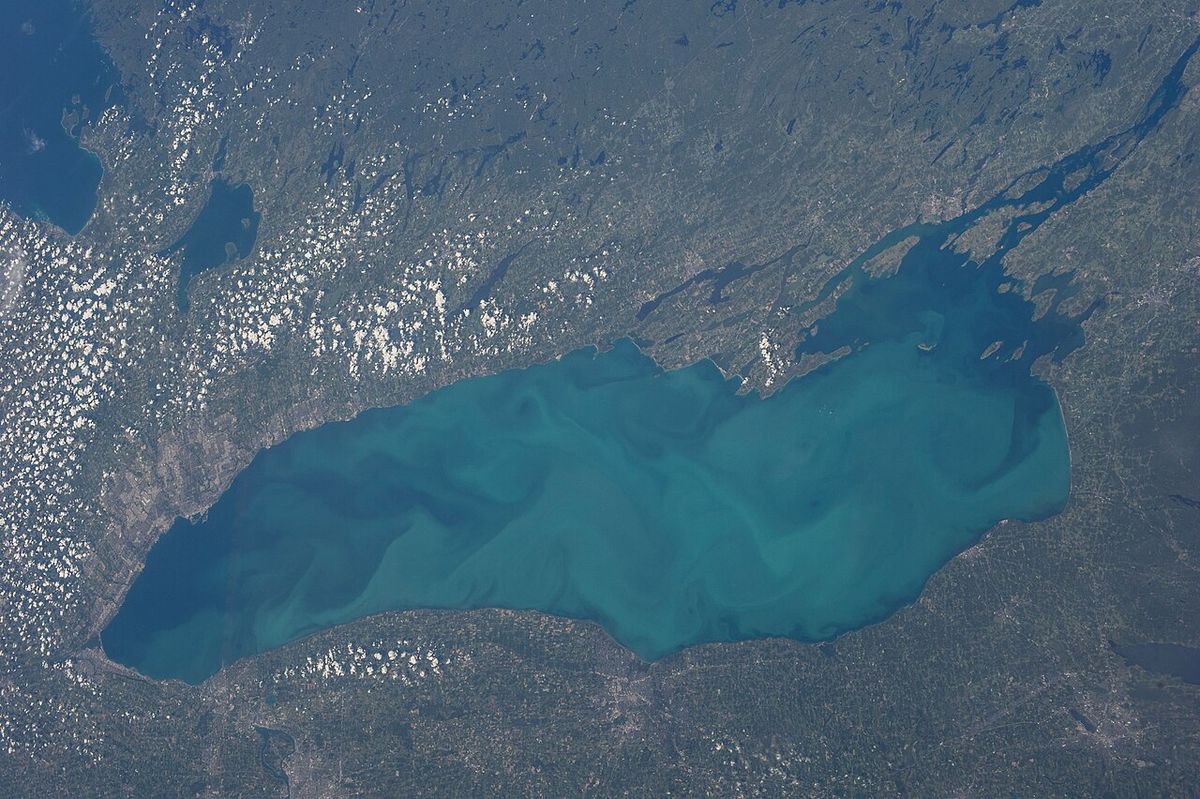
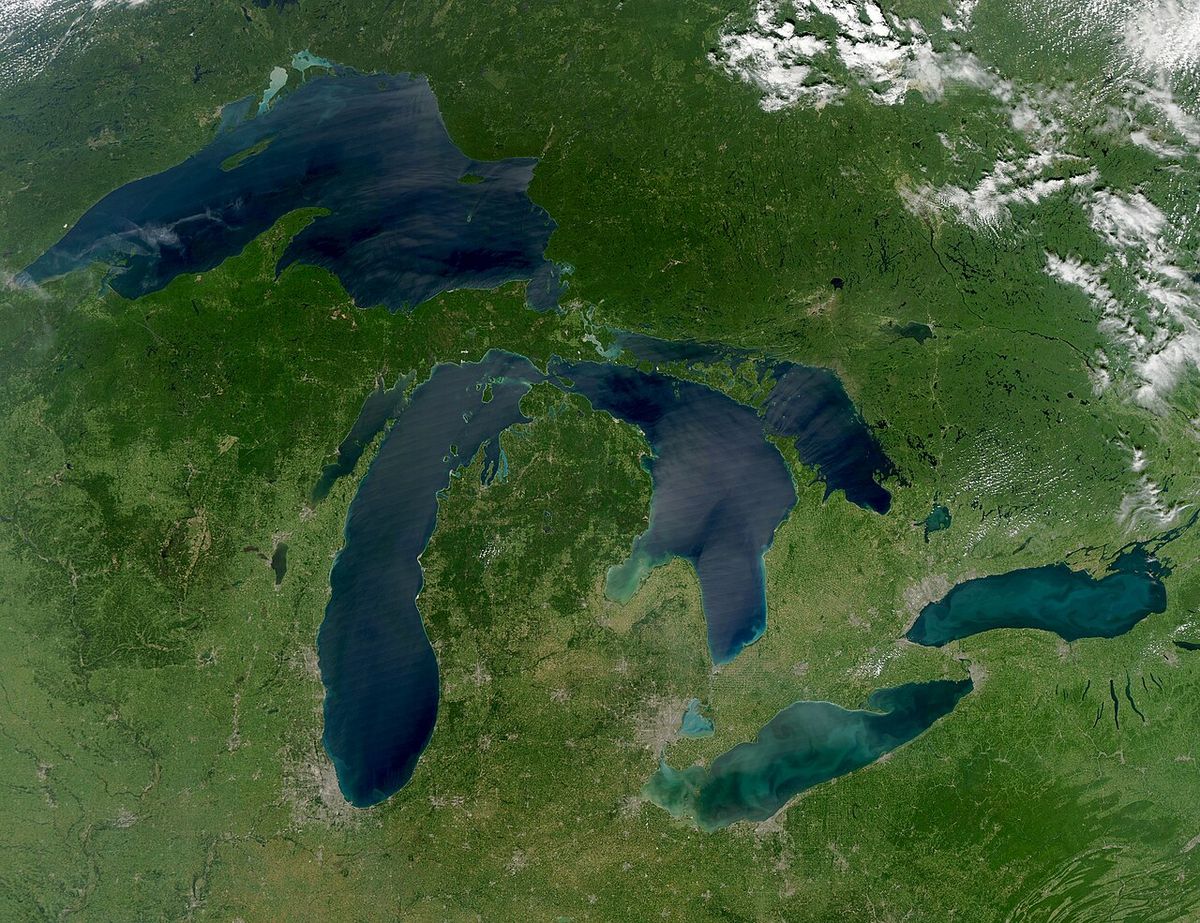
Port Credit is a historic neighbourhood and former town located in the south-central part of the City of Mississauga, Ontario, on the north shore of Lake Ontario at the mouth of the Credit River. Its origins as a Mississauga Ojibwe settlement and a fur trade post dating to 1720 make it one of the oldest continuously inhabited sites in the Greater Toronto Area. Incorporated as a police village in 1909 and later as a town in 1961, Port Credit was amalgamated into the City of Mississauga in 1974. Today, it is a designated heritage conservation district known as Mississauga's 'Village on the Lake', featuring a busy harbour, a dense network of condominiums, and a popular destination for festivals, dining, and recreational boating.
Early history and Indigenous settlement
The area now known as Port Credit is the traditional territory of the Mississauga Ojibwe. The Credit River, known to them as Missinhe or 'trusting creek', served as a vital meeting place for trade. A formal trading post was established at the river's mouth in 1720, where European goods were exchanged for furs, often on credit, giving the location its name. The earliest known map reference to Port Credit dates to 1757, drawn by La Broquerie. The first permanent English structure was the Government Inn, built on the east bank in 1798 on orders from Lieutenant Governor John Graves Simcoe to serve as a way station for travellers by land and lake. The inn was leased to a succession of residents until its destruction by fire in 1861. The Mississauga ceded much of the surrounding land in 1805 but retained a reserve at the river mouth, which they believed would be protected by the Crown from settler encroachment after the War of 1812.
Following the War of 1812, the local Mississauga population dwindled. Outside the reserve, a formal village plan was laid out in 1834, and Port Credit developed into a joint Indigenous and settler harbour community. Village lots were sold by the Mississauga, and the Port Credit Harbour Company, which developed the harbour, was jointly owned. The harbour became a working fishing port and a regional centre for shipping grain and other agricultural products, with a lighthouse in use from 1882 to 1918 that remained standing until destroyed by fire in 1936. On the reserve, a sawmill operated and timber was shipped by schooner, and the Credit Mission was established by Indigenous leader Peter Jones and the Methodist Church, with missionary Egerton Ryerson involved, to provide education and Christian studies. By the late 1840s, with local forests cleared, conditions declined, and after negotiations with the British who initially sought to move them near Owen Sound, the Mississauga accepted an offer to relocate to the Six Nations Reserve, departing Port Credit in 1847.
Industrial development and municipal growth
By 1846, Port Credit had a population of about 150 and was a thriving port with two steamers stopping between Hamilton and Toronto, two stores, two taverns, a Methodist chapel, and a post office. A large area of 4600 acres beside the village was a First Nations Reserve with its own chapel and school. The arrival of railways later supplanted its role as a primary shipping centre. In the late 19th century, the community became known for stonehooking, the practice of harvesting limestone slabs from the lakebed for construction. Significant local industries provided employment for decades, including the St. Lawrence Starch Works from 1889 to 1989 and the Port Credit Brick Yard from 1891 to 1927. An oil refinery was built on the old brickyard site in 1932 by L.B. Lloyd, operated successively by several companies until its purchase by a division of Texaco, which closed the facility in 1985 when it opened a larger refinery in Nanticoke. The 320-foot smokestack at the St. Lawrence Starch plant was once the tallest structure in Port Credit before its demolition marked the area's shift from an industrial hub to a residential area.
Port Credit's connectivity increased with the extension of an interurban radial streetcar line from Toronto along Lakeshore Road in 1892, operated by the Toronto and Mimico Electric Railway and Light Company, making it a summer destination and a streetcar suburb. The line was taken over by the Toronto Transportation Commission in 1928 but closed in 1935 when Lakeshore Road was widened, requiring track removal. Bus service was provided by the TTC until 1976, when Mississauga Transit, now known as MiWay, took over. Port Credit was incorporated as a police village in 1909, gained town status in 1961, and remained independent even after the surrounding Town of Mississauga was created from Toronto Township in 1968. It was finally amalgamated into the newly created City of Mississauga in 1974, ending its run as an independent municipality. The Don Rowing Club moved to the banks of the Credit River in 1960, and the Vogue Theatre opened on Lakeshore Road in 1937, operating until 1979 before being converted to a restaurant and sports bar.
Geography and landmarks
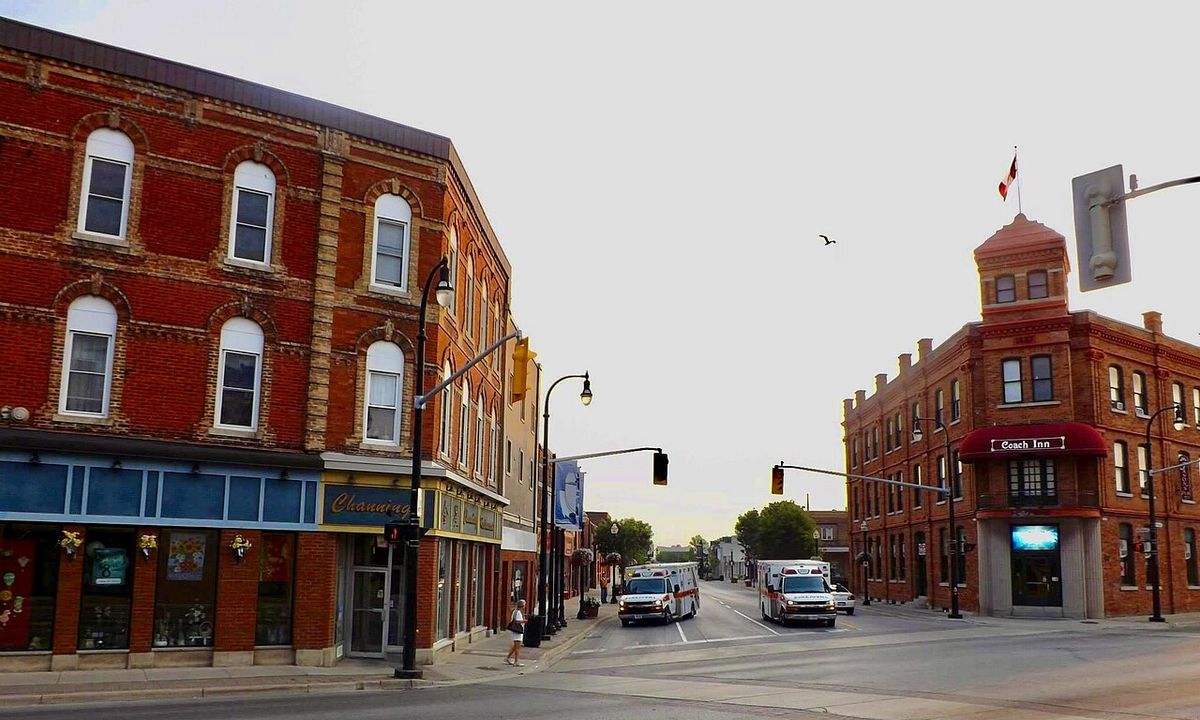
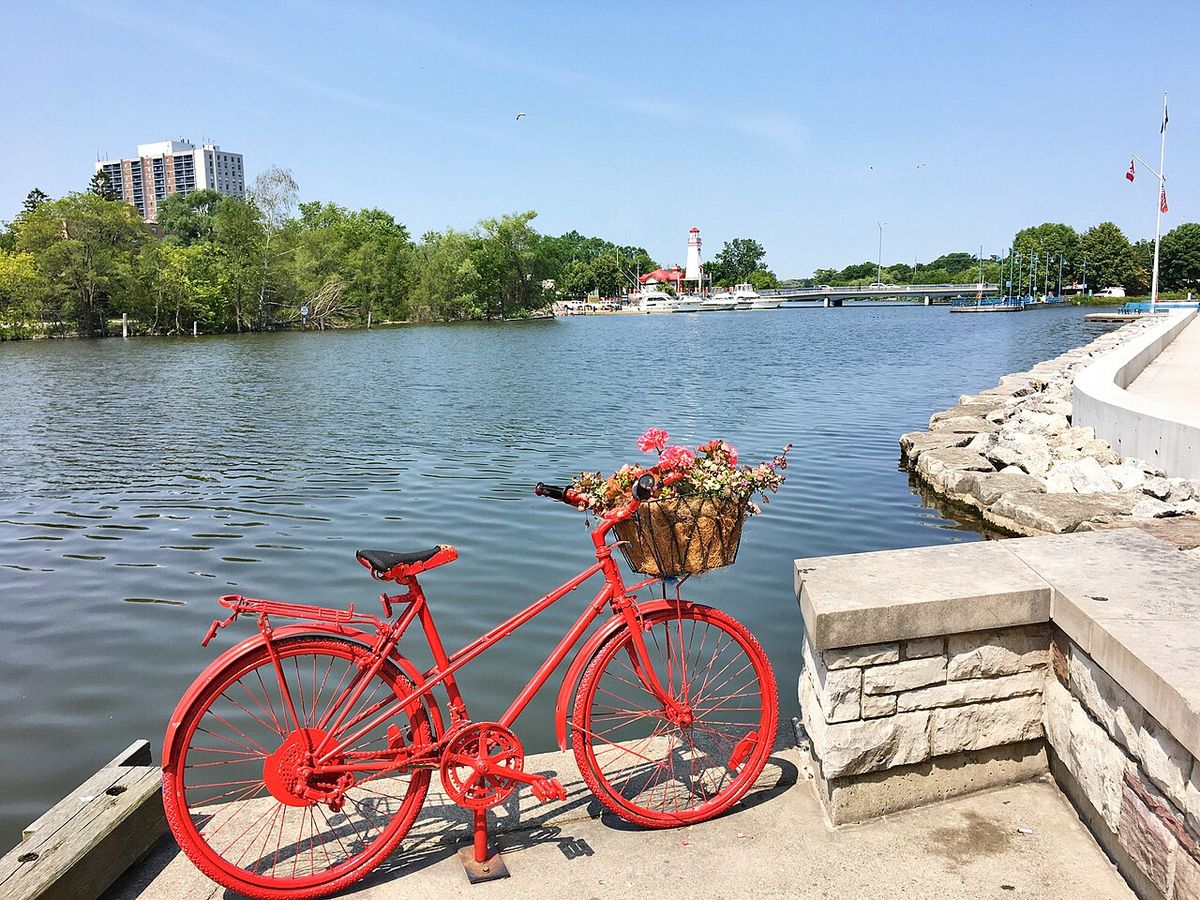
Port Credit is bounded approximately by the Canadian National Railway to the north, Seneca Avenue to the east, and Shawnmarr Road to the west. Its heart is the intersection of Hurontario Street and Lakeshore Road, situated about 0.6 kilometres east of the Credit River. The neighbourhood's defining geographic features are the river mouth and the Lake Ontario shoreline. The original village core is now a designated Heritage Conservation District. The harbour has been redeveloped with the Port Credit Harbour Marina on the east bank and a charter fishing centre and public boat launch facility on the west bank under the lighthouse site. A prominent local landmark is the Ridgetown, a lake bulk freighter launched on June 24, 1905, as the William E. Corey that was loaded with stone and sunk as a breakwater on June 21, 1974, with its cabins and stack still in place. A replica lighthouse built by the Lions Club of Credit Valley atop a sewage pumping station serves as a local symbol and houses the Business Improvement Area and Tourist Bureau, and is used as a logo for many local organizations.
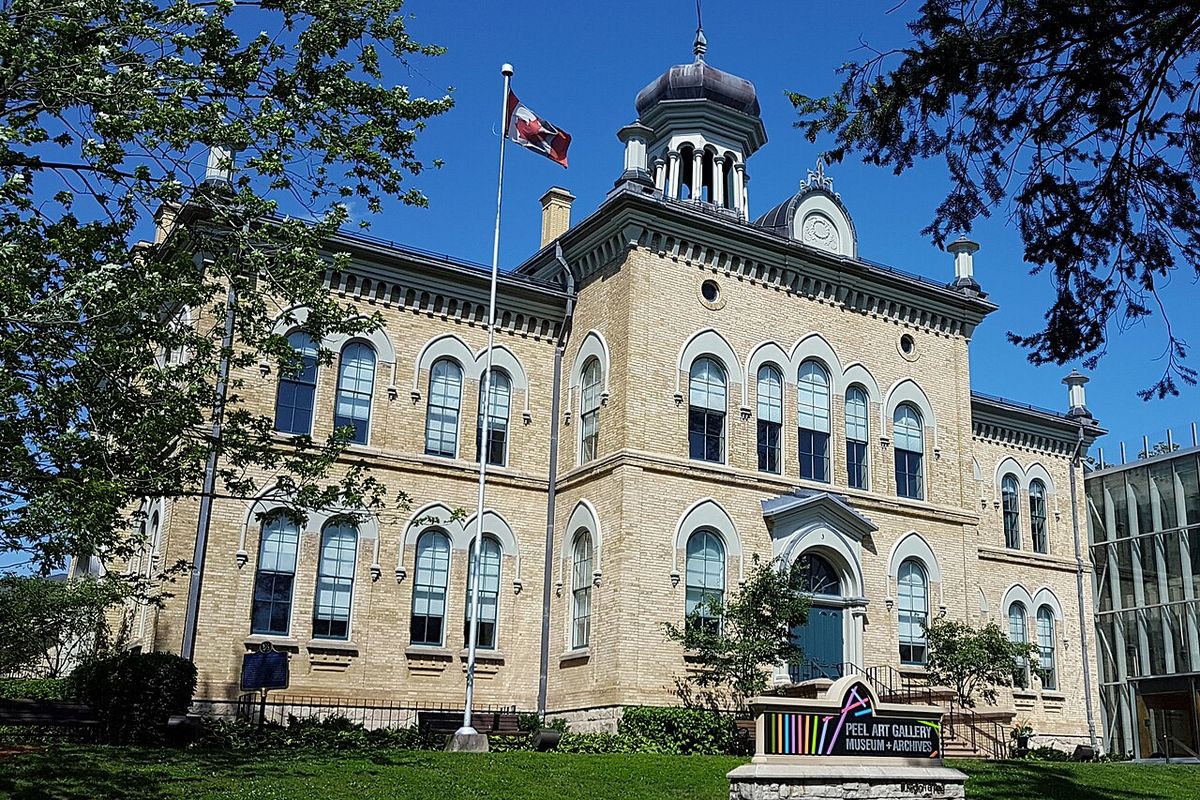
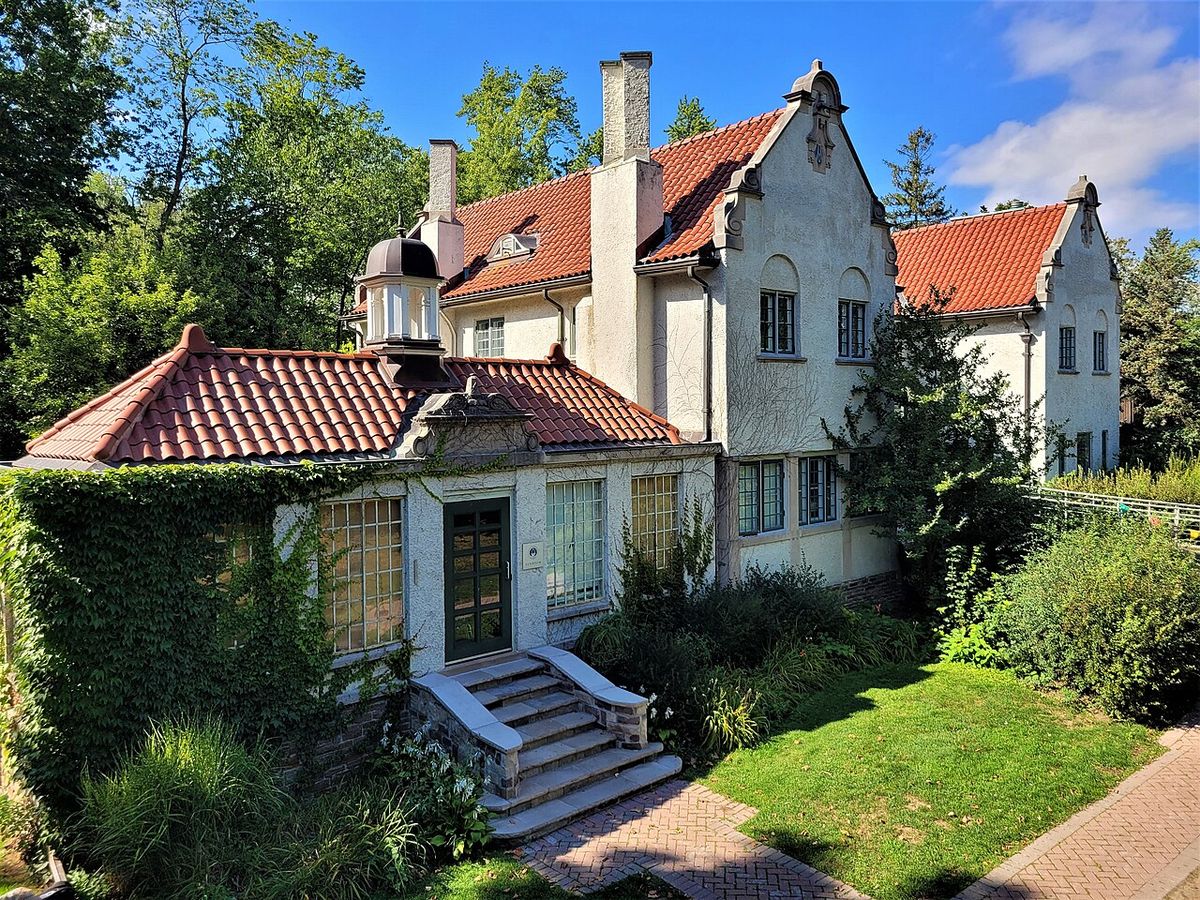
Notable community facilities include the Port Credit Arena, constructed between September 10, 1958, and its official opening on October 4, 1959. Built for $360,000, it is the second covered arena in Mississauga, the first public arena built, and the oldest surviving arena in the city, home to the Port Credit Storm hockey teams. The Port Credit Library, a Mid-Century Modern building at 20 Lakeshore Road East beside the Credit River, underwent a $3.1 million renovation as part of the federal Infrastructure Stimulus Fund starting in 2009, completed in 2013. It was closed due to structural issues on June 28, 2021, and reopened in early 2024. The Adamson Estate, near the eastern boundary, was purchased from the family of Agar Adamson by the Credit Valley Conservation Authority in 1975. The area also features over 225 kilometres of scenic walkways and trails that accentuate the district's natural beauty.
Festivals and tourism
Port Credit markets itself as Mississauga's 'Village on the Lake' and hosts numerous annual festivals that draw visitors from across the Greater Toronto Area and border cities in the United States. These events have become a central part of the community's identity and local economy. The area around the harbour includes 40 hectares of public land with playgrounds, splash pads, boardwalks, and barbecue facilities. The Port Credit Harbour Marina is the largest public marina in the region and serves as the venue for the Port Credit In-Water Boat Show, Ontario's largest such show, held annually in August. Another marina, the Lakefront Promenade Marina located in Lakefront Promenade Park, was built in 1991 and offers docking, boating facilities, and an outdoor eatery for convenience.
- The Mississauga Waterfront Festival, held at the end of June, began in 1998 with 7,000 visitors and grew to an average of over 50,000 annually by 2013. It has been recognized as a top 100 festival in Ontario for ten consecutive years and features over 600 performers annually. Past musical performers have included Sam Roberts, Jann Arden, Tom Cochrane, and Chantal Kreviazuk, while children's entertainment has featured Max & Ruby, The Backyardigans, Barney the Dinosaur, Dora the Explorer, Babar the Elephant, and Shrek. The festival includes educational programs on endangered species, health, wellness, and conservation, and in 2012 added the Monster Rock Orchestra Show with waterfall backdrops and a synchronized laser light show.
- The Southside Shuffle is a three-day Blues and Jazz festival founded in 1999 by Chuck Jackson, held in September. It includes the Mississauga Music Walk of Fame.
- Port Credit's Busker Fest is held annually in August.
- A seasonal Farmers Market operates on Saturdays from June 15 to October 24.
- Scenic tours are offered that detail the role of the Mississauga First Nation during the War of 1812, told by a veteran of the 2nd Regiment of the York Militia.
Other local attractions include the Vogue Theatre. This cinema opened on Lakeshore Road in 1937 and closed in 1979. The Art Deco theatre was later repurposed into a restaurant and sports bar, and its classic theatre marquee was removed. The harbour provides docking for ships up to 45 feet in length, catering to the recreational boating community. The Port Credit Harbour Marina is the largest public marina in the region and is located in the center of Port Credit.
Transportation and infrastructure
Transportation has shaped Port Credit's development from its origins as a shipping centre. Harbour improvements funded by the government in 1834 established its early role, supplemented by a branch of the Great Western Railway added in 1855. The key roadways are Lakeshore Road, the former Highway 2 running east-west along the lake, and Hurontario Street, the former Highway 10 running northwest toward Mississauga City Centre and Brampton. Two bridges including an arch bridge over the Credit River have been replaced by the current two-span box girder bridges. Access to the Queen Elizabeth Way was improved after the old Middle Road was upgraded to a divided highway from Highway 27 to Highway 10 in 1931. The railway through Port Credit has expanded to three tracks and is primarily used for GO Train commuter service to Toronto.
The Port Credit GO Station, located just north of the Lakeshore and Hurontario intersection, is a major transportation hub for southern Mississauga. The majority of residences are within walking distance of this station, which provides connections to GO Transit and the city's MiWay public bus system. MiWay took over bus service along Lakeshore Road from the Toronto Transit Commission in 1976. The neighbourhood's walkability and transit access have supported its residential density, though recent large-scale condo developments have raised concerns about increased local traffic. The area's history as a streetcar suburb was cemented after the paving of Lakeshore Road, later Highway 2, in 1915 increased urbanization along the corridor in Port Credit and the adjacent community of Lakeview.
Recent development and demographics
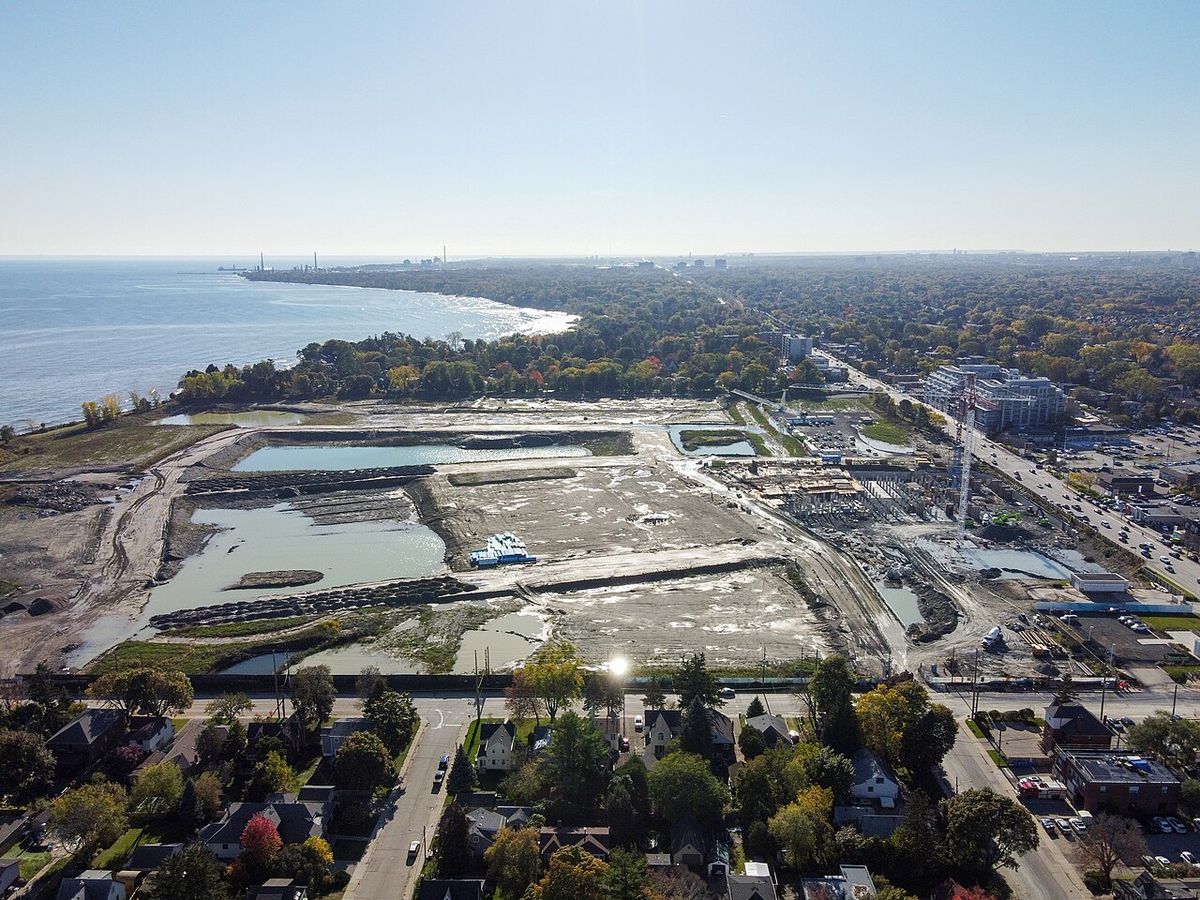
In recent decades, Port Credit has undergone significant residential intensification, shifting from its historic industrial and village character to a denser urban neighbourhood. The population has increased substantially due to condominium developments, including the remediation and redevelopment of the former Imperial Oil refinery site. This 72-acre project is planned to add up to 3,900 residential units over ground-level retail, representing one of the largest transformations in the area and raising concerns about impacts on local traffic. The 2001 census recorded a population of 10,260, but this figure has grown considerably since then with new condo developments attracting residents. The neighbourhood continues to attract summer visitors from other parts of Mississauga and the region, drawn by its lakeside ambiance, festivals, and dining scene. The original core village's status as a heritage conservation district helps preserve its historical character amidst this growth, balancing new residential density with the area's unique heritage.
Notable residents
Port Credit has been the birthplace or home to a variety of notable individuals. These include architect and educator Anthony Adamson, a descendant of the Adamson family. Musicians from Port Credit include Jill Barber and Matthew Barber. Notable athletes include professional ice hockey players Rick Dudley, Greg Gilbert, Bob Kelly, Larry Patey, and Matt Stajan. The community was also home to Igor Gouzenko, a Russian cipher clerk who defected to Canada.
- Anthony Adamson, architect and educator, was a descendant of the local Adamson family.
- Musicians Jill Barber and Matthew Barber are from Port Credit.
- Sports figures include former NASCAR Grand National driver Don Biederman, hockey players and executives Rick Dudley, Greg Gilbert, Bob Kelly, Larry Patey, and Matt Stajan, professional boxer Dave Hilton Jr., and Olympic bobsledder Michael Young.
- Rudy Cuzzetto is a politician and Member of Provincial Parliament.
- Winnie Leuszler was the first Canadian to swim the English Channel.
- In the arts, residents have included filmmaker and creator of Teenagers M. H. Murray, actor Christian Potenza, actor Kyle Schmid, and actor Robbie G.K.
Questions about Port Credit
When was Port Credit founded?
Port Credit's origins date to 1720 with the establishment of a fur trading post at the mouth of the Credit River by European traders and the Mississauga Ojibwe. A permanent village plan was laid out in 1834, and it was incorporated as a police village in 1909. It later gained town status in 1961 before being amalgamated into the City of Mississauga in 1974. The earliest map reference is from 1757, and the first permanent English structure, the Government Inn, was built in 1798 and operated until it burned down in 1861.
What is there to do in Port Credit?
Port Credit is a major tourism and festival destination known as Mississauga's 'Village on the Lake'. Key attractions include the Port Credit Harbour Marina for boating, over 225 kilometres of trails, and numerous annual festivals like the Mississauga Waterfront Festival in June, the Southside Shuffle blues festival in September, and the Port Credit In-Water Boat Show in August. The area also features a farmers' market from June to October, scenic War of 1812 tours told by a militia veteran, waterfront parks with splash pads and boardwalks, and a variety of restaurants and shops. The Lakefront Promenade Marina, built in 1991, also offers docking and an outdoor eatery, and the historic Vogue Theatre building now houses a restaurant and sports bar.
How do I get to Port Credit using public transit?
Port Credit is well-served by public transit. The Port Credit GO Station, located just north of Lakeshore Road and Hurontario Street, is a major hub offering GO Train commuter service to Toronto and connecting bus services. The city's MiWay bus system also provides extensive local service through the area, having taken over the route from the Toronto Transit Commission in 1976. The neighbourhood is highly walkable, with most residences within walking distance of the GO station. Historically, an interurban radial streetcar line connected Port Credit to Toronto from 1892 until 1935 when the tracks were removed for road widening.
What is the Ridgetown in Port Credit?
The Ridgetown is a historic lake bulk freighter originally launched on June 24, 1905, as the William E. Corey. On June 21, 1974, it was loaded with stone and sunk as a permanent breakwater for the Port Credit Harbour, with its cabins and stack still in place at the time. It remains a distinctive waterfront landmark and structure protecting the marina. The ship had a long career on the Great Lakes before its final role in Port Credit, where it continues to serve a functional purpose for harbour protection.
Is Port Credit a good place to live?
Port Credit is considered a desirable residential area due to its lakeside location, heritage character, walkability, and excellent transit connections via the Port Credit GO Station. The neighbourhood has seen significant condominium development, increasing its population density, including a major 72-acre redevelopment of the former Imperial Oil site adding up to 3,900 units. It offers a busy community with festivals, parks, and waterfront amenities, though large new developments have raised some concerns about traffic impacts. The heritage conservation district status helps preserve its historic village core, and community facilities like the renovated library and the historic arena add to its livability.
What happened to the industrial sites in Port Credit?
Major industries like the St. Lawrence Starch Works, which operated from 1889 to 1989, and an oil refinery first built in 1932 once dominated Port Credit. These facilities have all closed, with the starch plant's 320-foot smokestack demolished, symbolizing the area's transition from an industrial hub to a residential and commercial district. The refinery was operated by a Texaco division until its closing in 1985 when operations moved to Nanticoke. The former Imperial Oil refinery site has been remediated and is being redeveloped into a large residential community with up to 3,900 units, representing the most significant ongoing transformation. Other historic industries included the Port Credit Brick Yard and a stonehooking trade that harvested limestone from the lakebed.
Sources and further reading
- Port Credit (Wikipedia)
- Port Credit Neighbourhood Guide, Mississauga (lifewest.ca)
- Port Credit Neighbourhood Guide (hoodq.com)
- Port Credit BIA (portcredit.com)
- Port Credit, Mississauga, Neighburhood & Real EstateGuide (getwhatyouwant.ca)
Checked by the Your Space Hamilton desk. Last updated 2026-10-21.