Hochelaga-Maisonneuve
Hochelaga-Maisonneuve is a historic neighbourhood in Montreal's east end, situated south of the Olympic Stadium and east of downtown. Initially a 19th-century Anglophone settlement, it transformed into a wealthy Francophone industrial hub renowned for its Beaux-Arts architecture before facing a severe decline due to deindustrialization in the latter half of the 20th century. Today, the working-class district is in a complex phase of revitalization and gentrification, marked by new commercial developments alongside persistent social challenges. The area remains a significant cultural and historical centre in Quebec, home to major civic institutions like the Montreal Botanical Garden and the Olympic Park.
Historical Development
The area's name originates from the Iroquois village of Hochelaga, visited by Jacques Cartier in 1534, though the precise location of that historic settlement remains debated by scholars. Present-day Hochelaga was founded as a suburban village in 1863, with industry arriving quickly through cotton mills and railway shops. In 1883, Hochelaga was annexed to Montreal, prompting eastern landowners to separate and found the village of Maisonneuve that same year. Between 1896 and 1915, Maisonneuve grew into one of Canada's largest industrial suburbs, earning the nickname the Pittsburgh of Canada for its booming shoe, textile, tanning, and food processing factories. This industrial growth attracted a large workforce of immigrants and people from rural areas, establishing the neighbourhood's strong Francophone and working-class character for decades to come.
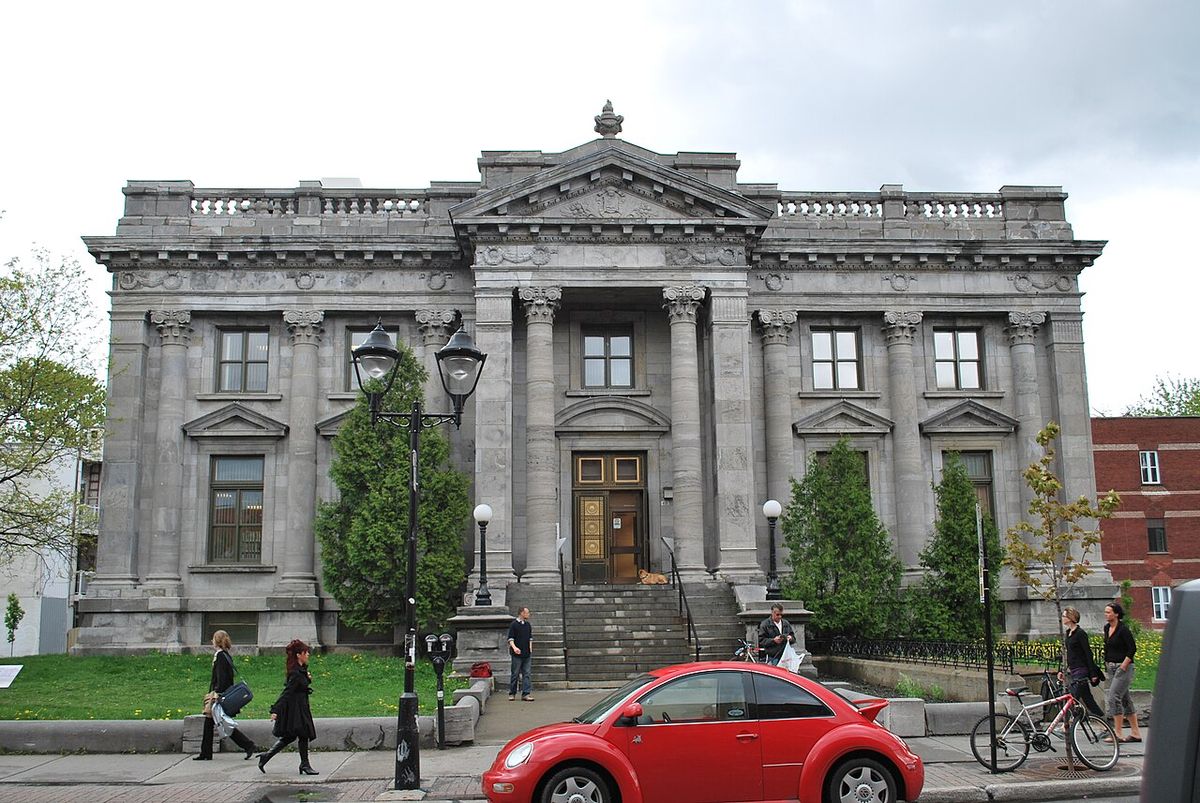
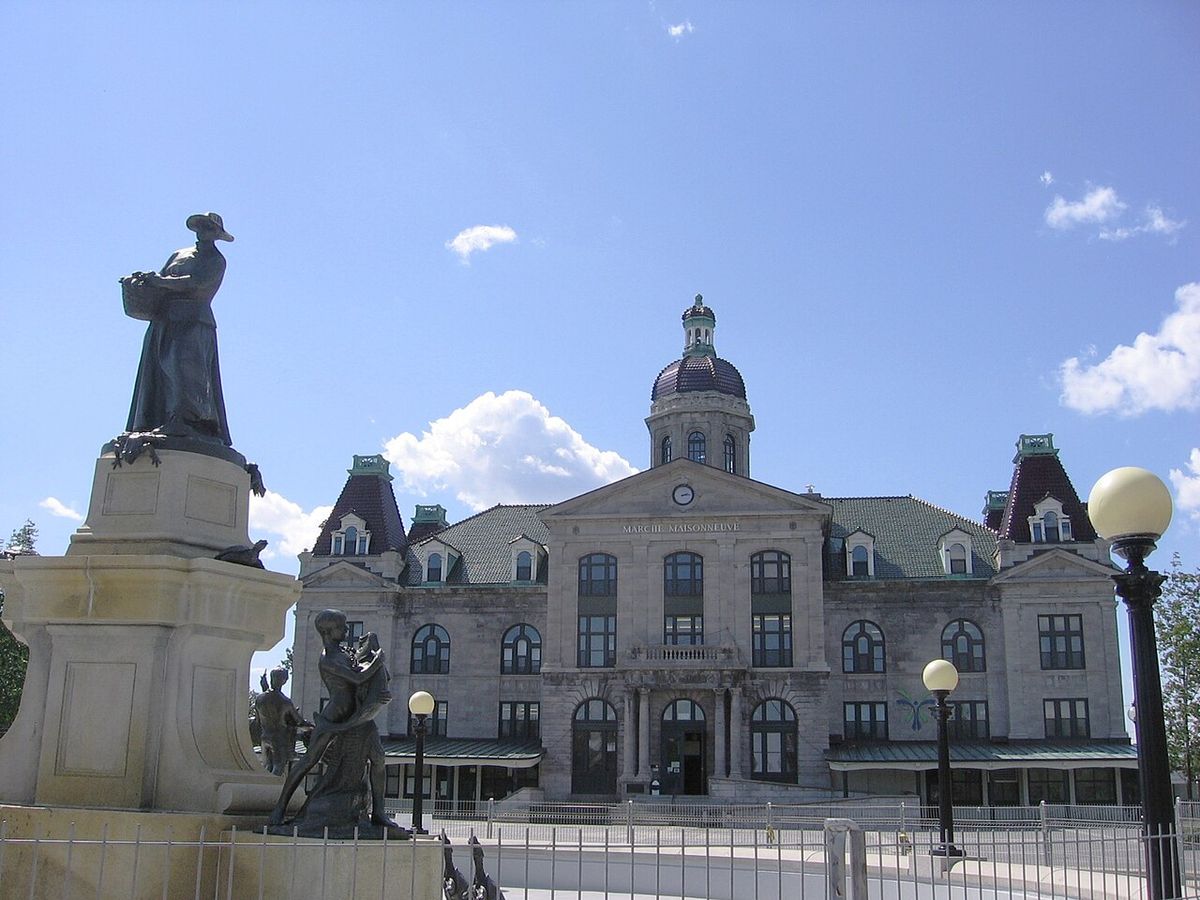
The threat of annexation by Montreal spurred Maisonneuve's French bourgeoisie to pursue ambitious civic beautification projects in the early 20th century. This included constructing the ornate Maisonneuve Town Hall, now the Bibliothèque Maisonneuve, the Maisonneuve Market, public gymnasium and baths, and expansive boulevards like Pie-IX, which established zoning that barred new factories. This attracted wealthier residents, exemplified by the construction of the opulent Château Dufresne, decorated with stained glass by artisan Guido Nincheri, who moved his studio to Pie-IX Boulevard in 1914. The town marketed itself as the Garden of Montreal, a contrast to its industrial roots, and opened the vast Maisonneuve Park in 1910 to reinvigorate the real estate market, though the project was plagued by budget overruns and land speculation scandals. By 1918, crippled by $18 million in debt from these overambitious projects, Maisonneuve was forced to be annexed by Montreal, consolidating it with Hochelaga into the single neighbourhood known today.
Post-War Decline and Social Challenges
The neighbourhood's decline accelerated in the post-1960s era due to deindustrialization and disruptive infrastructure projects. The construction of Highway 25 in 1967 alone required the demolition of approximately 2,000 homes and institutional buildings. As capital and production shifted to Toronto, many factories closed or left, triggering a population exodus and economic hardship. The 1976 opening of the Olympic Stadium for the Summer Olympics provided a major landmark but did not reverse the broader economic trends. Throughout the 1980s, factory shutdowns occurred at an alarming rate, leading to concentrated poverty, high welfare rates, and a generally unfavourable view of the area, particularly in Hochelaga.
The district gained notoriety for prostitution and drug trafficking, issues that remained contentious for many years. During the Quebec Biker War, the Hells Angels maintained a clubhouse in Hochelaga-Maisonneuve, further worsening its reputation for criminality. The most notorious incident of this conflict occurred on 9 August 1995, when a bomb planted in a drug dealer's jeep killed the dealer and sent shrapnel that severely injured 11-year-old Daniel Desrochers, who died from his wounds four days later. These events cemented a period of significant social distress for the neighbourhood, which continued to struggle with these underlying issues even as revitalization efforts began. The area became particularly associated with visible social problems in its south-western corner along Rue Sainte-Catherine Est, where poverty and illicit activities remained concentrated.
Contemporary Revitalization and Gentrification
The 2010s marked a period of significant change, characterized by increased gentrification, the arrival of students and professionals, and new condo developments, which sometimes led to protests and vandalism of new commerce. Key commercial areas have been revitalized, including the Promenade Ontario shopping street, which becomes pedestrianized in summer to host street fairs and performers, and Place Simon Valois, a public square on the corner of Ontario and Valois streets revitalized in 2017 that now hosts a variety of new businesses and attractions. Despite this influx of investment and a younger, more affluent demographic, the neighbourhood continues to grapple with deep-seated social issues. Areas in the south-western corner of Hochelaga, particularly along Rue Sainte-Catherine Est, still struggle with visible poverty, prostitution, and drug trafficking, creating a stark contrast within the district.
The ongoing housing crisis in Montreal, exacerbated by unemployment during the Covid-19 pandemic, led to the emergence of a significant homeless encampment along Rue Notre-Dame in summer 2020, creating something akin to a tent city. Despite promises from the mayor against forced relocation, police shut down the camp in December 2020 following a fire and hygiene concerns. By summer 2022, many occupants had gradually returned, leading to another police removal by the SPVM in June that sparked outcry from homeless advocates and certain opposition politicians. This tension between new development and persistent social need defines the current era in Hochelaga-Maisonneuve, where older, lower-income residents now coexist with a newer, wealthier population, and the process of change remains a source of local conflict and debate.
Geography and Transportation
Hochelaga-Maisonneuve is part of the larger borough of Mercier-Hochelaga-Maisonneuve. Its borders are roughly defined by the CP rail line west of Rue Moreau to the west, Rue Sherbrooke to the north, the train tracks east of Rue Viau to the east, and the Saint Lawrence River to the south. The traditional dividing line between the historic Hochelaga and Maisonneuve sectors is Boulevard Pie-IX. The neighbourhood is bordered by Ville-Marie (Centre-Sud) to the west, Rosemont-La Petite-Patrie to the north, and Mercier to the east. Its main east-west commercial arteries are Rue Sainte-Catherine Est, Rue Ontario, Rue Hochelaga, and Avenue Pierre de Coubertin, which serve as the primary corridors for business and community life.
The area is well-served by public transit, with four stations on the Montreal Metro's Green Line providing access. The Pie-IX station is a key hub, located near the historic dividing boulevard and providing direct access to the Olympic Park. Numerous Société de transport de Montréal (STM) bus routes also transit through the neighbourhood, connecting residents to the broader city. This comprehensive transit network supports both the daily commute of long-time residents and the mobility needs of the newer student and professional populations moving into the area, making it a well-connected part of Montreal's urban fabric. The neighbourhood is served by the following metro stations:
- Préfontaine station
- Joliette station
- Pie-IX station
- Viau station
Landmarks and Institutions
The neighbourhood is home to several of Montreal's most significant civic and cultural institutions, largely centred around the Olympic Park. This vast site contains the Olympic Stadium, the Olympic Tower, Saputo Stadium, the Biodome, the Olympic Pool, and the Maurice Richard Arena. The Biodome underwent a major renovation between 2018 and 2020, reopening to the public on 31 August 2020. A large portion of Parc Maisonneuve, one of Montreal's largest parks, lies within the neighbourhood and has been home to the Montreal Botanical Garden since the 1930s. The Marché Maisonneuve, one of the city's largest public markets, is another key historic building from the era of civic beautification. The borough operates the Hochelaga and Maisonneuve libraries, serving the local community with public resources and programming.
Beyond the major park and stadium complex, recent developments have created new focal points for community life. The Promenade Ontario has evolved into a shopping street that hosts seasonal pedestrian fairs. The revitalized Place Simon Valois functions as a modern public square, anchoring the corner of Ontario and Valois streets. These newer features complement the historic architecture, such as the Château Dufresne and the former town hall, creating a built environment that reflects the neighbourhood's long history and its ongoing transformation. The area's major attractions and institutions include:
- The Olympic Stadium (opened 1976)
- The Montreal Botanical Garden (established in the 1930s)
- Maisonneuve Market (Marché Maisonneuve)
- The Biodome (renovated 2018 to 2020)
- Promenade Ontario shopping street
- Place Simon Valois (revitalized 2017)
- Château Dufresne
- Bibliothèque Maisonneuve (former Maisonneuve Town Hall)
Education
The Commission scolaire de Montréal (CSDM) operates French-language public schools in the area. Elementary schools include École Baril, École Notre-Dame-de-L'Assomption, École Maisonneuve, École Saint-Clément, and École Saint-Jean-Baptiste-de-Lasalle. The main high school is École Sécondaire Chomedey-De Maisonneuve. The neighbourhood also hosts several specialized institutions that serve broader educational needs, including the École des Métiers de la Construction de Montréal for trade skills, the École pour Adultes Centre Hochelaga-Maisonneuve for continuing education, and the École Eulalie-Durocher for intellectually disabled students. The English Montreal School Board (EMSB) operates English-language schools, though options within the immediate neighbourhood are limited. Edward Murphy Elementary School is located in the nearby Mercier area. For high school, English-speaking students typically attend Vincent Massey Collegiate in Rosemont or F.A.C.E. School downtown, reflecting the historically Francophone character of the local school system.
The Commission scolaire de Montréal operates French language public schools in the neighbourhood. Elementary schools include École Baril, École Notre-Dame-de-L'Assomption, École Maisonneuve, École Saint-Clément, and École Saint-Jean-Baptiste-de-Lasalle. The high school is École Sécondaire Chomedey-De Maisonneuve. Specialized institutions include École des Métiers de la Construction de Montréal, École pour Adultes Centre Hochelaga-Maisonneuve, and École Eulalie-Durocher for intellectually disabled students. The English Montreal School Board operates English language schools such as Edward Murphy Elementary School in nearby Mercier.
Culture and Representation
Hochelaga-Maisonneuve holds a prominent place in Québécois culture and media, often serving as a subject and setting in artistic works. Notable songs about the neighbourhood include Voyou by Les Cowboys Fringants, Hochelaga by Alexandre Poulin, as well as La question à 100 piasses and Rue Ontario by Bernard Adamus. The film Hochelaga directed by Michel Jetté and the documentary East End Forever also focus on the area, exploring its identity and history. Politically, the neighbourhood is located in the federal riding of Hochelaga, represented by Liberal MP Marie-Gabrielle Ménard, and the provincial riding of the same name, represented by Québec Solidaire MNA Alexandre Leduc. Municipally, it is divided between the districts of Hochelaga and Maisonneuve-Longue-Pointe, represented by Projet Montréal councillors Éric Alan Caldwell and Laurence Lavigne-Lalonde on Montreal City Council. This representation across three levels of government involves multiple political parties, reflecting the diverse views within the community.
Hochelaga-Maisonneuve is prominently featured in Québécois culture and media. Notable songs about the neighbourhood include Voyou by Les Cowboys Fringants and Hochelaga by Alexandre Poulin. Other songs are La question à 100 piasses and Rue Ontario by Bernard Adamus. The film Hochelaga directed by Michel Jetté and the documentary East End Forever are also about the neighbourhood.
Notable Residents
The neighbourhood has been home to several notable figures from diverse fields, reflecting its complex social history. Film director and Quebec independence activist Pierre Falardeau hailed from the area, as did fellow film director and actor Julien Poulin. Singer-songwriter Bernard Adamus, whose music often references local streets like Rue Ontario, is another prominent cultural product of Hochelaga-Maisonneuve. Journalist and English-rights activist Robert Guy Scully was also a resident. In a starkly different vein, the area was once home to outlaw biker and former Hells Angels president Maurice Boucher, whose presence was linked to the neighbourhood's period of notoriety during the Biker War. This mix of cultural figures, activists, and infamous personalities shows the district's role as a place that has produced individuals who have shaped both its creative output and its public reputation.
Demographic and Economic Statistics
The demographic and economic history of Hochelaga-Maisonneuve can be traced through key phases of growth, decline, and change. The initial industrial boom from 1896 to 1915 transformed Maisonneuve into a major suburban employer, drawing workers for factories in shoes, textiles, tanning, slaughterhouses, tobacco, food, and shipbuilding. The civic debt crisis of 1918, with Maisonneuve $18 million in debt, marked the end of its independent growth and led to annexation. The mid-20th century brought severe disruption, exemplified by the demolition of 2,000 homes for Highway 25 in 1967, accelerating population loss. The 2010s initiated a new phase of gentrification and condo development, particularly along Promenade Ontario, though this has coexisted with persistent challenges like the homeless encampments of 2020 and 2022 on Rue Notre-Dame. This statistical and historical timeline illustrates the neighbourhood's cyclical nature, moving from prosperity to decline and into a current period of contested renewal.
Questions about Hochelaga-Maisonneuve
Where is Hochelaga-Maisonneuve located in Montreal?
Hochelaga-Maisonneuve is situated in Montreal's east end, generally to the south of the Olympic Stadium and east of downtown Montreal. It is part of the borough of Mercier-Hochelaga-Maisonneuve. The neighbourhood is bordered by Ville-Marie (Centre-Sud) to the west, Rosemont-La Petite-Patrie to the north, Mercier to the east, and the Saint Lawrence River to the south. Its main commercial streets run east-west and include Rue Sainte-Catherine Est, Rue Ontario, Rue Hochelaga, and Avenue Pierre de Coubertin, with Boulevard Pie-IX serving as the traditional dividing line between its Hochelaga and Maisonneuve sectors.
What is the history behind the name Hochelaga?
The name Hochelaga originates from an Iroquois village of the same name that was first visited by French explorer Jacques Cartier in 1534. While the present-day neighbourhood was once believed to be the location of that historic village, modern historians and anthropologists have not reached a consensus on its exact location. The modern district of Hochelaga was founded as a suburban village in 1863, with early industry including the Hudon and Sainte-Anne cotton mills and the terminal of the Quebec, Montreal, Ottawa and Occidental Railway by 1876. It later merged with the neighbouring town of Maisonneuve, which was founded in 1883, to form the combined neighbourhood known today after Maisonneuve's annexation in 1918.
What are the main attractions in Hochelaga-Maisonneuve?
The neighbourhood's premier attraction is the Olympic Park, site of the 1976 Summer Olympics, which includes the Olympic Stadium, the Biodome, the Olympic Tower, Saputo Stadium, the Olympic Pool, and the Maurice Richard Arena. The Montreal Botanical Garden, located within Parc Maisonneuve, is another major draw. Other notable features include the historic Marché Maisonneuve, the Promenade Ontario shopping street which becomes pedestrian in summer, and the revitalized Place Simon Valois public square. The area is also known for its concentration of Beaux-Arts architecture from its early 20th-century heyday, including the former Maisonneuve Town Hall and Château Dufresne.
How do you get to Hochelaga-Maisonneuve by public transit?
Hochelaga-Maisonneuve is well-served by the Montreal Metro's Green Line, with four stations providing access: Préfontaine, Joliette, Pie-IX, and Viau. The Pie-IX station is particularly central, located near the traditional dividing line between Hochelaga and Maisonneuve and providing direct access to the Olympic Park. In addition to the metro, numerous bus routes operated by the Société de transport de Montréal (STM) run through the neighbourhood, connecting it to other parts of the city. This makes the area highly accessible for residents and visitors alike, supporting both the daily commute of workers and the mobility of the growing student population.
What is the current social and economic situation in Hochelaga-Maisonneuve?
Hochelaga-Maisonneuve is in a period of transition marked by gentrification. The 2010s saw an influx of students, professionals, and new condo developments, revitalizing areas like Promenade Ontario and Place Simon Valois. However, this coexists with persistent social challenges, including poverty, drug trafficking, and prostitution, particularly in the south-western sector along Rue Sainte-Catherine Est. The neighbourhood has also been impacted by Montreal's housing crisis, exemplified by homeless encampments that appeared on Rue Notre-Dame in 2020 and 2022, which were removed by police. This creates a complex dynamic where older, lower-income residents live alongside a newer, more affluent demographic, often leading to tensions and protests related to development.
Who are the political representatives for Hochelaga-Maisonneuve?
The neighbourhood falls within the federal electoral district of Hochelaga, represented by Liberal Party MP Marie-Gabrielle Ménard. Provincially, it is located in the riding of Hochelaga, represented by Québec Solidaire MNA Alexandre Leduc. At the municipal level, the area is divided between the Montreal city council districts of Hochelaga and Maisonneuve-Longue-Pointe, both represented by councillors from the Projet Montréal party: Éric Alan Caldwell and Laurence Lavigne-Lalonde, respectively. This representation across three levels of government involves multiple political parties, reflecting the diverse political views within the community.
Sources and further reading
- Hochelaga-Maisonneuve (Wikipedia)
- Olympic District and Hochelaga-Maisonneuve (mtl.org)
- Hochelaga-Maisonneuve (centraide-mtl.org)
- Mercier-Hochelaga-Maisonneuve borough council (montreal.ca)
Checked by the Your Space Hamilton desk. Last updated 2026-11-01.