Cooksville, Mississauga
Cooksville is a central neighbourhood and historic community in Mississauga, Ontario, located at the crossroads of Dundas Street and Hurontario Street. As one of the oldest settlements in the region, originally founded as Harrisville in 1807, it served as a vital stagecoach stop and early commercial hub. Today, it functions as a major transportation node with the Cooksville GO Station and the future Hurontario LRT, and is known for its dense, multicultural character with a wide array of South Asian, Arab, and Afro-Caribbean businesses. The neighbourhood is undergoing significant transformation with numerous pre-construction developments and a new community-led sustainability plan, solidifying its role as a dynamic and evolving part of the Greater Toronto Area.
History and Development
The history of Cooksville is deeply intertwined with the early development of Toronto Township, the predecessor to the City of Mississauga. The settlement originated in 1807 when American immigrant Daniel Harris became the first settler, leading the community to be named Harrisville in his honour. In 1836, the name was changed to Cooksville to recognize entrepreneur and local magistrate Jacob Cook, who had established the area's first licensed tavern, the Cooksville House, at the northwest corner of Dundas and Hurontario in 1829. Cook also operated stagecoach lines and held the mail delivery contract from York to Niagara, cementing the crossroads location as a vital transportation stop. A heritage sign notes that the location was also the site of Canada's first winemaking operation in 1836.
Cooksville experienced significant setbacks with the Great Fire of 1852, which destroyed much of the community, and a severe tornado on June 24, 1923, that damaged surrounding farmhouses. A major local employer for much of the 20th century was a 182-acre brickyard operating south of the CP rail line from 1912 until its closure in 1995, which at one time employed a young Primo Carnera, the future Italian heavyweight boxing champion. The redeveloped brickyard site is now a medium-density residential and retail zone along Shoreline Drive. Despite never being incorporated as a separate town, Cooksville's central location spurred much of Mississauga's early suburban growth, and it was once proposed as the site for the city centre before development shifted north to the Square One area.
Geography and Neighbourhood Character
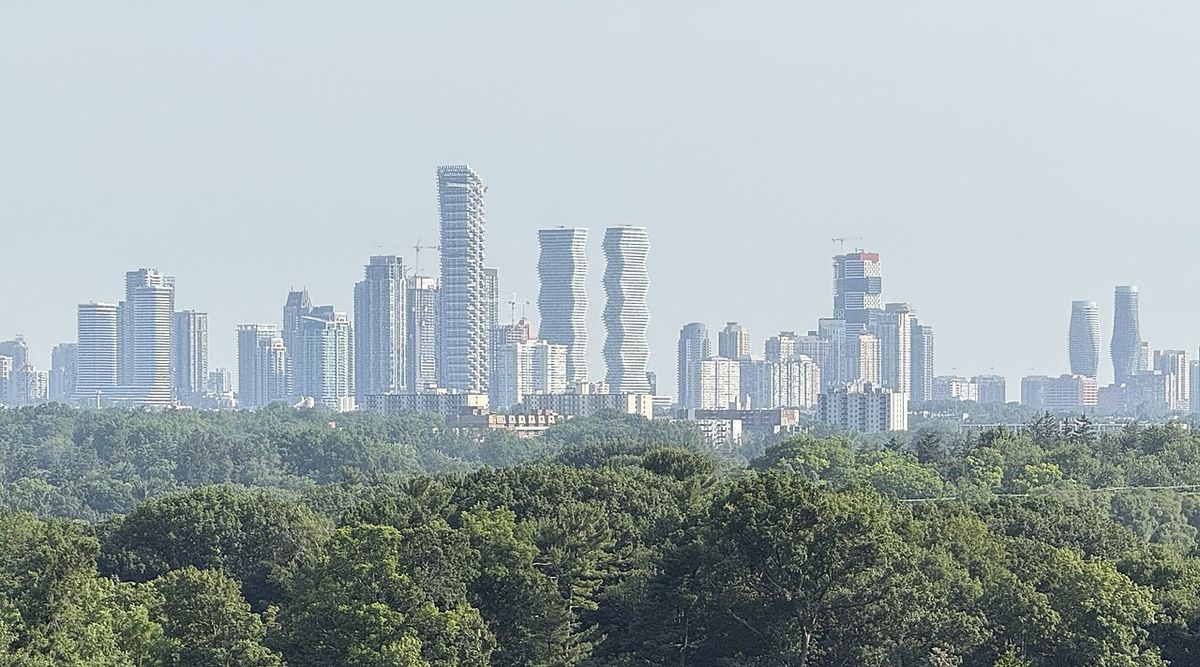
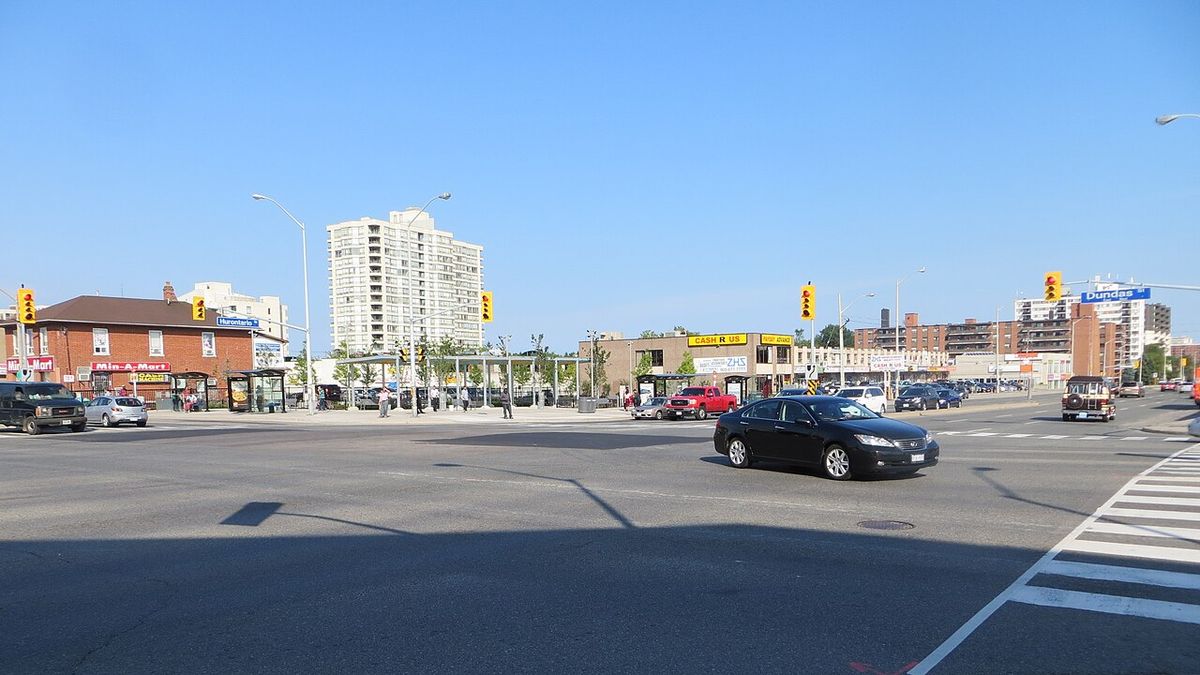
Cooksville is centred on the intersection of Dundas Street and Hurontario Street, near Cooksville Creek. The City of Mississauga designates three separate neighbourhood areas within its census tracts: Cooksville NHD, DT Cooksville (Downtown), and DT Hospital, the latter being the site of the Mississauga Hospital. The area southwest of the core, closer to the Credit River, is an exclusive enclave of large, detached homes on treed lots known as Gordon Woods. While sometimes grouped with Cooksville, the Fairview neighbourhood is actually a separate community located north of the CPKC rail line. The neighbourhood's commercial heart along Dundas and Hurontario is densely built with a mix of low-rise retail, high-rise condominiums, and rental apartment buildings, a concentration that was once the highest in Mississauga.
Transportation and Infrastructure
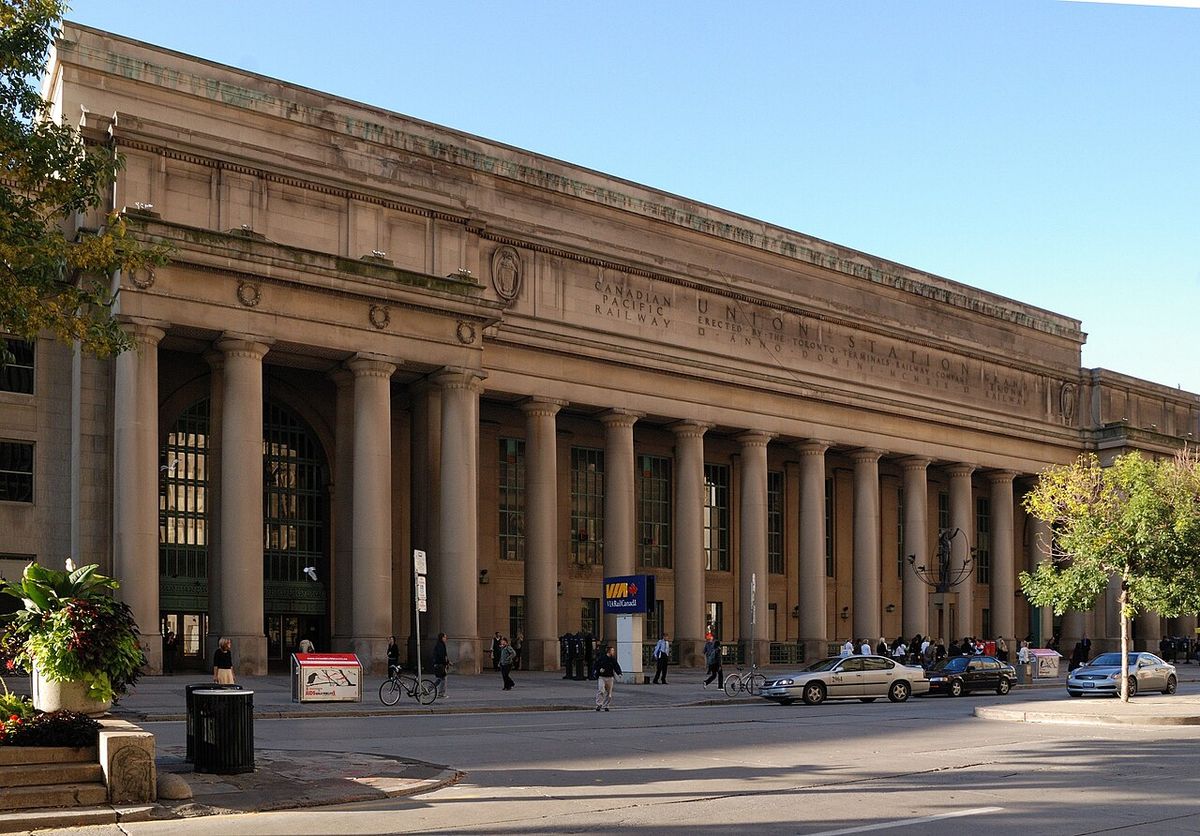
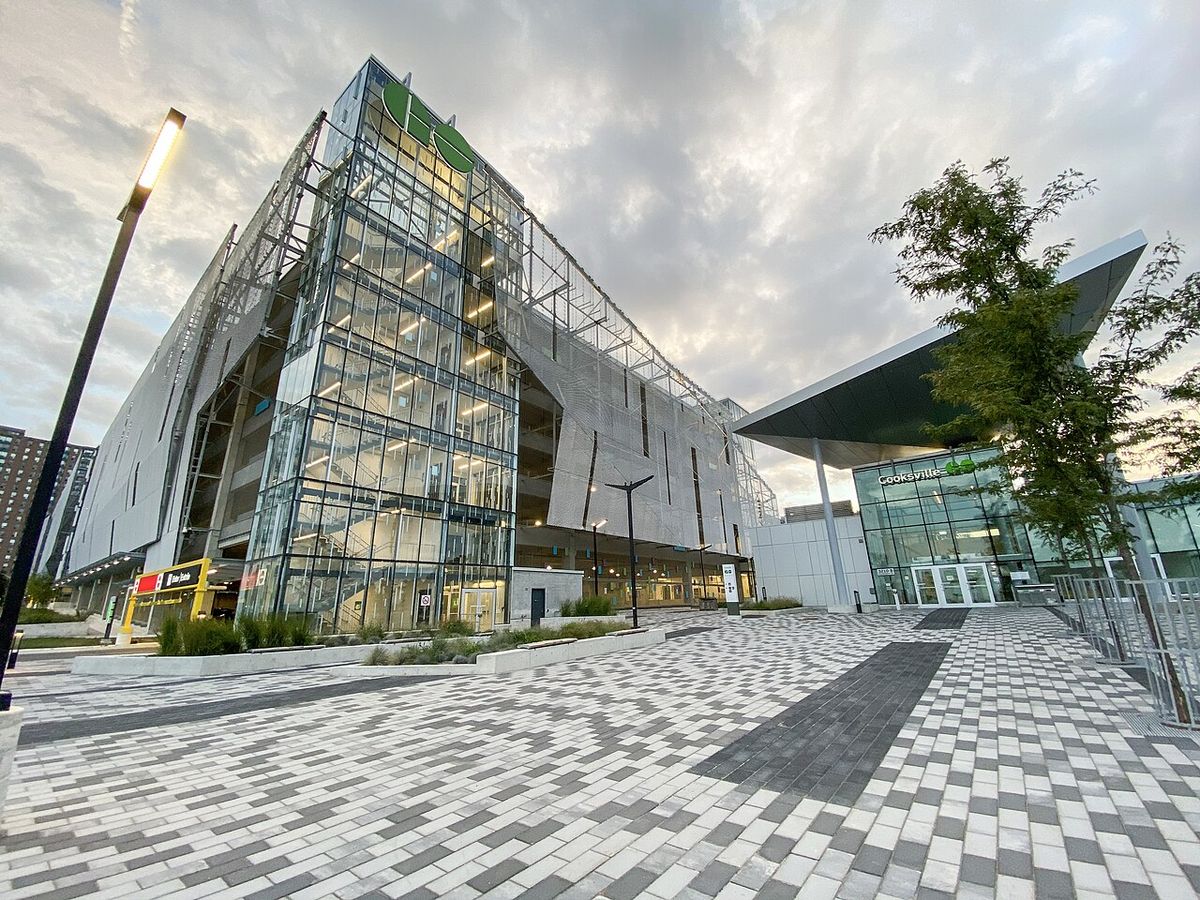
Cooksville is a primary transportation hub within Mississauga, anchored by the Cooksville GO Station located just north of the Dundas and Hurontario intersection. The station provides GO Transit rail and bus service, including express buses to Toronto's Union Station. The main thoroughfares are four-lane Dundas Street and six-lane Hurontario Street, whose intersection is still colloquially called "Five and Ten," referencing their former designations as Highway 5 and Highway 10. The neighbourhood is poised for a major transit upgrade with the construction of the Hurontario LRT, officially named the Hazel McCallion Line. This $4.6-billion light rail project will run 18 kilometres along Hurontario Street, connecting Port Credit GO Station through Cooksville to Brampton. Originally scheduled for a 2024 opening, the project has faced significant delays and as of May 2026 is not expected to open before 2028, with ongoing construction impacting local business traffic and access.
Demographics and Commercial Life
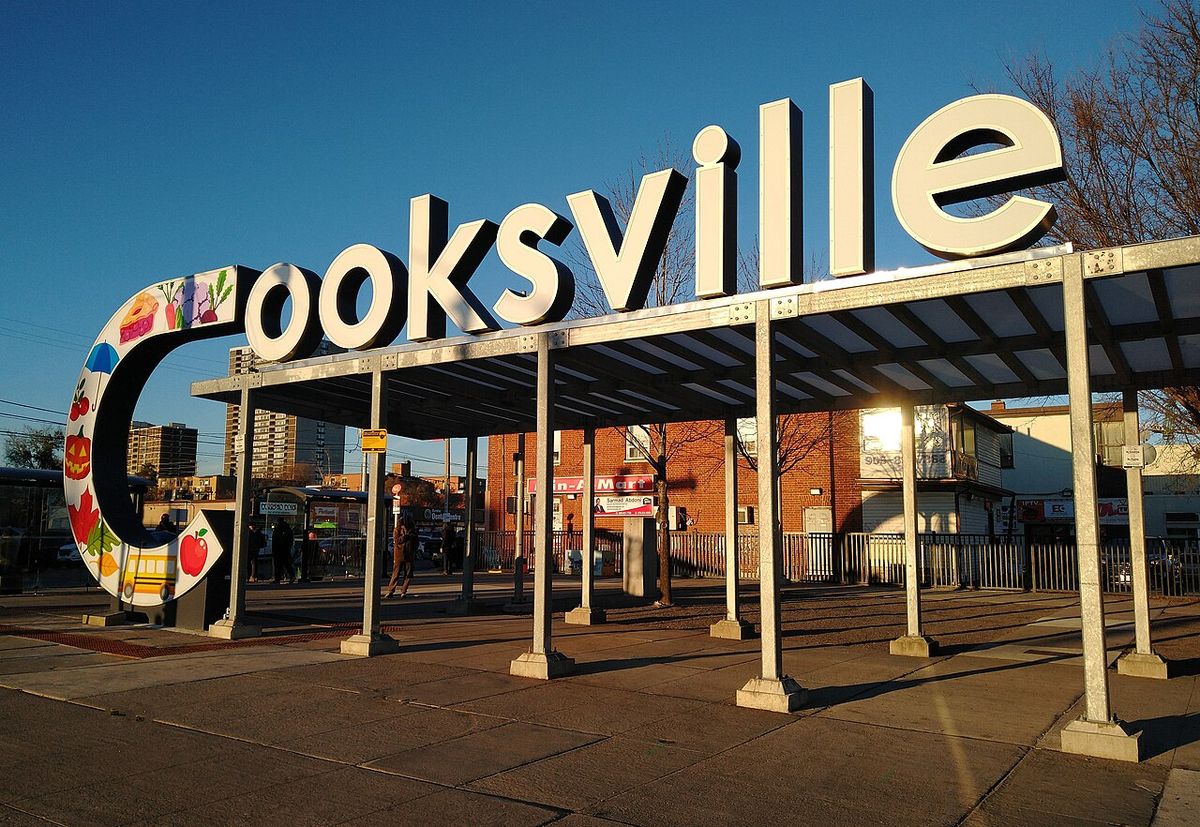
Cooksville is celebrated for its intensely multicultural and commercial character, serving as a hub for immigrant communities. The area features a high concentration of South Asian and Arab textile shops, restaurants, and grocery stores. It also has a significant number of Afro-Caribbean take-out restaurants and barber shops, catering notably to Mississauga's Black community. This diverse commercial strip has operated since the neighbourhood's founding. According to a Zumper reading from October 18, 2026, the median rent for all unit types in Cooksville was $2,185 per month, which was $75 below the Mississauga average at that time. The area's affordability is partially attributed to the disruptive construction of the Hurontario LRT, though this is expected to change once the line opens, increasing the neighbourhood's desirability and potential rental costs.
Recent Developments and Community Initiatives
Cooksville is the focus of substantial new investment and community planning aimed at shaping its future. The City of Mississauga's 2026 to 2035 proposed Capital Plan includes $5 million for the design of a new Cooksville Community Centre and Library. In 2023, the city, in collaboration with Credit Valley Conservation and the Region of Peel, launched the Cooksville Sustainable Neighbourhood Action Plan (SNAP), developed with input from nearly 2,400 residents. The resulting plan outlines five goals and 29 specific actions focused on safe mobility, access to fresh food, and climate resilience. A tree-planting event at Cooksville Park on May 10, 2026, marked the public launch of the SNAP. The real estate market is also highly active, with 18 pre-construction condo and townhome projects tracked in the area in 2026, with starting prices around $200,000, capitalizing on the neighbourhood's central location and upcoming transit improvements.
Culture and Events
The community spirit of Cooksville is highlighted through several annual events that draw residents and visitors from across the region. The premier event is the Taste of Cooksville festival, a free, two-day celebration presented by the Cooksville Business Improvement Area (BIA). The 2026 festival, scheduled for September 19-20, features nearly 100 street vendors offering international food, non-stop live entertainment on a main stage, family-friendly activities, and a dedicated car show. Another key community gathering is the Cooksville Community Festival, scheduled for July 18, 2026, at 67 Hillcrest Avenue. These events highlight the neighbourhood's diverse cultures and support local businesses, fostering a strong sense of community in this densely populated urban area.
Notable Facts and Landmarks
Cooksville contains several sites of historical and cultural significance. The McClelland-Copeland General Store, opened in 1852 after the Great Fire, is the area's longest-surviving building. The Cooksville House, built by Jacob Cook in 1829, was the first licensed tavern in the region. The neighbourhood was also the Canadian residence of HIH Grand Duchess Olga Alexandrovna of Russia during her exile. A notable modern landmark is the site of the infamous 1979 Mississauga train derailment, located at the CP rail crossing at Mavis Road, just north of the redeveloped brickyard lands. The area's commercial vitality is defined by its dense, pedestrian-oriented strips of small businesses representing a global array of cultures, making it a unique destination within Mississauga.
- McClelland-Copeland General Store (1852), Longest-surviving building.
- Cooksville House (1829), First licensed tavern, built by namesake Jacob Cook.
- Site of 1979 Mississauga train derailment, Located at CP crossing at Mavis Road.
- Former 182-acre brickyard (1912 to 1995), Employed many residents, now redeveloped.
- Residence of Grand Duchess Olga Alexandrovna, Lived here during Canadian exile.
- Cooksville Park, Location of 2026 SNAP launch and tree planting.
Questions about Cooksville, Mississauga
Where is Cooksville located in Mississauga?
Cooksville is located in the central part of Mississauga, Ontario. It is geographically centred around the major intersection of Dundas Street East and Hurontario Street, near Cooksville Creek. This crossroads is historically known as 'Five and Ten,' referencing the old highway numbers. The neighbourhood is a key transportation hub, containing the Cooksville GO Station just north of this intersection.
What is the history behind the name Cooksville?
The area was first settled in 1807 by Daniel Harris and was originally named Harrisville in his honour. In 1836, the settlement was renamed Cooksville after local entrepreneur and magistrate Jacob Cook. Cook was a significant figure who operated stagecoach lines, held the mail contract from York to Niagara, and built the Cooksville House, the area's first licensed tavern, in 1829. The name change officially recognized his influence on the community's early development.
What is the Hurontario LRT and how will it affect Cooksville?
The Hurontario LRT, officially the Hazel McCallion Line, is a $4.6-billion light rail transit project that will run 18 kilometres along Hurontario Street from Port Credit to Brampton. It will pass directly through Cooksville, with a stop at Cooksville GO Station. Originally slated to open in 2024, the project has been delayed and as of May 2026 is not expected to open before 2028. The prolonged construction has negatively impacted local business revenue due to reduced foot traffic and access, but the completed line is anticipated to significantly increase the neighbourhood's connectivity and desirability.
What is the Taste of Cooksville festival?
Taste of Cooksville is a major free food and cultural festival presented by the Cooksville BIA. The 2026 edition is scheduled for September 19 to 20 and is one of Mississauga's largest food festivals. It features nearly 100 street vendors offering international food options, continuous live entertainment on a main stage, and family friendly activities including kid's inflatables and workshops. A new car show featuring an exciting lineup of vehicles is also part of the event. This festival celebrates the neighbourhood's diverse community and lively local shopping, attracting visitors to explore the Cooksville area.
What is the Cooksville Sustainable Neighbourhood Action Plan (SNAP)?
The Cooksville Sustainable Neighbourhood Action Plan (SNAP) is a new community initiative launched in collaboration with Credit Valley Conservation, the Region of Peel, and local groups. Work on the SNAP began in 2023 with engagement from almost 2,400 residents and community members. The resulting action plan outlines five goals and 29 specific actions focused on safe and active mobility, access to fresh food, and enhancing climate resilience. To mark its launch, a tree planting event was held at Cooksville Park on Saturday, May 10, 2026, where participants planted native trees and shrubs. This family friendly event was open to all ages and provided volunteer hours.
What is the real estate market like in Cooksville?
As of 2026, Cooksville's real estate market is active with pre construction condos and homes, featuring 18 active projects with prices starting around $200,000. The neighbourhood is a central, transit connected Mississauga hub with a growing supply of mid rise condos. According to a Zumper reading from October 2026, the median rent for all unit types is $2,185 per month, which is $75 below the city average. The area's desirability is linked to its transit connections, including Cooksville GO Station and the upcoming Hurontario LRT, though the LRT's delayed construction has impacted local businesses. Once the LRT opens, proximity to rapid transit is expected to increase the area's desirability and influence prices.
Sources and further reading
- Cooksville, Mississauga (Wikipedia)
- Launching the Cooksville Sustainable Neighbourhood ... (mississauga.ca)
- Taste of Cooksville 2026 (visitmississauga.ca)
- Cooksville, Mississauga: Rent, LRT Impact & Costs 2026 (mississaugawallet.ca)
Checked by the Your Space Hamilton desk. Last updated 2026-10-30.