P. L. Robertson
Peter Lymburner Robertson (December 10, 1879 to September 28, 1951) was a Canadian inventor and industrialist who revolutionized tool design by popularizing the square-socket drive for screws, now universally known as the Robertson drive. His breakthrough was not the initial concept of a square socket, which had been patented earlier, but his development of an efficient cold-forming manufacturing technique that made the screw commercially viable. Robertson founded the P.L. Robertson Manufacturing Company, which became a major industrial employer in Ontario, and his screw design became a standard in Canadian construction and manufacturing. His invention remains a significant part of Canada's industrial heritage and is celebrated for its practicality and safety.
Early Life and Influences
Peter Lymburner Robertson was born in 1879 in Seneca Township, part of Haldimand County, Ontario, to parents John and Annie Robertson, both of Scottish heritage. He was one of six children, and his father left the family to pursue opportunities in the Gold Rush, passing away in 1886. Robertson grew up on the family farm, where his adoptive brother, Gordon MacKenzie, later recalled that Robertson was "always working on inventions" and would frequently build models. This early, hands-on tinkering fostered a mechanical aptitude that would later define his career, and the circumstances of his childhood, marked by his father's absence, likely contributed to his driven and independent character as an adult inventor and businessman.
Invention and Commercialization
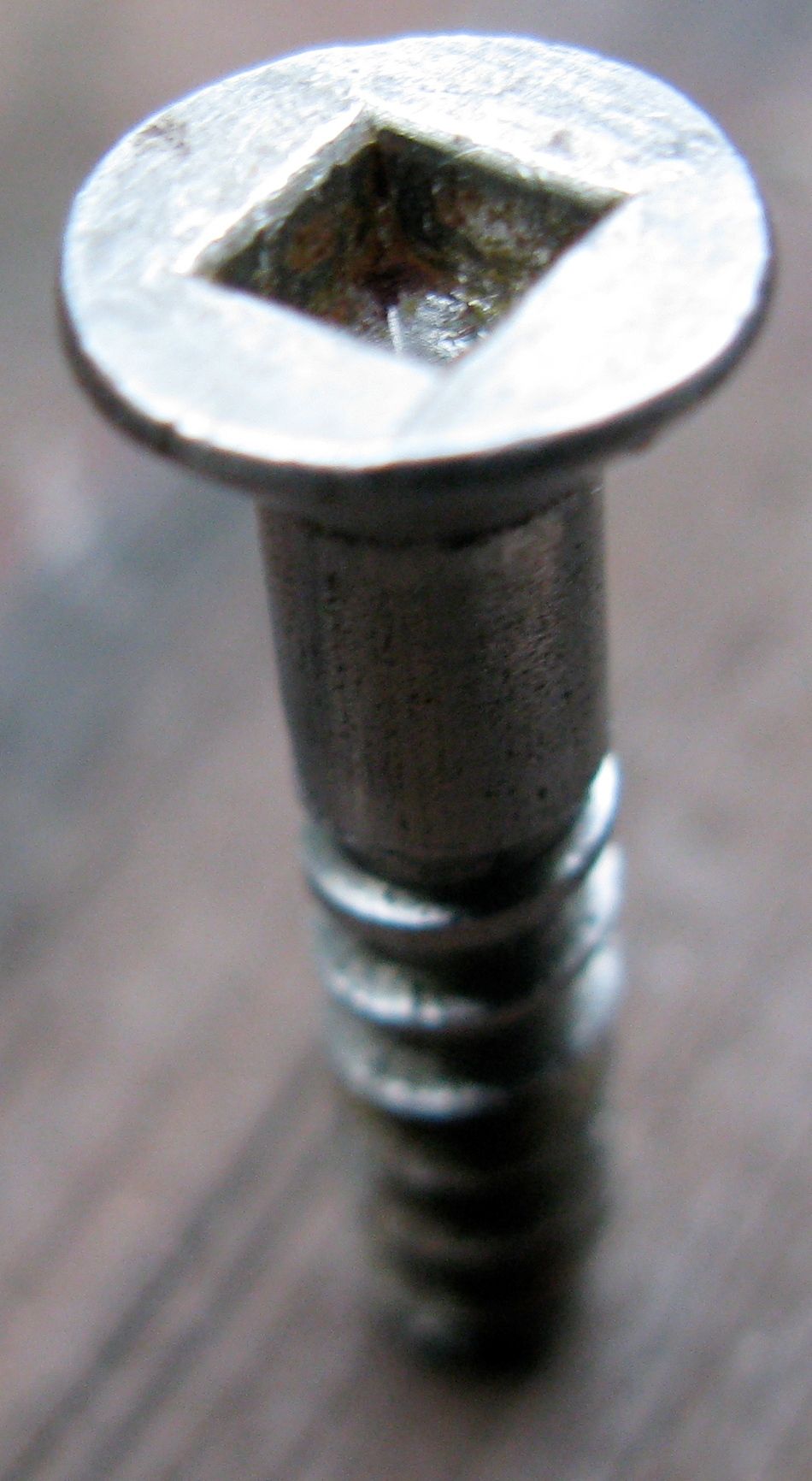
The key moment for Robertson's invention occurred while he was working as a travelling salesman for the Philadelphia tool company North Brothers, covering eastern Canadian territories. During a tool demonstration, his straight-bladed screwdriver slipped from the slot of a screw and cut his hand, a common hazard of the slotted screw design that prompted Robertson to conceive a safer, more secure alternative. He focused on developing a square-socket drive, which would centre the driver bit and drastically reduce cam-out, the slipping action that caused injuries and damaged workpieces, and Robertson received the Canadian patent for his improved square-socket screw design in 1909, securing the intellectual property for his innovation. Robertson's true genius lay not merely in the design but in its manufacturability, as earlier attempts at square-socket screws, such as the one patented by Allan Cummings in 1875 in the United States, had failed commercially because the sockets were difficult and expensive to produce.
Robertson developed an efficient cold-forming technique to stamp the square socket into the screw head. This manufacturing breakthrough transformed the Robertson screw from a clever idea into a viable commercial product. He had originally established his company, the P.L. Robertson Manufacturing Company, in Hamilton, Ontario in 1907. Robertson then relocated the company to produce his screws in Milton, Ontario, the following year after the town had given a $10,000 loan for the factory's local establishment. The new location provided incentives such as direct roads to the plant, reduced water rates, a sewage disposal system, and a railway siding.
Building the Milton Factory and Major Contracts
The new location in Milton provided significant incentives to Robertson's factory such as direct roads to the plant, reduced water rates, a sewage disposal system, and a railway siding, which enabled large-scale operations. During the height of production, the factory employed over 600 workers, making it a central economic force in the town. The company secured a landmark contract with the Fisher Body company, which made the car bodies for the Ford Motor Company and used over 700 Robertson screws in its Model T car. Henry Ford, after finding that the screw saved him about 2 hours of work for each car, attempted to get an exclusive licence for the use and manufacture of the Robertson screw in the US, but he was turned down by Robertson who felt it was not in his best interest.
Henry Ford attempted to get an exclusive licence for the use and manufacture of the Robertson screw in the US. He was turned down by Robertson who felt it was not in his best interest. Shortly after that, Ford found that Henry F. Phillips had invented another kind of socket screw and had no such reservations. This business decision is a primary reason the Robertson screw, while most popular in Canada, did not achieve the same dominance in the United States. The brand has been sold over the years, and the manufacturing for the present corporation, Robertson Inc., is done in Jiaxing, Zhejiang, China. The Milton, Ontario, building was still a head office for a long time before moving to nearby Burlington, Ontario.
Applications and Advantages
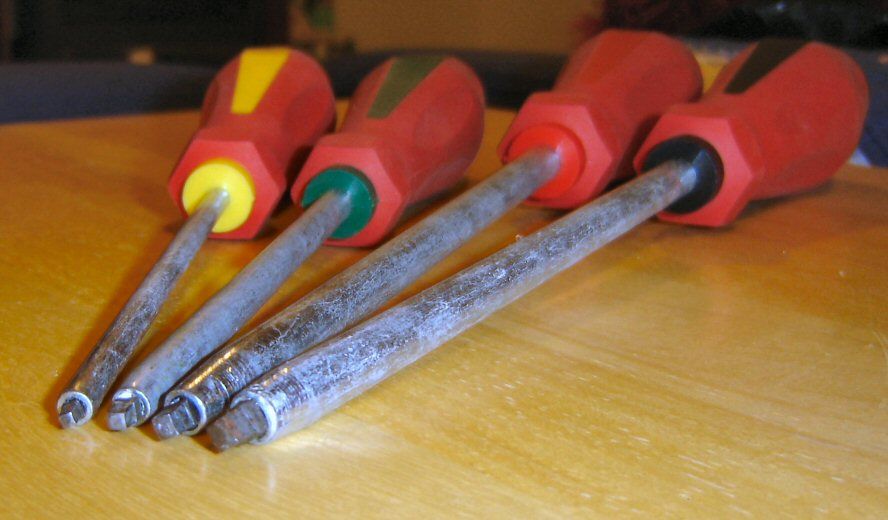
The Robertson screw is used extensively in boat building because it tends not to slip and damage material, it can be used with one hand, and it is much easier to remove and replace after weathering. Its design offers several distinct advantages over slotted and Phillips head drives, providing a self-centring action and dramatically reducing cam-out, which prevents damage to materials and screw heads. These features make it exceptionally reliable and user-friendly for a variety of professional trades. Beyond boat building, the Robertson drive is the standard in Canadian construction and is favoured in electrical work and production assembly for its speed and security.
The Robertson screw is used extensively in boat building because it tends not to slip and damage material. It can be used with one hand, and it is much easier to remove or replace after weathering. The Fisher Body company, which made the car bodies for the Ford Motor Company, was one of Robertson's first customers. It used over 700 Robertson screws in its Model T car.
- Boat Building and Marine Carpentry: Valued for its resistance to slipping and corrosion.
- Residential and Commercial Construction: The standard drive system in Canadian building.
- Electrical Work: Appreciated for secure grip and one-handed usability in panels.
- Automotive Assembly (Historically): Used by Fisher Body for Ford Model T production.
- General Woodworking and Carpentry: Preferred for its reliability and reduced driver slippage.
The design's practicality ensured its survival and continued preference among tradespeople long after Robertson's death. It solidifies the Robertson screw's status as a fundamental Canadian invention. The Robertson screw is most popular in Canada. Henry Ford found that the screw saved him about 2 hours of work for each car.
Other Pursuits: Writing and Investments
Robertson also wrote a book, The Remedy in 1932, where his writing suggested a strategy to end the Great Depression, discussing topics including national debts, currencies, and the gold standard. He self-published this work, hiring Davis-Lisson Ltd for the printing, to distribute his economic theories. Robertson was deeply interested in the value of gold, and by the 1950s, he had invested heavily in gold mining companies, owning more than 70,000 shares across eight companies. This financial activity reflected his broader interest in economic systems beyond his manufacturing work.
Personal Life and Health
Robertson had a daughter with his housekeeper, Margaret, whose identity was kept private from the public. By 1946, Robertson's health declined due to a combination of his long-time alcoholism and untreated diabetes, and he declined insulin treatment despite concern from his family. By October 1946, Robertson was admitted as a patient at The Homewood Sanitarium in Guelph, describing his condition in letters to friends overseas as being "many foul diseases, including diabetes, blindness, and many others." Robertson died September 28, 1951, having a small funeral at his adopted brother's home, and he was buried at Evergreen Cemetery in Milton.
Honours and Memorials
Peter Lymburner Robertson's contributions have been formally recognized through numerous honours and memorials established after his death. In 1986, the Milton Historical Society and the Robertson Whitehouse collaborated to set up two plaques in a ceremony honouring Robertson, one at the original plant building location and one near Robertson's former residence. The markers respectively described Robertson's manufacturing career and the home Robertson lived in for 35 years. Robertson's legacy is preserved through several specific honours and memorials. In 1986, two plaques were set up in a ceremony honouring Robertson, one at the original plant building location and one near Robertson's former residence. In 2001, Robertson was inducted into the Canadian Hardware and Housewares Manufacturers Association Industry Hall of Fame. He was later inducted into the Canadian Manufacturing Hall of Fame in 2008. Robertson was inducted into Milton's Walk of Fame in 2007, and the town has an elementary school named after him that opened in 2009.
- 1986: Two commemorative plaques installed in Milton by the Milton Historical Society.
- 2001: Inducted into the Canadian Hardware and Housewares Manufacturers Association Industry Hall of Fame.
- 2002: Documentary Ode to the Robertson Screwdriver aired on History Television's Turning Point series.
- 2007: Inducted into Milton's Walk of Fame.
- 2008: Inducted into the Canadian Manufacturing Hall of Fame (CMHOF).
- 2009: An elementary school named after Robertson opened in Milton.
These recognitions ensure that Robertson's story and his invention remain a point of local and national pride for Canadians. In 2002, the documentary Ode to the Robertson Screwdriver aired on the History Television's Turning Point series. The documentary described Robertson's life and his career involving the invention of the eponymous screw. The markers from 1986 respectively described Robertson's manufacturing career and the home Robertson lived in for 35 years.
Questions about P. L. Robertson
What are the main advantages of a Robertson screw?
The Robertson screw offers several practical advantages. Its tapered, square socket centres the driver automatically, drastically reducing cam-out (slipping), which prevents damage to the screw and material. The screw can stay on the driver tip without magnetic assistance, allowing for one-handed operation. It is also easier to remove after exposure to weather and corrosion. These features make it faster, safer, and more reliable than slotted or Phillips head screws, especially in construction and woodworking.
What happened to P.L. Robertson later in life?
In his later years, Robertson's health declined due to a combination of long-term alcoholism and untreated diabetes. He resisted insulin treatment. By October 1946, he was admitted to The Homewood Sanitarium in Guelph, Ontario, describing his condition in letters as including diabetes and blindness. Robertson died on September 28, 1951, and was buried at Evergreen Cemetery after a small funeral at his adoptive brother's home.
How is P.L. Robertson remembered today?
Robertson is remembered as an important Canadian inventor. He has been inducted into the Canadian Hardware and Housewares Manufacturers Association Hall of Fame (2001), the Canadian Manufacturing Hall of Fame (2008), and Milton's Walk of Fame (2007). Milton has an elementary school named after him, and historical plaques mark his factory and home. His invention remains a daily staple in Canadian trades, and his story was featured in a 2002 History Television documentary, Ode to the Robertson Screwdriver.
What did P.L. Robertson invent?
P.L. Robertson invented and popularized the square-socket drive for screws, universally known as the Robertson drive. He received his patent for this screw design in 1909. His key innovation was an efficient manufacturing technique using cold forming for the screw's head, which solved the production difficulties that had prevented earlier square socket concepts from achieving commercial success. This practical manufacturing method transformed the idea into a viable product. The invention was prompted by an accident where his straight-bladed screwdriver slipped and cut his hand during a sales demonstration.
Why is the Robertson screw popular in Canada but not the U.S.?
The Robertson screw is most popular in Canada due to Robertson's early establishment of manufacturing there and its adoption by Canadian industry. Its relative lack of popularity in the United States stems from a key business decision. Henry Ford, after finding the screw saved considerable time in assembling Model T cars, attempted to secure an exclusive licence for its use and manufacture in the US. Robertson refused this exclusive arrangement, believing it was not in his best interest. Ford subsequently turned to the Phillips head screw, whose inventor had no such reservations about an exclusive licence, allowing the Phillips design to dominate the American market.
Where was the P.L. Robertson Manufacturing Company located?
The P.L. Robertson Manufacturing Company was originally established in Hamilton, Ontario in 1907. The Milton location offered additional incentives including direct roads, reduced water rates, a sewage disposal system, and a railway siding. This factory employed over 600 workers at its production peak and served as the company's long-time head office before it was moved to nearby Burlington, Ontario. While the brand has been sold and manufacturing now occurs in China, the Milton building remained a central office for many years.
Sources and further reading
- P. L. Robertson (Wikipedia)
- P.L. Robertson, Halton District School Board (plr.hdsb.ca)
- P. L. Robertson Public School Profile (hoodq.com)
- The P.L. Robertson Manufacturing Company (ontarioplaques.com)
- P L Robertson Public School, Licensed Child Care Centre (hipinfo.ca)
Checked by the Your Space Hamilton desk. Last updated 2026-11-02.