Ilya Sutskever
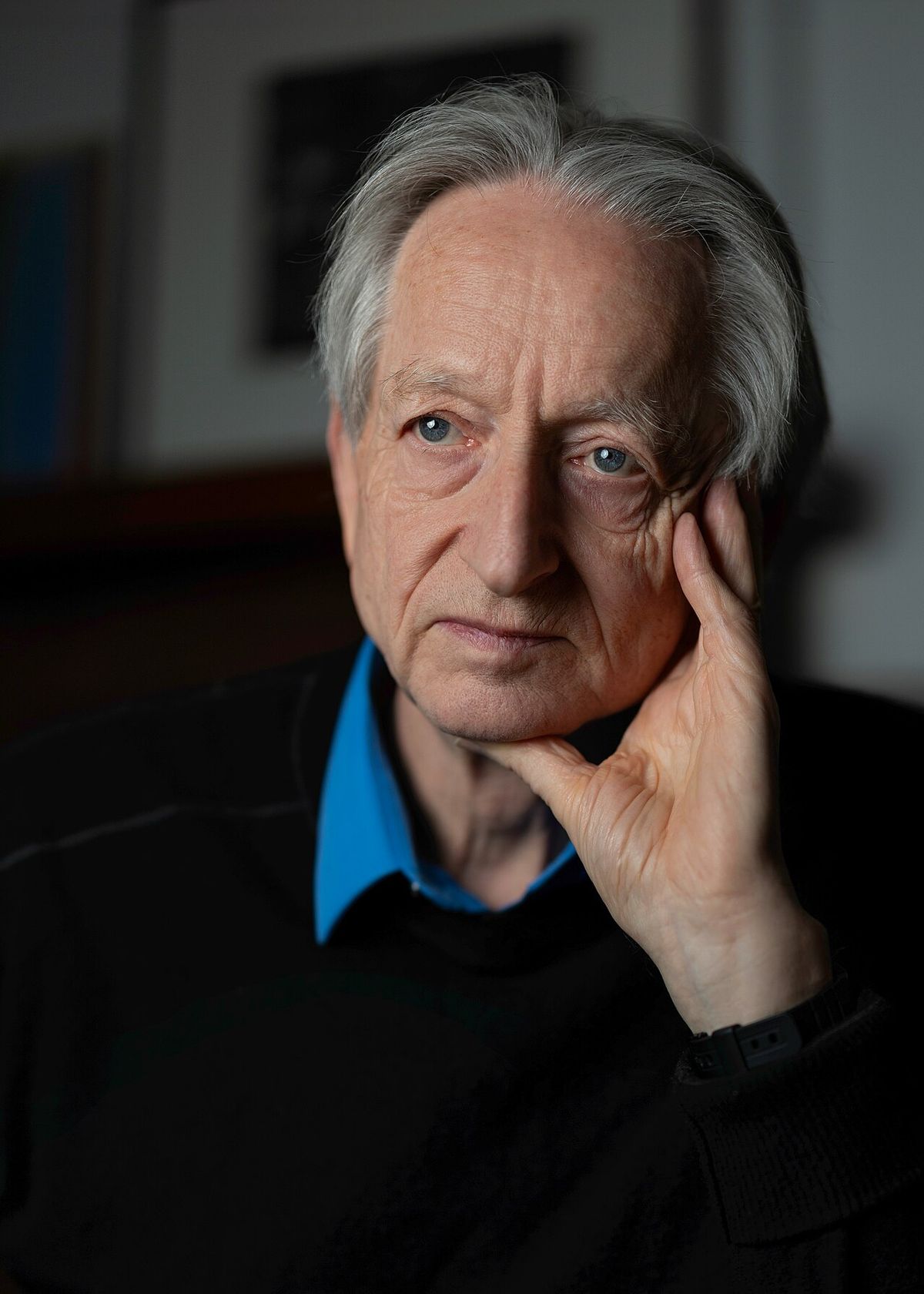
Ilya Sutskever is a Soviet-born Israeli-Canadian computer scientist and a foundational figure in the field of artificial intelligence. He is best known for co-founding OpenAI, where he served as chief scientist and oversaw the research that led to breakthrough technologies like ChatGPT and the reasoning model o1. Sutskever's career, which began in earnest at the University of Toronto, has been marked by pioneering contributions to deep learning, including co-creating the influential AlexNet neural network. In 2024, he left OpenAI to co-found Safe Superintelligence Inc., a company dedicated to building safe superintelligent AI, which by 2025 achieved a valuation exceeding $30 billion. His work and warnings about the rapid, profound potential of AI have positioned him as one of the most influential and scrutinized figures in global technology.
Early Life and Education in Canada
Ilya Sutskever was born in 1986 in Nizhny Novgorod, then part of the Soviet Union, to a Russian-Jewish family. He immigrated with his family to Israel at age five and grew up in Jerusalem, where he was a strong student and began taking university-level classes by eighth grade. At 16, his family moved again, this time to Canada. Sutskever attended high school for only a month before his academic prowess led to his direct admission to the University of Toronto in Ontario as a third-year undergraduate student at University College. This rapid transition marked the beginning of his deep academic connection to Canada.
At the University of Toronto, Sutskever accelerated through his studies, earning a bachelor's degree in mathematics in 2005. He continued at the same institution for graduate work, receiving a master's degree in computer science in 2007 and a PhD in computer science in 2013. His doctoral advisor was Geoffrey Hinton, a pioneering figure in neural networks who would later win the Nobel Prize in Physics. It was during this period, in 2012, that Sutskever collaborated with Hinton and fellow student Alex Krizhevsky to build AlexNet, the convolutional neural network that famously won the ImageNet competition and helped catalyze the modern deep learning revolution.
Foundational Work and Joining OpenAI
After a brief postdoctoral stint at Stanford University in 2012, Sutskever returned to the University of Toronto to join Hinton's new research company, DNNResearch. Google acquired this company in 2013, bringing Sutskever on as a research scientist at Google Brain. During his time at Google, he made another seminal contribution by co-creating the sequence-to-sequence learning algorithm with Oriol Vinyals and Quoc Viet Le, a fundamental architecture for machine translation and many other tasks. He also contributed to the development of TensorFlow and was a co-author on the landmark AlphaGo paper.
At the end of 2015, Sutskever left Google to become a co-founder and the chief scientist of OpenAI, a newly established research organization. In this role, he was instrumental in establishing the company's scaling ethos, the philosophy of aggressively increasing the size of models and datasets to unlock new capabilities. He oversaw the research teams that developed the Generative Pre-trained Transformer (GPT) series of models, which culminated in the launch of ChatGPT in late 2022. Sutskever is also credited with leading the research that produced advanced reasoning models, referred to internally as o1, which represented a significant step toward more capable and reliable AI systems.
The OpenAI Board Crisis and Departure
Sutskever was one of the six board members of the nonprofit entity that controlled OpenAI. In November 2023, the board, including Sutskever, voted to fire CEO Sam Altman, stating he had not been consistently candid in his communications. Sutskever authored a detailed 52-page memo based on information from Mira Murati, accusing Altman of lying and fostering internal division. He stated in a company meeting that firing Altman was the board doing its duty. However, after significant internal and external pressure, including the resignation of co-founder Greg Brockman and several senior researchers, Sutskever publicly expressed regret for his role in the ouster. Altman was reinstated as CEO within a week.
Following the crisis, Sutskever stepped down from the OpenAI board and was absent from the company's offices. In May 2024, he announced his departure from OpenAI entirely to pursue a project he described as very personally meaningful. His exit was followed hours later by the resignation of Jan Leike, the other leader of OpenAI's Superalignment project, who cited an erosion of safety and trust in the company's leadership. This period highlighted intense internal debates about the speed of AI development and the prioritization of safety protocols, with Sutskever firmly in the faction advocating for greater caution.
Founding Safe Superintelligence Inc.
In June 2024, Sutskever announced the formation of Safe Superintelligence Inc. (SSI), a new company he co-founded with entrepreneurs Daniel Gross and Daniel Levy. The company established offices in Palo Alto, California, and Tel Aviv, Israel. Sutskever articulated a singular mission for SSI, stating its first and only product would be a safe superintelligence and that it would not divert resources to other products or revenue streams beforehand. This stood in direct contrast to OpenAI's approach of releasing incremental, revenue-generating products like ChatGPT.
The company quickly attracted massive investment based on Sutskever's reputation. By September 2024, it had raised $1 billion from top-tier venture capital firms including Andreessen Horowitz and Sequoia Capital. In March 2025, SSI raised an additional $2 billion, reportedly reaching a valuation of $32 billion. In June 2025, the company rejected an acquisition offer from Meta Platforms. Shortly after, co-founder and initial CEO Daniel Gross left for Meta, and Sutskever assumed the role of CEO. In July 2026, chipmaker Nvidia announced a $5 billion investment into SSI, a significant bet on Sutskever's vision from a key player in the AI hardware ecosystem.
Scientific Contributions and Recognition
Ilya Sutskever's research has fundamentally shaped the field of artificial intelligence. His early work co-creating AlexNet demonstrated the power of deep convolutional neural networks. His development of the sequence-to-sequence learning framework provided the blueprint for a vast array of generative AI systems. At OpenAI, he was central to the scaling strategy that produced the GPT family and later the reasoning models that advanced AI capabilities toward more complex problem-solving. His consistent focus has been on pushing the boundaries of what large-scale models can achieve.
This impact has been recognized with numerous high-profile awards. He was named in MIT Technology Review's 35 Innovators Under 35 list in 2015. In 2022, he was elected a Fellow of the Royal Society (FRS). From 2022 to 2024, he won the Neural Information Processing Systems (NeurIPS) Test of Time Award three years consecutively, a rare honour recognizing papers with lasting influence. In 2025, the University of Toronto awarded him an honorary doctorate. The pinnacle of this recognition came in 2026 when he received the National Academy of Sciences Award for the Industrial Application of Science, the first time it was presented for work in artificial intelligence.
Public Warnings and Influence on AI Discourse
Sutskever has been an outspoken voice on the potential and perils of advanced artificial intelligence. In 2022, he sparked widespread debate by tweeting that it may be that today's large neural networks are slightly conscious. He has repeatedly warned that superintelligent AI could arrive within the current decade, profoundly changing work and life at an unprecedented speed. In 2023, he co-announced OpenAI's Superalignment project, aiming to solve the control problem for superintelligences within four years, underscoring his view of the urgency of the issue.
After leaving OpenAI, his warnings became more pointed. He has stated that AI will inevitably match all human abilities and that society is unprepared for what is coming. He has made specific predictions, suggesting that advanced artificial general intelligence (AGI) could arrive as soon as 2026. Furthermore, he has speculated on the immense infrastructure required, suggesting the entire surface of the Earth could eventually be covered in data centres to support future AI systems. These pronouncements have cemented his role not just as a builder of AI, but as one of its most prominent and cautionary prophets.
Financial Standing and Cultural Portrayal
Ilya Sutskever's work in founding and leading two of the most significant AI companies has translated into substantial personal wealth. As of July 2026, the Bloomberg Billionaires Index estimated his net worth at $13.8 billion. This valuation largely stemmed from two holdings, a $7 billion stake in OpenAI, which he verified during the 2026 Musk v. Altman trial, and a $6.75 billion holding in Safe Superintelligence Inc. These figures reflect the immense commercial value assigned to his expertise and leadership in the AI industry.
His influence has extended into popular culture. In 2026, he was portrayed by actor Yura Borisov in the movie Artificial, indicating his status as a recognizable figure in the narrative surrounding artificial intelligence. His technical papers, particularly the 2012 AlexNet paper and his later analyses of post-2020 AI capabilities, are considered landmark documents studied across the field. Sutskever remains one of the most cited computer scientists in history, and his career trajectory from a University of Toronto graduate student to the CEO of a multi-billion dollar AI venture encapsulates the rapid rise of the deep learning era.
Questions about Ilya Sutskever
What is Ilya Sutskever's connection to Canada?
Ilya Sutskever moved to Canada with his family when he was 16 years old. He completed all his higher education in Canada, earning a bachelor's degree in mathematics, a master's degree, and a PhD in computer science from the University of Toronto. His foundational work on the AlexNet neural network was conducted there under the supervision of Geoffrey Hinton. The University of Toronto later awarded him an honorary doctorate in 2025, cementing his academic ties to the country.
What is Safe Superintelligence Inc. and how is it different from OpenAI?
Safe Superintelligence Inc. (SSI) is a company Ilya Sutskever co-founded in June 2024 with Daniel Gross and Daniel Levy. The company's sole mission is to build a safe superintelligent AI, and it stated it will not release any other products until that goal is achieved. This contrasts with OpenAI, which releases revenue-generating products like ChatGPT. SSI has offices in Palo Alto and Tel Aviv and was valued at over 30 billion dollars within a year of its founding.
What major AI contributions is Ilya Sutskever known for?
Sutskever is known for several landmark contributions. He co-created AlexNet, the convolutional neural network that ignited the deep learning revolution. He co-invented the sequence-to-sequence learning algorithm, a core architecture for machine translation. As co-founder and chief scientist of OpenAI, he oversaw the development of the GPT model family and ChatGPT, and led research into advanced reasoning models. He also contributed to other major projects like AlphaGo, TensorFlow, CLIP, and DALL-E during his career.
What awards has Ilya Sutskever won?
Sutskever has received numerous prestigious awards. He won the NeurIPS Test of Time Award three years in a row from 2022 to 2024. He was elected a Fellow of the Royal Society in 2022. In 2026, he was awarded the National Academy of Sciences Award for the Industrial Application of Science, the first time it was given for work in AI. He was also named to MIT Technology Review's 35 Innovators Under 35 list in 2015 and Time's list of the 100 most influential people in AI in 2023 and 2024.
Sources: Wikipedia and current public reporting, checked by the Your Space Hamilton desk. Last updated 2026-10-18.