Hamilton, Ontario
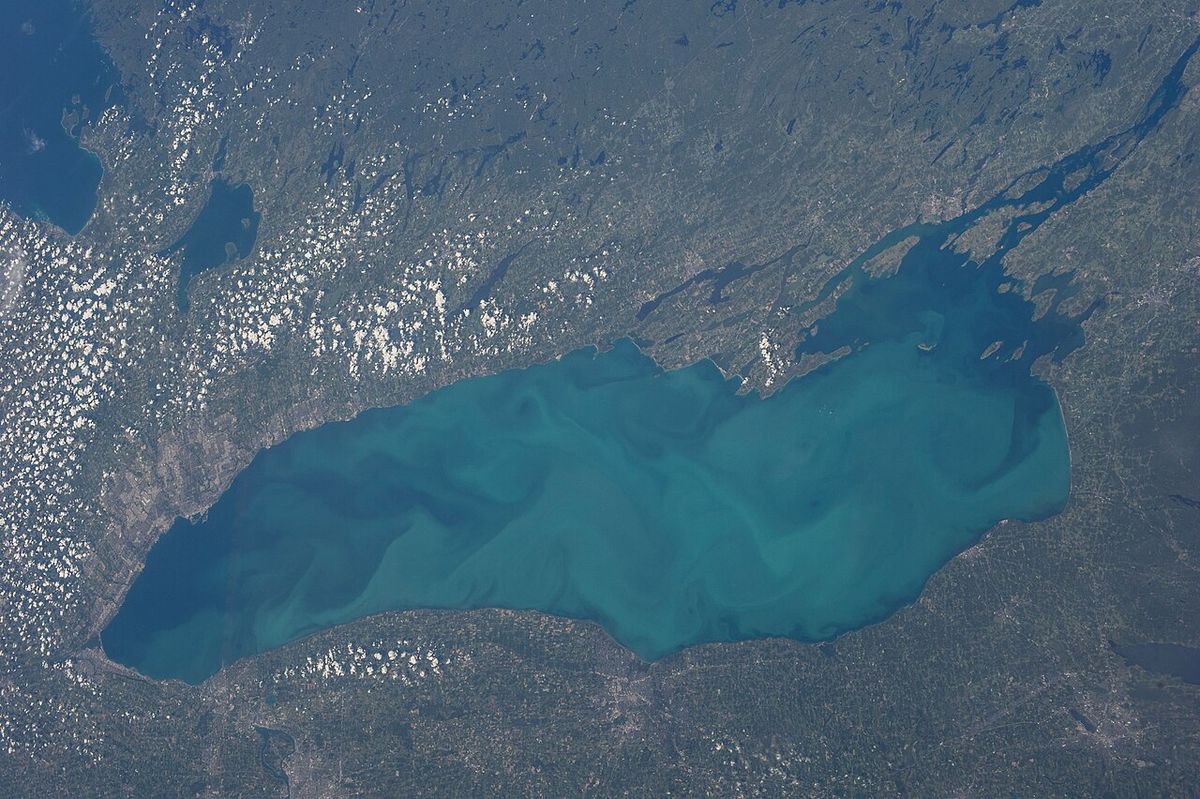
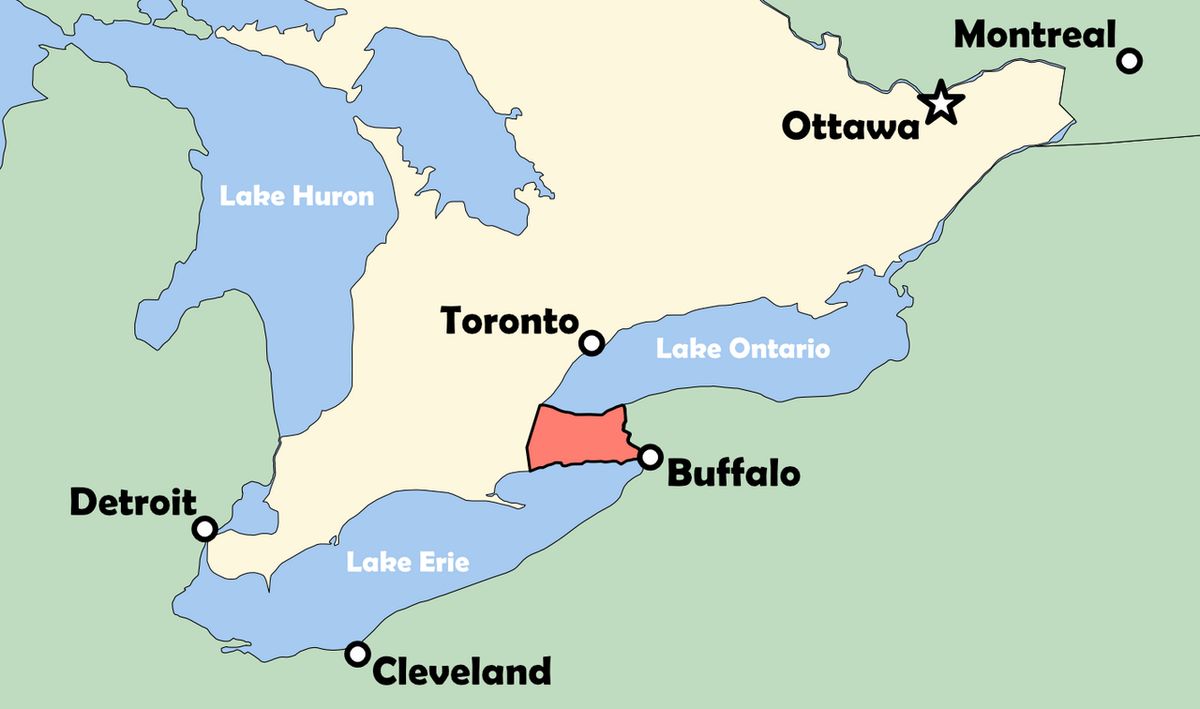
Hamilton is a port city and major urban centre in Ontario, Canada, situated at the western tip of Lake Ontario within the Greater Toronto and Hamilton Area. With a population of 569,353 as of the 2021 census, it is the third-largest city in Ontario and the ninth-largest metropolitan area in the country. Historically known as the Steel Capital of Canada, Hamilton's economy has diversified significantly, now anchored by advanced manufacturing, health sciences, and education. The city is distinguished by its dramatic geography, split by the Niagara Escarpment, and is home to major institutions like McMaster University and cultural landmarks such as the Royal Botanical Gardens.
History
The land on which Hamilton stands was originally inhabited by the Neutral First Nation, known as Attiwandaronia. Following the American Revolutionary War, about 10,000 United Empire Loyalists left the United States to settle in Upper Canada, and the Crown purchased the territory from the Mississaugas in Treaty 3, the Between the Lakes Purchase, in 1792. The town of Hamilton was conceived by George Hamilton, a son of entrepreneur Robert Hamilton, who purchased farm holdings from legislator James Durand after the War of 1812. Hamilton collaborated with landowner Nathaniel Hughson to propose a courthouse and jail, offering land to the Crown to establish an administrative centre. The town was selected as the seat for the new Gore District in 1816, surpassing nearby Ancaster, and its growth accelerated after the completion of the Burlington Canal in 1832, which made Hamilton a major port. A permanent jail of cut-stone design was completed on Prince's Square in 1832, the town limits were defined by statute on February 13, 1833, and official city status was granted by an act of Parliament on June 9, 1846.
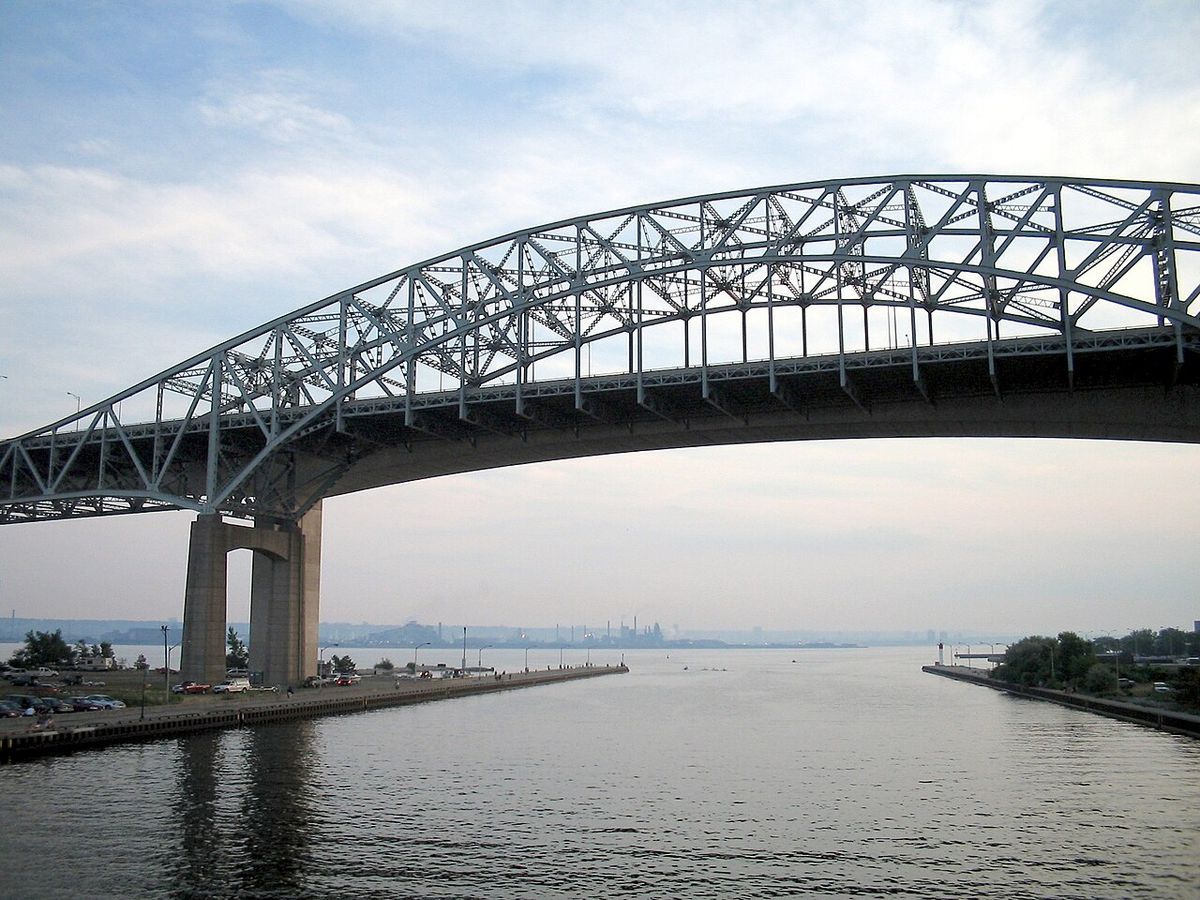
By 1845, the population was 6,475, and the city had eleven cargo schooners, eleven churches, four banks, and sixty-five taverns. The city was an early adopter of telephone technology, hosting the first commercial telephone service in Canada, the first telephone exchange in the British Empire, and the second telephone exchange in all of North America, each established between 1877 and 1878. The formation of steel giants Stelco in 1910 and Dofasco in 1912 cemented Hamilton's industrial identity. Major corporations like Procter & Gamble and Beech-Nut established their first plants outside the United States in Hamilton in 1914 and 1922 respectively. The city continued to grow with the relocation of McMaster University from Toronto in 1930, the opening of the second Canadian Tire store in Canada in 1934, the completion of the airport in 1940, and the opening of the first Tim Hortons store in 1964. The post-war era saw infrastructure projects like the Burlington Bay James N. Allan Skyway, which opened in 1958.
Economic restructuring from the 1970s onward led to the decline of heavy manufacturing. Stelco's mills were idled in 2010 and permanently closed in 2013, capping a decade where manufacturing employment in the city fell from 22 to 12 percent between 2003 and 2013. A significant political change occurred on January 1, 2001, when the old City of Hamilton, which had 331,121 residents and 100 neighbourhoods, amalgamated with the five neighbouring municipalities of Ancaster, Dundas, Flamborough, Glanbrook, and Stoney Creek to form a single-tier city. The new city began with a population of 519,949 in more than 100 neighbourhoods. Recent history includes environmental and industrial challenges, notably a devastating 1997 fire at the Plastimet plastics plant where 400 tonnes of PVC burned and the 2020 revelation that 24 billion litres of untreated wastewater had leaked into Chedoke Creek and Cootes Paradise since at least 2014 due to sewer system deficiencies.
Geography and natural features
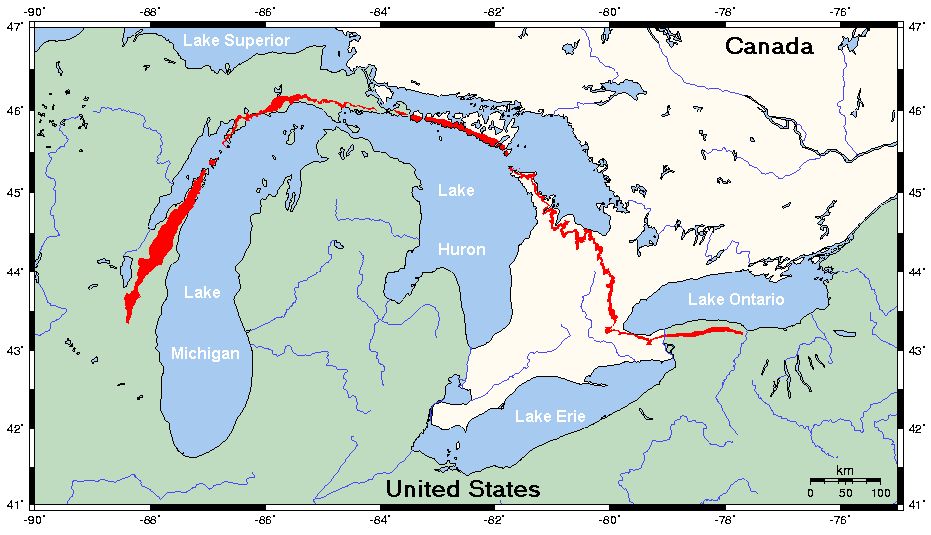
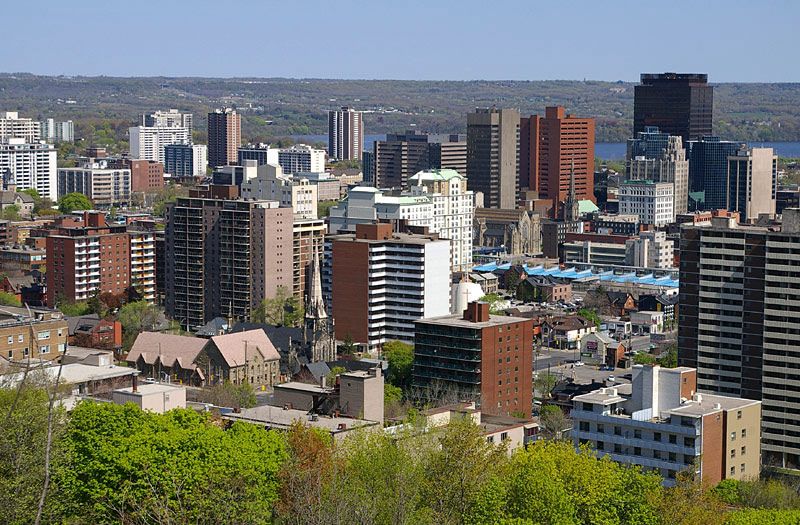
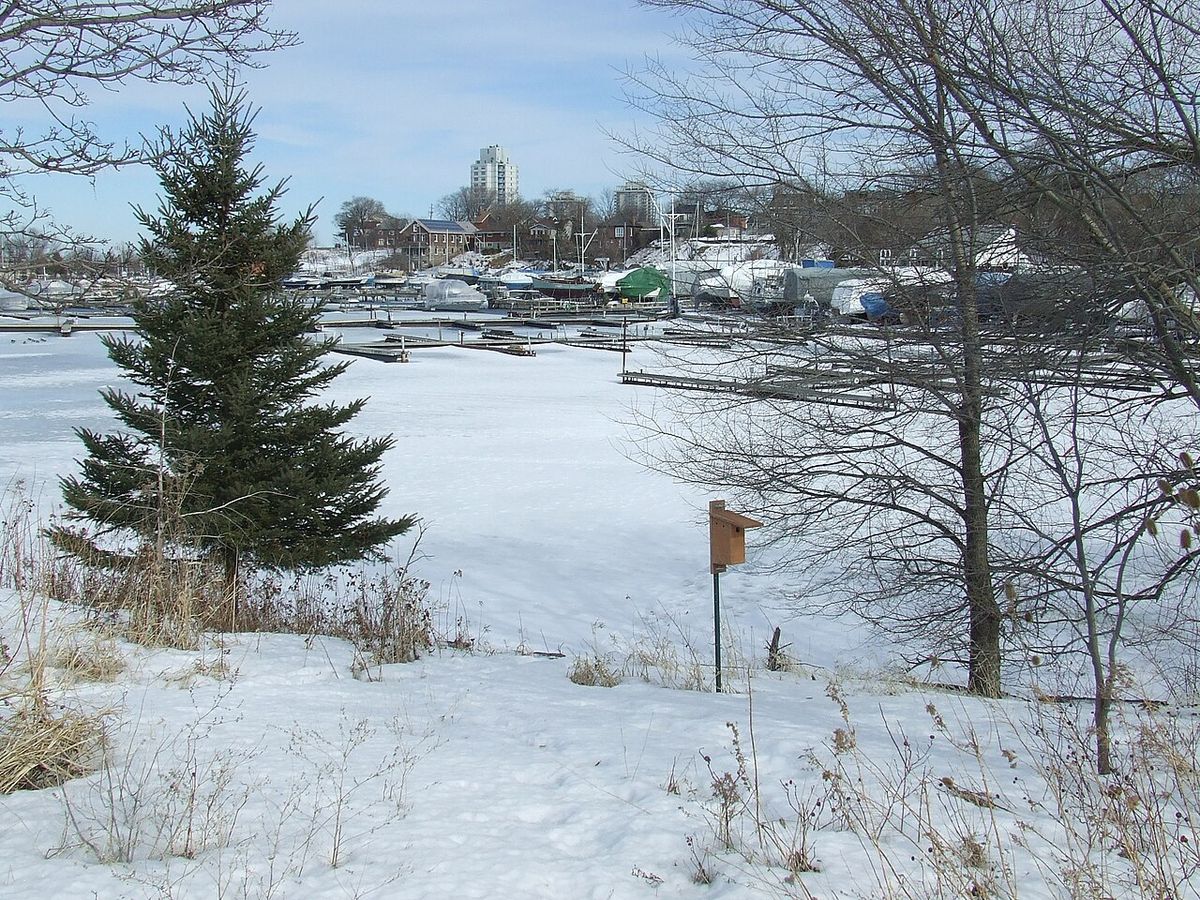
Hamilton is located in Southern Ontario on the western end of the Niagara Peninsula, wrapping around the westernmost part of Lake Ontario and Hamilton Harbour. The Niagara Escarpment, a UNESCO World Biosphere Reserve, runs east-west through the city, creating a dramatic physical divide between the 'lower city' near the lake and the 'upper city' on the plateau, with a maximum high point of 250 metres above Lake Ontario. This geological feature is central to the city's identity, providing scenic lookouts and recreational trails such as the Bruce Trail, which follows the escarpment's entire length. The city's deep-sea port is accessed via a ship canal through a natural sandbar called the Beachstrip, deposited during the last ice age, and this passage is traversed by the QEW's Burlington Bay James N. Allan Skyway and the lower Canal Lift Bridge. According to local historians, the district was originally called Attiwandaronia by the Neutral people, and early settler John Ryckman described the area in 1803 as an impenetrable forest.
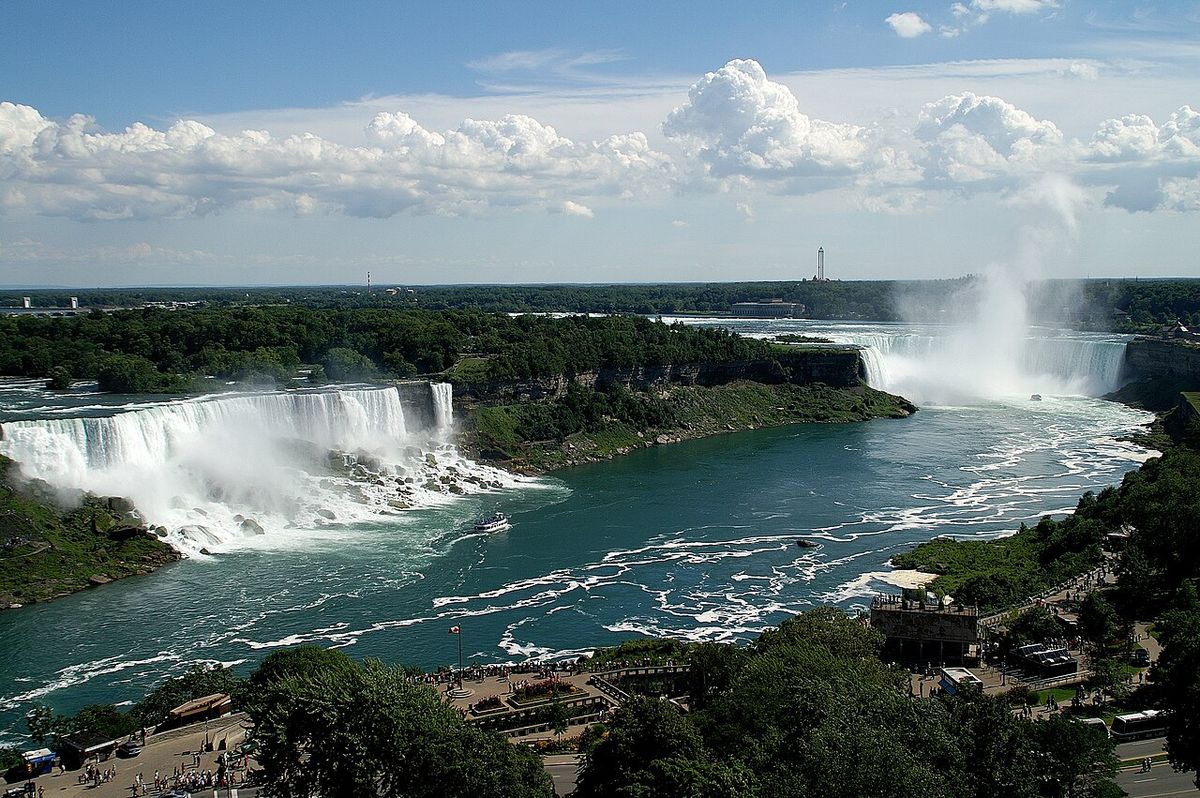
Hamilton is famously known as the 'City of Waterfalls,' home to more than 100 waterfalls and cascades, most located on or near the Niagara Escarpment and the Bruce Trail. Popular sites include Webster's Falls, Tew's Falls, and Albion Falls, and visitors are often seen swimming in them during summer. Water quality is a significant concern, however, as much of the watershed for creeks like Chedoke and Red Hill originates in storm sewers running beneath neighbourhoods atop the escarpment, carrying polluted runoff and occasional raw sewage from misconnected lines. Testing by McMaster University has regularly found dangerously high E. coli counts near many waterfalls, sometimes exceeding provincial recreational water limits by as much as 400 times. The city manages extensive green space, with the Hamilton Conservation Authority overseeing about 4,500 hectares and the city operating 1,077 hectares of parkland across 310 locations, many along the escarpment.
Climate
Hamilton has a humid continental climate, characterized by warm summers and cold winters, though it is moderate compared to much of Canada. The city sits on the Dfb/Dfa boundary in the Köppen classification, with an average July temperature of 22.0 °C. Weather conditions can vary significantly between the lower, built-up areas and the higher, more open airport location, which generally experiences lower temperatures, higher winds, and greater snowfall. The highest temperature ever recorded in Hamilton was 41.1 °C on July 14, 1868, while the coldest was -30.6 °C on January 25, 1884. Recent extreme weather events include a tornado in 2005 and the widespread North American blackout of 2003. A 2023 study identified areas of poor air quality in Hamilton, with high concentrations of benzo(a)pyrene, particularly in neighbourhoods near industrial sites.
Recent climate records highlight trends of warmer and more humid conditions. The warmest month on record was July 1988, with a mean temperature of 24.8 °C. July 2011 saw the highest average daily maximums at 29.8 °C and recorded no daily maximum below 26.0 °C for the entire month. July 2020 recorded the highest average daily minimums at 17.4 °C with no daily minimum below 12.9 °C. Humidity is also a factor, with August 2021 being the most humid month, featuring an average dew point of 18.3 °C, and the record high dew point was 27.7 °C on July 14, 1995. The city's climate data is primarily recorded at John C. Munro Hamilton International Airport, where the average yearly maximum dew point is 24.3 °C and the average yearly maximum daily minimum temperature is 21.6 °C. The record high daily minimum temperature at the airport was 25.1 °C on August 1, 2006.
Economy
Hamilton's economy has historically been dominated by steel and heavy manufacturing, earning it the nickname the Steel Capital of Canada. For decades, Stelco and Dofasco were the central pillars of this industry, with sixty percent of Canada's steel once produced in the city. Stelco returned to profitability in 2004 after nearly declaring bankruptcy, was acquired by United States Steel Corporation for C$38.50 per share in 2007, entered bankruptcy protection in 2014, and its Hamilton operations were permanently closed in 2013. Dofasco, now a subsidiary of the global giant ArcelorMittal, remains a major employer with approximately 7,300 workers at its Hamilton plant, producing about four million tons of steel annually, which represents roughly 30 percent of Canada's flat-rolled sheet steel shipments. Dofasco was North America's most profitable steel producer in 1999 and a long-time member of the Dow Jones Sustainability World Index.
Since the 2010s, the city's economy has diversified markedly, shifting toward the service and knowledge sectors. Healthcare, education, and advanced manufacturing now play leading roles. Hamilton is a central part of the Golden Horseshoe, Canada's most industrialized region, which had a population of approximately 8.1 million people in 2006 and stretches from Oshawa to Niagara Falls. The city's strategic location within the Greater Toronto and Hamilton Area provides access to a massive consumer market and transportation networks. Major employers beyond steel include McMaster University and its affiliated teaching hospitals, which form a significant health sciences cluster. The city's deep-water port continues to facilitate trade, supporting logistics and distribution industries. This economic transition has made Hamilton's economy more resilient, though manufacturing remains an important component, with the Toronto-Hamilton region identified as Canada's most industrialized area.
Demographics
According to the 2021 Canadian census, Hamilton had a population of 569,353, a growth of 6 percent from its 2016 population of 536,917. The population density was 509.1 people per square kilometre over a land area of 1,118.31 square kilometres. The larger Hamilton Census Metropolitan Area, which includes Burlington and Grimsby, had a population of 785,184 in 2021, up from 747,545 in 2016, with a land area of 1,373.15 square kilometres and a density of 571.8 people per square kilometre. The city's demographic profile shows an aging population, with those aged 65 and older constituting 17.3 percent of residents, an increase of 2.4 percent since 2011. The average age in Hamilton is 41.3 years, and children aged 14 and under make up 16.23 percent of the population, a decline of 1.57 percent from 2011. Just over half of Hamiltonians, 54.9 percent, are married or in a common-law relationship.
Hamilton is an increasingly diverse and immigrant-receiving city. As of the 2016 census, 24.69 percent of the population was born outside Canada. The city welcomed 26,330 immigrants between 2001 and 2010 and a further 13,150 between 2011 and 2016. In a move to support vulnerable newcomers, Hamilton's city council voted in February 2014 to declare Hamilton a sanctuary city, committing to offer municipal services to undocumented immigrants without the risk of deportation. This policy aims to improve access to essential services for all residents regardless of immigration status. The city's neighbourhoods vary widely, from dense urban cores to suburban and rural communities in the amalgamated areas, with the pre-amalgamation city alone containing 100 distinct neighbourhoods.
| Year | City Population | Notes |
|---|---|---|
| 2021 | 569,353 | Growth of 6% from 2016. |
| 2001 (post-amalgamation) | 519,949 | Population immediately after 2001 amalgamation. |
| Pre-2001 (Region) | 490,268 | Population of the former Regional Municipality of Hamilton-Wentworth. |
Culture, education, and landmarks
Hamilton is a major educational centre, home to several post-secondary institutions. Mohawk College is a large public college offering applied arts and technology programs, while Redeemer University is a private Christian liberal arts university. These institutions contribute significantly to the city's economy and cultural life, fostering innovation and a skilled workforce. The city's cultural scene is supported by venues like Hamilton Place, the Art Gallery of Hamilton, and the Hamilton Conservatory for the Arts, and it has a history of early technological adoption with its pioneering telephone services.
The city contains numerous significant landmarks and natural attractions. The Canadian Warplane Heritage Museum houses a large collection of historic aircraft and is a major tourist draw. Hamilton's unique urban geography provides many scenic lookouts along the Niagara Escarpment, such as Sam Lawrence Park. The city's history is preserved in its architecture, including the Pigott Building, the city's first high-rise completed in 1929, the historic Right House department store building from 1893, the Grand Lodge of Canada building from 1855, and the West Flamboro Methodist Church from 1879. The city also operates a public library that opened in 1890.
- McMaster University: A major public research university relocated to Hamilton in 1930.
- Canadian Warplane Heritage Museum: Home to a fleet of historic military aircraft.
- Bruce Trail: Canada's oldest marked hiking trail runs along the escarpment.
- Hamilton Waterfalls: Over 100 documented waterfalls within city limits.
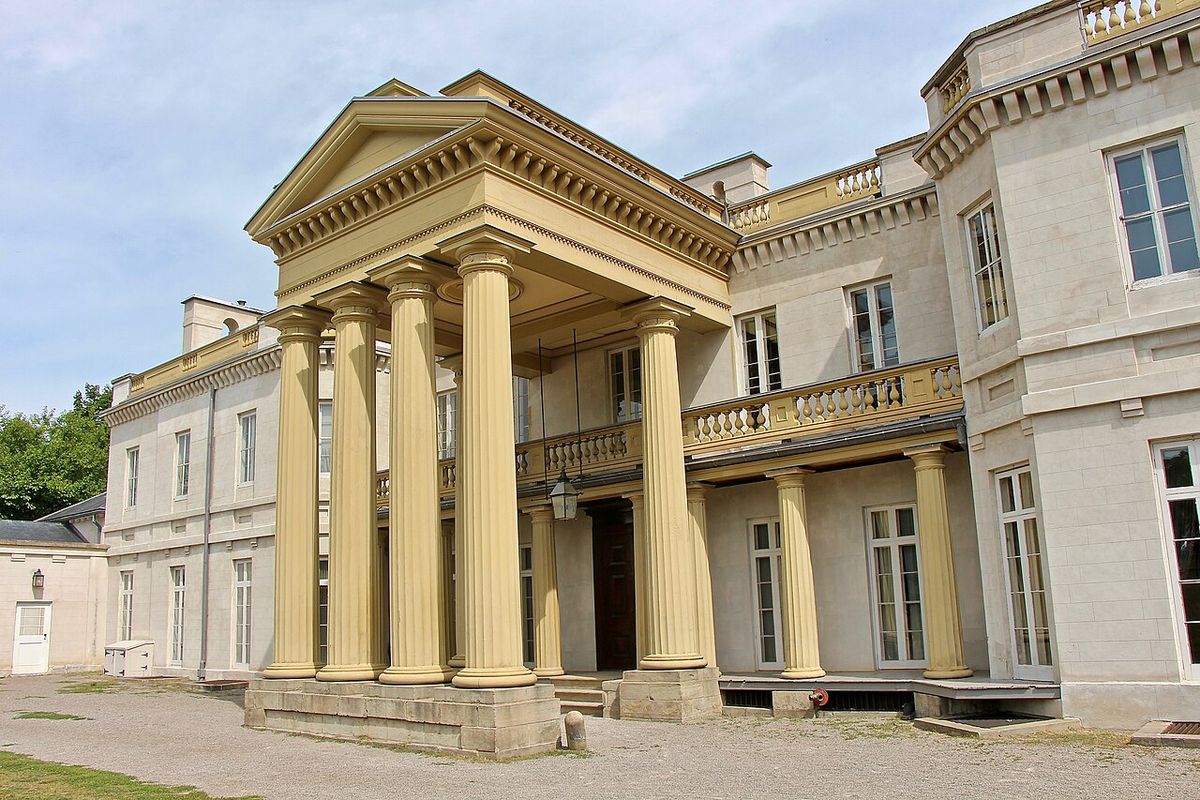
- Dundurn Castle: A 19th-century historic house museum.
- Tim Hortons: The first store of the national coffee chain opened in Hamilton in 1964.
- Art Gallery of Hamilton: The oldest and largest public art gallery in southwestern Ontario.
- Hamilton Street Railway: Operated interurban electric street railways and trolley buses from 1950 to 1992.
Infrastructure and transportation
Hamilton's transportation network has evolved significantly from its early days as a port town. The completion of the Burlington Canal in 1823 was a crucial development for the city's economy, enabling Hamilton to become a major port on Lake Ontario. The city's street railway system, the Hamilton Street Railway, began with interurban electric street railways and two inclines powered by the Cataract Power Company. The last streetcar line was abandoned in 1951, but the HSR operated trolley bus routes from 1950 until 1992. Major road infrastructure includes the Burlington Bay James N. Allan Skyway, a high-level bridge that opened in 1958 and carries the Queen Elizabeth Way over the ship canal, and the Red Hill Valley Parkway, which opened in 2007 after extensive delays. John C. Munro Hamilton International Airport was completed in 1940 and serves as a key cargo and passenger facility.
The city's industrial growth was supported by its infrastructure, including the early construction of a permanent jail on Prince's Square in 1832 and the establishment of a police board in 1833. The city has faced infrastructure challenges, notably with its water and sewer systems. The 2020 revelation of a 24-billion-litre wastewater leak into Chedoke Creek since 2014 highlighted deficiencies in the sewerage and stormwater management systems. The city's storm sewers, which feed many of the waterfall watersheds, carry polluted runoff and have been improperly connected to sanitary lines in some cases, contributing to serious water quality degradation in natural areas.
Questions about Hamilton, Ontario
How many waterfalls are in Hamilton?
Hamilton is known as the 'City of Waterfalls' and is home to more than 100 waterfalls and cascades. Most of these are located on or near the Niagara Escarpment, which runs through the city. Popular examples include Webster's Falls, Tew's Falls, and Albion Falls. They are a major natural attraction, though water quality issues due to urban runoff mean swimming is not recommended.
Why is Hamilton called the Steel Capital of Canada?
Hamilton is called the Steel Capital of Canada because sixty percent of Canada's steel was produced there by its two major steel companies, Stelco and Dofasco. This title reflects the city's traditional economic foundation in steel and heavy manufacturing. Stelco was founded in 1910 and Dofasco in 1912, establishing Hamilton as an industrial powerhouse. For decades, the steel industry led the local economy, though a significant shift toward service sector industries occurred during the 2010s. The Stelco mills were idled in 2010 and permanently closed in 2013, marking a major transition for the city's industrial identity.
When did Hamilton become a city?
Hamilton officially became a city on June 9, 1846, by an act of Parliament of the Province of Canada. This milestone followed a period of rapid growth and development after the town was conceived by George Hamilton in 1815. Key earlier developments included being chosen as the Gore District's administrative centre in 1816 and the completion of the Burlington Canal in 1823, which made Hamilton a major port. By 1845, the population had reached 6,475, supporting various industries, banks, and churches. The city's official status was a recognition of its growing importance and prosperity within Upper Canada.
What is the population of Hamilton?
As of the 2021 Canadian census, Hamilton has a population of 569,353 people. The city's census metropolitan area, which also encompasses Burlington and Grimsby, has a larger population of 785,184. With a land area of 1,118.31 square kilometres, this gives Hamilton a population density of 509.1 people per square kilometre. The city's population has grown from 536,917 in 2016, representing a change of 6 percent. The demographic profile shows an average age of 41.3 years, with 17.3 percent of residents aged 65 years and older.
What major universities are in Hamilton?
Hamilton is home to several major post secondary institutions, including McMaster University, Mohawk College, and Redeemer University. McMaster University is a prominent research university that relocated from Toronto to Hamilton in 1930. Mohawk College is a large public college serving the community. These institutions contribute to the city's economic and cultural scene, particularly as Hamilton's economy has shifted toward service sector industries like health and sciences during the 2010s. The presence of these schools supports education and innovation within the Greater Toronto and Hamilton Area.
What was the Hamilton amalgamation in 2001?
The Hamilton amalgamation on January 1, 2001, created the current city boundaries by merging the original City of Hamilton with five neighbouring municipalities: Ancaster, Dundas, Flamborough, Glanbrook, and Stoney Creek. This amalgamation dissolved the former Regional Municipality of Hamilton Wentworth and established a single tier municipal government. Before the merger, the old City of Hamilton had 331,121 residents, while the new amalgamated city began with a population of 519,949 people across more than 100 neighbourhoods. The change was intended to end the subsidization of suburbs and create a more unified municipal administration for the region.
Sources and further reading
- Hamilton, Ontario (Wikipedia)
- Home page | City of Hamilton (hamilton.ca)
- Tourism Hamilton: Welcome to Hamilton (tourismhamilton.com)
- Hamilton (thecanadianencyclopedia.ca)
Checked by the Your Space Hamilton desk. Last updated 2026-10-19.