Blue Water Bridge
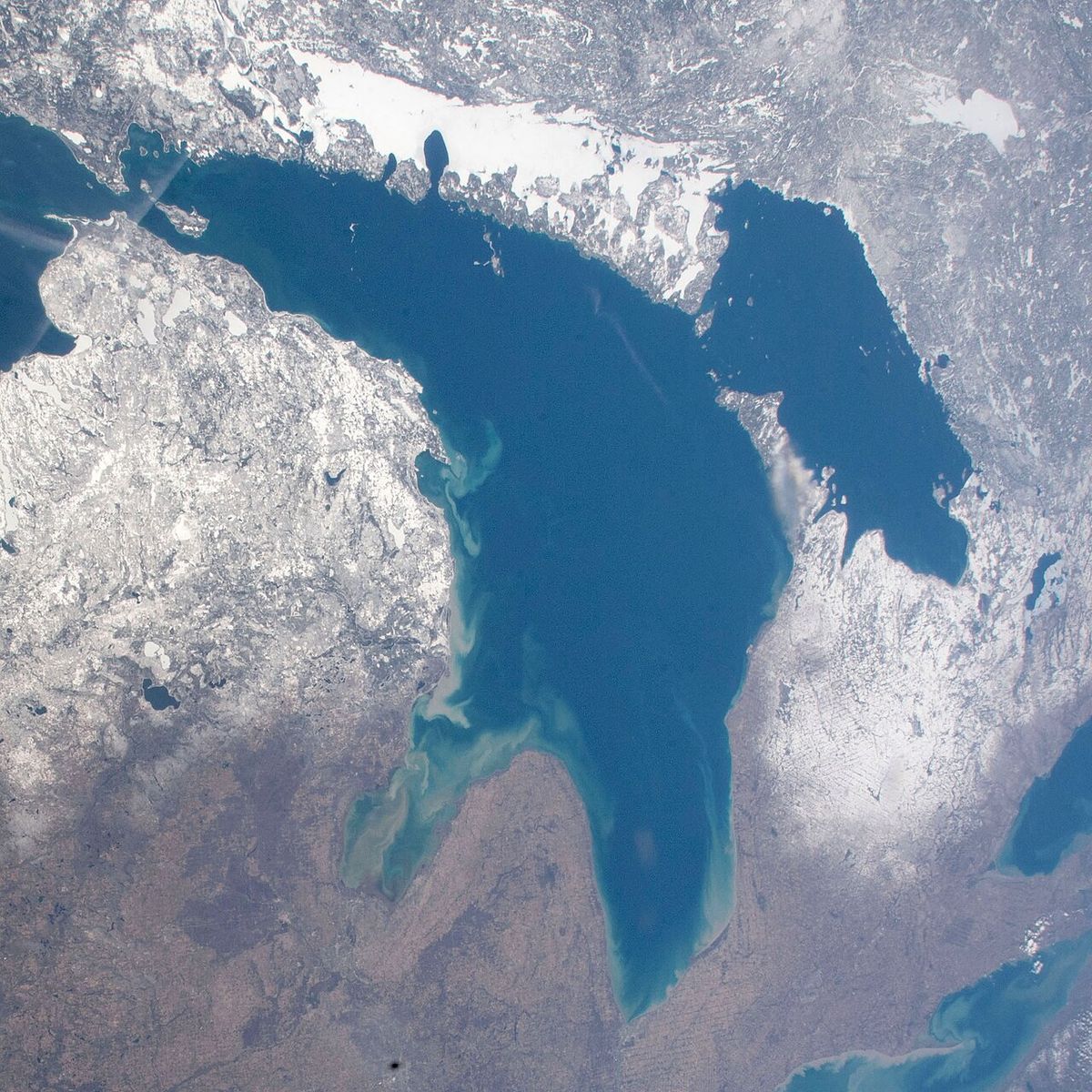
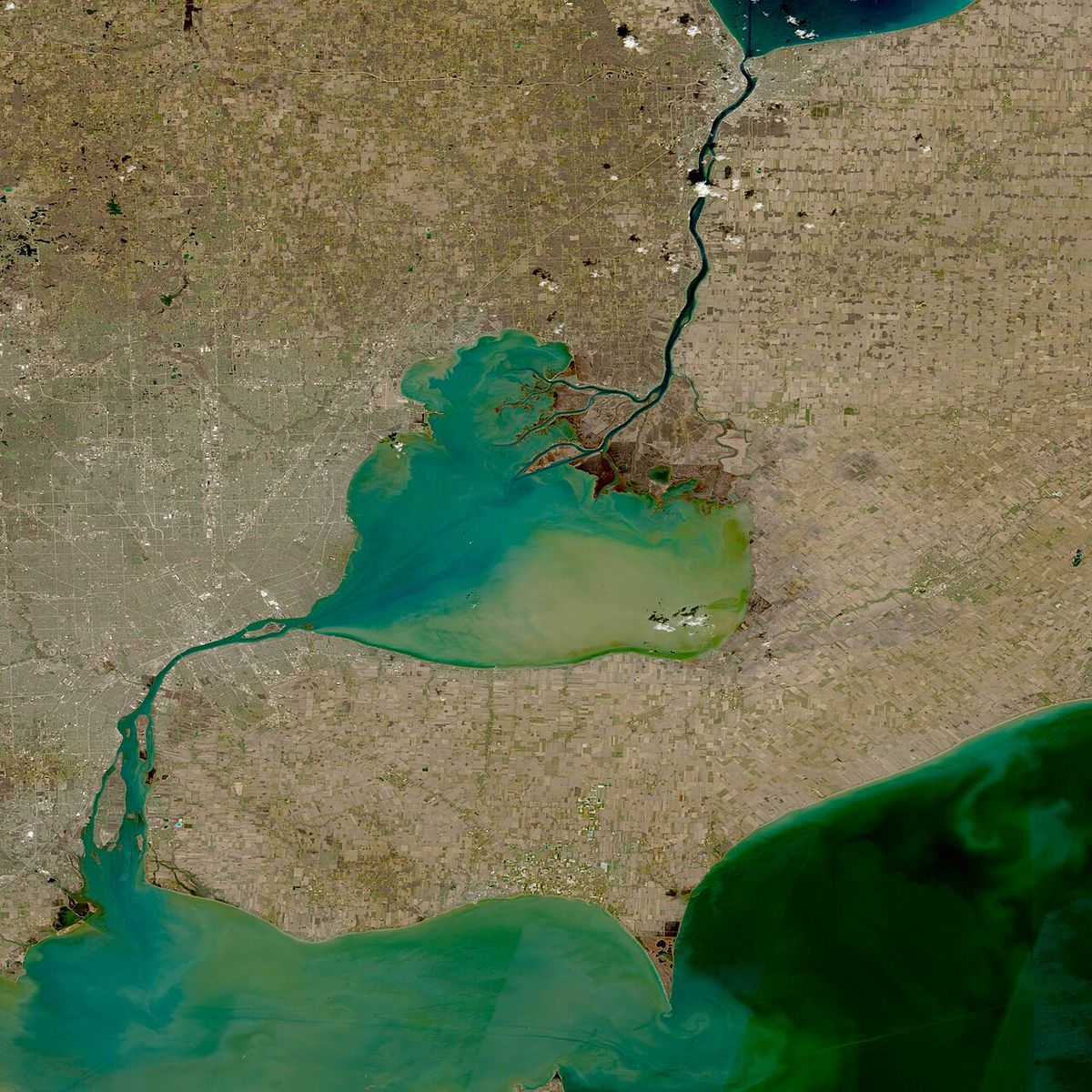
The Blue Water Bridge is a twin-span international bridge crossing the St. Clair River, connecting Port Huron, Michigan, with Point Edward, Ontario. The structure, which consists of an original cantilever truss span opened in 1938 and a continuous bowstring arch companion span opened in 1997, serves as a vital transportation link between Highway 402 in Ontario and Interstates 69 and 94 in Michigan. As of 2025, it became the busiest Canada-United States trade corridor, surpassing the Ambassador Bridge in commercial truck traffic due to more competitive tolls. The bridge is a critical economic gateway, facilitating the movement of millions of vehicles and billions of dollars in trade annually between the American Midwest and central Canada.
Design and Engineering
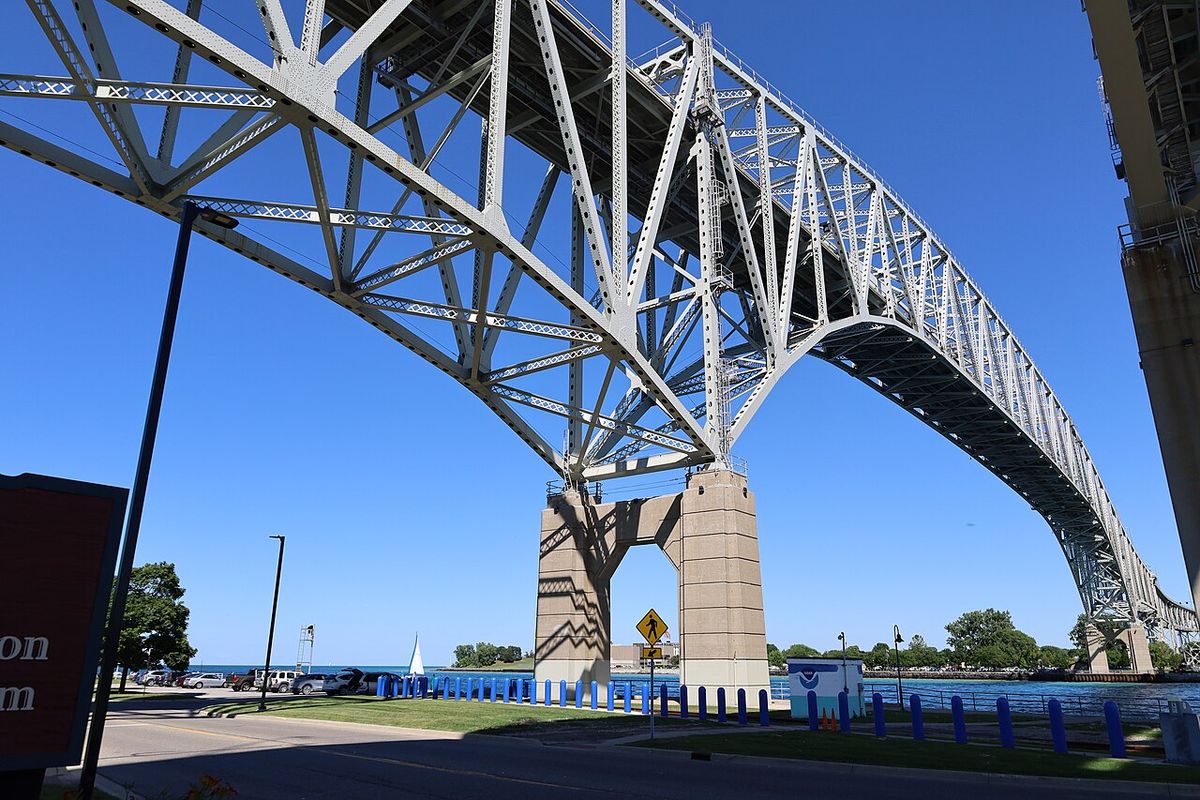
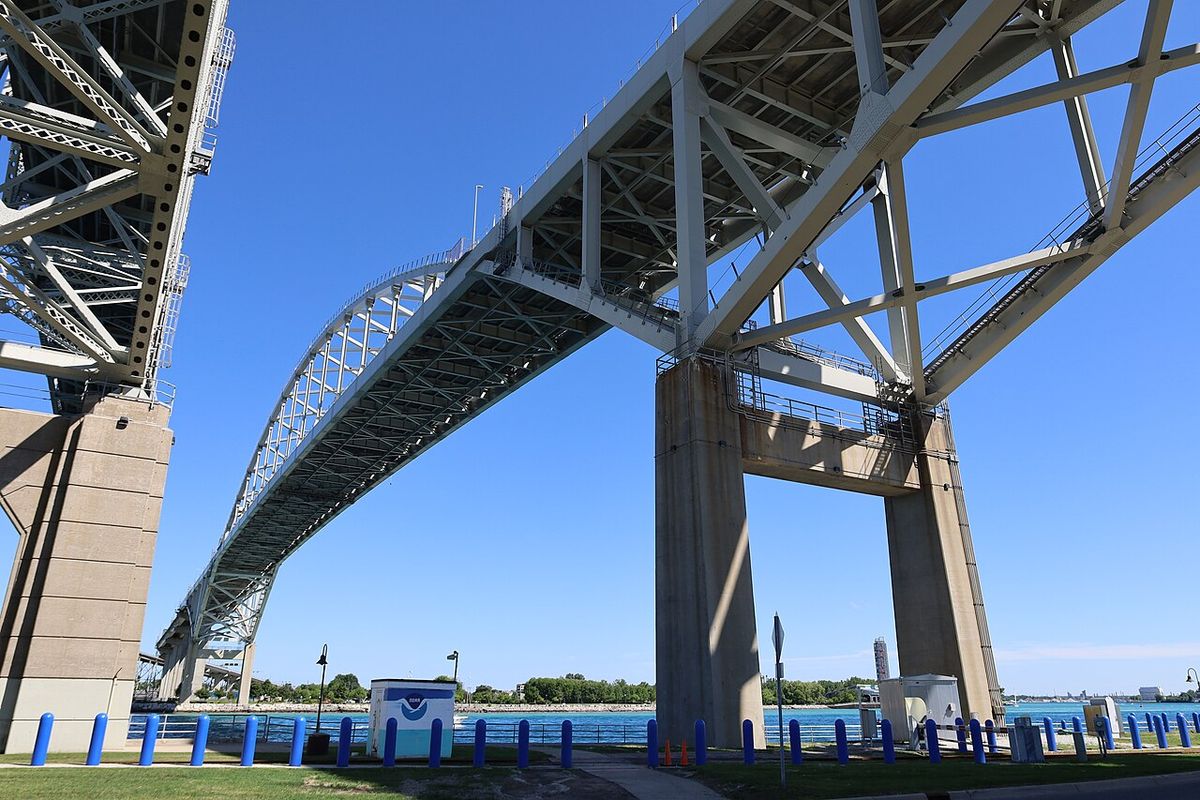
The Blue Water Bridge comprises two distinct and structurally different spans. The original 1938 bridge is a cantilever truss design with a total length of 6,178 feet and a main span of 871 feet. This design was selected by lead engineer Ralph Modjeski after the United States Army Corps of Engineers mandated a 150-foot vertical clearance for shipping, making a traditional suspension bridge impractical. The second span, opened in 1997, is a continuous bowstring arch bridge measuring 6,109 feet in total length with a main span of 922 feet. This design was chosen from several proposals for its lower maintenance costs and its aesthetic compatibility with the original structure, featuring a flattened arch that merges the traffic deck with the supporting steel. The approaches to the new bridge use concrete hammer-head piers and pre-cast concrete box girders on the Canadian side, while the American side uses large pre-cast concrete beams, though both appear identical from a side view. The twin spans are painted in a distinctive blue colour, giving the bridge its name and making it a prominent landmark on the St. Clair River. The engineering partnership for the second span involved Modjeski & Masters from the United States and Buckland & Taylor Ltd. from Canada, who collaborated to ensure the new structure complemented the historical span while incorporating modern construction techniques.
Historical Development from Ferries to First Span
The need for a fixed crossing at this location followed decades of ferry service, which began in 1836 with a sailboat licensed to a Canadian man named Crampton and evolved to include a pony-powered vessel in the 1840s operated by Davenport from Port Sarnia. Steam-powered paddle wheelers soon followed, but the first vessel capable of carrying automobiles did not arrive until 1921. Formal plans for a bridge languished during the Great Depression until the Michigan Legislature passed Public Act 147 of 1935, creating a State Bridge Commission. The commission, along with the Canadian government, hired the engineering firm of Modjeski and Masters, with Ralph Modjeski as lead engineer and Canadian associates Charles Monsarrat and Philip Louis Pratley, to design and build the bridge. Construction proceeded under the constraints of the 1935 United States Congressional approval via Public Law 411, which permitted the sale of bonds to be repaid by toll revenue set at 25 cents. The original two-lane bridge, which included sidewalks, opened to traffic on October 10, 1938. Major subsequent developments included the completion of the connecting freeway infrastructure, with Interstate 94 reaching the American side in 1964 and Highway 402 providing a continuous freeway link to Highway 401 in Ontario by 1982.
Toll Operations and Financial History
The financial and operational history of the Blue Water Bridge has seen significant shifts between toll-free and tolled periods. The original financing was based on bonds to be repaid by toll revenue within 30 years. Both governments had agreed to operate the bridge toll-free once bonds were paid off, and the U.S. side fulfilled this by cancelling its toll in February 1962 under an executive order from Governor John Swainson. This forced layoffs, including one of Swainson's own father who was a toll worker. However, the Canadian side, through the Blue Water Bridge Authority, continued to collect tolls from westbound traffic and began collecting a 25-cent toll from eastbound traffic in August 1962. In June 1963, the State of Michigan appropriated funds to operate its part of the bridge without toll revenue. The U.S. Congress passed a law in 1970 permitting Michigan to resume toll collection, contingent on repaying a $348,000 federal grant from 1938 that funded the approach road. This repayment was made, and tolls were restored in September 1971, but only for eastbound traffic on the Michigan side. In 1985, Congress allowed Michigan to increase tolls to create a state matching fund for plaza improvements, with the condition that after construction bonds were retired, tolls would revert to levels sufficient only for operation and maintenance. A 1991 agreement with the Federal Highway Administration formalized the use of toll receipts for both operating costs and the state's share of the major plaza improvement project, which was completed in November 1996 at a cost of $55 million.
The Twinning Project of the 1990s
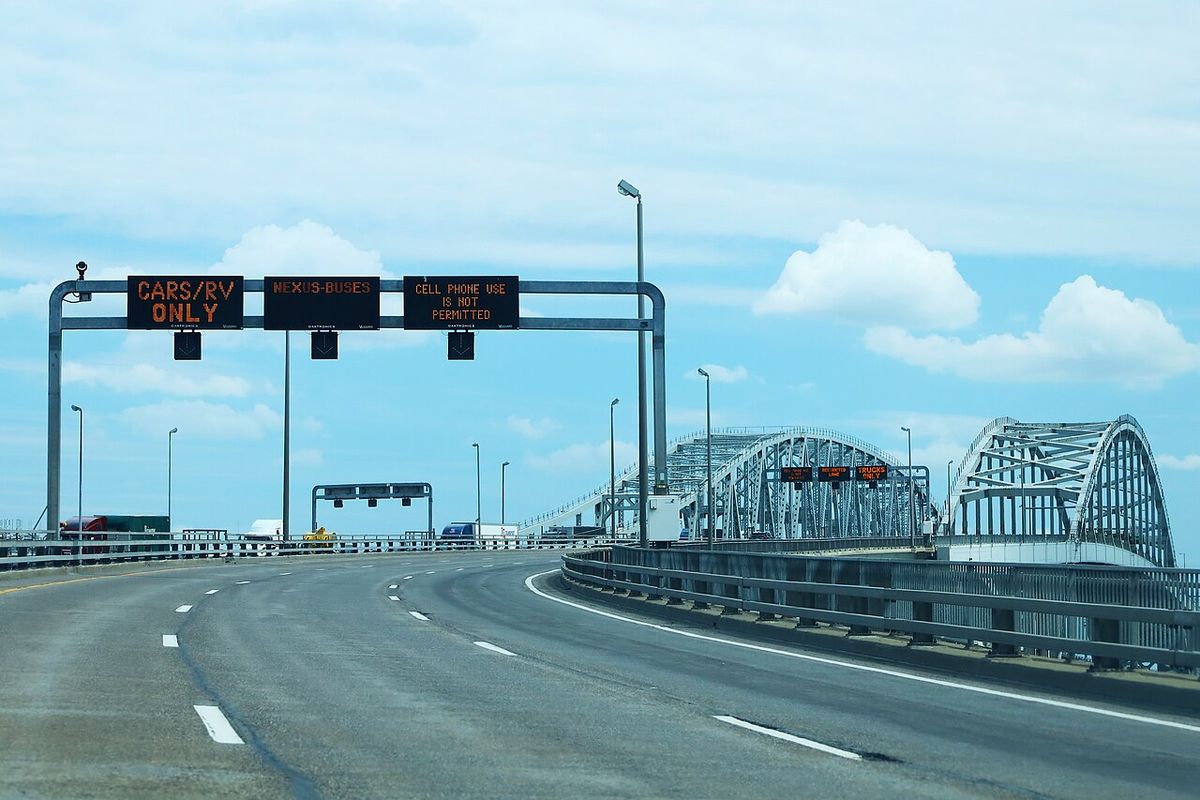
By 1992, traffic volumes had exceeded the original bridge's rated capacity, prompting authorities to plan for a second span. A public consultation process from 1994 to 1995 presented five possible designs, with public opinion favouring either a duplicate of the existing bridge or a cable-stayed design, the latter garnering about 21 percent support for its dramatic appearance. The Blue Water Bridge Authority, however, selected a continuous-tied arch design, which was a distant third in polls, citing its aesthetic harmony with the old bridge and lower long-term maintenance costs due to fewer spans. Critics initially found this design awkward, so engineers modified details such as using concrete piers and steel towers for a less massive appearance to ease the visual transition between spans. The twinning project was a binational engineering effort between Modjeski & Masters of the United States and Buckland & Taylor Ltd. of Canada. Construction involved innovative techniques, including the use of two temporary red-painted and lighted masts to assist in erecting the arch. The new three-lane bridge opened on July 22, 1997, south of the original span. From 1997 to 1999, it carried traffic in both directions while the original bridge was closed for a comprehensive deck replacement and upgrades to its guardrail and lighting, the latter made to match the new bridge. Upon reopening, the original bridge was reconfigured to carry three lanes of westbound traffic exclusively, while the new span was dedicated to three lanes of eastbound traffic, creating a six-lane crossing. A temporary flyover ramp on the Michigan side, used to direct westbound traffic during construction, was closed after the original bridge reopened.
Key factors in the design selection and construction for the second span included public opinion and engineering considerations. Over half of public opinion had favoured a duplicate of the first bridge, while a cable-stayed bridge came in second. The Blue Water Bridge Authority rejected both of these designs that topped public opinion. The authority chose a continuous-tied arch design because it blends in with the original span yet stands out on its own and has lower maintenance costs. Engineers changed design details to make the new bridge complement the existing one, using concrete piers and a steel tower for a less massive appearance.
- Public preference for a duplicate bridge was overruled as it would create a false sense of history, and the cable-stayed design was rejected for overshadowing the original bridge in height and proportion.
- The chosen continuous-tied arch design used an innovative low arch that merged the traffic deck with the bottom structural support, eliminating expensive bracing.
- Concrete hammer-head piers were selected for the new approaches for economy and to give the new bridge a simpler look, making it easier to distinguish from the old bridge's truss approaches.
- Differing construction methods for the approach spans between the two countries, using pre-cast concrete beams in the U.S. and pre-cast box girders in Canada, resulted in identical visual profiles from the side.
- The construction required ensuring the St. Clair River remained navigable, with no use of floating platforms permitted during the build.
The successful completion of the twinning project effectively doubled the vehicular capacity of the Blue Water Bridge crossing and established its modern twin-span profile. The second three-lane bridge opened on July 22, 1997, just south of the first bridge. After opening, it served both directions of traffic from 1997 to 1999 while the original bridge was closed for deck replacement. Upon reopening, the original bridge was re-striped with three westbound lanes and the new bridge exclusively carried three eastbound lanes. The twinning project was a combined effort between American and Canadian engineering firms.
Ownership, Operations and Border Traffic
The Blue Water Bridge is jointly owned and maintained by Canada and the United States through a unique binational partnership. The Canadian side is owned and operated by the Federal Bridge Corporation Limited, a federal Crown corporation known as Blue Water Bridge Canada since 2007, while the Michigan Department of Transportation (MDOT) manages the American side. Both countries operate 24-hour border inspection facilities at the Port Huron-Sarnia Border Crossing, with the Canada Border Services Agency and U.S. Customs and Border Protection processing all crossing traffic. The bridge is a tolled crossing, with revenue dedicated to maintenance, operations, and capital projects. In 2020, cash toll payments were discontinued as a pandemic measure, and the shift to electronic payments became permanent on January 1, 2024. The bridge offers prepaid toll accounts, such as the ConneXion program, to expedite crossing for commercial and frequent travellers, with tolls automatically deducted from accounts. The Blue Water Bridge is a fundamental component of continental trade, consistently ranking among the busiest border crossings. As of 2011, it was the second-busiest commercial crossing on the Canada-U.S. border after the Ambassador Bridge and the fourth-busiest overall international crossing in Ontario, with approximately 4.7 million vehicle crossings annually. U.S. inspectors at Port Huron processed 1,579,646 cars and 826,288 trucks in 2017. A significant shift occurred in 2025, when it surpassed the Ambassador Bridge in Detroit-Windsor to become the busiest trade corridor on the Canada-U.S. border, recording 2.1 million commercial truck crossings compared to 1.9 million at Windsor, a change largely attributed to the Ambassador Bridge's significantly higher toll rates of $27 per axle versus approximately $7 at Blue Water Bridge, as well as delays in the opening of the Gordie Howe International Bridge.
Recent Rehabilitation and Major Plaza Redevelopment
The Blue Water Bridge has been the focus of continuous investment and rehabilitation to maintain its structural integrity and operational efficiency. A major rehabilitation project on the Second Blue Water Bridge, the eastbound span, involved blast cleaning, deck repairs, and resurfacing. It was closed from May 29, 2024, and reopened on October 23, 2024, two days ahead of schedule. Similarly, the westbound span underwent resurfacing and waterproofing in April 2015 and received pier protectors and new gusset plates in 2018. The most ambitious current project is a multi-phase, multi-decade overhaul of the U.S. port of entry plaza in Port Huron, with an allocation of $800 million announced in 2026. The project aims to improve traffic flow, safety, and security by reconfiguring local access, expanding the toll plaza, and constructing new inspection facilities, with the goal of separating local and international traffic which had caused congestion. The first phase, completed in 2025, involved relocating Exit 275 from eastbound I-94, reconfiguring a critical city intersection at Pine Grove Avenue, and adding noise walls and landscaping. The second phase, underway as of summer 2026, includes expanding the plaza southward, building a new secondary inspection facility to improve safety over the previous practice of officers waving vehicles over on the open plaza, an MDOT administration building, and a non-intrusive inspection building for truck X-rays. This phase also involves constructing five new bridges or ramps to connect the expanded southern area to the existing plaza, which sits about 30 feet above the surrounding ground. A key change is relocating a duty-free store inside the plaza footprint to prevent trucks from using its parking lot to shortcut around freeway backups. The second phase has a targeted completion date of 2030. Future phases for northward expansion for commercial inspection and refurbishment of the existing plaza itself remain contingent on further federal funding. These upgrades are designed not to increase bridge capacity but to modernize security infrastructure and operations, with project managers working to minimize disruptions to cross-border traffic during construction.
Economic Role and Regional Importance
The Blue Water Bridge is an indispensable economic conduit, forming part of one of the four shortest land routes between the U.S. Midwest and the Northeastern United States and Canada. It directly connects the industrial and agricultural heartlands of the Midwest with the major population and manufacturing centres of southern Ontario, notably Toronto. The crossing's reliability and competitive toll structure have solidified its status, making it the leading trade corridor by commercial volume as of 2025 and 2026. The structure plays an essential role as an economic link, with the Federal Bridge Corporation stating it takes pride in ensuring the bridge is safe, secure, and operates efficiently for the travellers and shippers who depend on it. Culturally, the twin spans are a prominent landmark for the communities of Sarnia, Point Edward, and Port Huron, featuring in the region's identity and celebrated for its graceful architecture and the panoramic views it offers of the St. Clair River and Lake Huron. Institutions like the Lambton County Museums, which includes the Oil Museum of Canada National Historic Site, help preserve and promote the bridge's history and its role in the region's development alongside the oil industry. The bridge's image is widely used in local tourism and civic branding, symbolizing the connection and flow of people and goods between the two nations. Its continued operation and modernization, including the recent rehabilitation and plaza redevelopment, are viewed as a long-term investment in binational prosperity and regional community vitality, supporting the millions of passengers and the billions of dollars in trade that cross annually.
Questions about Blue Water Bridge
How much does it cost to cross the Blue Water Bridge?
The Blue Water Bridge charges a toll for all vehicular crossings, with rates varying by vehicle type. As a point of comparison, in 2026, tolls for commercial trucks were cited as a key reason for its increased traffic, being approximately $7 per axle compared to $27 per axle at the competing Ambassador Bridge. The bridge transitioned to a fully cashless tolling system on January 1, 2024. Drivers can pay using electronic prepaid accounts like ConneXion, which offer convenience and sometimes discounted rates, with tolls automatically deducted as vehicles pass through designated lanes.
Why did the Blue Water Bridge become busier than the Ambassador Bridge?
The Blue Water Bridge surpassed the Ambassador Bridge as the busiest Canada-U.S. trade corridor in 2025, a position it continued to hold into 2026. The primary driver was commercial truck traffic diverting from the Windsor-Detroit crossing due to significantly higher toll rates on the Ambassador Bridge. Data from 2025 showed 2.1 million truck crossings at Sarnia-Port Huron compared to 1.9 million at Detroit-Windsor. Ongoing delays in the opening of the new Gordie Howe International Bridge in Windsor also contributed to the shift in traffic patterns toward the Blue Water Bridge.
What are the current construction projects happening at the bridge?
A major, multi-phase redevelopment of the U.S. port of entry plaza in Port Huron is underway, with $800 million allocated for the project as of 2026. The work aims to reconfigure traffic patterns, improve safety, and modernize inspection facilities. Key elements include relocating a duty-free store inside the plaza footprint, constructing new buildings for secondary inspections and the Michigan Department of Transportation, and adding several new ramps and bridges to connect the expanded plaza. The second phase of this plaza project began in the summer of 2026 and is scheduled for completion around 2030. These projects focus on operational improvements rather than increasing the number of traffic lanes on the bridge itself.
Who owns and operates the Blue Water Bridge?
The Blue Water Bridge is jointly owned and operated by Canada and the United States under a binational agreement. On the Canadian side, the Federal Bridge Corporation Limited, a Crown corporation of the Government of Canada, is responsible for ownership, maintenance, and toll collection. On the American side, the Michigan Department of Transportation (MDOT) owns and maintains its portion of the bridge and plaza. Border security and customs inspection for all traffic are handled separately by the Canada Border Services Agency and U.S. Customs and Border Protection at their respective plazas.
Which bridge is older, the Blue Water Bridge or the Ambassador Bridge?
The Ambassador Bridge is older than the Blue Water Bridge. In contrast, the original span of the Blue Water Bridge opened later, on October 10, 1938. The Blue Water Bridge's second, twin span was constructed much later, opening on July 22, 1997. Therefore, while both are key border crossings, the Ambassador Bridge has been in operation for nearly a decade longer than the original Blue Water Bridge.
Can pedestrians or bicycles cross the Blue Water Bridge?
No, pedestrians and bicycles are not permitted to cross the Blue Water Bridge. The original 1938 span was constructed with sidewalks for pedestrian use. However, these sidewalks were removed around 1982 to add a third reversible traffic lane to alleviate vehicle congestion. The bridge is designed solely for motor vehicle traffic, including cars and commercial trucks. Neither of the twin spans provides any dedicated pathway for non vehicular traffic.
Sources and further reading
- Blue Water Bridge (Wikipedia)
- Blue Water Bridge (bluewaterbridge.ca)
- $800 million allotted to revamp U.S. Blue Water Bridge plaza (canada.constructconnect.com)
- The Federal Bridge Corporation Limited (federalbridge.ca)
- The Blue Water Bridge, Lambton County Museums (lambtonmuseums.ca)
Checked by the Your Space Hamilton desk. Last updated 2026-10-26.