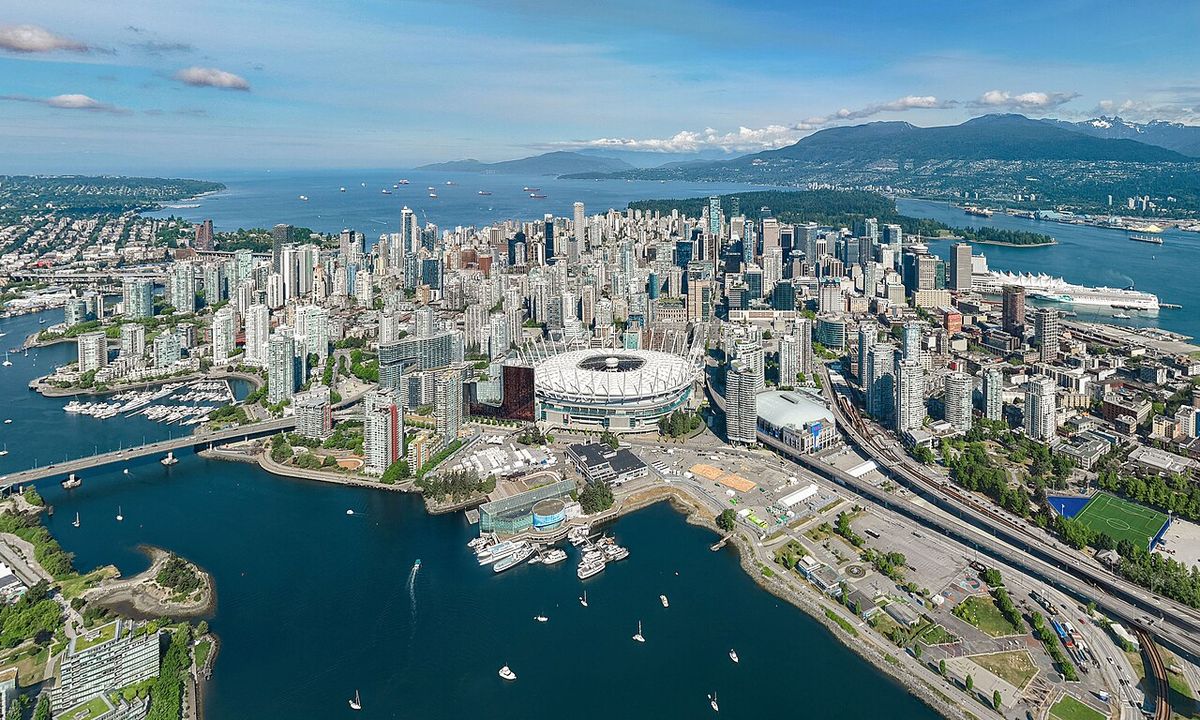
Vernon, British Columbia
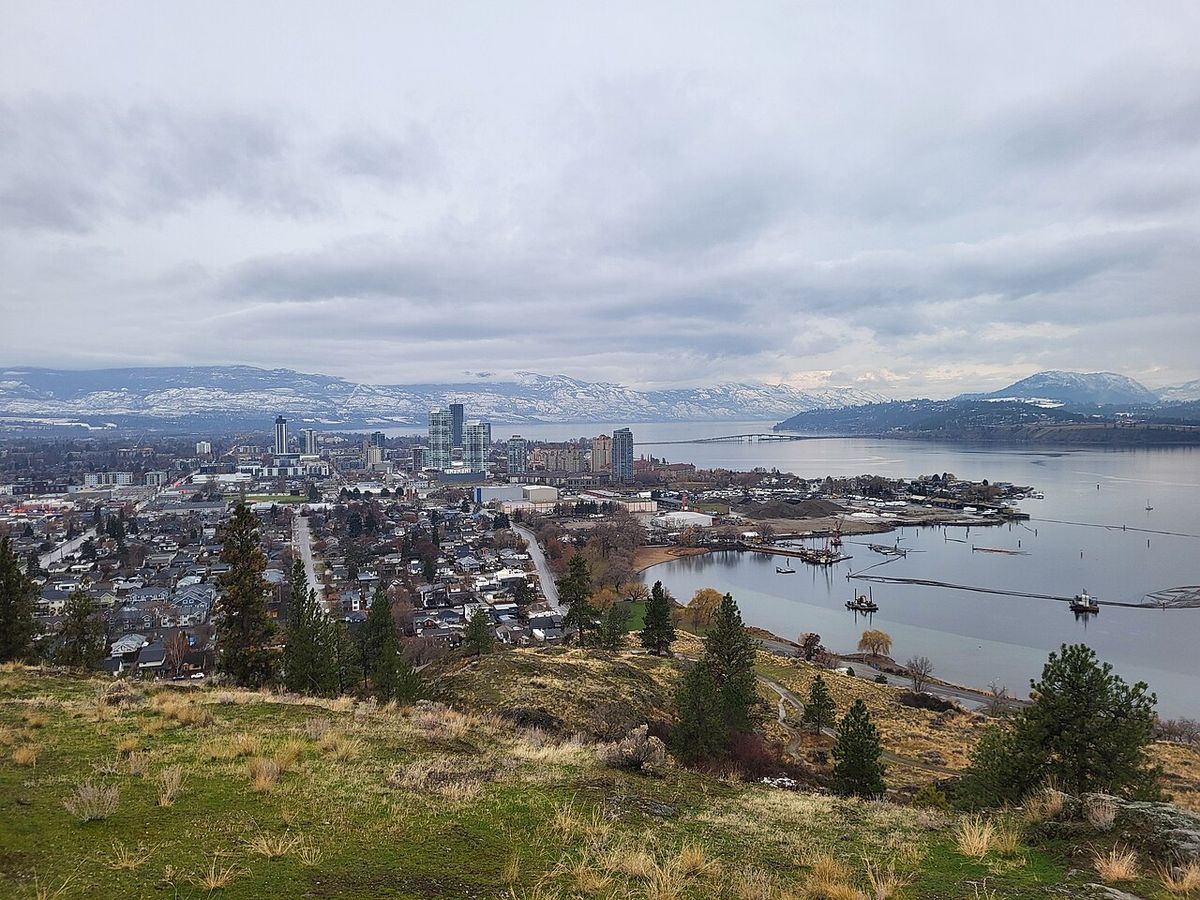
Vernon is a city in the North Okanagan region of British Columbia, Canada. Located 440 kilometres northeast of Vancouver, it is the largest city in the North Okanagan Regional District with a population of 44,519 as of the 2021 census. The city was incorporated in 1892 and named for Forbes George Vernon, a former MLA who helped establish the nearby Coldstream Ranch. With its location between Okanagan Lake and Swan Lake, Vernon is a major year-round tourist destination known for its lakes, ski resorts, and rich agricultural history centred on fruit orchards and cattle ranches.
History and Early Development
The area now known as Vernon has been inhabited for millennia by the Okanagan people, part of the Interior Salish, who initially named the site Nintle Moos Chin, meaning 'jumping over place where the creek narrows.' This name refers to a section of Swan Lake that passes through the present-day downtown. Some of these Indigenous peoples are part of the Okanagan Indian Band within the Okanagan Nation Alliance. The first European fur traders arrived in the area in 1811, with Luc Girouard recorded as the first white settler. The North West Company, and later the Hudson's Bay Company after their 1821 merger, operated in the region. Significant permanent settlement began in 1863 following gold discoveries at Cherry Creek, the Monashee Mountains, Mission Creek, and the east side of Okanagan Lake, which led to the establishment of numerous cattle ranches.
The community's original central business district, called Centreville, was formed in 1885, the same year a post office, hotel, general store, and school house were constructed. A Hudson's Bay Company store was established in a rough wooden structure in 1887. The community was known as Priest's Valley before being renamed in honour of Forbes George Vernon, a member of the Legislative Assembly of British Columbia for Yale who helped establish the nearby Coldstream Ranch. Vernon's growth accelerated with the arrival of the Canadian Pacific Railway in the Okanagan and Shuswap regions in 1891, connecting to the community and its Okanagan Landing neighbourhood. In 1893, the Canadian Pacific Railway launched the sternwheeler S.S. Aberdeen on Okanagan Lake, connecting Vernon to Penticton and points between. Fruit trees were first planted and grew by the early 1890s, with a canal built to supply water to orchards and farms in 1906.
Incorporation and 20th Century Growth
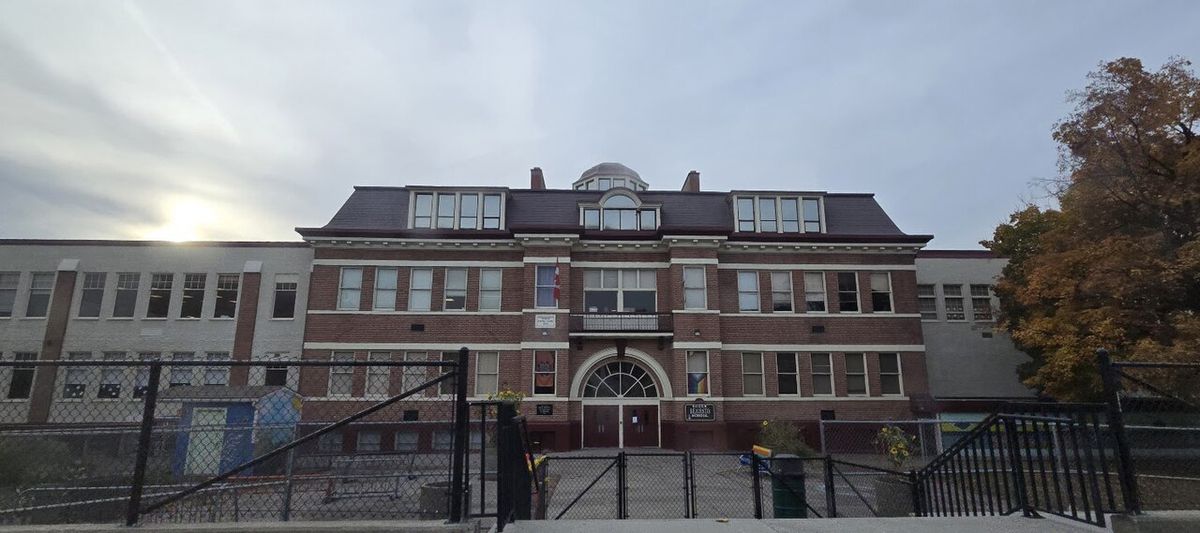
Vernon was incorporated as a city on 30 December 1892. Its first city hall, which also housed a fire hall and public reading space, was built in 1903. Key public services like the Vernon Jubilee Hospital and a new high school were established in 1909. The city centre shifted from Coldstream Road to 30th Avenue as the population expanded. The Okanagan Mounted Rifles military program was formed in the city in 1908, bringing an increased number of people to the area for training during World War I and World War II. Despite a slowdown during World War I, citizens later voted to open a new high school, sports stadium, the Village Green Centre shopping mall, and a public library, solidifying Vernon's role as a regional hub.
Geography, Climate, and Demographics
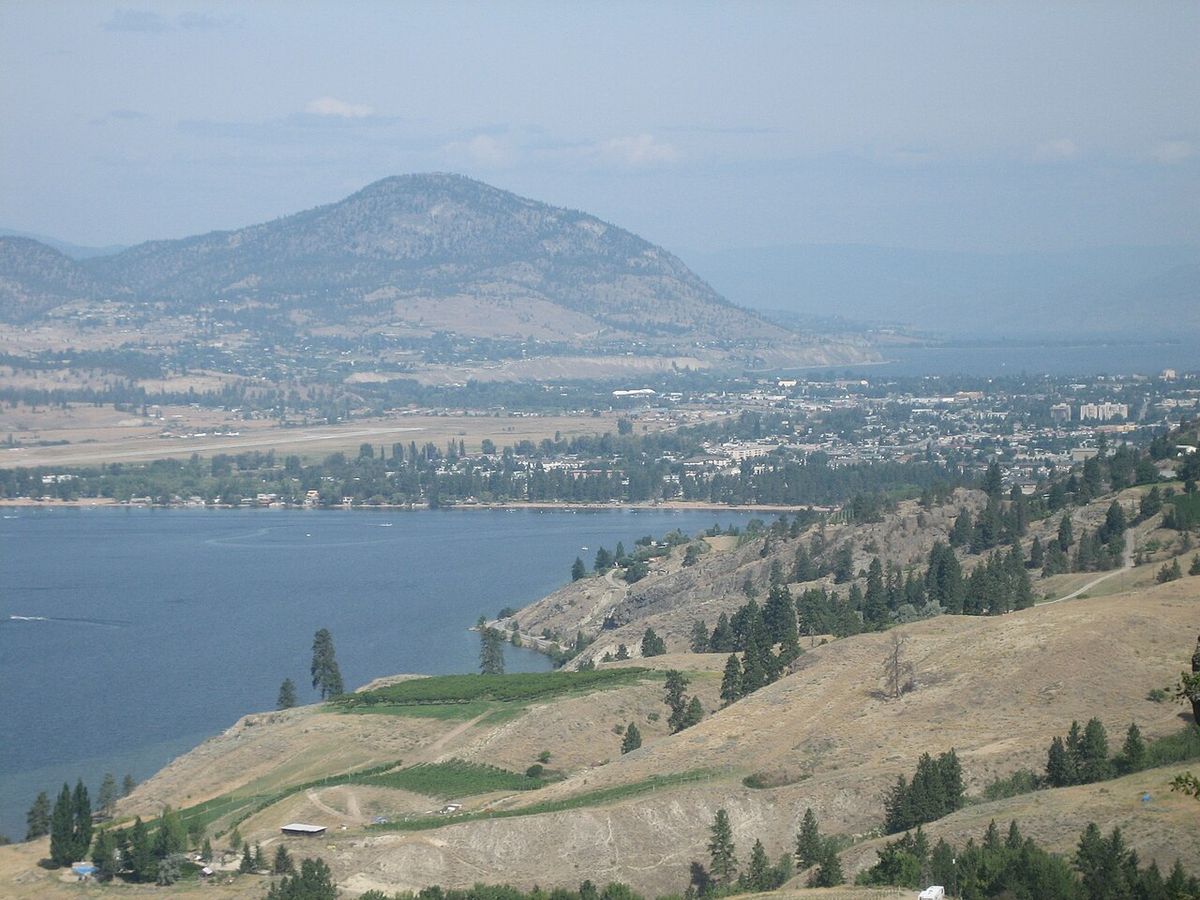
Vernon is situated in the North Okanagan Valley between Okanagan Lake to the west and Swan Lake to the east. The city's downtown core is built around a narrowing section of Swan Lake. The surrounding landscape features rolling hills, orchards, and nearby mountain ranges like the Monashees. Vernon experiences a humid continental climate with warm, sometimes hot summers and cold winters where highs are around freezing, though mild by Canadian standards. Precipitation is well-distributed year-round. According to the 2021 Canadian census, Vernon had a population of 44,519 living in 19,776 of its 21,287 total private dwellings, an 11 percent increase from 2016. With a land area of 96.43 square kilometres, it had a population density of 461.7 people per square kilometre.
The demographic profile shows an older population, with a median age of 48.4 in 2016, higher than the national median of 41.2. Residents aged 65 and older constituted 25.5 percent of the population. The median household income before tax was $31,455, and the median dwelling value was $349,932. The ethnic composition is predominantly white (84.7 percent), with visible minorities at 8.0 percent and Indigenous peoples at 7.3 percent. The largest visible minority groups are South Asian (2.4 percent), Filipino (1.1 percent), and Chinese (1.0 percent). English is the first language for 87.2 percent of residents. Other common first languages are German (2.1 percent), French (1.2 percent), and Punjabi (1.2 percent). In terms of religion, 55.1 percent reported no religious affiliation, while Christianity was the faith of 40.8 percent. Smaller religious communities include Islam (0.9 percent), Sikhism (0.8 percent), and Hinduism (0.5 percent).
Economy and Transportation Infrastructure
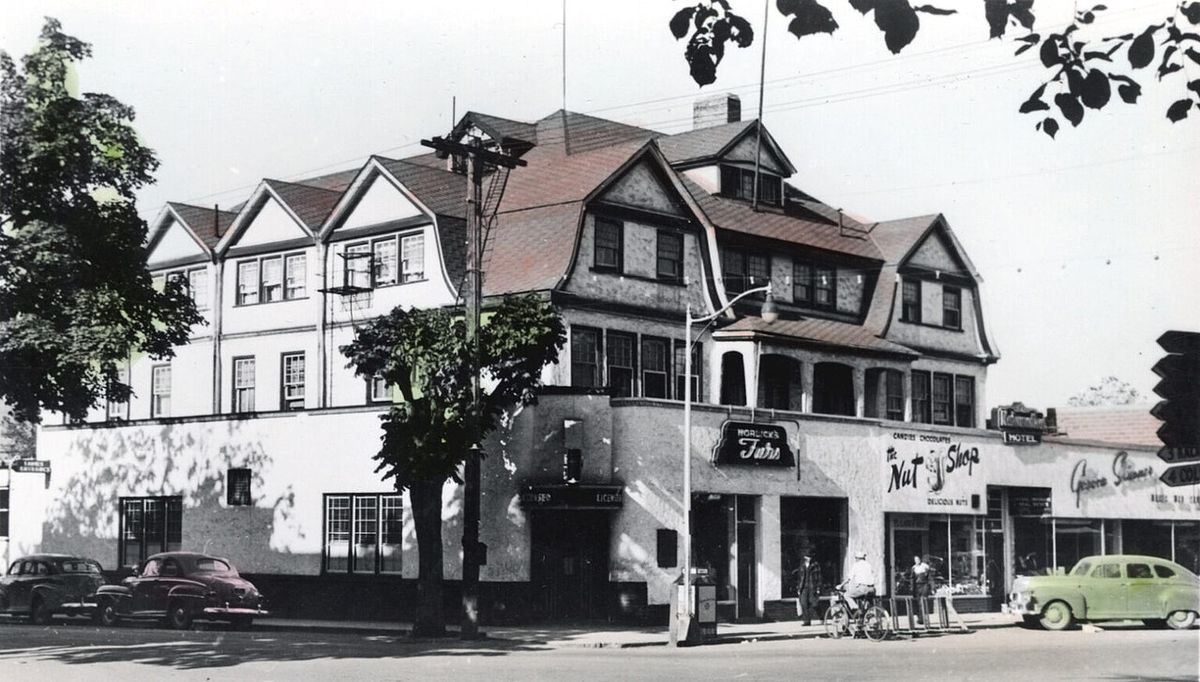
Historically, Vernon's economy was rooted in cattle ranching and fruit orchards, attracting British families and establishing it as a major economic hub in the Okanagan. The city remains a significant agricultural centre and has diversified into tourism, retail, and services as the commercial centre for the North Okanagan. Major transportation corridors connect Vernon to the rest of the province. Highway 97 runs north-south, linking the city to Kelowna to the south and Kamloops to the north. Highway 97A begins in Vernon and travels north to Armstrong and Enderby, while Highway 6 connects Vernon east-west to Lumby. A major $22 million interchange renovation was completed at the junction of Highways 97 and 6, including a new interchange system and four-lane expansion.
Local public transit is provided by Vernon Regional Transit, operated through BC Transit in conjunction with the District of Coldstream and the North Okanagan Regional District. This system includes full-service buses and handyDART services for people with disabilities. For intercity travel, Ebus, a sister brand to Red Arrow, offers coach service from a downtown terminal. Vernon is served by the Vernon Regional Airport (IATA: YVE, ICAO: CYVK) in the Okanagan Landing area, which is used primarily for general aviation with no scheduled air service. Scheduled passenger air service is accessed via Kelowna International Airport, located approximately 40 kilometres south of the city, which offers flights to destinations across British Columbia, Alberta, Toronto, and Seattle.
Arts, Culture, and Public Art
Vernon hosts a significant calendar of cultural events and operates numerous arts facilities. The Vernon Winter Carnival, first held in 1961, is Western Canada's largest and North America's second largest winter carnival. Each summer, the downtown core holds the Sunshine Festival, featuring live music, artisan booths, community program booths, food trucks, and children's entertainment. The Vernon and District Performing Arts Centre presents three series of entertainment including dance, theatre, and child-oriented programming, hosting hundreds of touring musical acts and local talent. The Powerhouse Theatre operates seasonally in a former power station, relying on volunteers. The historic Towne Cinema, built in 1929-30 in Art Deco style, is home to the Vernon Film Society and served as a main venue for entertaining troops and collecting aluminum for the war effort during World War II.
The Vernon Community Arts Centre, located in Polson Park and operated by the Arts Council of the North Okanagan, is a studio-based facility offering year-round art classes, workshops, and an artist in residence program. Every June, the city hosts Creative Chaos, the largest craft show in Western Canada, where artisans sell handmade goods over three days. Vernon displays a variety of public art, including a collection of 28 heritage murals created under the direction of lead artist Michelle Loughery. One notable mural depicts Sveva Caetani, an Italian immigrant and local art instructor. In 2016, Canada's first inclusive memorial sculpture was installed on the grounds of Vernon Secondary School.
- Vernon Winter Carnival (founded 1961, largest in Western Canada)
- Sunshine Festival (annual summer downtown event)
- Vernon and District Performing Arts Centre (three performance series)
- Powerhouse Theatre (seasonal theatre in former power station)
- Towne Cinema (historic 1930s Art Deco theatre, home to Vernon Film Society)
- Vernon Community Arts Centre (studio facility in Polson Park)
- Creative Chaos (largest Western Canadian craft show, held in June)
- Heritage mural collection (28 murals, project ongoing)
Sports, Recreation, and Junior Hockey Success
Vernon is a premier destination for year-round sports and recreation. In summer, activities centre on the water, with popular beaches like Kalamalka Beach, which has a large pier for sunbathing and jumping, Kin Beach, and Paddle Wheel Park Beach. The city hosts a large slo-pitch tournament called Funtastic. Golf is a major draw, with several courses including the 36-hole Predator Ridge Resort, ranked by Score Magazine as one of Canada's top 25 public golf courses. Predator Ridge hosted the Skins Game in 2000, featuring Fred Couples, Sergio García, Phil Mickelson, and Mike Weir, and again in 2008. Mountain biking trails are found in Ellison Provincial Park, Kalamalka Lake Park, Sovereign Lake Provincial Park, Predator Ridge, and Silver Star Mountain. Winter sports are dominated by skiing and snowboarding at Silver Star Mountain Resort, which hosted a 1991 FIS Cross-Country World Cup event, and cross-country skiing at the Sovereign Lake Nordic Club, host of a 2005 World Cup event with over 50 kilometres of terrain.
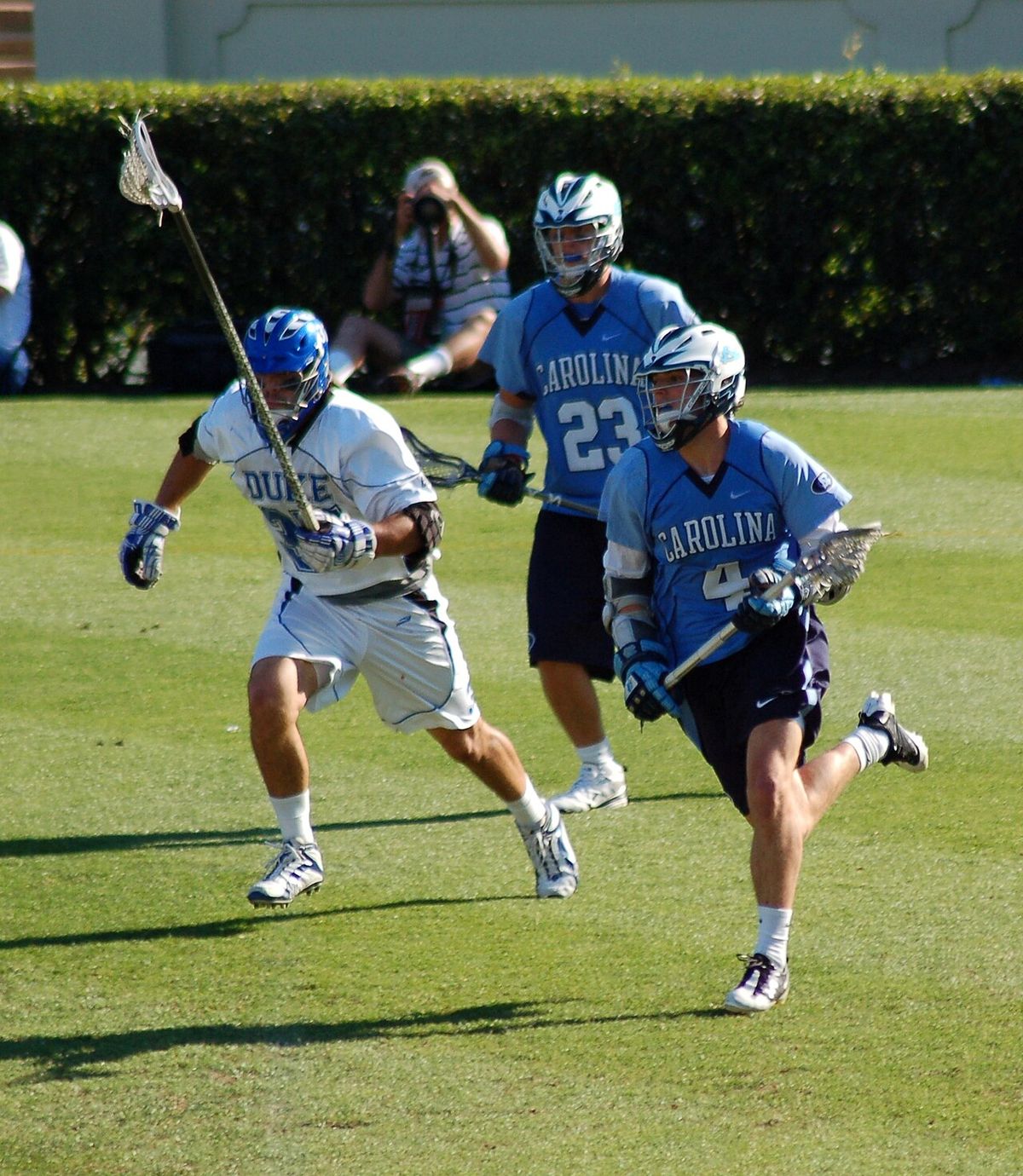
The city has a strong tradition in ice sports. The Vernon Vipers junior hockey team, originally the Vernon Lakers, is one of the most decorated in Canadian Junior A history. The team has won the national championship six times: the Royal Bank Cup in 1990, 1991, 1996, 1999, 2009, and 2010. They have also won four Abbott Cups, five Doyle Cups, eight Mowat Cups, and nine league titles. Curling is also popular at the Vernon Curling Club, which has hosted the 1979 Canadian Senior Women's Curling Championship, the 1992 Canadian Junior Curling Championships, the 2004 Canadian Senior Curling Championships, and the 2008 Ford World Women's Curling Championship at the Vernon Multiplex. Other sports include tennis, organized by the Vernon Tennis Association which runs programs 15 hours per week, and pickleball, with the Vernon Pickleball Association incorporating in 2014 and now having over 500 members. The Vernon Tigers Junior B Lacrosse Club, established in 2000, has won three league titles and two provincial silver medals.
| Team/Sport | Notable Achievement | Years/Details |
|---|---|---|
| Vernon Vipers (Hockey) | National Junior A Championships | 6 titles: 1990, 1991, 1996, 1999, 2009, 2010 |
| Vernon Tigers (Lacrosse) | Thompson Okanagan Junior Lacrosse League Titles | 3 league titles, 2 provincial silver medals |
| Curling | Major Events Hosted | 2008 Ford World Women's Curling Championship, 1979 Canadian Senior Women's, 1992 Canadian Juniors, 2004 Canadian Seniors |
| Skiing | FIS Cross-Country World Cup Host | Silver Star (1991), Sovereign Lake Nordic Club (2005) |
| Golf | Skins Game Host | Predator Ridge Resort (2000, 2008) |
Education, Governance, and Civic Projects
Public education in Vernon is administered by School District 22 Vernon, which operates 14 elementary schools and five high schools: Vernon Secondary School, Kalamalka High School in Coldstream, Clarence Fulton High School near the airport, W.L. Seaton Secondary off 27th Street, and Charles Bloom Secondary in Lumby. Vernon Secondary School was renovated in the early 21st century. The district includes independent schools like Vernon Christian School, which has elementary and secondary campuses. For post-secondary education, the city is home to a campus of Okanagan College, a degree-granting institution that offers many summer and yearly courses. Several smaller community and specialty colleges also operate within Vernon.
Vernon is governed by an elected city council and is represented provincially in the Vernon-Lumby electoral district and federally in the Vernon, Lake Country, Monashee riding. Local governance has addressed practical community needs, such as the installation of a distinctive public toilet. The project began after requests from the Activate Safety Task Force in 2018. Council initially considered purchasing 'Portland loos' for $275,000 but commissioned a similar stainless steel facility from local suppliers instead. The local design was installed at a lower cost, features slats for security visibility, and is open from 7 a.m. to 9 p.m. If satisfactory, similar toilets may replace facilities near the city's bus station. The city's flag was officially adopted in November 2010 after being flown in Afghanistan by Canadian Forces members including local seaman Gareth Eley and returned as part of the Home Flags Project during Remembrance Day ceremonies at the Wesbild Centre.
Questions about Vernon, British Columbia
What is Vernon, BC known for?
Vernon is known as a year-round recreation destination in British Columbia's Okanagan Valley. It is famous for its lakes and beaches in summer, and for skiing at Silver Star Mountain Resort in winter. The city has a rich agricultural history in ranching and fruit orchards. It is also renowned for its successful junior hockey team, the Vernon Vipers, which has won six national championships. The city hosts major events like the Vernon Winter Carnival, Western Canada's largest winter carnival, and the Creative Chaos craft show.
What is the population of Vernon, BC?
According to the 2021 Canadian census, the city of Vernon had a population of 44,519 living in 19,776 private dwellings. The broader metropolitan area, known as Greater Vernon, which includes surrounding communities, had a population of 67,086. Vernon is the largest city within the North Okanagan Regional District and saw an 11 percent population increase from its 2016 count of 40,116. The population density in 2021 was 461.7 people per square kilometre.
When was Vernon founded and incorporated?
The townsite developed with the name Priest's Valley before being renamed in honour of Forbes George Vernon, a former MLA who helped establish the Coldstream Ranch. Vernon was officially incorporated as a city on 30 December 1892. Key infrastructure like the Canadian Pacific Railway arrived in 1891, and the first city hall was built in 1903. The Vernon Jubilee Hospital opened in 1909.
What are the main lakes and ski resorts near Vernon?
Vernon is situated between Okanagan Lake to the west and Swan Lake to the east, with a section of Swan Lake flowing through downtown. Popular beach areas include Kalamalka Beach on Kalamalka Lake, Kin Beach, and Paddle Wheel Park Beach. The primary ski resort is Silver Star Mountain Resort, a short drive from the city, which hosted a FIS Cross-Country World Cup event in 1991. For dedicated Nordic skiing, the Sovereign Lake Nordic Club, adjacent to Silver Star, offers over 50 kilometres of groomed trails and hosted a World Cup event in 2005.
What educational facilities are in Vernon?
Vernon is served by School District 22, which operates five high schools and 14 elementary schools. The high schools are Vernon Secondary School, Kalamalka High School in Coldstream, Clarence Fulton High School, W.L. Seaton Secondary, and Charles Bloom Secondary in Lumby. For post-secondary education, the city has a campus of Okanagan College, which offers university transfer programs, degrees, diplomas, and certificates. The city also has independent schools such as Vernon Christian School, with campuses for preschool to grade 12.
What is the history behind Vernon's public art and flag?
Vernon displays a variety of public art, including a collection of 28 heritage murals created under artist Michelle Loughery, with one notable mural depicting local art instructor Sveva Caetani. In 2016, Canada's first inclusive memorial sculpture was installed at Vernon Secondary School. The city's flag was adopted in November 2010 after being flown in Afghanistan by Canadian Forces members from Vernon, including seaman Gareth Eley. The flag was returned and presented to the mayor as part of the Home Flags Project during Remembrance Day ceremonies at the Wesbild Centre sports stadium.
Sources and further reading
- Vernon, British Columbia (Wikipedia)
- The City of Vernon, the perfect place to visit, live and do ... (vernon.ca)
- Vernon BC Trip Planner | Official Tourism Vernon Website (tourismvernon.com)
Checked by the Your Space Hamilton desk. Last updated 2026-11-02.