North Bay, Ontario
North Bay is a city in Northeastern Ontario, Canada, serving as the administrative seat of Nipissing District. Situated on the shore of Lake Nipissing, the city developed historically as a vital railroad centre and later became a significant military location during the Cold War. Its economy is anchored by public sector institutions, post-secondary education, and a diverse service industry, supported by a population of 52,662 as of the 2021 census. North Bay's unique geography straddling two watersheds and its position as a major transportation hub make it a key community in Northern Ontario.
History and Development
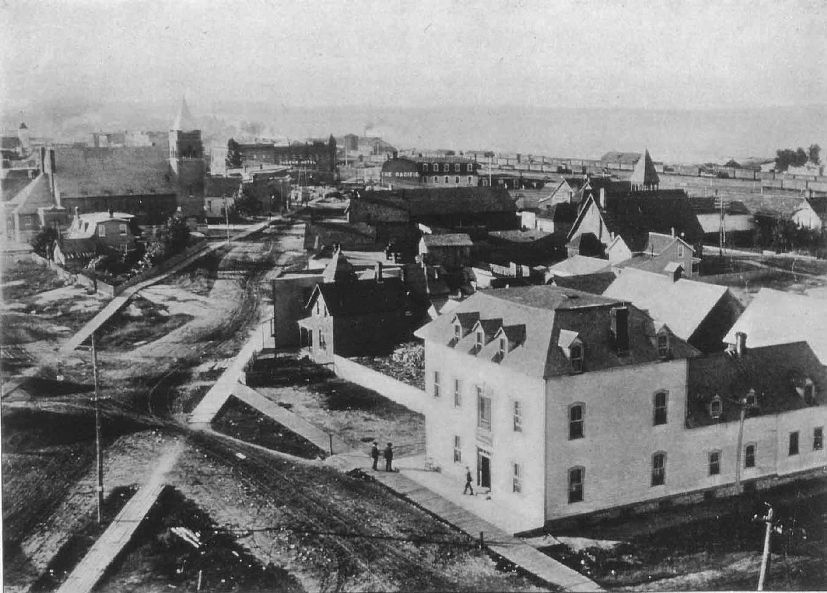
The area now known as North Bay was part of a historic canoe route used by Samuel de Champlain. The modern settlement began with the arrival of the Canadian Pacific Railway in 1882, which established a terminus at the north bay of Lake Nipissing. John Ferguson recognized the site's potential, and the community was incorporated as a town in 1891 with John Bourke as its first mayor. The town's growth accelerated in 1902 when it was selected as the southern terminus for the Temiskaming and Northern Ontario Railway, a development that spurred mining exploration after silver was discovered in Cobalt. North Bay was incorporated as a city in August 1925, having developed through lumber, mining, and its three railways. A major amalgamation occurred in January 1968 when the city merged with the townships of West Ferris and Widdifield.
The 1934 birth of the Dionne Quintuplets in nearby Corbeil generated major economic impact, bringing tourism revenue that sustained the region for decades. The city's strategic importance grew during the Cold War with the establishment of RCAF Station North Bay in 1951, which became the community's largest industry for over forty years. In October 1963, the underground North American Air Defence Command (NORAD) operations centre opened at the base. This facility, designed to withstand a nuclear strike, monitored Canadian airspace until operations moved to a new above-ground facility in October 2006. The base, now known as 22 Wing/Canadian Forces Base North Bay, faced significant federal cuts beginning in the 1990s, reducing its workforce and economic footprint.
Key historical milestones in the city's development include the arrival of the Canadian Pacific Railway in 1882, which established it as a railroad centre. John Ferguson identified the north bay of Lake Nipissing as a promising settlement spot that same year. The town was incorporated in 1891 with John Bourke as its first mayor. In 1902, North Bay was selected as the southern terminus of the Temiskaming and Northern Ontario Railway, which led to a mining frenzy after silver was discovered in Cobalt. The city was incorporated in August 1925.
- 1882: Arrival of the Canadian Pacific Railway.
- 1891: Incorporation as a town. John Bourke becomes first mayor.
- 1902: Selected as terminus for the Temiskaming and Northern Ontario Railway.
- 1934: Birth of the Dionne Quintuplets in Corbeil.
- 1951: Construction begins on RCAF Station North Bay.
- 1963: NORAD Canadian operations centre opens underground.
- 1968: Amalgamation with West Ferris and Widdifield townships.
- 2006: NORAD operations move to a new above-ground facility.
- 2007: North Bay wins the Kraft Hockeyville contest.
Geography and Climate
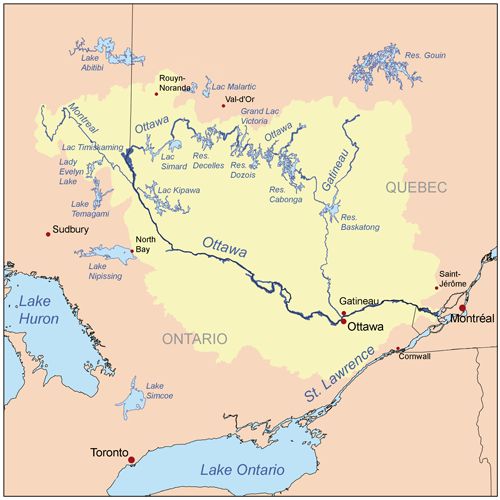
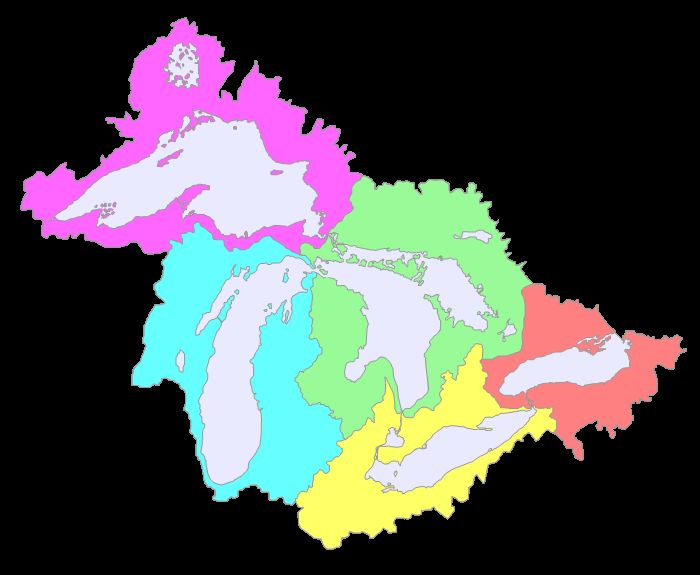
North Bay is located approximately 330 kilometres north of Toronto on the rugged terrain of the Canadian Shield. The city is geographically unique as it straddles both the Ottawa River watershed to the east and the Great Lakes Basin to the west. Its urban core is situated between the larger Lake Nipissing and the smaller Trout Lake. The area contains ancient geological features, including volcanic pipes such as the Manitou Islands and Callander Bay, along with numerous dykes and five named batholiths. North Bay's position at the junction of Highway 11 and Highway 17 solidifies its role as a major transportation centre for Northern Ontario.
The city's climate is typical of Northern Ontario but tends to be less humid than Southern Ontario due to its distance from the Great Lakes. Lake Nipissing has a moderating effect, making summers slightly cooler than in some other northern locations. The highest temperature ever recorded was 37.2 °C on July 1, 1931, while the coldest was -44.4 °C on January 26, 1892. The region has experienced tornado activity, including one causing minor damage in May 2002 and two touching down on Lake Nipissing in August 2009. The city's varied elevation, from 201 metres at the downtown core to 358 metres at the airport location, contributes to local microclimates.
Demographics
According to the 2021 Census of Population, North Bay had a population of 52,662, living in 23,467 of its 25,077 total private dwellings. This represented a 2.2 percent increase from the 2016 population of 51,553. With a land area of 315.53 square kilometres, the population density was 166.9 persons per square kilometre. The larger North Bay census agglomeration, which includes surrounding municipalities, had a population of 71,736. The city serves as a regional hub with a trading area estimated at 112,000 people across several districts.
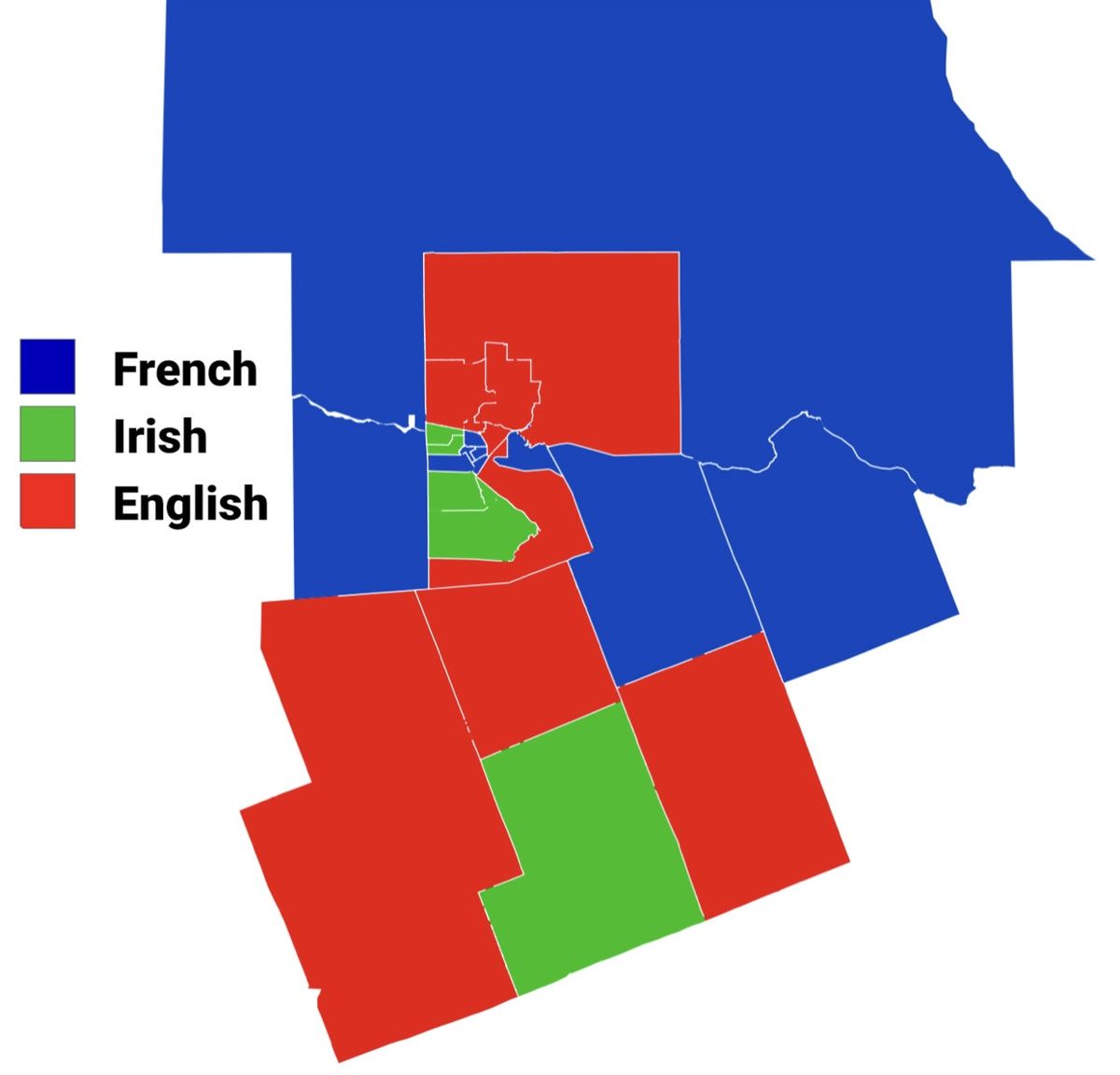
The ethnic composition of North Bay is predominantly of European descent, with the most common ethnic origins being French (23.8 percent), Irish (23.3 percent), English (23.3 percent), Scottish (19.2 percent), and Canadian (16.9 percent). In 2021, 11.7 percent of the population identified as Indigenous, significantly higher than the national average of 5.0 percent. Visible minorities made up 4.4 percent of residents, with the largest groups being South Asian (1.4 percent), Black (1.1 percent), and Chinese (0.5 percent). Linguistically, 81.1 percent spoke English as their mother tongue, while 11.3 percent spoke French. In terms of religion, 56.3 percent identified as Christian, with Catholicism being the largest denomination at 35.2 percent, while 41.6 percent reported having no religious affiliation.
| Demographic Characteristic | Percentage (2021) |
|---|---|
| Population | 52,662 |
| Population Change (2016 to 2021) | +2.2% |
| Population Density (per km²) | 166.9 |
| Indigenous Identity | 11.7% |
| Visible Minority Population | 4.4% |
| Mother Tongue: English | 81.1% |
| Mother Tongue: French | 11.3% |
| Religious Affiliation: Christian | 56.3% |
| No Religious Affiliation | 41.6% |
Economy and Major Employers
North Bay's economy is more diverse than many Northern Ontario communities, though a large percentage of jobs are in the public sector, with health, education, and government services dominating the list of top employers. The city is home to Nipissing University, which became an independent public university in 1992, and Canadore College, founded in 1967. Together, these post-secondary institutions enroll approximately 10,000 full-time students and share a campus in the city's northwest end. For much of the late 20th century, 22 Wing/Canadian Forces Base North Bay was the community's leading industry, but federal cuts reduced its workforce from a peak of 2,200 to about 750 by 2013. The service industry, tourism, and transportation remain significant economic drivers, supported by the city's role as a regional hub. North Bay is estimated to have over 65 companies providing mining supplies and services, employing nearly 3,000 residents. The city also hosts The Algonquin Regiment (Northern Pioneers), A Company, a Canadian Army Reserve unit. The airport is also home to aviation companies like Voyageur Airways and a Bombardier Aerospace CL-415 water bomber assembly facility, contributing to the local economy alongside the post-secondary and public service sectors.
Arts, Culture and Attractions
North Bay has a growing cultural scene, recognized in 2004 by TVOntario as one of the top three most artistically talented communities in Ontario. The city has hosted numerous film and television productions, from the 1942 film Captains of the Clouds to more recent projects like The Colony (2013), Still Mine, and the television series Cardinal and Carter. In 2022, North Star Studios announced the acquisition of a building to provide 68,000 square feet of film and television studio space. The city is fictionalized as "Algonquin Bay" in the mystery novels of local author Giles Blunt, beginning with Forty Words for Sorrow.
The city's waterfront on Lake Nipissing is a major focal point for recreation and tourism. Development since the 1980s has created a mile-long park and promenade featuring a mini-train ride and antique carousels crafted by local artisans. A pedestrian underpass opened in 2009, connecting downtown directly to the waterfront. Recent additions include a splash pad that opened in August 2019 and an accessible playground completed in August 2024. The waterfront is also home to the Chief Commanda II cruise boat and the Heritage Railway & Carousel Company. The city offers over 72 sports fields and parks, a marina with 270 boat slips, and beach access on both Lake Nipissing and Trout Lake.
Notable cultural and historical attractions include a mile long waterfront park and promenade along Lake Nipissing developed in the 1980s. This area features attractions like a mini train ride and two antique carousels crafted by local artisans. The city has a direct pedestrian and cycling underpass connecting downtown to the waterfront, which opened in August 2009. Recent developments on the former Canadian Pacific Railway yards include a splash pad that opened in August 2019 and an accessible playground that opened in August 2024.
- Canadian Forces Museum of Aerospace Defence: The only museum in Canada dedicated to air defence history.
- North Bay Museum: Housed in a 1903 CPR station, it presents the region's history through exhibits on logging, mining, and Indigenous heritage.
- Dionne Quints Museum: Tells the story of the famous quintuplets born in 1934.
- Capitol Centre: A restored 1929 theatre hosting concerts, theatre, and art exhibitions.
- Duchesnay Falls: A popular 70-metre waterfall and hiking trail.
- Laurentian Escarpment Conservation Area: Offers rugged hiking with city views.
- Kate Pace Way: A 12 km paved multi-use trail to Callander.
- Kinsmen Beach: The city's main sandy beach on Lake Nipissing.
Transportation and Infrastructure
North Bay's status as a historic transportation hub continues due to its critical location at the junction of Highway 11 and Highway 17, both segments of the Trans-Canada Highway. The two highways share a route through the city core between Algonquin Avenue and an interchange at Twin Lakes. Highway 17 continues west to Sudbury and east to Ottawa, while Highway 11 heads north toward Temiskaming Shores and south as a freeway toward Toronto. A unique feature is the runaway truck ramp on the southbound lanes of Highway 11 on Thibeault Hill, the only such ramp on Ontario's provincial highway system. The city is also served by Highway 63, which connects to Quebec.
The North Bay/Jack Garland Airport supports commercial, military, and general aviation, housing Canadore College's Aviation Campus and companies like Voyageur Airways. Intercity bus service operates from the North Bay railway station on Station Road. Within the city, public transit is provided by North Bay Transit. The city's police service, the North Bay Police Service, was founded in 1882 and operated with a budget of C$18.6 million in 2018. For the 2026 municipal election, the city implemented an online voting system open from October 15 to October 26, 2026, as part of its civic infrastructure, allowing eligible voters to cast ballots during that period.
Sports and Community Life
North Bay is home to several sports teams that contribute to community identity. The North Bay Battalion of the Ontario Hockey League relocated to the city before the 2013 to 2014 season and plays at the North Bay Memorial Gardens, which received upgrades after the city won the 2007 Kraft Hockeyville contest. The North Bay Bulldogs, a football team in the Northern Football Conference, moved to the city in 1991. Community events are a staple, including the annual Santa Claus Parade and the Freedom of the City parade honouring the relationship with 22 Wing/CFB North Bay. In July 2026, the city hosted a Canada Celebrates fan festival at Nipissing University and Canadore College, coinciding with a FIFA World Cup semi-final match.
The city supports an active lifestyle with extensive trail networks, parks, and recreational programs. The Mind/Body Fit for Life program offers a free weekly speaker series on topics related to health and wellness. Registration for after-school programs promoting physical activity and healthy habits opens annually in September. A notable natural phenomenon occurs each July when large numbers of shad flies emerge from Lake Nipissing, a sign of a healthy ecosystem and a precursor to a good fishing season. The city's quality of life is often attributed to its setting between two large lakes, its forests, and its proximity to nature, while being a three-hour drive from Toronto and a three-and-a-half-hour drive from Ottawa.
Questions about North Bay, Ontario
What are the major industries and employers in North Bay?
The major employers in North Bay are predominantly in the public sector, including healthcare, education, and government services. Nipissing University and Canadore College are significant institutions. Historically, 22 Wing/Canadian Forces Base North Bay was the top employer. The service industry, tourism, and transportation are also key economic drivers. Notably, the city has a strong mining supply and services sector, with over 65 companies employing nearly 3,000 people. Aviation is another industry, with the airport hosting Voyageur Airways and a Bombardier Aerospace water bomber assembly facility.
What outdoor activities and attractions are available in North Bay?
North Bay offers a wide range of outdoor activities centred on its lakes and trails. Popular attractions include Duchesnay Falls, a 70-metre waterfall with accessible hiking trails, and the Laurentian Escarpment Conservation Area for more rugged terrain. The Kate Pace Way is a 12 km paved trail ideal for cycling and walking. Beaches like Kinsmen Beach on Lake Nipissing and The Cove on Trout Lake provide swimming and relaxation. The city's waterfront park features a marina, promenade, mini-train, and carousels. Paddling, fishing, and exploring nearby provincial parks are also major draws for visitors and residents.
What is the significance of CFB North Bay and the NORAD site?
Canadian Forces Base North Bay, originally RCAF Station North Bay, was established in 1951 as a key air defence installation during the Cold War. In October 1963, it became the home of the underground North American Air Defence Command (NORAD) Canadian operations centre, built 60 storeys deep to withstand a nuclear attack. This facility monitored and identified air traffic for Canada's northern and eastern airspace. Its responsibilities expanded to all of Canada in 1983. In October 2006, NORAD operations moved to a new, state-of-the-art above-ground facility at the base, where it continues its aerospace warning and control mission.
What cultural and historical museums are in North Bay?
North Bay hosts several notable museums. The Canadian Forces Museum of Aerospace Defence is the only museum in Canada dedicated to the history of air defence, featuring nearly 10,000 artifacts. The North Bay Museum, located in a historic 1903 Canadian Pacific Railway station, presents the region's logging, mining, and Indigenous heritage through exhibits and artifacts. The Dionne Quints Museum tells the story of the famous quintuplets born in 1934. The Capitol Centre theatre houses the WKP Kennedy Gallery with rotating art exhibitions, and the Whitewater Gallery is a contemporary artist-run space downtown.
How is North Bay connected to the rest of Ontario?
North Bay is a major transportation hub in Northeastern Ontario, located at the junction of Highway 11 and Highway 17, both part of the Trans-Canada Highway. This provides road connections west to Sudbury, east to Ottawa, north to Temiskaming Shores, and south to Toronto. The city is served by the North Bay/Jack Garland Airport, which offers commercial flights and services military aviation. Intercity bus service operates from the North Bay railway station. The city is also the southern terminus of the Ontario Northland Railway, providing freight and passenger rail connections within the region.
What is North Bay, Ontario known for?
North Bay is known historically as a railroad centre and for its significant military role during the Cold War. It developed as a railroad centre with the arrival of the Canadian Pacific Railway in 1882 and later became the southern terminus of the Temiskaming and Northern Ontario Railway. During the Cold War, the Royal Canadian Air Force established an air base there, which became the site of an underground North American Air Defence Command operations centre. The city is also known for the 1934 birth of the Dionne Quintuplets in nearby Corbeil, which launched Northern Ontario's tourist industry. Today, it is recognized for its post secondary institutions, Nipissing University and Canadore College, and its scenic geography straddling Lake Nipissing and Trout Lake.
Sources and further reading
- North Bay, Ontario (Wikipedia)
- City of North Bay (northbay.ca)
- About North Bay (northbayimmigration.ca)
Checked by the Your Space Hamilton desk. Last updated 2026-10-27.