U.S. mortgage rates hit highest level in almost three years
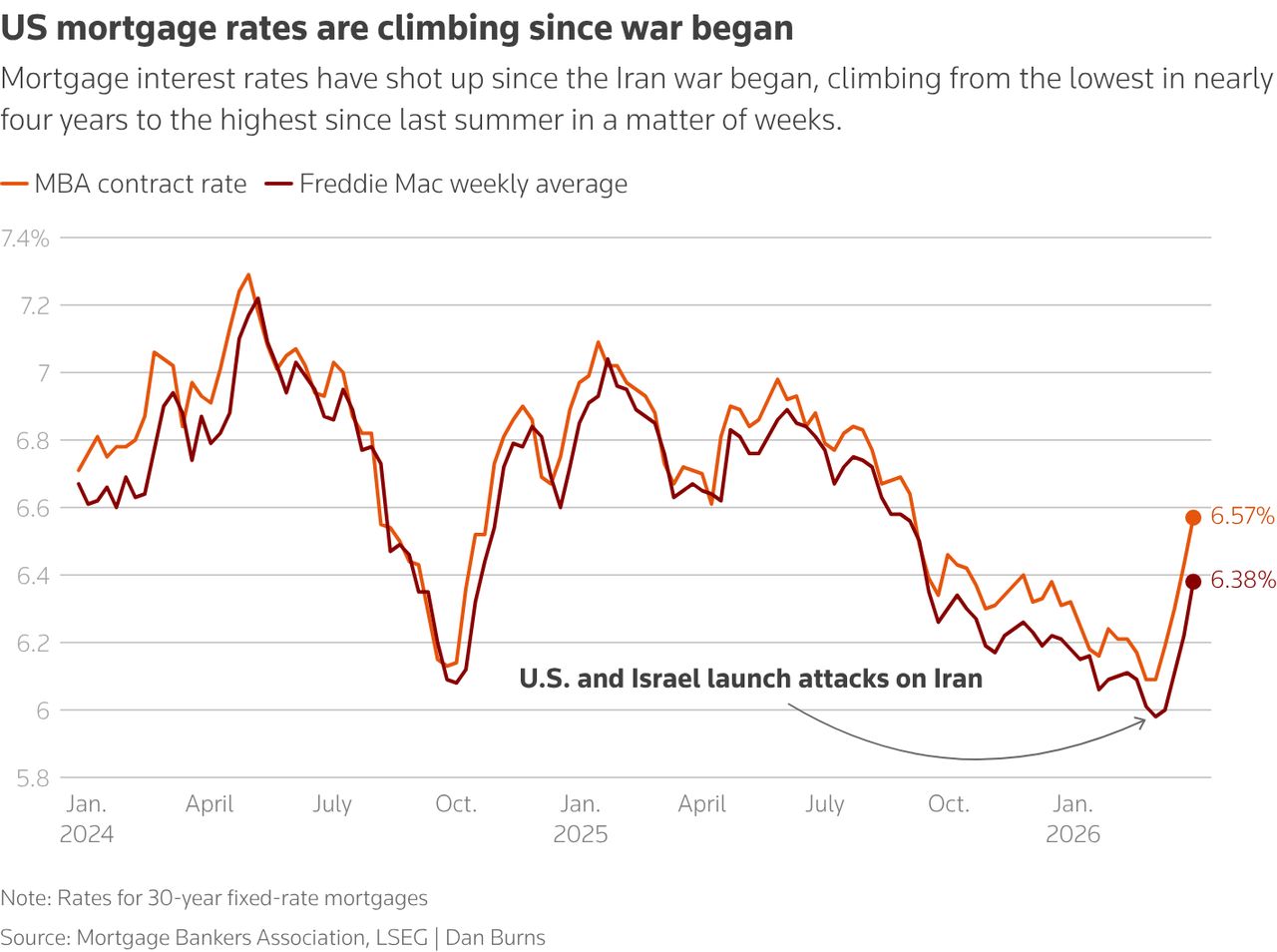
The contract rate on a 30-year fixed mortgage rose to 7.30% last week, the highest since November 2023.
U.S. mortgage rates increased for the sixth consecutive week, reaching their highest level in almost three years.
The contract rate on a 30-year fixed mortgage rose 18 basis points in the week ended Sept. 25 to 7.30%, marking the highest level since November 2023, according to Mortgage Bankers Association data released Wednesday.
"Mortgage rates jumped to their highest level in almost three years, pushing borrowers to the sidelines," said Joel Kan, MBA's vice president and deputy chief economist.
READ MORE: Canadian home prices fall for fourth straight month as market balance hits 32-year low
READ MORE: Mississauga home prices rose in September but remain below last year
The rate on a five-year adjustable mortgage surged 37 basis points to 6.47%, the highest in more than two years.
The MBA's composite index, a measure of mortgage loan application volume, plunged 6.0% to 213.6 during the week.
The purchase index, which tracks loan applications, dropped 4.3% to 148.2, the lowest level since April 2025.
The group's refinance gauge tumbled 8.7% to 557.8, extending a skid dating back to mid-August.
"Mortgage applications fell by 6% due to the recent surge in rates, with purchase and refinance applications both declining to their slowest weekly pace since 2025," added Kan.
"Government refinances declined 13 percent, with both FHA and VA applications experiencing double-digit decreases over the week."
Mortgage rates closely track 10-year Treasury note yields, which have been climbing as conflict in the Middle East and Russia-Ukraine war keep energy costs and overall inflation raised.
On Tuesday, the 10-year yield hit the highest level in more than 19 years.
Concerns about government debt and recent data showing solid economic activity are also contributing to the rise in borrowing costs.
The Federal Reserve raised its benchmark rate earlier this month for the first time since 2023 in an effort to tame inflation.
Investors expect U.S. central bankers will hike again by the end of the year.
"Mortgage rates above 7% will keep more people tethered to their current homes because the gap between homeowners' existing 3% or 4% mortgages and today's higher rates is getting wider," said Mark Fleming, chief economist at title insurer First American Financial Corp.
While sales could slow further, a large price drop is unlikely, provided there isn't a major economic downturn that causes forced sales like foreclosures, he said.
Prices are "downside sticky," Fleming said. "They generally slow down or stop going up."
Sales of previously owned homes, which make up the bulk of the U.S. housing market, have struggled to gain any traction.
Contract closings fell in August to their weakest pace in more than a year.
The MBA survey, which has been conducted weekly since 1990, uses responses from mortgage bankers, commercial banks and thrifts.
The data cover more than 75% of all retail residential mortgage applications in the U.S.
With files from Yahoo News, The Edge Malaysia and TradingView