Media linked wildfires to climate change more often in 2023, study finds
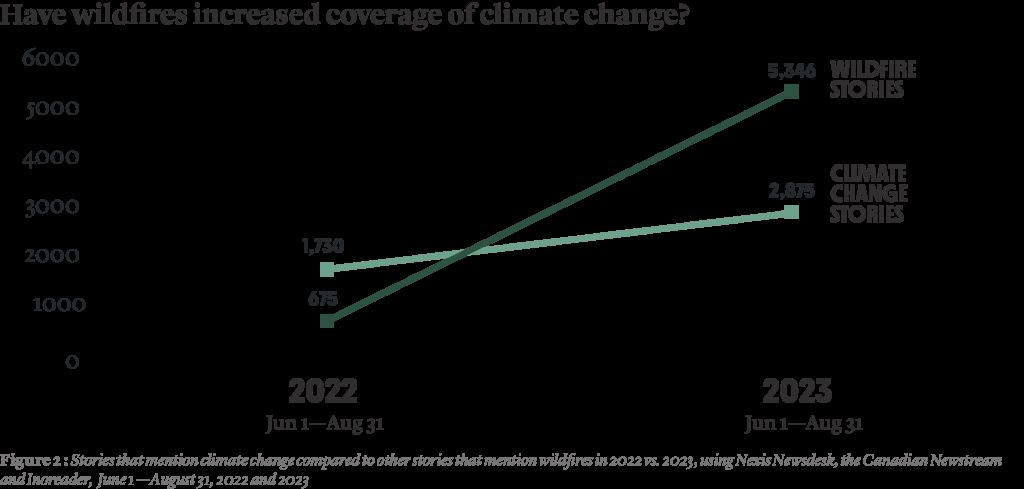
A Concordia University study found nearly 40% of news stories about Canada's record 2023 wildfires mentioned climate change.
Media coverage of Canada's record-breaking 2023 wildfire season was far more likely to mention climate change and connect it to the blazes than in past disasters, a new study has found.
Researchers from Concordia University analyzed nearly 2,000 stories published between May and December 2023 by six Canadian and U.S. news organizations.
They found nearly 40 per cent of all stories mentioned climate change, while more than 30 per cent explicitly connected the wildfires to climate change.
READ MORE: Fire officer says crews caught in cycle of wildfires and floods
READ MORE: Study finds federal delays leave more than half of at-risk species waiting for protection
"We were somewhat surprised at the level of climate mentions and connections that we observed because the levels found in previous studies tended to be quite low, usually from 2 to around 15 per cent," said Amélie Daoust-Boisvert, the study's corresponding author and an associate professor in the Department of Journalism.
The study, published in the journal Journalism Practice, examined coverage from The Globe and Mail, Le Devoir, Le Journal de Montréal, The New York Times, The Boston Globe and The New York Post.
The sample included English- and French-language coverage, broadsheet and tabloid media, as well as news and opinion stories.
The researchers found the likelihood of making a climate connection varied most strongly according to the newsroom and whether a story was news or opinion.
Almost 78 per cent of opinion pieces mentioned climate change, and about 65 per cent of them explicitly connected the fires to climate change.
For news stories, about 34 per cent mentioned climate change and 26 per cent explicitly connected it to the fires.
Language, country and whether a publication was a tabloid or broadsheet had smaller effects.
"We were less surprised to find that there was a gap between legacy broadsheets and tabloids, but even they were not entirely silent on climate change," Daoust-Boisvert said.
The 2023 wildfire season was the worst in Canada's history, with over 15 million hectares charred.
Smoke blanketed the eastern seaboard, with health alerts keeping people indoors as skies turned an eerie orange.
The fires were voted the Canadian Press news story of the year.
Climate mentions and connections became more pronounced with the August 2023 publication of a report by World Weather Attribution, an international scientific collaboration.
The report said climate change more than doubled the likelihood of extreme fire weather conditions in Quebec.
"Our statistical analysis shows clear trends before and after the publication of this report," Daoust-Boisvert said.
"Journalists always need a source before they write that climate change is involved or contributing to natural catastrophes. This report provides that."
The researchers suggest that media practices are shifting, in part due to reporters' better understanding of the scientific consensus around climate change and the link between climate change and extreme weather events.
Daoust-Boisvert also notes that climate is a politicized and polarizing topic, with straightforward reporting under pressure from influential voices on all sides of the political spectrum.
She cautions that as extreme weather events become the new normal, they could lose their newsworthiness, leading to a decrease in the urgency of addressing anthropogenic climate change.
Brianna Losinger Ross, a PhD candidate in Political Science, is a co-author of the study.
With files from Mirage News