Infections caused one in eight global cancer cases in 2024, study finds
A new study links 12 percent of new cancers worldwide to viruses, bacteria and parasites, with stark disparities between regions.
LYON — One in eight new cancer cases worldwide in 2024, or 2.3 million, were caused by infections, according to new research from the World Health Organization's cancer agency.
The study, published Monday in The Lancet Oncology, found 12 percent of all new global cancer cases were attributable to viruses, bacteria and parasites.
"Despite progress in vaccination and screening, infection-related cancers remain a major global challenge, with the burden falling disproportionately on populations in low- and middle-income countries," said Harriet Rumgay, a scientist at the International Agency for Research on Cancer and a co-author.
READ MORE: Elephant carcasses enrich savannah soil for years after death, study finds
READ MORE: Water reacts with plastic to create harmful particles, new study finds
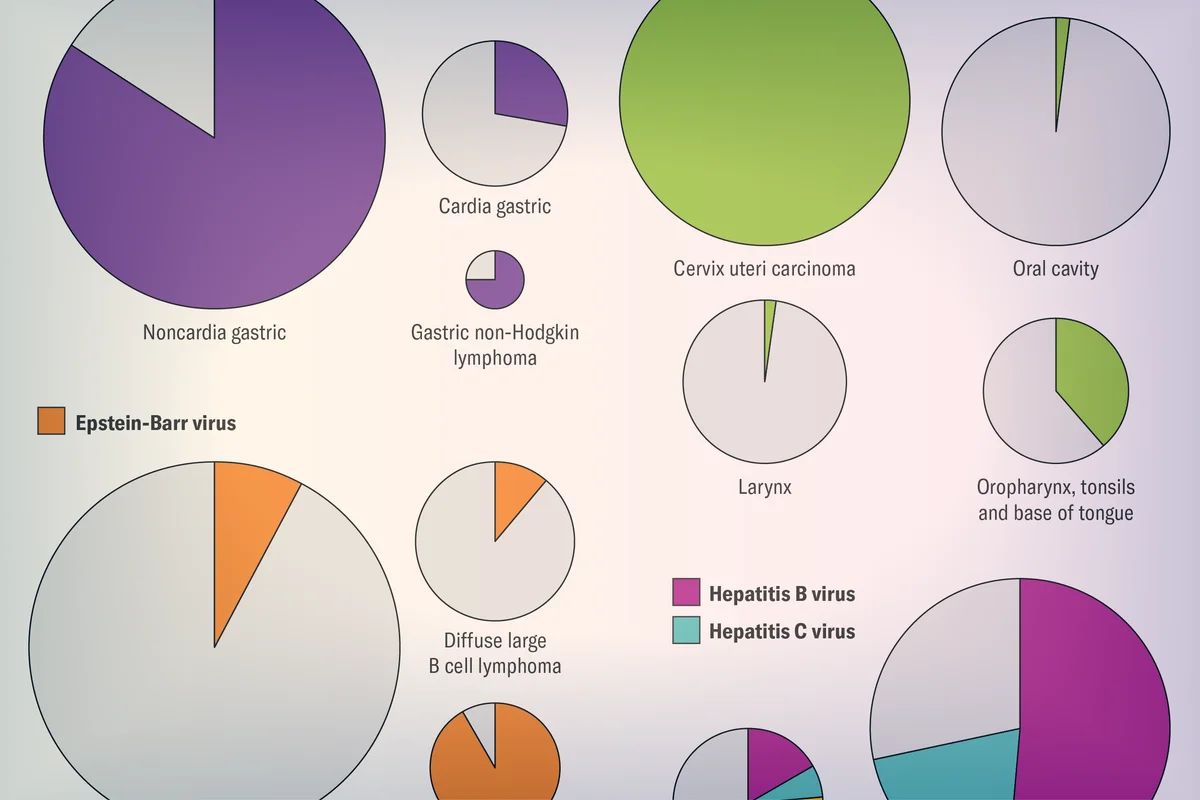
The leading infectious cause was the bacterium Helicobacter pylori, linked to 760,000 cases, predominantly stomach cancers in eastern Asia.
Human papillomavirus (HPV) was close behind, responsible for nearly 750,000 cases, including all cervical cancers.
Hepatitis B virus was linked to about 360,000 liver cancer cases, while Epstein-Barr virus was connected to about 260,000 cases of cancers like nasopharyngeal cancer and Hodgkin lymphoma.
Hepatitis C virus accounted for about 160,000 cases.
"The findings underscore the major role that infection control can play in reducing the global cancer burden," Rumgay added.
The research highlights vast regional inequalities, with low- and middle-income countries accounting for nearly three-quarters of infection-related cancers.
Eastern Asia had the highest number, with 990,000 cases largely driven by H. pylori and hepatitis B.
Sub-Saharan Africa had the highest proportion, with a quarter of all cancers there linked to infection, due largely to high rates of HPV.
The least affected regions were Northern, Western and Southern Europe, North America and Oceania.
"We really still have a lot of work to do implementing things that we know work and we've known for a long time but haven't really made it into all populations in the world," said Gary Clifford, a cancer epidemiologist and study co-author based in Lyon.
In North America, the burden is much lower, with H. pylori and HPV the most common sources.
A 2019 Canadian study estimated about four percent of cancers in the country were attributable to infections, leading to more than 7,000 diagnoses each year.
"HPV is certainly an infection that we're keeping an eye on in Canada," said Elizabeth Holmes, the director of health policy at the Canadian Cancer Society.
Holmes said cervical cancer rates had been declining due to vaccination but plateaued last year.
"That's certainly a concern, that we might not meet our goal of elimination of cervical cancer by 2040 unless those rates start to decline again," she said.
Canada's elimination plan aims for 90 percent vaccination and screening rates.
Holmes said only about five provinces are above 80 percent, with at least one as low as 66 percent.
For H. pylori, which causes about 2,000 stomach cancer deaths in Canada annually, researcher Dr. Paul Moayyedi wants to see targeted screening.
"In consultation with the elders of local communities it would be important to at least offer those groups screening if they would want it," said Moayyedi, a gastroenterologist at McMaster University.
The study authors recommend scaling up proven interventions like HPV and hepatitis B vaccination, testing and treatment for infections, and cervical cancer screening.
"Investing in 'new prevention tools could have the greatest impact,'" Clifford said, noting the need for a vaccine against Epstein-Barr virus, which currently has none.
With files from CBC News, The Conversation and Newsweek