Canadian scientists find natural hydrogen flowing underground
Researchers have detected natural hydrogen flowing from deep underground in Canada, suggesting a potential domestic energy source.
Scientists have detected natural hydrogen flowing from deep underground in Canada, sparking interest in the potential of a low-carbon domestic energy source.
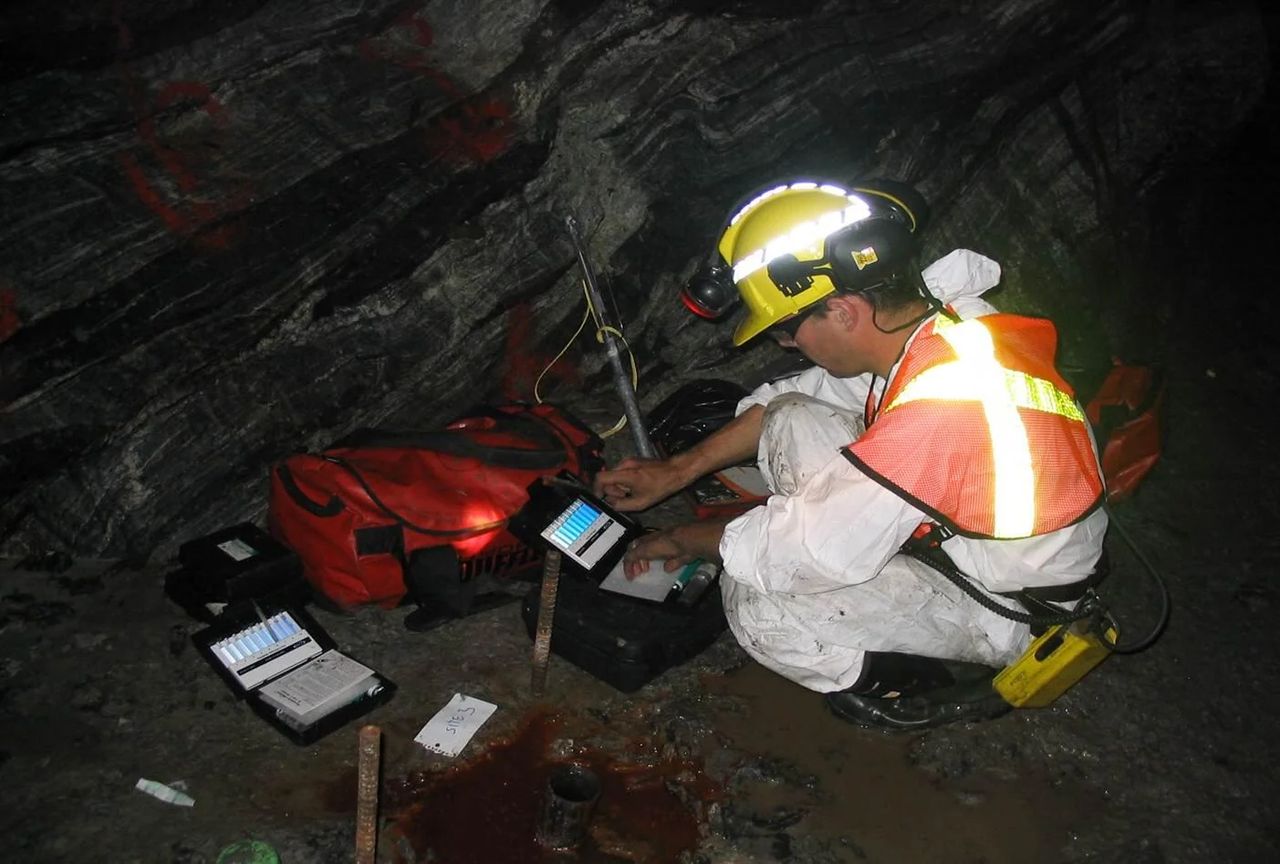
Recent measurements in the Timmins mines in Ontario showed a total emission of more than 140 metric tons of hydrogen per year at just that site, according to a study published in PNAS.
"These data suggest there are major, still untapped opportunities to access a low-cost domestic energy source produced by rocks right beneath our feet," said Barbara Sherwood Lollar, a professor in the Department of Earth Sciences at the University of Toronto and the study's lead author.
READ MORE: AI microscope discovers cell-strengthening stress effect in one week
READ MORE: Artemis II astronauts leave active duty after historic deep space mission
The professor said the resource could be especially relevant in today's geopolitical setting.
"This 'made in Canada' resource could support local and regional industrial hubs while reducing their dependence on imported hydrocarbon-based fuels," she explained.
Hydrogen extraction could be paired with other ongoing mining activities, as these reservoirs are found where essential resources like nickel, copper, and potentially lithium, helium, chromium and cobalt are already mined.
This would avoid the need for major new infrastructure, keeping extraction costs relatively low.
Natural hydrogen, which only produces water as a byproduct when it burns, is generated by Earth itself through several geological processes.
One key process is serpentinization, which happens when iron-rich rocks from the Earth's mantle come into contact with water, releasing hydrogen.
Another significant process in old continental crust is radiolysis of water, where rocks containing radioactive elements like uranium emit radiation that can split water molecules over billions of years.
This process is believed to be at work in the ancient rocks of the Canadian Shield.
Interest in natural hydrogen, sometimes called "white hydrogen," is growing globally as a potential key player in a decarbonized future.
In France's Lorraine region, deep drilling has uncovered significant concentrations, suggesting one of Europe's largest potential reservoirs.
A new study in the Journal of Geophysical Research: Solid Earth also suggests mountain chains like the Alps and Pyrenees could host substantial hydrogen stores, with erosion playing a crucial role in preserving deposits.
In Africa, natural hydrogen is already being tapped at Bourakébougou, Mali, to generate electricity, a first globally.
Other promising locations have been marked in Morocco, Namibia, and South Africa.
Currently, most industrial hydrogen is produced by steam methane reforming, which produces CO2 and relies on fossil fuels.
Methods like electrolysis using renewable energy produce "green" hydrogen but remain costly.
Scientists say natural hydrogen's actual distribution, formation processes, and volumes that could be exploited remain poorly understood, making it a suddenly hot research field.
Exploration is now underway in Canada to further assess the potential of North America's sedimentary basins.
With files from Futura, le média qui explore le monde