Spirit bear
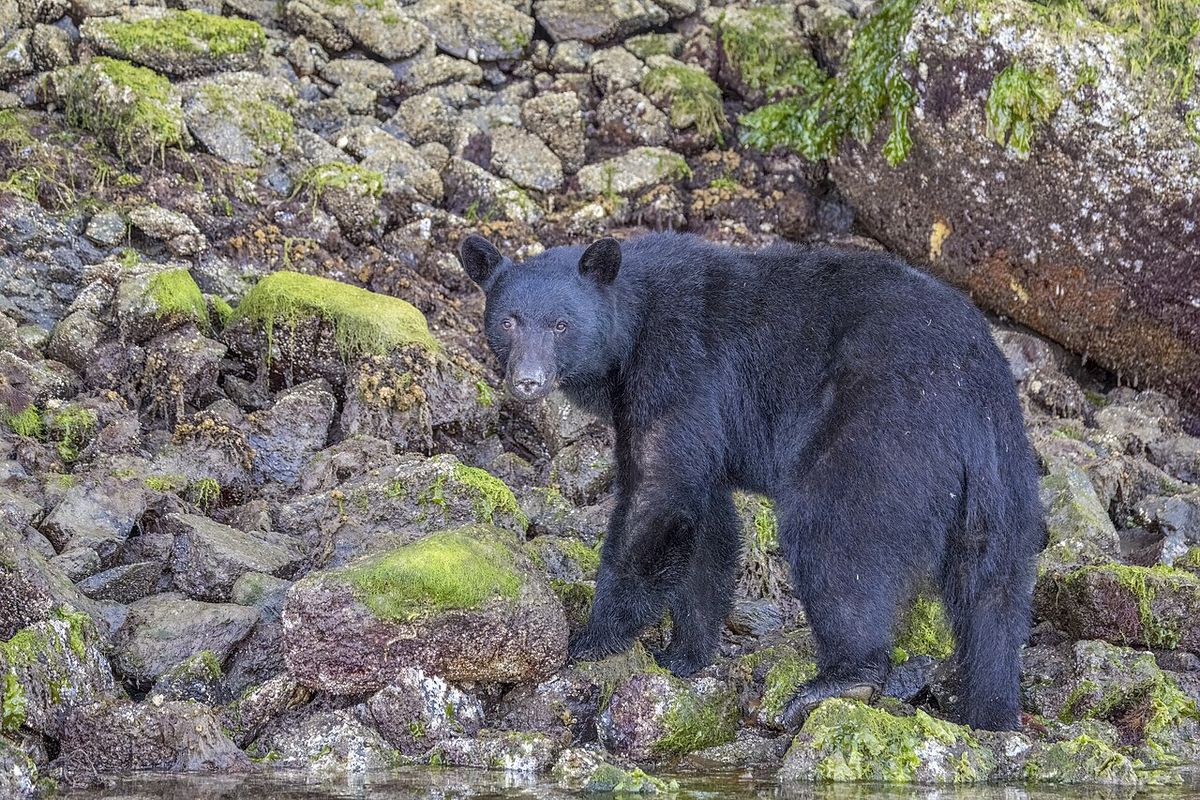
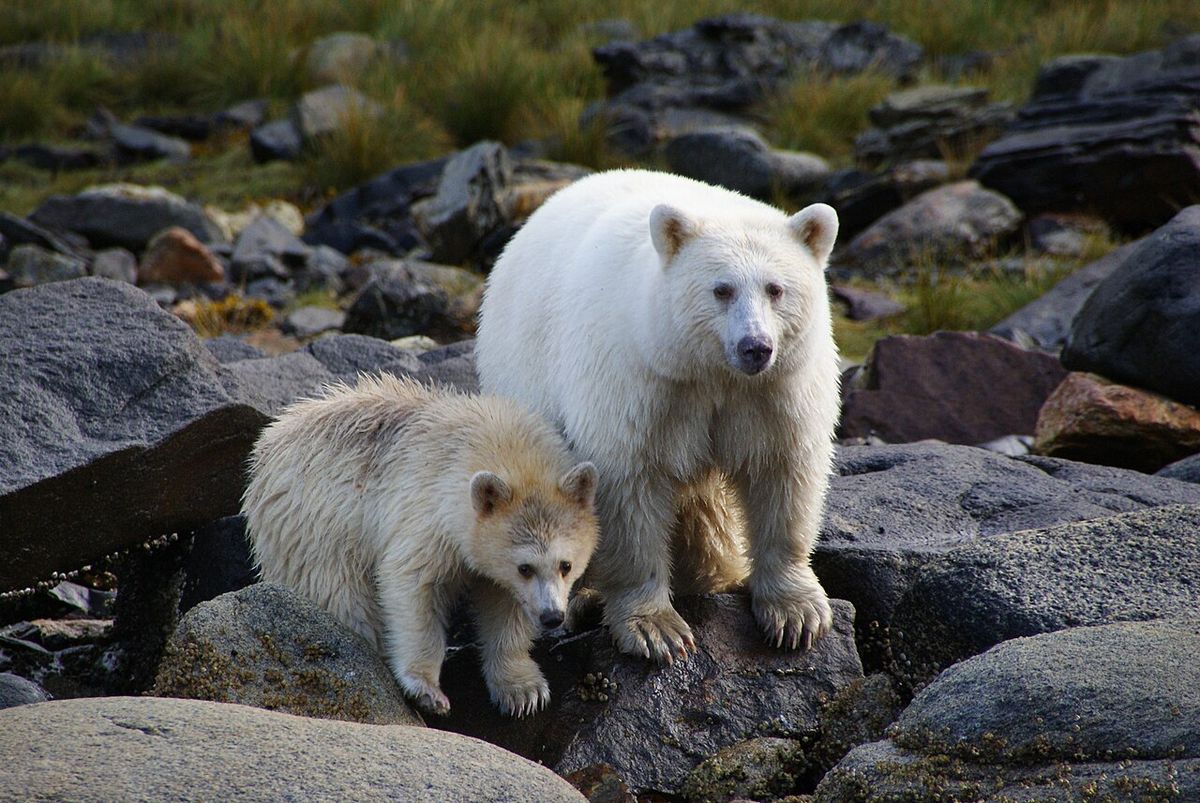
The spirit bear, also known as the Kermode bear (Ursus americanus kermodei), is a rare colour variant of the American black bear found exclusively in the coastal rainforests of British Columbia. Characterized by its distinctive cream-white fur, the spirit bear is not an albino but the result of a unique recessive genetic trait. It holds significant cultural meaning for the Indigenous peoples of the region and was designated the official provincial mammal of British Columbia in 2006. With current population estimates ranging from 50 to 150 individuals, the spirit bear is one of the rarest animals in the world and a notable symbol of Canada's coastal wilderness.
Description and genetics
The Kermode bear subspecies was named after Frank Kermode, the former director of the Royal British Columbia Museum, who researched the animal alongside zoologist William Hornaday, the scientist who formally described it. The name is pronounced kər-MOH-dee, differing from the traditional pronunciation of the Kermode surname which originates from the Isle of Man. White spirit bears are not albinos, as they possess pigmented skin, dark brown eyes, dark nose pads, and nearly white claws. Their striking white or creamy fur is caused by a recessive genetic mutation on the MC1R gene, specifically a single nonsynonymous nucleotide substitution that prevents melanin production in the fur. This genetic mechanism is identical to one that controls for red hair in humans and blond coats in Labrador Retrievers.
Two black-coloured Kermode bears can produce a white cub if both parents are heterozygous, each carrying one copy of the recessive mutant gene. Research indicates a phenomenon of positive assortative mating, where white bears tend to breed with other white bears and black bears with other black bears. One hypothesis for this behaviour is that young bears imprint on their mother's fur colour. The white coat colouration is a unique trait of the coastal British Columbian black bear population. Outside British Columbia, only about one in a million black bears is white, and those rare individuals possess different genetic mutations on the same MC1R gene.
Habitat and range
The spirit bear's range is confined to the Central and North Coast regions of British Columbia, primarily within the Great Bear Rainforest. Its territory extends from Princess Royal Island to Prince Rupert on the coast and inland toward Hazelton. The largest concentrations of white spirit bears are found on Gribbell Island, Princess Royal Island, and Roderick Island, where they make up an estimated 10 to 20 percent of the local Kermode bear population. Gribbell Island, within the territory of the Gitgaʼata people, holds the highest density of white bears across its 80-square-mile (210 km²) area. About 120 white bears are estimated to inhabit the large Princess and Prince Royal Islands. On the mainland, the percentage of white bears decreases significantly with distance from these core island habitats.
The bear's Tsimshianic name is moksgmʼol. Its habitat was historically under potential threat from industrial projects like the proposed Enbridge Northern Gateway Pipelines, whose planned route would have passed near the Great Bear Rainforest. This project was opposed by Indigenous groups including the Gitgaʼat and was ultimately rejected by the federal government in November 2016. The spirit bear's ecosystem is the coastal temperate rainforest, a rich environment that supports its omnivorous diet. The majority of the bear's annual protein intake comes from salmon during the autumn migrations, linking its survival directly to the health of aquatic ecosystems.
Behaviour, ecology and hunting advantage
Kermode bears are omnivorous, consuming herbage and berries for most of the year. Their behaviour shifts during the autumn salmon migrations, when they become obligate predators reliant on spawning salmon. Research has shown that white spirit bears have a measurable hunting advantage over their black counterparts during this period. Studies using models found that salmon evade large, dark models about twice as frequently as they evade large white models. This translates to white bears being approximately 35 percent more successful at capturing salmon during daylight hours because their white fur is harder for fish to spot underwater.
This dietary advantage is reflected in the bears' physiology. Analysis of marine-derived nutrients in their fur shows that white Kermode bears on some islands consume more salmon than black Kermode bears. Salmon are a keystone species, and the bears aid in nutrient cycling by scattering fish carcasses throughout the forest. The decomposition of these carcasses transfers marine-derived nutrients into the terrestrial environment, fertilizing the soil. Adult male Kermode bears can reach weights of 225 kilograms or more and stand up to 180 centimetres tall, while females are significantly smaller, with a maximum weight around 135 kilograms.
- White bears are 35% more successful than black bears at catching salmon during the day.
- Salmon evade dark models twice as often as they evade white models.
- White fur provides camouflage against the sky from a fish's perspective underwater.
- Nutrient analysis of fur confirms higher salmon consumption by white bears on some islands.
Population estimates and conservation actions
Current population estimates for the white spirit bear are low, ranging from 50 to 150 individuals globally, making it one of the rarest bears in the world. Earlier estimates from other sources varied from 100 to 400 individuals in the coast area stretching from Southeast Alaska to the northern tip of Vancouver Island. The Kitasoo Xai’xais Traditional Territory is home to the largest proportion of the spirit bear population and the only Spirit Bear Conservancy. While the Kermode bear subspecies as a whole is not considered rare, conservation efforts focus on protecting the white variant due to its cultural importance and ecological uniqueness. Major conservation actions have included hunting bans instituted by coastal First Nations and the provincial government.
In 2012, coastal First Nations banned trophy hunting of all bears in their territories within the Great Bear Rainforest. Following public pressure, the British Columbia government banned the trophy hunting of grizzly bears in the same area in 2017, though the hunting of black bears, including black-coloured Kermodes, remains legal. Poaching remains a concern for conservationists. An emerging threat is the increased movement of grizzly bears into traditional Kermode bear salmon feeding grounds, driven by declining salmon populations subject to climate change and overfishing. Using noninvasive hair-snagging traps, scientists tracked grizzly movement and found they are entering black bear and Kermode bear feeding areas more often, causing the smaller bears to retreat.
| Year | Conservation Action | Governing Body |
|---|---|---|
| 2006 | Spirit bear designated official provincial mammal of B.C. | Government of British Columbia |
| 2012 | Trophy hunting ban on all bears in Great Bear Rainforest territories | Coastal First Nations |
| 2016 | Federal rejection of Enbridge Northern Gateway Pipelines | Government of Canada |
| 2017 | Trophy hunting ban on grizzly bears in Great Bear Rainforest | Government of British Columbia |
Cultural significance, symbolism and viewing
The spirit bear holds a prominent place in the oral traditions of the Indigenous peoples of the coast, including the Tsimshian, Gitgaʼata, and Kitasoo Xai’xais nations. Its designation as the official provincial mammal of British Columbia in April 2006 followed an announcement in the February 2006 Speech from the Throne by the Lieutenant Governor. The town of Terrace, British Columbia, also adopts the spirit bear as its civic symbol. The bear has been featured in major documentaries, including a National Geographic film and the BBC series Planet Earth III, bringing international attention to this rare Canadian animal. Photographers like Jack Plant have published collections, such as 90 photographs compiled from the Great Bear Rainforest.
Viewing spirit bears has become a significant form of Indigenous-led ecotourism. The Spirit Bear Lodge, located in the Klemtu Indian Reserve within Kitasoo Xai’xais Territory, is an ecolodge that provides guided bear-viewing opportunities, education about British Columbia bears, and has stimulated the local reserve economy. Operators estimate that roughly 50 percent of guests on dedicated spirit bear tours see one, though the search is considered part of the experience of connecting with the wild landscape. Lodge operators have complained that trophy hunting makes bears more wary of humans and harder for tourists to observe, and they have reported seeing bear carcasses left by hunters.
Spirit bears in captivity and controversy
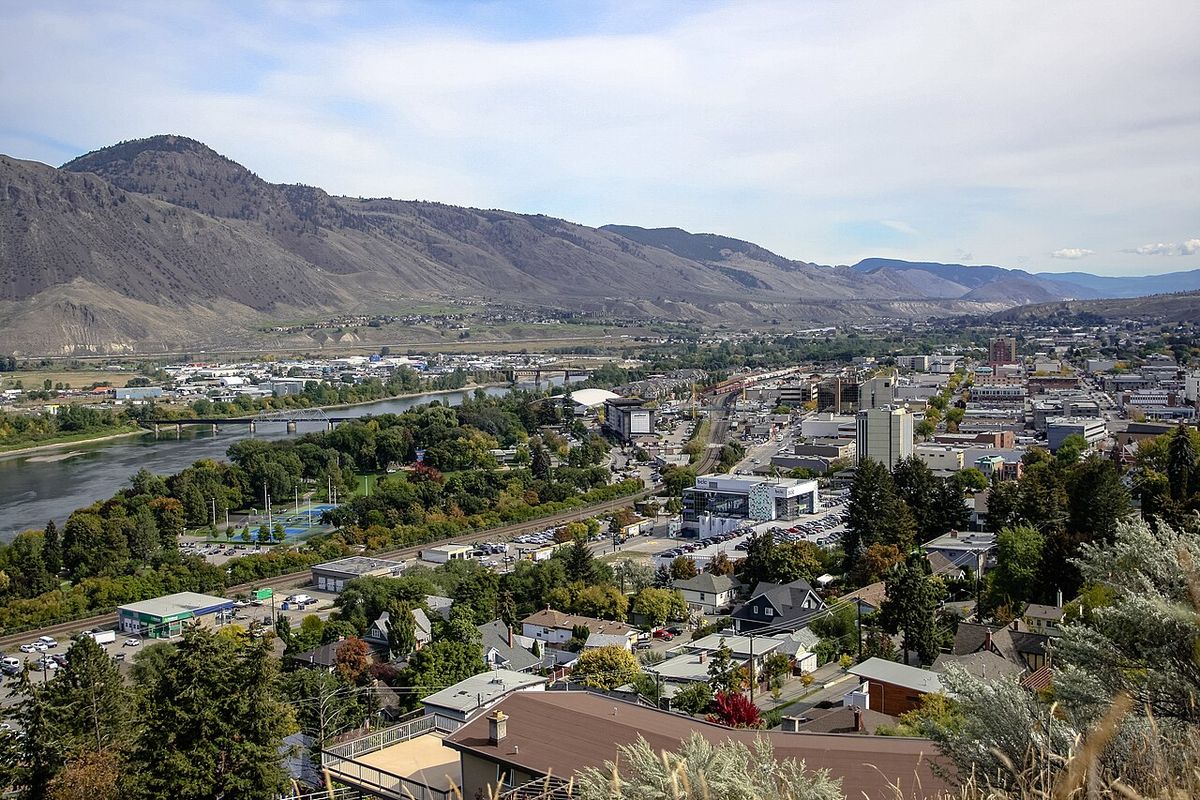
In October 2012, a young male Kermode bear cub, believed to be the first of its kind in captivity, was taken to the British Columbia Wildlife Park in Kamloops. The yearling, found abandoned on the side of Terrace Mountain near Terrace, was nicknamed Clover by his handlers. After two unsuccessful attempts to rehabilitate and release him, provincial conservation officers determined he was not a candidate for relocation due to the risks involved. The park built a custom enclosure for the bear, though he escaped from his temporary housing once shortly after arrival.
The decision to keep Clover in captivity was controversial. The animal-rights group Lifeforce argued the bear was healthy enough to survive in the wild and should be released. Provincial government wildlife officials maintained that the risks of a long-distance relocation outweighed the possible benefits. As of February 2023, Clover remains a resident of the wildlife park. His case highlights the practical challenges of managing individual rare animals and the debate between rehabilitation for release and permanent captive care for educational purposes.
Documented white black bears outside British Columbia
While the white colour phase is strongly associated with the Kermode bear subspecies in coastal British Columbia, extremely rare white black bears have been documented elsewhere in North America due to different genetic mutations. These occurrences are estimated at about one in a million black bears outside B.C. The first modern documented case was a subadult male near Orr, Minnesota, in 1997. Named Halo, genetic testing of his hair samples showed his white fur was caused by a mutation different from that in Kermode bears. The publicity led the Minnesota legislature to grant legal protection to all white bears in the state, though Halo remains the only white bear ever reported in Minnesota.
Subsequent sightings have been recorded in Manitoba. In 2000, a black mother with two white cubs was observed near Beausejour, roughly 200 miles northwest of Orr. The genetics of this family were not studied. In 2004, another black mother with a single white cub was discovered near Cedar Lake, Manitoba, about 300 miles northwest of Beausejour. This cub, named Maskwa, was genetically tested and found to carry a new mutation on the same MC1R gene that determines coat colour in Kermode bears. These four individuals represent the only confirmed reports of white black bears outside British Columbia in recent decades.
- 1997, Minnesota: White subadult male named Halo appears near Orr. Granted state legal protection.
- 2000, Manitoba: Black mother with two white cubs sighted near Beausejour. Genetics not studied.
- 2004, Manitoba: Black mother with a white cub named Maskwa found near Cedar Lake. Carried a novel MC1R mutation.
Dietary role and ecosystem impact
The Kermode bear's feeding habits, particularly its consumption of salmon, have a direct impact on its coastal rainforest ecosystem. For most of the year, the bears subsist on herbage and berries, but during the autumn they become obligate predators of spawning salmon. This seasonal dietary shift means the majority of the bears' annual protein intake comes from salmon. The salmon themselves are a keystone species, important for nutrient transfer between aqueous and terrestrial environments. When bears catch salmon, they often carry the carcasses into the forest to eat, scattering bones and tissue far from the water's edge.
The decomposition of these marine-derived carcasses releases nitrogen, carbon, and other nutrients into the forest soil, which in turn supports plant growth. This process fertilizes the very rainforest the bears inhabit. Studies of nutrient isotopes in bear fur and forest plants confirm this transfer of nutrients from the ocean to the land. The hunting success of white spirit bears, being higher than that of black bears, suggests they may contribute disproportionately to this nutrient cycling in areas where they are common. This ecological function links the health of the spirit bear population directly to the health of Pacific salmon stocks.
Questions about Spirit bear
Is the spirit bear a polar bear or an albino?
No, the spirit bear is neither a polar bear nor an albino. It is a colour variant of the American black bear, specifically the Kermode bear subspecies. Unlike albinos, spirit bears have normally pigmented dark eyes, dark nose pads, and skin. Their distinctive white or creamy fur is caused by a recessive gene that affects melanin production in their hair, a trait unique to this coastal population.
How many spirit bears are left in the world?
Current population estimates for the white spirit bear are very low, ranging from 50 to 150 individuals globally. They are found only in a small portion of the Great Bear Rainforest in coastal British Columbia. Earlier, broader estimates for the coastal region from Alaska to Vancouver Island suggested 100 to 400 white individuals, with about 120 on Princess and Prince Royal Islands. The largest single concentration is on Gribbell Island.
Where is the best place to see a spirit bear in Canada?
The best chance to see a spirit bear is in the Great Bear Rainforest of British Columbia. This is particularly true within the Kitasoo Xai’xais Traditional Territory, which includes islands like Gribbell and Princess Royal. Indigenous led ecotourism operations, such as the Spirit Bear Lodge in the Klemtu Indian Reserve, offer guided viewing tours. Operators note that roughly half of their guests on dedicated tours see a spirit bear, though sightings are never guaranteed. The search for the elusive bear is considered a significant part of the experience.
Why are spirit bears white?
The white fur is the result of a unique recessive genetic trait. A single nucleotide replacement in the MC1R gene, which controls melanin production, causes the colouration. A bear must inherit two copies of this recessive gene (one from each parent) to have white fur. If a bear has only one or no copies, it will have the typical black fur. This genetic mechanism is identical to one that controls for red hair in humans and blond coats in Labrador Retrievers.
What is being done to protect spirit bears?
Conservation efforts include habitat protection within the Great Bear Rainforest and hunting bans. In 2012, coastal First Nations banned trophy hunting of all bears in their territories. The B.C. government banned grizzly bear trophy hunting in the area in 2017, though black bear hunting remains legal. Scientists monitor threats like grizzly bear encroachment on salmon streams using noninvasive hair traps. The federal rejection of the Enbridge Northern Gateway pipeline in 2016 also removed a major industrial threat.
Have white black bears ever been seen outside of B.C.?
Yes, but they are exceptionally rare. Only four white black bears have been documented outside British Columbia in recent decades, each with different genetic mutations. These include a bear named Halo in Minnesota in 1997, a family with two white cubs in Manitoba in 2000, and a white cub named Maskwa in Manitoba in 2004. Genetic testing confirmed Maskwa's mutation was on the same MC1R gene but was distinct from the Kermode bear variant.
Sources and further reading
- Spirit bear (Wikipedia)
- Spirit Bear Lodge (spiritbear.com)
- What is a Spirit Bear? (bear.org)
Checked by the Your Space Hamilton desk. Last updated 2026-10-28.