Reindeer
The reindeer, known as caribou in North America (Rangifer tarandus), is a species of deer with a circumpolar distribution, native to Arctic, subarctic, tundra, boreal, and mountainous regions. It is the only deer species in which females commonly grow antlers, and it exists in both wild and domesticated populations. For Canada, caribou are a species of substantial cultural, ecological, and economic significance, with herds ranging from the Yukon to Labrador. Several subspecies are in serious decline, making their conservation a critical issue for Canadian wildlife management and Indigenous communities.
Description and Subspecies
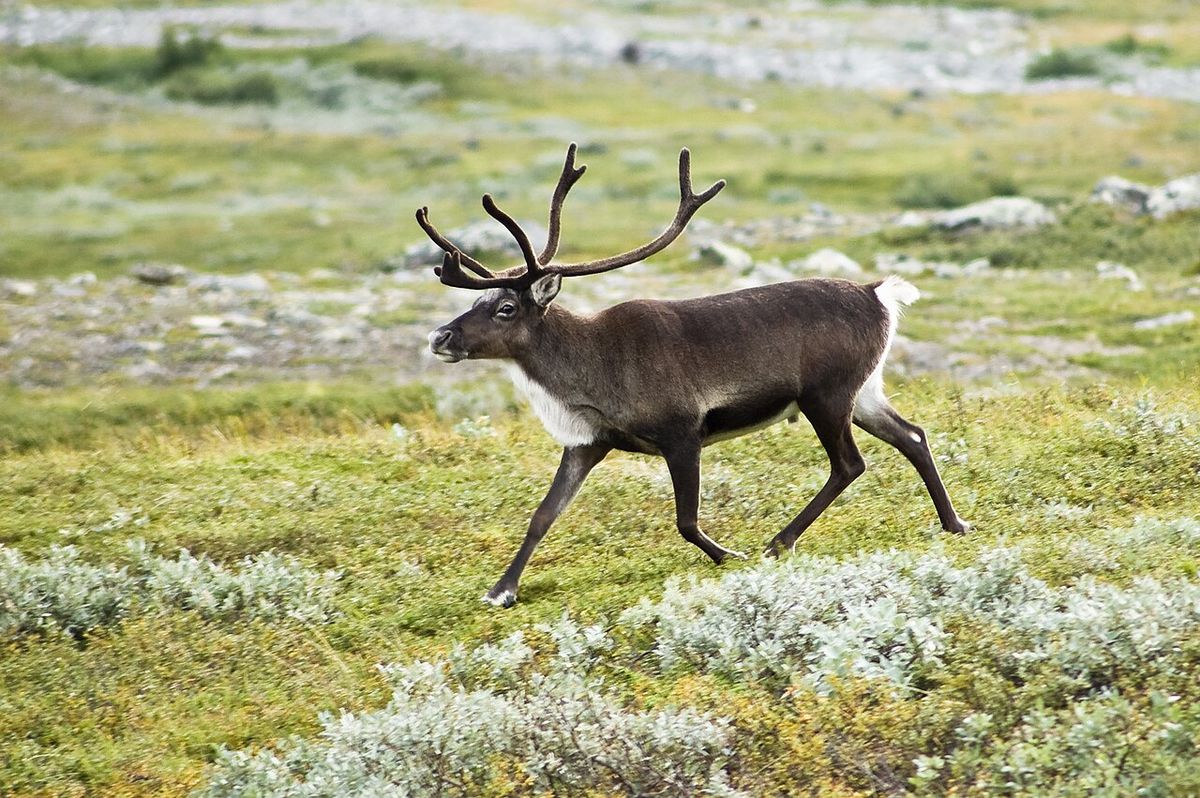
Reindeer and caribou exhibit considerable variation in size, coat colour, and antler architecture across their range. The smallest subspecies is the Svalbard reindeer (R. t. platyrhynchus), while the largest is Osborn's caribou (R. t. osborni) of North America. A defining characteristic of the species is that both males (bulls) and females (cows) can grow antlers annually, though the proportion of antlered females varies significantly between populations. Antlers are typically larger on males, and their specific shape and structure, along with pelage differences, are often used to distinguish between subspecies.
In North America, the term 'caribou' typically refers to wild populations, while 'reindeer' denotes domesticated animals, a distinction formalized by agencies like the U.S. Food and Drug Administration. The species is divided into numerous subspecies, which are often grouped by their ecological adaptations. Tundra or barren-ground caribou, such as the migratory mainland barren-ground caribou (R. t. arcticus), are adapted for extreme cold and undertake long-distance migrations between summer tundra and winter taiga habitats. Montane caribou, including Osborn's, Stone's (R. t. stonei), Rocky Mountain (R. t. fortidens), and Selkirk Mountains caribou (R. t. montanus), inhabit mountainous regions.
The boreal woodland caribou (R. t. caribou) lives in the boreal forest of northeastern Canada. Other notable North American forms include the nomadic Peary caribou (R. t. pearyi) which lives in the polar desert of the high Arctic Archipelago. The Labrador or Ungava caribou (R. t. caboti) is found in northern Quebec and northern Labrador. An extinct island dwarf subspecies, Dawson's caribou (R. t. dawsoni), lived on Graham Island in Haida Gwaii. Genetic studies have found the Newfoundland caribou (R. t. terranovae) to be in the woodland caribou lineage. In Eurasia, both wild and domestic reindeer (R. t. forma domesticus) are distributed across the tundra and into the taiga. Eurasian subspecies include the Eurasian mountain reindeer (R. t. tarandus), the Finnish forest reindeer (R. t. fennicus), and the Siberian forest reindeer (R. t. valentinae).
Distribution and Populations
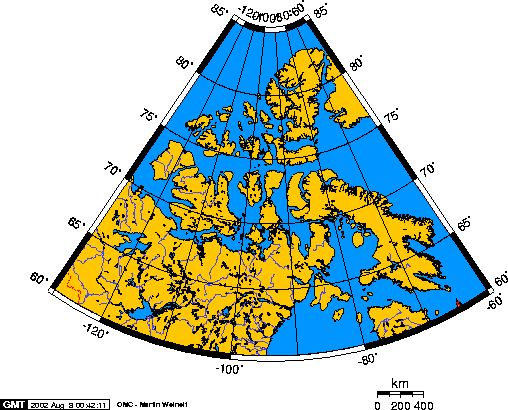
Reindeer have a circumpolar distribution across the Northern Hemisphere. In Eurasia, both wild and domestic reindeer are found from the tundra into the taiga, with significant populations in Norway, Sweden, and Russia. The Taimyr herd of Siberian tundra reindeer (R. t. sibiricus) in Russia is the largest wild reindeer herd in the world, fluctuating between 400,000 and 1,000,000 animals. In North America, caribou range from Alaska through Canada's Yukon, Northwest Territories, Nunavut, and into the boreal forests and Rocky Mountains.
Historically, the range of the sedentary boreal woodland caribou covered more than half of Canada and extended into the northern contiguous United States from Maine to Washington. Caribou populations in Canada have experienced dramatic changes, such as the catastrophic decline of the migratory George River herd of Labrador caribou from 800,000 to 900,000 animals in the 1990s to an estimated fewer than 9,000 by January 2018. Southern mountain woodland caribou have been extirpated from the contiguous United States, with the last herd considered functionally extinct by 2018 after dwindling to three animals. The Committee on the Status of Endangered Wildlife in Canada (COSEWIC) has classified multiple Canadian populations under threat, including the Endangered Southern Mountain and Central Mountain populations and the Threatened Northern Mountain population.
The boreal woodland caribou was designated as Threatened in 2002 by the Committee on the Status of Endangered Wildlife in Canada (COSEWIC). Environment and Climate Change Canada reported in 2011 that there were approximately 34,000 boreal woodland caribou in 51 ranges remaining in Canada. Globally, Rangifer as a whole is considered to be Vulnerable by the International Union for Conservation of Nature (IUCN). Some subspecies are rare and three subspecies have already become extinct. These are Dawson's caribou (R. t. dawsoni) from western Canada, the Sakhalin reindeer (R. t. setoni) from Sakhalin, and the East Greenland caribou (R. t. eogroenlandicus) of northeastern Greenland.
Evolution and Fossil Record
The evolution of reindeer and caribou has been heavily influenced by glacial-interglacial cycles of the Pleistocene epoch. Isolation in refugia during the last glacial maximum shaped the genetic variability between North American and Eurasian populations. The species belongs to the subfamily Odocoileinae, splitting from the lineage of cattle, sheep, and goats approximately 36 million years ago. Rangifer originated in the Late Pliocene and diversified during the Early Pleistocene, a period of multiple glacier advances and retreats.
Archaeologists distinguish 'modern' tundra reindeer and barren-ground caribou from more primitive forms by specific adaptations to extreme cold and long-distance migration. These adaptations include a broad, high muzzle to warm inhaled air, distinctive antler tines for digging in snow, short legs suited for long-distance running, and synchronized calving behaviours. The oldest undoubted Rangifer fossil is from Omsk, Russia, dated to 2.1-1.8 million years before present, while the oldest North American fossil is from the Yukon, dated to 1.6 million years BP. A fossil skull fragment from Süßenborn, Germany, dates to the Middle Pleistocene, roughly 680,000 to 620,000 BP.
The glacial-interglacial cycles of the upper Pleistocene had a major influence on the evolution of Rangifer species. Modern tundra reindeer and barren-ground caribou are thought to have evolved adaptations to extreme cold and long-distance migration, probably in Beringia, before dispersing west into Eurasia and east into North America. Genetic analysis shows that woodland caribou (R. caribou) diverged from primitive ancestors of tundra or barren-ground caribou in the Middle Pleistocene around 357,000 years ago. Woodland caribou are likely more related to extinct North American forest caribou than to barren-ground caribou. For example, the extinct caribou Torontoceros [Rangifer] hypogaeus had features that relate it to forest caribou.
Cultural and Economic Significance
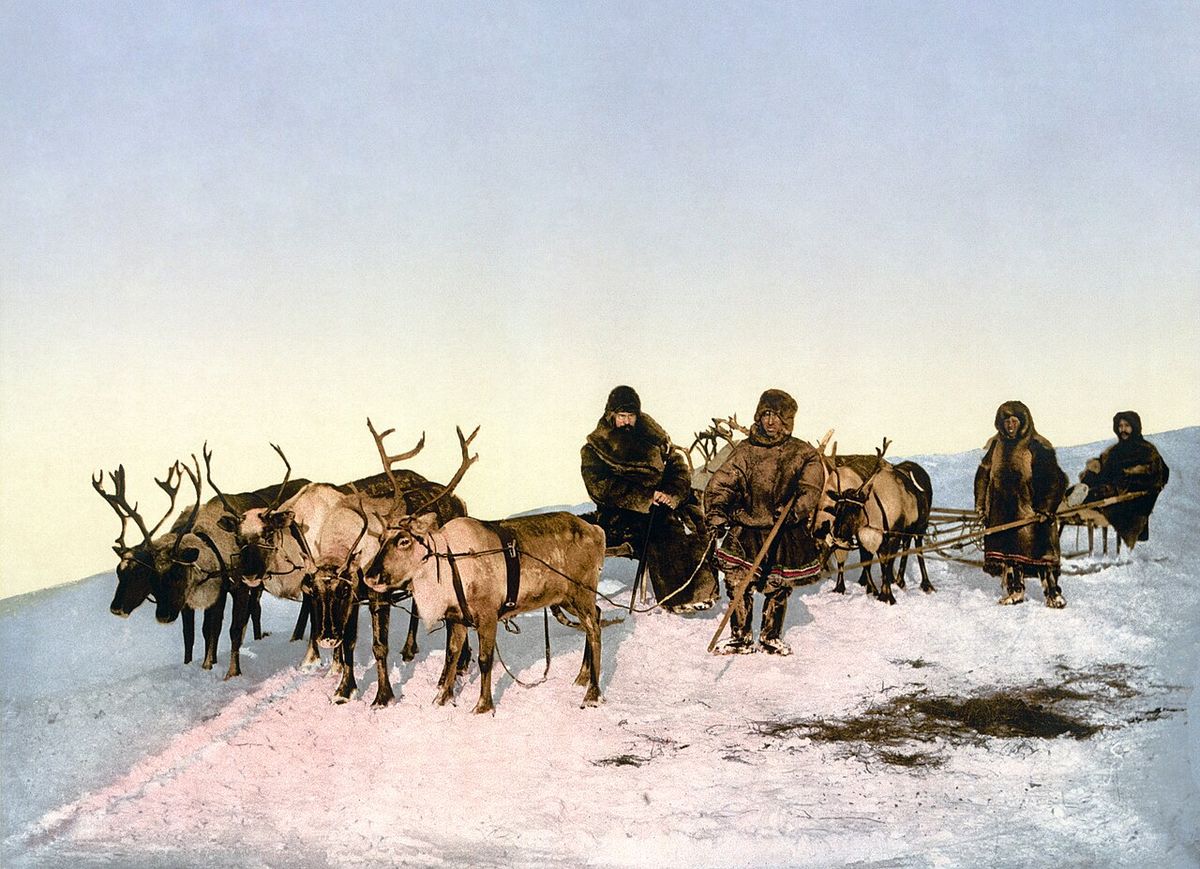
Reindeer and caribou have been an integral part of human life in the Arctic for millennia, serving as a crucial source of food, clothing, and shelter from prehistoric times to the present day. They are the only deer species to have been semi-domesticated on a large scale, with domestic reindeer (R. t. forma domesticus) herded across Eurasia. In North America, wild caribou continue to be hunted by Indigenous communities, sustaining cultures and traditions. The animal holds great importance for many Indigenous peoples across its range, each with their own rich vocabulary and knowledge systems related to the species.
For example, the Inuvialuit of the western Canadian Arctic and Inuit of the eastern Arctic call the barren-ground caribou 'tuktu'. The Tłı̨chǫ (Wekʼèezhìi) people have distinct words for Arctic caribou ('Ɂekwǫ̀') and boreal woodland caribou ('tǫdzı'), and the Gwichʼin people are reported to have over 24 distinct caribou-related words. Beyond subsistence, reindeer feature prominently in global folklore, most famously in Christmas legends where they are depicted pulling Santa Claus's sleigh. The species' name reflects this deep connection; 'caribou' derives from the Mi'kmaq word 'qalipu', meaning 'snow shoveller', a reference to its feeding behaviour, while 'reindeer' comes from the Old Norse 'hreindýr'.
Humans started hunting reindeer in both the Mesolithic and Neolithic Periods. Norway and Greenland have unbroken traditions of hunting wild reindeer from the Last Glacial Period until the present day. In the non-forested mountains of central Norway, such as Jotunheimen, remains of stone-built trapping pits and guiding fences can be found. These hunting structures can be dated to the Migration Period, although they may have been in use since the Stone Age. Cave paintings by ancient Europeans include depictions of reindeer, further evidencing the long relationship between humans and the species.
- The Inuvialuit and Inuit word for barren-ground caribou is 'tuktu'.
- The Tłı̨chǫ word for Arctic caribou is 'Ɂekwǫ̀'.
- The Tłı̨chǫ word for boreal woodland caribou is 'tǫdzı'.
- The Gwichʼin language has over 24 distinct caribou-related words.
- Greenlandic Inuit call reindeer 'tuttu'.
- Icelanders call reindeer 'hreindýr' or sometimes 'rein'.
- The Mi'kmaq origin of 'caribou' is 'qalipu', meaning 'snow shoveller'.
- The Old Norse origin of 'reindeer' is 'hreindýr' (hreinn 'reindeer' + dýr 'animal').
Conservation Status and Threats
The conservation status of reindeer and caribou varies widely by subspecies and population, but the overall trend is concerning. The International Union for Conservation of Nature (IUCN) lists Rangifer tarandus as Vulnerable globally. Several subspecies are rare, and three are already extinct: Dawson's caribou from Haida Gwaii, the Sakhalin reindeer, and the East Greenland caribou. The primary threats across their range include habitat loss and fragmentation from industrial development, climate change, and increased predation linked to landscape alteration.
Climate change affects the availability of forage, the timing of migrations, and increases the frequency of freezing rain events that create impenetrable ice layers over lichen, a key winter food source. In Canada, the situation is particularly acute for several ecotypes, exemplified by the George River herd's catastrophic decline from nearly a million animals to under nine thousand in just a few decades. The boreal woodland caribou has disappeared from most of its original southern range and is threatened by cumulative disturbances in the boreal forest. The Committee on the Status of Endangered Wildlife in Canada (COSEWIC) has assigned at-risk status to multiple populations, mandating federal and provincial recovery strategies.
Siberian tundra reindeer herds have been in decline but are stable or increasing since 2000. The Committee on the Status of Endangered Wildlife in Canada (COSEWIC) has classified specific mountain caribou populations. It classified both the Southern Mountain population DU9 (R. t. montanus) and the Central Mountain population DU8 (R. t. fortidens) as Endangered. COSEWIC classified the Northern Mountain population DU7 (R. t. osborni) as Threatened. These classifications reflect the severity of the conservation situation for some populations.
- The Southern Mountain population (DU9, R. t. montanus) is classified as Endangered.
- The Central Mountain population (DU8, R. t. fortidens) is classified as Endangered.
- The Northern Mountain population (DU7, R. t. osborni) is classified as Threatened.
- The boreal woodland caribou (R. t. caribou) was designated as Threatened in 2002.
Biology and Adaptations
Reindeer and caribou possess a suite of physical and behavioural adaptations that allow them to survive in some of the planet's harshest environments. Their dense, hollow-haired coats provide superior insulation against extreme cold, and their wide, concave hooves act as natural snowshoes for walking on soft snow and as efficient paddles for swimming during migrations. These hooves are also used to dig or 'crater' through snow to access ground lichen, their primary winter forage. Their unique nasal structure, with extensive turbinate bones, warms incoming air before it reaches the lungs and recovers moisture from exhaled breath, conserving both heat and water.
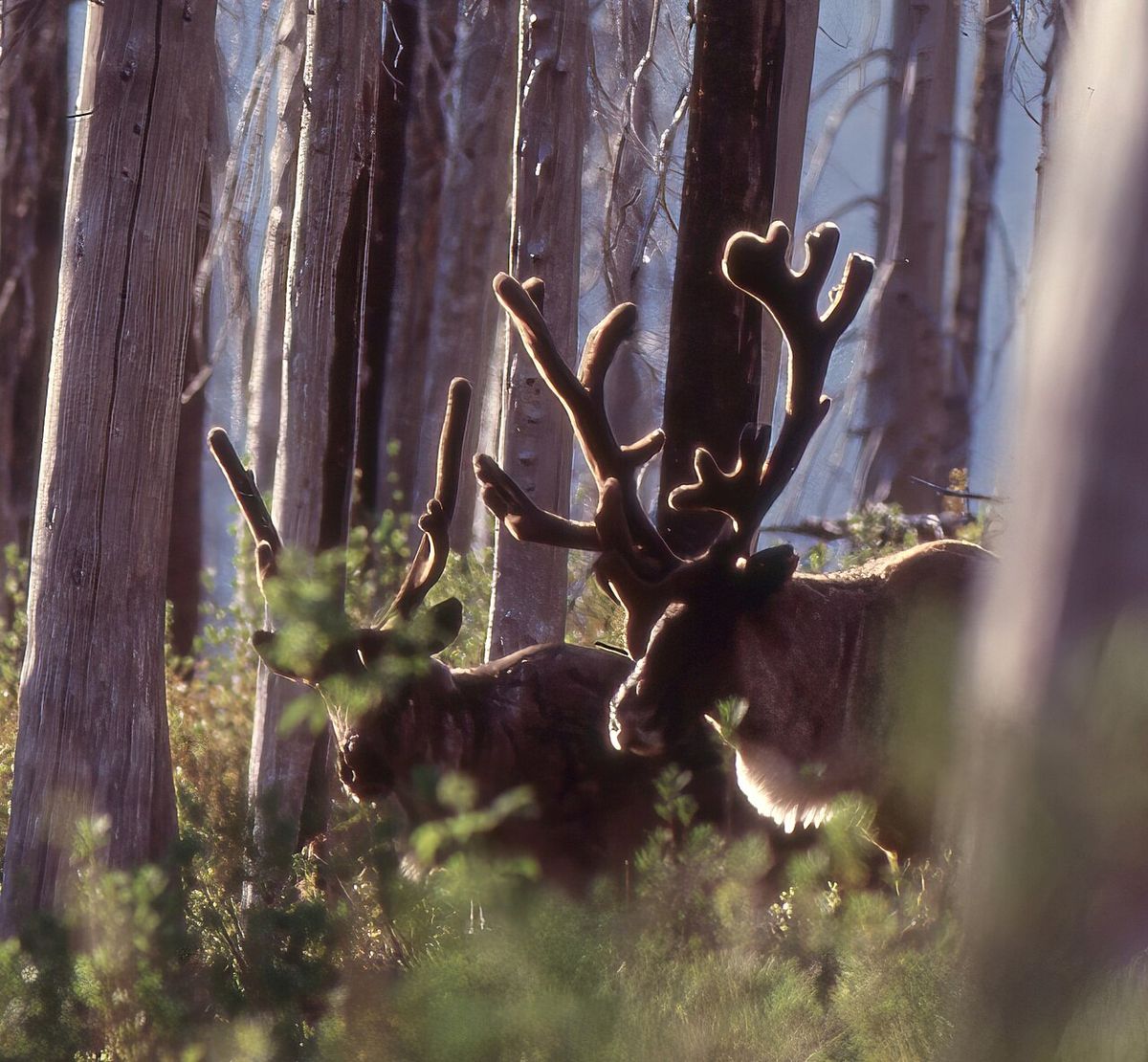
Antlers are a key feature, grown and shed annually by both sexes, though they are typically larger and more complex in males. Antler architecture is ecologically significant, with the low-set bez tines and broad, flattened brow tines functioning together as shovels for digging into hard-packed snow. This adaptation is so central that it gave the animal its Mi'kmaq name, 'qalipu' or snow shoveller. Reindeer are ruminants with a specialized digestive system that allows them to extract nutrients from lichens, which are low in protein but abundant in their winter habitat.
Modern tundra reindeer and barren-ground caribou have adaptations to extreme cold and to long-distance migration. They have many genes suited to tundra environments. These genes are for vitamin D metabolism, fat metabolism, retinal development, circadian rhythm, and tolerance to cold temperatures. These genes are found in tundra caribou but are lacking or rudimentary in forest-adapted types. For this reason, forest-adapted reindeer and caribou, such as the boreal woodland caribou, could not survive in tundra or polar deserts.
Major Herds and Population Estimates
Reindeer occur in both migratory and sedentary populations, and their herd sizes vary greatly in different regions. The tundra subspecies are adapted for long-distance migration. For example, the migratory mainland barren-ground caribou of Arctic Alaska and Northern Canada (R. t. arcticus) summers in tundra and winters in taiga. The Taimyr herd of Siberian tundra reindeer is the largest wild reindeer herd in the world, varying between 400,000 and 1,000,000 animals. The migratory George River herd of Labrador caribou (R. t. caboti) in Canada was once the second largest herd, with numbers between 800,000 and 900,000 in the 1990s.
| Population / Herd | Subspecies / Type | Region | Estimated Size (Notes) |
|---|---|---|---|
| Taimyr Herd | Siberian tundra reindeer (R. t. sibiricus) | Russia | 400,000-1,000,000 (Largest wild herd) |
| Swedish Herds | Reindeer | Sweden | ~250,000 (Managed by Sámi) |
| Siberian Tundra Herds (19 total) | Siberian tundra reindeer (R. t. sibiricus) | Russia | ~940,000 total |
| George River Herd (1990s peak) | Labrador caribou (R. t. caboti) | Canada (Labrador/Quebec) | 800,000 to 900,000 |
| George River Herd (2018) | Labrador caribou (R. t. caboti) | Canada (Labrador/Quebec) | < 9,000 |
| Boreal Woodland Caribou (2011) | Boreal woodland caribou (R. t. caribou) | Canada | ~34,000 in 51 ranges |
| Mountain Reindeer | Mountain reindeer (R. t. tarandus) | Norway | ~20,000 |
| New Siberia Archipelago | Novaya Zemlya reindeer (R. t. pearsoni) | Russia | 10,000-15,000 |
- Approximately 20,000 mountain reindeer (R. t. tarandus) live in the mountains of Norway.
- About 250,000 reindeer are in herds managed by Sámi villages in Sweden.
- Russia manages 19 herds of Siberian tundra reindeer totalling about 940,000 animals.
- The Novaya Zemlya Archipelago has about 5,000 animals, mostly domestic or hybrids.
- The New Siberia Archipelago has about 10,000 to 15,000 reindeer.
- Wrangel Island has 200 to 300 feral domestic reindeer.
- The George River herd was estimated at fewer than 9,000 animals in January 2018.
- Environment Canada reported approximately 34,000 boreal woodland caribou in Canada in 2011.
Questions about Reindeer
What is the difference between a reindeer and a caribou?
Reindeer and caribou are the same species, Rangifer tarandus. The difference in name is primarily geographical and cultural. In North American English, the wild animals are typically called caribou, while the domesticated animals are called reindeer. In Eurasia, all animals of this species are generally called reindeer, whether wild or domesticated. The International Union for Conservation of Nature notes 'Reindeer is the European name for the species of Rangifer, while in North America, Rangifer species are known as Caribou.'
Do female reindeer have antlers?
Yes, female reindeer (cows) can grow antlers, which is a unique trait among deer species. However, the prevalence of antlered females varies significantly between different populations and subspecies. Antlers are typically larger and more complex on males (bulls), but in many herds, females grow and shed antlers annually just like males. This characteristic is one of the key biological features that distinguishes Rangifer tarandus from other members of the deer family.
Are caribou endangered in Canada?
Several populations of caribou in Canada are endangered or threatened. The Committee on the Status of Endangered Wildlife in Canada (COSEWIC) has classified the Southern Mountain and Central Mountain populations as Endangered, and the Northern Mountain population as Threatened. The boreal woodland caribou was designated as Threatened in 2002. Some herds, like the George River herd in Labrador, have experienced catastrophic declines from nearly a million animals in the 1990s to fewer than nine thousand by 2018, highlighting serious conservation challenges.
What do caribou eat?
Caribou are herbivores with a diet that changes seasonally. In summer, they graze on a variety of grasses, sedges, forbs, and leaves from shrubs like willow and birch. Their most critical winter food source is lichen, particularly ground lichen (often called reindeer moss), which they dig up from under the snow using their wide hooves. This ability to subsist on lichen, a food source few other large mammals can efficiently digest, is a key adaptation for surviving in harsh northern winters where other vegetation is scarce or inaccessible.
Where can you find caribou in Canada?
Caribou are found across much of northern Canada. Their range extends from Alaska through the Yukon, Northwest Territories, and Nunavut, throughout the tundra and taiga (boreal forest). They are also found south through the Canadian Rocky Mountains in montane populations. Different subspecies occupy specific habitats: barren-ground caribou migrate across the tundra, Peary caribou live on the high Arctic islands, boreal woodland caribou inhabit the boreal forest, and various mountain caribou live in the Rockies and other ranges. Historically, their range was even more extensive, reaching into the northern contiguous United States.
Why are caribou important to Indigenous peoples in Canada?
Caribou have been fundamentally important to Indigenous peoples in Canada for thousands of years, providing a vital source of food, clothing, tools, and shelter. This relationship is deeply embedded in culture, spirituality, language, and identity. Many Indigenous communities, such as the Inuit, Inuvialuit, Dene, and Gwichʼin, have extensive traditional knowledge and vocabularies related to caribou. The animal remains central to subsistence hunting and cultural practices today. Its conservation is therefore not only an ecological issue but also a matter of Indigenous rights and cultural survival.
Sources and further reading
- Reindeer (Wikipedia)
- Caribou vs. Reindeer (nps.gov)
- Same species, different stories: The facts about caribou ... (wwf.ca)
- Caribou Reindeer (kids.nationalgeographic.com)
- Reindeer | Large Animal Research Station (uaf.edu)
Checked by the Your Space Hamilton desk. Last updated 2026-10-19.