Rainbow trout
The rainbow trout (Oncorhynchus mykiss) is a species of trout native to the cold-water tributaries of the Pacific Ocean in Asia and North America, including the coastal waters of British Columbia and Alaska. It is one of the world's most widely introduced fish species, valued both as a sport fish and a commercially farmed food source. In Canada, rainbow trout are a major focus of recreational angling, with stocked populations supporting fisheries in provinces from coast to coast. The anadromous form, known as steelhead, undertakes remarkable migrations from freshwater birthplaces to the ocean and back, and some distinct populations are listed as threatened or endangered.
Taxonomy and Classification
The rainbow trout's scientific name, Oncorhynchus mykiss, has a complex taxonomic history rooted in 18th-century exploration. German naturalist Johann Julius Walbaum first described the species in 1792 based on specimens from the Kamchatka Peninsula in Siberia, coining the name 'mykiss' from the local Kamchatkan term for the fish. Throughout the 19th century, other names were applied, such as Salmo gairdneri, honouring Hudson's Bay Company surgeon Meredith Gairdner, and Salmo irideus, referencing the fish's rainbow hues. For decades, the rainbow trout was classified within the Atlantic salmon genus, Salmo. However, in 1989, detailed morphological and genetic studies revealed a closer relationship to Pacific salmon, leading to its reclassification into the genus Oncorhynchus. Walbaum's original name took precedence, resulting in the current scientific designation. The previous names persist as subspecies identifiers, with coastal rainbow trout known as O. m. irideus and Columbia River redband trout as O. m. gairdneri.
The species is part of the Salmonidae family, which includes other trout, salmon, and char. A key distinction is that true trout of the genera Oncorhynchus and Salmo possess only black spots, unlike chars (Salvelinus) which can have spots of various colours, or brown trout which have red and orange spots alongside black ones. The rainbow trout's closest relatives within its genus are the cutthroat trout, with which it can hybridize, and various Pacific salmon species. This reclassification highlighted the evolutionary divide between Pacific and Atlantic basin salmonids.
Physical Description and Identification
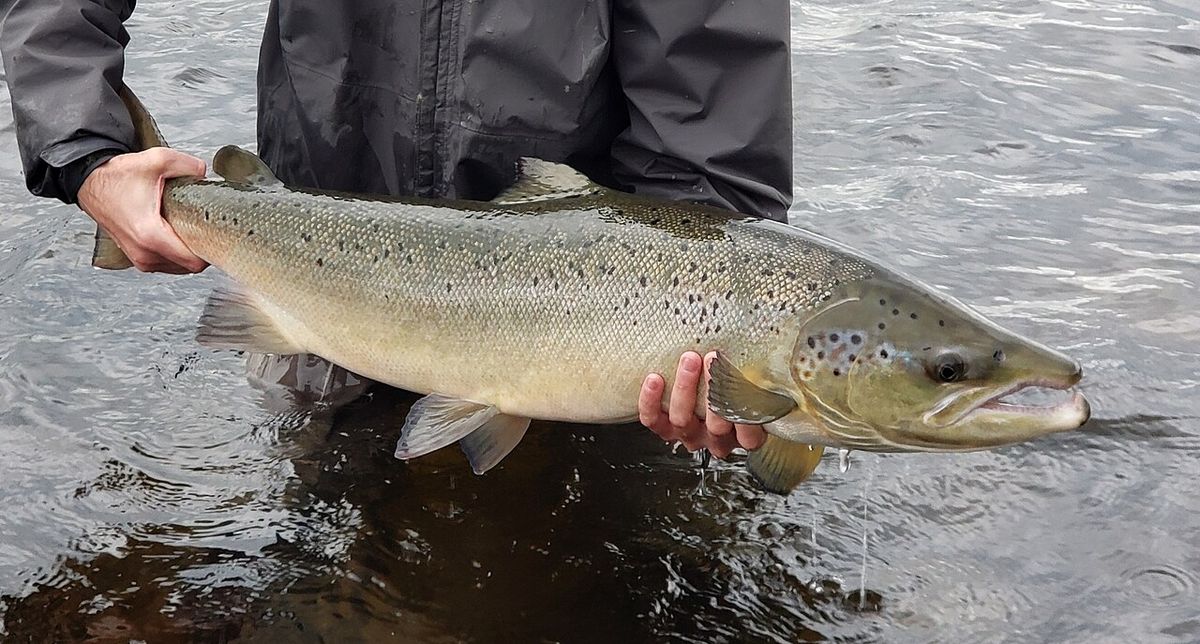
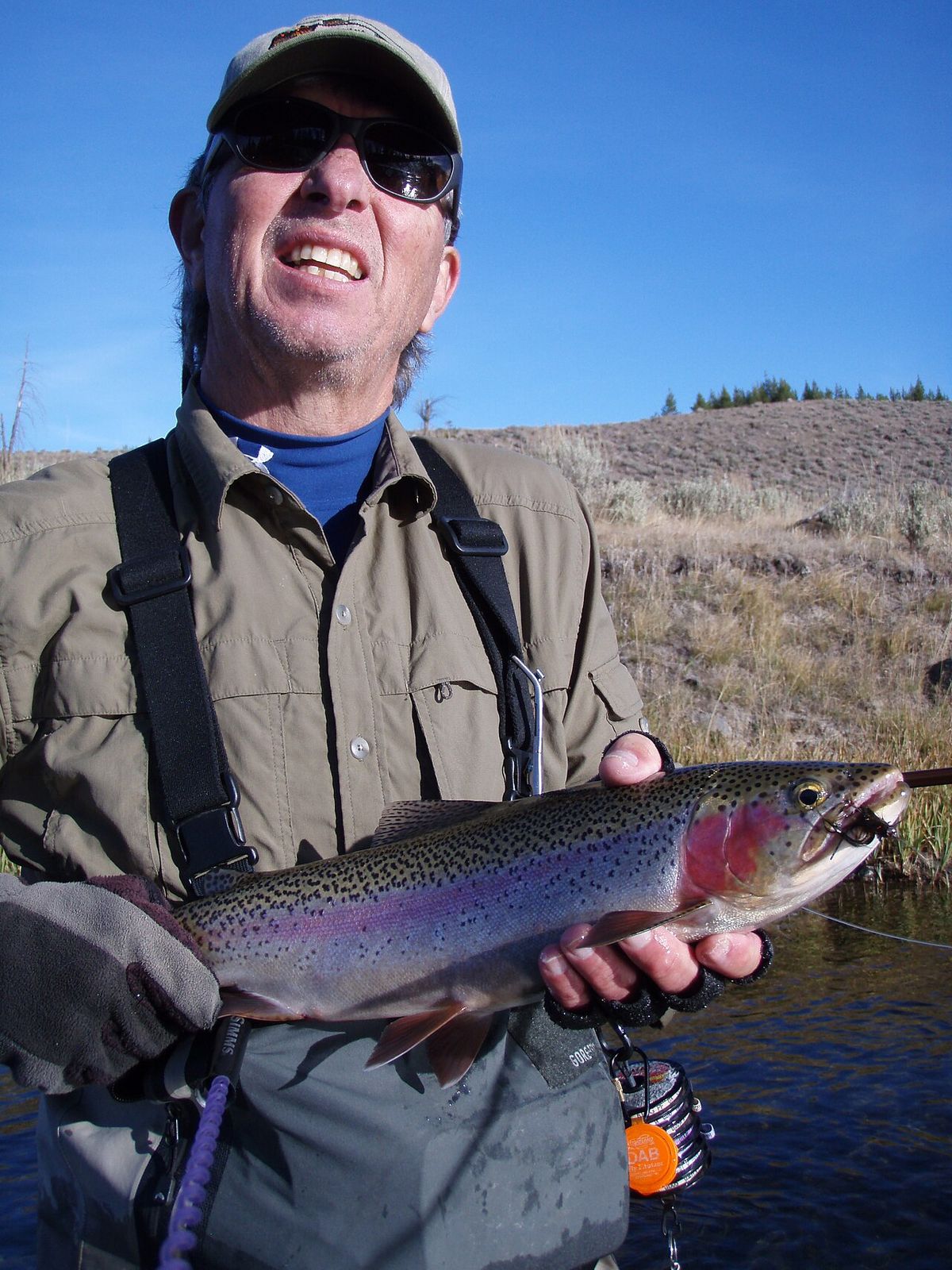
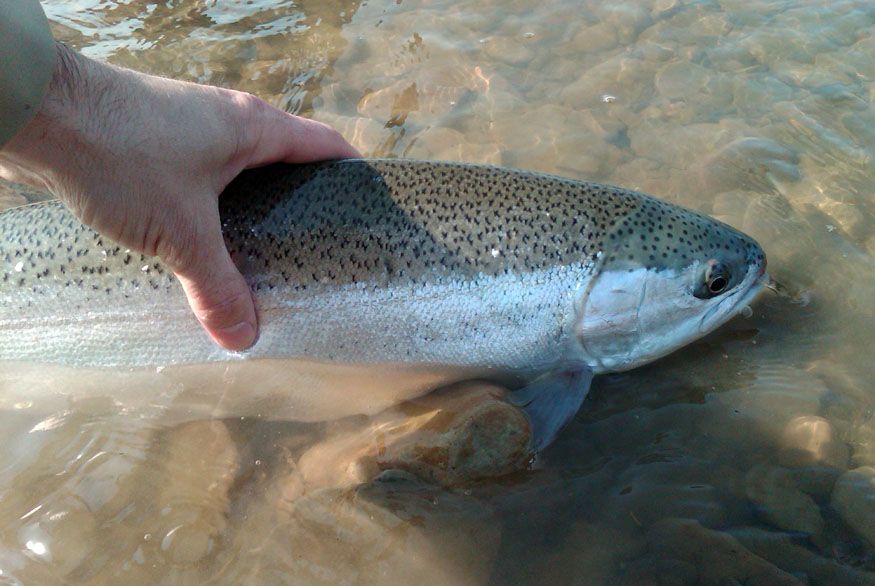
The appearance of the rainbow trout is highly variable, influenced by subspecies, habitat, age, and life history form. Resident freshwater adults typically exhibit a blue-green or olive green base colouration along the back, transitioning to silvery white on the belly. The body is heavily adorned with small black spots, predominantly above the lateral line. The most distinctive feature is a broad, vivid reddish or pink stripe running horizontally along the lateral line from the gills to the tail, which becomes intensely pronounced in spawning males. The caudal fin is squarish and only mildly forked. In contrast, lake-dwelling and anadromous steelhead forms adopt a more silvery, streamlined appearance to blend into open water, with the reddish stripe often faint or absent. Juvenile rainbow trout display 8 to 13 dark vertical bars known as parr marks, which are typical of young salmonids and may be retained into adulthood in some redband and golden trout subspecies. Another identifying management practice, especially in areas with both wild and stocked fisheries, is the clipping of the adipose fin on hatchery-raised fish to distinguish them from native populations.
Life Cycle and Reproduction
The life cycle of the rainbow trout is defined by two primary strategies: a permanent freshwater residence or an anadromous journey to the ocean. Spawning occurs in early to late spring in the Northern Hemisphere when water temperatures reach at least 6 to 7 °C. Females seek out gravel-bottomed riffles in streams or along lake shores to excavate a nest, or redd, by turning on their side and using her tail to displace gravel. A female can produce 2000 to 3000 eggs per kilogram of her body weight. During spawning, a male aligns alongside the female, and together they release eggs and milt into the redd. The female then covers the fertilized eggs with gravel. The eggs hatch in approximately four to seven weeks into sac fry, which remain sheltered in the gravel until their yolk sac is absorbed. They then emerge as free-swimming fry, feeding on zooplankton. As they grow, they develop parr marks and are referred to as parr or fingerlings.
The steelhead life history is a remarkable adaptation. Juvenile steelhead may remain in freshwater for one to three years before undergoing smoltification, a physiological transformation that allows them to survive in saltwater. They then migrate to the ocean, where they spend two to three years feeding and growing. Steelhead are iteroparous, meaning they can survive spawning and return to the ocean to make subsequent runs, though fewer than 10 percent of wild adults do so. They return to their natal streams with precise homing instinct. Two distinct runs are recognized: summer-run steelhead, which enter rivers between May and October and spawn the following spring after maturing in freshwater, and winter-run steelhead, which enter rivers from November to April ready to spawn almost immediately. After spawning, surviving steelhead can return to the ocean, unlike most Pacific salmon which die after spawning.
Habitat, Diet, and Range
Rainbow trout are native to cold, well-oxygenated waters. Their original range spans the Pacific Basin from the Kamchatka Peninsula in Russia, along the Aleutian Islands and the coast of Alaska, down through British Columbia, and along the western United States to northern Mexico. Certain subspecies, like the Columbia River redband trout, have extended east into the upper Mackenzie and Peace River watersheds in Alberta and British Columbia, draining into the Arctic Ocean. In freshwater, they thrive in alluvial or freestone streams with gravel bottoms essential for spawning. Lake-resident populations require access to such streams and are found in moderately deep, cool lakes with productive shallows.
Rainbow trout are opportunistic predators with a varied diet. Their feeding habits shift with age and habitat.
- Juveniles and adults in streams consume larval, pupal, and adult aquatic insects such as caddisflies, stoneflies, and mayflies.
- They readily eat terrestrial insects that fall into the water, including ants, beetles, and grasshoppers.
- As they grow, fish eggs and smaller fish become a larger part of their diet, and they will prey on fish up to one-third of their own length.
- Other prey items include crayfish, shrimp, amphipods, and even decomposing flesh from fish carcasses.
- Adult steelhead in the ocean feed primarily on other fish, squid, and amphipods.
- Occasionally, they may consume small rodents, amphibians, and birds.
Aquaculture and Economic Importance
Rainbow trout hold significant economic value through both recreational fisheries and commercial aquaculture. Artificial propagation began in 1870 with the establishment of the first hatchery on San Leandro Creek in California. The practice expanded rapidly, with eggs from the McCloud River hatchery distributed across North America and beyond, forming the genetic foundation for many global populations. Today, hundreds of hatcheries operated by federal, state, provincial, and tribal agencies in Canada and the United States produce trout for conservation and stocking recreational waters. In Canada, six provinces have rainbow trout farms, with Ontario being the leading producer.
Commercial aquaculture of rainbow trout is a major global industry. Worldwide production in 2007 reached approximately 604,695 tonnes, valued at about US$2.6 billion. The industry is dominated by several key producing nations.
| Country/Region | Production Note |
|---|---|
| Chile | Largest global producer. Utilizes sea cages for steelhead. |
| Norway | Significant sea cage production for export. |
| United States | Produces about 7% of world's farmed trout. Idaho's Snake River area leads. |
| Iran & Turkey | Major producers in the Middle East. |
| European Union (Italy, France, Germany, Denmark, Spain) | Inland production for domestic markets. |
Rainbow Trout Angling in Canada
Rainbow trout are a premier target for recreational anglers across Canada, supporting an active sport fishing culture. Management is conducted through detailed zoning, seasons, and limits to ensure sustainable fisheries. For example, in Newfoundland and Labrador, regulations for the 2026 season define specific angling zones and periods. In many scheduled waters, the rainbow trout season runs from June 1 to October 7, though dates can vary by location and year, such as a season from June 1 to September 7 in some areas for 2026. Anglers may fish for trout year-round in coastal waters of Labrador. These regulations are carefully designed to protect spawning fish and maintain healthy populations, with specific catch limits applying to aggregate trout species including rainbow, brown, and cutthroat trout within each zone.
The fish's adaptability has allowed for successful introductions in countless lakes and rivers outside its native Pacific range, creating angling opportunities in provinces like Ontario, Quebec, and Alberta. The excitement of the opening day, often in late spring, is a celebrated event among fishing communities. Anglers employ a variety of techniques, from fly fishing with imitations of insects and eggs to spin casting with lures, to catch these prized fish. The pursuit of the powerful, migratory steelhead is particularly revered, drawing anglers to coastal rivers in British Columbia and elsewhere during the winter and summer runs. The economic and social value of rainbow trout angling is considerable, contributing to local economies through tourism, guiding services, and equipment sales.
Conservation Status and Environmental Impact
The rainbow trout presents a complex conservation narrative, being both a species of concern in its native habitat and a problematic invader elsewhere. Within its original Pacific Northwest range, specific populations, particularly of steelhead, face significant threats. Habitat degradation from logging, agriculture, and urban development, coupled with barriers like dams that block migration routes, have led to declines. As a result, several distinct population segments of steelhead are listed as either threatened or endangered under legislation like the U.S. Endangered Species Act, highlighting the need for targeted recovery efforts.
Conversely, the rainbow trout's introduction around the world for sport and food has had severe ecological consequences, earning it a place on the list of the world's top 100 invasive species. Its impacts on native fauna involve several mechanisms.
- Predation: Rainbow trout prey on native fish, amphibians, and invertebrates, disrupting local food webs.
- Competition: They out-compete native trout and other species for food and prime habitat.
- Disease Transmission: Introduced trout can spread pathogens like whirling disease to susceptible native populations.
- Hybridization: They readily hybridize with closely related species such as cutthroat trout, diluting unique genetic lineages and potentially leading to local extinctions of pure native stocks.
Questions about Rainbow trout
What is the difference between a rainbow trout and a steelhead?
Rainbow trout and steelhead are the same species, Oncorhynchus mykiss, but represent different life history strategies. Resident rainbow trout spend their entire lives in freshwater rivers, streams, or lakes. Steelhead are the anadromous form. They are born in freshwater, migrate to the ocean to live and grow for two to three years, and then return to freshwater to spawn. Steelhead are typically larger and more silvery than resident rainbows, and they possess a remarkable homing instinct to return to their natal streams. Unlike most Pacific salmon, steelhead can survive spawning and return to the ocean to potentially spawn again.
Where are rainbow trout native?
Rainbow trout are native to the cold-water tributaries of the Pacific Ocean basin. Their native range extends from the Kamchatka Peninsula in Russia, east along the Aleutian Islands and throughout southwest Alaska, down the Pacific coast of British Columbia and the contiguous United States to northern Mexico. Certain subspecies have extended inland, such as the Columbia River redband trout found in watersheds draining into the Columbia River and east into parts of Alberta and British Columbia. They are not native to the Great Lakes region, eastern North America, Europe, or any waters in the Southern Hemisphere.
What do rainbow trout eat?
Rainbow trout are opportunistic predators with a varied diet that changes as they grow. Juveniles and adults in freshwater feed heavily on aquatic insects like mayflies, caddisflies, and stoneflies, as well as terrestrial insects that fall into the water. They also consume fish eggs, crustaceans like crayfish and shrimp, and algae. Larger rainbow trout increasingly prey on other smaller fish. Adult steelhead in the ocean feed primarily on fish, squid, and amphipods. They have even been known to eat small rodents, amphibians, and birds on rare occasions.
How long do rainbow trout live?
The maximum recorded lifespan for a rainbow trout is 11 years. In the wild, they typically live for 6 to 8 years, though this varies with habitat, food availability, and predation pressure. Factors such as whether they are resident or anadromous also influence lifespan. Steelhead face significant mortality during their ocean migration and spawning runs, with fewer than 10 percent of wild adults surviving to spawn a second time, though survival rates can be higher in introduced populations like those in the Great Lakes.
Why are rainbow trout considered invasive?
Rainbow trout are considered one of the world's top 100 invasive species because their introduction outside their native range has often harmed local ecosystems. Introduced for sport fishing and aquaculture since the 1870s, they have established populations on every continent except Antarctica. They impact native species through predation, out-competing them for food and habitat, transmitting diseases like whirling disease, and hybridizing with closely related native trout such as cutthroat trout. These actions can lead to population declines or even extinctions of unique native fish species.
When is rainbow trout fishing season in Canada?
Fishing seasons for rainbow trout in Canada are set by provincial and territorial authorities and vary by specific water body and zone. For example, in Newfoundland and Labrador for the 2026 season, many scheduled waters for rainbow trout are open from June 1 to October 7, with some areas having a season from June 1 to September 7. In coastal waters of Labrador, angling for trout is permitted year-round. Regulations, including exact dates, catch limits, and permitted methods, are detailed in annual angling guides, and anglers must always consult the current rules for their specific fishing location.
Sources and further reading
- Rainbow trout (Wikipedia)
- Anglers' Guide 2026 to 2027 - Trout (nfl.dfo-mpo.gc.ca)
- Oncorhynchus mykiss (Coast rainbow trout) | INFORMATION (animaldiversity.org)
- Rainbow Trout (wildtrout.org)
- fishing periods, limits and exceptions (peche.faune.gouv.qc.ca)
Checked by the Your Space Hamilton desk. Last updated 2026-10-24.