Atlantic salmon
The Atlantic salmon (Salmo salar) is a ray-finned fish species native to the northern Atlantic Ocean and the rivers flowing into it. It is the third largest salmonid species, capable of reaching lengths over one metre, and is renowned for its anadromous life cycle, migrating from freshwater birthplaces to the ocean and back to spawn. In Canada, Atlantic salmon hold significant ecological, cultural, and economic value, supporting historic Indigenous and commercial fisheries and contemporary recreational angling. While wild populations have faced severe declines due to habitat loss and overfishing, leading to extensive conservation efforts, the species is now predominantly supplied to global markets through large-scale aquaculture operations.
Nomenclature and Description
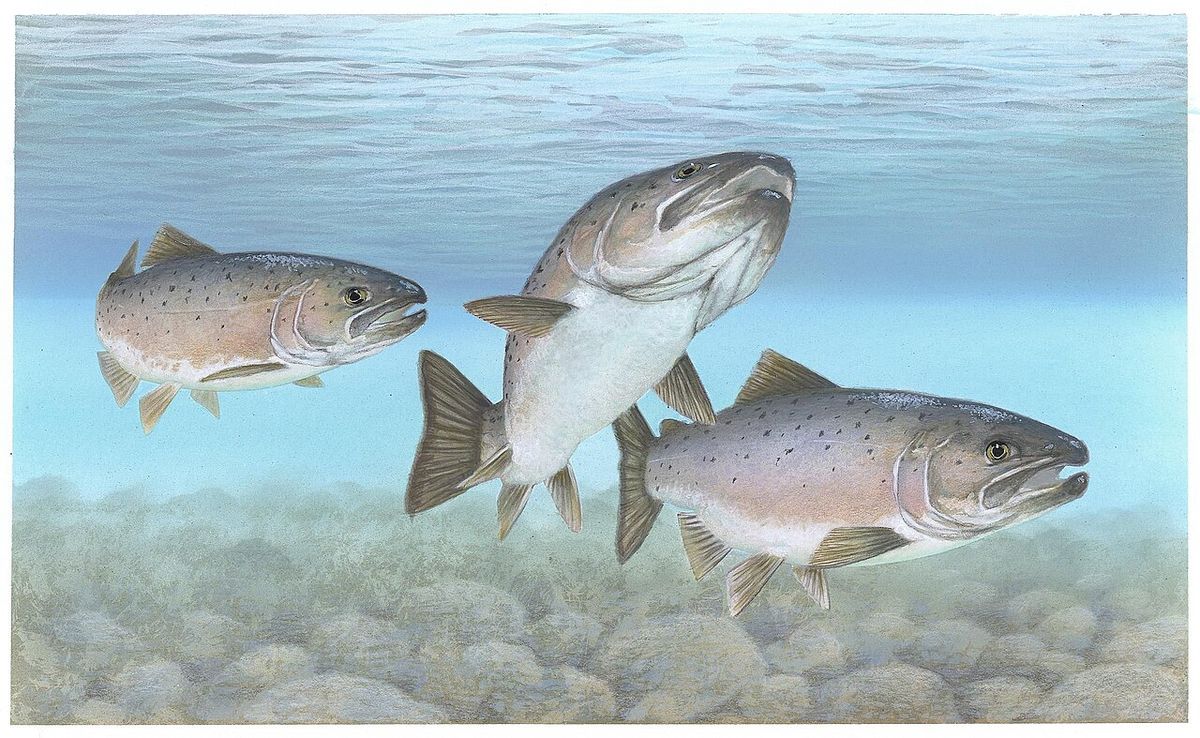
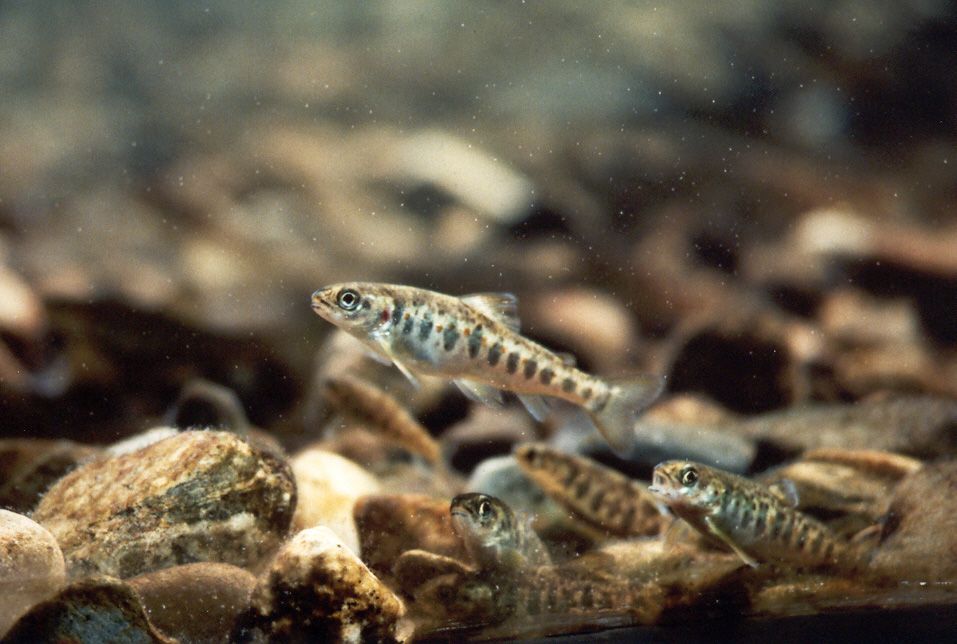
The species was formally described by Swedish zoologist Carl Linnaeus in 1758 with the binomial name Salmo salar. The name derives from the Latin 'salmo' for salmon, with 'salar' historically interpreted as 'leaper' or more likely 'resident of salt water'. Throughout its life cycle and across regions, the fish is known by various common names including bay salmon, black salmon, silver salmon, sebago salmon, and winnish. Landlocked freshwater populations are often called ouananiche in North America. The appearance of Atlantic salmon changes dramatically with age and environment. Juvenile fish in freshwater, known as parr, exhibit blue and red spots along their flanks and distinctive dark vertical bars called parr marks. Upon maturing and entering the saltwater phase after smoltification, they develop a distinctive silver-blue sheen with black spots predominantly above the lateral line, while the caudal fin typically remains unspotted. During the spawning period, males often take on a green or red hue. The species has a streamlined, fusiform body and well-developed teeth, with all fins except the adipose fin bordered in black. After two years at sea, fish average 71 to 76 cm in length and 3.6 to 5.4 kg in weight, but repeat spawners or those with more sea winters grow much larger. The colour of young Atlantic salmon does not resemble the adult stage, and the easiest way to identify an adult is by the black spots above the lateral line.
Distribution and Habitat
The natural range of the Atlantic salmon spans both sides of the North Atlantic. In Europe, they are found from northern Portugal and Spain northeast to the Pechora River in Russia, and have recently colonized Svalbard as far as 78°N from 2002 to 2006 onward due to climate warming. In North America, their range extends from Connecticut north to northern Labrador and Arctic Canada, with breeding confirmed from Connecticut to Arctic Canada. They are a cold-water species highly sensitive to changes in both water temperature and freshwater habitat quality, and their distribution is easily influenced by these factors. Historical accounts and archaeological evidence, such as fish scales dated to 10,000 years BP in a coastal New Jersey pond, suggest a formerly more extensive southern distribution. A 1609 account by Henry Hudson indicated salmon once ran up the Hudson River. The southernmost documented spawning runs in the United States occurred in the Housatonic River and its Naugatuck River tributary. Young salmon, known as parr, spend one to four years in their natal river before undergoing a physiological transformation called smoltification. This process prepares them for the osmotic shift to seawater, changes their camouflage from stream-adapted spots to a shiny silvery colour, and they begin to swim with the current, at which point they are termed smolts. Their oceanic migration is not a long-distance swim but rather a journey guided by sea surface currents, which eventually transport them back towards their river of origin. It is believed they locate their natal stream by its unique olfactory chemical signature, with only about 5 percent of fish ascending the wrong river, and the range of an individual is essentially its natal river and the circular sea surface currents connected to it.
Life Cycle and Ecology
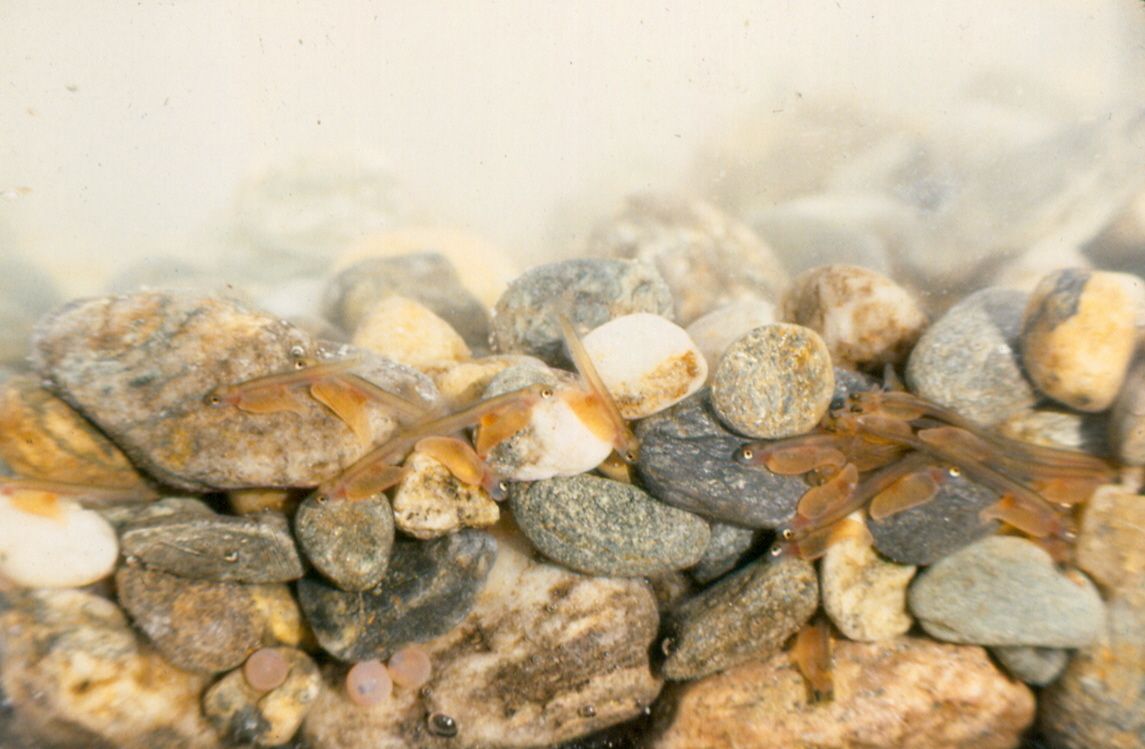
The Atlantic salmon exhibits a complex anadromous life cycle, though permanent freshwater populations exist. The freshwater phase can last from two to eight years, varying with latitude, being shorter in southern rivers like those to the English Channel and longer in northern areas like Ungava Bay, Quebec, where smolts as old as eight years have been found. It begins with the alevin stage, where newly hatched fish rely on their yolk sac, progresses to the actively feeding fry stage, and culminates in the parr stage where they prepare for seaward migration. Upon becoming smolts, they migrate to the ocean between March and June, preferring an ebb tide for departure. In the rich feeding grounds of the North Atlantic, such as on the continental plate off West Greenland, they experience rapid growth for one to four years before maturing into grilse or multi-sea-winter fish ready to return and spawn. Unlike Pacific salmon, Atlantic salmon are iteroparous, meaning they can survive spawning, return to the sea, and repeat the cycle, though only 5 to 10 percent do so. Repeat spawners can grow to extremely large sizes. Their diet evolves with life stage. Juveniles consume aquatic invertebrates like caddisflies, blackflies, mayflies, and stoneflies, and some may eat salmon eggs. In the ocean, adults strongly prefer capelin but also eat herring, alewives, smelts, and sand lance. Predation is a constant pressure, with trout alone consuming nearly 40 percent of juveniles, and seals, Greenland sharks, skate, cod, and halibut preying on adults at sea. Survivability from egg to returning adult has been estimated at between 14 and 53 percent.
The different life stages of the Atlantic salmon are known by several different names in English. The first stage after hatching is the alevin, which uses nutrients from its yolk sac. The next stage is the fry, which begins to hunt for food. Following this is the parr stage, where the fish prepares for its journey to the ocean. The stage at which the fish migrates to saltwater is called the smolt. Atlantic salmon that are ready to return to freshwater to spawn for the first time are known as grilse.
- Alevin: Newly hatched fish with yolk sac attached.
- Fry: Independent young fish that have absorbed the yolk sac and begun hunting.
- Parr: Juvenile stage in freshwater, characterized by dark vertical bars and spots.
- Smolt: Stage undergoing physiological change for migration to saltwater.
- Grilse: Salmon that returns to spawn after one winter at sea.
- Kelt/Slink: A post-spawned salmon that is returning to the sea.
- Spring Salmon: An adult salmon returning early in the season.
Breeding and Spawning Behaviour
Atlantic salmon breed in the gravel beds of rivers across their range from northern Portugal to Norway, Iceland, Greenland, and down the North American coast from Connecticut to Arctic Canada. The female, or hen, uses her tail to create a powerful downdraught to excavate a depression called a redd. She and a male fish release eggs and milt upstream of the depression, and the female then uses her tail to cover the fertilized eggs with gravel. The species shows remarkable diversity in the age of maturity, which acts as a 'bet hedging' strategy against variable environmental conditions like stream flows. Individuals can mature as parr (precocious males), or as one- to five-sea-winter fish, meaning they can spawn after one to five years of ocean growth. This variety can occur within the same population, ensuring that in a drought year where some fish of a certain age do not return, others from the same generation may spawn in wetter years later. When in shared habitats with brown trout (Salmo trutta), Atlantic salmon will hybridize. After spawning, adults cease eating entirely. The physiological toll of migration and spawning is enormous, making repeat spawners the exception, though their potential for multiple cycles contributes to the species' resilience where conditions allow. The migration and spawning pattern can be repeated several times, although most fish spawn only once or twice.
Historical Decline and Conservation
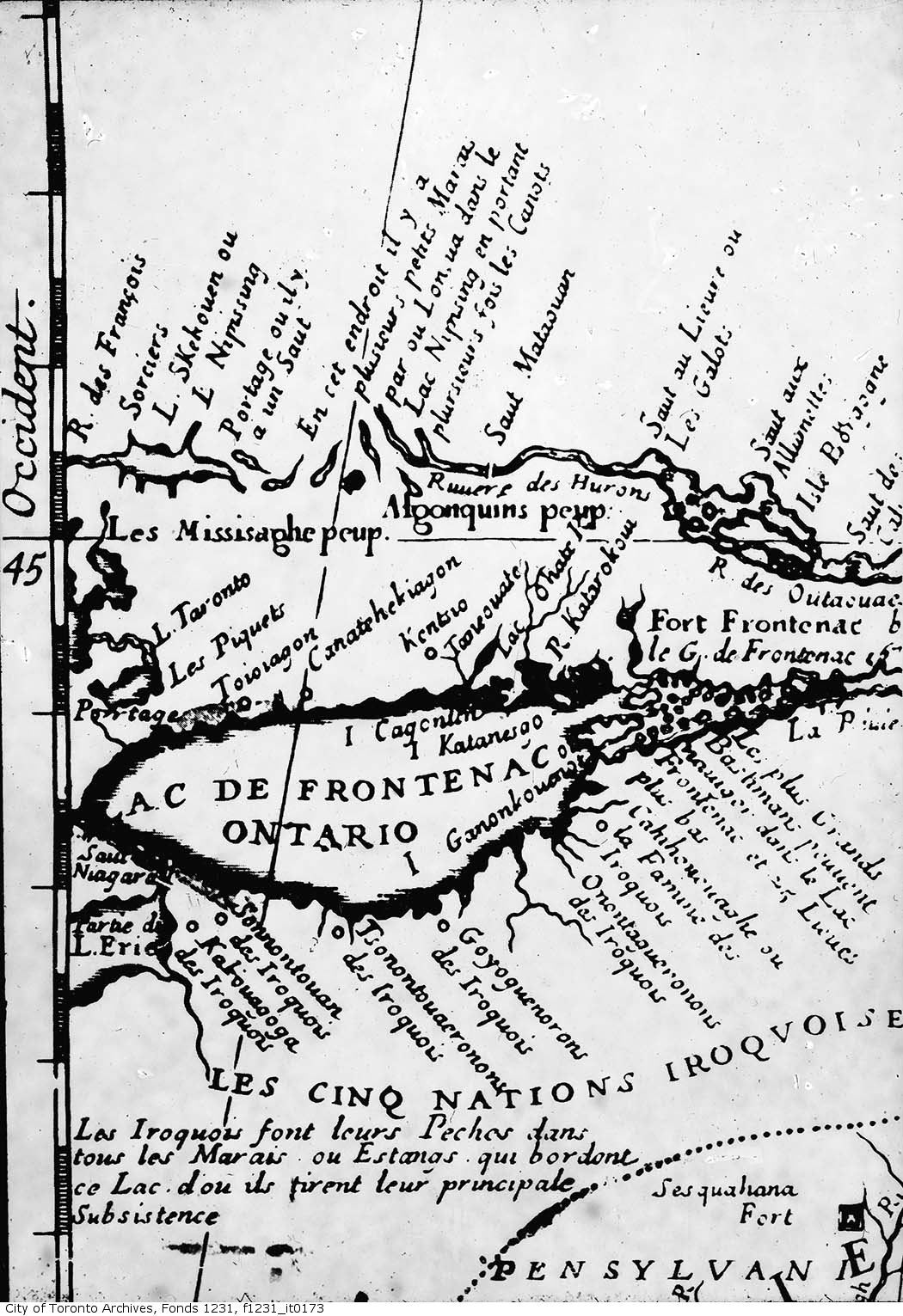
Wild Atlantic salmon populations have undergone severe declines across their range since European settlement in North America and due to pressures in Europe. Historian D.W. Dunfield estimated that over half of historical salmon runs in North America had been lost by 1850. The primary drivers were habitat degradation from the fur trade, timber harvesting, dam and mill construction, and agriculture. Beaver populations, whose dams create beneficial pond habitats for juvenile salmon, were trapped to near-extinction by 1800, removing a key ecosystem engineer. Stream erosion from log drives and clear-cutting further degraded spawning and rearing grounds. Overfishing, both commercial inshore fisheries and recreational, compounded these losses throughout the 20th century. Some southern populations in northern Spain are growing smaller due to sport-fishing pressure. In response, conservation efforts have been implemented in several countries since the late 20th century, showing some success from the 2000s onward. Early legislative action included a 1798 bill introduced in Canadian Parliament to protect Lake Ontario salmon populations. Modern efforts focus on habitat restoration, dam removal, fishing regulation, and stocking programs to rebuild vulnerable populations. The sensitivity of the species to ecological change makes egg and juvenile survival highly dependent on habitat quality, which is a central focus of these conservation measures.
Aquaculture and Commercial Fishing
Due to the scarcity of wild fish, the global market for Atlantic salmon is now dominated by aquaculture, which has developed viable aquacultural methods for the species. Farming techniques involve anaesthetising adult fish, stripping and mixing their eggs and sperm, washing them, and placing the fertilized eggs into freshwater. Fry are reared in large systems, and some research has explored cryopreservation of eggs. Norway is the world's leading producer, contributing over 50 percent of the farmed supply. Other major producers include Chile, Canada, the United Kingdom, Ireland, the Faroe Islands, Russia, and Tasmania in Australia. While aquaculture provides a consistent commercial alternative, farming methods have attracted criticism from environmentalists concerning issues like pollution, disease transfer to wild stocks, and sea lice infestations. Historically, Atlantic salmon supported a significant commercial and subsistence fishery. Indigenous peoples and early settlers used wood and stone weirs for millennia in New England rivers. European fishermen employed gillnets in rivers for centuries, a practice continued in early colonial America. The inshore Atlantic salmon fishery was a major export from the New World, with operations along major river systems, but wild-caught salmon are now virtually absent from commercial markets, having been replaced entirely by farmed product. The species remains a popular fish for human consumption, sold fresh, canned, or frozen, and is considered one of the more refined types of fish meat.
| Primary Aquaculture Region | Key Contribution |
|---|---|
| Norway | Produces over 50% of global farmed supply |
| Chile | Major Southern Hemisphere producer |
| Canada | Significant producer in Eastern provinces |
| United Kingdom & Ireland | Long-standing Atlantic salmon farming industry |
| Faroe Islands | Notable North Atlantic producer |
| Russia | Producer within the species' native range |
| Tasmania, Australia | Producer in the Southern Hemisphere |
Ecological Relationships and Species Interactions
The ecology of Atlantic salmon is intertwined with several other species, both as predators and as ecosystem engineers. Beavers have a complex relationship with salmonids. While fish and game departments have historically removed beaver dams as potential barriers, research indicates they pose little hindrance to migration except in the smallest upstream reaches during years of low flow. Studies in Norway's Numedalslågen River and in Nova Scotia found beaver dams generally did not block spawning salmon or downstream smolt migration. More importantly, beaver ponds provide crucial winter habitat in shallow streams where ice contact is a problem, and the permanent summer pools they create enhance juvenile salmon growth and survival. In eastern Canada, two-year-old parr in beaver ponds showed faster summer growth in length and mass and were in better condition than those upstream or downstream. Atlantic salmon also interact with brown trout (Salmo trutta) in shared habitats, where they can hybridize. In the ocean, major predators include humans, seals, Greenland sharks, skate, cod, and halibut. Some dolphins have been observed playing with dead salmon, though consumption is unconfirmed. The species' diet preference for capelin links its population health to the abundance of this forage fish, though they also consume other species like herring and sand lance. Adult Atlantic salmon are considered more aggressive than other salmon and are more likely to attack other fish.
Recreational and Cultural Significance
Atlantic salmon are highly prized as a recreational fish, particularly by fly anglers who pursue them during their annual spawning runs into rivers. This sport fishery generates considerable economic activity in regions like Eastern Canada, the United Kingdom, and Norway, and contributes to conservation funding through licensing and advocacy. The species also features prominently in the traditional cuisines of Atlantic coastal communities on both sides of the ocean, valued for its nutritious, refined meat which can fetch a higher price than some other fish. Its historical importance is evidenced by centuries of fishing weirs and nets, with the fur trade and salmon fishery being early economic drivers in the New World. The fish's precise homing ability to its natal stream has made it a subject of extensive scientific study and cultural symbolism. Despite the commercial shift to aquaculture, the wild Atlantic salmon remains a powerful driver of ongoing habitat protection and river restoration projects across its native range. Conservation efforts for this species help protect entire freshwater and riparian ecosystems, making it an important indicator of environmental health. The fish's presence signifies clean, cold, well-oxygenated water and intact ecological connections from headwaters to the sea, and it continues to be a target for recreational fishing in its natal streams.
Questions about Atlantic salmon
What is the difference between Atlantic salmon and Pacific salmon?
The most significant difference is in their reproductive biology. Atlantic salmon are iteroparous, meaning they can spawn, return to the sea, and potentially spawn again in future years. Pacific salmon species are semelparous, dying shortly after a single spawning event. Physically, adult Atlantic salmon have black spots predominantly above the lateral line and an unspotted tail fin, while Pacific species have different spotting patterns. Their geographic ranges are also distinct, separated by the North American continent, with Atlantic salmon in the North Atlantic and Pacific species in the North Pacific.
Can Atlantic salmon live entirely in freshwater?
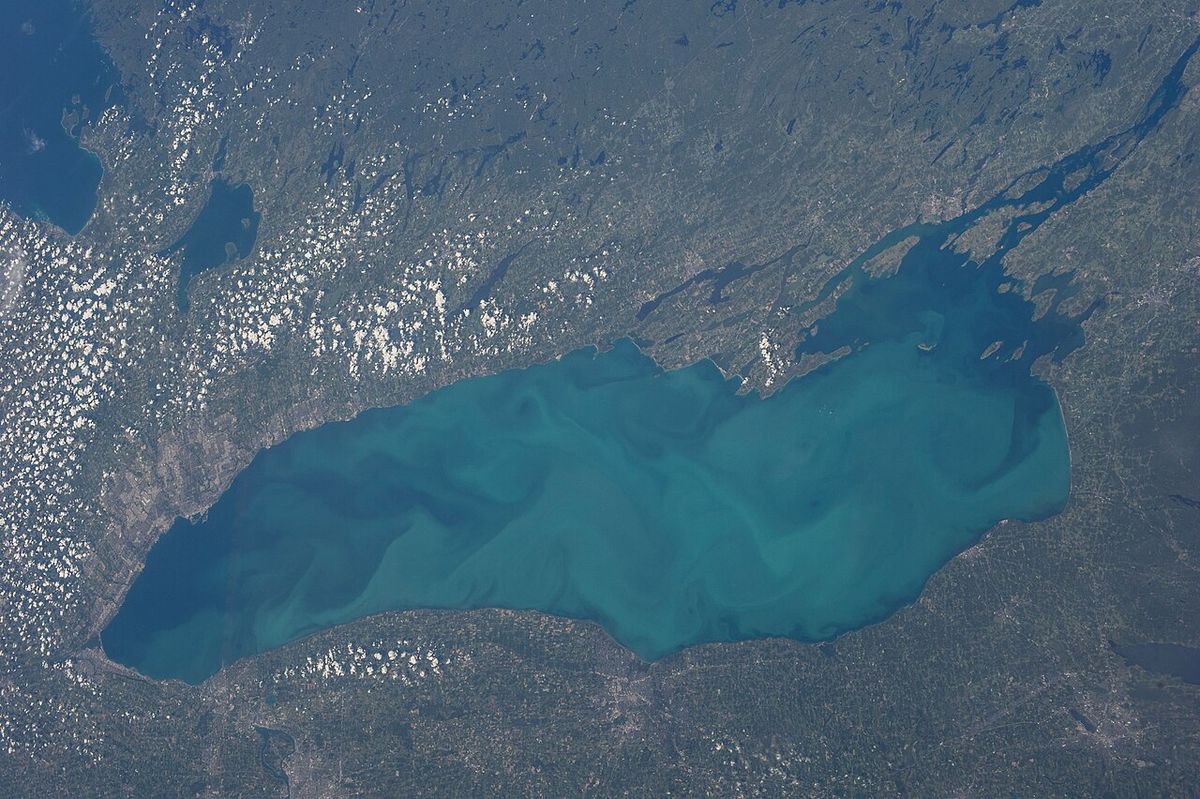
Yes, populations known as landlocked salmon or ouananiche spend their entire lifecycle in freshwater lakes and rivers. These populations exist throughout the Northern Hemisphere within the species' range. A now extinct population once lived its entire life cycle in the Lake Ontario watershed, demonstrating that saltwater is not a physiological requirement for the species. Such landlocked fish follow the same general life stages but complete them all in freshwater, often migrating to large lakes instead of the ocean.
Why have wild Atlantic salmon populations declined?
Wild populations have declined due to a combination of habitat destruction and overfishing spanning centuries. Key habitat impacts include dam and mill construction blocking spawning routes, deforestation and log drives causing stream erosion and siltation, pollution from agriculture, and the historical near-extirpation of beavers by 1800. Commercial inshore fisheries and recreational overfishing in both rivers and at sea further reduced numbers. These cumulative pressures led to the loss of over half of North American salmon runs by 1850, a trend that continued through the 20th century with habitat change.
How do Atlantic salmon find their way back to their home river to spawn?
Scientific evidence strongly suggests Atlantic salmon use olfactory cues, or smell, to identify the unique chemical signature of their natal stream. They begin their return journey by moving to sea surface currents that transport them back toward their natal region. Their lateral line, which contains iron, may allow them to sense the Earth's magnetic field. They do not swim thousands of kilometres independently but surf through ocean currents to facilitate their return.
What is a 'grilse'?
A grilse is an Atlantic salmon that returns to its freshwater birthplace to spawn after spending only one winter at sea. These fish are typically smaller, weighing 3.6 to 5.4 kg on average, than multi-sea-winter salmon, which feed in the ocean for two or more years before returning and can grow much larger. The term is commonly used by anglers and biologists to describe this specific life history stage within the salmon's complex anadromous cycle. Other names for returning adults include spring salmon for early arrivals and kelt for post-spawned fish.
Where does most Atlantic salmon in grocery stores come from?
Virtually all Atlantic salmon sold in supermarkets and restaurants today comes from aquaculture farms, not wild fisheries. Norway is the largest producer, supplying over half of the world's farmed Atlantic salmon. Other major farming countries include Chile, Canada, the United Kingdom, Ireland, the Faroe Islands, Russia, and Tasmania in Australia. Wild-caught Atlantic salmon are endangered in many areas, subject to conservation efforts, and are essentially absent from commercial markets. The development of aquaculture has made this nutritious fish widely available despite wild population declines.
Sources and further reading
- Atlantic salmon (Wikipedia)
- Salmon Soaring at Parks Canada (parks.canada.ca)
- Salmon in Toronto and GTA Waters (trca.ca)
- Atlantic Salmon (fisheries.noaa.gov)
- Where to spot salmon: Metro Vancouver and Sea-to-Sky (psf.ca)
Checked by the Your Space Hamilton desk. Last updated 2026-10-19.