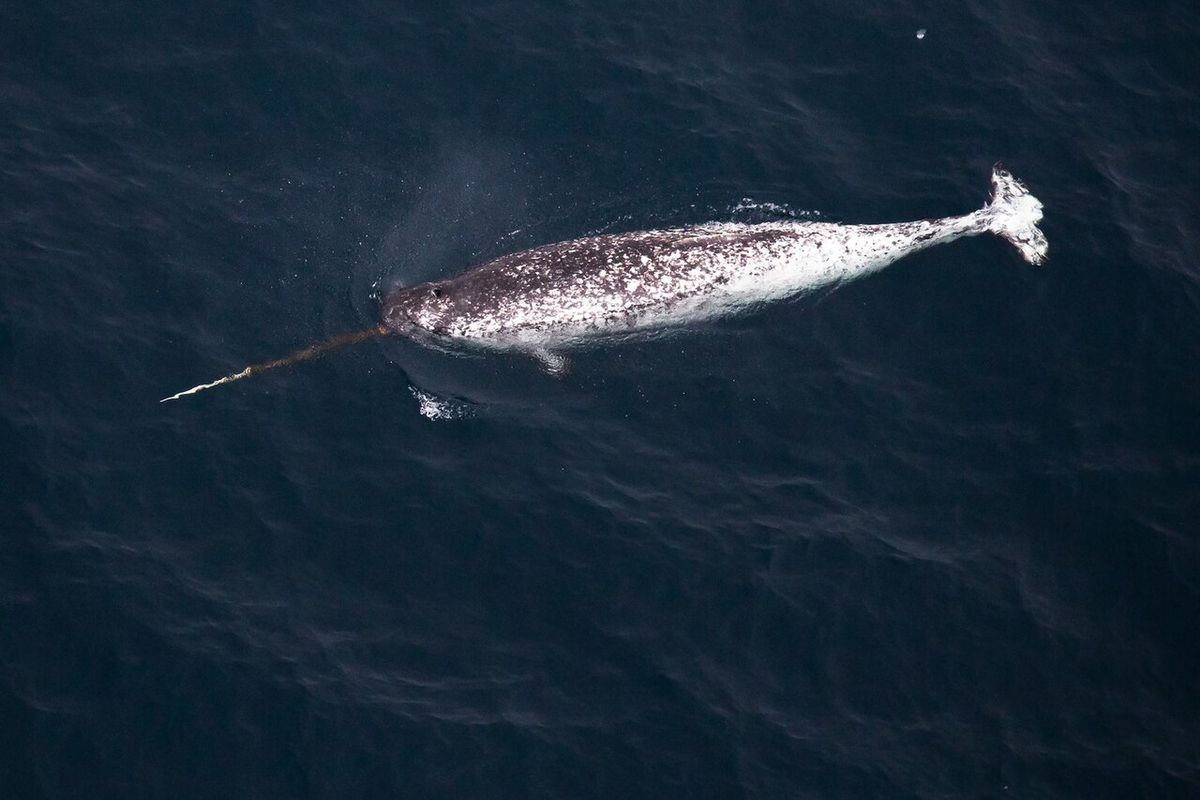
Pacific sleeper shark
The Pacific sleeper shark ( Somniosus pacificus ) is a large, deep-sea predator native to the North Pacific Ocean and a member of the sleeper shark family. It is one of the world's largest predatory sharks, capable of reaching lengths of over seven metres, and is highly adapted to the cold, high-pressure environments of the continental slopes and deep ocean basins. For Canadians, this species is a significant component of marine ecosystems off the coasts of British Columbia and Alaska, where it is frequently encountered as bycatch in commercial fisheries. Its elusive nature and recent sightings in unexpected locations, including the South China Sea and Antarctic waters, have made it a subject of growing scientific interest and conservation concern, leading to its classification as Near Threatened by the International Union for Conservation of Nature.
Physical Description and Unique Adaptations
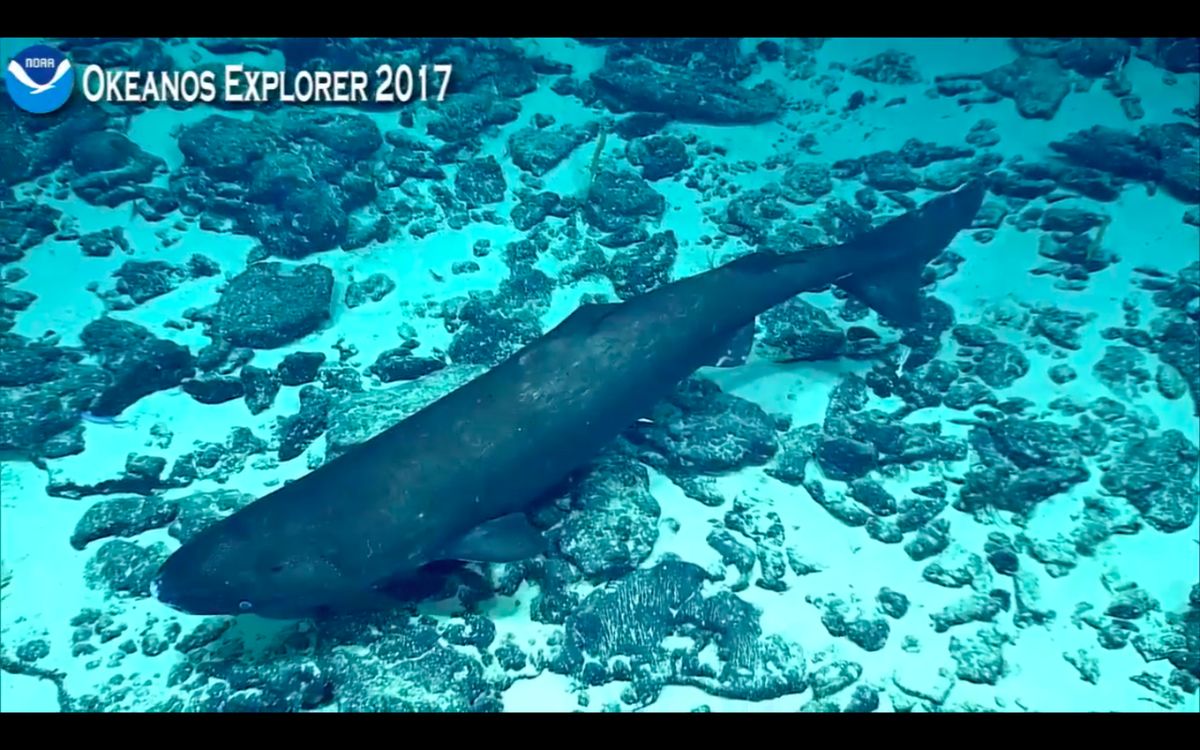
The Pacific sleeper shark possesses a sturdy, cylindrical body with a wide midsection tapering to a narrow caudal region and a short, heterocercal tail fin. Its snout is narrow with a rounded tip, and its skin is rough due to placoid scales, or denticles, which are replaced as the shark grows. Average mature size is approximately 3.65 metres in length and 318 to 363 kilograms, though the heaviest recorded specimen weighed 888 kilograms. The longest confirmed individual measured 4.65 metres, but estimates from sightings suggest some may reach seven metres or more, with one unconfirmed historical account suggesting a length exceeding nine metres. The species exhibits countershading, with juveniles often lighter grey than the darker adults, and its eyes are frequently afflicted by the parasitic copepod Ommatokoita elongata, which degrades corneal tissue.
To survive in the frigid, high-pressure depths it inhabits, the Pacific sleeper shark has evolved remarkable physiological adaptations. Its liver oil does not contain squalene, which would solidify in the cold, but instead contains low-density compounds like diacylglyceryl ethers and triacylglycerol that remain fluid and provide buoyancy. Like other elasmobranchs, it maintains high concentrations of urea and trimethylamine oxide in its tissues as osmoprotectants. These compounds also counteract the protein-destabilizing effects of pressure and urea itself. The shark's jaws are short and transverse, capable of a powerful bite, with spike-like upper teeth and lower teeth featuring oblique cusps and overlapping bases, an arrangement ideal for grasping and sawing large prey.
The shark's anatomy supports a stealthy, energy-efficient hunting style. It can glide through the water with minimal body movement and hydrodynamic noise. Its short caudal fin is adapted for storing energy to unleash fast, violent bursts of speed when attacking prey. Because food is scarce in the deep sea, the species has a capacious stomach for storing large meals. During feeding, it exhibits a characteristic rolling motion of the head and, lacking a protective nictitating membrane, rolls its eyes back into its sockets to shield them from thrashing prey.
Distribution and Habitat
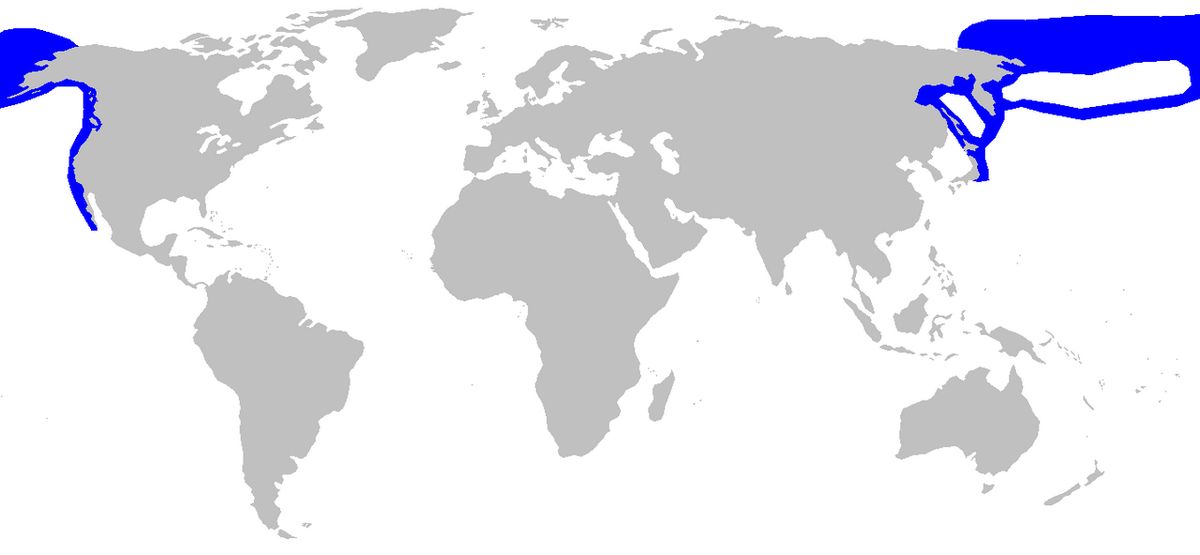
The core range of the Pacific sleeper shark spans the temperate and subarctic waters of the North Pacific Ocean, from the Bering Sea and Gulf of Alaska south to Baja California and across to the seas off Japan and Russia. It is found on continental shelves and slopes, typically at depths between 200 and 600 metres, though its recorded range extends from the surface down to 2,000 metres. Recent discoveries have dramatically expanded the known distribution of this species. In 2015, it was recorded via video near the Solomon Islands in the western tropical Pacific, and another was filmed in the Tonga Trench. In June 2025, scientists published footage of multiple individuals feeding on a cow carcass at 1,629 metres depth in the South China Sea, marking the first confirmed sighting in that region. Most remarkably, in January 2025, a sleeper shark was spotted in Antarctic waters, representing the first documented sighting of any shark in such frigid southern latitudes.
Genetic studies are ongoing to determine if southern hemisphere sightings represent the Pacific sleeper shark or the closely related Southern sleeper shark. The species occupies a wide thermal range, with tracked sharks experiencing temperatures from 3.3 to 11.0 degrees Celsius in their occupied depths. Tagging studies from 2019 to 2022 show these sharks make moderate regional movements, with some individuals traveling between 3.9 and 145.1 metres from tagging sites over 31-day periods. Tracked sharks spent more than 99 percent of their time between 200 and 600 metres deep, most commonly at 300 to 500 metres.
Vertical and Seasonal Movement Patterns
Pacific sleeper sharks are highly active in the water column, exhibiting complex vertical migration patterns critical to their foraging. They perform systematic vertical oscillations, irregular movements, and diel vertical migration (DVM), where they approach shallower depths at night and retreat deeper during the day. This crepuscular pattern is linked to hunting strategies, using stealth and ambush tactics. The median daily depth range in the northeast Pacific is 184 metres, with most time spent between 150 and 450 metres, though ascents above 100 metres are common. Vertical movement rates are steady, averaging about six kilometres per day, with median depth changes of four to six metres per minute and bursts up to 40 metres per minute.
Stomach content analyses confirm these sharks feed both on the bottom and in the water column, necessitating this vertical travel. Seasonal shifts in depth are also evident, particularly in northern regions like the Bering Sea. During the colder months from December to February, average depths are greater, ranging from 473 to 540 metres. In the warmer period from May to July, sharks reside at shallower average depths of 290 to 330 metres. These seasonal depth changes are likely related to water temperature and prey distribution, though studies have not found corresponding seasonal changes in horizontal displacement across their range.
Diet and Feeding Ecology
Pacific sleeper sharks are versatile generalist predators and active scavengers. Their diet is highly location-dependent and varies with the shark's size. Primary prey across their range includes teleost (bony) fish and cephalopods like squid and octopus. In the northwest Pacific, common stomach contents include chum salmon, walleye pollock, popeye grenadier, giant grenadier, red squid, and Kamchatka flounder. In the Gulf of Alaska, diets commonly feature walleye pollock, giant Pacific octopus, arrowtooth flounder, and Pacific salmon. They are also known to consume bottom-dwelling fish like soles and rockfish, as well as crustaceans like shrimp and hermit crabs.
Larger sharks incorporate bigger and faster prey into their diets. A 3.7-metre female off California had fed mostly on giant squid. Sharks between 3.3 and 4.25 metres long consume teleosts and cephalopods but also take marine mammals. There is evidence from the Gulf of Alaska that they may prey on juvenile Steller sea lions. They are also documented to feed on fast-swimming prey like albacore tuna, Pacific salmon, and harbour porpoises. The 2025 South China Sea study provided new behavioural insights, showing larger sharks (over 2.7 metres) aggressively tearing at a carcass while smaller ones circled cautiously, and suggesting a queuing behaviour where arriving sharks took feeding priority.
The species faces predation pressure from the offshore ecotype of killer whale, which has been documented in British Columbia waters. Their feeding mechanism involves powerful suction, inhaling prey into their large mouths. The upper jaw teeth are spike-like, while the lower jaw teeth have oblique cusps and overlapping bases, allowing them to cut pieces too large to swallow whole. Since they lack a nictitating membrane, they roll their eyes back in their sockets to protect them from thrashing prey.
- Northwest Pacific Diet: Chum salmon, walleye pollock, popeye grenadier, giant grenadier, red squid (Berryteuthis magister), Kamchatka flounder.
- Gulf of Alaska Diet: Walleye pollock, giant Pacific octopus, arrowtooth flounder, Pacific salmon.
- Large Shark Prey: Giant squid (from a 3.7m female off Trinidad, California), juvenile Steller sea lions, harbour porpoises, albacore tuna.
- Scavenging Study: Observed feeding on a cow carcass at 1,629m in the South China Sea, June 2025.
- Predator: Offshore ecotype killer whale in British Columbia.
Reproduction and Life Cycle
Very little is known about the reproductive biology of the Pacific sleeper shark due to the challenges of studying deep-sea species. They are believed to be ovoviviparous, meaning eggs hatch inside the female's body and the pups are born live. A female can carry up to 300 eggs, but only about ten percent of these fully develop into embryos. Gestation time remains unknown. Males possess external reproductive organs called claspers, which are used to transfer sperm to the female. Pups are estimated to be about 42 centimetres or less in length at birth and tend to be lighter in colour than adults. Growth is slow, and sexual maturity is not reached until the shark exceeds approximately 3.5 metres in length. This late maturity, combined with a low reproductive output, makes the species particularly vulnerable to population declines from human activities. The potential lifespan is thought to be very long, possibly stretching hundreds of years, analogous to its relative the Greenland shark, but no definitive age studies have been completed for the Pacific sleeper shark.
Interactions with Fisheries and Conservation Status
The Pacific sleeper shark is not a primary target for commercial fisheries, but its large size and wide distribution make it a common bycatch species. It is frequently caught incidentally in fisheries targeting groundfish like walleye pollock, Pacific halibut, flatfish, and Pacific cod in federal waters off Alaska and along the North American west coast. The primary fishing gears responsible for captures are bottom trawls and longlines. In bottom trawl fisheries in the western Bering Sea, individual hauls have occasionally captured up to 100 sleeper sharks, indicating local abundance. Survey data from that region showed density increased from about 10.8 individuals per square kilometre (1982 to 1990) to 27.7 individuals per square kilometre (1991 to 1995), with biomass estimates rising sharply from 1,170 metric tons in 1999 to 87,500 metric tons by 2002.
Despite these indications of regional abundance, the biological characteristics of the species, slow growth, late maturity, and low reproductive rates, make it highly vulnerable to overfishing. Most individuals captured in northwestern Pacific fisheries measure between 120 and 170 centimetres, which are all immature given the 350-centimetre maturity threshold. Mature sharks tend to inhabit deeper waters (beyond 1,000 metres) than most commercial fishing operations, which may offer some protection to the breeding population. Interactions with fishing gear pose operational challenges. Observations since 2015 show that over 60 percent of sharks caught on longlines required fishers to cut the line or the shark to remove it, and survival post-release is uncertain.
Due to its vulnerability to fishing pressure and evidence of regional population declines, the International Union for Conservation of Nature has assessed the Pacific sleeper shark as Near Threatened, changing it from a previous status of Data Deficient. Directed fisheries have been rare, historically occurring off Taiwan and anecdotally in Southeast Alaska for its liver oil, but these have not been sustained. Along the British Columbia and U.S. West Coast, nearly all incidentally caught individuals are released back into the ocean. However, the survival rate of the released individuals is uncertain and varies depending on the fishing gear used and handling practices.
- Primary Bycatch Fisheries: Walleye pollock, Pacific halibut, flatfish, and Pacific cod fisheries off Alaska.
- Main Fishing Gear: Bottom trawls and longlines.
- Bycatch Volume: Individual trawls in the western Bering Sea have caught up to 100 sharks.
- Population Density Increase: Rose from 10.8 ind/km² (1982 to 1990) to 27.7 ind/km² (1991 to 1995) in the western Bering Sea.
- Biomass Increase: Estimates grew from 1,170 metric tons (1999) to 87,500 metric tons (2002) in the same region.
- IUCN Status Change: From Data Deficient to Near Threatened.
- Directed Fishery: Documented off Hualien, Taiwan.
Recent Scientific Discoveries and Significance
Recent years have yielded groundbreaking observations that have reshaped understanding of the Pacific sleeper shark's range and behaviour. The June 2025 study in the South China Sea was particularly significant, not only confirming the species' presence in a new region but also providing detailed behavioural data. Researchers noted that all observed sharks were female, raising the possibility that the area could serve as a nursery ground for large shark species, similar to patterns seen with the megamouth shark in the same waters. The study also documented the sharks' unique eye retraction motion during feeding, interpreted as a defensive reflex. The January 2025 sighting in Antarctic waters was a landmark event, captured by an Australian research team near the South Shetland Islands at a depth of 490 metres. This represents the first time any shark has been filmed in the Southern Ocean in a natural setting. Genetic analysis of water samples from the expedition, along with tissue samples collected from sleeper sharks across the southern hemisphere, aims to clarify the taxonomic relationship between the Pacific and Southern sleeper sharks, with results expected from mid-2026. These discoveries highlight the species' role as a deep-sea apex predator and scavenger across hemispheres and reveal the vast gaps remaining in our knowledge of deep-ocean ecosystems.
- South China Sea Sighting: June 2025, first footage in the region, sharks feeding on a cow carcass at 1,629m.
- Antarctic Sighting: January 2025, first shark filmed in the Southern Ocean, near South Shetland Islands at 490m.
- Tropical Pacific Records: Filmed near Solomon Islands (2015) and in the Tonga Trench.
- Behavioural Insight: Observed queuing behaviour and eye retraction during feeding in the 2025 South China Sea study.
- Demographic Note: All sharks in the South China Sea footage were female.
- Genetic Research Timeline: Analysis of sleeper shark DNA from southern oceans scheduled to begin mid-2026.
- Taxonomic Question: A 2023 genetic study suggested the Pacific and Southern sleeper sharks may be the same species.
Questions about Pacific sleeper shark
How big can a Pacific sleeper shark get?
The Pacific sleeper shark is one of the world's largest predatory sharks. The longest confirmed specimen measured 4.65 metres (15.3 feet), while the heaviest weighed 888 kilograms (1,958 pounds). Based on estimates from sightings, including a shark filmed off Japan in 1989, scientists believe they can reach lengths of seven metres (23 feet) or more. There is a single unconfirmed historical account of an individual potentially exceeding 9.2 metres (30 feet), which, if verified, would make it the longest extant macro-predatory shark.
Where are Pacific sleeper sharks found?
Their core range is the temperate and subarctic North Pacific, from the Bering Sea and Alaska south to Baja California and across to Japan and Russia. They inhabit continental shelves and slopes, typically between 200 and 600 metres deep. Remarkably, recent sightings have expanded this range. They have been filmed in the tropical western Pacific near the Solomon Islands and Palau, in the Tonga Trench, and in June 2025, multiple individuals were documented feeding in the South China Sea. Most unexpectedly, a sleeper shark was filmed in Antarctic waters in January 2025, the first such recording of any shark in the Southern Ocean.
What do Pacific sleeper sharks eat?
They are generalist predators and scavengers. Their diet varies by location and size but primarily consists of bony fish (teleosts) and cephalopods like squid and octopus. Common prey includes Pacific salmon, walleye pollock, grenadiers, flounders, and giant Pacific octopus. Larger sharks also consume marine mammals, with evidence of predation on juvenile Steller sea lions, harbour porpoises, and scavenging on whale carcasses. They use powerful suction to inhale prey and saw-like teeth to cut larger items.
Are Pacific sleeper sharks dangerous to humans?
There are no documented attacks on humans by Pacific sleeper sharks. They are deep-water inhabitants that rarely encounter people. Their behaviour, as observed in recent studies, involves cautious or aggressive feeding on carcasses, but they are not known to be a threat to divers or swimmers. Their elusive nature and preference for cold, deep environments make direct interactions with humans extremely uncommon.
Why is the Pacific sleeper shark considered Near Threatened?
The International Union for Conservation of Nature (IUCN) lists the species as Near Threatened due to its vulnerability to fishing pressure. Although not targeted, it is frequently caught as bycatch in bottom trawl and longline fisheries targeting species like pollock and halibut in the North Pacific. Its life history traits, slow growth, late sexual maturity (exceeding 3.5 metres), and low reproductive output, make it susceptible to population declines from even incidental mortality. Evidence of regional population declines has prompted the changed conservation status.
What recent discoveries have been made about this shark?
Recent discoveries have significantly expanded the known range of the Pacific sleeper shark. In June 2025, scientists released extraordinary footage of multiple sharks feeding on a cow carcass at a depth of 1,629 metres in the South China Sea, marking the first time the species was documented in that region. In January 2025, a Pacific sleeper shark was spotted in Antarctic waters, representing the first recorded sighting of any shark in such frigid southern waters. A Pacific sleeper shark was also filmed in the Tonga Trench in 2024. These observations in the tropical Pacific and Antarctic challenge the previous understanding that this shark was primarily associated with temperate and subarctic Northern Pacific waters.
Sources and further reading
- Pacific sleeper shark (Wikipedia)
- Somniosus pacificus (Pacific Sleeper Shark) | INFORMATION (animaldiversity.org)
Checked by the Your Space Hamilton desk. Last updated 2026-10-30.