North American cougar
The North American cougar ( Puma concolor couguar ), also known as the mountain lion, puma, or panther, is the largest wild cat in Canada and the second largest in the Americas. This powerful and adaptable carnivore plays a crucial ecological role as a top predator, helping to regulate populations of deer, elk, and other ungulates. Once extirpated from much of its eastern range, the cougar persists in western Canada and is showing signs of a gradual return to parts of its former habitat in the east. As a symbol of wilderness and a key component of healthy ecosystems, the cougar's conservation and management are of significant interest to Canadian wildlife authorities and the public.
Physical Description and Taxonomy
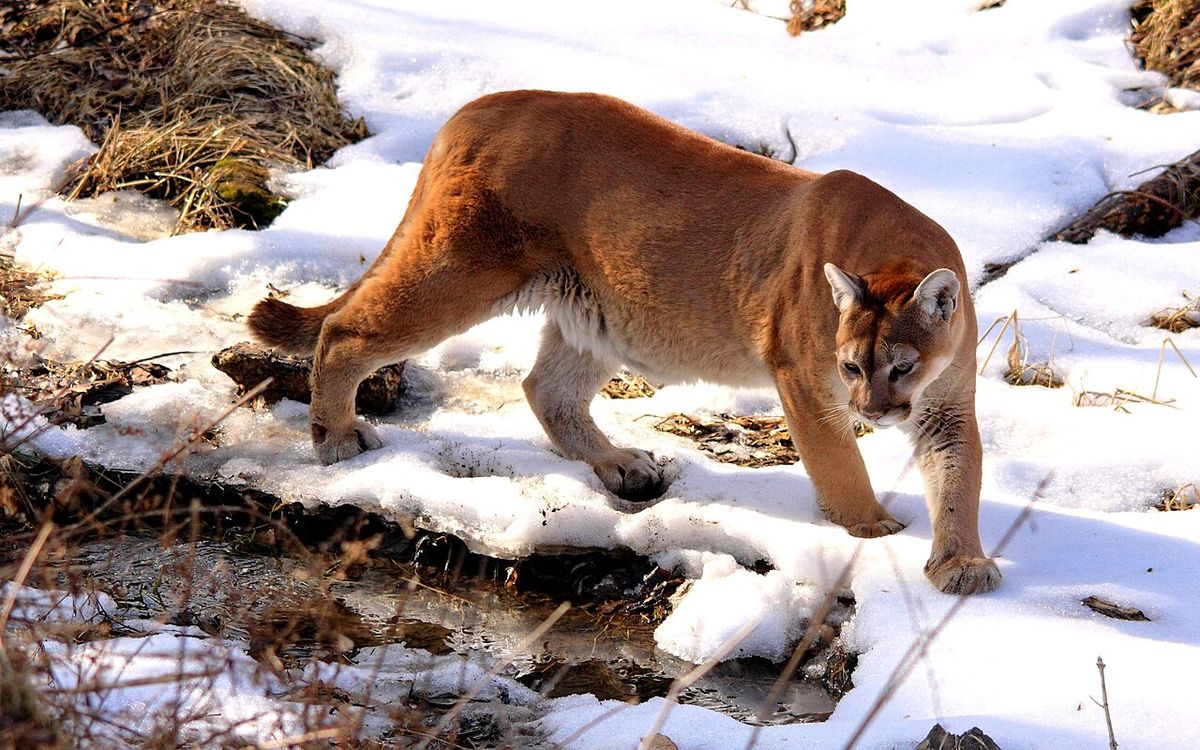
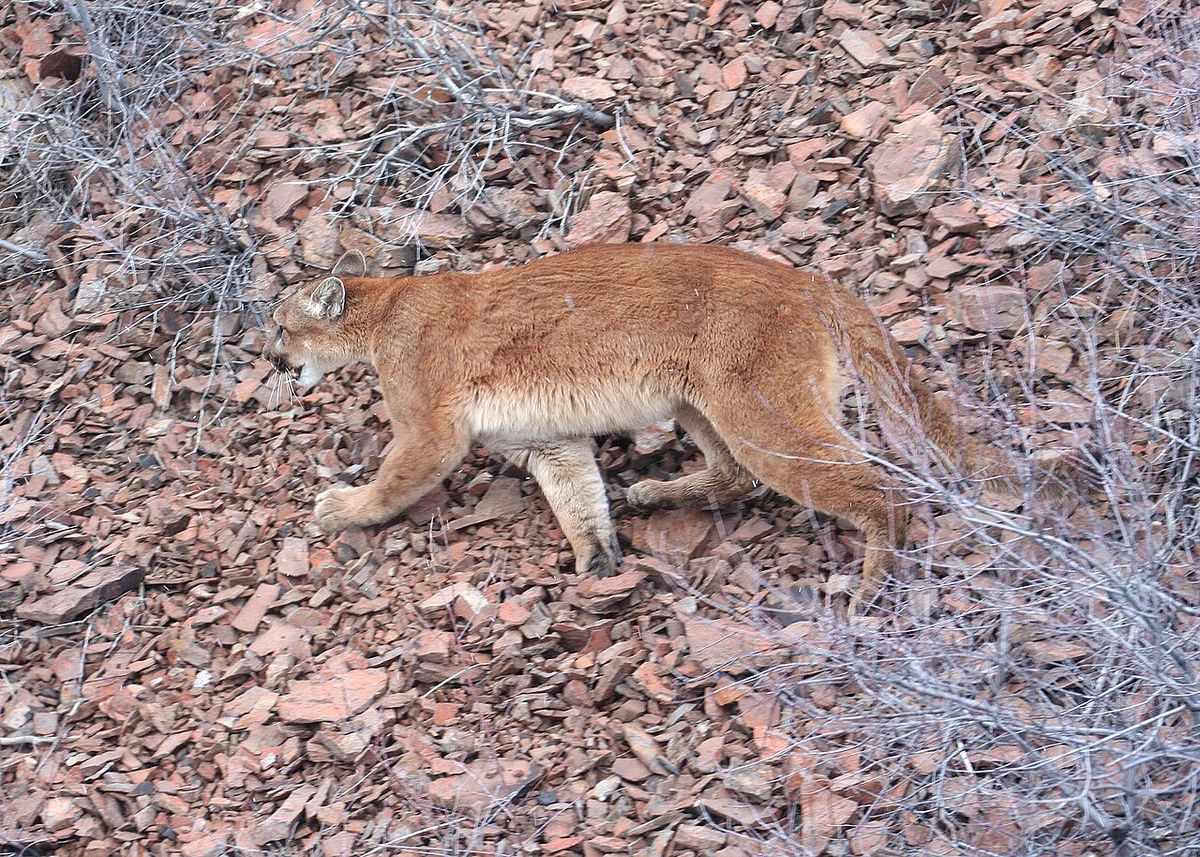
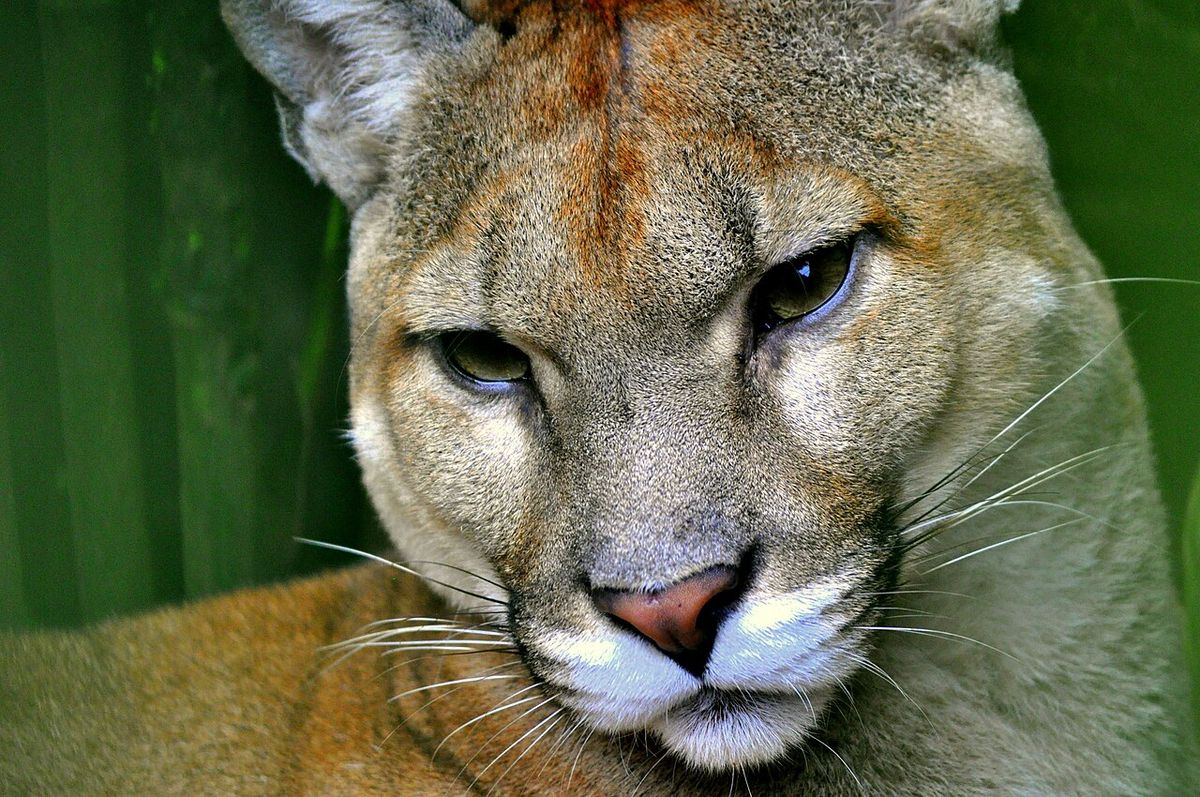
The North American cougar is a lithe, muscular, and deep-chested feline, larger than the lynx and bobcat, which are Canada's other wild cats. It possesses a rounded head with prominent whiskers, large eyes with round pupils adapted for nocturnal hunting, and an exceptionally long tail crucial for balance. Adult cougars in North America have short, solid-coloured fur that ranges from tawny and reddish-brown to greyish, with black markings on the face, the backs of the ears, and the tip of the tail. Kittens are born with spots, which they typically lose before their first year, though faint barring may remain until they are about 14 months old. Recent taxonomic research suggests all North American cougars are essentially the same species, though genetic differences exist across their range. The subspecies Puma concolor couguar is recognized as valid by the Cat Classification Taskforce and includes populations from western Canada to Central America, as well as the critically endangered Florida panther. The cougar is well-adapted for predation with extremely strong forequarters and neck, muscular jaws, a wide gape, and long canine teeth designed for clamping onto and killing large prey.
Habitat and Distribution in North America
The cougar is the most wide-ranging cat species in the world, historically found from coast to coast in North America and as far south as Chile. Today, stable, breeding populations are primarily located in the western United States, western Canada, and southern Florida. In Canada, the cougar inhabits forested fragments of foothills, mountains, and interior plateaus in British Columbia and Alberta, where suitable cover and prey like white-tailed deer and mule deer are abundant. The cat's presence in eastern Canada, long considered extirpated, is now supported by growing evidence from multiple provinces. DNA tests on hair samples collected at lynx mating sites have confirmed cougars in Quebec, where wildlife services consider them a threatened species. Recent scientific findings from hair traps in Fundy National Park in New Brunswick confirmed the existence of at least three cougars. The Ontario Puma Foundation estimates a population of 850 cougars in that province, and there have been unconfirmed sightings in Maine and New Hampshire. Sightings continue to be reported in former range states across the U.S. Midwest and East, indicating potential dispersal from western populations and a reversal of a century of absence.
Confirmed sightings in recent decades highlight this pattern of eastward movement and occasional long-distance travel by individual animals. In 2011, a cougar sighted in Greenwich, Connecticut, was later killed by a vehicle in Milford after allegedly travelling 2,400 kilometres from South Dakota. Genetic analysis of a cougar in Wisconsin in 2008 indicated it was a wild animal, likely from the Black Hills of South Dakota. In 2008, a cougar was cornered and killed in the Roscoe Village neighbourhood of Chicago, the first sighted within the city limits since its founding in 1833. Other notable confirmed sightings include a cougar shot on a farm in Whiteside County, Illinois in 2013, 14 verified sightings in Minnesota since 2007, and multiple verifications in Wisconsin, including in Florence County in 2013 and Dane County in 2020. The Michigan Department of Natural Resources reported fifteen confirmed sightings in 2020 and ten in the Upper Peninsula by October of 2021, attributing the increase partly to the proliferation of trail cameras.
Ecology and Hunting Behaviour
As an obligate carnivore and apex predator, the cougar's diet consists almost exclusively of meat, with deer and elk being its preferred and most common prey across its range. It also hunts moose, mountain goats, bighorn sheep, and smaller animals like raccoons, coyotes, rabbits, and hares. Cougars are solitary, primarily crepuscular hunters most active at dusk and dawn, relying on stealth and a powerful ambush from dense cover. They stalk prey using a zigzag course through their home range, then use a short, explosive burst of speed and a powerful leap to attack, often killing by delivering a suffocating bite to the throat or by breaking the neck with their strong jaws and large canine teeth. After making a kill, a cougar will often drag or carry the carcass to a secluded spot, feed, and cover the remains with debris like snow, grass, leaves, or soil to cache it for later. A large male cougar in the Cascade Mountains may kill a deer or elk every 9 to 12 days, consuming up to 20 pounds of meat at a time.
Cougars share their range with other large predators, including wolves, grizzly bears, and American black bears. While cougars can fall prey to these larger carnivores, they are also known to prey on bear cubs. In some regions like the Great Basin, Sonoran, and Mojave Deserts, cougars have been recorded preying on feral horses and donkeys. The cougar's role as a top predator is vital for ecosystem health, as it helps prevent the overpopulation of herbivores like deer, which can lead to overbrowsing and a loss of vegetation and biodiversity. In Central and North America, where their ranges overlap, cougars share the same prey base as jaguars. The rivalry between cougars and grizzly bears has been a noted topic, with staged fights and wilderness encounters recorded historically.
Reproduction and Life Cycle
Cougars reach sexual maturity at two to three years of age. While they can breed at any time of year, peak breeding seasons occur in January and August. During the mating season, females in heat will yowl to attract males, and competing males may caterwaul, which is a specific screeching sound. A male will accompany a receptive female for up to a week, after which they separate. The male plays no role in raising the young, his sole responsibility being to drive off rival male intruders. After a gestation period of 90 to 96 days, the female gives birth to an average litter of three kittens, each weighing just over 500 grams. The mother raises the cubs alone in a secluded den, communicating with them using chirps and teaching them to hunt. Kittens typically stay with their mother for up to two years before dispersing to establish their own territories, with female progeny often establishing a territory adjacent to their mother while males disperse considerable distances. In the wild, cougars have a short lifespan, averaging about 13 years if they survive the numerous challenges of their environment, though few live a full natural lifespan today due to human-caused mortality.
Threats, Conservation, and Human Conflict
The primary historical threats to cougars have been trophy hunting, persecution to protect livestock, and extensive habitat loss and fragmentation. Bounty hunts in the early 20th century extirpated them from much of their eastern range. Today, while still hunted legally in many western jurisdictions, regulated seasons with harvest caps aim to manage populations. For example, Washington State's cougar hunting season runs from September 1, 2025, to March 31, 2026, and hunters must verify weekly if their hunt area is open based on the harvest cap. Vehicle collisions and retaliatory killings over livestock depredation remain significant sources of mortality. As human development expands into prime cougar habitat, encounters become more frequent, leading to conflicts. Conservation efforts are complicated by the cougar's need for large, connected landscapes, and its habitat is often prime for human development. In California, with an estimated 4,000 to 6,000 cougars, urban populations around the Los Angeles metropolitan area have adapted by becoming more nocturnal and occupying the smallest home ranges recorded for the species, likely to avoid humans. Projects like the Bay Area Puma Project study these interactions to inform coexistence strategies.
- Trophy Hunting & Persecution: Historically the leading cause of decline and extirpation. Still occurs through sport hunting and livestock protection.
- Habitat Loss & Fragmentation: Human development for building sites and infrastructure isolates populations and reduces available territory, leading to increased conflict.
- Vehicle Collisions: A common cause of mortality, especially in areas with roads bisecting habitat.
- Retaliatory Killing: Occurs when cougars prey on livestock like goats, sheep, and chickens, or when pets disappear.
- Genetic Isolation: Populations like the Florida panther and those in California are becoming increasingly isolated, threatening long-term genetic health.
Despite these pressures, the overall North American cougar population is not currently considered at significant risk of extinction. Large populations exist in the western United States and Canada. In Oregon, a population of 5,000 was reported in 2006, exceeding a conservation target of 3,000. The Washington Department of Fish and Wildlife estimates approximately 2,400 independent-aged cougars live in that state. Ongoing research and monitoring, including the use of trail cameras, genetic analysis, and projects like the Washington Predator-Prey Project, are crucial for understanding population trends, impacts from wolf recovery, and managing this elusive predator effectively.
Behaviour, Communication, and Territoriality
Cougars are solitary and territorial animals. They establish and defend home ranges, where their needs for food, water, and shelter are met. For males, home ranges average about 300 square kilometres and often overlap the territories of three or four females. Female home ranges are about half the size of males', with considerable overlap between females. They mark their territories with visual signs like scrapes, which are piles of leaves, pine needles, and dirt covered with urine and feces, and by leaving claw marks on trees near territorial edges. These markings delineate boundaries, attract females in heat, and discourage other cougars from intruding. Both males and females regularly patrol their territory. Communication between cougars involves a variety of vocalizations, postures, and scents. Growls, snarls, and hisses signal aggression or threat. Mothers communicate with their kittens using chirps. During mating seasons, females yowl and males may caterwaul, especially when competing for mates. When sensing danger, a cougar will flatten its ears and may either hold eye contact or retreat to cover in preparation to attack. Their keen senses of sight and hearing are paramount for hunting, with round pupils that open wide at night and close in bright light, and rounded ears that can move independently to isolate sounds.
Cultural Significance and Names
The cougar is known by a multitude of names across its range, reflecting local culture, legend, and history. The Maliseet of New Brunswick call the cougar “pi-twal,” meaning “the long-tailed one.” English settlers along the Atlantic coast gave it the name “panther” after the Old World panther. French explorers in southern Quebec and New Brunswick initially called it the “carcajou,” a name later transferred to the wolverine, causing historical confusion. The names “cougar” and the French “couguar” were adapted from the Brazilian native name “cuguacuarana.” “Mountain lion” is extensively used in the western United States, and “puma” is the native Peruvian name. Other common names include catamount and painter. The cougar holds a place in North American natural history and folklore, with its depicted rivalry with the grizzly bear being a popular topic. In modern times, it is celebrated on National Cougar Day and International Cougar Day, honouring its role as one of the continent's most powerful and elusive predators.
Cougar Populations and Management by Region
Cougar population estimates and management strategies vary significantly by region due to habitat quality, prey availability, and human pressures. Jurisdictions employ different methods, from active population estimates to regulated hunting seasons with harvest objectives. The following table outlines known estimates, statuses, and management notes from various areas across North America, illustrating the cougar's stronghold in the west and tentative signs in the east. The overall North American population is estimated at around 30,000 individuals, facing a future shaped by habitat connectivity and human coexistence. Management in the west often involves regulated hunting to maintain balance with prey species and reduce conflict, while in the east the focus is on monitoring and protection of dispersing individuals.
| Region | Notes & Management Status |
|---|---|
| California | Actively protected. Populations becoming isolated due to development. Bay Area Puma Project studies urban interactions. |
| Washington State | Estimated via density research. Hunting season with harvest caps in all Cougar Hunt Management Units. |
| Oregon | Exceeded conservation target of 3,000. |
| Ontario | Estimate by the Ontario Puma Foundation. |
| Florida Panther | Critically endangered. Only known unequivocal eastern breeding population. |
| Quebec | Considered a threatened species after DNA confirmation from lynx mating sites. |
| New Brunswick | DNA from hair traps in Fundy National Park confirmed presence. |
| Santa Monica Mountains (CA) | Includes well-known individuals like P-1, P-2, P-22, and P-64. |
| Midwest (e.g., OK, MO) | Populations returning to some former habitats, reversing 100 years of absence. |
Questions about North American cougar
Are there cougars in eastern Canada?
Yes, there is confirmed evidence of cougars in eastern Canada, though they are not considered established breeding populations. DNA tests on hair samples have verified cougar presence in New Brunswick's Fundy National Park and at lynx mating sites in Quebec. The Quebec wildlife services lists the cougar as a threatened species. The Ontario Puma Foundation estimates there are 850 cougars in Ontario. These animals are likely dispersing individuals from western populations or remnants of historical eastern groups, with sightings also reported in Maine and New Hampshire.
What is the difference between a cougar, a puma, and a mountain lion?
There is no biological difference. These are all common names for the same species, Puma concolor. The name used often depends on regional tradition. 'Cougar' and the French 'couguar' are derived from the Brazilian native name “cuguacuarana. 'Puma' originates from the native Peruvian name. 'Mountain lion' is commonly used in the western United States. Other historical names include catamount, panther, painter, and the Maliseet name “pi-twal. In Canada, both 'cougar' and 'puma' are widely used.
How big do cougars get in Canada?
Cougars in Canada are among the largest in North America. Their total body length, including the long tail, is slightly more than 2 metres for males and slightly less for females. The tail itself can measure up to 1 metre long and is a key identifying feature, used for balance. Their size and power, with strong forequarters and large forepaws equipped with retractable claws, allow them to take down large prey like deer and elk.
What should I do if I encounter a cougar?
If you encounter a cougar, do not run. Stand your ground, make yourself look larger by raising your arms or opening your jacket, and maintain eye contact. Speak firmly and loudly. Back away slowly while facing the animal. If the cougar behaves aggressively, throw rocks or sticks. If attacked, fight back with anything available, focusing on the animal's face and eyes. Cougar attacks on humans are extremely rare, as they are secretive animals that generally avoid people, and most sightings are brief.
What do cougars eat?
Cougars are obligate carnivores, meaning they eat only meat. Their primary prey across their range are deer and elk. They also hunt moose, mountain goats, bighorn sheep, and smaller mammals like raccoons, coyotes, rabbits, and hares. In some desert regions like the Sonoran and Mojave, they have been known to prey on feral horses and donkeys. A large male may kill a deer or elk every 9 to 12 days, consuming up to 20 pounds of meat at a time and caching the rest for later by covering it with debris.
Is the North American cougar endangered?
The North American cougar is not currently classified as endangered overall. It has a large, stable population in western North America, with tens of thousands of individuals. However, it is considered extirpated from most of its eastern historical range. The Florida panther, a subspecies population, is critically endangered. In Canada, it is present in the west, and in Quebec it is listed as a threatened species. Primary conservation concerns are habitat fragmentation, human-wildlife conflict, and maintaining genetic diversity in isolated populations like those in California and Florida.
Sources and further reading
- North American cougar (Wikipedia)
- About Mountain Lions (mountainlion.org)
- Cougar | Washington Department of Fish & Wildlife (wdfw.wa.gov)
- Cougar (hww.ca)
Checked by the Your Space Hamilton desk. Last updated 2026-10-30.