Muskox
The muskox (Ovibos moschatus) is a large, hoofed Arctic mammal of the Bovidae family, native to the tundra regions of northern Canada, Greenland, and Alaska. It is renowned for its exceptionally thick, shaggy coat and the strong musky odour emitted by males during the rutting season, from which its name derives. The species holds significant cultural and economic importance for many northern Indigenous communities, particularly for its fine underwool, called qiviut, which is among the warmest and most prized natural fibres in the world. As one of the few Pleistocene megafauna to survive the last Ice Age, the muskox is a resilient symbol of the northern wilderness and the subject of numerous conservation and reintroduction efforts across the circumpolar world.
Evolution and fossil history
The muskox is the last surviving member of the ovibovine lineage, a group of caprines more closely related to sheep and goats than to true oxen. Its genus name, Ovibos, is Latin for 'sheep-ox,' reflecting this evolutionary relationship. Genetic analysis indicates its closest living relatives are the gorals of the genus Naemorhedus found in central and east Asia, while the similar-sized takin is an example of convergent evolution, not a close relative. The muskox lineage first evolved in the temperate regions of Asia during the Pliocene epoch before adapting to the cold tundra environment. Ancestral forms like the 'shrub-ox' Euceratherium crossed the Bering Land Bridge into North America approximately two million years ago and prospered in the American southwest and Mexico. Later, genera such as Praeovibos, the 'giant muskox,' colonized Alaska and the Yukon one million years ago, while the sexually dimorphic 'woodland muskox' Bootherium bombifrons inhabited open woodlands from Alaska to Texas during the late Pleistocene. The modern muskox (Ovibos) first appeared in Germany nearly one million years ago and was common in Britain and Europe during cold periods, even surviving in warmer interglacial forests alongside red deer. Today's populations are descended from animals that migrated from Siberia to North America between 200,000 and 90,000 years ago, having previously occupied Alaska between 250,000 and 150,000 years ago when it was connected to Siberia. The muskox was one of the few North American Pleistocene megafauna to survive the extinction event at the end of the last glacial period, alongside the bison and pronghorn, likely by finding ice-free refugia away from prehistoric human hunters.
Fossil DNA evidence reveals that Pleistocene muskoxen were far more genetically diverse and geographically widespread than their modern counterparts, with populations ranging from the Ural Mountains to Greenland. This diversity appears to have been correlated with colder climatic periods, with research indicating colder periods in Earth's history are linked to more genetic diversity in the species. The species persisted in Siberia until relatively recently, with the youngest natural remains in the region dating to around 2,700 years ago from the Taymyr Peninsula and from Tumat, Sakha Republic, dating to 615 to 555 BC. The current, more homogenous genetic makeup of muskox populations is likely a result of population bottlenecks and range contractions during warmer interglacial periods. Research into these ancient populations continues to inform our understanding of how large mammals adapt to dramatic climate shifts over geological time, including the debate over whether Praeovibos was directly ancestral to Ovibos or if both genera descended from a common ancestor during the middle Pleistocene.
Physical description and adaptations
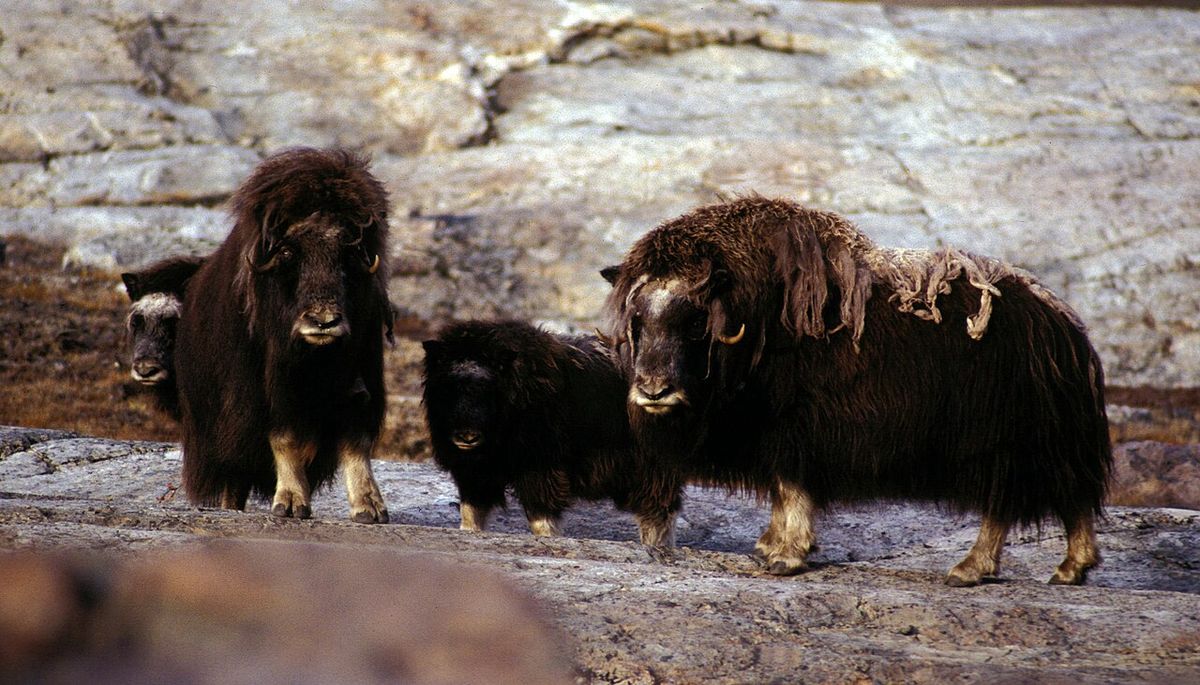
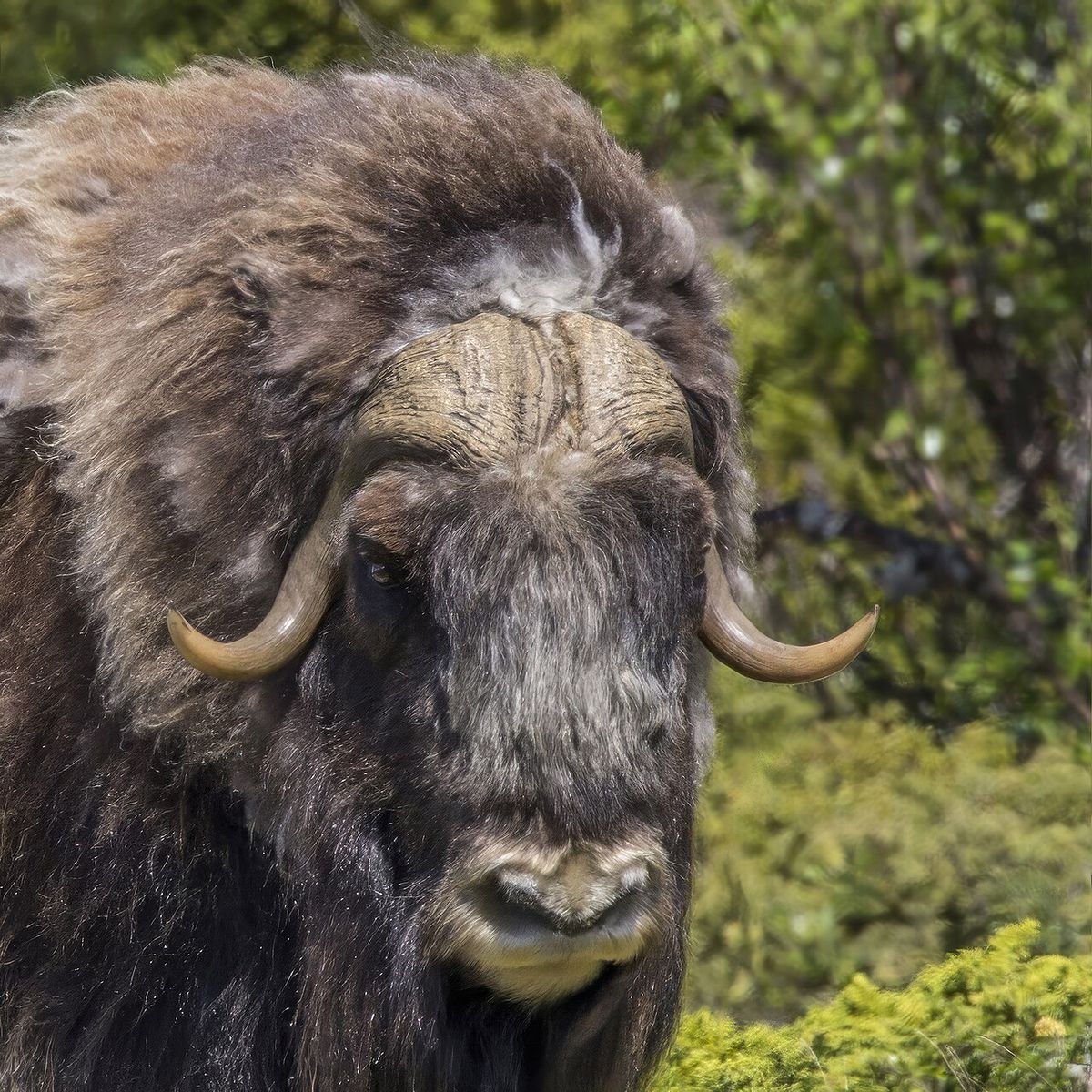
Muskoxen are stocky animals whose thick, shaggy coat and large head can make them appear larger than they are. Adults stand between 1.1 and 1.5 metres high at the shoulder, with males being significantly larger than females. Male body length ranges from 200 to 250 centimetres, while females measure 135 to 200 centimetres, and the small tail is often concealed under fur, measuring only 10 centimetres long. Average weight is around 285 kilograms, though it can range from 180 to 410 kilograms, with exceptionally heavy zoo specimens recorded at up to 650 kilograms. Both sexes possess distinctive long, curved horns that sweep downward and then forward, used for defence and dominance contests. Their coat is a mix of black, grey, and brown, consisting of long guard hairs that can almost reach the ground and a dense, soft undercoat called qiviut. Rare leucistic 'white muskoxen' have been observed in areas like the Queen Maud Gulf Bird Sanctuary.
The muskox is a heterothermic mammal, possessing a unique physiological adaptation that allows it to shut off thermal regulation in its lower limbs. Maintaining the lower limbs at a cooler temperature than the rest of the body reduces heat loss from its extremities in the extreme Arctic cold. Muskox hemoglobin is three times less sensitive to temperature changes than human hemoglobin, an adaptation that maintains a high oxygen affinity in frigid conditions. This ensures that oxygen continues to be effectively delivered to its cold tissues, supporting metabolism even when peripheral body parts are very cold. Combined with their exceptional insulation, these traits allow muskoxen to conserve energy and thrive in environments where temperatures can plummet far below freezing for much of the year. Their life expectancy in the wild is typically between 12 and 20 years, and they can reach running speeds of up to 60 kilometres per hour when threatened.
Historic and current range
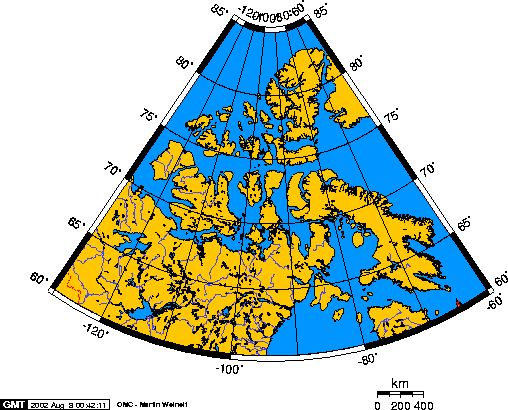
During the Pleistocene, muskoxen had a vast circumpolar distribution across the mammoth steppe, from the Urals through Siberia and across the Bering land bridge into North America. Following the retreat of the continental ice sheets, their range contracted significantly. In historic times, native populations were confined to the Arctic regions of Northern Canada, Greenland, and Alaska. The Alaskan population was extirpated by the late 19th or early 20th century due to overhunting, possibly exacerbated by climate changes. The species gradually moved north across the Canadian Arctic Archipelago after the ice retreated, arriving on Banks Island 34,000 years ago and reaching Greenland from Ellesmere Island around 350 AD. Human hunting by Dorset and Thule cultures in areas like Qaanaaq likely influenced their distribution within Greenland, confining them to the island's northeastern fringes and preventing movement down the west coast.
Today, the core native populations persist in the Canadian Arctic territories of Nunavut and the Northwest Territories, and in Greenland. Significant reintroduction programs have re-established the muskox in several former parts of its range and introduced it to new areas. In North America, successful reintroductions began with the translocation of animals to Nunivak Island, Alaska, by the United States Fish and Wildlife Service in 1935 to support subsistence living. Populations now also exist in Alaska's Arctic National Wildlife Refuge, Bering Land Bridge National Preserve, Gates of the Arctic National Park, and Kanuti National Wildlife Refuge, as well as in Canada's Ivvavik National Park in Yukon, Aulavik National Park in the Northwest Territories, and a wildlife conservation centre in Anchorage.
Major reintroduction and introduction efforts include:- Nunivak Island, Alaska (1935): The first major reintroduction to support subsistence living.
- Gurskøya, Norway (1925-26): The world's first release, using animals caught off Greenland. This island population later died out.
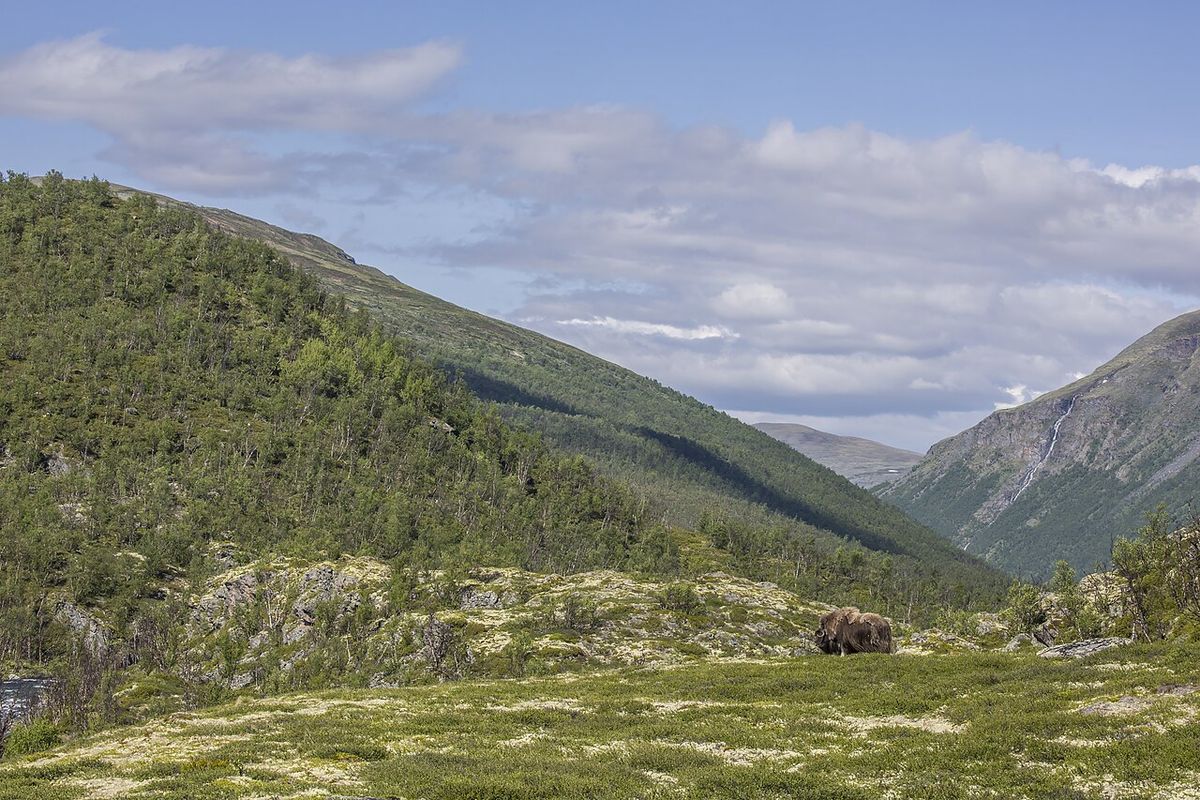
- Dovrefjell, Norway (1947): Established from new imports after a 1932 herd was hunted to extinction during World War II.
- Wrangel Island, Russia (1975): Animals from Nunivak Island were introduced.
- Pleistocene Park, Kolyma River, Russia (2010): Six animals released as part of an ecosystem restoration experiment led by Sergey Zimov.
These efforts have met with varying success. The Norwegian population on Dovrefjell is managed over 340 square kilometres and numbered about 300 animals in the summer of 2012, with flocks in the Nystuguhø, Kolla, and Hjerkinn areas. A group from this herd migrated to Sweden in 1971, establishing a Swedish herd in Härjedalen. The introduced herds in Russia have grown substantially, with an estimated 11,000-14,000 on the Taymyr Peninsula and about 1,100 on Wrangel Island by 2019, with some animals from Taymyr migrating south to the Putorana Plateau. Attempted introductions in places like Svalbard (1929) and Iceland (around 1930) ultimately failed, with populations dying out by the 1970s, and a herd released at Adventfjorden on West Spitsbergen in 1929 disappeared entirely.
Ecology, diet, and behaviour
Muskoxen are herbivores perfectly adapted to the sparse forage of the tundra. Their diet shifts with the seasons, primarily consisting of grasses, sedges, and forbs during the summer when such plants are succulent and abundant. In the winter, they rely more heavily on woody plants, with Arctic willow being the most commonly eaten staple. They will also consume lichens and mosses, and when food is abundant, they selectively prefer nutritious grasses. To conserve energy during the harsh winter, muskoxen select ranges with shallow snow cover, minimizing the effort required to dig through snow to reach forage, a behaviour known as cratering. Their seasonal movements are typically from lowland wet areas like river valleys in the summer to wind-swept higher elevations in the winter where snow is less deep. Females require a high threshold of fat reserves to conceive, reflecting a conservative breeding strategy tied to the harshness of their environment.
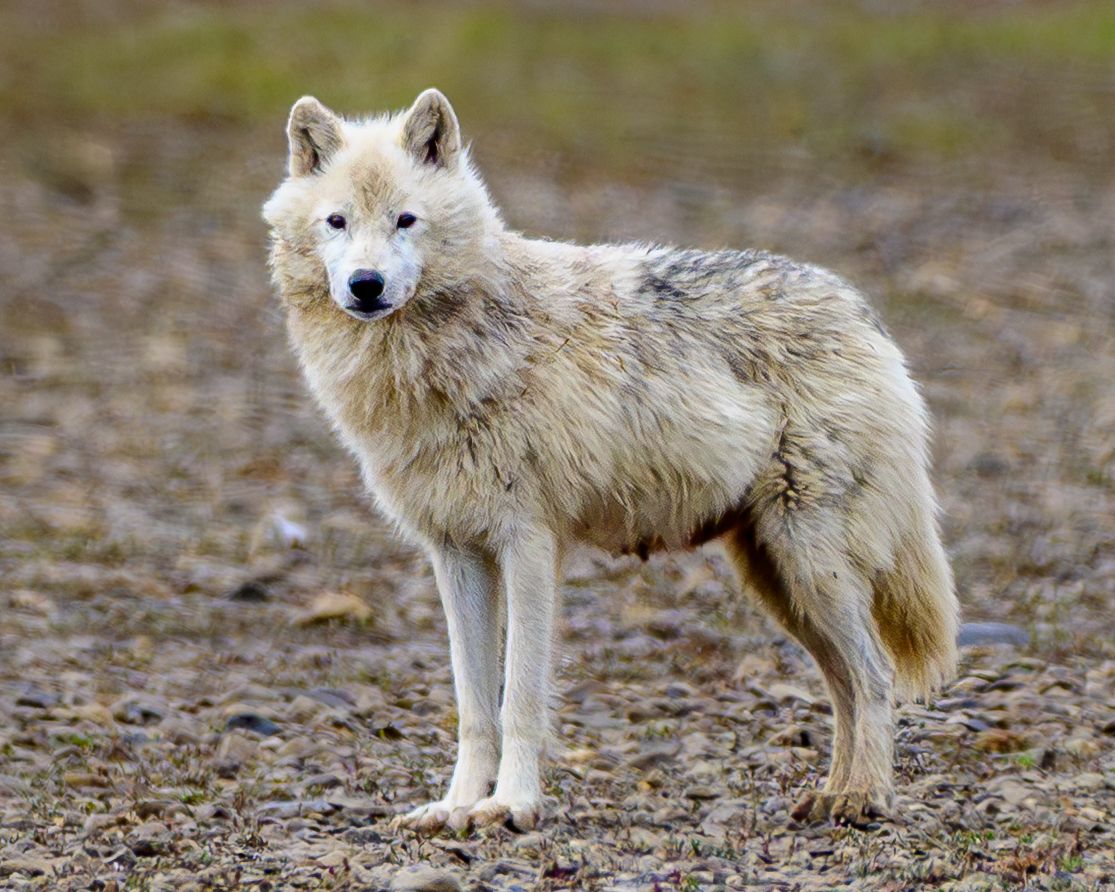
The primary predator of muskoxen is the Arctic wolf, which can account for up to half of all mortality for the species. Wolves typically target calves or infirm adults, though they can take healthy adults by working in packs. Other occasional predators include grizzly bears and polar bears, which may prey on calves, and wolverines. Muskoxen are famous for their defensive behaviour against predators, forming a stationary circle or line with adults facing outward and calves protected in the centre. This formidable strategy, combined with their sharp horns and powerful charges, makes them a challenging target for most predators. During the Pleistocene, they thrived in the tundra south of the Laurentide Ice Sheet in what is now the Midwest, Appalachians, and Virginia, while their relative Bootherium lived in southern forests and Euceratherium in western shrublands. Their abundance peaked during the Würm II glaciation 20,000 years ago before declining, especially during the Pleistocene/Holocene extinction event which greatly reduced their range.
Domestication projects and the qiviut industry
Muskoxen have been the subject of several domestication projects aimed primarily at harvesting their unique underwool, qiviut. This fibre is finer than cashmere, eight times warmer than sheep's wool, and does not shrink in water. The first major North American endeavour began in the 1950s when an American researcher captured calves in Canada by herding family groups into open water to separate the young, adhering to a Canadian government condition not to kill defending adults. The calves were airfreighted to Montreal, trucked to Vermont, and habituated to temperate conditions. The calves thrived, but parasite and disease resistance problems impaired the project's overall success. The surviving herd was moved to a farm in Palmer, Alaska, in the mid-1950s, where it has been maintained successfully. Alaska now hosts several farms dedicated to qiviut production.
A significant Canadian project was initiated in 1967 when the Institute for Northern Agricultural Research captured 14 muskoxen near Eureka on Ellesmere Island and brought them to a farm in Kuujjuaq (Old Fort Chimo), northern Quebec. The goal was to create a cottage industry based on qiviut, training Inuit knitters and developing a market. The project showed early promise, but it was later revealed that the Quebec government's intention was to establish a wild population for hunting, not domestication. Government officials demanded the institute leave Quebec and the farm be closed. Subsequently, 54 animals from the farm were released in three places in northern Quebec between 1973 and 1983, and the remaining were ceded to local zoos. The released animals increased from 148 to 290 between 1983 and 1986, a growth rate of 25% per year. By 2003, the estimated population in Quebec was 1,400 muskoxen, with an additional 112 adults and 25 calves counted on the nearby Diana Island in 2005, having arrived there on their own from the mainland. The commercial value of qiviut remains high, supporting a niche market for luxury garments and providing economic opportunities in remote northern communities.
Conservation status and population management
While not currently considered globally threatened, muskox populations face various challenges including climate change, habitat shifts, and the genetic risks associated with small, isolated herds. The species' conservation story is one of dramatic decline followed by active recovery through human intervention. The extirpation of the native Alaskan population in the late 19th century served as a warning, leading to protective legislation and the pioneering reintroduction to Nunivak Island. Most reintroduced populations have been successful, demonstrating the species' adaptability when protected from overhunting. However, specific populations face unique threats that require active management to ensure their long-term stability and health.
The small herd in Norway's Dovrefjell, while generally increasing since 1999, is vulnerable to inbreeding depression due to its limited size and isolation. It has also suffered setbacks like a measles outbreak in the summer of 2004 that killed 29 animals, and occasional mortality from collisions with trains on the Dovre Railway. The animals are managed over an area of 340 square kilometres and in summer move down towards the Driva river for lush pastures, though winter forage is marginal. In Russia, the large and expanding populations in Siberia are monitored as part of broader efforts to understand and restore Pleistocene-era ecosystems, as seen in the Pleistocene Park project which aims to test hypotheses about megafauna extinction. In Canada, the introduced Quebec population has grown rapidly, showing the suitability of the habitat in the northern Labrador Peninsula, and vagrant adults are sometimes spotted in Labrador though no herds are established there. The table below shows estimated populations for key reintroduced areas as of recent surveys, highlighting the scale of these conservation successes.
| Location | Estimated Population | Notes on Source and Status |
|---|---|---|
| Dovrefjell, Norway | ~300 (Summer 2012) | Population from Greenland. Managed, suffers from disease and train collisions. |
| Wrangel Island, Russia | ~1,100 (2019) | From Nunivak Island (1975). Population is stable and isolated. |
| Sweden (Härjedalen) | Small herd | Established by migrants from Dovrefjell, Norway in 1971. |
Ongoing management of muskoxen includes monitoring herd health and mitigating human-wildlife conflict. In some cases, genetic mixing of herds is considered to improve diversity. The future of the muskox across the Arctic will depend on careful stewardship and adaptive strategies. These strategies must address a rapidly changing northern environment, including potential pressures from increased industrial activity and ecological shifts driven by global warming. The University of Tromsø maintained a small herd on Ryøya outside Tromsø until 2018. This herd represented another facet of managed populations kept for research and display purposes.
Questions about Muskox
Where can you see muskoxen in Canada?
In Canada, wild muskoxen are primarily found in the Arctic regions of Nunavut and the Northwest Territories, including on Banks Island and within protected areas like Aulavik National Park. A reintroduced population also thrives in northern Quebec, estimated at about 1,400 animals in 2003, with individuals sometimes seen on Diana Island and as vagrants in Labrador. They can be seen in the Yukon in Ivvavik National Park and at the wildlife preserve in Whitehorse. For guaranteed viewing, several zoos and wildlife parks across Canada house muskoxen, and in Alaska, the conservation centre in Anchorage and the farm in Palmer also have herds.
What is qiviut and why is it valuable?
Qiviut is the fine, soft underwool of the muskox, shed naturally each spring. It is one of the warmest natural fibres in the world, being eight times warmer than sheep's wool, and is also remarkably lightweight and non-shrinking. Due to its rarity and exceptional insulating properties, qiviut is highly prized and commands a high price in the luxury textile market. It supports a niche economic industry in the North, with projects in Alaska and formerly Quebec aimed at domesticating muskoxen or collecting shed wool to create garments through local knitting cooperatives, providing a potential source of income for remote communities.
Are muskoxen dangerous?
Muskoxen can be dangerous, particularly during the rutting season or when they feel threatened, especially if calves are present. They are large, powerful animals capable of charging at speeds up to 60 km/h and are equipped with sharp, curved horns. Their primary defence against predators like wolves is to form a defensive circle, and they may exhibit similar aggressive behaviour towards perceived threats, including humans. It is essential to observe them from a very safe distance and to avoid any action that might be interpreted as a challenge or threat to the herd, as their defensive charge is powerful and potentially fatal.
How did muskoxen survive the Ice Age?
Muskoxen survived the Pleistocene/Holocene extinction event that wiped out many other megafauna through a combination of physiological adaptations and behavioural strategies. Their thick coats and heterothermic physiology allowed them to conserve heat in extreme cold, and their hemoglobin is specially adapted to deliver oxygen in freezing temperatures. They likely survived by finding ice-free refugia away from concentrated human hunting pressures, as suggested by their presence on Banks Island 34,000 years ago. Their ability to subsist on a wide variety of low-quality forage like willows, lichens, and mosses during long winters gave them a dietary advantage in the harsh tundra environment that persisted after the glaciers retreated.
What is being done to conserve muskoxen?
Conservation efforts for muskoxen have largely focused on reintroducing them to parts of their historic range and protecting existing populations. This includes successful reintroductions in Alaska, Norway, Russia, and Quebec, often using source animals from Greenland, Banks Island, or Nunivak Island. Management involves monitoring herd health and population trends, protecting habitat, and in some cases, controlling regulated hunting. Scientific research, such as the Pleistocene Park project in Russia's Kolyma River area, studies their role in the ecosystem and tests hypotheses about past extinctions. For small, isolated populations like Norway's, genetic management to prevent inbreeding is a future consideration to ensure long-term viability.
What do muskoxen eat in the winter?
During the long Arctic winter, when grasses are buried under snow, muskoxen shift their diet to rely heavily on woody plants. Arctic willow is the most commonly eaten plant during this season. They also dig through snow, a behaviour called cratering, to find sedges, lichens, and mosses. To minimize energy expenditure, they selectively forage in areas with shallow snow cover, often moving to higher, wind-swept ridges where the snow is less deep and easier to dig through to reach the frozen forage beneath. This winter diet, though less nutritious, provides enough sustenance for them to survive until spring when fresh growth appears.
Sources and further reading
- Muskox (Wikipedia)
- Muskox (Ovibos moschatus) Species Profile (adfg.alaska.gov)
- Meet the magnificent muskox, an Ice Age survivor (wwf.ca)
- Muskoxen, Wilder Institute's Calgary Zoo (calgaryzoo.com)
- The Mighty Muskox (assiniboinepark.ca)
Checked by the Your Space Hamilton desk. Last updated 2026-10-20.