Harbor seal
The harbor seal (Phoca vitulina), also known as the common seal, is a true seal and the most widely distributed pinniped species in the Northern Hemisphere. Found along the temperate and Arctic coastlines of both the Atlantic and Pacific Oceans, this marine mammal is a familiar sight in Canadian waters from British Columbia to the Maritimes and the Arctic. Harbour seals are important indicators of healthy coastal ecosystems and hold cultural significance for many Indigenous communities. They are protected in Canada under the Marine Mammal Regulations, though limited subsistence hunting and lethal removals to protect fisheries are permitted in some regions.
Physical Description and Subspecies
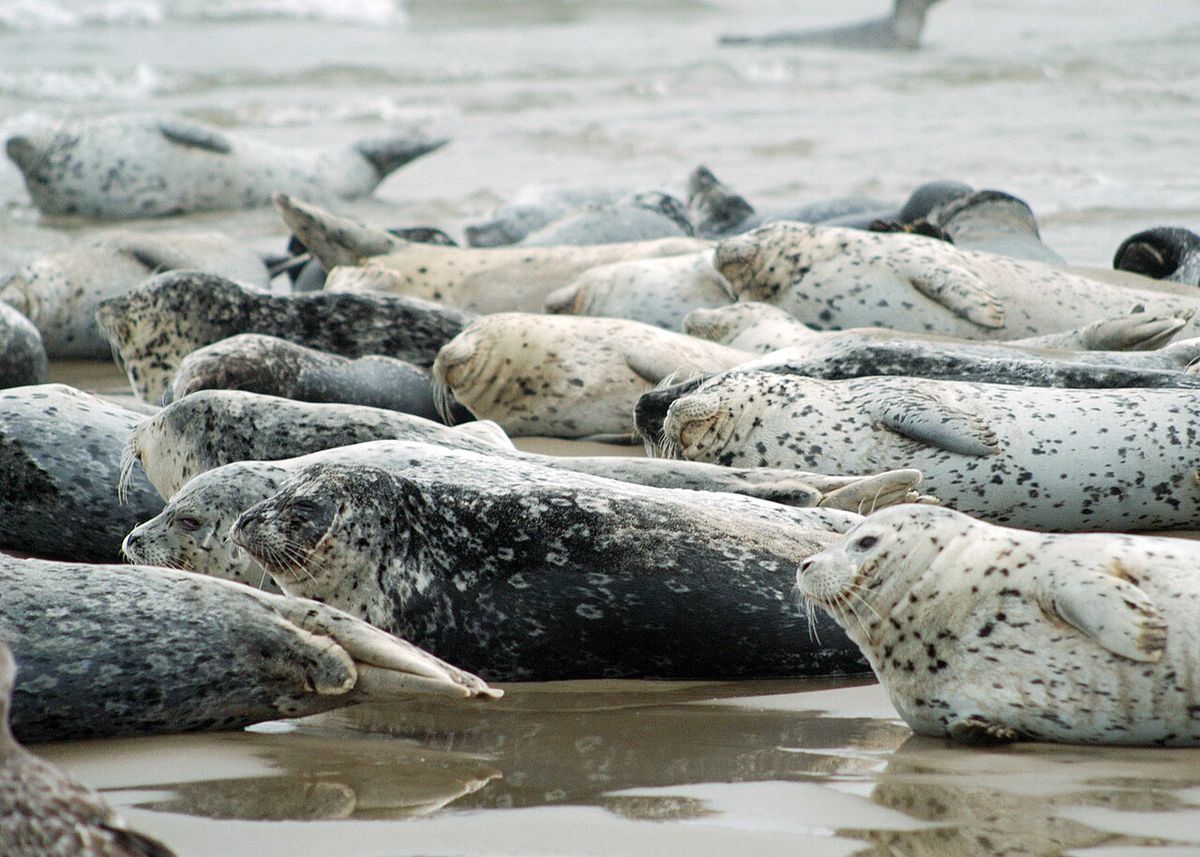
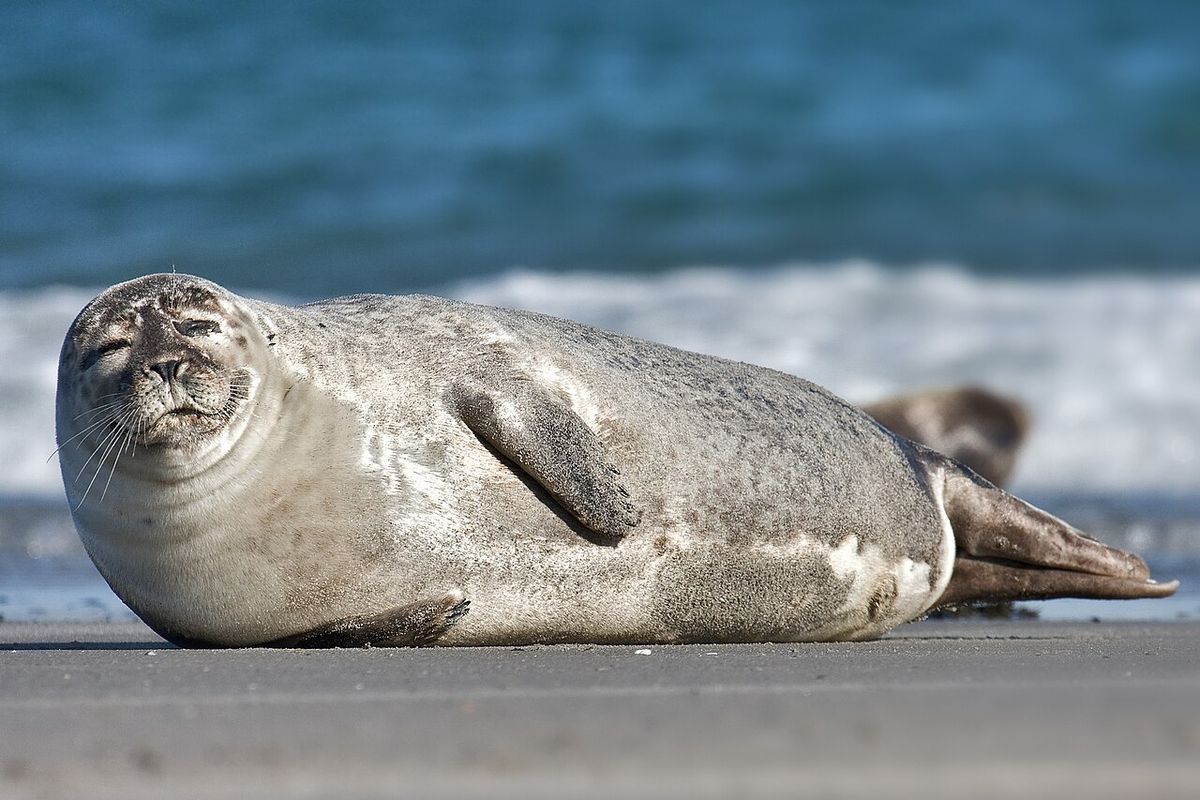
Harbour seals are characterized by their rounded, dog-like heads, short flippers, and lack of external ear flaps. Their colouration is highly variable, ranging from light tan or silvery grey to dark brown or black, typically covered in a pattern of spots or rings. This unique spotting pattern is used to identify individuals. A key distinguishing feature is their V-shaped nostrils. Adults typically reach lengths of 1.5 to 1.85 metres and weights between 55 and 168 kilograms, with males generally being slightly larger than females. They possess a thick layer of blubber for insulation and energy storage, which can account for up to 30 percent of their body mass in winter. Five subspecies are generally recognized, with their ranges spanning the North Atlantic and North Pacific Oceans.
The Pacific harbour seal (P. v. richardii) is the subspecies found along Canada's west coast, from Alaska down to California. On the Atlantic coast, the Western Atlantic common seal (P. v. concolor) inhabits waters from the eastern Canadian Arctic down to the northeastern United States. Another notable subspecies is the endangered Ungava seal (P. v. mellonae), a freshwater population found in lakes and rivers of northern Quebec. Physical size can vary by region, with seals in Alaskan and Pacific waters generally being larger than their Atlantic counterparts.
Distribution and Habitat in Canada
In Canada, harbour seals are found along all three coastlines, demonstrating their remarkable adaptability. On the Pacific coast, they are abundant from the southern Arctic (Yukon to northern Alaska) down the entire British Columbia shoreline, frequently hauling out on rocky islands, reefs, and sometimes urban beaches. They inhabit inshore waters, bays, and estuaries, and are rarely found far offshore. On the Atlantic coast, their range extends from the Hudson Bay and the mouth of the St. Lawrence River down through the Maritimes. Historically, they ranged as far south as North Carolina but were extirpated from southern areas due to hunting and pollution.
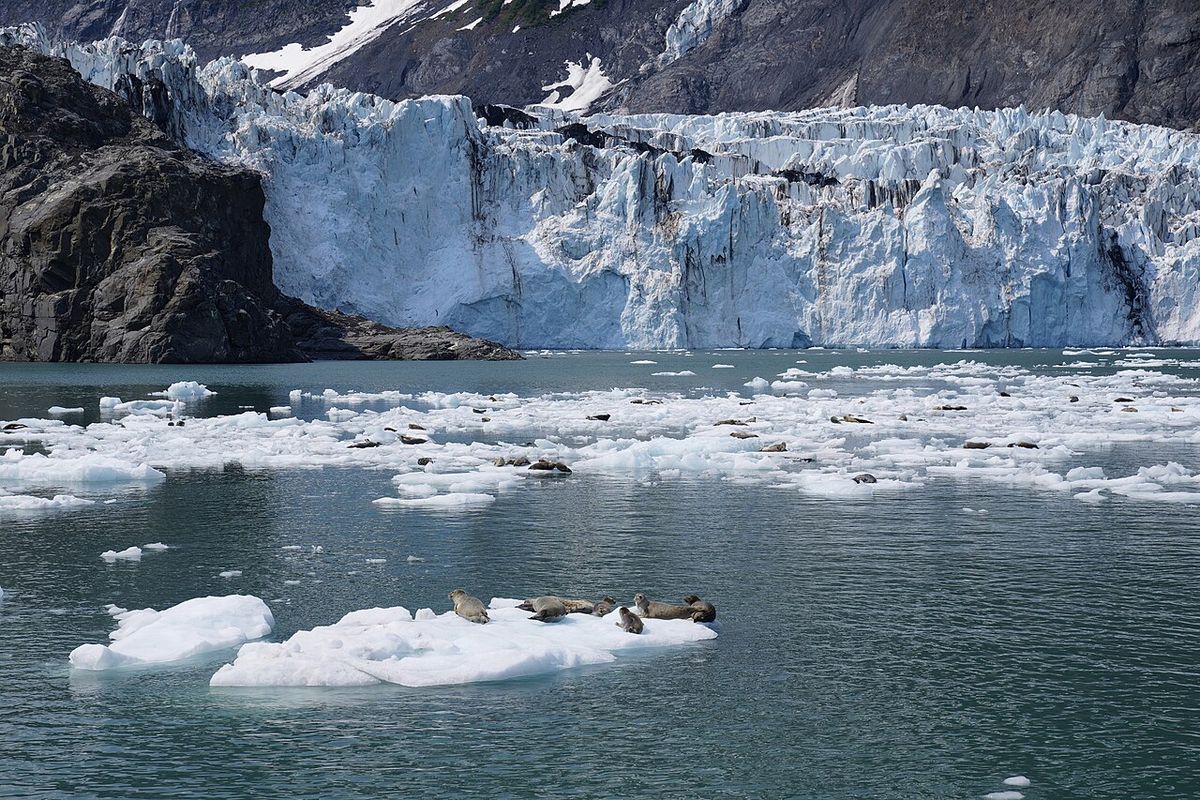
Populations have been recovering and recolonizing former habitats, with seals now regularly sighted along the New England coast. Harbour seals also inhabit the Arctic, though they are less common in areas with extensive annual sea ice. They show strong site fidelity, repeatedly using familiar haulout sites for resting, breeding, and molting. These sites can be on rocky coasts, sandy beaches, mudflats, or on floating glacial ice in fjords. They are also known to venture far upstream into freshwater rivers and lakes in pursuit of migratory fish.
- Pacific Coast: Found along the entire British Columbia coastline, including inland waters like the Salish Sea.
- Atlantic Coast: Populations range from the eastern Canadian Arctic through the Gulf of St. Lawrence and the Maritimes.
- Freshwater Populations: The endangered Ungava seal subspecies lives in lakes in northern Quebec, and a separate population inhabits Iliamna Lake in Alaska.
- Haulout Sites: Include rocky shores, sandy beaches, estuaries, and glacial ice.
Diet and Hunting Behaviour
Harbour seals are opportunistic, carnivorous predators whose diet varies by location and season. They primarily consume a wide variety of fish species, making them a key component of the coastal food web. On the Pacific coast, common prey includes herring, hake, cod, flounder, rockfish, and salmon. Atlantic seals feed on similar species such as herring, mackerel, cod, whiting, and flatfish, as well as sand lance. They also consume invertebrates including squid, octopus, shrimp, and crabs. Harbour seals often swallow their prey whole and are known to follow tidal movements and seasonal fish runs to optimize foraging.
They are adept divers, typically foraging at an average depth of 91 metres, though dives exceeding 500 metres have been recorded. Before a deep dive, they exhale to reduce lung buoyancy and rely on oxygen stored in their blood and muscles. Their heart rate can slow dramatically from 80-120 beats per minute to as few as three or four beats per minute to conserve oxygen. They usually remain submerged for less than three minutes per dive, though they are capable of staying underwater for up to 30 minutes. Hunting usually occurs in coastal, subtidal, and intertidal zones, and they have been documented travelling up to 50 kilometres from haulout sites in search of food.
Life Cycle and Reproduction
The harbour seal breeding season, or pupping season, varies by latitude. In lower latitudes like California, pupping occurs from March to May, while in subarctic regions like Alaska, it can be as late as July. In Atlantic Canada, pupping typically happens in May and June. Females give birth to a single, well-developed pup annually after a gestation period of approximately nine months, which includes a period of delayed implantation. Pups are born on land or ice, weighing between 8 and 16 kilograms, and are capable of swimming and diving within hours of birth.
Mothers are the sole caregivers, nursing their pups with extremely fat-rich milk for a period of three to six weeks. During this time, pups can double their birth weight. Weaning is abrupt, after which the female mates again. Males are polygamous and compete for access to females, with courtship and mating taking place underwater. Researchers have observed males gathering underwater, turning on their backs, and vocalizing to attract females. Females reach sexual maturity at an average age of about four years and can remain reproductively active into their mid-twenties, with a maximum recorded lifespan of 36 years for females and 31 years for males.
- Pupping Season: Varies from March-May on the Pacific coast to May-June on the Atlantic coast.
- Pup Development: Born weighing 8-16 kg, able to swim immediately, weaned at 4-6 weeks.
- Maternal Care: Females nurse pups alone. Lactation lasts 24 days on average.
- Mating: Occurs underwater shortly after weaning. The mating system is polygamous.
Population Status and Conservation
The global harbour seal population is estimated at 350,000 to 500,000 individuals and is not considered threatened overall. However, specific subspecies and regional populations face significant challenges. The freshwater Ungava seal in northern Quebec is classified as endangered. In Canada, harbour seals are protected under the federal Marine Mammal Regulations, which prohibit commercial hunting. However, limited subsistence harvesting by Indigenous peoples is permitted, and lethal removal of seals to protect fisheries is legal in certain circumstances, similar to regulations in Norway.
Major historical threats included government-sponsored bounty programs, which ended in North America in the 1960s, and widespread pollution. The 1972 Marine Mammal Protection Act in the United States and similar protective measures have allowed many populations to recover. Current threats include accidental bycatch in fishing gear, habitat disturbance from human activity at haulout sites, and disease outbreaks such as phocine distemper virus, which has caused significant mortality in Atlantic populations. In Canada, NOAA Fisheries and the Department of Fisheries and Oceans monitor various stocks, with most on the Pacific coast considered stable or increasing, while some Alaskan stocks have shown declines.
| Region/Stock | General Population Trend | Notable Details |
|---|---|---|
| British Columbia / Pacific Coast | Stable or increasing | Part of the P. v. richardii subspecies. Common in coastal waters. |
| Eastern Canada / Atlantic | Stable, recolonizing southern range | Part of a complex North Atlantic stock. Recovering in New England. |
| Ungava Seal (Quebec) | Endangered | Freshwater subspecies. Population is small and isolated. |
| Alaska (multiple stocks) | Mixed (stable, increasing, or declining) | 12 distinct stocks. Aleutian Islands and Glacier Bay stocks likely declining. |
Behaviour and Interaction with Humans
Harbour seals spend roughly half their time hauled out on land or ice and half in the water. Hauling out is essential for resting, thermoregulation, molting, and pupping. They are generally solitary animals but congregate in groups at haulout sites, sometimes numbering in the hundreds or thousands. When hauled out, they often assume a characteristic "banana" posture, with their head and rear flippers raised. They are sensitive to human disturbance, and approaching too closely can cause stampedes into the water, which wastes energy and can lead to pup abandonment. Guidelines in both Canada and the U.S. recommend maintaining a distance of at least 50 metres from hauled-out seals.
They are more vocally reticent than sea lions but do use vocalizations for communication, particularly during the breeding season to attract mates and defend territories, and for mother-pup recognition. Notable individual seals have gained public attention, such as Andre from Rockport, Maine, who was trained and returned to the wild annually, and Hoover, also from Maine, who could mimic human speech. In Canada, they are a common sight for coastal residents and tourists, contributing to ecotourism. Their presence in rehabilitated urban harbours, such as New York Harbor and the Thames in London, signals improved water quality and ecosystem health.
Physiological Adaptations for Marine Life
Harbour seals possess a suite of remarkable physiological adaptations for their aquatic lifestyle. Their streamlined bodies and fused pelvic bones, which prevent them from walking on land like sea lions, are optimized for swimming. Propulsion comes from side-to-side undulations of their body and powerful strokes of their hind flippers. Thermoregulation is achieved through a thick blubber layer and a process called countercurrent heat exchange, where blood vessels in the flippers minimize heat loss. They also have a higher metabolic rate than similarly sized land mammals to generate internal heat.
Their diving adaptations are particularly sophisticated. Prior to a dive, they exhale to collapse their lungs and reduce nitrogen absorption, preventing decompression sickness. They can drastically reduce their heart rate to conserve oxygen, which is then directed to vital organs like the brain and heart. Their muscles contain high levels of myoglobin, a protein that stores oxygen. These adaptations allow them to undertake deep dives, with a maximum recorded depth of 1,460 feet (446 metres), though most feeding dives are much shallower. After the breeding season, they undergo a catastrophic molt, spending more time hauled out while they shed and regrow their fur.
Questions about Harbor seal
Are harbour seals dangerous to humans?
Harbour seals are not typically aggressive towards humans and are often curious but wary. However, they are wild animals with powerful jaws and can bite if threatened, cornered, or if humans attempt to touch them or get too close to their pups. It is crucial to observe them from a safe distance of at least 50 metres to avoid causing them stress, which can lead to stampedes or pup abandonment. Never attempt to feed or interact with a wild harbour seal.
What is the difference between a harbour seal and a sea lion?
The most noticeable differences are in their physical features and locomotion on land. Harbour seals, as true seals, lack external ear flaps and have short foreflippers. On land, they move by undulating their bodies in a caterpillar-like motion. Sea lions, which are eared seals, have visible external ear flaps and large, powerful front flippers that they use to "walk" on land by rotating their hind flippers forward. Sea lions are also generally more vocal and social than the more solitary harbour seals.
Why are harbour seals sometimes seen in rivers or freshwater lakes?
Harbour seals are opportunistic feeders and will travel significant distances upstream into rivers and lakes in pursuit of migratory fish like salmon and shad. Some populations have even become permanent freshwater residents. The endangered Ungava seal subspecies lives exclusively in freshwater lakes in northern Quebec, and a separate population resides in Iliamna Lake, Alaska. These behaviours demonstrate the species' adaptability to different aquatic environments.
What should I do if I find a harbour seal pup alone on a beach?
It is normal for harbour seal mothers to leave their pups alone on the beach while they forage at sea. The pup is likely not abandoned. The most important action is to keep a very large distance, at least 50 metres, and keep dogs on a leash. Do not touch or attempt to move the pup, as human scent may cause the mother to reject it. If the pup appears visibly injured, is in immediate danger, or the mother has not returned after a full 24-hour cycle, contact local wildlife authorities or a licensed marine mammal rescue organization for guidance.
How is climate change affecting harbour seals?
Climate change impacts harbour seals in several ways, though the species' wide distribution offers some resilience. Warming ocean temperatures can affect the distribution and abundance of their fish prey. In the Arctic, reduced sea ice may open new habitats but also increase exposure to predators and human activity. Changes in the timing of seasonal events like fish runs could disrupt foraging patterns. Extreme weather events linked to climate change, such as stronger storms, can disturb crucial haulout and pupping sites. Long-term monitoring is essential to understand these complex effects.
How long can a harbour seal hold its breath?
Harbour seals are capable of holding their breath for extended periods, with dives of over 500 metres having been recorded, which requires significant breath-holding ability. They may spend several days at sea and travel up to 50 kilometres in search of feeding grounds, indicating sustained diving activity. Their physiology supports this, as blubber under their skin helps maintain body temperature during dives. They are known to swim more than a hundred miles upstream into fresh water in large rivers, further demonstrating their diving and breath-holding endurance.
Sources and further reading
- Harbor seal (Wikipedia)
- Harbor Seal (fisheries.noaa.gov)
- Harbor seal (nationalzoo.si.edu)
- Pacific Harbor Seal Denali Chosen as the 2026 Calendar ... (marinemammalcenter.org)
- Phoca vitulina (harbor seal) | INFORMATION (animaldiversity.org)
Checked by the Your Space Hamilton desk. Last updated 2026-10-25.