Gray treefrog
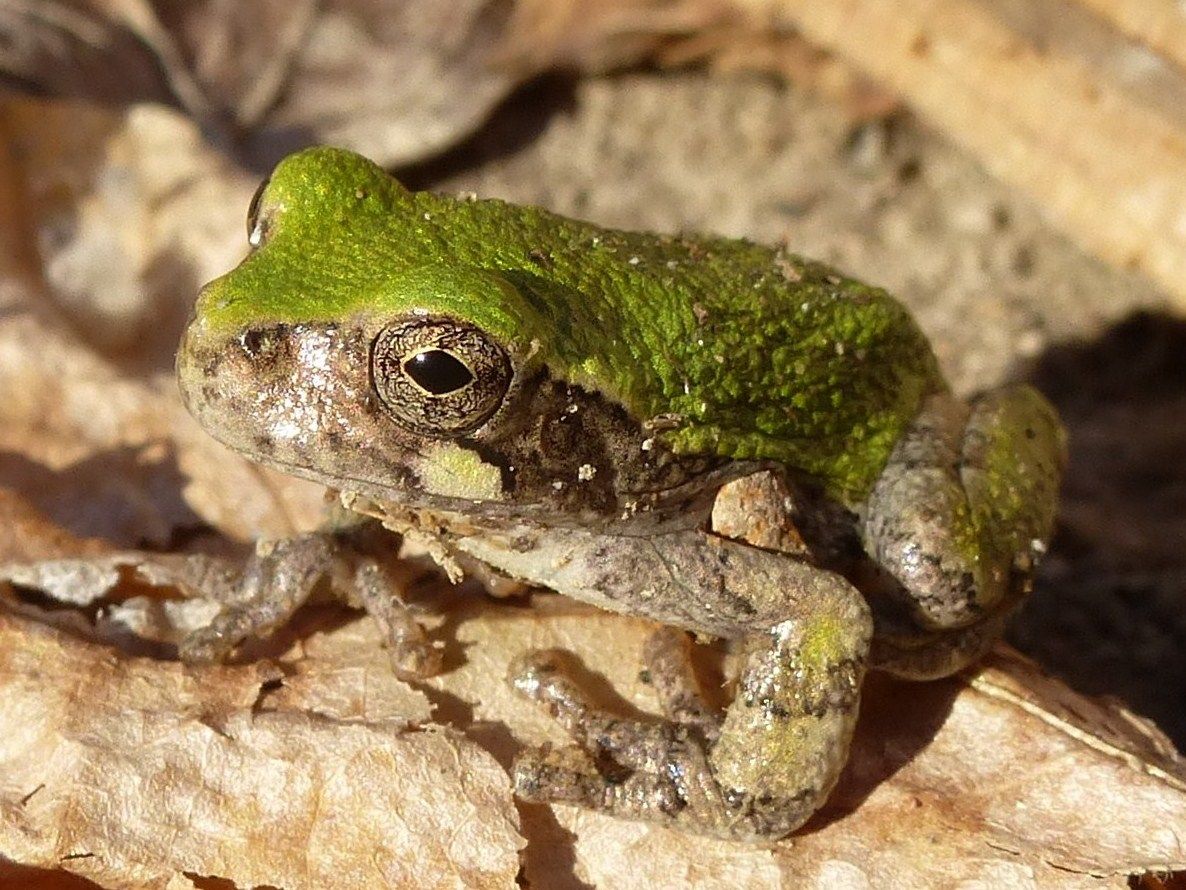
The gray treefrog (Dryophytes versicolor) is a small, highly arboreal amphibian native to a wide swath of eastern North America, including significant portions of southeastern Canada. Often referred to as the eastern or tetraploid gray treefrog, it is renowned for its remarkable ability to change colour for camouflage, ranging from gray and green to brown. This species is a familiar voice in Canadian woodlands, with its distinctive musical trill heralding spring and summer evenings near ponds and wetlands. While common, it faces pressures from habitat loss and serves as an important indicator of ecosystem health in its forested habitats.
Physical Description and Identification
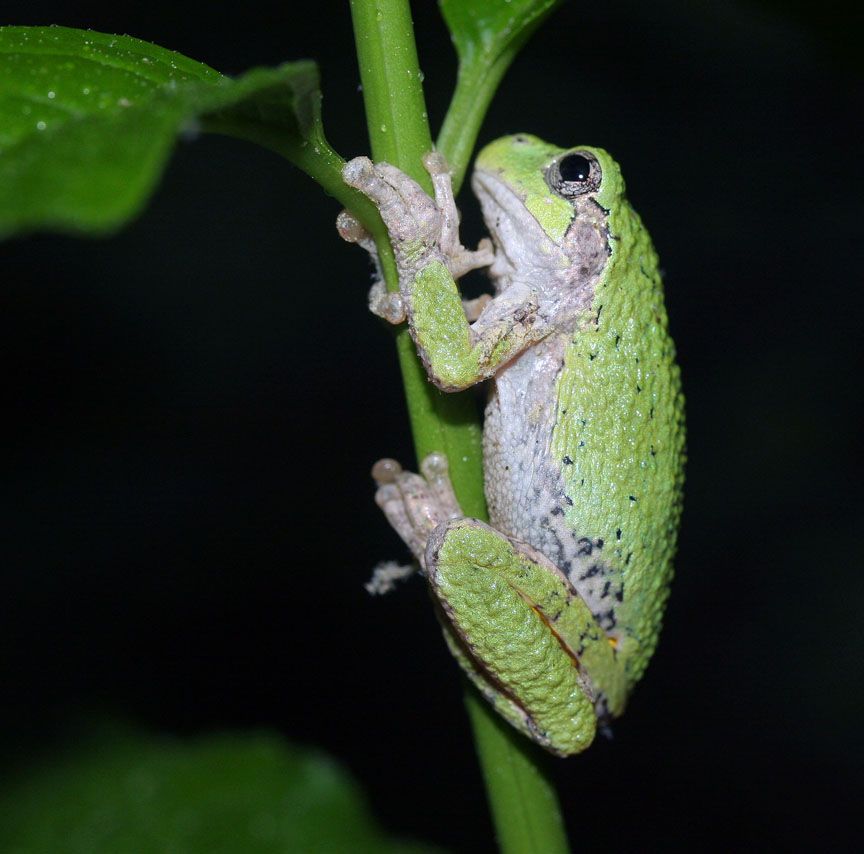
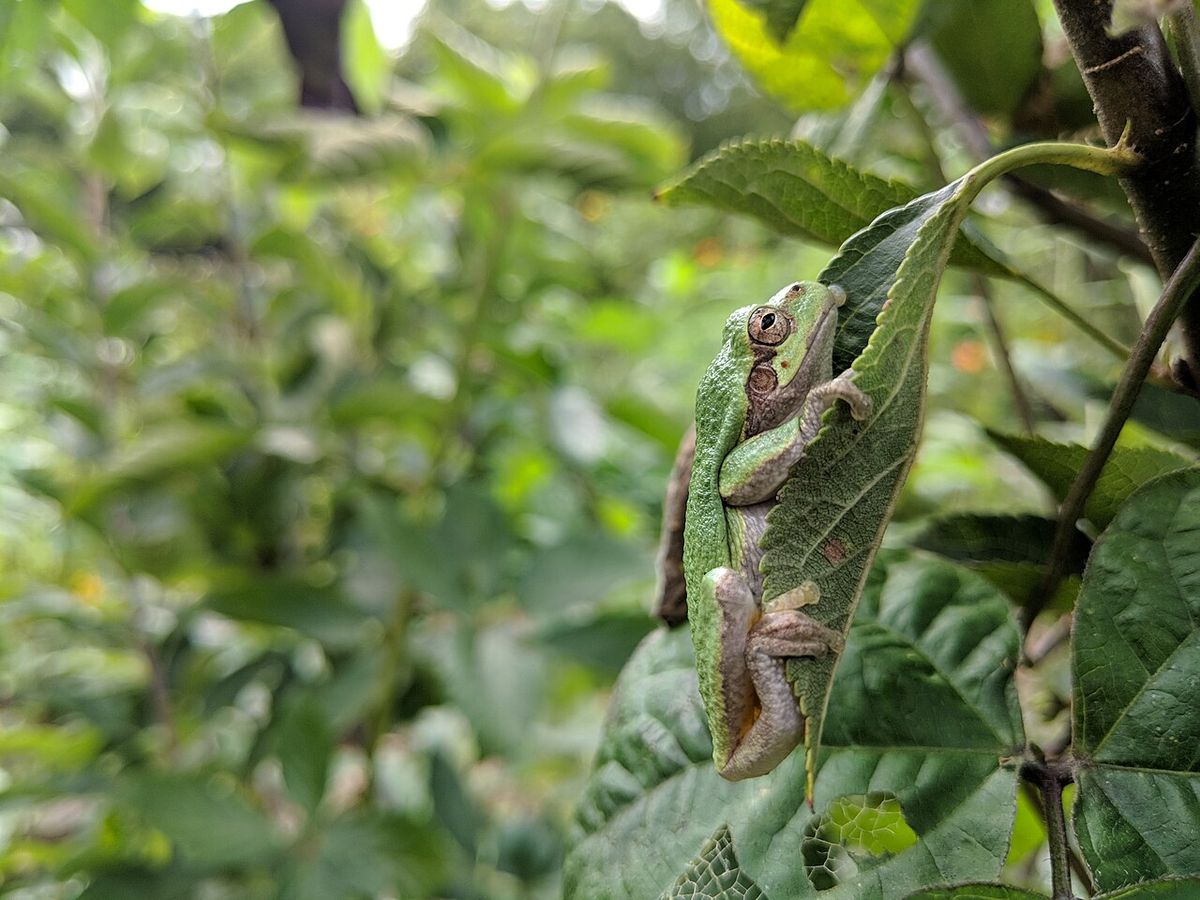
The gray treefrog is a relatively small frog, with adults typically measuring between 1.5 and 2 inches from snout to vent, though females can occasionally reach 2.25 inches. Its most notable feature is its variable colouration, an ability reflected in its species name 'versicolor'. Individuals can shift their skin colour among shades of gray, green, and brown to match their surroundings, a process slower than that of a chameleon but highly effective for camouflage against bark and lichen. The skin has a lumpy, warty texture, and the dorsal surface usually features darker blotches. A consistent white spot is present beneath each eye, and a dark stripe runs from the eye to the front leg. The species possesses large, sticky toe pads characteristic of treefrogs, which secrete an adhesive fluid to aid in climbing. A key identifying mark is the bright yellow or orange colour with black speckling on the concealed surfaces of the thighs and groin, which is flashed during jumping. Males and females are slightly dimorphic, with males having darker gray or black throats, especially evident when calling.
This species is virtually identical in appearance to its close relative, Cope's gray treefrog (Dryophytes chrysoscelis). The most reliable method to distinguish them is by their call, as Cope's gray treefrog produces a faster, shorter trill. At comparable temperatures, the gray treefrog's call has a pulse rate of 16 to 34 pulses per second, while Cope's averages 34 to 60 pulses per second. Genetically, the gray treefrog is tetraploid, meaning it has 48 chromosomes, compared to the 24 chromosomes of Cope's gray treefrog. Hybrids between the two species occur but suffer from high larval mortality and reduced fertility in survivors. Tadpoles are small and colourful, often displaying red or orange tail fins with black speckles. Newly metamorphosed froglets often appear green for a short period before adopting more typical gray or brown hues.
Distribution and Habitat in Canada
The gray treefrog has an extensive range across eastern North America, reaching into several Canadian provinces. In Canada, its range includes southern Quebec, Ontario, and Manitoba, with an isolated population recorded in New Brunswick. Its northern distribution is limited by climate, though it exhibits a remarkable physiological adaptation for cold tolerance. This frog can survive the freezing of its internal body fluids to temperatures as low as -8°C, allowing it to hibernate terrestrially under leaf litter, logs, and snow cover. This adaptation enables it to inhabit regions with harsh winters. The species is highly arboreal and is most common in forested landscapes. It requires access to both trees for shelter and foraging and water bodies for breeding.
Its habitat preferences are diverse but consistently linked to woodlands. It can be found in mixed or deciduous forests, swamps, old fields, farm woodlots, and even wooded suburban neighbourhoods. During inactive periods, it hides in tree holes, under bark, in rotten logs, and under roots or leaves. For breeding, it utilizes a wide variety of still water bodies, showing a strong preference for semipermanent woodland ponds without fish. It also readily uses swamps, vernal pools, marshes, bogs, and human-made water features like garden ponds, fountains, and rainwater-filled swimming pool covers. Young, newly metamorphosed frogs often stay closer to the forest floor, while adults may ascend into the forest canopy.
Diet and Nocturnal Behaviour
The gray treefrog is a nocturnal and opportunistic predator. Its diet consists primarily of small invertebrates, which it hunts in the understory of wooded areas, in trees, and on shrubs. Common prey items include a wide variety of insects such as beetles, ants, moths, and insect larvae. It also consumes other arthropods like mites, spiders, harvestmen, and plant lice, as well as snails and slugs. Research has indicated a positive correlation between the mass of a frog's stomach contents and its distance from a breeding pond, with beetles becoming a more prevalent part of the diet farther from the water's edge. Like many frogs, it is not strictly limited to invertebrates and may occasionally eat smaller frogs, including other treefrogs.
During the day, gray treefrogs remain inactive, often resting openly on horizontal tree branches or leaves, relying on their superb camouflage for protection. They have been observed basking in direct sunlight, being less prone to overheating and desiccation than many other amphibians. At night, they become active foragers. A familiar behaviour in rural and suburban areas is their tendency to congregate around windows and porch lights to feed on insects attracted to the light. Their nocturnal calls are a defining sound of summer evenings in their range. Males call from perches in trees and shrubs near water, and these calls, along with their light-seeking feeding behaviour, are when they are most likely to be observed by people.
Breeding and Life Cycle
The breeding season for gray treefrogs begins in late spring, typically starting in late April or early May when evening air temperatures consistently rise above 15°C, and can extend into early August. Males emerge from hibernation first and establish calling territories in trees and bushes overhanging or near still water. The male's advertisement call is a loud, musical, flute-like trill used to attract females and assert dominance. Choruses are most intense on warm, cloudy nights from dusk to midnight. Females select mates based on call characteristics, showing a preference for longer advertisement calls over shorter aggressive calls. Courtship is initiated when a female approaches a calling male and touches him, often causing him to rotate 90 degrees and produce one or two especially long 'courting calls'.
The actual mating takes place in water through amplexus, where the male clasps the female from behind. A single female deposits between 1,000 and 2,600 eggs in small clusters of 10 to 40. The eggs are encased in a transparent, mucous layer that attaches them to submerged vegetation or debris. Embryonic development is temperature-dependent, with eggs hatching in as little as three days or up to three weeks. The resulting tadpoles are omnivorous, feeding on algae and organic detritus. Their development is also temperature-driven, with metamorphosis usually occurring 45 to 65 days after hatching, though it can happen in as little as two months under optimal conditions. The young froglets, measuring about 0.6 inches long, often exhibit a temporary green colouration. Gray treefrogs reach sexual maturity at approximately two years of age and have a typical lifespan of seven to nine years in the wild.
- Late April-Early May: Breeding choruses begin after hibernation.
- Egg Deposition: Females lay 1,000-2,600 eggs in small clusters attached to vegetation.
- 3 Days-3 Weeks: Eggs hatch, depending on water temperature.
- 45-65 Days: Tadpoles undergo metamorphosis into froglets.
- 2 Years: Age of sexual maturity.
- 7-9 Years: Typical lifespan in the wild.
Vocalizations and Social Interactions
Vocal communication is central to the gray treefrog's social and reproductive life. Males produce two primary types of calls: advertisement calls and aggressive calls. The advertisement call is a melodic trill used to attract females and is the sound most associated with the species. The aggressive call is shorter, lower in frequency, and used during conflicts with other males. This species exhibits a system of 'graded aggressive calling,' where the characteristics of the aggressive call change in relation to the level of threat or conflict. Unlike many chorus frogs, gray treefrog males do not strictly avoid call overlap with neighbours. Instead, they may use increasing call overlap as a signal of rising aggression levels during territorial disputes.
Male-male interactions often begin with exchanges of advertisement calls and can escalate to aggressive call exchanges. Physical combat is less common but can occur, involving wrestling, shoving, and head-butting for 30 to 90 seconds until one male retreats. Female choice drives mating success. Females generally prefer advertisement calls with no overlap from other males, but they can distinguish between overlapping calls if the males are sufficiently far apart. They show a strong preference for longer calls and do not favour the leading call in a sequence. Females are not typically attracted to aggressive calls. The social environment, including the density of calling males and the presence of females, dynamically influences male calling behaviour, timing, and aggression levels.
Interactions with Cope's Gray Treefrog
The gray treefrog shares a significant portion of its geographic range with its cryptic sibling species, Cope's gray treefrog. The two are physically indistinguishable, leading to sympatric populations in areas like Wisconsin and northern Michigan where they may even share the same breeding ponds. The primary barrier preventing interbreeding is a difference in mating calls, with Cope's producing a faster trill. This difference in call rate is a key species-specific cue that females use to select mates, a phenomenon strengthened in areas where both species overlap. Despite this, the species are largely intersterile due to the gray treefrog's tetraploid genetics. Hybridization results in high larval mortality and reduced fertility.
When the two species interact at breeding sites, their similar calls can cause acoustic interference. In aggressive encounters, gray treefrog males respond with equal intensity to calls from both species. However, conflicts between the two species escalate to physical aggression more quickly than conflicts within the same species. Gray treefrog males are more likely to initiate physical attacks during intense vocal contests. Research suggests gray treefrog males may have more to lose from continued call overlap with Cope's gray treefrog, as their mate attractiveness decreases more sharply in such situations.
Conservation Status and Threats
Globally, the gray treefrog is assessed as Least Concern by the International Union for Conservation of Nature, a status confirmed as of December 2020. Its population is presumed to be large, and it has a wide distribution. In Canada, it has not been formally assessed by the Committee on the Status of Endangered Wildlife in Canada or the Ontario counterpart. However, in Ontario, it is designated as a Specially Protected Amphibian under the Fish and Wildlife Conservation Act, which offers some legal protection to individuals and their habitats. The main threat to gray treefrog populations across their range is habitat loss and degradation. As a forest-dependent species, it is negatively impacted by clearcutting, agricultural expansion, urbanization, and road construction, which fragment woodlands and eliminate breeding ponds.
Pollution of aquatic habitats from agricultural runoff or other sources can degrade water quality for eggs and tadpoles. The species is also susceptible to Batrachochytrium dendrobatidis, the fungal pathogen responsible for chytridiomycosis. Infection with this fungus has been shown to reduce the frog's cold tolerance by raising its critical temperature minimum, potentially increasing overwintering mortality. Despite these threats, the species' ability to utilize a variety of woodland habitats and human-made water bodies, combined with its excellent camouflage and arboreal habits, has allowed it to remain common. Public awareness and stewardship of woodland ponds and forest buffers are important for its continued conservation.
| Province/Territory | Presence |
|---|---|
| Ontario | Widespread in southern regions |
| Quebec | Present in southern areas |
| Manitoba | Part of southeastern range |
| New Brunswick | Isolated population |
Questions about Gray treefrog
Are gray treefrogs poisonous?
Gray treefrogs are not poisonous to humans. The bright yellow or orange colouration on the undersides of their legs is believed to be an aposematic signal to potential predators. This flash colouration is revealed when the frog jumps and may startle predators. It may signal that the frog is unpalatable.
What does a gray treefrog sound like?
The male gray treefrog's advertisement call is a short, musical, flute-like trill. It is often described as a melodic whistle. The call rate is temperature-dependent, ranging from 16 to 34 pulses per second. On warm spring and summer evenings, these calls can be heard from trees and shrubs near ponds, swamps, and other still water bodies, sometimes continuing for up to four hours after dusk.
Where do gray treefrogs live in Canada?
In Canada, the gray treefrog is found in the provinces of Quebec, Ontario, and Manitoba. An isolated population is also recorded in New Brunswick. It inhabits forested areas and is highly arboreal. It is known to hibernate on land under logs, roots, and leaf litter.
What is the difference between a gray treefrog and a Cope's gray treefrog?
The two species are physically identical. The primary difference is in their mating calls: Cope's gray treefrog has a faster, shorter trill with a pulse rate of 34 to 60 pulses per second, while the gray treefrog's trill is slower at 16 to 34 pulses per second. Genetically, the gray treefrog is tetraploid with 48 chromosomes, and Cope's is diploid with 24 chromosomes. They are largely intersterile, and hybrids have low survival and fertility.
What do gray treefrogs eat?
Gray treefrogs are nocturnal insectivores. Their diet consists mainly of insects such as beetles, ants, moths, and insect larvae. They also eat other arthropods including spiders, mites, harvestmen, and plant lice, as well as snails and slugs. Occasionally, they may prey on smaller frogs, including other treefrogs. Tadpoles feed on algae and organic detritus in their aquatic environment.
How long do gray treefrogs live?
Gray treefrogs have a typical lifespan of seven to nine years in the wild. They reach sexual maturity at about two years of age. Their longevity is influenced by factors such as predation, habitat quality, and disease. Their ability to survive freezing temperatures during hibernation contributes to their success in colder climates like Canada's.
Sources and further reading
- Gray treefrog (Wikipedia)
- Gray tree frog (nationalzoo.si.edu)
- » Gray Treefrog (ontarionature.org)
- Hyla versicolor (Gray Treefrog) | INFORMATION (animaldiversity.org)
Checked by the Your Space Hamilton desk. Last updated 2026-10-28.