Fox squirrel
The fox squirrel ( Sciurus niger ), also known as the eastern fox squirrel or Bryant's fox squirrel, is the largest species of tree squirrel native to North America. Its natural range extends north into the southern prairie provinces of Canada, and it has been introduced to urban areas in Ontario, British Columbia, and more recently, Utah. This adaptable rodent is recognized by its size, often grizzled grey and orange colouration, and its bushy tail, and it thrives in open woodlands, forest edges, and suburban neighbourhoods. Fox squirrels are diurnal foragers, caching nuts and seeds for winter, and they play a role in forest ecology through seed dispersal. Their presence in Canada, both native and introduced, makes them a familiar part of the wildlife mosaic in many regions.
Physical Description and Identification
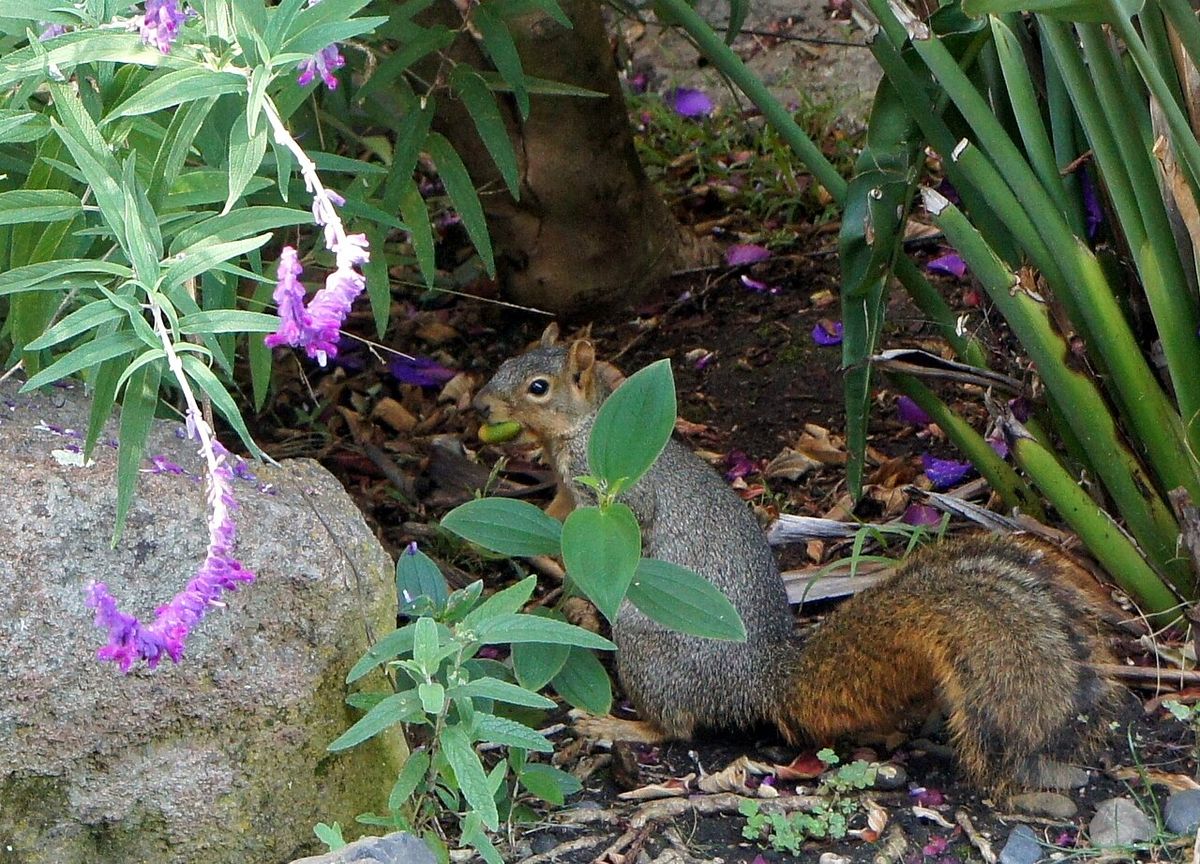
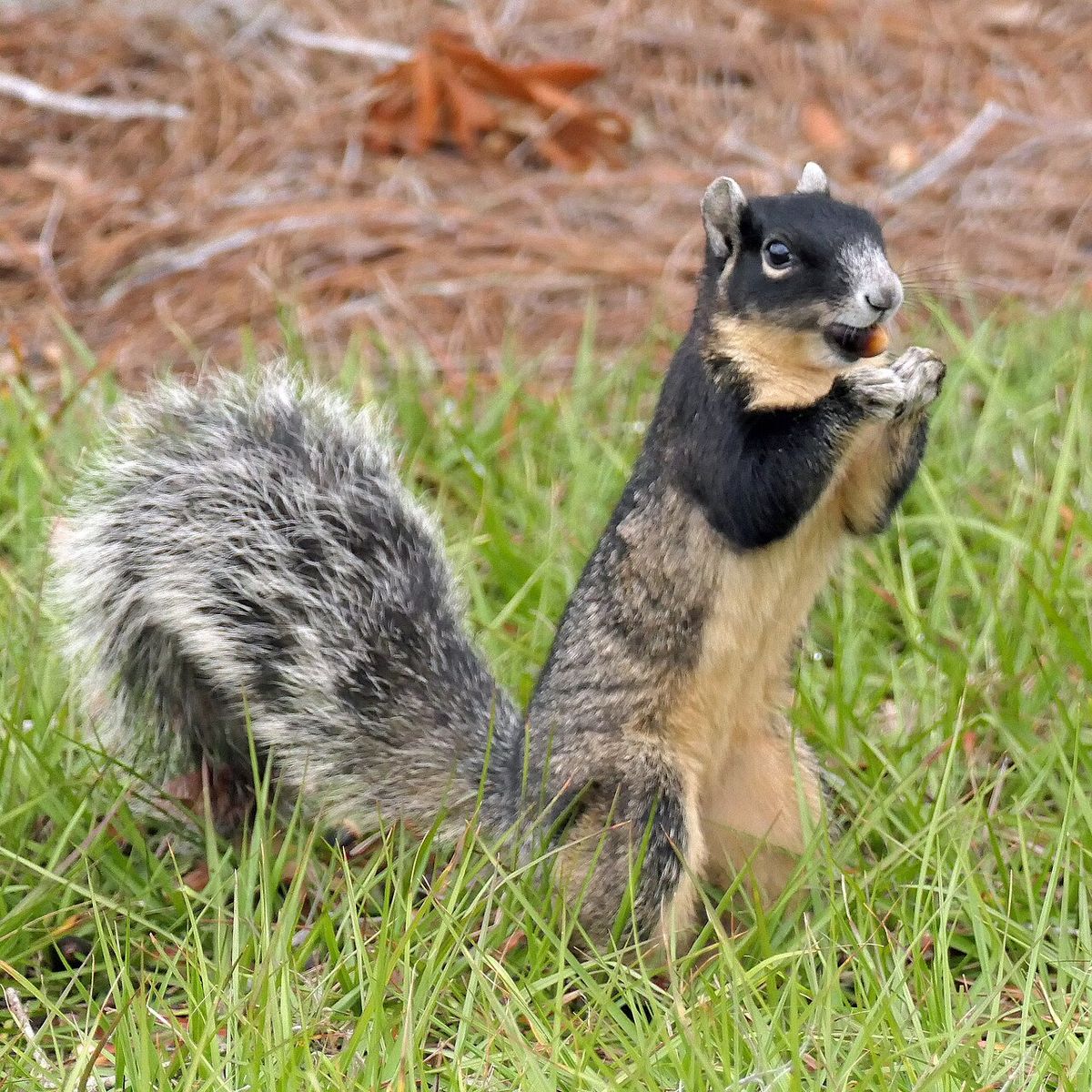
The fox squirrel is distinguished by its substantial size, being the largest tree squirrel native to the continent. Its total length, including its characteristically long and bushy tail, ranges from 20 to 30 inches (50.8 to 76.2 centimetres), with the tail itself often nearly matching the body length of 10 to 15 inches. Adults typically weigh between one and two and a half pounds, with individuals in western populations tending to be smaller. There is no noticeable difference in size or appearance between males and females. Colouration varies significantly across three main geographical morphs. The most common morph, found through much of its range, features a brown-grey to brown-yellow back with a brownish-orange underside. In eastern regions like the Appalachians, a striking pattern of dark brown or black fur with white bands on the face and tail occurs. Uniform black coats are prevalent in southern populations and in areas along the Missouri River in Nebraska and Iowa. Adaptations for arboreal life include sharp, recurved claws and well-developed forearm and abdominal muscles for climbing. Their excellent vision, hearing, and smell are complemented by vibrissae, or whiskers, on their face and forearms that act as touch receptors. The dental formula for the species is 1.0.1.3 over 1.0.1.3, totalling 20 teeth, which are essential for processing their hard-shelled diet.
Distribution, Habitat, and Introduction
The fox squirrel's native range covers most of the eastern and central United States, extending south into northern Mexico and north into the southern prairie provinces of Canada. It is absent from New England, most of New York, northern Pennsylvania, Ontario, Quebec, and the Atlantic provinces. The species is highly versatile but shows a strong preference for open forest stands with little understory vegetation, such as small woodlots of 40 hectares or less interspersed with farmland. Ideal habitats feature mature oak, hickory, walnut, pecan, and pine trees, which provide critical food and shelter, with optimal tree canopy closure between 20% and 60%. Fox squirrels use two types of shelters: leaf nests, called dreys, built high in deciduous trees about 30 feet above ground, and tree dens, which are natural cavities or old woodpecker holes often in trees with a diameter at breast height of 12 inches or more. Den openings are generally circular and about 2.9 to 3.7 inches wide, with the cavities themselves being 6 inches wide and 14 to 16 inches deep. They are highly tolerant of human activity and thrive in urban and suburban settings, readily nesting in attics and exploiting backyard food sources. Deliberate introductions have significantly expanded their range. They were introduced to several western U.S. states, including California, Oregon, Washington, Idaho, Montana, New Mexico, and Utah, beginning in the early 1900s with specific releases in Fresno, California in 1900 and West Los Angeles in 1904. In Canada, beyond its native prairie presence, the fox squirrel has been introduced to Ontario and British Columbia. A notable recent establishment is in northern Utah, where populations were first reported along the Jordan River in Salt Lake City in 2011 and are now being tracked by citizen science surveys. In Europe, the fox squirrel is listed as an Invasive Alien Species of Union concern since 2016, prohibiting its import, breeding, transport, commercialization, or intentional release into the environment.
Behaviour and Social Structure
Fox squirrels are strictly diurnal and spend considerable time foraging on the ground, though they remain agile climbers and impressive jumpers capable of horizontal leaps of 15 feet and controlled free-falls of 20 feet or more. They are generally solitary and asocial outside of the breeding season, described as non-territorial but with males maintaining larger home ranges than females. Communication involves a large vocabulary of sounds including an assortment of clucking and chucking sounds, barks, distress screams, and high-pitched whines during mating. Visual threats involve standing upright with the tail over the back and flicking it, while scent-marking is another key form of intraspecific communication. During the breeding season, they become more gregarious, with mating chases involving one female and several competing males. Males form dominance hierarchies to determine mating privilege and will guard a female in estrus to prevent other males from mating with her, though females are serially polygynous and may mate with multiple males. Cohabitation in tree dens is not uncommon, particularly among breeding pairs. Fox squirrels construct different types of dreys for different seasons, with summer dreys often being simple platforms of sticks and winter dens being more substantial, hollowed-out tree trunks that may be used by a succession of occupants over 30 years.
Diet and Foraging Ecology
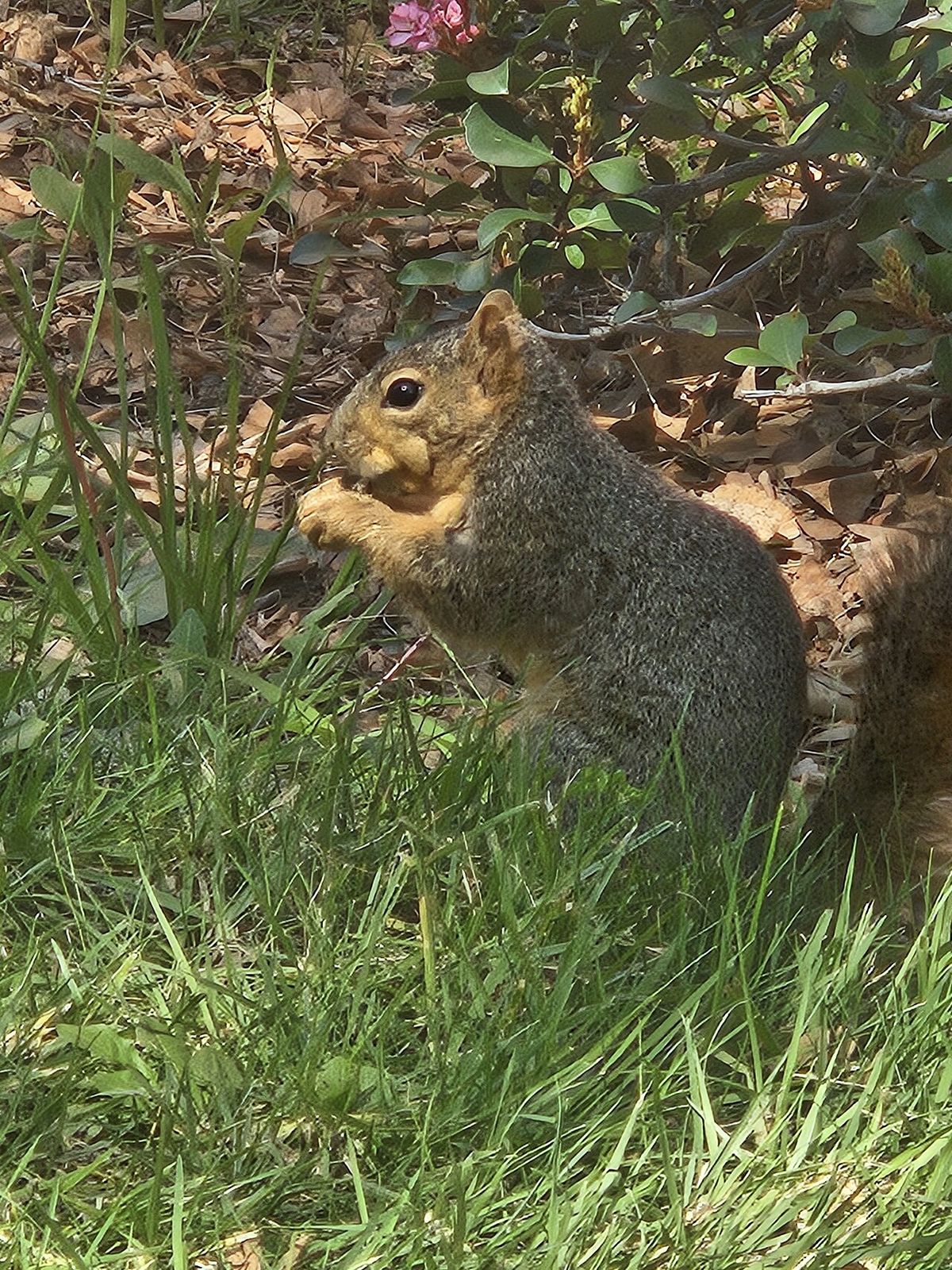
Food habits of fox squirrels depend largely on geographic location and season, making them opportunistic omnivores. In general, fox squirrel foods include mast, tree buds, insects, tubers, bulbs, roots, bird eggs, pine nuts, spring-fruiting trees, and fungi. Agricultural crops such as corn, soybeans, oats, wheat, and fruit are also eaten. They exhibit strong regional preferences and caching behaviour for shelled, high-fat foods. Key food items and seasonal patterns across their range include hickories and pecans in Illinois from late summer, a clear preference for white oak acorns over other acorns in Ohio, and a winter staple of osage orange in Kansas. In eastern Texas they prefer bluejack oak acorns, while in California they eat introduced foods like English walnuts and avocados. Fox squirrels cache food by burying items in a scattered fashion, a behaviour known as scatter-hoarding, which is crucial for winter survival. They favour shelled foods like acorns and nuts because they are less likely to spoil, and they open them using a levering technique with their lower incisors. This caching plays a significant role in seed dispersal and forest regeneration, as uneaten seeds may sprout.
In Illinois, fox squirrels rely heavily on hickories from late August through September. Pecans, black walnuts, osage orange fruits, and corn are also important fall foods. In early spring, elm buds and seeds are the most important food. In May and June, mulberries are heavily used. By early summer, corn in the milk stage becomes a primary food. During the winter in Kansas, osage orange is a staple item supplemented with seeds of the Kentucky coffee tree and honey locust, corn, wheat, eastern cottonwood bark, ash seeds, and eastern red cedar berries.
- In Illinois, heavy reliance on hickories from late August through September, plus pecans, black walnuts, osage orange fruits, and corn, with elm buds and seeds critical in early spring and mulberries in May and June.
- In Ohio, a preference order of white oak acorns, then black oak acorns, red oak acorns, walnuts, and corn, with additional foods like buckeyes, maple and elm seeds, hazelnuts, blackberries, and tree bark.
- During Kansas winters, a staple of osage orange supplemented with Kentucky coffee tree seeds, honey locust seeds, corn, wheat, cottonwood bark, ash seeds, and eastern red cedar berries.
- In eastern Texas, a preference for acorns of bluejack oak, pecans, southern red oak, and overcup oak, while avoiding swamp chestnut oak acorns.
- In California introduced populations, feeding on English walnuts, oranges, avocados, strawberries, tomatoes, and eucalyptus seeds in midwinter.
- In Michigan, a full seasonal progression from maple and elm seeds in spring, to berries and unripe corn in summer, to a variety of nuts in autumn, relying on caches in winter.
Reproduction and Life Cycle
Fox squirrels typically have two breeding peaks per year, with females coming into estrus in mid-December or early January and again in June. Females can become sexually mature as early as 8 to 11 months, though many produce their first litter at around one year of age, and their reproductive longevity may exceed 12 years. During estrus, multiple males will aggregate in the female's home range and compete for mating privileges, forming dominance hierarchies. A female may mate with several males, but copulation lasts less than thirty seconds and is often followed by the formation of a copulatory plug. Gestation lasts 44 to 45 days, resulting in litters that average three young but can range from one to seven, with the earliest litters appearing in late January and most births in mid-March and July. The blind, hairless young, weighing only 13 to 18 grams at birth, are born in a tree den or a well-constructed leaf nest. Tree cavities, often those created by northern flickers or red-headed woodpeckers, are remodelled into winter dens and frequently serve as nurseries. Their eyes open at four to five weeks, their ears open at six weeks, and they are weaned between 8 and 14 weeks old, though they may not be fully self-supporting until 16 weeks. Juveniles usually disperse from their mother's range in September or October of their first year, with males typically dispersing farther than females, which may increase male mortality. Fox squirrels can live over 12 years in the wild, with a maximum recorded lifespan of about 18 years in captivity, though most die before reaching adulthood. Females have a longer life expectancy in the wild, averaging 12.6 years compared to 8.6 years for males, according to studies.
Predators, Disease, and Mortality
Adult fox squirrels face relatively few regular predators due to their size, agility, and arboreal nature, with most predation being opportunistic. Documented predators include bobcats, Canada lynx, red foxes, gray foxes, coyotes, red-tailed hawks, red-shouldered hawks, great horned owls, barred owls, and historically, cougars and wolves within their native range. Nestlings and young squirrels are far more vulnerable to climbing predators such as raccoons, opossums, rat snakes, and pine snakes. In Florida, invasive constrictor snakes like Burmese pythons, reticulated pythons, and various anaconda species may also prey on fox squirrels. Beyond predation, major causes of mortality include severe winter weather and infestations of mange mites (Cnemidoptes spp.). Fox squirrels can carry diseases such as West Nile Virus, and they have been used as surveillance species to track the transmission of the virus to mammals, as demonstrated in a Wisconsin case study. In many states and provinces where they are not protected, fox squirrels are considered a game animal and are still hunted, having been an important meat source for European settlers in the 17th and 18th centuries. Some subspecies, like the Delmarva Peninsula fox squirrel (S. n. cinereus) and the southern fox squirrel (S. n. niger), have faced endangerment due to overhunting and habitat destruction from the loss of mature forests. However, the species as a whole is currently listed as G5, or Secure, by NatureServe as of September 2026. Their adaptability to human-altered landscapes has allowed many populations to remain stable or even expand into new urban areas.
The Fox Squirrel in Canada and Citizen Science
Within Canada, the fox squirrel has both a native and an introduced presence. Its native range extends into the southern portions of the prairie provinces, including areas of Manitoba, Saskatchewan, and Alberta. It has also been intentionally introduced to urban areas in Ontario and British Columbia, though specific release dates in Canada are less documented than in the western United States. A contemporary case study of its expansion is occurring in Utah, which shares ecological parallels with introduced populations in western Canada and demonstrates the value of public monitoring. Since their first reported sighting along the Jordan River in Salt Lake City in 2011, fox squirrels have been spreading throughout northern Utah. This introduction offers scientists a chance to study the ecology of an establishing non-native species, including its interactions with native wildlife and its use of urban corridors like power lines. The Natural History Museum of Utah (NHMU) launched a citizen science project to track this spread, inviting the public to report sightings through an online survey accessible via web browser or a mobile app. The project, which had recorded its 10,000th animal admission for 2026 by October 15 of that year, helps map the squirrel's distribution and understand its interaction with the environment and native species, such as the smaller red squirrel and the ground-dwelling rock squirrel. Key identification tips promoted by the project highlight the fox squirrel's large size (18 to 28 inches total length), grizzled grey and orange back, bright orange bushy tail, and its tendency to escape by climbing. This model of public engagement demonstrates how community observations can contribute valuable data for wildlife management and ecological study, an approach applicable to monitoring introduced populations in Canadian provinces as well, particularly where the species is not native.
Comparative Table of Squirrel Species in Northern Utah (Introduced Range Context)
The arrival of fox squirrels in regions like northern Utah creates a new dynamic with existing native squirrel species. The following table compares key characteristics of the introduced fox squirrel with two common native squirrels in the area, based on identification guides from the NHMU citizen science project. This comparison aids in accurate species reporting and understanding ecological niches, which is vital for assessing the impact of introduced species. The table illustrates the fox squirrel's distinct size and colouration, which help differentiate it from native species. Its arboreal nature and escape-by-climbing behaviour directly contrast with the more terrestrial rock squirrel, which runs to burrows, while its larger size and bushier tail set it apart from the red squirrel. Understanding these differences is crucial for tracking the fox squirrel's impact and range in introduced environments and for public participation in citizen science surveys.
| Species | Total Length | Colouration | Tail Description | Primary Habitat & Escape Behaviour |
|---|---|---|---|---|
| Fox Squirrel (Sciurus niger) | 18 to 28 in | Grizzled grey-and-orange back. Pale yellow to orange underside | Very bushy, bright orange, almost as long as body | Trees, power lines. Escapes by climbing |
| Red Squirrel (Tamiasciurus hudsonicus) | 12 to 16 in | Dark reddish-brown back. Pale creamy underside | Less bushy than fox squirrel | Conifer forests, telephone lines. Climbs |
| Rock Squirrel (Otospermophilus variegatus) | 17 to 21 in | Grizzled gray back with yellow/brown highlights. Pale underside | Bushy | Ground-dwelling, rocky areas. Retreats to burrows or rock piles |
Conservation Status and Human Interactions
The overall conservation status of the fox squirrel is secure, but its story is one of localized threats and broad adaptability. The species is rated G5, or Secure, by NatureServe as of 2026, indicating it is common, widespread, and not currently at risk of extinction. This status, however, masks the pressures on specific subspecies and populations, particularly those reliant on mature forest habitats that have been fragmented or destroyed. The Delmarva Peninsula fox squirrel, for instance, has been endangered. The primary historical threats were overhunting and the large-scale clearing of mature forests for agriculture, which reduced both food sources and critical den trees with cavities. Modern threats include vehicle collisions in suburban areas, severe weather events, and disease. Fox squirrels have a complex relationship with humans. They are tolerant of proximity and exploit human habitations for food and nesting, often being considered a charming part of the suburban landscape. However, they can also be viewed as pests when they raid bird feeders, nest in attics, or damage gardens. In many jurisdictions throughout their range, they are legally hunted as game animals. Their introduction to new areas, whether intentional or through illegal releases as suspected in Washington's Orcas Island and Wahkiakum County, requires careful monitoring to understand potential impacts on native ecosystems. The species' success in human-dominated environments is a sign of its resilience, but continued habitat conservation in its native range remains important for maintaining genetic diversity and healthy populations of all its colour morphs.
Questions about Fox squirrel
Are there fox squirrels in Canada?
Yes, fox squirrels are found in Canada in two contexts. They are native to the southern prairie provinces, including parts of Manitoba, Saskatchewan, and Alberta. They have also been intentionally introduced to urban and suburban areas in Ontario and British Columbia. Their adaptability allows them to thrive in parks and neighbourhoods with mature trees, where they use both natural tree cavities and human structures like attics for shelter.
What is the difference between a fox squirrel and a grey squirrel?
The eastern fox squirrel is significantly larger than the eastern grey squirrel, with fox squirrels weighing 1 to 2.5 pounds compared to the smaller grey squirrel. Fox squirrels often have a more grizzled, orange-tinged grey fur with a rust-coloured or pale yellow underside, whereas eastern grey squirrels are more uniformly grey with a white underside. Some fox squirrel populations in the southeastern United States are entirely black, which can cause confusion, but size remains a key differentiator. The fox squirrel also spends more time foraging on the ground than many other tree squirrels.
What do fox squirrels eat?
Fox squirrels are omnivorous with a diet that shifts seasonally and regionally. Their primary foods are mast, including acorns from various oaks, hickory nuts, walnuts, and pecans. They also eat tree buds, seeds, fungi, insects, bird eggs, and agricultural crops like corn, soybeans, and fruit. They are known to cache nuts in the fall by burying them in a scattered fashion to eat during the winter months when other food is scarce, showing a preference for shelled, high-fat items.
How can I identify a fox squirrel?
Look for a very large tree squirrel with a total length often exceeding 20 inches, sometimes up to 30 inches. It typically has a grizzled grey and orange back and a pale yellow to bright orange belly. Its most distinctive feature is its long, very bushy, fox-like tail, which is often bright orange and almost as long as its body. In some regions, like the southeastern U.S. and parts of Nebraska, they may be entirely black. They are commonly seen foraging on the ground in open woodlands, parks, and suburban yards and will escape danger by climbing trees or power lines.
How long do fox squirrels live?
In captivity, fox squirrels have been known to live about 18 years. In the wild, most fox squirrels die before they become adults, with a maximum life expectancy of 12.6 years for females and 8.6 years for males. Under natural conditions, the average lifespan ranges from 8 to 18 years. Their relatively long potential lifespan is contrasted by high mortality in the wild due to factors like overhunting, habitat destruction, and disease. Major causes of population decline include mange mites and severe winter weather. Relatively few natural predators regularly capture adults, but nestlings and young are vulnerable to climbing predators like raccoons and snakes.
Why are fox squirrels considered invasive in some places?
Fox squirrels are considered invasive because in Europe, Sciurus niger has been included since 2016 in the list of Invasive Alien Species of Union concern. This legal designation means the species cannot be imported, bred, transported, commercialized, or intentionally released into the environment anywhere in the European Union. This status is assigned to non native species that pose a threat to biodiversity. The fox squirrel's natural range is in North America, but it has been introduced to other regions. Their tolerance of human proximity allows them to thrive in urban areas, where they exploit human habitations for food and nesting sites, potentially displacing native species.
Sources and further reading
- Fox squirrel (Wikipedia)
- Sciurus niger (eastern fox squirrel) | INFORMATION (animaldiversity.org)
- Utah Fox Squirrels (nhmu.utah.edu)
Checked by the Your Space Hamilton desk. Last updated 2026-10-28.