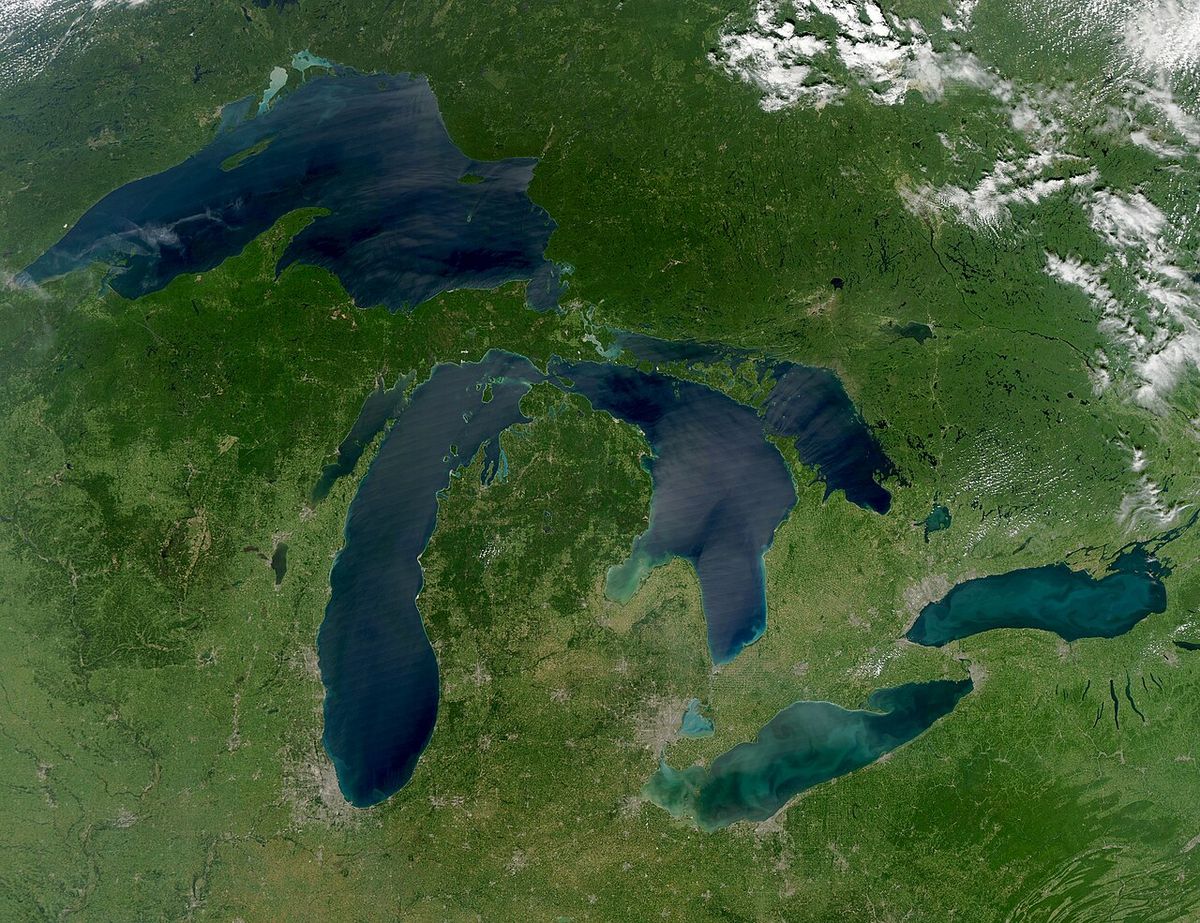
Common loon
The common loon (Gavia immer) is a large, widely recognized diving bird native to North America, known for its striking black-and-white breeding plumage, haunting calls, and exceptional aquatic abilities. As a powerful underwater predator, it breeds on freshwater lakes across Canada and the northern United States before migrating to coastal wintering grounds. The loon holds significant cultural meaning in Canada, serving as the provincial bird of Ontario and the emblematic image on the one-dollar "loonie" coin. Its presence on northern lakes is a cherished symbol of wilderness, though populations face pressures from habitat disturbance, pollution, and lead poisoning from fishing tackle.
Taxonomy and Naming
The common loon is a member of the genus Gavia, which comprises all five living loon species, and is classified within the family Gaviidae and order Gaviiformes. Its closest relative is the yellow-billed loon (Gavia adamsii), another large black-headed species. There are no recognized subspecies of the common loon. The species was first formally described by Danish zoologist Morten Thrane Brünnich in 1764 under the name Colymbus immer. The genus name was later standardized to Gavia, a Latin term for an unidentified seabird, while the specific name immer is derived from a Norwegian name for the bird. In Europe, the bird is commonly known as the great northern diver, a name referencing its diving prowess. The North American name "loon" likely originates from the Old Norse word lómr, which refers to the bird's distinctive and mournful calls. This call has also influenced related Scandinavian names like the Swedish and Norwegian lom.
Physical Description
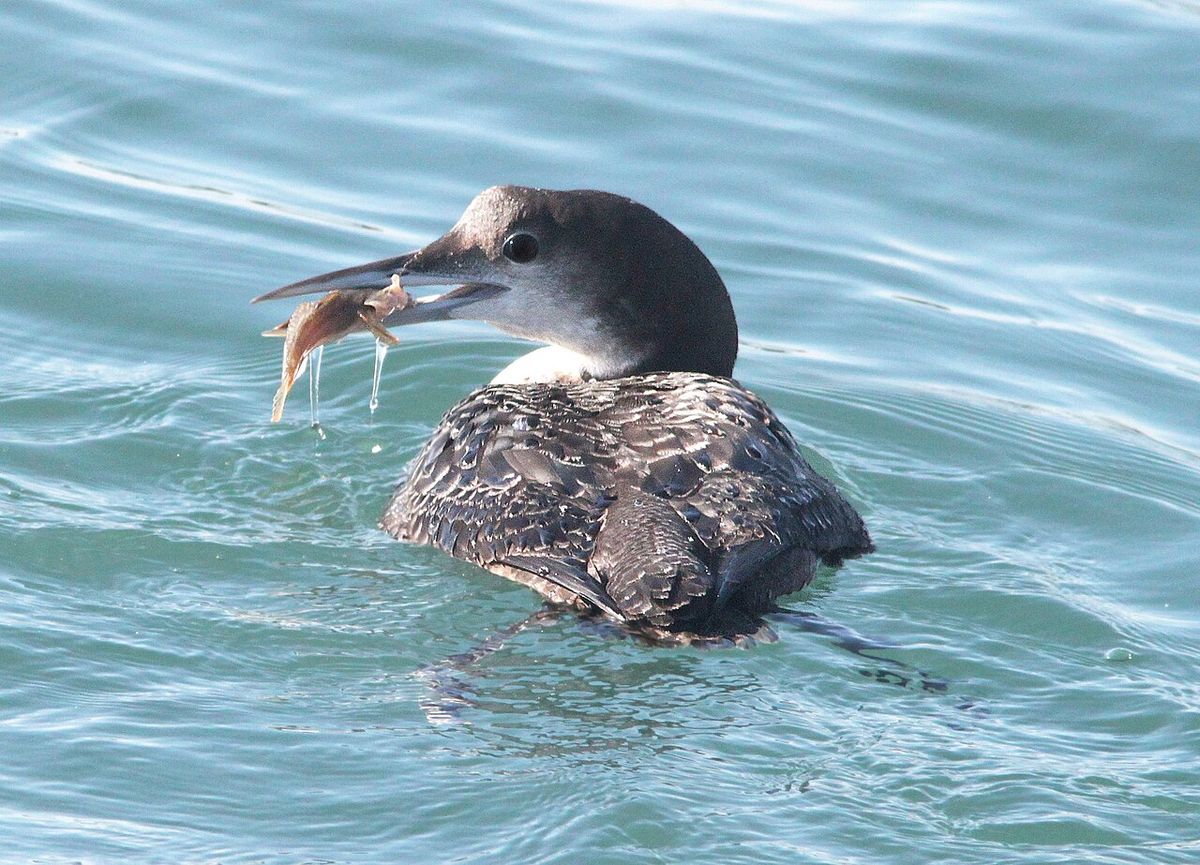
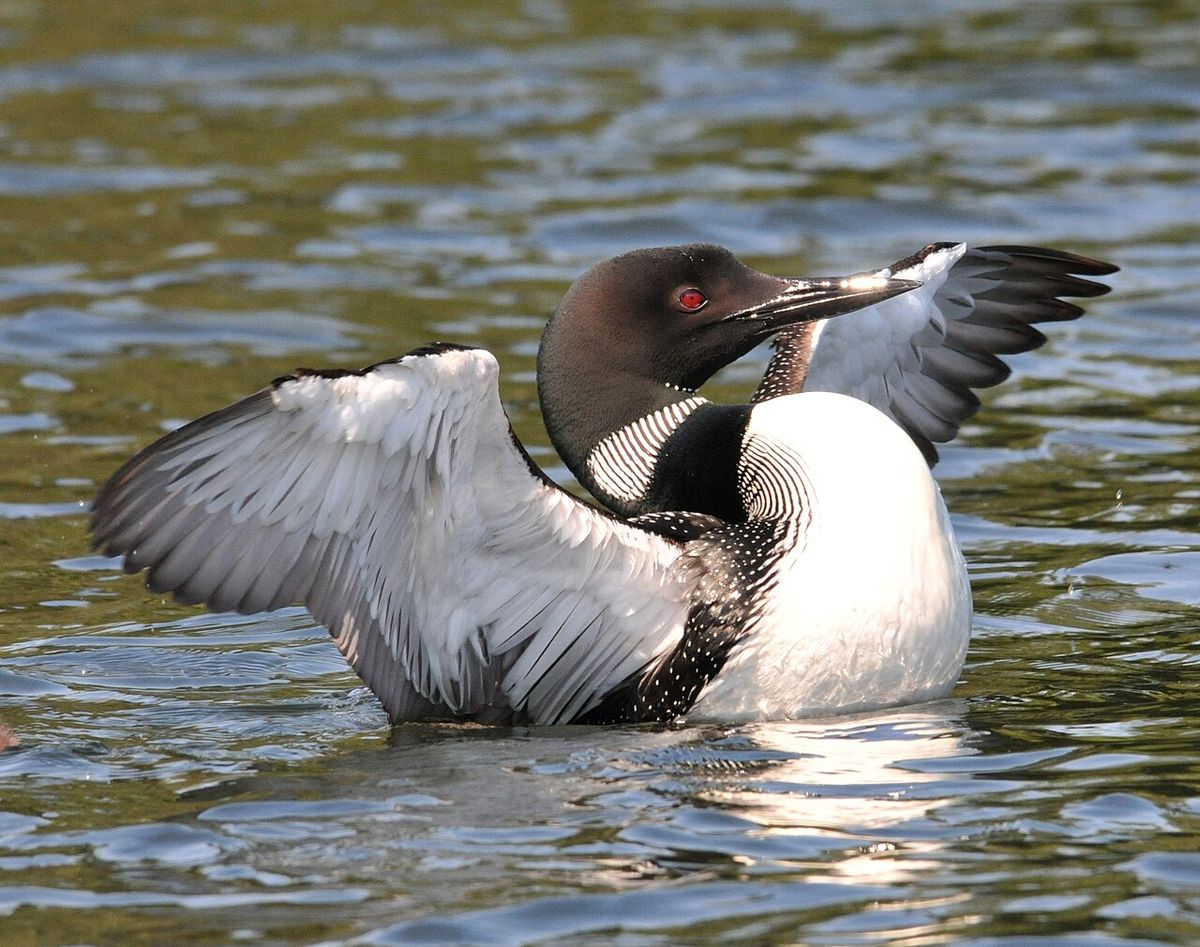
The common loon is a substantial waterbird with a body built for diving, characterized by a heavy, dagger-like bill, a short thick neck, and legs positioned far back on its body. This anatomy makes the loon an agile swimmer but renders it clumsy on land, where it often slides on its belly. Adults exhibit dramatic seasonal plumage changes. During the breeding season, they sport a broad black head and neck with a greenish or purplish sheen, a blackish-grey back checkered with white spots, and crisp white underparts. A distinctive black ring and white "necklaces" adorn the neck. In non-breeding plumage, adults become predominantly brownish-grey above and white below, with a dark grey-brown head and a pale grey bill. The sexes are identical in colouration, but males are significantly larger and heavier than females, sometimes by up to 27 percent. Regional size variations exist, with loons in eastern Canada often being larger than those in central regions or the Great Lakes. Juveniles resemble non-breeding adults but have a darker, more scaled appearance on the back and nape.
The loon undergoes a complete moult of its flight feathers annually, typically in late winter, leaving it temporarily flightless. A full adult breeding plumage is not attained until a loon is about three years old. The bird's skeletal structure includes many solid bones, unlike the hollow bones of most flying birds, which adds weight beneficial for diving but requires a long runway across water to become airborne. Its flying speed can reach up to 120 kilometres per hour during migration, with its neck outstretched and feet trailing behind.
Distribution and Habitat
The common loon's breeding range spans the Nearctic region, encompassing most of Canada, Alaska, the northern contiguous United States, and southern parts of Greenland and Iceland. Small populations also breed in Svalbard and sporadically in Arctic Eurasia. For nesting, loons favour clear, freshwater lakes that are large enough for a flight take-off run and that support healthy fish populations. They show a strong preference for lakes with islands, coves, and marshy shorelines that offer protection from predators and suitable nest sites. Loons exhibit high breeding site fidelity, with individuals and pairs often returning to the same lake year after year. In winter, they migrate to coastal marine environments, though some may winter on large inland reservoirs that remain ice-free. Migration typically occurs during the day at high altitudes, between 1,500 and 2,700 metres above sea level.
North American populations winter along both the Pacific and Atlantic coasts. They range as far north as Alaska and Newfoundland and as far south as Baja California, Sonora, and the Gulf of Mexico. Several thousand also winter along the Atlantic coasts of Europe, from Finland and Scandinavia to Portugal and the Iberian Peninsula. Wintering site fidelity is observed, with adults frequently returning to specific locations such as Morro Bay in the Pacific Ocean or Barataria Bay in the Gulf of Mexico. They also return to wintering sites on the Atlantic Ocean in places like Maryland and Massachusetts.
Behaviour and Ecology
The common loon is a consummate aquatic predator, spending most of its life on water. It is an expert diver, using its large webbed feet to propel itself in pursuit of prey at depths commonly between 4 and 10 metres, though dives exceeding 60 metres have been recorded. An average dive lasts about 42 seconds. The loon's diet is predominantly piscivorous, with fish making up roughly 80 percent of its intake. It is a visual hunter, requiring clear water to spot prey, which it usually swallows underwater head-first. When fish are scarce, it will also consume crustaceans, insect larvae, molluscs, and occasionally aquatic vegetation. Loons are serially monogamous, forming pair bonds that typically last for a breeding season and often reunite in consecutive years, though they do not mate for life. Pairs vigorously defend a breeding territory on a lake, which they will attack intruders, including other waterfowl, to protect. Outside the breeding season, non-breeding "floater" loons sometimes form social gatherings on lakes or coastal waters, which are thought to relate to territory assessment and social dynamics rather than foraging.
Loons are known for their complex vocalizations, which are a defining sound of northern lakes. The common loon flies with its neck outstretched, usually calling a particular tremolo that can be used to identify a flying loon. Its flying speed is as much as 120 kilometres per hour during migration. The common loon must run across the water surface to gain momentum for flight take off. This need is due in part to its skeletal structure, which is made up of a number of solid bones unlike most flying birds.
- Primary Prey: Fish such as perch, pike, trout, bass, herring, and flounder.
- Hunting Depth: Typically 4-10 m, with a maximum recorded depth of 70 m.
- Dive Duration: Average of 42 seconds, maximum around 60 seconds.
- Flight Speed: Up to 120 km/h during migration.
- Pair Bonding: Serially monogamous, with pairs often reuniting annually.
- Key Vocalizations: Tremolo (alarm/flight), yodel (male territorial defence), wail (long-distance contact).
Breeding and Life Cycle
Common loons do not begin breeding until at least six years of age. Nesting usually commences in late spring, with pairs building a large mound nest from dead marsh grasses and other vegetation at the water's edge, often on an island or a sheltered, vegetated shore. The female typically lays a clutch of one or two olive-brown, dark-spotted eggs. Both parents share incubation duties for about 28 days. Chicks leave the nest within a day of hatching and are capable of diving within their first few days, though they often ride on a parent's back for warmth and protection during their initial weeks. They are fed small fish and insects by both parents and fledge, or become capable of flight, at 11 to 12 weeks of age. Shortly after, they migrate independently to wintering areas before ice forms on their natal lakes. Successful breeding pairs often maintain a bond and return to the same territory in subsequent years. However, territorial disputes are common, and older loons may be evicted by younger rivals, leading to new pair formations. The lifespan of a common loon is estimated to be around 30 years, with the oldest known individual in Washington state recorded at 25 years.
| Stage | Timeline | Key Details |
|---|---|---|
| Egg Laying | Mid-May to mid-June | Clutch of 1-2 eggs |
| Incubation | 25-32 days | Shared by both parents |
| Chick Rearing | 0-3 weeks | Chicks may ride on parents' backs |
| Fledging | 11-12 weeks | Chicks become capable of flight |
| Migration | Late fall | Before ice forms on lakes |
| First Breeding | ≥ 6 years old | Attain sexual maturity |
Conservation Status and Threats
The common loon is classified as a species of Least Concern on the IUCN Red List, and its populations are generally stable. It is protected under international agreements like the Agreement on the Conservation of African-Eurasian Migratory Waterbirds. However, the species faces several significant threats, particularly in parts of its range. In the United States, the Forest Service has designated it a species of special status due to habitat loss and pollution. The leading cause of documented adult mortality in some regions, such as New Hampshire, is lead poisoning from ingested fishing tackle like sinkers and jigs. Loons are also apex predators susceptible to bioaccumulation of mercury and other toxins, which can impair reproduction and health. Increased shoreline development and recreational pressure on nesting lakes can disturb breeding pairs and degrade habitat. Predation, primarily by bald eagles on eggs and chicks, has become a more notable cause of chick mortality as eagle populations have recovered. Conservation efforts across North America include public education on lead tackle alternatives, monitoring programs, nest protection initiatives, and the preservation of critical lake habitats.
Cultural Significance
The common loon holds an esteemed place in Canadian culture and identity. The bird has also appeared on previous series of Canadian twenty-dollar bills. Its evocative calls are synonymous with the wilderness experience of Canada's northern lakes. In the United States, the common loon is the state bird of Minnesota, where it appears on the state quarter and the state seal. The loon's image and call are frequently used in art, literature, and media to evoke themes of solitude, wilderness, and the natural beauty of the northern landscapes. Its ecological role as a top predator and indicator of aquatic health further highlights its importance as a symbol of environmental stewardship.
Questions about Common loon
What does the common loon eat?
The common loon's diet is primarily composed of fish, which accounts for about 80 percent of its intake. It hunts species like perch, pike, trout, bass, herring, and flounder, depending on whether it is in freshwater or saltwater habitats. When fish are less abundant, it will also consume crustaceans, crayfish, insect larvae, molluscs, and occasionally aquatic plants. Loons swallow most prey underwater after catching it in a swift dive.
Where do loons go in the winter?
Common loons migrate from their northern breeding lakes to coastal wintering grounds. In North America, they winter along both the Pacific and Atlantic coasts, from Alaska and Newfoundland south to Mexico. Some also winter on large inland lakes and reservoirs that do not freeze over. Several thousand loons from Icelandic and Greenlandic populations winter along the Atlantic coasts of Europe, from Scandinavia to Portugal.
What are the main threats to common loons?
The primary threats include lead poisoning from ingested fishing tackle, which is a leading cause of adult mortality in some areas. They are also vulnerable to mercury and other toxic pollutants that accumulate in their prey. Habitat disturbance from shoreline development and recreational activities can disrupt nesting. Increased predation by bald eagles on eggs and chicks is also a growing concern in certain regions.
Do loons mate for life?
Common loons are serially monogamous, not strictly mating for life. A male and female remain together throughout a breeding attempt and may reunite and breed together for many consecutive years, sometimes for a decade or more. However, if one member of the pair dies or is evicted from the territory by an intruding loon, the remaining bird quickly forms a new pair bond with the evicting individual. This means most adult loons have two or more different mates during their lifetimes. Pairs do not remain together during the winter months.
Why can't loons walk on land?
Loons cannot walk well on land because their legs are positioned at the rear of their bodies, an adaptation ideal for powerful swimming and diving. Their well developed pelvic muscles are excellent for propulsion in water but are not well suited for supporting their body weight on land. This makes them ungainly on solid ground, where they must slide on their belly and push themselves forward with their legs. They only come ashore to nest and require a long run up across water to gain enough momentum for flight takeoff.
Why is the loon a symbol of Canada?
The common loon is a prominent symbol of Canada due to its official status and cultural representation. It is designated as the provincial bird of Ontario. Its most widespread national symbol is its image on the Canadian one dollar coin, commonly known as the 'loonie'. The bird also appeared on a previous series of twenty dollar bills. Its presence on lakes across Canada and its evocative calls associate it strongly with the country's northern wilderness, cementing its role as a beloved national emblem.
Sources and further reading
- Common loon (Wikipedia)
- About Loons (loon.org)
- Common loon | Washington Department of Fish & Wildlife (wdfw.wa.gov)
Checked by the Your Space Hamilton desk. Last updated 2026-10-25.