Black-footed ferret
The black-footed ferret (Mustela nigripes) is a slender, nocturnal mustelid native to the grasslands of central North America and the only ferret species indigenous to the Americas. It is an endangered predator whose survival is inextricably linked to prairie dogs, which constitute up to 90 percent of its diet. Once declared extinct, the species was famously rediscovered in Wyoming in 1981, leading to an intensive international captive-breeding and reintroduction program. This conservation story holds particular significance for Canadians, as the ferret's historical range extended into southern Alberta and Saskatchewan, and reintroduction efforts have been undertaken in Saskatchewan's Grasslands National Park.
Physical Description and Characteristics
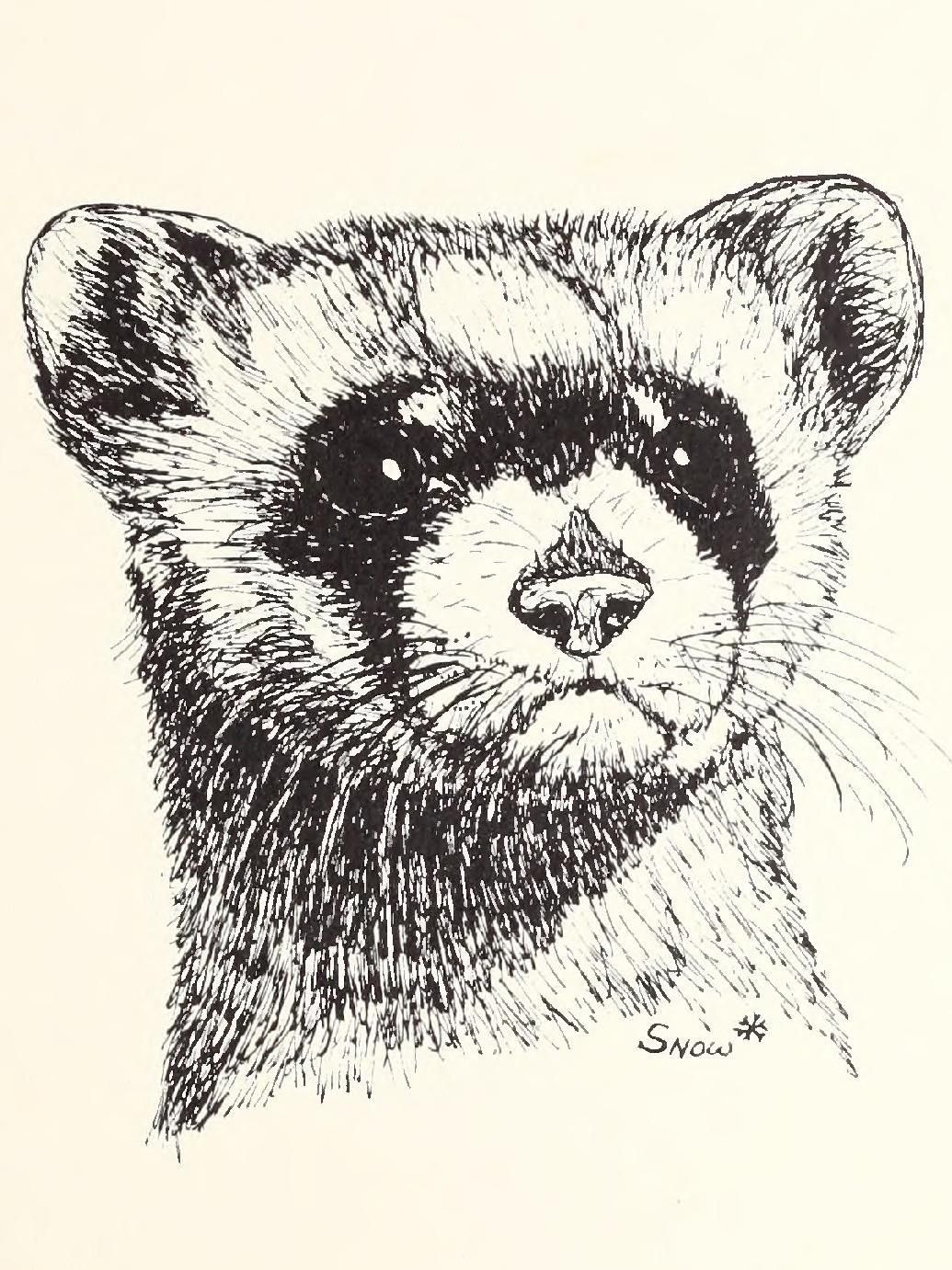
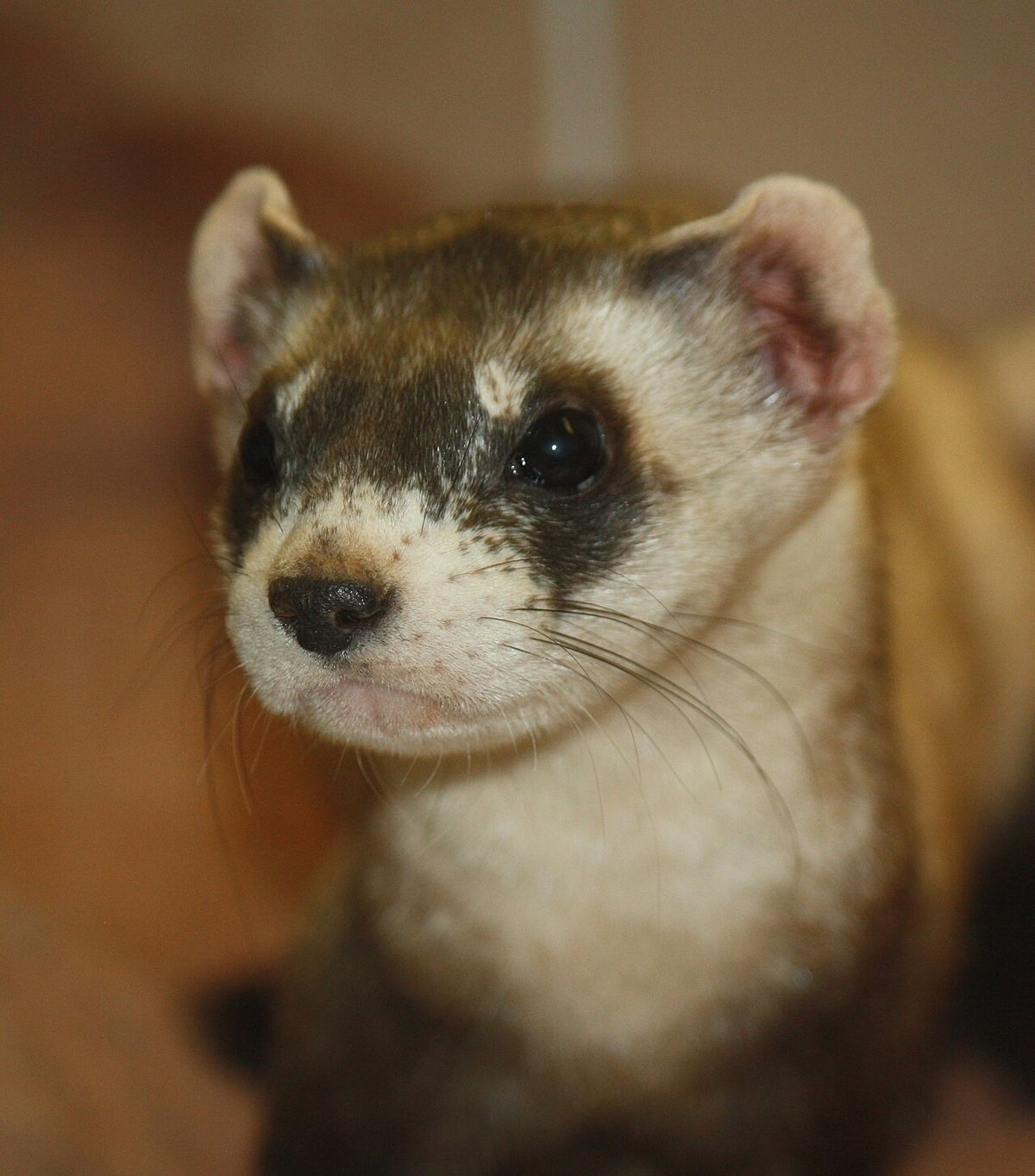
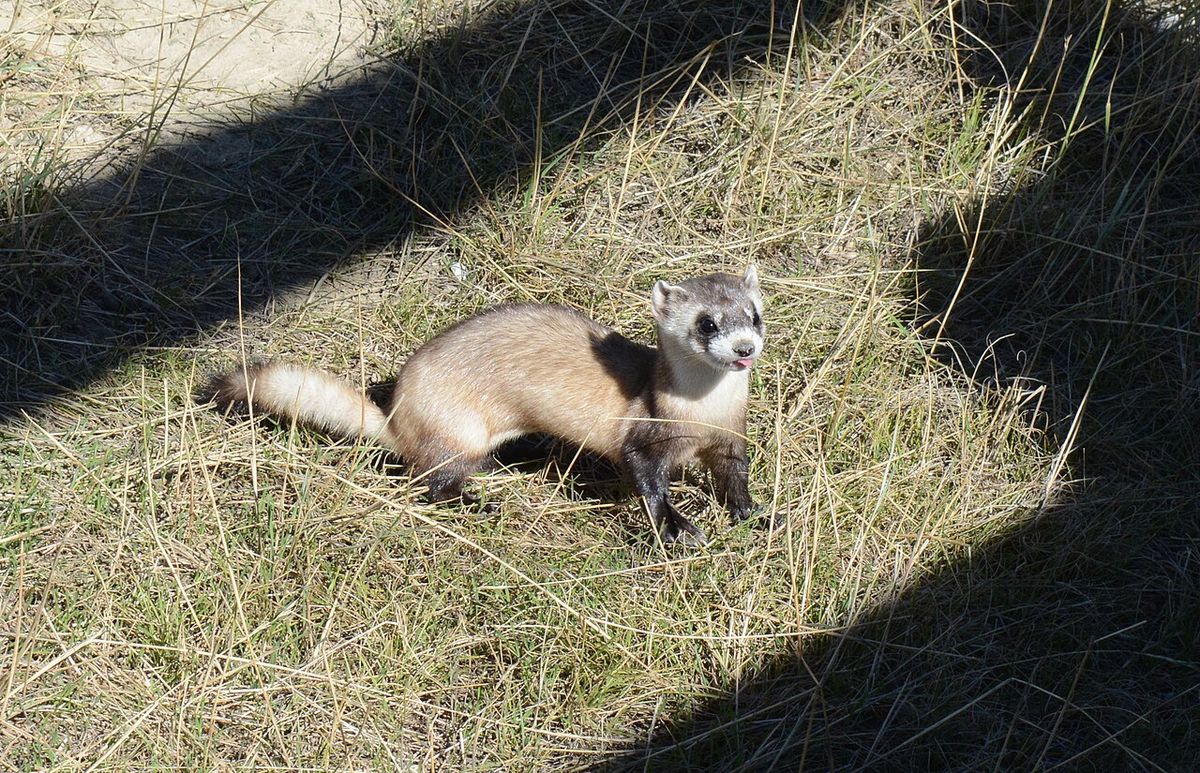
The black-footed ferret possesses a distinctive, elongated body well-suited for moving through the burrows of its prey. Its fur is primarily a pale yellowish-buff colour, lighter on the belly and nearly white on the forehead, muzzle, and throat. The species is named for its characteristic dark markings: a black facial mask, black feet, black legs, and a black-tipped tail. Adults typically measure between 38 and 50 centimetres in head-and-body length, with an additional 11 to 15 centimetres of tail. Males are generally larger, weighing between 950 and 1,100 grams, while females weigh between 750 and 900 grams. The animal's large, rounded ears and eyes suggest acute hearing and sight, but its sense of smell is likely most critical for hunting in dark burrows. Its body is muscular and tubular, with a circumference roughly equal at the neck and hips, and it is equipped with large front paws and sharp claws adapted for digging.
Physically, the black-footed ferret combines features of both weasels and polecats, its close relatives. Its skull is massive like a polecat's but its body conformation, with a long neck, very short legs, and sleek fur, is more akin to a weasel. Captive-bred individuals used in reintroduction programs were initially found to be smaller than their historical wild counterparts, though they rapidly attained typical body sizes once released into their natural habitat. The species is also known for its vocalizations, which include a loud chatter used as an alarm, a hiss to show agitation, and a chortling sound made by males during the breeding season.
Behaviour and Life Cycle
The black-footed ferret is a solitary and predominantly nocturnal animal, spending most of its life underground within prairie dog burrow systems. It is most active above ground from dusk to midnight and again in the early morning. Aboveground activity peaks in late summer and early autumn when juvenile ferrets become independent. During winter, activity decreases substantially, and ferrets may remain inactive inside a burrow for up to a week at a time. Home ranges vary by sex, with males occupying larger territories that often overlap the ranges of several females.
Breeding occurs in March and April. After a gestation period of 41 to 45 days, a litter of kits is born, typically numbering three or four, though litters as large as ten have been recorded. The kits are born blind and helpless, with thin white hair, and their dark markings appear at about three weeks of age. The female raises the young alone, and they first emerge from the burrow at about six weeks old. By late summer, the young begin to hunt alone, becoming fully independent and solitary by September. Black-footed ferrets reach sexual maturity at one year of age, with peak reproductive years at three to four years old. Average lifespan in the wild is only about one to four years due to high mortality rates, though they can live longer in captivity.
- Activity: Nocturnal, spending most time in prairie dog burrows.
- Social Structure: Solitary, except during breeding or when females are raising kits.
- Breeding Season: March to April.
- Gestation: 41 to 45 days.
- Average Litter Size: 3 to 4 kits.
- Age at Independence: Approximately 4 to 5 months.
- Sexual Maturity: 1 year.
Juvenile dispersal from their natal area occurs from early September to early November. Dispersal distances may be short or long. Near Meeteetse, Wyoming, some juvenile males and females dispersed one to four miles. Other juvenile females dispersed a very short distance and remained on their natal area. This intercolony dispersal happens several months after birth.
Diet and Hunting
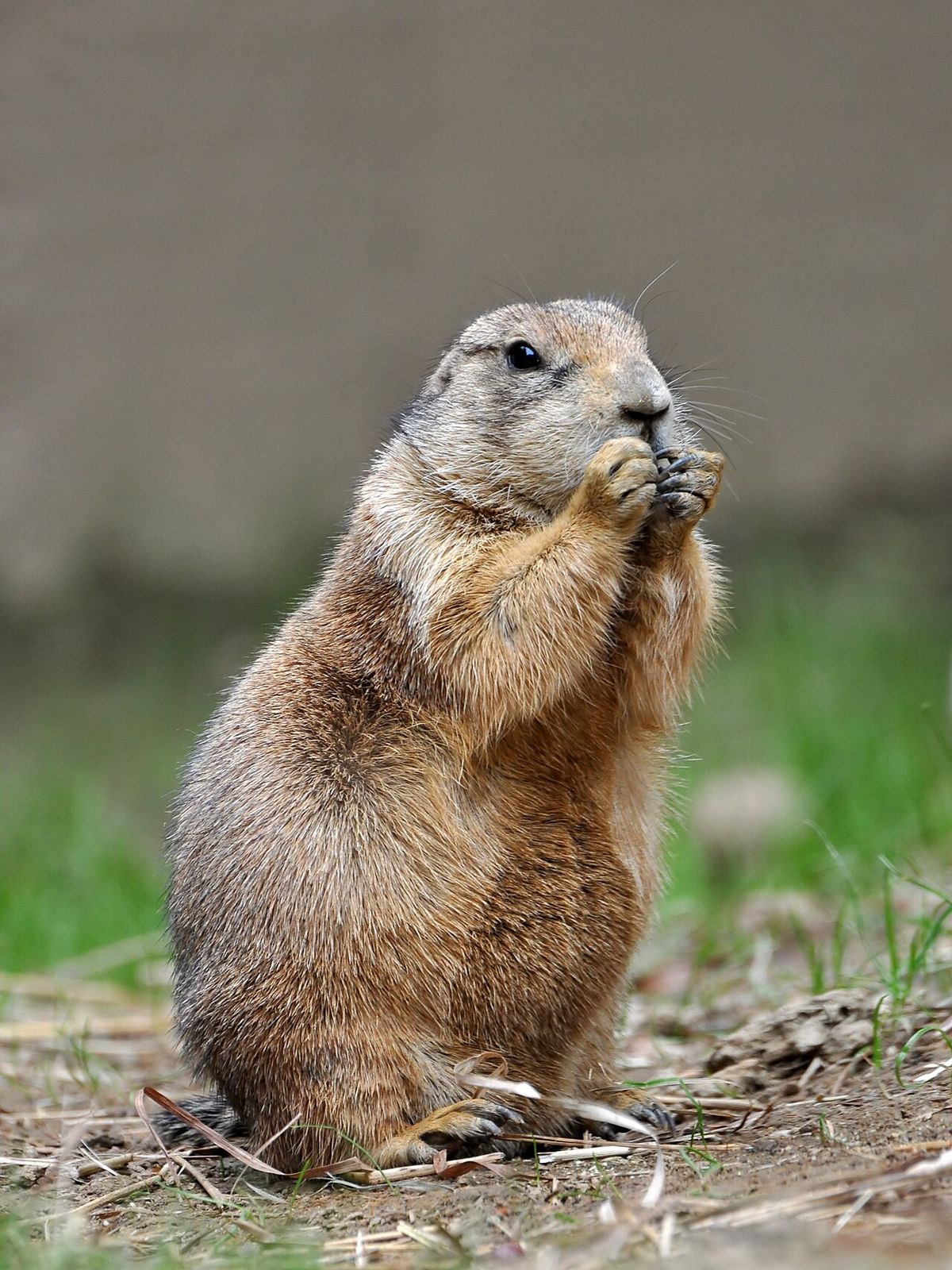
The black-footed ferret is a dietary specialist with an obligate dependence on prairie dogs. Up to 90 percent of its diet is composed of these colonial ground squirrels, with the remainder consisting of small rodents like mice and voles, ground squirrels, rabbits, and occasionally birds or insects. This dietary focus varies slightly by region and the species of prairie dog present. In areas with black-tailed prairie dogs, which do not hibernate, the ferret's diet remains consistent year-round. In regions with white-tailed prairie dogs, which undergo a four-month hibernation, ferrets must switch to alternative prey like voles and mice during winter. A single ferret consumes a prairie dog approximately every three to four days, amounting to over 100 prairie dogs per year.
Research has estimated that one adult female and her litter require between 250 and 1,400 prairie dogs annually, depending on the species. This immense prey requirement means a female ferret needs access to a large area of prairie dog habitat, ranging from 91 to 877 acres depending on prairie dog density and type. Ferrets hunt primarily within the burrow systems, using their keen sense of smell to locate sleeping prairie dogs. They are quick and bold hunters, perfectly adapted to dart through the extensive underground tunnels where they live and feed.
Historical Range and Habitat
The historical range of the black-footed ferret was vast, closely correlated with the distribution of prairie dog colonies across the Great Plains. It extended from southern Alberta and Saskatchewan in Canada, south through the central United States to Texas, New Mexico, and Arizona, and into northern Mexico. The species inhabited various grassland ecosystems, including shortgrass prairie, mixed-grass prairie, desert grassland, and sagebrush steppe. Its habitat is defined by the presence of extensive prairie dog towns, as ferrets rely almost exclusively on their burrows for shelter, rearing young, and protection from predators and weather.
Prairie dog burrows are critical for ferret survival. Ferrets show a preference for certain burrow types, with studies indicating they may use mounded burrows with multiple entrances for raising kits due to their deeper, more extensive systems. However, non-mounded burrows are used more frequently overall. The density of burrows is a key factor, with black-tailed prairie dog colonies typically offering higher burrow density and thus potentially more suitable habitat than white-tailed prairie dog colonies. The ferret's range and numbers declined catastrophically in the 20th century alongside the systematic eradication of prairie dogs, which were viewed as agricultural pests.
| Historic Region | Associated Prairie Dog Species | Current Reintroduction Status |
|---|---|---|
| Southern Alberta & Saskatchewan | Black-tailed | Reintroduced (2009 to 2013), currently extirpated |
| Wyoming, Montana, Colorado | White-tailed & Black-tailed | Multiple active reintroduction sites |
| South Dakota | Black-tailed | Major population in Conata Basin |
| Arizona | Black-tailed | Reintroduced in Aubrey Valley |
| Northern Mexico | Black-tailed | Reintroduction site established |
Conservation History and Recovery Efforts
The black-footed ferret's path to the brink of extinction and back is a dramatic conservation saga. Widespread poisoning and habitat destruction of prairie dog towns throughout the 1900s caused a parallel collapse in ferret numbers. By 1979, the species was declared extinct. This declaration was famously reversed in 1981 when a ranch dog near Meeteetse, Wyoming, brought home a dead ferret, leading to the discovery of a small residual wild population. This group became the foundation for the species' salvation. After outbreaks of sylvatic plague and canine distemper devastated this last wild group, the final 18 individuals were captured between 1985 and 1987 to establish a captive breeding program.
From these few founders, a coordinated recovery program led by the U.S. Fish and Wildlife Service and partners, including the Smithsonian's National Zoo, began breeding ferrets in captivity. The first reintroduction took place in 1991 in Shirley Basin, Wyoming, with 49 animals. Subsequent releases have established populations at sites across the American West and in Mexico. In Canada, a reintroduction program began in 2009, releasing ferrets into Grasslands National Park and surrounding ranch land in Saskatchewan. This program was suspended in 2013 due to insufficient prairie dog prey, a result of sylvatic plague and drought. The species remains listed as extirpated in Canada.
- 1981: Rediscovery of a wild population in Meeteetse, Wyoming.
- 1985 to 1987: Last 18 wild ferrets captured for captive breeding.
- 1991: First reintroduction in Shirley Basin, Wyoming.
- 1996 to 1999: 147 ferrets released in South Dakota's Conata Basin.
- 2008: Sylvatic plague outbreak in Conata Basin ferret population.
- 2009: Reintroduction program begins in Grasslands National Park, Canada.
- 2013: Canadian reintroduction program suspended.
- 2021: First successful clone, a female named Elizabeth Ann, is introduced.
Modern recovery efforts include a captive breeding program launched by the United States Fish and Wildlife Service. This program resulted in reintroductions into eight western US states, Canada, and Mexico. As of 2015, over 200 mature individuals are in the wild across 18 populations. There are four self-sustaining populations in South Dakota, Arizona, and Wyoming.
Threats and Mortality
The black-footed ferret faces persistent and severe threats that challenge its recovery. Its obligate dependence on prairie dogs makes it extremely vulnerable to any decline in prairie dog populations. Primary historical causes of mortality include habitat loss from conversion to agriculture, livestock grazing, and urban development. Prairie dog control programs, through poisoning or plague, indirectly devastate ferret populations by eliminating their food source and shelter. Annual mortality for juvenile and adult ferrets in the wild is high, ranging from 59 to 83 percent, with 50 to 70 percent of juveniles perishing during their first fall and winter.
Disease represents a catastrophic threat. Ferrets are fatally susceptible to canine distemper, which can be introduced by species like skunks, raccoons, and foxes. They are also susceptible to sylvatic plague, a bacterial disease that can kill them directly and also wipe out entire prairie dog colonies. Vaccination programs in captivity and limited field applications for plague are critical tools in the recovery effort. Predation is another natural pressure, with great horned owls, golden eagles, coyotes, badgers, and various hawks known to prey on ferrets. Other modern threats include oil and gas exploration, which can collapse burrows and increase disruptive human activity, and accidental mortality from traps set for other animals.
Questions about Black-footed ferret
Are there any black-footed ferrets in Canada?
The black-footed ferret is currently listed as extirpated in Canada, meaning it no longer exists in the wild here. A reintroduction program was active from 2009 to 2013 in Saskatchewan's Grasslands National Park and surrounding areas. The program was suspended due to insufficient populations of their primary prey, the black-tailed prairie dog, which were impacted by sylvatic plague and drought. While there are no known wild populations in Canada today, the species historically ranged into southern Alberta and Saskatchewan.
What do black-footed ferrets eat?
Black-footed ferrets are dietary specialists, with prairie dogs constituting up to 90 percent of their diet. A single ferret can eat more than 100 prairie dogs in a year. When prairie dogs are unavailable, such as during the hibernation of white-tailed prairie dogs, they will hunt alternative prey including mice, voles, ground squirrels, and rabbits. Their survival is completely dependent on healthy prairie dog colonies.
Why are black-footed ferrets endangered?
The black-footed ferret declined primarily as a result of decreases in prairie dog populations and sylvatic plague. Up to 90 percent of its diet is composed of prairie dogs. It was declared extinct in 1979, but a residual wild population was discovered in 1981. Primary causes of mortality include habitat loss, human-introduced diseases, and indirect poisoning from prairie dog control measures.
When was the black-footed ferret rediscovered?
The black-footed ferret was famously rediscovered in 1981 near the town of Meeteetse in Wyoming. A ranch dog brought a dead ferret home, alerting landowners and biologists to the presence of a small, unknown population. This occurred two years after the species had been declared extinct. This residual wild group provided the genetic founders for the international captive breeding and reintroduction program that saved the species.
What is being done to save black-footed ferrets?
A captive breeding program was launched by the United States Fish and Wildlife Service. This program resulted in reintroductions into eight western US states, Canada, and Mexico from 1991 to 2009. The species was first listed as endangered in 1982. In February 2021, the first successful clone of a black-footed ferret, a female named Elizabeth Ann, was introduced to the public.
How many black-footed ferrets are left?
As of 2015, over 200 mature black-footed ferrets were in the wild across 18 populations, with four self-sustaining populations in South Dakota, Arizona, and Wyoming. More recent estimates from other sources indicate approximately 300 individuals are estimated in the wild. This population is the result of a successful captive-breeding and reintroduction program launched after the species was rediscovered in 1981. The entire modern population descends from a small residual group found near Meeteetse, Wyoming. While still endangered, these numbers represent a significant recovery for a species once declared extinct in the wild in 1996.
Sources and further reading
- Black-footed ferret (Wikipedia)
- Black-footed ferret (nationalzoo.si.edu)
- Black-footed ferret facts about habitat, diet and conservation (nature.org)
- Black-footed Ferret (thecanadianencyclopedia.ca)
Checked by the Your Space Hamilton desk. Last updated 2026-10-25.