Prairie dog
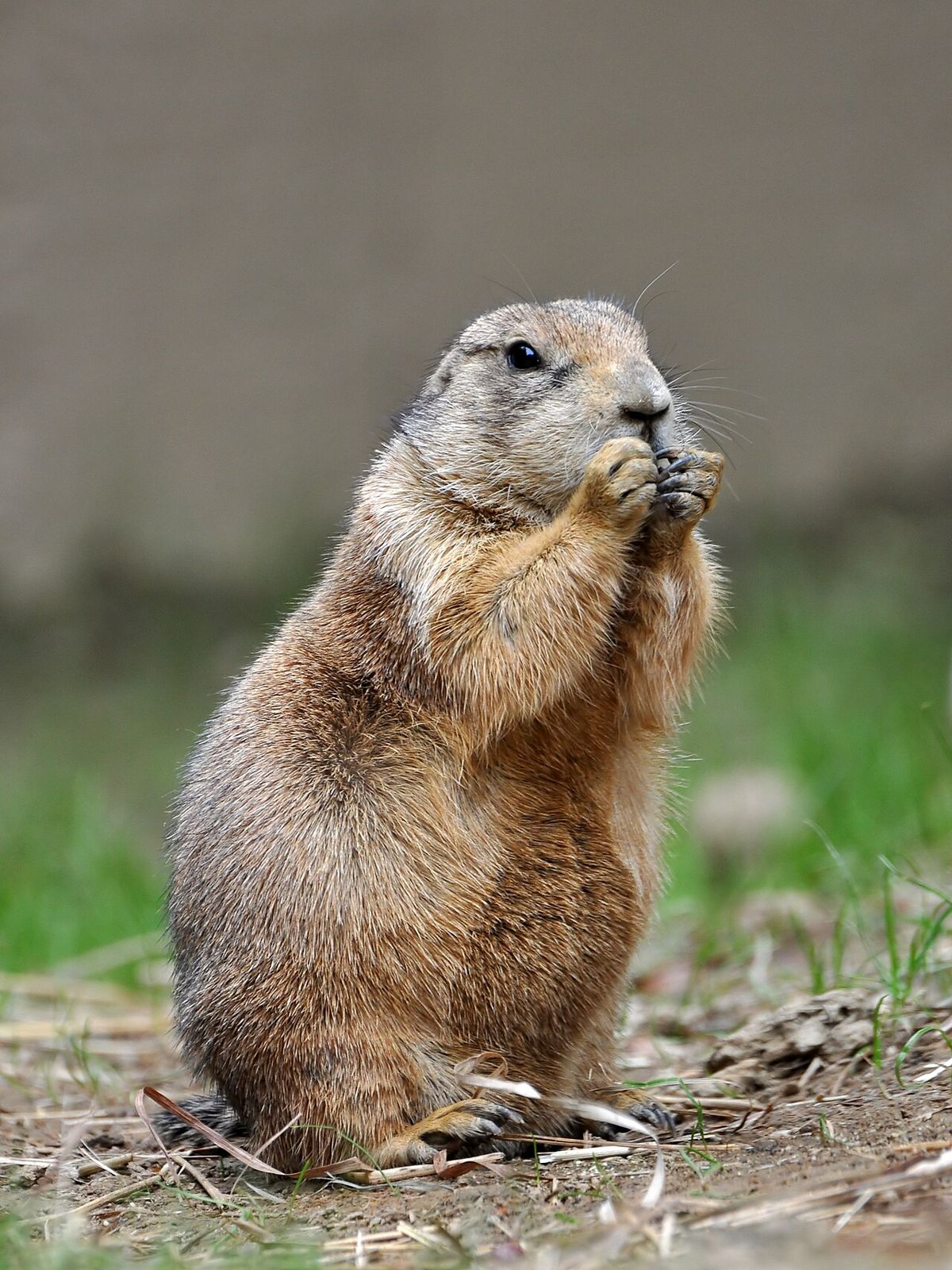
Prairie dogs are a genus (Cynomys) of stout-bodied, herbivorous ground squirrels native to the grasslands of North America, including the Canadian Prairies. There are five recognized species: black-tailed, white-tailed, Gunnison's, Utah, and Mexican prairie dogs. They are considered a keystone species, as their extensive burrowing activities and social colonies shape their ecosystems, influencing soil health, plant communities, and providing critical habitat and prey for numerous other species. Their complex social structures and sophisticated communication systems make them one of the most behaviourally detailed rodents on the continent.
Description and Classification
Prairie dogs are rodents belonging to the squirrel family (Sciuridae) and are not canines, despite their common name. The genus name Cynomys derives from the Greek words for dog (kuōn) and mouse (mus). There are five extant species: the black-tailed (Cynomys ludovicianus), white-tailed (C. leucurus), Gunnison's (C. gunnisoni), Utah (C. parvidens), and Mexican (C. mexicanus) prairie dogs. On average, adults are 30 to 40 centimetres long, including a short tail, and weigh between 0.5 and 1.5 kilograms. Sexual dimorphism, where one sex is larger than the other, varies among the species, with white-tailed prairie dogs showing the most pronounced difference and black-tailed the least. This dimorphism peaks during weaning when females lose weight and males eat more, and is lowest when females are pregnant. The black-tailed prairie dog was first described for science by the Lewis and Clark Expedition in 1804, with Meriwether Lewis providing a more detailed account in 1806, calling it the barking squirrel. Indigenous names for the animal include wishtonwish, recorded by Lieutenant Zebulon Pike in 1806, and, in Lakota, pispíza.
Habitat and Burrow Engineering
Prairie dogs inhabit grasslands, primarily at altitudes ranging from 600 to 3,000 metres above sea level. Their environments experience extreme temperatures, from summer highs near 38 °C to winter lows approaching -37 °C. To survive these conditions and threats like hail, blizzards, floods, drought, and fire, prairie dogs construct elaborate underground burrow systems. These tunnels are typically 5 to 10 metres long and 2 to 3 metres below ground, with entrance holes 10 to 30 centimetres in diameter. A single burrow system can have up to six entrances, often surrounded by mounds of soil either left as piles or hard-packed. Some mounds, known as dome craters, can be 20-30 cm high, while rim craters can reach up to 1 metre in height. These mounds serve as observation posts used by the animals to watch for predators and also protect the burrows from flooding. The holes may also provide ventilation as air enters through the dome crater and leaves through the rim crater, causing a breeze through the burrow. The burrows contain specialized chambers for different functions, including nurseries for young, chambers for night, and chambers for the winter. They also contain air chambers that may function to protect the burrow from flooding and a listening post for predators. When hiding from predators, prairie dogs use less-deep chambers about 1 metre below the surface, while nursery chambers tend to be 2 to 3 metres deep. Burrows play a crucial ecological role by channeling rainwater into the water table, preventing runoff and erosion, and reversing soil compaction caused by cattle grazing. The internal temperature of a burrow remains a stable 5-10 °C in winter and 15-25 °C in summer, providing vital thermoregulation for the colony.
Social Structure and Communication
Prairie dogs are highly social animals that live in large colonies, historically called towns, which can span hundreds of acres. The basic social unit is the family group, known as a cotery for black-tailed and Mexican prairie dogs and a clan for white-tailed, Gunnison's, and Utah species. A town may contain 15 to 26 family groups, sometimes organized into subgroups called wards that are separated by a physical barrier like a rock or tree line. A typical family group consists of one adult breeding male, two or three adult females, and one or two male offspring and one or two female offspring. Females usually remain in their natal group for life, providing social stability, though some may disperse if no close family members are alive. Males leave their natal groups when they mature to find another family group to defend and breed in. Members of a family group interact through oral contact or kissing and mutual grooming, behaviours not extended to outsiders. Territories are well-established, covering 0.05 to 1.01 hectares, and resident males defend them through antagonistic encounters that can happen 20 times per day and last five minutes. These encounters involve staring, bluff charges, tail flaring, teeth chattering, and sniffing of perianal scent glands. Prairie dogs are renowned for their sophisticated vocal communication system used to warn of predators. Research by Con Slobodchikoff and others asserts that prairie dogs use a sophisticated system of vocal communication to describe specific predators, with calls containing information as to what the predator is, how big it is, what colour it is and how fast it is approaching, which have been described as a form of grammar. For example, they have three distinct mid-pitched sounds for birds like hawks and eagles, and four high-pitched quick sounds for mammals like coyotes, dogs, and humans. The calls elicit different escape behaviours: for a diving hawk, prairie dogs in its flight path dive into holes. For a human, all members of the colony immediately rush inside the burrows. For a coyote, they gather at burrow entrances to stand and watch. Another distinctive behaviour is the jump-yip display of the black-tailed prairie dog, where an individual stretches vertically, throws its forefeet into the air while making a call, often triggering a contagious wave of similar displays across the colony.
Prairie dogs are highly social animals that live in large colonies or towns, which can span hundreds of acres. Their society is based on family groups that inhabit the same territory. These groups are called coteries for black-tailed and Mexican prairie dogs, and clans for white-tailed, Gunnison's, and Utah prairie dogs. Members of a family group interact through oral contact, often described as kissing, and by grooming one another. They do not perform these behaviours with prairie dogs from other family groups. A prairie dog town may contain 15 to 26 family groups, with subgroups called wards that are separated by physical barriers.
- Family Groups: Called coteries or clans, these are the core social units, typically containing one breeding male, several females, and their young.
- Territorial Defence: Males vigorously defend well-bordered territories, with antagonistic encounters between rival males occurring up to 20 times per day.
- Kin Selection: Alarm calling is believed to be a form of kin selection, as individuals call more often when close relatives like offspring, cousins, nephews, or nieces are nearby.
- Jump-Yip Display: A contagious territorial call and visual display unique to black-tailed prairie dogs.
- Ventriloquistic Calls: Predators have difficulty determining which individual is making an alarm call due to this acoustic nature.
- Multiple-Male Groups: Some family groups contain more than one breeding male, often with antagonistic relationships if the males are unrelated.
Diet and Reproduction
Prairie dogs are primarily herbivorous, feeding on grasses, small seeds, roots, fruit, buds, and broadleaf forbs. Their specific diet varies by species and location. For example, black-tailed prairie dogs in South Dakota consume western bluegrass, blue grama, buffalo grass, six weeks fescue, and tumblegrass. Gunnison's prairie dogs eat rabbit brush, tumbleweeds, dandelions, saltbush, and cacti in addition to buffalo grass and blue grama. Occasionally, they eat insects, and white-tailed prairie dogs have been observed killing competing herbivores like ground squirrels. In winter, lactating and pregnant females may eat snow for extra water. Reproduction occurs within the safety of the burrows, which reduces the risk of interruption by a competing male and predation. Females signal estrus through behaviours like underground consorting, self-licking of genitals, dust-bathing, and late entrances into the burrow at night. The licking of genitals may protect against sexually transmitted diseases and genital infections, while dust-bathing may protect against fleas and other parasites. Prairie dogs also have a mating call consisting of up to 25 barks with a 3- to 15-second pause between each one. For black-tailed prairie dogs, the resident male of the family group typically fathers all the offspring, though multiple paternity in litters seems to be more common in Utah and Gunnison's prairie dogs. After copulation, the male may insert a copulatory plug to prevent other males from mating with the female. Following a gestation period, the mother does most of the care for the altricial young, nursing them, defending the nursery chamber, and collecting grass for the nest, while males defend the territory and maintain the burrows. The young spend their first six weeks below ground being nursed before they begin to surface, and by five months, they are fully grown. The subject of cooperative or communal breeding, where females may nurse another's young, is debated among biologists, with some arguing they will defend and feed young that are not theirs. Infanticide is a documented behaviour. Males that take over a family group will kill the offspring of the previous male to bring the mother into estrus sooner, and lactating females may also kill the offspring of a related female to decrease competition and gain increased foraging area.
Ecological Role as a Keystone Species
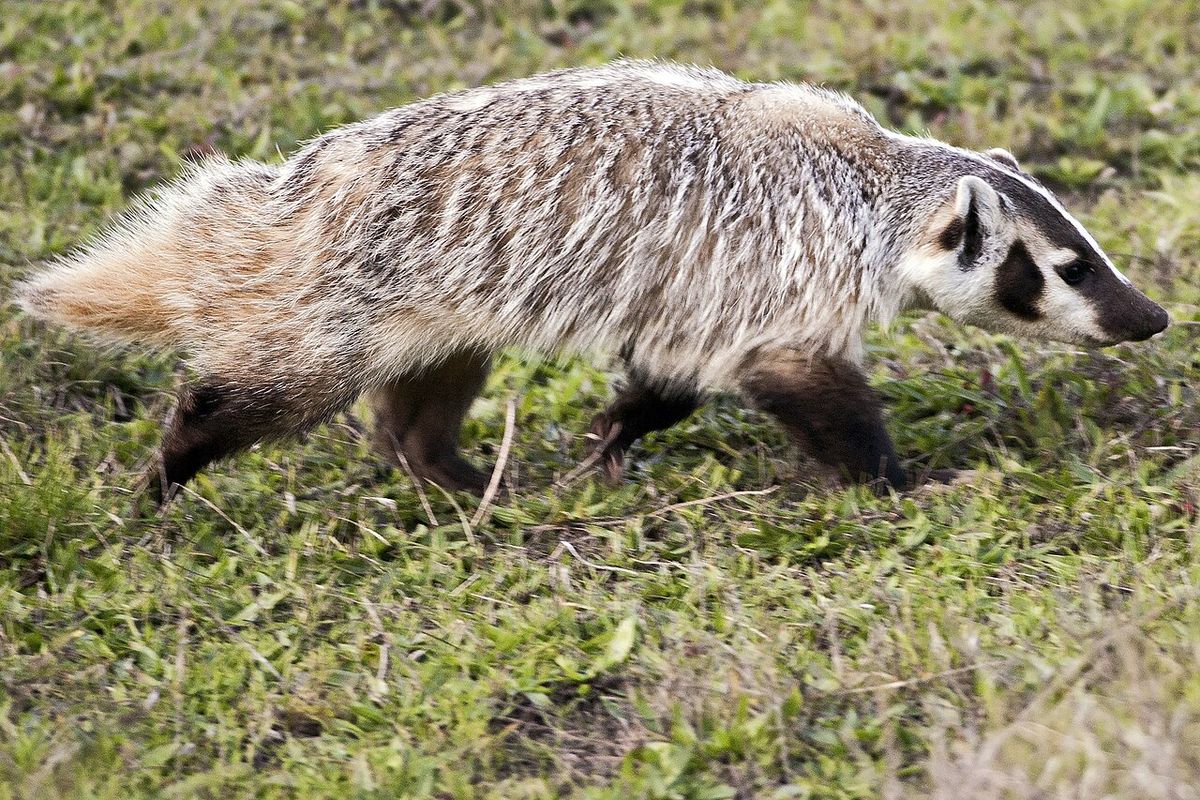
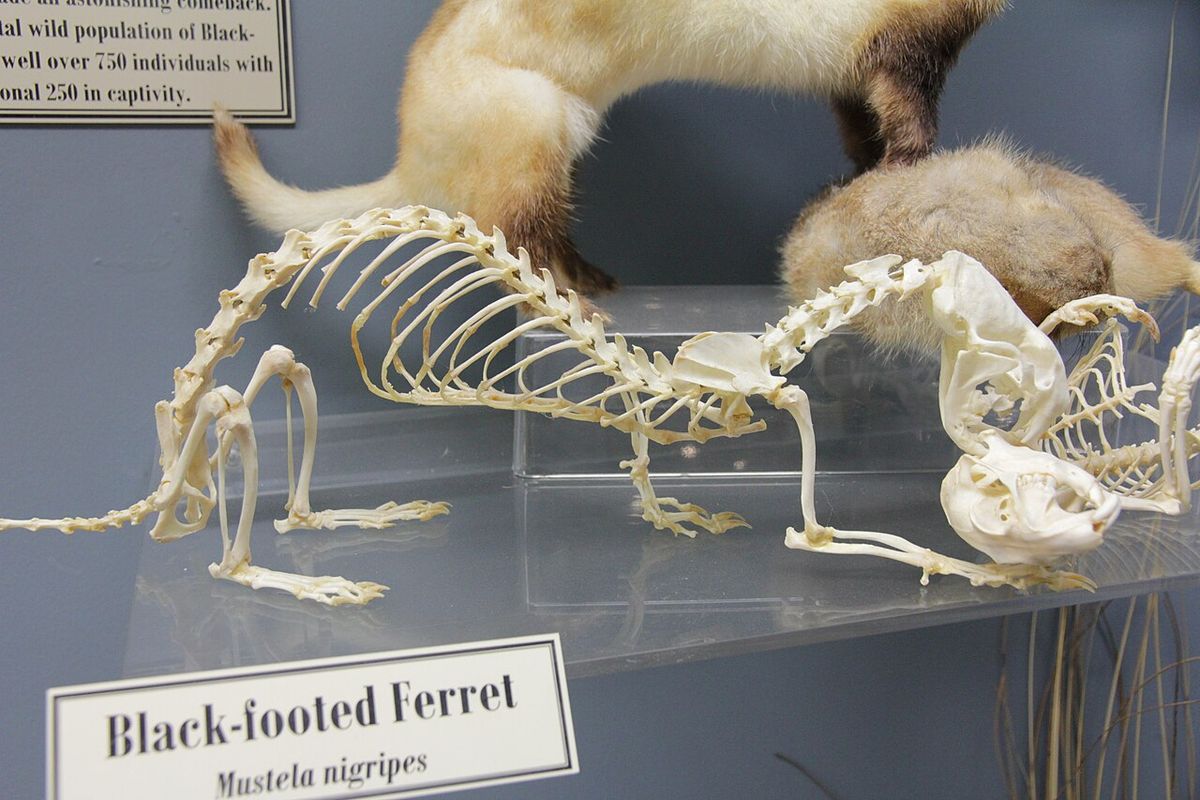
Ecologists classify prairie dogs as a keystone species due to their disproportionate impact on the grassland ecosystem. Their burrowing activities aerate the soil, encourage grass development, and facilitate the renewal of mineral-rich topsoil, which benefits soil quality and agriculture. Their mound-building specifically encourages grass development and renewal of topsoil with rich mineral and nutrient renewal. Their colonies create habitat for a wide array of other species. The black-footed ferret, an endangered species, relies almost exclusively on prairie dogs for food. Other predators that depend on them include the swift fox, golden eagle, bald eagle, red-tailed hawk, American badger, coyote, and ferruginous hawk. Species such as the burrowing owl, mountain plover, and golden-mantled ground squirrel use abandoned prairie dog burrows for nesting and shelter. Even large grazing mammals like plains bison, pronghorn, and mule deer show a proclivity for grazing on the same land used by prairie dogs, likely due to the nutrient-rich, newly sprouted vegetation found there. The removal of prairie dogs leads to undesirable spread of brush, the costs of which to livestock range and soil quality often outweigh the benefits of removal. Prairie dogs are extremely important in the food chain, being a primary component of the diet for many predator species, and their activities are crucial for maintaining healthy humus in the soil.
Conservation Status and Threats
Prairie dog populations have been greatly reduced across their range due to several human-related factors. They have historically been viewed as agricultural pests because they are capable of damaging crops, as they clear the immediate area around their burrows of most vegetation, leading to widespread extermination campaigns by farmers and ranchers. Urban development has also caused significant habitat loss and fragmentation. A persistent but largely unsubstantiated concern has been that their digging activities could injure horses by fracturing their limbs, though investigations after years of asking ranchers have found not one example. All species face the threat of Bubonic plague. Conservation status varies by species, with the Utah prairie dog listed as threatened and the Mexican prairie dog as endangered. The black-tailed prairie dog, while still comprising the largest remaining community, has seen its range dramatically reduced. In Mexico, prairie dogs are found primarily in the northern states of Sonora, Chihuahua, Coahuila, Nuevo León, and Tamaulipas. In the United States, they range primarily west of the Mississippi River, though introduced in a few eastern locales. In response to these threats, prairie dogs are protected in many areas to maintain local populations and ensure natural ecosystems. As of July 2016, the U.S. Fish and Wildlife Service plans to distribute an oral vaccine it had developed by unmanned aircraft or drones. Their ability to adapt is evidenced by colonies persisting in open areas within some western cities.
Prairie Dogs and Human Interaction
Human interaction with prairie dogs has been complex, ranging from eradication efforts to captive keeping. Until 2003, primarily black-tailed prairie dogs were collected from the wild for the exotic pet trade in Canada, the United States, Japan, and Europe. They were removed from their burrows each spring, as young pups, with a large vacuum device. They can be difficult to breed in captivity, but breed well in zoos, and they can be difficult pets to care for, requiring regular attention and a very specific diet of grasses and hay. Each year, they go into a period called rut that can last for several weeks. In the wild, their presence is a double-edged sword for landowners. While they can damage crops, their removal often leads to worse ecological and economic outcomes like soil degradation and brush invasion. Their sophisticated alarm calls for things that are not predators to them, including humans, indicate a very descriptive language and have calls for any potential threat, which is cited as evidence of highly developed cognitive abilities. The subject of their communication has been a significant area of scientific study, with research asserting they have calls for things that are not predators to them.
Physical and Behavioural Adaptations
Prairie dogs possess several key adaptations for survival in the open grassland environment. Their dichromatic colour vision allows them to detect predators from a great distance, and then they alert other prairie dogs of the danger with a special, high-pitched call. Their skull, with a condylobasal length of 5.2 to 6.4 cm, is distinctly shorter than a canine skull, which measures between 11.39 and 17.96 cm in length. Their burrow systems are engineered for climate control, flood prevention, and predator evasion, with chambers providing certain functions like nurseries and listening posts. Socially, their complex colony structure with defined family groups and territories minimizes conflict and maximizes cooperative vigilance. The jump-yip display may function as a territorial call or a check on colony alertness. Their foraging behaviour of clearing vegetation around burrow entrances provides a clear line of sight for spotting predators, an activity that is a natural anti-predator strategy but sometimes leads to conflict with agriculture. The practice of dust-bathing likely helps control ectoparasites like fleas, which is especially important given their susceptibility to diseases like plague carried by fleas. These combined adaptations allow them to thrive in a challenging environment prone to environmental threats like hailstorms, blizzards, floods, drought, and prairie fires.
Questions about Prairie dog
Are prairie dogs actually dogs?
No, prairie dogs are not canines. They are rodents belonging to the squirrel family (Sciuridae). Their common name comes from their habitat, the prairie, and their warning call, which sounds similar to a dog's bark. Their scientific genus name, Cynomys, even means dog mouse in Greek, combining the words for dog (kuōn) and mouse (mus). The Lewis and Clark journals from 1804 noted the French called the animal the Prairie Dog.
Why are prairie dogs important to the ecosystem?
Prairie dogs are a keystone species, meaning their presence is crucial for a healthy grassland ecosystem. Their burrowing aerates the soil, promotes new plant growth, and channels rainwater into the water table to prevent erosion. Their colonies provide essential prey for endangered species like the black-footed ferret and offer nesting habitat for birds like the burrowing owl and mountain plover. Grazing animals like bison and pronghorn prefer to feed on the nutritious grasses that sprout on their colonies. Their removal causes undesirable spread of brush and degrades soil quality.
What do prairie dogs eat?
Prairie dogs are primarily herbivores. Their diet consists mainly of grasses and small seeds, but they also eat roots, fruit, buds, and broadleaf forbs (herbaceous flowering plants). In fall, they eat broadleaf forbs, and in winter, lactating females may eat snow for water. The specific plants vary by species and location. For instance, black-tailed prairie dogs eat western bluegrass and buffalo grass, while Gunnison's prairie dogs may eat cacti and rabbit brush. They occasionally consume insects, and white-tailed prairie dogs have been observed killing ground squirrels.
How do prairie dogs communicate?
Prairie dogs have one of the most complex communication systems in the animal kingdom. They use distinctive alarm calls that research suggests contain specific information about a predator's type, size, colour, and speed of approach, with different calls for hawks, eagles, coyotes, dogs, and humans. Different calls elicit different escape behaviours from the colony. They also engage in a visual display called a jump-yip and maintain social bonds within family groups through oral contact (kissing) and grooming. Their calls have a ventriloquistic quality, making it hard for predators to locate the caller.
Are prairie dogs endangered?
The conservation status varies by species. The Mexican prairie dog is endangered, and the Utah prairie dog is threatened. Other species, like the widespread black-tailed prairie dog, have seen significant population declines due to habitat loss from agriculture and urban development, extermination as pests, and disease (like sylvatic plague), but are not currently listed as endangered. They are protected in many areas to preserve their keystone role in ecosystems. Conservation efforts include the development of oral plague vaccines for distribution by drones.
Where do prairie dogs live in Canada?
Prairie dogs are found in the Canadian Prairies, which form the northern part of the North American Great Plains grassland ecosystem. This region represents the northernmost extent of their natural range, which primarily lies to the west of the Mississippi River in the United States. In Mexico, they are found in northern states like Sonora and Chihuahua. The Canadian Prairies provide a suitable grassland habitat for these burrowing rodents, though their populations and specific distributions within this area can be influenced by local conditions. Their presence in Canada is part of a larger continental range that spans from northern Mexico up through the central United States.
Sources and further reading
- Prairie dog (Wikipedia)
- Facts about prairie dogs (ifaw.org)
- How Prairie Dogs Became One of America's Most ... (nationalzoo.si.edu)
- Black-tailed Prairie Dog, Grasslands National Park (parks.canada.ca)
- Prairie Dog (defenders.org)
Checked by the Your Space Hamilton desk. Last updated 2026-10-21.