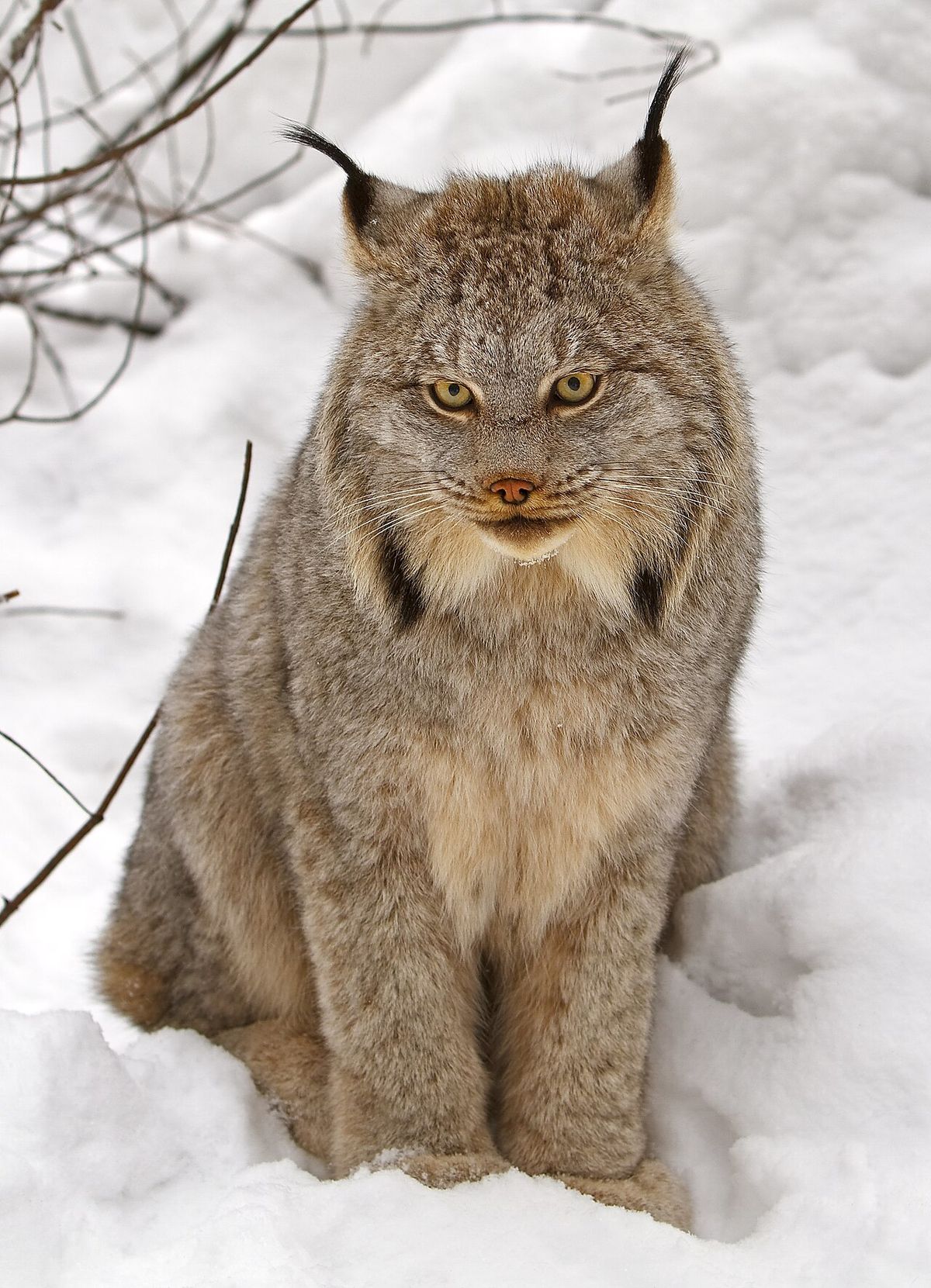
American marten
The American marten (Martes americana), often called the pine marten, is a slender, weasel-like mammal native to the northern forests of North America. It is a widespread species found throughout Canada, from Newfoundland to Alaska, inhabiting mature coniferous and mixedwood forests. Prized historically for its luxurious, sable-like fur, the marten was heavily trapped during the fur trade, leading to local extirpations, though populations have largely rebounded. This agile predator plays a significant ecological role and is a subject of ongoing conservation and forestry research, particularly concerning its threatened subspecies in Newfoundland.
Taxonomy and Physical Description
The American marten is a member of the Mustelidae family, which includes weasels, otters, and minks. It was once considered conspecific with the Pacific marten (Martes caurina), but genetic studies now support their status as distinct species. The Pacific marten has a more westerly distribution, a longer snout, and a broader cranium. Seven regional subspecies of American marten are recognized, though they are not morphologically distinct and are primarily identified for regional management purposes. These subspecies include Martes americana abieticola, M. a. abietinoides, M. a. actuosa, M. a. americana, M. a. atrata, M. a. brumalis, and M. a. kenaiensis. A fossil species from the Late Pleistocene to Early Holocene, Martes nobilis, is considered synonymous with M. americana.
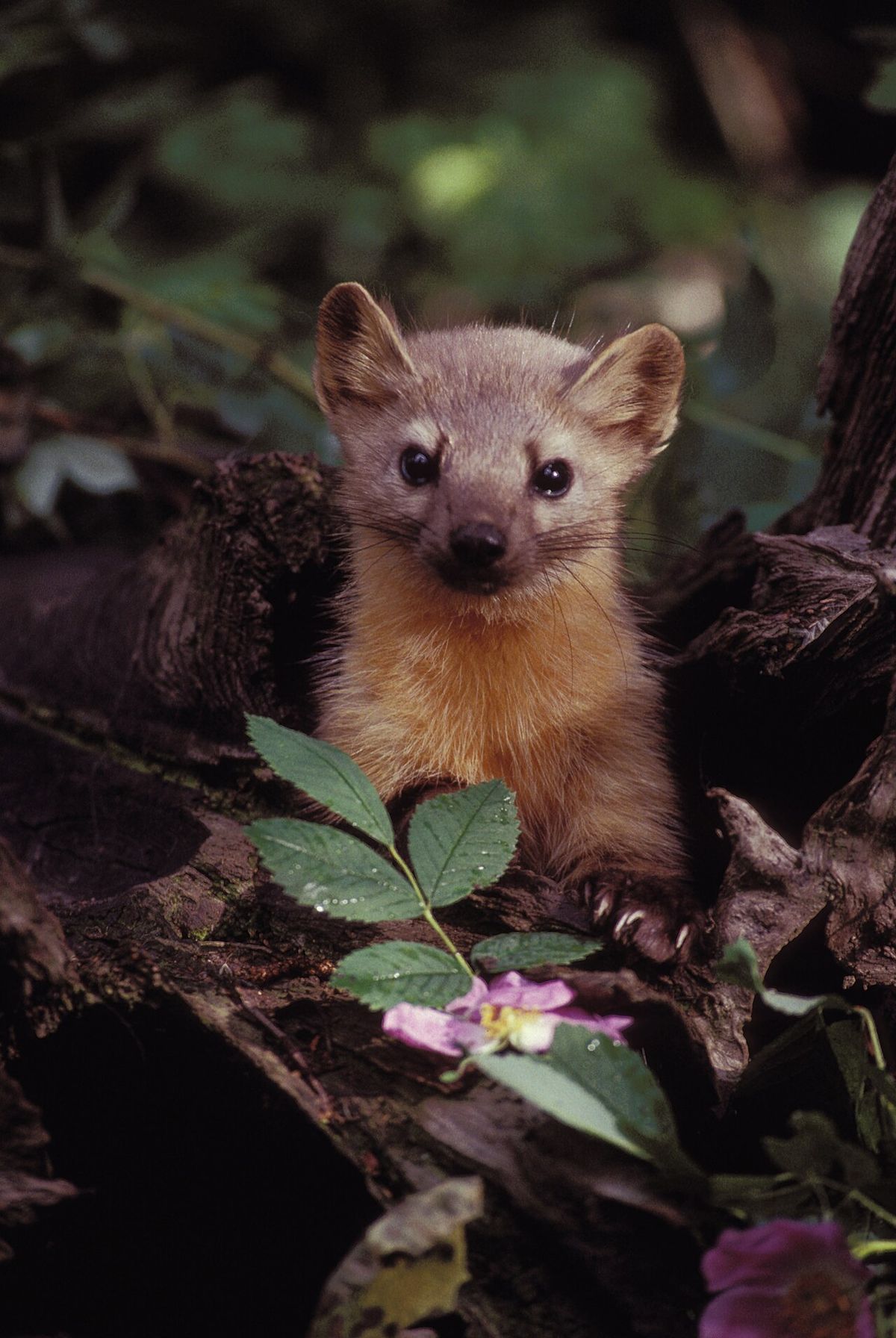
Physically, the American marten is a long, slender-bodied animal about the size of a domestic cat, with relatively large, rounded ears, short limbs, and a bushy, cylindrical tail measuring 14.6 to 23 cm. Its fur is long and silky, ranging in colour from pale yellowish buff to tawny brown to nearly black. A distinctive feature is a characteristic bib on the throat and chest, which varies from pale straw to vivid orange, setting it apart from other mustelids like the fisher. The head is usually lighter than the body, while the tail and legs are darker. Sexual dimorphism is pronounced, with males being about 15% longer and up to 65% heavier than females. Adult weights range from 0.7 to 1.6 kilograms, with males typically between 470 and 1300 grams and females between 280 and 850 grams.
American martens possess five toes on each foot with sharp, recurved, semi-retractile claws, aiding in climbing. They have limited body-fat reserves and experience high mass-specific heat loss, which influences their activity and energy needs. In winter, individuals may enter shallow torpor daily to conserve energy. Their large eyes and keen senses are adaptations for a predatory lifestyle in often low-light forest environments.
Distribution and Habitat
The American marten has a broad distribution across northern North America. Its range extends from the northern treeline in arctic Alaska and Canada south to New York, and from Newfoundland west to Alaska and south into sections of the Rocky Mountains and northern California. In the United States, its presence is more fragmented, limited to northern forest regions and mountain ranges such as the Adirondacks in New York, the Upper Peninsula of Michigan, Wisconsin, and Minnesota. The species has been extirpated from several northeastern and midwestern states including Pennsylvania, Maryland, Massachusetts, West Virginia, Ohio, New Jersey, and Illinois, though reintroduction efforts have occurred in some areas like Minnesota and Ontario.
Historically thought to inhabit only old-growth conifer forests, martens are now known to live in a variety of forest types including young deciduous, conifer, and mixed forests. They are closely associated with structurally complex, mature forests that provide critical denning sites and prey habitat. Key habitat features include coarse woody debris, standing dead wood (snags), and hollow trees. In Canada, they are found in coniferous and mixedwood forests nationwide. A significant conservation concern is the Newfoundland marten subspecies (M. a. atrata), found only on the island of Newfoundland and the Labrador peninsula, which is listed as threatened under federal and provincial species at risk legislation.
Over time, the distribution of American martens has contracted and expanded regionally, with local extirpations and successful recolonizations occurring in the Great Lakes region and some parts of the Northeast. A broad, natural hybrid zone between the Pacific and American martens is known to exist in the Columbia Mountains, as well as Kupreanof and Kuiu Islands in Alaska. Several translocations of American martens have been made without regard to the Pacific marten, threatening the latter species. On Dall Island, American martens have been introduced and are hybridizing with the native Pacific marten population, which may put them at risk. Genetic evidence of introgression with American martens is also present in other parts of the Pacific marten's range, likely a consequence of these introductions.
- Broad range across Canada from coast to coast and throughout Alaska.
- Present in fragmented populations in the northern contiguous United States.
- Extirpated from several U.S. states in the Northeast and Midwest.
- Prefers mature forests with structural complexity, including old and young stands.
- The threatened Newfoundland subspecies is range-restricted.
- Hybridization with Pacific martens occurs in western overlap zones.
Behaviour and Ecology
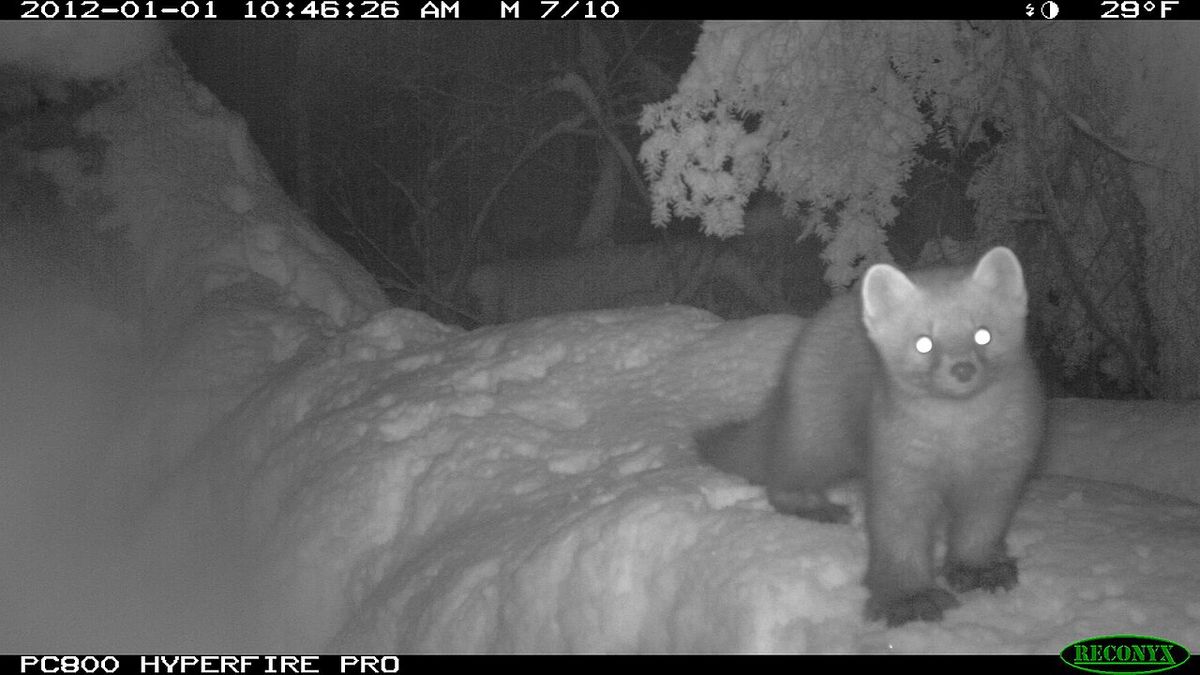
American martens are generally solitary and nocturnal, though they can be diurnal depending on prey activity and season. They are semi-arboreal, moving with great ease through trees but doing most of their hunting on the ground. Activity levels vary, being higher in summer (up to 60% of the day) and lower in winter (as little as 16% of the day), with reductions during extreme cold or storms. In north-central Ontario, activity was about 10 to 16 hours daily except in late winter when it dropped to about 5 hours. They are well-adapted to snowy environments, often travelling under the snowpack in subnivean corridors that can extend over 33 feet and rarely sinking more than 2 inches into deep snow.
Male home ranges are typically larger than those of females, ranging from 0.04 square miles in Maine to 6.1 square miles in Minnesota. Female ranges are smaller, from 0.04 to 3.0 square miles. Population densities are low for their body size, ranging from 0.4 to 2.5 individuals per square kilometre, with higher densities in optimal habitat. Home ranges are maintained through scent marking, and boundaries often coincide with topographic features like rivers, creeks, or habitat transitions. Intrasexual aggression between males, evidenced by scarring on the head and shoulders of pelts, is linked to territory defence. Home range overlap is minimal between adult males but can occur between males and females, adults and juveniles, and between females.
| Factor | Influence on Home Range and Activity |
|---|---|
| Sex | Males have significantly larger ranges than females. |
| Prey Availability | Low prey abundance leads to larger home ranges. |
| Season | Activity and range use contract in winter, especially in extreme cold below -20°C. |
| Habitat Quality | Structurally complex forests support higher densities and smaller ranges. |
| Snow Depth | Martens select areas with deep, soft snow for subnivean travel but may hunt in patches of shallower snow. |
| Age | Juveniles in east-central Alaska traveled 1.4 miles per day on average, compared to 0.9 miles for adults. |
Diet and Hunting
The American marten is an opportunistic omnivore and a skilled predator, though its diet is dominated by small mammals. Voles, particularly red-backed voles (Myodes spp.) and meadow voles (Microtus spp.), are the staple prey throughout its range and are often taken in proportion to or in preference over their availability. Larger prey such as snowshoe hares and American red squirrels become more important, particularly in winter. The diet also includes deer mice, shrews, birds, eggs, insects, amphibians, reptiles, and carrion. In summer and autumn, the diet diversifies to include fruits, nuts, and vegetation like wild strawberries, raspberries, blueberries, and seeds.
Martens require about 80 kilocalories per day while at rest, equivalent to roughly three voles. Hunting occurs primarily at dawn and dusk when prey is most active, and they employ various strategies including searching ground cover, climbing trees, and leaping from trees from heights of 4-5 metres into the snow to access subnivean prey. They are also important seed dispersers. Seeds from berries like Alaska blueberry and oval-leaf huckleberry show higher germination rates after passing through the marten's gut. Analyses indicate martens can disperse seeds over considerable distances, with 54% of calculated dispersal events exceeding 0.5 kilometres.
Diet diversity is generally greater in summer and in southern parts of their range compared to the subarctic. In areas where large prey like hares dominate, diet diversity is lower. Diet composition can shift seasonally and annually based on local prey abundance. Martens are known to hunt red squirrels and may raid their nests or middens. They are accomplished swimmers and can even dive underwater, though this is not a primary foraging method.
Reproduction and Life Cycle
American martens are polygamous, with a breeding season from June to August. Females enter estrus in July or August, and courtship involves tumbling, playing, and wrestling, lasting about 15 days. Females may have one to four periods of sexual receptivity, each lasting 1 to 4 days, at intervals of 6 to 17 days. A unique aspect of their reproduction is delayed implantation. The fertilized embryo does not implant in the uterus until late winter, with active gestation lasting only about 28 days. Total gestation lasts 220 to 275 days. Females give birth to a litter of one to five kits, with an average of two to four, in late March or early April in natal dens lined with grass, moss, and leaves.
Kits are born blind, weigh about 34 grams, and are either naked or have a thin covering of soft hair. Their eyes open between 28 and 40 days, and they are weaned at around 42 days. They emerge from the den at about 50 days old, gaining coordination by 12 to 15 weeks and reaching adult size by three and a half months. The mother frequently moves the kits to new maternal dens once they are 7 to 13 weeks old, spending more than 50% of her time attending dens initially. Juveniles typically stay with their mother through the summer and disperse in the fall, though dispersal timing varies from early August to October, sometimes extending into the following spring.
Sexual maturity is reached at 15 to 24 months, though effective breeding often occurs after age two. Females can remain reproductive up to 12 years in the wild, and a 15-year-old female has bred successfully in captivity. Paternal care has not been documented. The potential lifespan is at least 15-17 years in captivity, with the oldest wild individual recorded at 14.5 years. Survival rates are lower for juveniles, with studies showing first-year survival probabilities as low as 0.26 in harvested populations.
- Breeding season is from June to August with delayed implantation.
- Litter size ranges from 1 to 5 kits, born in late March or April.
- Kits are weaned at 42 days, emerge at 50 days, and disperse in the fall.
- Sexual maturity is reached at 15 to 24 months.
- Females use various dens: natal dens for birth and maternal dens for rearing.
- Den sites include hollow trees, snags, logs, rock piles, and old squirrel nests.
Conservation, Threats, and Research
Historically, the American marten was heavily trapped for its valuable fur, often called Canadian sable, with trapping peaking around 1820. This led to significant population declines and local extirpations by the early 20th century. Protections and reintroductions have allowed most populations to recover, and the species is currently listed as Least Concern by the IUCN. However, threats persist, primarily from habitat loss due to deforestation and intensive forestry practices. The species is sensitive to habitat changes, avoiding young stands and relying on mature forests with coarse woody debris and snags.
Ongoing research, particularly by the Canadian Forest Service in partnership with provincial agencies and universities, focuses on the impacts of forest management. A major large-scale collaborative field study was conducted from 2000 to 2007 in Northern Ontario near Red Lake and Kapuskasing. Researchers captured over 100 martens, fitted them with radio collars, and monitored habitat use, survival, and population density. The study found that marten in managed sites exhibited poorer body conditions and higher rates of juvenile mortality, indicating less efficient hunting. Marten were also more susceptible to capture in managed forests due to higher road density.
The research indicated that mature and older forests provide the most favourable habitat, but populations can persist at lower levels in regenerating forests if trapping is controlled. Marten showed a positive response in areas replanted with conifers about 50 years prior. A Population Viability Analysis model has been developed to predict marten populations under different forest management and trapping scenarios. The threatened Newfoundland marten remains a focal point for conservation efforts under the federal Species at Risk Act and provincial legislation, with research aimed at understanding its specific habitat needs and responses to forestry.
Predators and Mortality
American martens face predation from a variety of raptors and carnivores, which influences their behaviour and habitat selection, particularly their avoidance of open areas. Common predators vary by region but include red foxes, coyotes, great horned owls, bald eagles, golden eagles, bobcats, Canada lynx, mountain lions, fishers, wolverines, grizzly bears, American black bears, and grey wolves. On Newfoundland, red foxes are the most frequent predator, though coyotes and other martens are also responsible for some deaths. In deciduous forests of northeastern British Columbia, most predation is attributed to raptors.
Survival rates are influenced by geographic region, habitat quality, age, and exposure to trapping. In an unharvested population in northeastern Oregon, the probability of survival for a marten aged 9 months or less was 0.55 for the first year, declining to 0.15 by the fourth year, with a mean annual survival probability of 0.63 over four years. In Newfoundland, annual adult survival in a protected population was 0.83, while juvenile survival from October to April was 0.76 in protected areas but dropped to 0.51 in areas open to snaring and trapping. In east-central Alaska, annual adult survival in a harvested population ranged from 0.51 to 0.83 over three years, with juvenile survival between 0.26 and 0.50.
The oldest individual American marten documented in the wild was 14.5 years old. Survival rates vary by geographic region, exposure to trapping, habitat quality, and age. Natural mortality rates are higher in clear cut areas than in unlogged forests. The threat of predation is a hypothesized driver behind the marten's strong preference for dense forest cover and complex habitat that provides escape routes and concealment.
Questions about American marten
Where can you find American martens in Canada?
American martens are found throughout Canada, from the northern limit of the treeline in the arctic south to northern regions. Their distribution is vast and continuous in Canada and Alaska, extending from Newfoundland to western Alaska. They live in both old and young deciduous and conifer forests as well as mixed forests. The Newfoundland subspecies is considered to be threatened.
What do American martens eat?
American martens are opportunistic predators with a diet that varies by season. Their primary prey consists of small mammals, especially voles like red-backed and meadow voles. They also eat snowshoe hares, red squirrels, deer mice, shrews, birds, eggs, and insects. In summer and autumn, their diet diversifies to include fruits, nuts, and vegetation such as blueberries and raspberries. They require about 80 kcal per day while at rest, equivalent to roughly three voles, and are important seed dispersers for several berry-producing plants.
Why is the Newfoundland marten considered threatened?
The Newfoundland marten (Martes americana atrata) is listed as threatened under the federal Species at Risk Act and provincial legislation due to its restricted range and specific habitat requirements. Threats include historical overtrapping, habitat loss and fragmentation from forestry, and increased mortality from road networks. Its population is isolated to the island of Newfoundland and Labrador, making it more vulnerable. Conservation efforts and research are focused on understanding its response to forest management to ensure viable populations persist.
How does forestry impact American marten populations?
Trapping and destruction of forest habitat have reduced American marten numbers. They were once thought to live only in old conifer forests, but further study shows they live in various forest types. Their home range size is influenced by habitat fragmentation and cover type or quality. They prefer habitats with deep snow that provide thermal protection and access to subnivean sites.
How do American martens reproduce?
American martens breed in summer (June to August) but have delayed implantation, where the embryo does not implant and develop until late winter. Active gestation is only about 28 days, with kits born in late March or April. Litters range from one to five kits, which are weaned at 42 days, emerge from the den around 50 days, and disperse in the fall. They reach sexual maturity between 15 and 24 months of age. Females use a variety of dens, including hollow trees and logs, and frequently move their kits to new locations.
What are the main predators of the American marten?
American martens are preyed upon by various raptors and carnivores. Common predators include great horned owls, golden eagles, red foxes, coyotes, fishers, bobcats, Canada lynx, and occasionally wolverines, bears, and wolves. Predation risk influences their behaviour, contributing to their strong preference for dense forest cover and avoidance of open areas. On Newfoundland, red foxes are the most frequent predator, while in other regions, birds of prey pose a significant threat.
Sources and further reading
- American marten (Wikipedia)
- Martes americana (American marten) | INFORMATION (animaldiversity.org)
- American Marten (esf.edu)
- Marten, Natural Resources Canada (natural-resources.canada.ca)
- The American Marten: The Most Adorable Predator You've ... (visiontimes.com)
Checked by the Your Space Hamilton desk. Last updated 2026-10-25.