Kapuskasing
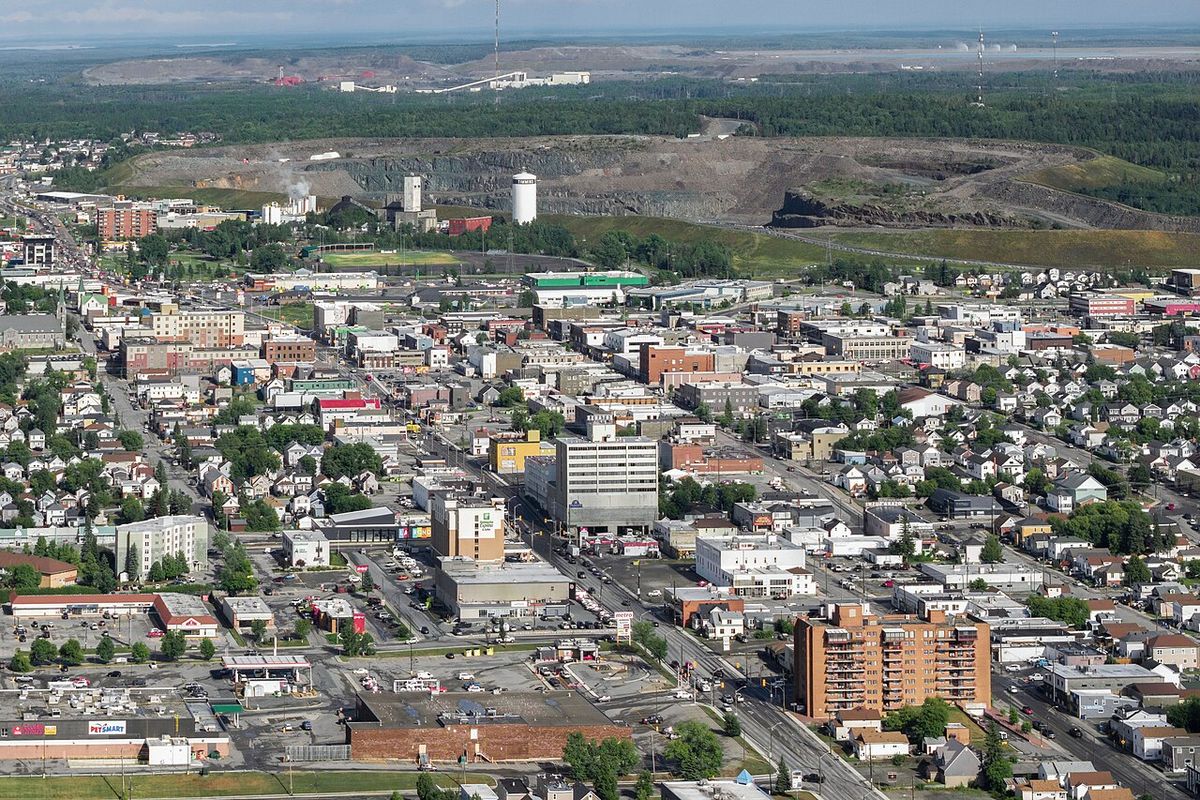
Kapuskasing is a town in the Cochrane District of Northern Ontario, Canada, situated on the Kapuskasing River within the Great Clay Belt. Founded in the early 20th century following the construction of the railway, its development was fundamentally shaped by the pulp and paper industry, most notably the Spruce Falls mill. The town holds historical significance as the site of one of Canada's largest World War I internment camps and a post-war soldier settlement scheme. With a majority Francophone population, Kapuskasing is a key service centre in the region, balancing its industrial heritage with its role in Northern Ontario's community fabric.
Geography and Climate
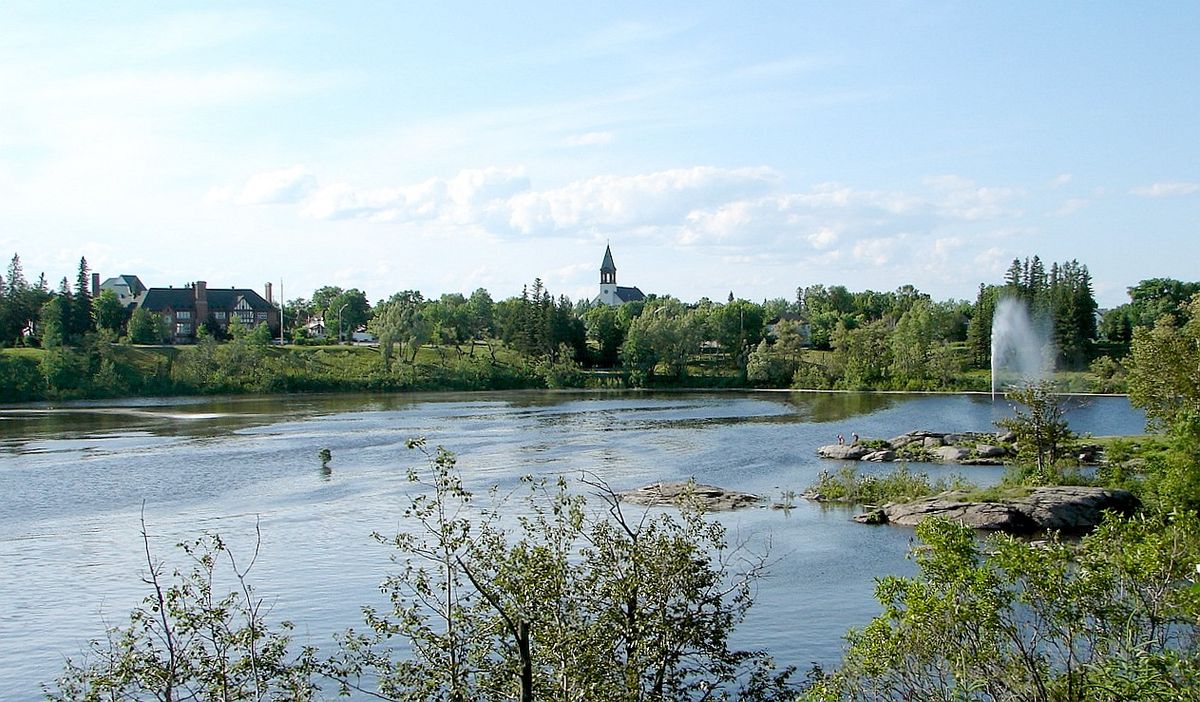
Kapuskasing is located approximately 92 kilometres east of Hearst and 130 kilometres northwest of Timmins, positioned in the heart of the Great Clay Belt. The regional topography is predominantly flat, characterized by numerous small lakes, muskeg bogs, and dense boreal forest. The area is drained by rivers flowing north to James Bay and is heavily forested with commercially valuable black spruce. Wildlife in the region includes moose, black bear, lynx, and red fox, while local lakes and rivers are populated with walleye, northern pike, and yellow perch. The town experiences a humid continental climate with long, cold winters and warm, sometimes humid summers, while spring and autumn are relatively short transitional seasons. Visitors often note the deep blue of the sky during clear weather, a characteristic feature of the northern environment.
History and Development
The town's origins are tied to the construction of the National Transcontinental Railway, later part of the Canadian National Railway, which was built through the area in 1911. Originally named MacPherson, the settlement was renamed Kapuskasing in 1917, a name derived from the Kapuskasing River and understood to mean "Whispering Water." Early development was slow until the establishment of the pulp and paper industry in the 1920s. A federal experimental farm and a post-World War I soldier settlement colony, established under the Returned Soldiers and Sailors Act of 1917, largely failed due to the challenging climate and geography. The town's growth became inextricably linked to the fortunes of the Spruce Falls pulp and paper mill, which began operations in 1922. An Ontario Historical Plaque commemorates the town's founding role in Ontario's heritage.
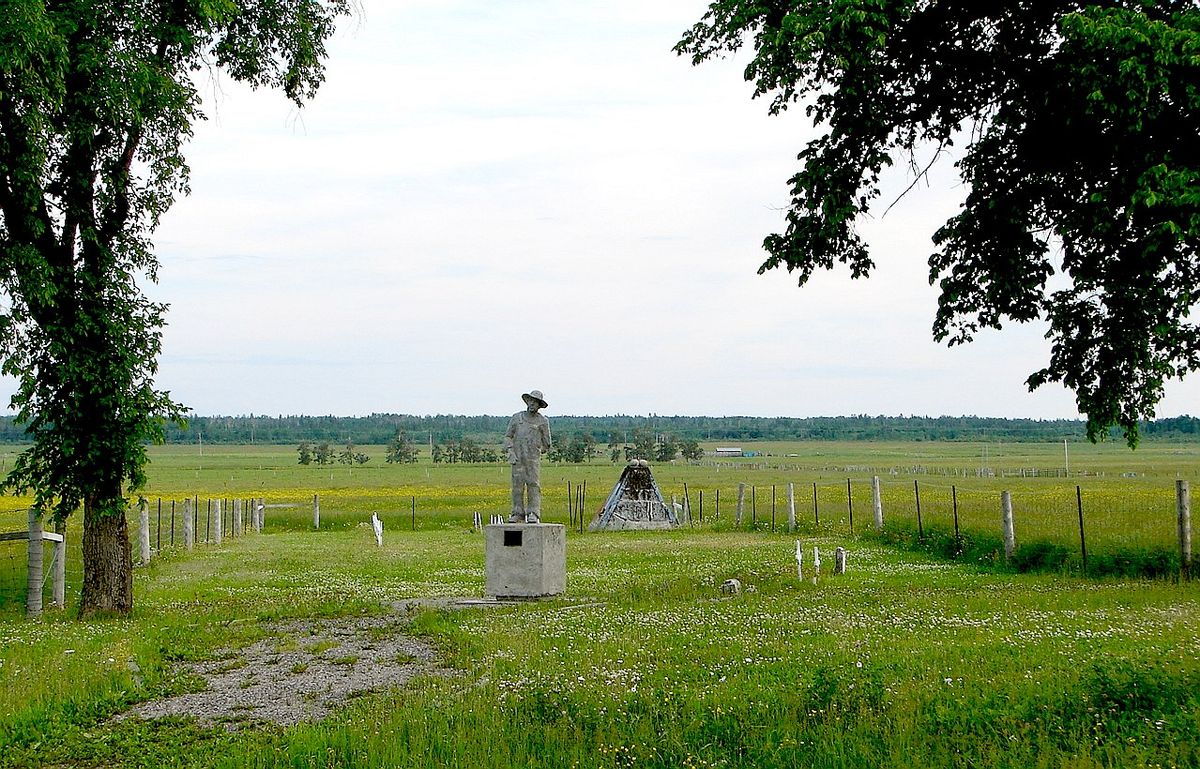
During World War I, from December 1914 to February 1920, Kapuskasing was the site of a major internment camp holding over 1,300 internees. The camp's population initially included many civilian internees of Ukrainian descent from the provinces of Bukovina and Galicia, which were then part of the Austro-Hungarian Empire. Later, it held German, Austrian, and Turkish prisoners of war. Prisoners were employed in constructing buildings and clearing land for the government experimental farm on the west side of the Kapuskasing River. Captain Watson Kirkconnell, later a notable figure in Canadian poetry, served as camp paymaster and helped prevent a prisoner uprising. A small cemetery near the Kapuskasing Airport, where victims of the 1918 influenza epidemic were buried, and an Ontario Historical Plaque are the main remnants of the camp.
In World War II, the town served as a headquarters for radar bases manned by the United States Army Air Forces, part of a network of five in Northern Ontario to watch for potential attacks on the Soo Locks in Sault Ste. Marie, Michigan. Today, the site hosts a Super Dual Auroral Radar Network station involved in tracking and measuring ionospheric turbulence. The town also annexed the Val Albert Improvement District and some unorganized territory in 1964, with the Val Albert name having been assigned by postal authorities on October 7, 1936.
The Spruce Falls Mill and Economic Base
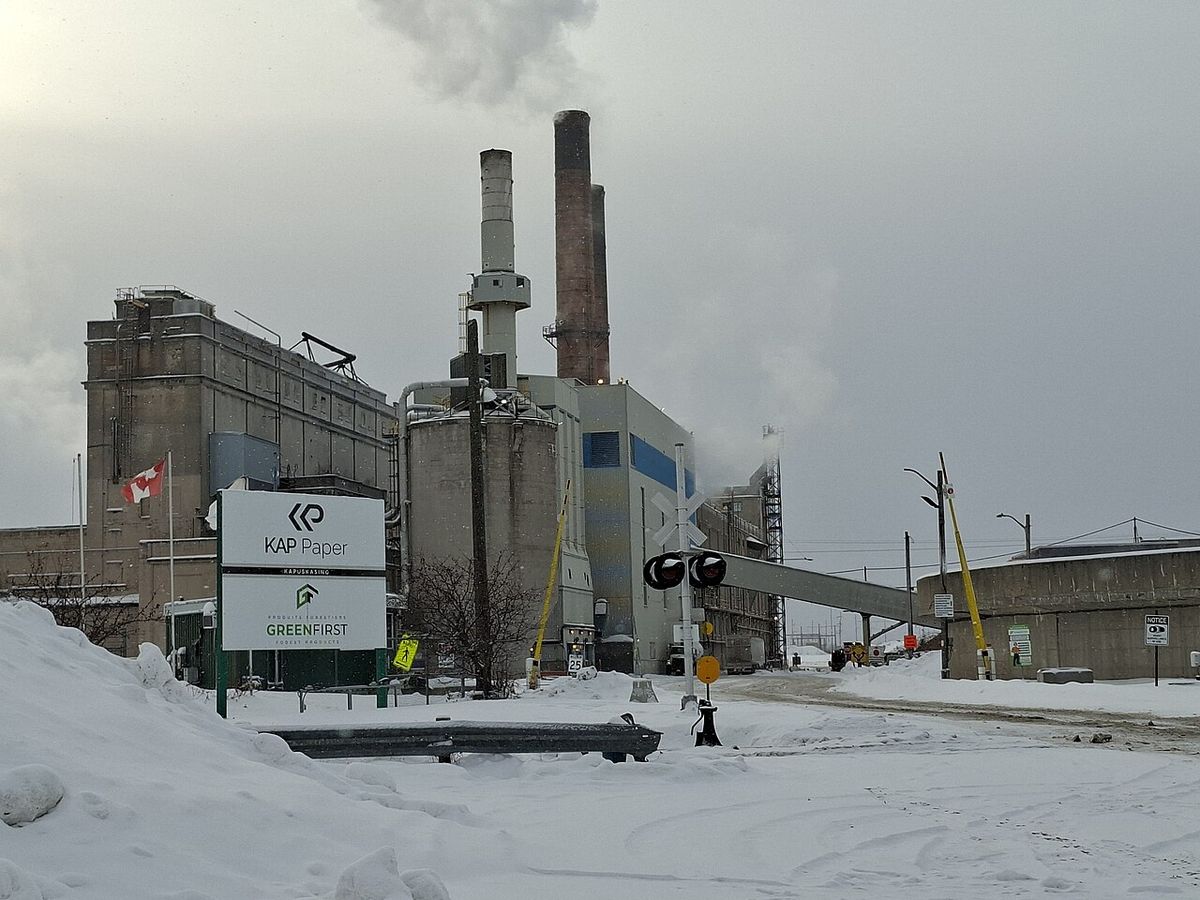
The economic life of Kapuskasing has been dominated by the pulp and paper mill, originally developed by the Spruce Falls Company Ltd. after Kimberly-Clark purchased the timber limits in 1920. A sulphite mill started in late 1922 with four 12-ton digesters and a daily output of 75 tons of pulp, though early development was plagued by fires and floods. A major expansion in 1926 saw the incorporation of the Spruce Falls Power and Paper Company under joint ownership of Kimberly-Clark and The New York Times. This project included building a 550 ton/day paper mill at Kapuskasing, a 75,000 HP hydro generating station at Smoky Falls, and an 80 kilometre railway and power line connecting the two, with Morrow and Beatty Ltd. of Peterborough as the contractor.
From July 13, 1928 until 2003, The New York Times was printed entirely on paper from this mill. The company, affectionately called "Uncle Spruce," provided steady employment for decades. Ownership changes occurred in 1991 when The Times and Kimberly-Clark sold their stakes to the mill's employees and Tembec Inc., with Tembec becoming the sole owner in 1997. The mill, known as Tembec, Spruce Falls Operations, was the focus of the tragic Reesor Siding strike in 1963 where three union workers were killed. In 2021, the mill was purchased by GreenFirst Forest Products from Rayonier Advanced Materials. The mill's operational history includes several key events:
- 1917: The Kapuskasing River Pulp and Timber limit is awarded to speculators Saphrenous A. Mundy and Elihu Stewart.
- 1920: Kimberly-Clark purchases the timber limits and forms the Spruce Falls Company Ltd.
- 1923: A water storage and hydroelectric dam is built at Spruce Falls by Morrow and Beatty Ltd.
- 1925: Additional timber limits bring the company's total holdings to 11,830 square kilometres.
- 1991: The New York Times and Kimberly-Clark sell the mill to employees and Tembec Inc.
- 2021: GreenFirst Forest Products purchases the mill from Rayonier Advanced Materials.
- September 2025: The mill announces a temporary shutdown after a deal with the Ontario government falls through.
- October 2025: A new deal is concluded and the mill announces it will resume operations.
The pulp and paper mill is the town's major employer, soon to be replaced by the Ontario Power Generation's Smoky Falls Dam reconstruction site. General Motors Canada operates the GM Cold Weather Development Centre in Kapuskasing. A former employer was also the Agrium phosphate mine which shut down in 2013. Agriculture and Agri-Food Canada operated an agricultural experiment station, or Experimental Farm, close to the town. The Experimental Farm closed in 2014. In late September 2025 the Paper Mill announced that it would shutdown after a deal with the Ontario Government fell through. The day after the shutdown became official, a rally was held in front of the Mill involving school classes, union workers and local figures such as mayors of localities and the local MPP Guy Bourgouin. During his speech Bourgouin blamed the Ford government for the shutdown. In mid October a deal was concluded and the Mill announced it will resume operations.
Demographics and Language
According to the 2021 Census of Population, Kapuskasing had a population of 8,057, a decrease of 2.8 percent from its 2016 population of 8,292. The town has a land area of 83.98 square kilometres, resulting in a population density of 95.9 persons per square kilometre. The community is predominantly Francophone, with 63.3 percent of the population identifying French as their mother tongue. English is the first language for 29.5 percent of residents, while 1.8 percent reported a non-official language as their mother tongue. A further 4.9 percent of the population identified both English and French as their first languages. This linguistic profile establishes Kapuskasing as a key Francophone centre within Northern Ontario, with Cree among the non-official languages reported.
Government and Representation
Kapuskasing is governed locally by a mayor and six councillors, all elected at large without a ward system. As of 2025, the mayor is David Plourde. Federally, the town is part of the Kapuskasing, Timmins, Mushkegowuk riding, represented by Conservative Party MP Gaétan Malette. Provincially, it lies within the Mushkegowuk, James Bay riding, represented by New Democratic Party MPP Guy Bourgouin. Bourgouin was notably vocal during the 2025 mill shutdown discussions, criticizing the provincial government's role in the situation during a rally that included local mayors and union workers. The structure of local government ensures all officials are elected through universal elections, meaning the town is not divided into wards for municipal voting.
Infrastructure and Public Services
Transportation access to Kapuskasing is primarily by car via Highway 11 or by Ontario Northland bus service. The town is served by the Ontario Northland Railway, which took over the trackage serving the mill in 1994 from the original Canadian National Railway line built in 1913. The Kapuskasing Airport no longer has scheduled commercial flights, having once been a refuelling stop for Trans-Canada Air Lines. The nearest airport with such service is Timmins Victor M. Power Airport, approximately 170 kilometres away by road. Health care is provided by the Sensenbrenner Hospital, a 53-bed facility built in 1988 that serves a regional population of about 14,000. The original Sensenbrenner Hospital was built in 1929 by the Spruce Falls Company. Clinical services at the current hospital are comprehensive, covering a wide range of medical needs for the community.
- Emergency services
- Chronic cardiorespiratory and acute neurology care
- Specialty clinics, general medicine, surgery, and anaesthesia
- Obstetrics, pediatrics, and chronic or long-term care
- Rehabilitation and related diagnostic and treatment services
Sensenbrenner Hospital serves a regional population of 14,000 residents and provides both in-patient and out-patient care. The health care services are assessment, evaluation, screening, treatment programs and direct therapy. EMS services are provided. The Porcupine Health Unit provides preventive and public health services, including psychiatric and social services. Public safety is maintained by a local fire department, which is a member of the Fire Marshalls of Ontario Public Fire Safety Council. An Ontario Provincial Police detachment is located at the site of the former Kapuskasing Inn, with Enhanced 911 service available for fire, ambulance, and police.
Education and Media
Kapuskasing is served by multiple school boards offering education in both English and French from kindergarten through to post-secondary levels. The public English-language system is administered by the District School Board Ontario North East, operating Diamond Jubilee Public School for junior kindergarten to grade 8 and Kapuskasing District High School for grades 9 to 12. French-language public education is provided by the Conseil scolaire de district du Nord-Est de l'Ontario, which runs École publique Coeur du Nord for kindergarten to grade 8 and École secondaire publique l'Écho du Nord for grades 9 to 12. The separate Catholic school systems include several institutions under two distinct boards.
- Northeastern Catholic District School Board (NCDSB): St Patrick School (JK-8, including French Immersion), established in 1960.
- Conseil scolaire catholique de district des Grandes-Rivières (CSCDGR): École élémentaire Jacques-Cartier (M-6), École élémentaire André Cary (M-6), and École secondaire catholique Cité des Jeunes (7-12).
- Other institutions include the Centre d’apprentissage du Nord-Est de l’Ontario (9-12), Centre d'éducation Alternative High School for adult education, a campus of Collège Boréal, and a campus of Université de Hearst.
Local media reflect the community's bilingual character. English-language commercial radio is provided by CKAP, branded as Moose FM, while French-language community radio is broadcast on CKGN. Print media includes the English-language Kapuskasing Northern Times, the bilingual Le/The Weekender community newspaper, and the French newspaper L'Horizon. The French newspaper Le Nord from Hearst is also available in town, while the Timmins Daily Press offers minimal regional coverage. These outlets serve both the English and French-speaking populations of the area.
Notable Landmarks and Architecture
Several historic buildings commissioned by the Spruce Falls Company Ltd. in the late 1920s formed the impressive architectural nucleus of the town. Designed by George Roper Gouinlock, son of architect George Wallace Gouinlock, in a distinctive Neo-Tudor style, these buildings included the Kapuskasing Inn, the Civic Centre built in 1928, and the original Sensenbrenner Hospital built in 1929. The Kapuskasing Inn, which hosted Princess Elizabeth and the Duke of Edinburgh on their first visit to Canada in 1951, closed in 2002, was damaged by arson in 2007, and was demolished in 2008. The Civic Centre remains, and the former hospital building is now repurposed as the Drury Place geared-to-income housing complex. The Spruce Falls dam, built in 1923 at the White Spruce Rapids, is another significant industrial landmark. The town's built heritage is a direct reflection of the company's role in community planning and development during the early industrial period.
Population Trends
Kapuskasing has experienced population changes over recent decades, reflecting broader economic shifts in Northern Ontario resource towns. The 2021 census recorded a population below that of 2016, continuing a trend of modest decline. The following table shows population figures from recent censuses, illustrating this trend. The town's population is housed in 3,790 of its 4,134 total private dwellings according to the 2021 census. The demographic composition, with its strong Francophone majority, remains a stable and defining characteristic of the community despite these numerical shifts. The economic events of 2025 related to the pulp mill will likely influence future population trends and housing occupancy rates in the municipality.
| Census Year | Population | Change from Previous Census |
|---|---|---|
| 2016 | 8,292 | Not Applicable |
| 2021 | 8,057 | -2.8% |
Questions about Kapuskasing
What does the name Kapuskasing mean?
The name Kapuskasing is derived from the Kapuskasing River. Based on a 1900 survey report that included information from local Cree guides, the word is said to mean "Whispering Water. The river itself was historically referred to as "Kai-bush-ka-sing" in early surveys. The town was originally named MacPherson until it was renamed in 1917.
What was the Kapuskasing internment camp?
During World War I, from December 1914 to February 1920, Kapuskasing was the site of one of Canada's largest internment camps. It held over 1,300 internees, including civilian internees of Ukrainian descent from the Austro-Hungarian Empire, as well as German, Austrian, and Turkish prisoners of war. Prisoners were used for construction and land clearing. A small cemetery near the airport remains from this period.
What happened to the historic Kapuskasing Inn?
The Kapuskasing Inn was a Neo-Tudor style landmark built in 1927-28. It hosted the future Queen Elizabeth II in 1951. The inn closed in 2002 and fell into disrepair. On May 22, 2007, it was severely damaged by a fire set by youths, who were not charged due to their age. The remains of the building were demolished in May and June 2008.
What is the major industry in Kapuskasing?
The pulp and paper mill is the town's major employer. The mill originated as Spruce Falls Pulp and Paper Ltd., incorporated in 1917, and was later developed by Kimberly-Clark starting in 1920. It became a joint venture with The New York Times in 1926 and was a primary economic driver for decades, with the Times printed on its paper from 1928 to 2003. The mill is now known as Tembec Spruce Falls Operations, having been purchased by GreenFirst Forest Products in 2021. Other significant employers include the Ontario Power Generation's Smoky Falls Dam reconstruction site and the GM Cold Weather Development Centre, while the former Agrium phosphate mine closed in 2013.
What languages are spoken in Kapuskasing?
According to the 2021 census, 63.3 percent of the population identified French as its mother tongue and 29.5 percent identified English as its mother tongue. Approximately 4.9 percent of residents identified both French and English as their first languages. A further 1.8 percent identified a non official language as a first language, with examples including Cree. This linguistic profile is reflected in the town's educational and media institutions, which serve both English and French speaking communities.
Who are the current political representatives for Kapuskasing?
The federal representative is Gaétan Malette of the Conservative Party of Canada, who is the Member of Parliament for the riding of Kapuskasing, Timmins, Mushkegowuk. The provincial representative is Guy Bourgouin, a member of Ontario's New Democratic Party, who serves as the Member of Provincial Parliament for Mushkegowuk, James Bay. At the municipal level, the town is led by Mayor David Plourde. The mayor works with six councillors to complete the town's municipal government, with all local officials elected through universal elections, meaning the town is not divided into wards.
Sources and further reading
- Kapuskasing (Wikipedia)
- Home | Town of Kapuskasing (kapuskasing.ca)
- Kapuskasing, Garden City and Model Town (heritagetrust.on.ca)
- Kapuskasing | The Seven, Northeastern Ontario Tourism (northeasternontario.com)
- Kapuskasing (onthisspot.ca)
Checked by the Your Space Hamilton desk. Last updated 2026-11-01.