American badger
The American badger (Taxidea taxus) is a powerful fossorial carnivore and the only badger species native to North America. Characterized by its stocky, low-slung body, formidable digging claws, and distinctive black-and-white facial markings, it is a master excavator of the grasslands. In Canada, the species is of significant conservation concern, with subspecies in British Columbia and Ontario listed as endangered under the federal Species at Risk Act. Its survival is directly linked to the preservation of open prairie and grassland habitats, which are increasingly fragmented by agriculture and urban development.
Taxonomy and Physical Description
The American badger is a member of the diverse Mustelidae family, which includes weasels, otters, ferrets, and wolverines. Its lineage is ancient, having split from other mustelids approximately 18 million years ago, making it sister to all other extant species in the family. Within the badger group, it belongs to its own subfamily, Taxidiinae, and is not closely related to the European or honey badger. In Mexico, it is sometimes called tlalcoyote, which can cause confusion as the Spanish word tejón is also used for coatis. The species exhibits notable physical adaptations for its digging lifestyle, with a body built for power and excavation.
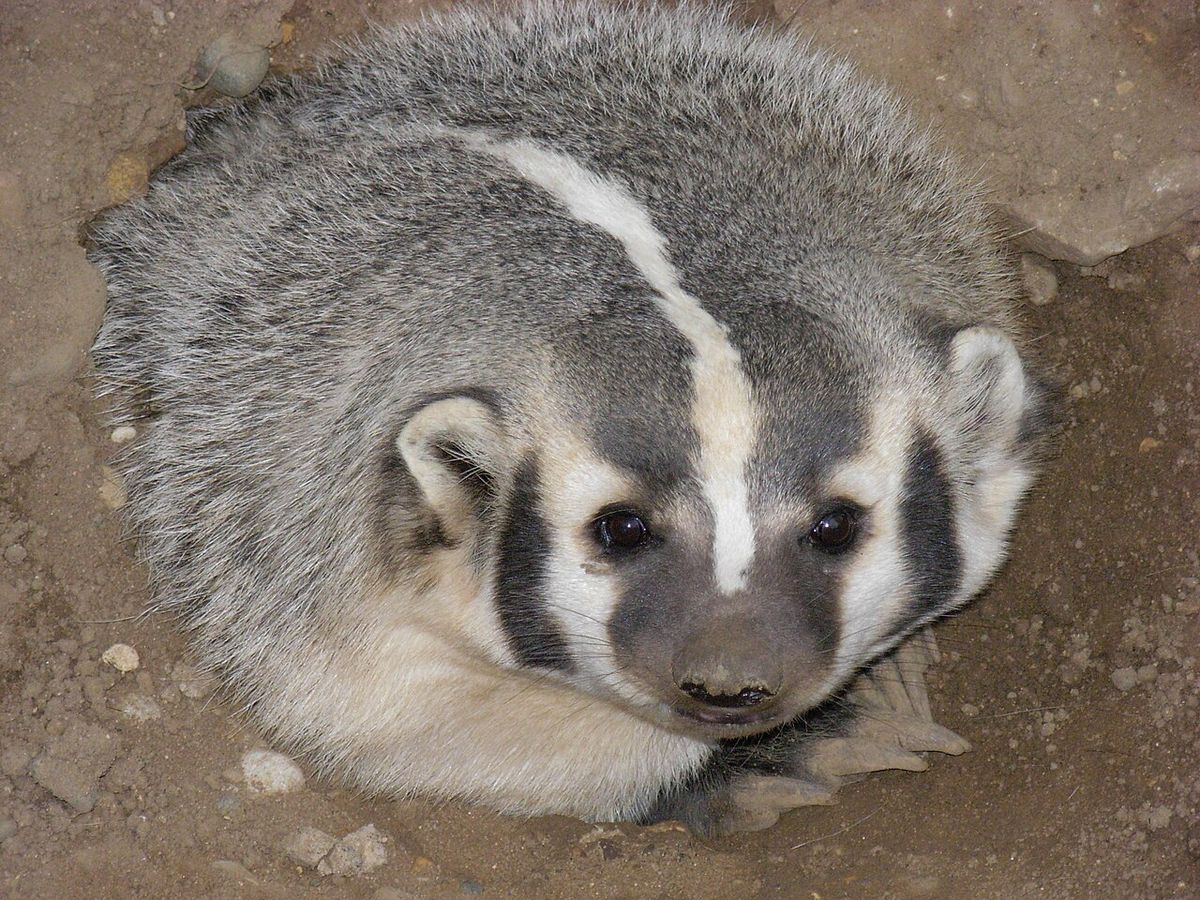
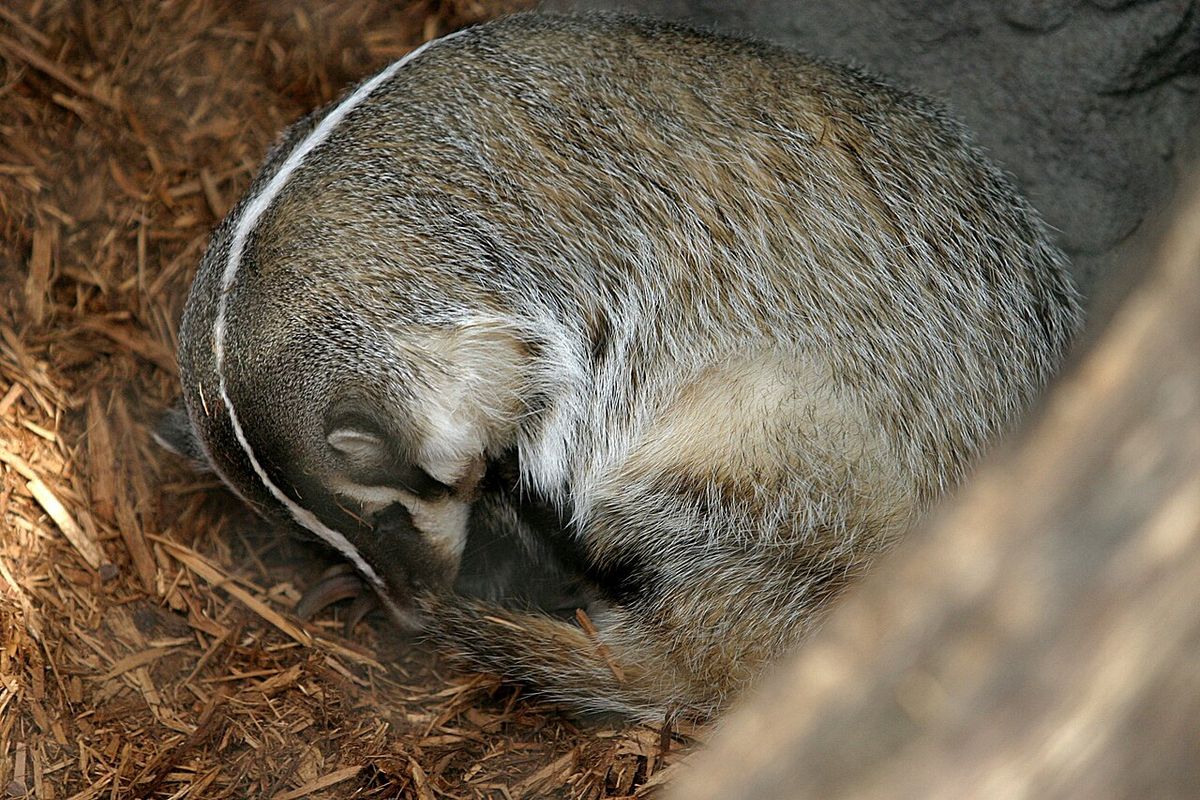
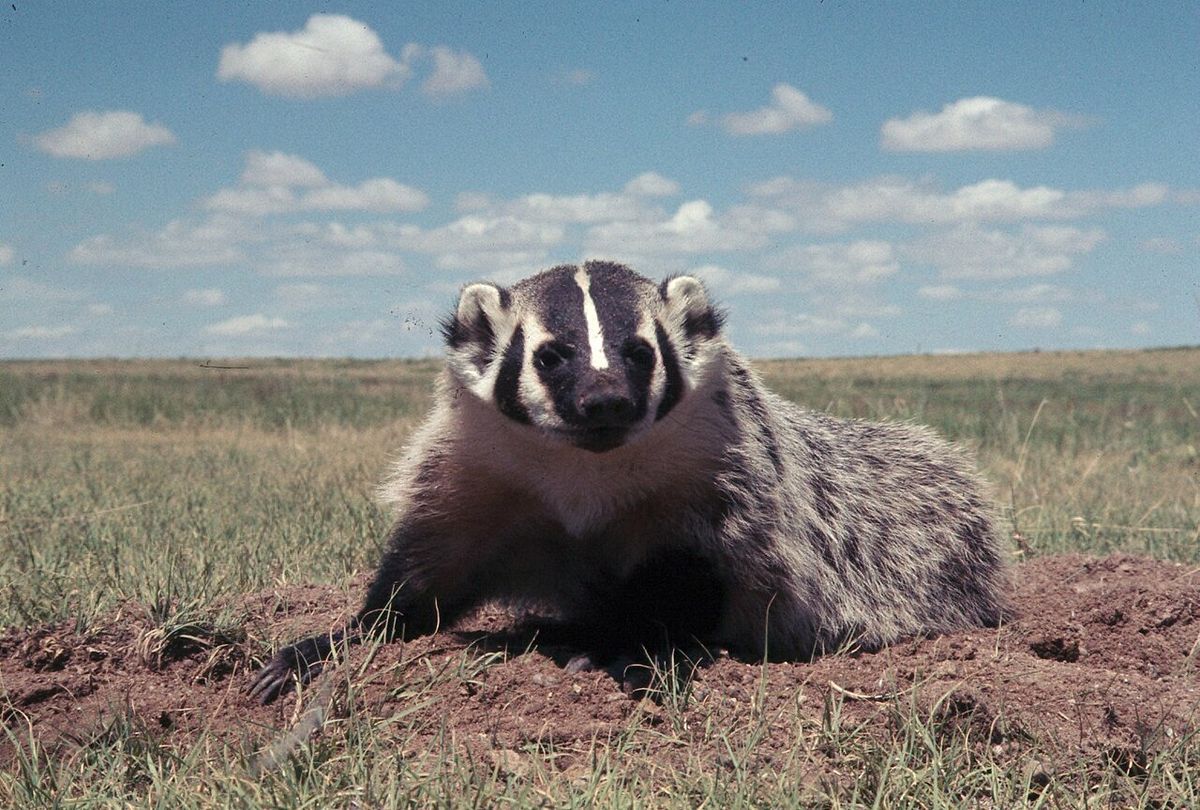
An American badger typically measures between 60 and 75 centimetres in length, with males being slightly larger than females. Weight varies by season and location, with northern subspecies being heavier. Females average 6.3 to 7.2 kilograms, while males average up to 8.6 kilograms, though they can reach 11.5 to 15 kilograms in the fall when food is abundant. The coat is a grizzled mix of brown, black, and white coarse hair, providing camouflage in grassland settings. The face is triangular with a distinctive pattern, including brown or black cheek patches and a white stripe running from the nose over the head, which extends the full body length in the subspecies T. t. berlandieri.
The animal's morphology is specialized for digging, or fossorial life. It possesses a conical head, bristles on the ears, and nictitating membranes to protect the eyes from soil. Its most powerful tools are its forelimbs, equipped with huge, non-retractable claws that can measure up to five centimetres long. The forelimb bones, including a strong humerus and specialized olecranon process, provide immense mechanical advantage for moving earth. The badger's skin is notably loose, allowing it to twist and turn within tight burrows and making it difficult for predators to get a firm grip during an attack.
Habitat and Range in Canada
The American badger is a creature of open country, preferring grasslands, prairies, farmlands, meadows, and shrub-steppe communities where the soil is friable and prey is abundant. It avoids dense forests but can be found in forest glades, marshes, and riparian zones. In Canada, its range is limited and fragmented, concentrated in specific regions of the prairies and interior plateaus. The species can be found at elevations up to 3,700 metres but is typically found in lower, drier life zones. Plant communities associated with its habitat include grasses, sagebrush, creosotebush, junipers, and in some areas, fescue grasslands and aspen parklands.
In Ontario, the subspecies T. t. jacksoni is restricted to the extreme southwestern portion of the province, primarily along the north shore of Lake Erie in agricultural areas and woodland edges, with occasional reports from the Bruce-Grey region. In British Columbia, the T. t. jeffersonii subspecies is divided into two endangered populations. A western population exists in the Okanagan Valley and Cariboo region, while an eastern population is found in the East Kootenay area. These Canadian populations are isolated from the broader badger range in the United States, making them particularly vulnerable. Habitat loss due to agricultural conversion and urban sprawl is the primary threat, fracturing the open landscapes they require.
Badgers require specific cover for sleeping, concealment, protection, and raising young. They often enlarge the burrows of prey like gophers or ground squirrels to create their own dens. A female may create a network of two to four burrows connected by tunnels for her offspring. Home range size varies significantly by season and sex, with males having larger territories. One study found an average annual home range of 2,100 acres, with a female's range shrinking from 1,790 acres in summer to just 5 acres in winter. Density in optimal Utah scrub-steppe was estimated at one badger per 2.6 square kilometres.
Diet and Hunting Behaviour
The American badger is a carnivore specialized in hunting subterranean rodents. Its diet consists predominantly of fossorial mammals, which it pursues with relentless digging. Primary prey species include pocket gophers, ground squirrels such as Richardson's ground squirrel, moles, marmots, prairie dogs, and voles. It is also a significant predator of snakes, including rattlesnakes, and is considered their most important predator in regions like South Dakota. The badger's menu is supplemented by ground-nesting birds like burrowing owls and bank swallows, lizards, amphibians, carrion, fish, insects including bees, and occasionally plant matter like corn, peas, mushrooms, and sunflower seeds.
Badgers are primarily nocturnal but can be active during the day, especially in remote areas or when females are foraging for their young in spring. They do not hibernate but may enter cycles of torpor lasting around 29 hours during winter, emerging when temperatures are above freezing. Their hunting method is a spectacular display of fossorial adaptation, using a scratch-digging process where powerful forelimbs break soil and move it behind or to the sides of the body. They sometimes plug tunnel entrances with objects to trap prey. Their keen sense of smell and sensitive facial vibrissae (whiskers) are crucial for detecting prey underground, as their vision is adapted for low-light conditions rather than being their primary sense.
One of the most fascinating aspects of badger behaviour is their documented hunting partnership with coyotes. This interspecific cooperation typically involves one badger and one coyote working in tandem. The partnership capitalizes on their different hunting styles. A ground squirrel fleeing a coyote will retreat into its burrow, where the badger can dig it out. Conversely, a squirrel spotting a badger will flee above ground, where the coyote can chase it down. Research indicates this cooperation raises the coyote's catch rate by about 33 percent, while the badger benefits by spending more time underground and active, expending less energy. This relationship highlights the badger's integral role in prairie ecosystem dynamics.
Life Cycle and Reproduction
American badgers are generally solitary animals except during the breeding season. Mating occurs in late summer and early fall, with some males breeding with multiple females. The species exhibits delayed implantation, where the fertilized egg does not immediately implant in the uterus. Pregnancy is suspended until December or as late as February, with births occurring from late March to early April. This adaptation ensures young are born in spring when conditions are favourable and prey is becoming more active. Litter sizes range from one to five young, with an average of three.
Badgers are born blind, furred, and helpless, with their eyes opening at four to six weeks of age. The female feeds her young solid foods before complete weaning and for several weeks afterward. The kits first emerge from the den on their own at five to six weeks old. Families typically break up and juveniles disperse from the end of June through August, with some leaving their mothers as early as late May. These dispersal movements are often erratic as young badgers establish their own territories. Most females become pregnant for the first time after they are a year old, though a small minority as young as four to five months old can ovulate and rarely become pregnant. Males usually do not breed until their second year.
- Mating Season: Late summer to early fall.
- Birth Season: Late March to early April.
- Average Litter Size: Three kits.
- Eyes Open: 4-6 weeks old.
- First Emergence from Den: 5-6 weeks old.
- Juvenile Dispersal: End of June to August.
The average lifespan of an American badger in the wild is 9 to 10 years, with a recorded maximum of 14 years. In captivity, one individual lived at least 15 years and five months. While they are formidable and aggressive, juvenile badgers are vulnerable to predation by golden eagles, coyotes, and bobcats. Adult badgers are occasionally killed by larger predators including bears, gray wolves, and cougars, with a 2019 study indicating cougars may be a main predator of adults. Their abandoned burrows provide important shelter for a variety of other wildlife, including foxes, skunks, burrowing owls, and amphibians, demonstrating their role as ecosystem engineers.
Conservation Status and Threats
The conservation status of the American badger in Canada is a serious concern, with populations fragmented and declining. Under the federal Species at Risk Act, the subspecies Taxidea taxus jacksoni (Ontario population) and T. t. jeffersonii (British Columbia populations) are listed as Endangered. The nominate subspecies, T. t. taxus, found in the prairie provinces, was listed as a species of Special Concern in 2012. In British Columbia, the Ministry of Environment designates the American badger as a red-listed species, meaning it is considered provincially threatened or endangered. These legal designations trigger the creation of recovery strategies and offer protections, particularly on federal lands.
The primary threat to American badgers across their range is habitat loss and fragmentation. The conversion of native grasslands to intensive agriculture and the expansion of urban and industrial development have drastically reduced and isolated their living space. This not only decreases the area available for foraging and denning but also reduces populations of their rodent prey. Roads pose a severe and direct threat, as badgers are often killed by vehicles while crossing between habitat fragments. One study in Sonoma County documented badgers foraging between fragments separated by distances from under half a mile to approximately four miles, highlighting the perilous journeys they must undertake.
- Federal Status (Canada): Endangered (T. t. jacksoni, T. t. jeffersonii), Special Concern (T. t. taxus).
- Provincial Status (BC): Red-listed (Threatened/Endangered).
- Primary Threat: Habitat loss from agriculture and urbanization.
- Major Direct Threat: Road mortality.
- Key Conservation Goal: Protect 30% of Canada's lands and waters by 2030.
- Legal Protection: Ontario Endangered Species Act (T. t. jacksoni).
Conservation efforts are focused on habitat protection, research, and public engagement. Recovery teams have been established to map habitats, identify threats, and develop action plans. Recommendations include conducting radio-telemetry studies to understand habitat use, investigating diet, and developing measures to reduce road mortality, such as wildlife crossings. Translocation of at-risk badgers has been used successfully to re-establish populations in areas where they have disappeared. Stewardship programs encourage landowners to protect dens found on private property. The broader national commitment to protecting 30 percent of lands and waters by 2030 is seen as a crucial step in conserving the grassland ecosystems upon which the American badger depends.
Subspecies and Canadian Populations
The American badger has several recognized subspecies, with their ranges overlapping in some areas. In Canada, three designations are critical for conservation. The subspecies Taxidea taxus jacksoni is found only in a small, isolated area of southwestern Ontario, primarily south of the Niagara Peninsula near Lake Erie. This population is geographically separated from other badger groups and is estimated to number only in the low hundreds. The T. t. jeffersonii subspecies is found in western North America. In Canada, it is split into two distinct and endangered populations in British Columbia's interior, one in the Okanagan Valley-Cariboo region and another in the East Kootenay.
The more widespread T. t. taxus subspecies ranges across the prairie provinces of Alberta, Saskatchewan, and Manitoba. While its status is less dire than the endangered subspecies, it is still a species of Special Concern due to ongoing habitat pressures. These subspecies are not always morphologically distinct to the casual observer, as intermediate forms occur in areas of range overlap. However, their genetic and geographic isolation, particularly in Ontario and British Columbia, makes each population uniquely vulnerable and a priority for separate conservation strategies. The table below summarizes the status and range of the key subspecies within Canada.
| Subspecies | Canadian Range | Conservation Status (SARA) | Key Threats |
|---|---|---|---|
| T. t. jacksoni | Southwestern Ontario (Lake Erie region) | Endangered | Habitat loss, road mortality, isolation |
| T. t. jeffersonii (East) | East Kootenay, British Columbia | Endangered | Habitat loss, development, prey reduction |
| T. t. jeffersonii (West) | Okanagan Valley-Cariboo, B.C. | Endangered | Habitat loss, urbanization, roads |
| T. t. taxus | Prairie provinces (AB, SK, MB) | Special Concern | Agricultural conversion, habitat fragmentation |
Protection and recovery efforts are tailored to these distinct populations. In Ontario, the Endangered Species Act provides legal protection for T. t. jacksoni and its habitat. In British Columbia, recovery strategies focus on protecting known den sites, especially natal dens used by mothers, and securing grassland habitats. Across the prairies, conservation aims to maintain connectivity in the face of expanding agricultural landscapes. Public involvement through reporting sightings, supporting habitat stewardship, and advocating for protected areas is considered vital for the long-term survival of all Canadian badger populations.
Questions about American badger
Where can you find American badgers in Canada?
American badgers in Canada are found in three main regions. The endangered jacksoni subspecies lives in a small, isolated area of southwestern Ontario near the north shore of Lake Erie. The endangered jeffersonii subspecies has two populations in the interior of British Columbia, one in the Okanagan Valley and Cariboo region and another in East Kootenay. The more widespread taxus subspecies, a species of Special Concern, inhabits the grassland and parkland regions of the prairie provinces, including Alberta, Saskatchewan, and Manitoba.
Why are American badgers endangered in Canada?
American badgers are endangered primarily due to extensive habitat loss and fragmentation. The conversion of native grasslands to agriculture and the spread of urban development have destroyed and divided the open landscapes they require for hunting and denning. This also reduces populations of their rodent prey. Roads pose a direct lethal threat, causing many badger fatalities as they travel between habitat fragments. The isolation of populations, like those in Ontario and British Columbia, reduces genetic diversity and increases vulnerability, making recovery more difficult without targeted conservation intervention.
What do American badgers eat?
American badgers are carnivores specialized in hunting burrowing rodents. Their primary diet consists of pocket gophers, ground squirrels, moles, voles, and prairie dogs. They are also significant predators of snakes, including rattlesnakes. Their diet is supplemented by ground-nesting birds like burrowing owls, lizards, amphibians, insects, carrion, and occasionally some plant materials such as corn or sunflower seeds. They hunt by using their powerful claws to dig prey out of their burrows, sometimes working cooperatively with coyotes to increase hunting success.
How do American badgers hunt with coyotes?
American badgers and coyotes sometimes engage in a cooperative hunting relationship. Typically, one badger and one coyote work together, though groups can vary. This partnership exploits the different escape behaviours of their shared prey, such as ground squirrels. A squirrel fleeing a coyote will dive into its burrow, where the badger can dig it out. If a squirrel sees a badger, it will stay above ground and run, where the coyote can chase it. Research shows this teamwork increases the coyote's catch rate by about 33 percent, while the badger benefits by being able to hunt more efficiently underground with less energy expenditure.
What makes American badgers such good diggers?
American badgers are anatomical marvels adapted for digging. Their most obvious tools are their long, strong, non-retractable foreclaws, which can exceed five centimetres and act like spades. Their forelimbs are massively powerful, with sturdy bones and large muscle attachments for generating force. They have a conical head, loose skin for maneuverability in tunnels, and protective features like nictitating membranes over their eyes. Their keen sense of smell and sensitive whiskers help them locate prey underground. This suite of adaptations allows them to excavate soil rapidly and pursue prey deep into burrow systems.
How can I help protect American badgers in Canada?
Canadians can help protect American badgers in several ways. Report any sightings to provincial wildlife authorities, as this data helps map populations and habitats. If you witness illegal activity like trapping or harassment on protected lands, report it to conservation officers. Landowners who discover a badger den on their property may be eligible for stewardship programs that provide support for habitat protection. Supporting broader conservation goals, such as Canada's commitment to protect 30 percent of lands and waters by 2030, helps preserve the grassland ecosystems badgers need. Staying informed through organizations dedicated to species at risk is also valuable.
Sources and further reading
- American badger (Wikipedia)
- The American Badger: A Subterranean Specialist (aiwc.ca)
- American Badger (naturecanada.ca)
- American Badger jeffersonii subspecies (wildlifepreservation.ca)
Checked by the Your Space Hamilton desk. Last updated 2026-10-24.