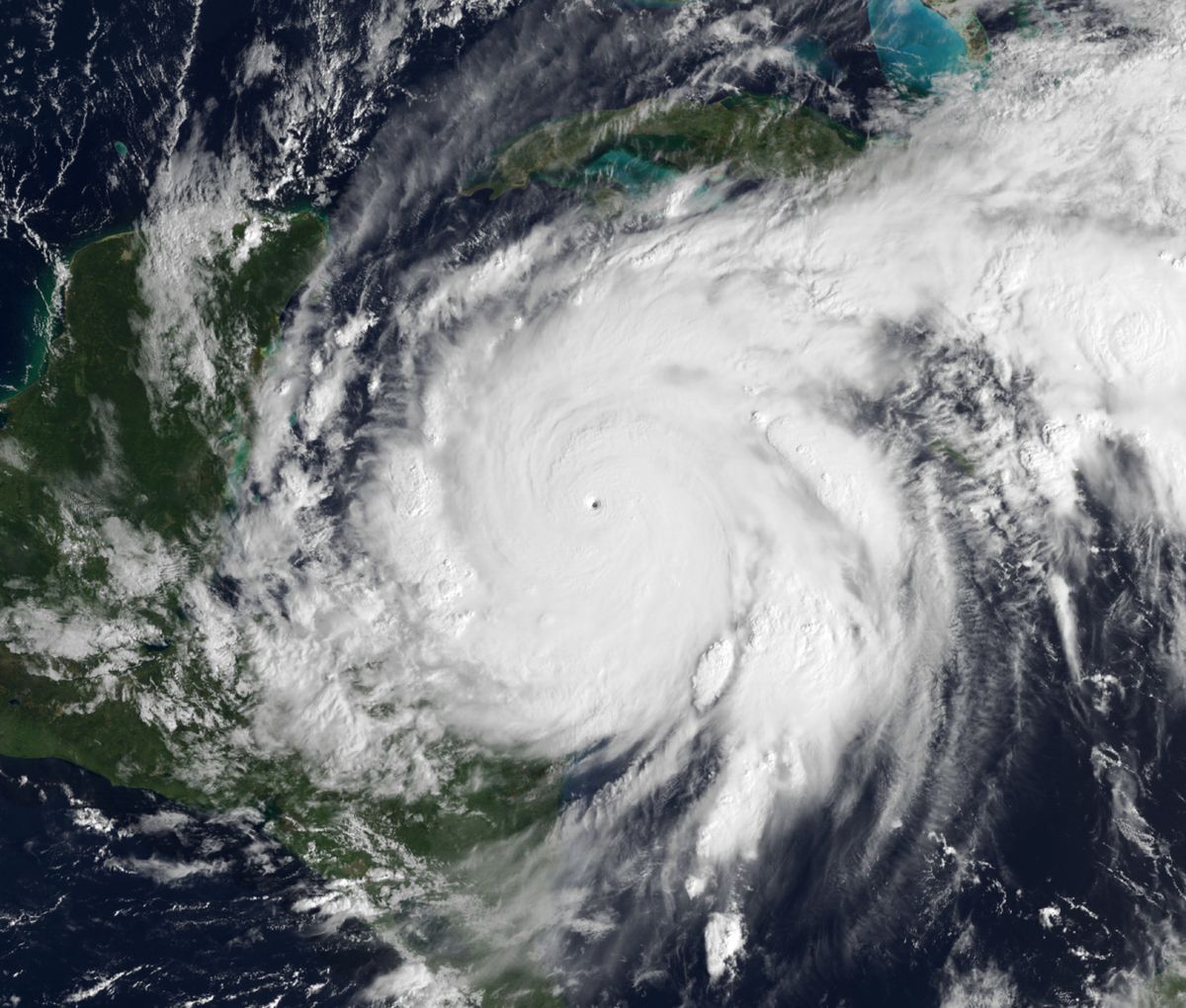
Tornado outbreak of June 16-18, 2014
The tornado outbreak of June 16-18, 2014, was a severe weather event concentrated in the Great Plains and Midwestern United States, with two tornadoes also occurring in Ontario. The outbreak most significantly affected Nebraska, where twin EF4 tornadoes devastated the town of Pilger on June 16, killing two people and critically injuring twenty others. This event was part of a violent tornado family that produced four EF4 tornadoes, broadcast live on television, and was followed by multiple other strong tornadoes across the northern Great Plains over the subsequent two days. The outbreak sequence produced a total of 76 confirmed tornadoes, causing widespread destruction across several states and one Canadian province.
Meteorological Synopsis
The Storm Prediction Center (SPC) first noted the potential for severe weather associated with mesoscale convective systems in the northern United States for June 16-18 on June 13. The development of a low-pressure area and increasing atmospheric instability were expected to be key contributing factors. Forecasts on June 15 predicted a probability for significant severe weather across a large area of northern Iowa and adjacent regions, setting the stage for the outbreak. The morning of June 16 featured only isolated storms with marginal severe weather in Nebraska. Beginning around 0800 UTC, however, conditions became favourable for severe weather, particularly large hail, across central Nebraska. Moisture from the Gulf of Mexico raised dew points, and the presence of altocumulus castellanus clouds indicated potential for later severe weather. An eastward-moving warm front enhanced moisture flow, prompting the SPC to issue a slight risk for severe weather for eastern South Dakota, Nebraska, and areas eastward to the western Great Lakes at 1200 UTC. The first severe thunderstorm watch was issued for eastern Nebraska in response to developing supercells. An hour later, the SPC upgraded some areas to a moderate risk due to increasing moisture and convective available potential energy (CAPE). A Particularly Dangerous Situation tornado watch was issued later that afternoon as a powerful cyclic supercell developed in Nebraska, which would go on to produce the violent tornado family near Pilger.
The Northeast Nebraska Tornado Family
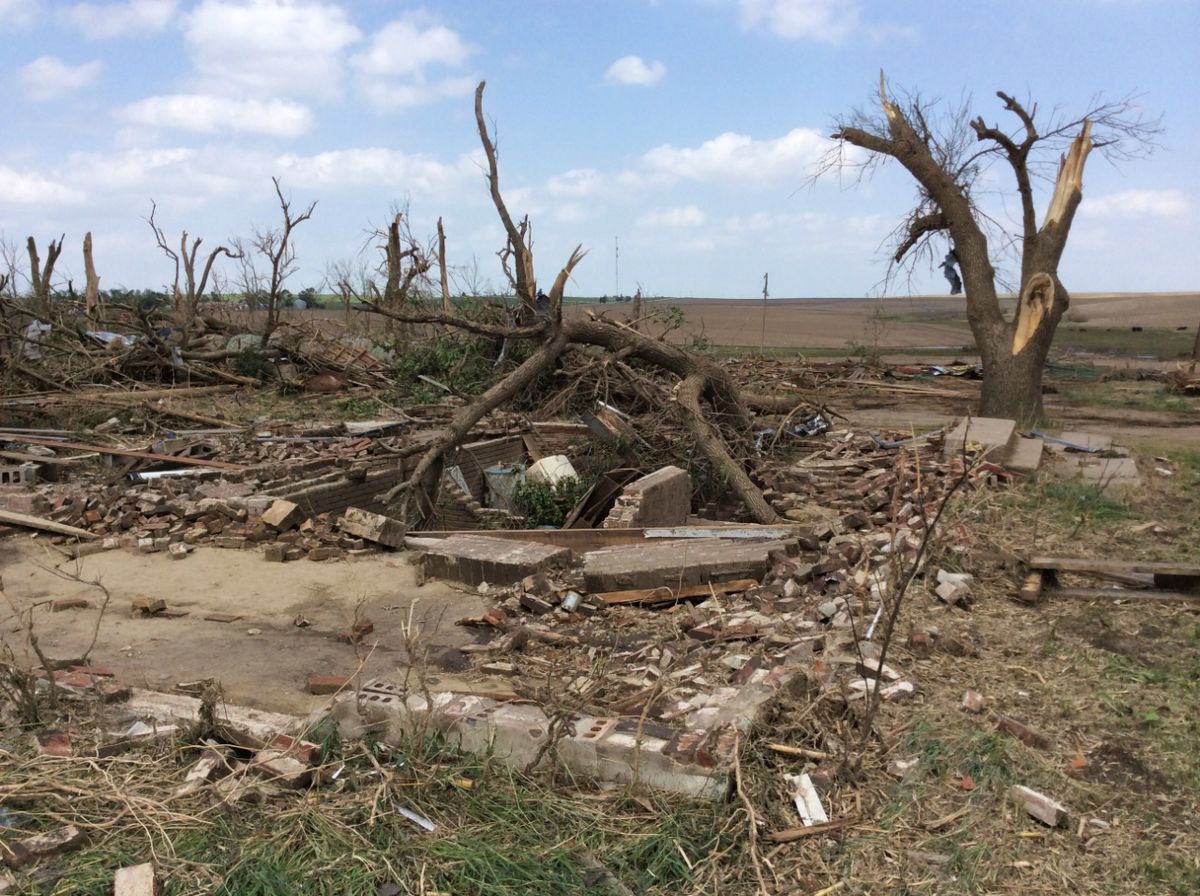
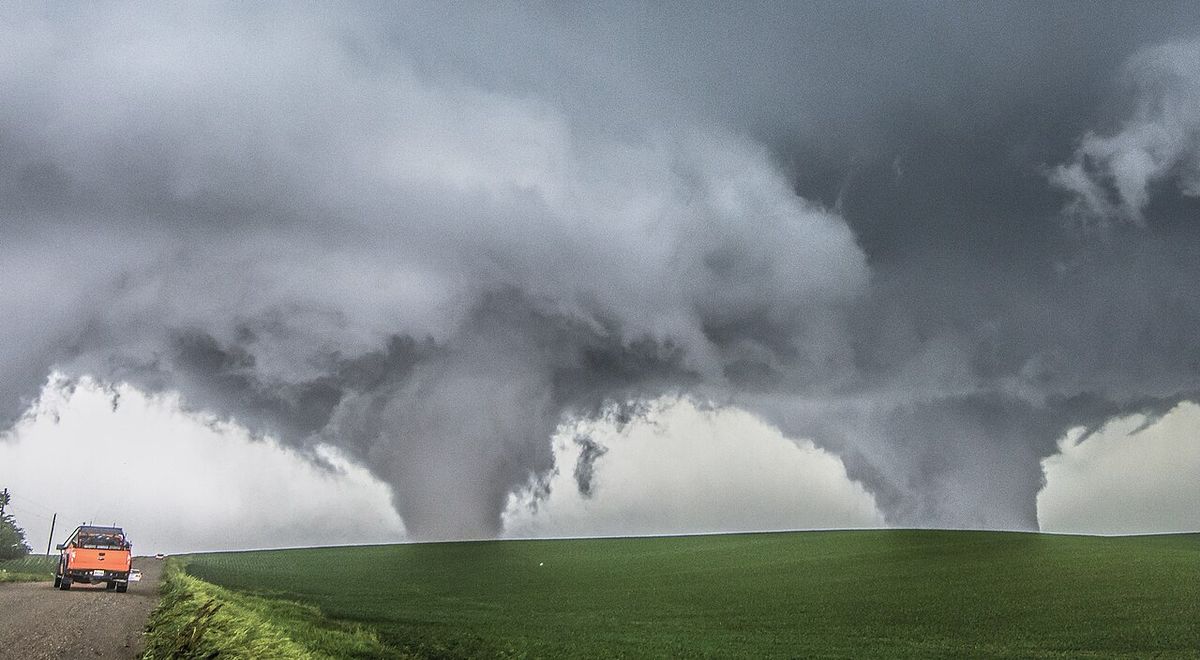
A single, powerful cyclic supercell thunderstorm tracked across five counties in northeastern Nebraska on the afternoon of June 16, producing a family of six tornadoes. Four of these tornadoes were rated EF4, making this an extremely rare and violent event. The storm's evolution was broadcast live on television, capturing the terrifying twin tornadoes that struck Pilger. The first tornado was a brief EF0 near Stanton that caused no damage. The second tornado touched down southwest of Stanton, intensifying into a large wedge tornado. It leveled two homes at high-end EF3 strength west of Stanton before reaching EF4 intensity near the Maskenthine Reservoir, where it swept away farmhouses and debarked trees. This tornado dissipated after crossing Highway 57. The third tornado developed southwest of Pilger and intensified rapidly as it approached town, striking Pilger directly at EF4 strength. This tornado killed one person, injured many others, and destroyed or damaged most structures in Pilger, marking Nebraska's first tornado fatality since 2004. As this main Pilger tornado approached town, a fourth tornado developed south of Pilger and paralleled its path.
These twin EF4 tornadoes continued northeast past Pilger, with both reaching peak intensity simultaneously as their damage paths crossed. In this area, numerous trees were completely debarked, two farm homes were swept away leaving only basements, and over 300 cattle were killed. A second fatality occurred when the fourth tornado tossed a car from a road. After crossing paths, the fourth tornado lifted, and the main Pilger tornado continued northeast, sweeping away another home at EF4 strength before dissipating. The supercell then produced a fifth tornado, another large wedge that quickly reached EF4 strength, sweeping away a farm home and toppling a large metal electrical transmission tower. This tornado, which moved north past Wakefield, was the final violent tornado of the family, weakening and dissipating north of town. A sixth and final EF0 tornado briefly touched down near Hubbard, causing no damage.
Other Significant Tornadoes
While the Pilger supercell was the most dramatic event, the multi-day outbreak produced numerous other significant tornadoes across the Great Plains and Midwest. On the evening of June 16, two tornadoes struck Platteville, Wisconsin simultaneously, rated EF1 and EF2, resulting in major damage. Before tornado activity continued on June 17, a man died due to straight-line winds in Iowa. Early on June 17, an EF3 tornado caused major damage to homes and an elementary school in Verona, Wisconsin, while an EF2 from the same storm damaged residential areas of Madison. Later that day, an EF3 tornado caused significant damage in rural Carter County, Montana near the Custer National Forest.
A large EF2 tornado also damaged numerous homes in Angus and Barrie, Ontario, representing the Canadian impact of the outbreak. That evening, multiple large wedge tornadoes were reported near Coleridge and Laurel, Nebraska. One tornado from a cyclic supercell in Cedar County caused EF3 damage northwest of Coleridge. No casualties occurred from this tornado, though several farmsteads were hit.
- June 16, Platteville, WI: Simultaneous EF1 and EF2 tornadoes caused major damage.
- June 17, Verona, WI: EF3 tornado damaged homes and an elementary school.
- June 17, Madison, WI: EF2 tornado damaged residential areas.
- June 17, Carter County, MT: EF3 tornado damaged rural areas near Custer National Forest.
- June 17, Angus/Barrie, ON: Large EF2 tornado damaged numerous homes.
- June 17, Coleridge, NE: EF3 multiple-vortex tornado caused significant farm damage.
June 18 Tornadoes in South Dakota
The outbreak continued into its third day with significant tornado activity in South Dakota. During the evening of June 18, a supercell produced a large EF2 tornado that struck the southern side of Wessington Springs. The tornado rapidly intensified, causing EF2 damage to a car dealership before moving into southeastern neighbourhoods of the town. It impacted numerous homes, with one residence on Blowers Avenue South suffering wall collapse and another on Main Street East having a car thrown through the air into a tree. In total, 43 homes and 12 businesses in Wessington Springs were damaged or destroyed. Despite the extensive damage, no fatalities occurred and only one person was injured, a outcome credited to an effective tornado warning.
Later that evening, another supercell produced the fifth and final EF4 tornado of the outbreak sequence near Lane and Alpena, South Dakota. This large, violent, shape-shifting tornado displayed strong multiple-vortex characteristics. It reached EF4 intensity southwest of Alpena, completely decimating the farmstead owned by the Jerauld County commissioner. The farmhouse was swept away, with debris falling into the basement where the commissioner, his wife, and their dog were sheltering. The couple survived with minor injuries, but their dog was killed. The tornado scoured fields clean, debarked trees, and hurled machinery. Another pair of twin tornadoes were also reported near Crow Lake, South Dakota, that same evening.
Damage Assessment and Tornado Ratings
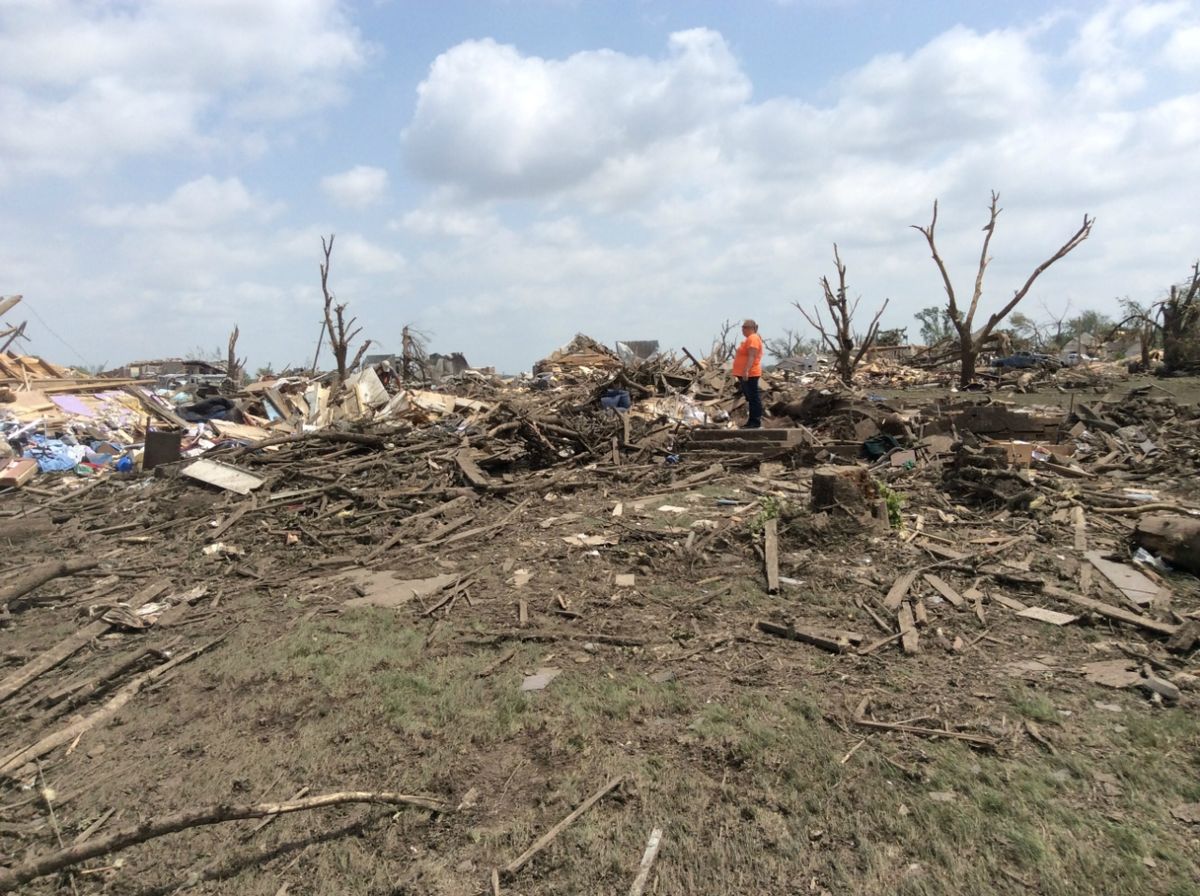
The National Weather Service confirmed a total of 76 tornadoes during the three-day outbreak sequence. The Pilger tornadoes were responsible for both fatalities and the majority of critical injuries. Damage in Pilger was catastrophic, with numerous homes and businesses completely destroyed, brick buildings in the downtown area heavily damaged or destroyed, and trees denuded and debarked. A church was leveled and partially swept away, and a school building had much of its top floor destroyed.
Across the affected region, damage ranged from minor tree and outbuilding damage from weaker tornadoes to complete destruction of farmsteads and residential areas. The table below summarises the confirmed tornado counts and the highest rating for each day of the outbreak. The outbreak caused millions of dollars in property and agricultural damage. In addition to the structural losses, the tornadoes killed over 300 cattle in Nebraska and caused significant crop damage in South Dakota. Recovery efforts were undertaken quickly in some areas, such as the Jerauld County commissioner installing a concrete bunker in his new basement within two months of the Alpena tornado.
| Date | Confirmed Tornadoes | Maximum Rating |
|---|---|---|
| June 16 | Multiple, including 4 EF4s in NE | EF4 |
| June 17 | Multiple, including EF3s in WI & MT | EF3 |
| June 18 | Multiple, including an EF4 in SD | EF4 |
Historical Context and Rarity
The tornado outbreak of June 16-18, 2014, was notable for several rare meteorological phenomena. The production of twin violent (EF4) tornadoes occurring simultaneously and in close proximity, as seen near Pilger, is an exceptionally rare event. The last documented instance of twin violent tornadoes occurring so close together was nearly 50 years prior. The cyclic supercell that produced the Nebraska tornado family was also remarkable for generating four EF4 tornadoes in succession, a demonstration of the storm's intense and sustained rotation. The entire outbreak sequence fits within a pattern of significant June tornado events in the northern Great Plains.
This outbreak has drawn comparisons to other historic events, such as the tornado outbreak and derecho of June 16-18, 2010, which occurred exactly three years prior. It also preceded another violent outbreak, the tornado outbreak and derecho of June 19-22, 2025, which would occur 11 years later. The Pilger event specifically was a stark reminder of the destructive potential of Great Plains supercells, as the town had also been hit by a violent F4 tornado over a decade earlier, on June 23, 2003. The event's intensity and the live television coverage have made it a frequently studied case in meteorology.
Questions about Tornado outbreak of June 16-18, 2014
How many people died in the June 2014 tornado outbreak?
The tornado outbreak directly caused two fatalities. Both deaths occurred in Nebraska on June 16 due to the twin EF4 tornadoes that struck the Pilger area. One person was killed in the town of Pilger itself, and a second fatality occurred when a car was tossed from a road northeast of town. One man died in Iowa on June 17 due to straight-line winds associated with the severe weather, bringing the total weather-related deaths for the event to three.
What made the Pilger, Nebraska tornadoes so rare?
The Pilger event was extremely rare due to the simultaneous occurrence of twin violent (EF4) tornadoes from the same supercell thunderstorm. The two tornadoes had parallel tracks for several miles, with both reaching peak EF4 intensity at the same time as their damage paths crossed. Meteorologists noted that the last time twin violent tornadoes occurred in such close proximity was nearly 50 years before this event. The parent supercell was also cyclic, meaning it underwent multiple cycles of tornado production, ultimately generating six tornadoes including four rated EF4.
Did the tornado outbreak affect Canada?
Yes, the tornado outbreak did affect Canada. On June 17, 2014, a large EF2 tornado caused damage to numerous homes in the communities of Angus and Barrie, Ontario. This was part of the same widespread severe weather pattern that affected the Great Plains and Midwestern United States. The tornado in Ontario was one of the stronger tornadoes confirmed during the three-day outbreak sequence outside of the primary Nebraska event.
Were there any notable tornadoes in Wisconsin during this outbreak?
Yes, Wisconsin experienced several notable tornadoes. On the evening of June 16, two tornadoes, rated EF1 and EF2, struck the town of Platteville simultaneously, causing major damage. Early on June 17, an EF3 tornado caused major damage to homes and an elementary school in Verona. Another tornado from the same storm, rated EF2, caused damage in residential areas of Madison. These events were part of the same widespread severe weather pattern that extended east from the primary outbreak area in Nebraska.
What was the strongest tornado rating in the outbreak?
The strongest tornado rating in the outbreak was EF4 on the Enhanced Fujita Scale. Five EF4 tornadoes were confirmed during the entire outbreak sequence. Four of these occurred within a single violent tornado family in northeast Nebraska on June 16, impacting areas near Stanton, Pilger, and Wakefield. The fifth EF4 tornado struck on June 18 near Lane and Alpena in South Dakota, completely sweeping away a farmstead.
How many tornadoes were confirmed during the three-day outbreak?
The outbreak produced a total of 76 confirmed tornadoes from June 16 to 18, 2014. This severe weather event was concentrated primarily in the Great Plains and Midwestern United States, with two tornadoes also occurring in Ontario, Canada. The most destructive day was June 16, which featured a violent tornado family in Nebraska that spawned six tornadoes, four of which were rated EF4. The outbreak sequence continued for two more days, generating multiple other strong tornadoes across several states including Wisconsin, South Dakota, and Montana.
Sources and further reading
- Tornado outbreak of June 16-18, 2014 (Wikipedia)
- June 16, 2014 Pilger Tornado Event (weather.gov)
- June 16, 2014 Northeast Nebraska Tornado Outbreak (silverliningtours.com)
- June 16-18, 2014 tornado outbreak sequence Facts for Kids (kids.kiddle.co)
Checked by the Your Space Hamilton desk. Last updated 2026-10-26.