1991 Perfect Storm
The 1991 Perfect Storm, also known as the Halloween Nor'easter, was a powerful and unusual weather system that ravaged the eastern seaboard of North America from October 28 to November 2, 1991. The storm began as an extratropical cyclone off Atlantic Canada, absorbed Hurricane Grace, and later evolved into a small, unnamed Category 1 hurricane. It caused over $200 million in damage and resulted in thirteen fatalities, most famously the loss of the fishing vessel Andrea Gail and its crew of six. The event gained its well-known name from a conversation between a National Weather Service forecaster and author Sebastian Junger, and its story became deeply embedded in North American culture through a bestselling book and major film.
Meteorological history and development
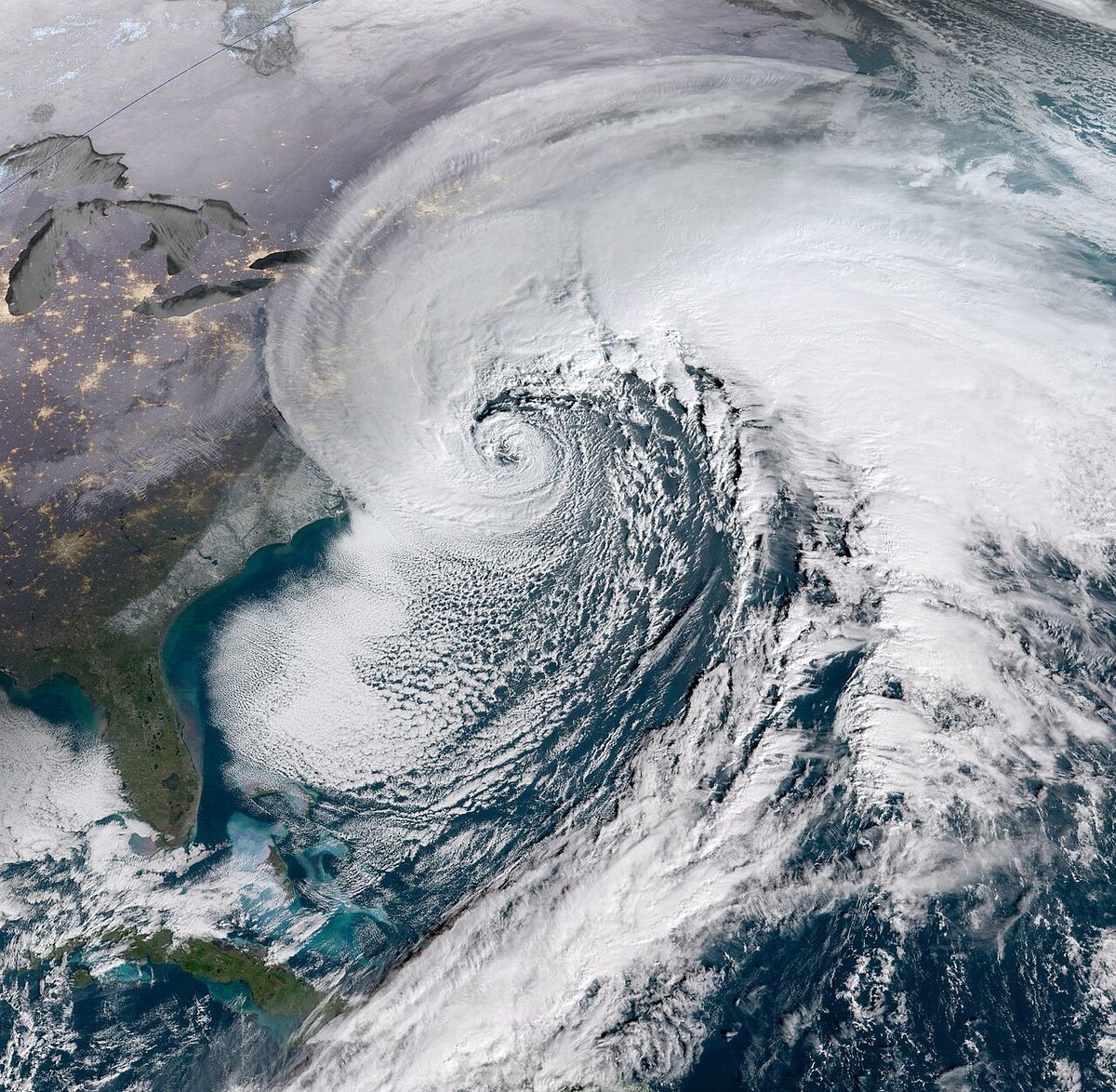
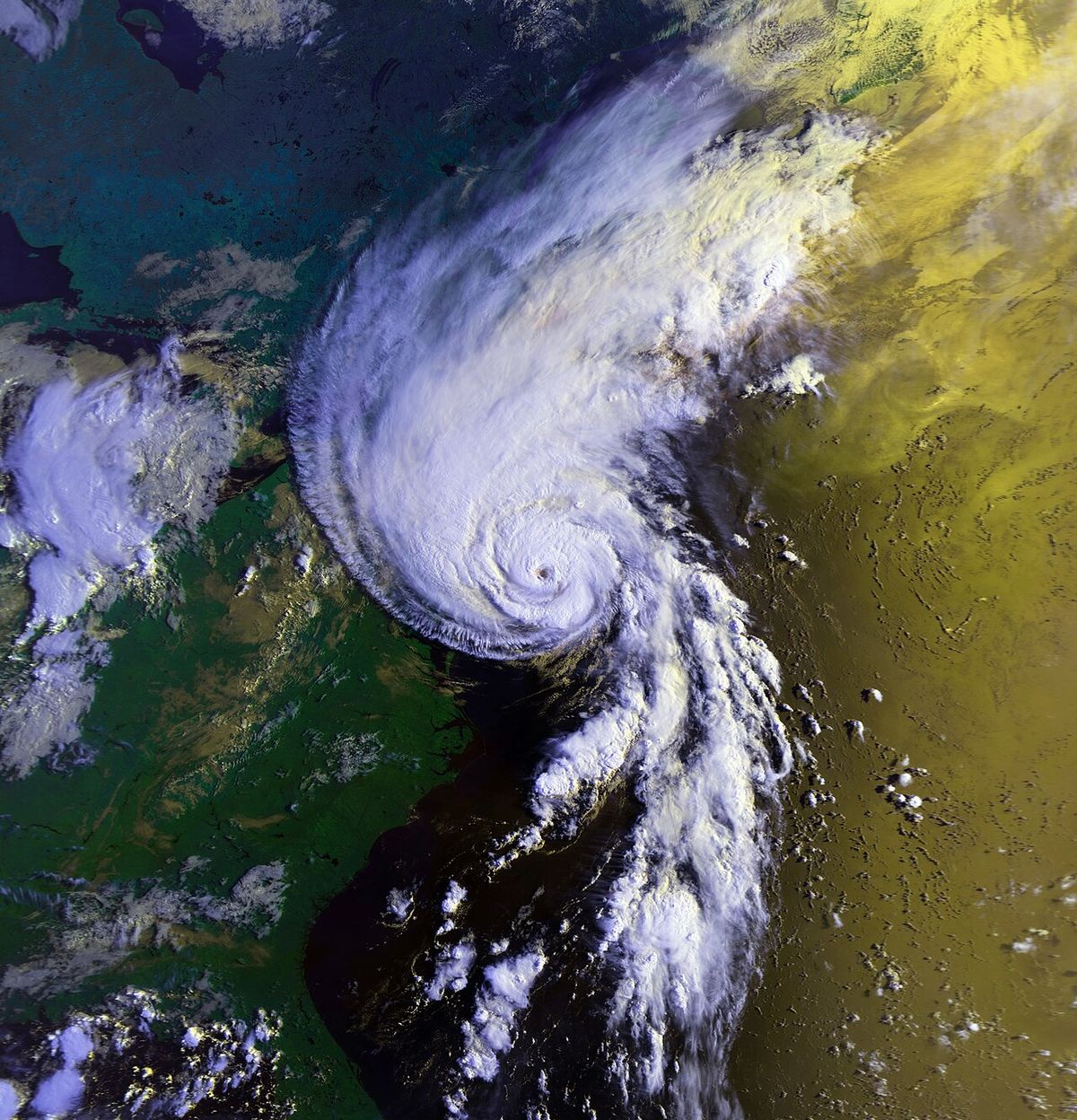
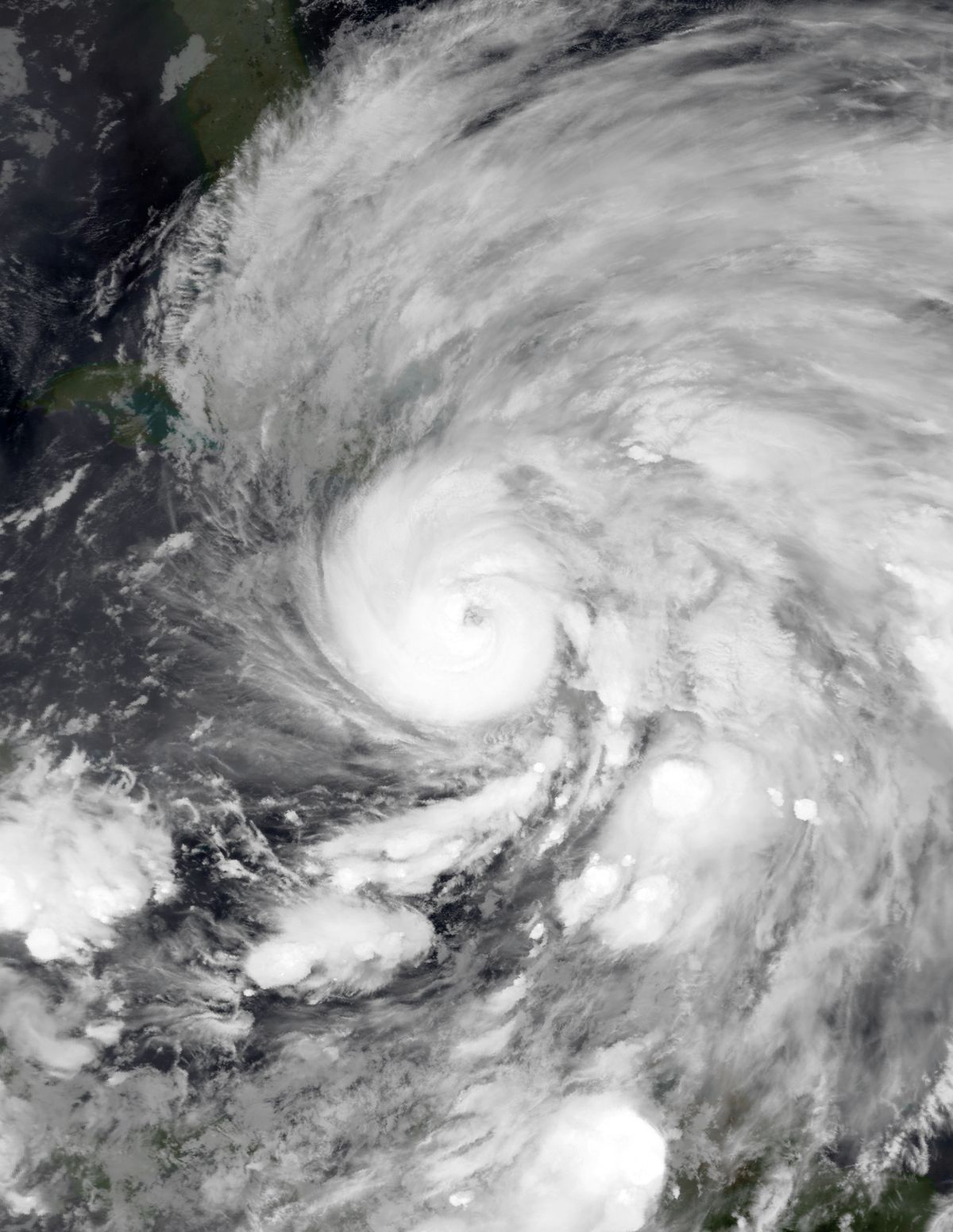
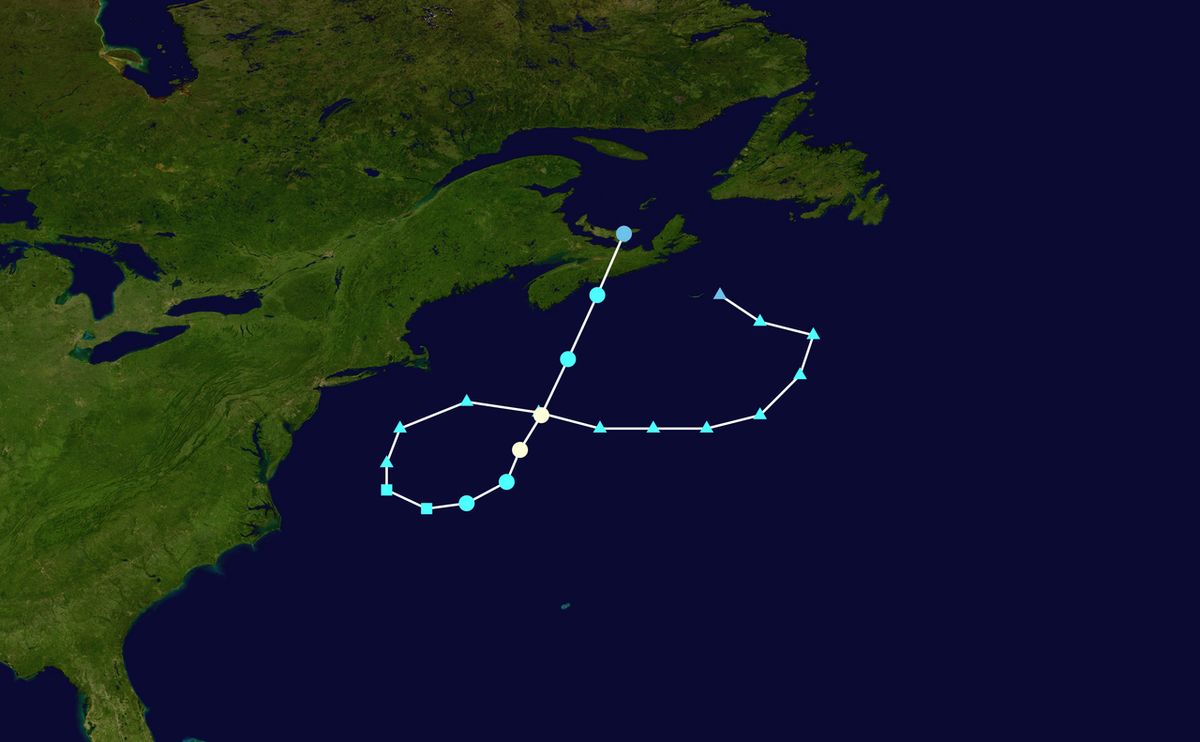
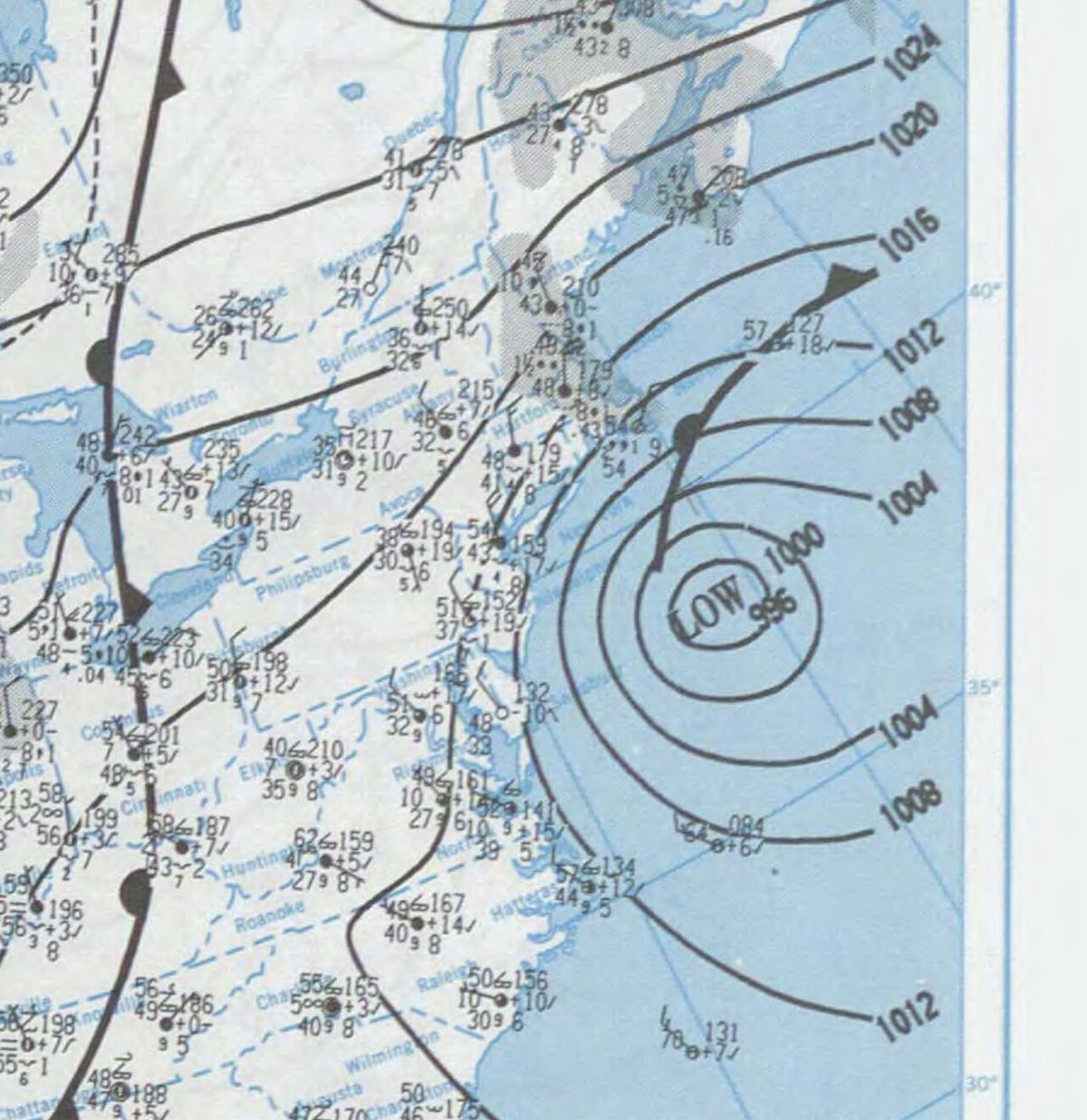
The origins of the Perfect Storm trace back to a cold front that moved off the US East Coast on October 28, 1991, spawning an extratropical low-pressure system east of Nova Scotia. A strong blocking high-pressure ridge over eastern Canada forced this low on an unusual retrograde track, moving it southeastward and then westward instead of the typical northeastward path of a nor'easter. This rare steering pattern, estimated to occur only once every 50 to 100 years, set the stage for a catastrophic convergence of weather systems. On October 29, Hurricane Grace, which had been moving northward in the western Atlantic, was drawn into the circulation of the deepening cyclone. By the following day, Grace was completely absorbed by the larger storm, injecting warm, moist tropical energy that significantly enhanced the nor'easter's intensity.
The merged storm reached its peak intensity as a powerful extratropical cyclone at approximately 12:00 UTC on October 30, located about 390 miles south of Halifax, Nova Scotia. Its central pressure dropped to 972 millibars, generating winds up to 70 mph and producing enormous waves across the western Atlantic. The pressure gradient between the storm and the blocking high to the north was exceptionally strong, reaching a differential of 70 millibars off the southern New England coast. A buoy 264 miles south of Halifax recorded a monumental wave height of 100.7 feet, the highest ever measured on the Scotian Shelf. Other NOAA buoys east of Cape Cod recorded significant wave heights of 39 feet and maximum sustained winds of 61 mph with higher gusts.
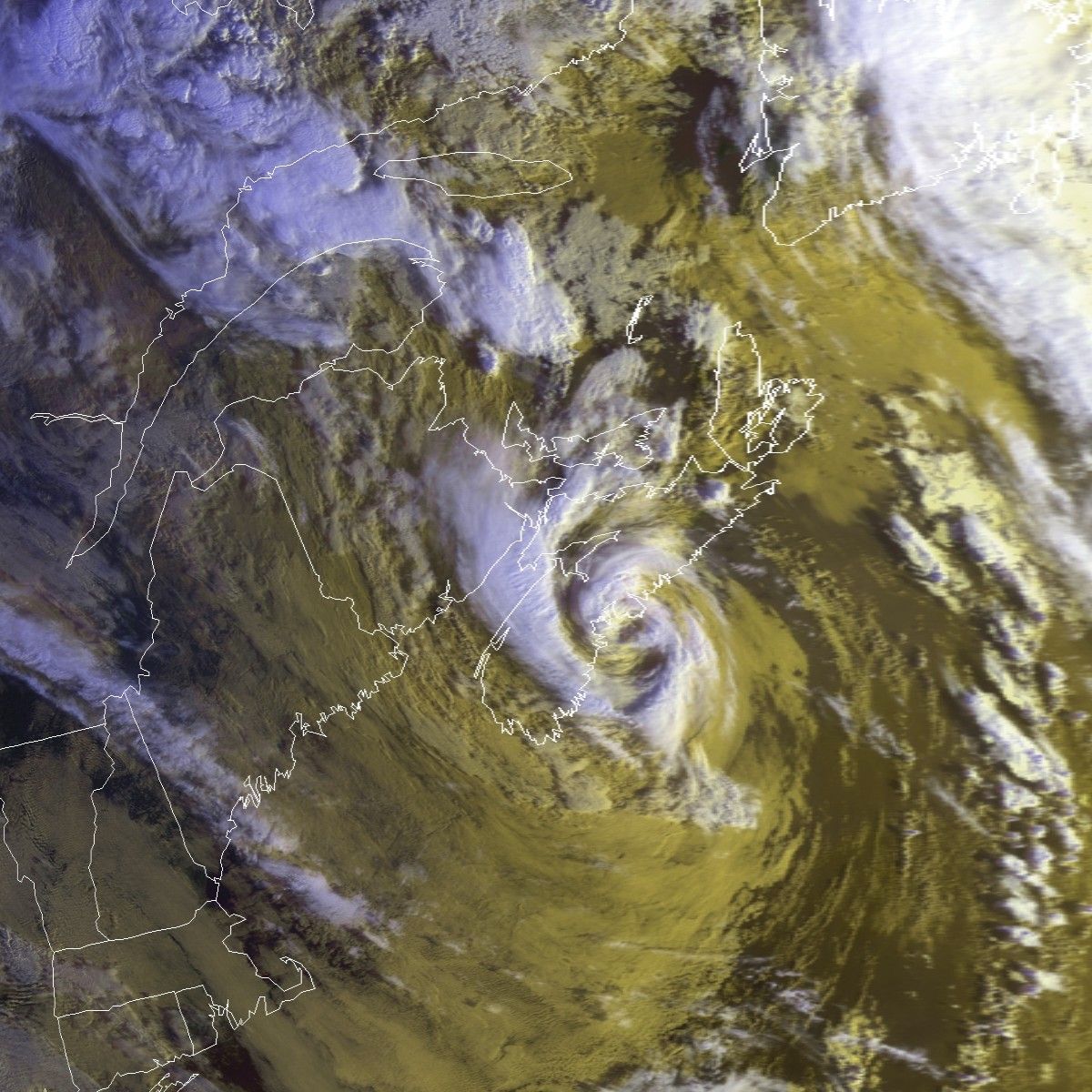
After peaking, the storm turned southward and weakened, but then moved over the warm waters of the Gulf Stream. There, it began a remarkable transformation, developing organized convection and a warm core. By approximately 14:00 UTC on November 1, the system had evolved into a Category 1 hurricane with maximum sustained winds of 75 mph, confirmed by an Air Force Reserve Unit reconnaissance flight. The National Hurricane Center deliberately left it unnamed to avoid public confusion, as the storm had been widely reported for days in its earlier, destructive extratropical phase. The hurricane accelerated northeastward, quickly weakening back to a tropical storm before making landfall near Halifax, Nova Scotia, at 14:00 UTC on November 2 with winds of 45 mph. The system dissipated later that day after crossing Prince Edward Island.
Forecasting, preparations and naming
Weather models had forecast the development of a significant storm off New England for several days prior to its arrival, though they were inadequate in predicting specific coastal conditions. On October 27, the Ocean Prediction Center warned of a 'dangerous storm' forming within 36 hours, emphasizing its unusual nature. The National Weather Service issued widespread warnings to emergency services and media, though public skepticism remained high initially. These timely warnings are credited with keeping the death toll relatively low compared to historic storms like the 1938 New England hurricane. Evacuations were ordered, and states of emergency were declared for nine counties in Massachusetts, two in Maine, and Dare County in North Carolina.
In Canada, the storm threat led to the cancellation of several ferry services, including routes from Bar Harbor, Maine, to Yarmouth, Nova Scotia, and connections between Nova Scotia, Prince Edward Island, and Newfoundland. The storm received several official designations in post-analysis reports, including 'The Halloween Nor'easter of 1991' and 'Unnamed Hurricane'. The now-famous 'Perfect Storm' moniker was coined after a conversation between Boston National Weather Service Deputy Meteorologist Robert Case and author Sebastian Junger. Case described the convergence of meteorological conditions as being 'perfect' for creating such an intense storm, a phrase Junger later used as the title for his book.
Official Designations and Warnings- The National Hurricane Center's tropical cyclone report referred to it as 'Unnamed Hurricane'.
- The Natural Disaster Survey Report called it 'The Halloween Nor'easter of 1991'.
- The Ocean Prediction Center issued High Seas Forecasts for the system.
- The National Weather Service office in Boston issued Offshore Marine Forecasts.
- Local NWS offices along the coast covered the storm in Coastal Waters Forecasts.
The system met all the criteria to be officially named as a tropical storm or hurricane. It was the eighth nameable storm of the 1991 Atlantic hurricane season. If it had been named, it would have received the name Henri, which was the next name on the list after Hurricane Grace. The National Hurricane Center deliberately left it unnamed to avoid public confusion. This decision was made because the media and public were already widely focused on the damage from the storm's earlier, extratropical phase.
Impact on the United States coastline
The storm's extratropical phase battered the US East Coast for three days with waves up to 30 feet and severe coastal flooding from North Carolina to Maine. Total damage across seven states exceeded $200 million. The storm's effects were concentrated along the coast, with hundreds of homes and businesses damaged or destroyed, roads and airports closed, and about 38,000 people left without power. The power outages were less extensive than those caused by Hurricane Bob two months earlier, partly due to a lack of leaves on trees and minimal rainfall. The storm resulted in thirteen confirmed fatalities from various maritime and coastal incidents.
Massachusetts sustained the heaviest damage, where waves reached 25 feet on top of a 4-foot storm tide. In Boston, the tide peaked at 14.3 feet, just one foot below the record set during the 1978 blizzard. A wind gust of 78 mph was recorded in Chatham. Over 100 homes were destroyed or severely damaged in communities like Marshfield, Scituate, and Nantucket, with statewide damage totalling in the hundreds of millions of dollars. Further north in Maine, more than 100 homes were affected, with 49 severely damaged and 2 destroyed. The vacation home of President George H. W. Bush in Kennebunkport sustained significant first-floor flooding and broken windows. Damage in Maine was estimated at $7.9 million, with coastal damage exceeding that from Hurricane Bob.
Other New England states were also hard hit. In New Hampshire, coastal flooding destroyed two homes and three boats, while high waves swept away over 50,000 lobster traps, causing $2 million in losses. Total damage in the state reached $5.6 million. In Rhode Island and Connecticut, high winds and flooding killed one man in Narragansett, Rhode Island. The United States Coast Guard conducted numerous rescues, saving 25 people at sea, including 13 from Long Island Sound. A dramatic rescue attempt led to the crash of a New York Air National Guard helicopter 90 miles south of Montauk, New York, after it ran out of fuel. Four of its five crew members were rescued after six hours in hypothermic waters by the Coast Guard Cutter Tamaroa.
The loss of the Andrea Gail
The most famous tragedy of the Perfect Storm was the sinking of the commercial swordfishing boat Andrea Gail out of Gloucester, Massachusetts. The vessel departed Gloucester for fishing grounds off Nova Scotia and encountered the storm's ferocious seas. Its last radio contact was made late on October 28, about 180 miles northeast of Sable Island. The Andrea Gail sank while attempting to return to port, and its debris washed ashore in the following weeks. A massive Coast Guard search failed to locate the vessel or its six crew members, who were all presumed killed. The story of the boat and its crew became the central narrative of Sebastian Junger's 1997 nonfiction bestseller The Perfect Storm, which was later adapted into a major 2000 Hollywood film starring George Clooney. The storm's immense power was demonstrated by data from a buoy 60 miles west of the Andrea Gail's last known position, which recorded a 73-foot rise in wave height in just 10 hours as the storm intensified.
Impact on Atlantic Canada
As the system moved north, it brought significant impacts to Atlantic Canada, particularly as it made landfall in Nova Scotia as a tropical storm on November 2. Offshore, very high waves flooded one ship near Sable Island and stranded another. Along the coast, waves wrecked three small boats near Tiverton, Nova Scotia, and nine boats in Torbay, Newfoundland and Labrador. In Nova Scotia, the storm dropped up to 1.18 inches of rain and left 20,000 people in Pictou County without power. High winds caused widespread power outages across Newfoundland. While the tropical phase caused less damage than the earlier nor'easter, it still contributed to the storm's disruptive legacy in the region, compounding the effects of the extreme waves recorded earlier in the event.
Aftermath and disaster response
In the wake of the widespread destruction, President George H. W. Bush declared several counties federal disaster areas. The declaration covered five counties in Maine, seven counties in Massachusetts, and Rockingham County in New Hampshire, making residents eligible for low-interest repair loans. A request from New Jersey Governor Jim Florio for a similar declaration was denied due to funding being directed to other recent disasters like Hurricane Hugo and the Loma Prieta earthquake. The American Red Cross played a significant role in relief efforts, opening service centres in four Massachusetts locations. The agency deployed cleanup units and food vehicles, allocating $1.4 million to provide assistance to approximately 3,000 affected families with food, clothing, medicine, and shelter.
Scientific context and records
The 1991 Perfect Storm occurred in a unique global climatic context. Some meteorologists have speculated that the 1991 eruption of Mount Pinatubo, which injected large quantities of ash and sulfur dioxide into the stratosphere, may have contributed to the storm's unusual behaviour. The volcanic aerosols caused global cooling of up to 0.5-0.6 °C from 1991 to 1993, potentially altering jet stream patterns and sea surface temperatures. The storm itself set several significant records, most notably the wave height of 100.7 feet measured by a buoy on the Scotian Shelf, which remains the highest ever recorded in Nova Scotia's offshore waters. The storm's complex lifecycle, transitioning from a nor'easter to a hurricane, is an exceptionally rare meteorological phenomenon.
| Measurement | Value | Location / Source |
|---|---|---|
| Peak Wave Height | 100.7 ft (30.7 m) | Buoy 264 mi S of Halifax, NS |
| Lowest Central Pressure | 972 mbar | Extratropical peak (Oct 30) |
| Max Sustained Winds (Hurricane) | 75 mph (121 km/h) | Category 1 peak (Nov 1) |
| Significant Wave Height | 39 ft (12 m) | NOAA buoy at 41.1°N 66.6°W |
| Wind Gust | 78 mph (126 km/h) | Chatham, Massachusetts |
The storm's intensity, while severe, was mitigated by several factors as it approached land. It was weakening during its closest approach, and the highest tides coincided with a neap tide cycle, when tidal ranges are at their minimum. Consequently, the worst of the storm's effects remained offshore, though the coastal impacts were still devastating. The event highlighted gaps in coastal observation networks and forecasting models, leading to post-storm assessments that called for improved warning systems.
Questions about 1991 Perfect Storm
Why was the 1991 Perfect Storm not given an official hurricane name?
The National Hurricane Center deliberately left the storm unnamed to avoid public confusion. By the time the system evolved into a Category 1 hurricane on November 1, it had already been widely reported for days in its destructive extratropical nor'easter phase. Naming it would have created media confusion about a new threat, even though the hurricane itself posed a diminished danger to land. Had it been named according to the standard list for the 1991 Atlantic hurricane season, it would have been called Hurricane Henri.
How many people died in the Perfect Storm?
The storm was responsible for thirteen confirmed fatalities. The most famous loss of life was the six crew members of the swordfishing boat Andrea Gail, which sank in the storm. Other deaths included one crew member from a crashed Air National Guard helicopter, two people whose boat sank off Staten Island, two people swept away by high waves in Rhode Island and Puerto Rico, and one person blown off a bridge. One additional traffic accident death in Newfoundland was linked to the storm's tropical phase.
What was the total cost of damage from the storm?
Total damage from the storm along the US East Coast exceeded $200 million in 1991 US dollars. The damage was concentrated in coastal communities from North Carolina to Maine, with the heaviest impacts in Massachusetts. Hundreds of homes and businesses were damaged or destroyed, roads and airports were closed, and high winds left about 38,000 people without power. Specific state-level damage included $7.9 million in Maine and $5.6 million in New Hampshire.
What records did the storm set?
The storm set a major wave height record in Atlantic Canada. A buoy located 264 miles south of Halifax, Nova Scotia, recorded a wave height of 100.7 feet, which is the highest ever measured on the Scotian Shelf. Other buoys off the New England coast recorded significant wave heights of 39 feet and record wind speeds. The storm was also notable for its rare meteorological transition from a powerful extratropical nor'easter into a Category 1 hurricane.
How did the storm affect Canada?
The storm significantly affected Atlantic Canada, both in its extratropical and tropical phases. It produced the record 100.7-foot wave off Nova Scotia and caused coastal flooding and boat damage. As a tropical storm, it made landfall near Halifax on November 2, 1991, bringing high winds that left 20,000 people without power in Pictou County, Nova Scotia, and caused widespread outages in Newfoundland. Ferry services between Nova Scotia, Maine, Prince Edward Island, and Newfoundland were cancelled due to the severe conditions.
Where did the name 'Perfect Storm' come from?
The name 'Perfect Storm' originated from a conversation between Boston National Weather Service forecaster Robert Case and author Sebastian Junger. Case described the convergence of weather conditions as being perfect for the formation of such an intense storm. This moniker was coined after their discussion and was later used by Junger as the title for his 1997 nonfiction book. The storm was also widely known as The No Name Storm and the Halloween Gale in the years immediately after it occurred. Officially, the National Hurricane Center referred to it as the Unnamed Hurricane in its tropical cyclone report.
Sources and further reading
- 1991 Perfect Storm (Wikipedia)
- Remembering the “Perfect Storm” (vlab.noaa.gov)
- 7:15 AM | *“The Perfect Storm” - October 31st, 1991 (arcfieldweather.com)
- The Perfect Storm of 1991: What Happened to the Andrea Gail? (farmersalmanac.com)
- The Perfect Storm (1991) (nps.gov)
Checked by the Your Space Hamilton desk. Last updated 2026-10-19.