Hurricane Gonzalo
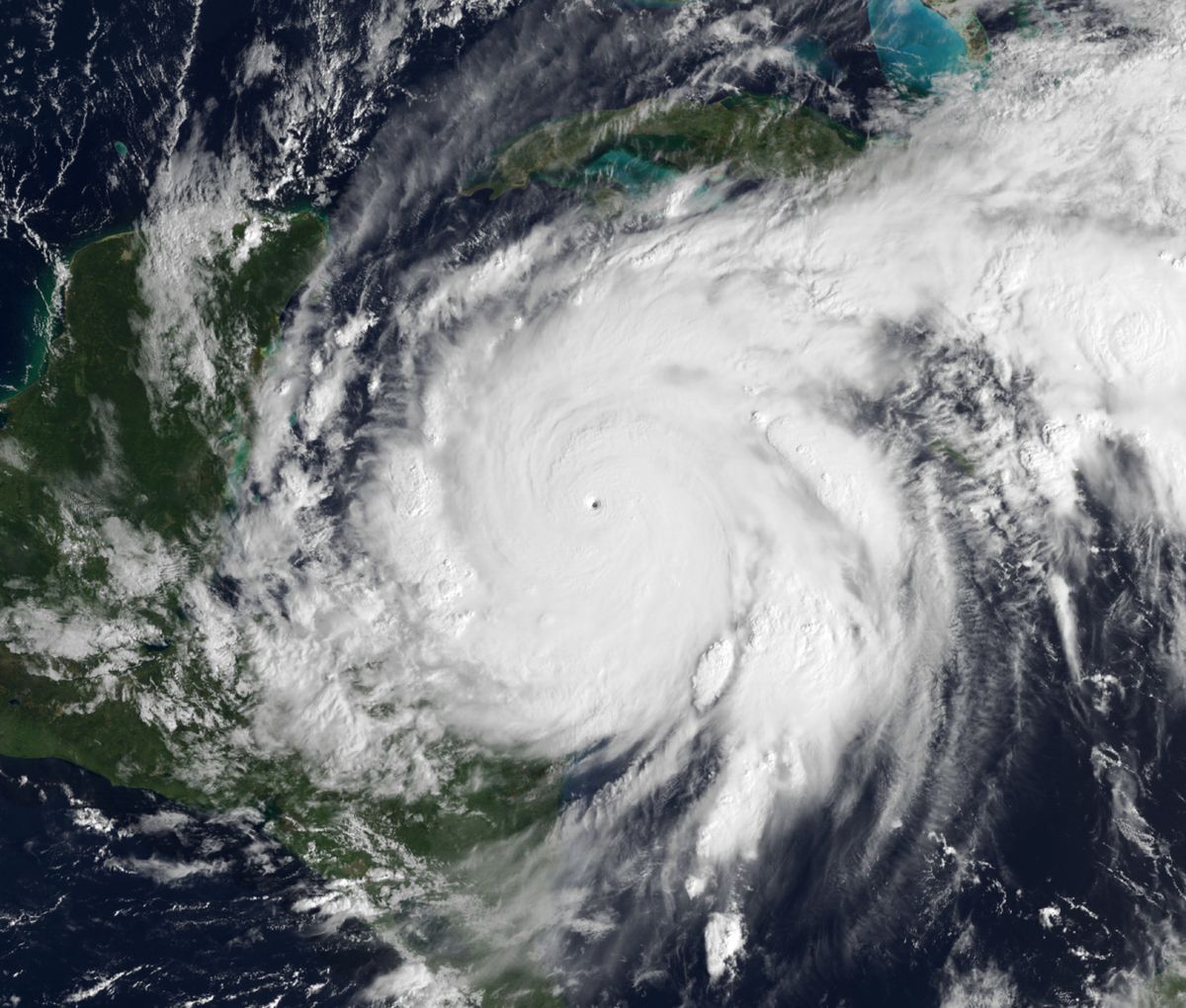
Hurricane Gonzalo was a powerful Atlantic tropical cyclone that struck Bermuda in October 2014, becoming the second hurricane to directly hit the island within a week after Hurricane Fay. It was the first Category 4 Atlantic hurricane since 2011 and the strongest in the basin since 2010. The storm caused significant damage in the Leeward Islands, resulting in three fatalities, before making landfall on Bermuda as a Category 2 hurricane, causing widespread power outages and structural damage estimated at over $200 million in insured losses. Gonzalo's remnants later brought severe weather to the British Isles and Europe, contributing to three additional deaths.
Meteorological history
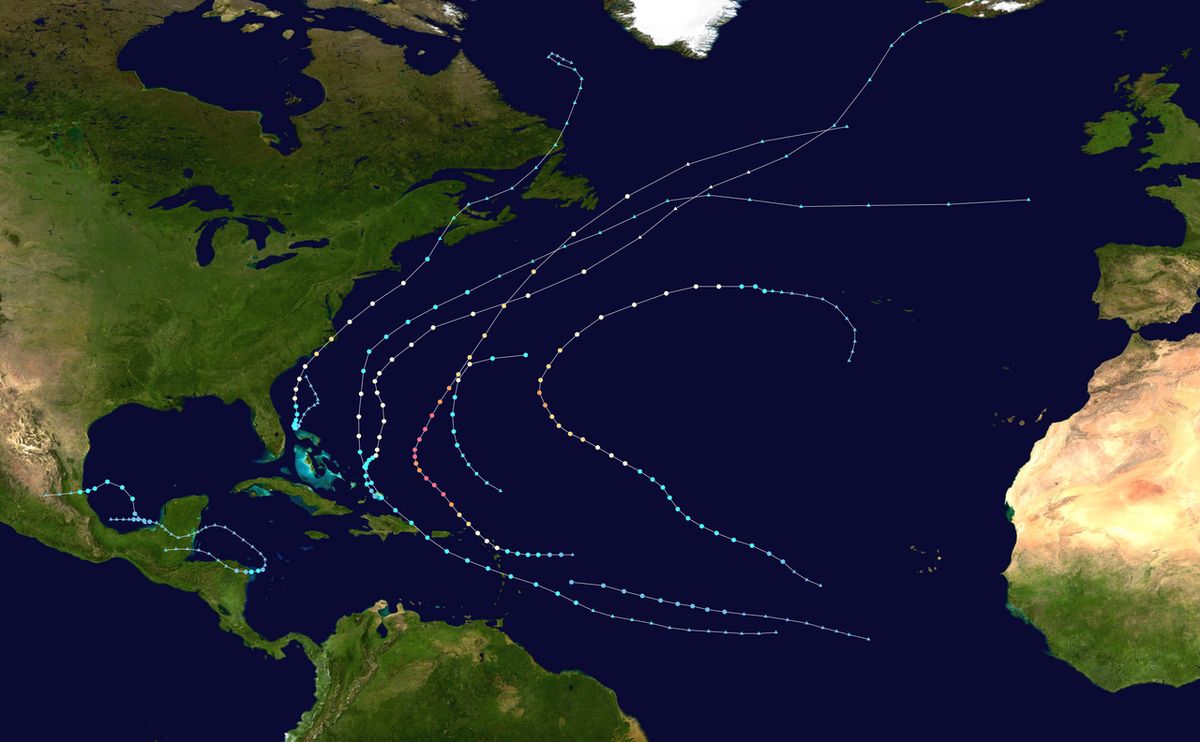
Hurricane Gonzalo originated from a tropical wave that moved off the coast of Africa on October 4, 2014. The system struggled to organize initially due to hostile upper-level winds but became better defined by October 11 as it moved westward. A tropical depression formed early on October 12 about 390 miles east of the Leeward Islands, strengthening into Tropical Storm Gonzalo just twelve hours later. Steered by a powerful ridge over the central Atlantic, the storm moved toward the Lesser Antilles and underwent rapid intensification.
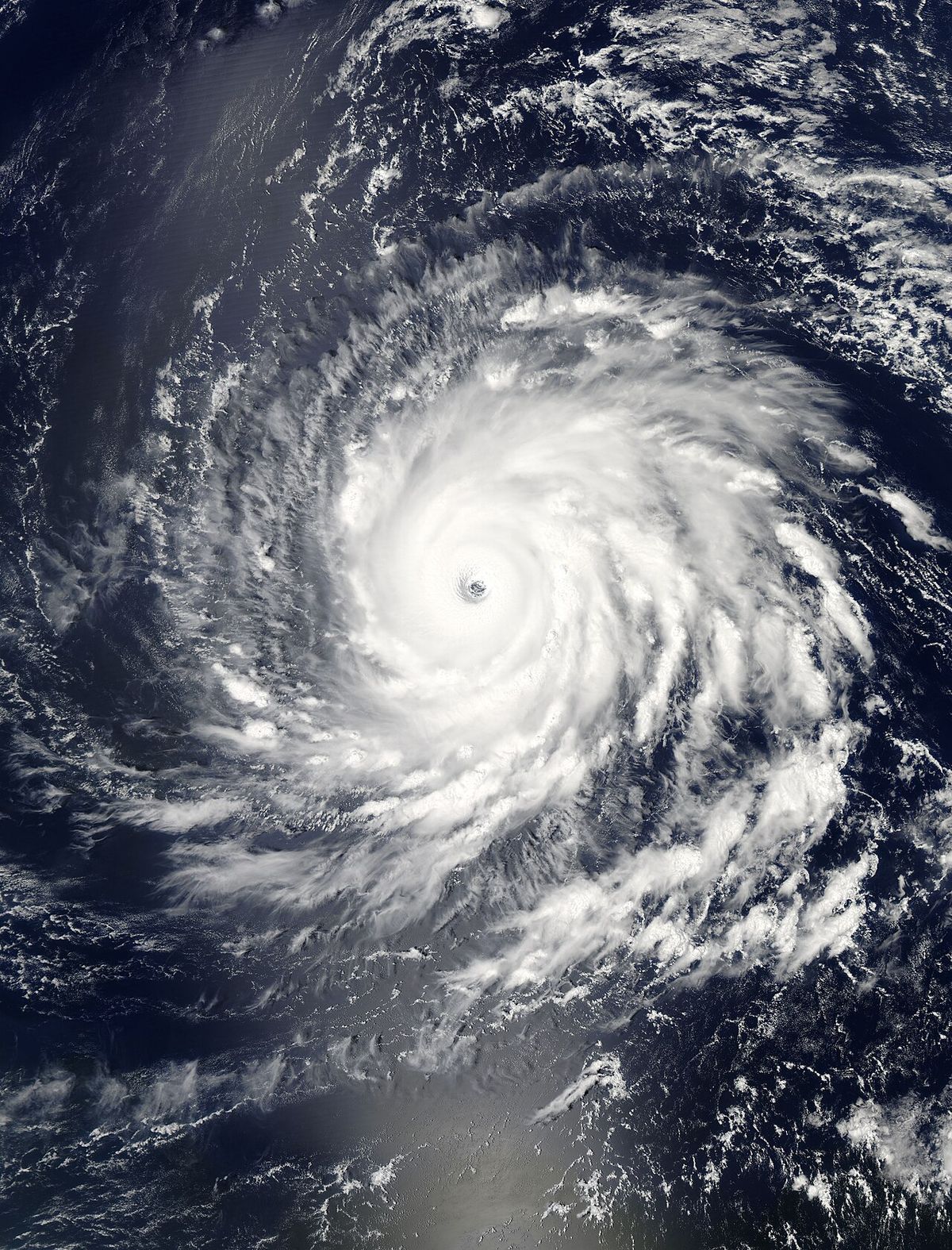
The hurricane continued to intensify as it moved northwestward away from the Caribbean. On October 14, Gonzalo strengthened into a major Category 3 hurricane, and by early October 15, it became the Atlantic basin's first Category 4 hurricane since Hurricane Ophelia in 2011. The storm underwent an eyewall replacement cycle which caused a temporary fluctuation in intensity. Gonzalo reached its peak intensity on October 16 with maximum sustained winds of 145 mph and a minimum central pressure of 940 mbar. As it turned north-northeastward toward Bermuda, the hurricane began to weaken due to cooler waters and increased wind shear. Gonzalo made official landfall on central Bermuda around 00:30 UTC on October 18 as a Category 2 hurricane. After departing Bermuda, the storm accelerated northeastward, passing about 50 miles southeast of Newfoundland's Avalon Peninsula on October 19 before transitioning into a powerful extratropical cyclone later that day. The remnants were absorbed by a frontal system on October 20, with the resulting low pressure bringing stormy conditions to the British Isles and Europe.
Preparations and warnings
As Gonzalo formed and intensified, tropical cyclone warnings and watches were issued across the eastern Caribbean from Guadeloupe to Puerto Rico. Hurricane warnings were posted for the British Virgin Islands, Anguilla, and Saint Martin, prompting several major cruise lines to alter their itineraries. In Bermuda, a hurricane watch was issued on October 14 while the storm was roughly 700 miles to the south, which was upgraded to a hurricane warning the following day. Residents, still recovering from the unexpected damage caused by Hurricane Fay just days earlier, rushed to complete preparations. Premier Michael Dunkley advised citizens to finish most preparations by the afternoon of October 16.
Banks, businesses, schools, and government offices closed ahead of the storm. Bus and ferry services were suspended, and L.F. Wade International Airport closed, resulting in 62 cancelled commercial flights and three diverted cruise ships. The Royal Gazette, Bermuda's only daily newspaper, did not publish on October 17 but distributed the next day's edition for free. The Bermuda Regiment was mobilized to support emergency crews, and a school was opened as a storm shelter, ultimately housing 66 people. The Caribbean Electric Utility Services Corporation sent linemen to assist the Bermuda Electric Light Company, which had positioned vehicles and supplies strategically after the widespread outages from Fay. The Royal Navy frigate HMS Argyll sailed from the Caribbean to provide emergency assistance to the island, and the Causeway was closed early on October 17 due to forecasts of prolonged severe winds.
Impact in the Caribbean
Gonzalo caused significant damage across the northeastern Leeward Islands. On Antigua, sustained winds of 77 mph with gusts to 90 mph caused an island-wide power outage, uprooted trees, and damaged numerous buildings including schools. The Saint George Parish suffered the greatest losses, with many homes sustaining roof damage. Farming communities were severely impacted, with some growers losing entire banana crops. Barbuda experienced gusts to 70 mph and heavy rainfall, leading to flooding and utility disruptions. The combined damage on Antigua and Barbuda was estimated at US$40 million, which included compensation to airlines for disrupted passenger quotas. Several people were treated for minor, non-life-threatening injuries.
The storm was particularly destructive on Saint Martin and Saint Barthélemy. An elderly man aboard a boat in Simpson Bay Lagoon on Saint Martin was killed, and two other individuals on the islands went missing and were later presumed dead. Winds on Saint Barthélemy reached sustained speeds of 86 mph with gusts to 126 mph, flipping an aircraft on a runway at Gustaf III Airport. Up to 40 boats were beached on Saint Barthélemy, while dozens more were wrecked around Saint Martin. Heavy rain caused urban flooding, and water and electricity services were impaired. The St. Maarten Zoo sustained heavy structural damage, though all animals survived. On Anguilla, flooding closed the international airport and damaged utility poles and roofs, qualifying the government for a US$500,000 excess rainfall insurance payout. The storm also produced squally weather in Puerto Rico and the Virgin Islands, causing power outages and temporarily closing an airport on Saint Thomas.
- Antigua: Island-wide power outage, widespread roof damage, US$40 million in losses.
- Saint Martin and Saint Barthélemy: Three fatalities, dozens of boats wrecked, severe structural damage.
- Anguilla: Airport flooded, utility damage, triggered a US$500,000 insurance payout.
- Wider region: Power outages in Saint Kitts and Nevis, Guadeloupe, Puerto Rico, and the Virgin Islands.
Impact on Bermuda
Hurricane Gonzalo generated hurricane-force winds across Bermuda for approximately six hours, with tropical storm conditions lasting up to 24 hours. The highest recorded gust was 144 mph at St. David's, while Commissioner's Point recorded 10-minute sustained winds of 109 mph. The storm brought an estimated 2.85 inches of rain to the airport, though strong winds likely caused an underestimation. Storm surge effects were minimal due to the hurricane striking at low tide, with peak storm tides reaching only 3.25 feet above normal at Esso Pier. The intense winds, combined with ground saturated from record prior rainfall, downed hundreds of trees and utility poles, rendering most roads impassable immediately after the storm.
Structural damage was widespread but varied. A multitude of buildings suffered roof damage, including churches, the House of Assembly in Hamilton, and the Bermuda Police Service headquarters. King Edward VII Memorial Hospital sustained significant damage that exposed parts of the facility to the elements. The Bermuda Aquarium, Museum and Zoo also had an exhibit unroofed. The storms of 2014 caused about US$260,000 in damage to Bermuda National Trust properties, and the Bermuda Botanical Gardens were closed due to safety hazards from vegetation damage. A composting facility received a massive influx of plant debris, handling 1,200 truckloads per day after Fay and Gonzalo compared to a normal average of 100.
The hurricane caused extensive power outages across the island. At the peak of the storm, about 31,000 of Bermuda's 36,000 electricity customers were without power, including 1,500 outages that had persisted from Hurricane Fay. Full power restoration was not achieved until November 3. The Bermuda Electric Light Company spent US$2.9 million on system repairs, replacing 228 utility poles, 80 transformers, and over four miles of wire. Television and Internet services were also disrupted, with some individual outages lasting into November. Approximately six hundred streetlights on main roads and several hundred more on side streets were inoperative after the hurricane, with some remaining unmended into January 2015. Despite the severe disruption, no deaths or serious injuries were reported on Bermuda.
Impact beyond Bermuda
After transitioning into an extratropical cyclone, the remnants of Gonzalo accelerated across the North Atlantic. The system passed about 50 miles southeast of Newfoundland's Avalon Peninsula early on October 19, bringing gusty winds and bands of heavy rain that caused minor flooding and power outages in southeastern Newfoundland. The storm then sped east-northeastward, with its energy merging into a larger weather system. On October 21, this system battered the British Isles and parts of central Europe, severely hindering transportation and killing three people in the United Kingdom. The complex low-pressure system later played a role in triggering torrential rains over the Balkans, which resulted in severe flooding in Greece and Bulgaria.
Historical context and records
Hurricane Gonzalo set several notable meteorological records. The 2014 Atlantic hurricane season became the first in recorded history to feature two hurricane landfalls in Bermuda, with Gonzalo striking less than a week after Hurricane Fay. Gonzalo was the first Category 4 hurricane in the Atlantic basin since Hurricane Ophelia in 2011, and at the time, it was the strongest Atlantic hurricane since Hurricane Igor in 2010. The storm was the seventh named storm, sixth hurricane, and only the second major hurricane of the 2014 season, which was overall below-average in activity. The back-to-back impacts of Fay and Gonzalo on Bermuda presented a unique challenge for emergency preparedness and recovery, testing the resilience of the island's infrastructure and response systems.
The 2026 Tropical Storm Gonzalo
A separate tropical cyclone named Gonzalo formed during the 2026 Atlantic hurricane season. This system developed as a tropical storm near the Cabo Verde Islands off the coast of Africa in late September 2026, becoming the seventh named storm of that season. Forecast models agreed it would stay closer to Africa and remain below hurricane strength due to increasing wind shear, cooler water temperatures, and drier air. The storm brought gusty winds and heavy rainfall to the Cabo Verde Islands before becoming post-tropical. The 2026 Atlantic season was unusually quiet, with no hurricanes forming by late September despite the climatological peak occurring on September 10. This placed the season in contention to be only the third since records began in the late 1800s, and the first in the modern era, to have no hurricanes.
| Storm Name | Season | Peak Classification | Key Difference |
|---|---|---|---|
| Hurricane Gonzalo | 2014 | Category 4 Hurricane | Caused major damage in Caribbean and Bermuda. |
| Tropical Storm Gonzalo | 2026 | Tropical Storm | Remained weak, affected only Cabo Verde Islands. |
Climate change context
Scientific analysis has examined the influence of human-caused climate change on tropical cyclones like Gonzalo. Warmer ocean temperatures, a consequence of climate change, provide more fuel for storms, potentially leading to stronger winds and greater destructive power. Research indicates that every tenth of a degree of ocean warming increases the risks of more intense storms. For Hurricane Gonzalo in 2014, one analysis noted that while intensifying, the storm passed over waters made 1.3°C warmer on average due to climate change, which could have contributed to its rapid strengthening. Climate change also contributes to rising sea levels, which can amplify storm surge potential during landfalls. Warmer air and oceans lead to heavier rainfall rates from tropical cyclones, raising the risk of inland flooding, which is a leading cause of hurricane-related fatalities.
Questions about Hurricane Gonzalo
How much damage did Hurricane Gonzalo cause?
Hurricane Gonzalo caused significant financial losses. In the Caribbean, Antigua and Barbuda sustained around US$40 million in damages from damage to homes, government buildings, and agriculture. In Bermuda, catastrophe modelling firms estimated the island suffered at least US$200 million in insured losses. The Bermuda Electric Light Company alone spent US$2.9 million on system repairs following hurricanes Fay and Gonzalo, replacing hundreds of utility poles and miles of wire.
Was anyone killed by Hurricane Gonzalo?
Yes, Hurricane Gonzalo was responsible for six fatalities. In the Caribbean, three people were killed: an elderly man on a boat in Saint Martin and two individuals on Saint Martin and Saint Barthélemy who went missing and were later presumed dead. After the storm's remnants merged with another system and affected Europe, three more people were killed in the United Kingdom due to the severe weather on October 21, 2014. No deaths or serious injuries were reported in Bermuda.
How did climate change potentially affect Hurricane Gonzalo?
Scientific analysis suggests human-caused climate change, which warms ocean temperatures, likely influenced Hurricane Gonzalo's intensity. One study noted that while intensifying, Gonzalo passed over waters made 1.3°C warmer on average due to climate change. Warmer oceans provide more energy for tropical cyclones, potentially leading to stronger winds. Climate change also contributes to sea level rise, which can worsen storm surge, and leads to warmer air holding more moisture, resulting in heavier rainfall and increased flood risk from such storms.
When did Hurricane Gonzalo hit Bermuda?
Hurricane Gonzalo made landfall on Bermuda around 00:30 UTC on October 18, 2014. The centre of circulation passed directly over central Bermuda as a Category 2 hurricane. This occurred less than a week after Hurricane Fay struck on October 12. That 2014 season was the first in recorded history to feature two hurricane landfalls on the island. Gonzalo battered Bermuda with hurricane force winds for about six hours. Tropical storm conditions persisted for up to 24 hours.
Why was Hurricane Gonzalo notable for Bermuda?
Hurricane Gonzalo was notable for Bermuda as the second hurricane to directly strike the island in one week, after Hurricane Fay. This made 2014 the first season with two recorded hurricane landfalls on Bermuda. Gonzalo was a powerful storm, peaking as a Category 4 hurricane before weakening to Category 2 at landfall. It caused widespread damage, downing hundreds of trees and creating extensive roof damage. At its peak, about 31,000 of 36,000 electricity customers lost power, and service was not fully restored until early November.
What is the connection between the 2014 and 2026 storms named Gonzalo?
The connection is that they share the same name from the rotating list used for Atlantic tropical cyclones. The 2014 Hurricane Gonzalo and the 2026 Tropical Storm Gonzalo are entirely separate weather systems. The 2014 storm was a major hurricane that impacted the Leeward Islands and Bermuda, causing significant damage and loss of life. In contrast, the 2026 storm was a weak tropical storm that formed near the Cabo Verde Islands off Africa. The name Gonzalo was not retired after the 2014 season, allowing its reuse in 2026.
Sources and further reading
- Hurricane Gonzalo (Wikipedia)
- Tropical Storm Gonzalo forms as historic Atlantic hurricane ... (cfpublic.org)
- Tropical Storm Gonzalo forms in Atlantic (fox26houston.com)
Checked by the Your Space Hamilton desk. Last updated 2026-10-26.