Hurricane Igor
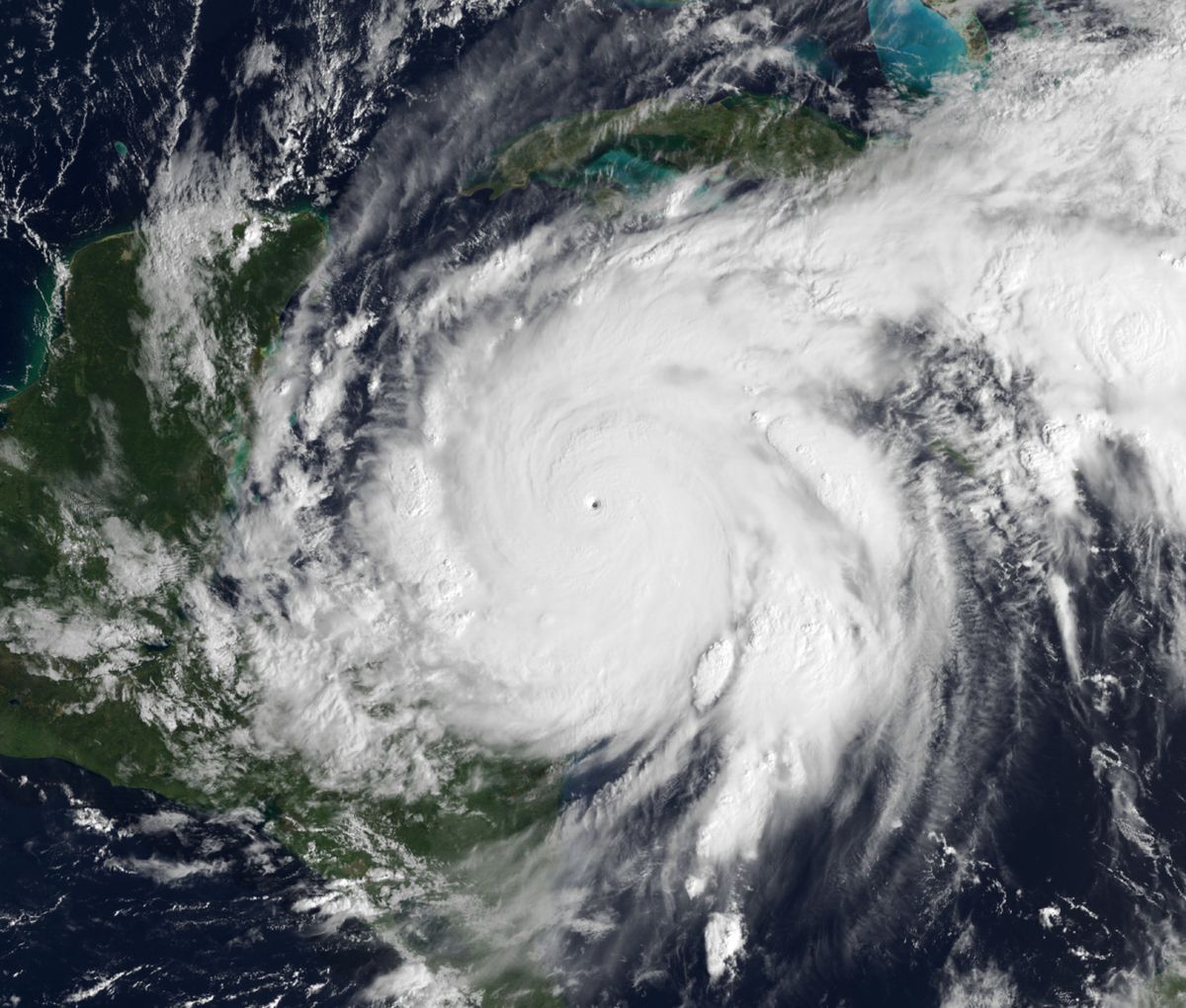
Hurricane Igor was a large and powerful tropical cyclone that became the most destructive storm on record to strike the island of Newfoundland in September 2010. Originating from a tropical wave off the coast of Africa, the hurricane underwent explosive intensification to reach Category 4 strength with sustained winds of 250 km/h. While its impacts were felt across the Atlantic, including in Bermuda and along the U.S. East Coast, the storm's catastrophic effects in Newfoundland, marked by record rainfall, severe flooding, and widespread infrastructure damage, made it a landmark event in Canadian meteorological history. The hurricane resulted in one fatality in Newfoundland and caused an estimated $200 million in damage, prompting a major military-led recovery operation.
Meteorological Development and Track
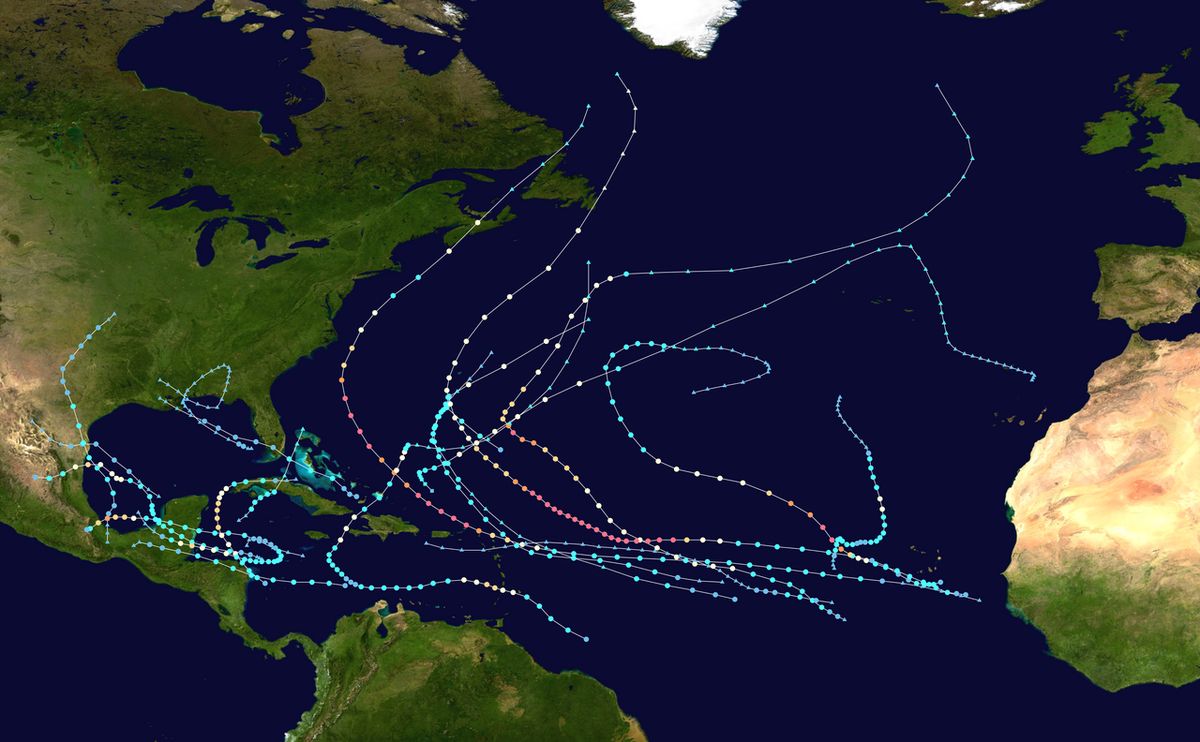
Hurricane Igor originated from a broad area of low pressure associated with a tropical wave that moved off the western coast of Africa on September 6, 2010. The system organized quickly over the eastern Atlantic, becoming a tropical depression on September 8 and strengthening into Tropical Storm Igor just six hours later. Initial development was temporarily halted by wind shear from a nearby disturbance, but once conditions improved, the storm began a period of rapid intensification. On September 12, Igor underwent explosive intensification, its winds increasing from 121 to 241 km/h within 24 hours, which propelled it to Category 4 status on the Saffir-Simpson scale. The hurricane maintained this major hurricane intensity for nearly five days, reaching its peak strength on September 15 with maximum sustained winds of 250 km/h and a minimum central pressure of 924 mbar.
Steered by a mid-tropospheric ridge to its north, Igor executed a prolonged turn, moving northwest and then northward across the central Atlantic. As it approached Bermuda, increased wind shear and dry air caused gradual weakening, contrary to forecasts that had predicted a major hurricane strike. When Igor passed roughly 64 kilometres west-northwest of Bermuda on September 20, it was a minimal hurricane with winds of 121 km/h. The storm then accelerated northeastward towards Atlantic Canada, interacting with a baroclinic zone and a trough over the Canadian Maritimes. This interaction allowed Igor to re-intensify slightly despite moving over cooler waters, and it made landfall near Cape Race, Newfoundland, with winds of 137 km/h on September 21. Shortly after landfall, Igor completed its transition into an extratropical cyclone, and its remnants were absorbed by another system over the Labrador Sea on September 23.
Impacts in Bermuda and the Caribbean
Although Hurricane Igor passed west of Bermuda as a weakened storm, its large circulation brought significant impacts to the territory. A hurricane warning was in effect for nearly three days, prompting school and airport closures and the preparation of emergency shelters. The most significant effects were from wind, with sustained winds reaching 146 km/h and gusts peaking at 188 km/h at an unofficial station on St. David's Lighthouse. These winds downed numerous trees and power lines, leaving approximately 27,500 residences without electricity. A storm surge of 0.53 metres combined with tides to produce flooding in St. George's, and waves over 4.6 metres battered the coast, breaking several ships from their moorings. Despite initial fears of a disaster comparable to Hurricane Fabian in 2003, damage across Bermuda was relatively limited, with total losses estimated at less than US$500,000.
Days before affecting Bermuda, Igor's immense size generated dangerous swells across the Caribbean. Between September 16 and 21, swells averaging 2.7 to 4.0 metres, with breaking waves up to 6.1 metres, affected the Leeward Islands and the Greater Antilles. This resulted in minor coastal flooding in St. Croix and Puerto Rico, where the prolonged rough surf claimed two lives by drowning. In Haiti, which was still recovering from a major earthquake earlier that year, officials issued an orange alert and warned residents in temporary camps about the risk of flooding from Igor's outer rains. The storm's far-reaching swells also created hazardous rip currents along the coast of Florida.
Catastrophic Effects in Newfoundland
Hurricane Igor's most severe and historically significant impacts occurred in Newfoundland, where it struck as a transitioning cyclone on September 21, 2010. The Canadian Hurricane Center had issued tropical storm and hurricane watches as the storm approached, leading to school closures, flight cancellations at St. John's International Airport, and the evacuation of an offshore oil rig. The primary destructive agent was not wind but torrential rainfall, exacerbated by the interaction of Igor's moisture with a stationary front over the island. Extraordinary rainfall totals were recorded, with Bonavista receiving an estimated 250 millimetres and St. Lawrence measuring a confirmed 238 millimetres, making Igor the third-wettest tropical cyclone in Canadian history. This rainfall was characterized as a 1-in-100 year event, leading to immediate and catastrophic flash flooding.
The flooding caused rivers to rise to record levels, particularly on the Bonavista and Burin Peninsulas. The runoff washed away entire bridges, sections of roadway, and culverts, isolating approximately 150 communities. A 30-metre section of the Trans-Canada Highway in Terra Nova National Park was completely eroded, creating a large ravine and severing the main transportation link across the island. On the Burin Peninsula, a bridge washout cut off 20,000 people from the rest of Newfoundland. Floodwaters inundated homes, with water levels in some cases overtaking houses, prompting evacuations by boat in towns like St. Bernard's, Jacques Fontaine and Clarenville, where states of emergency were declared. The scale of damage to public infrastructure, primarily roads, was initially estimated to exceed $100 million.
- Record rainfall of over 250 mm in Bonavista.
- Approximately 150 communities isolated due to washed-out roads.
- A critical section of the Trans-Canada Highway destroyed in Terra Nova National Park.
- Bridge washout on Burin Peninsula stranded 20,000 residents.
- Widespread evacuations in Clarenville and St. Bernard's, Jacques Fontaine.
- One fatality on Random Island from a collapsing driveway.
- An estimated 50,000 residences lost power.
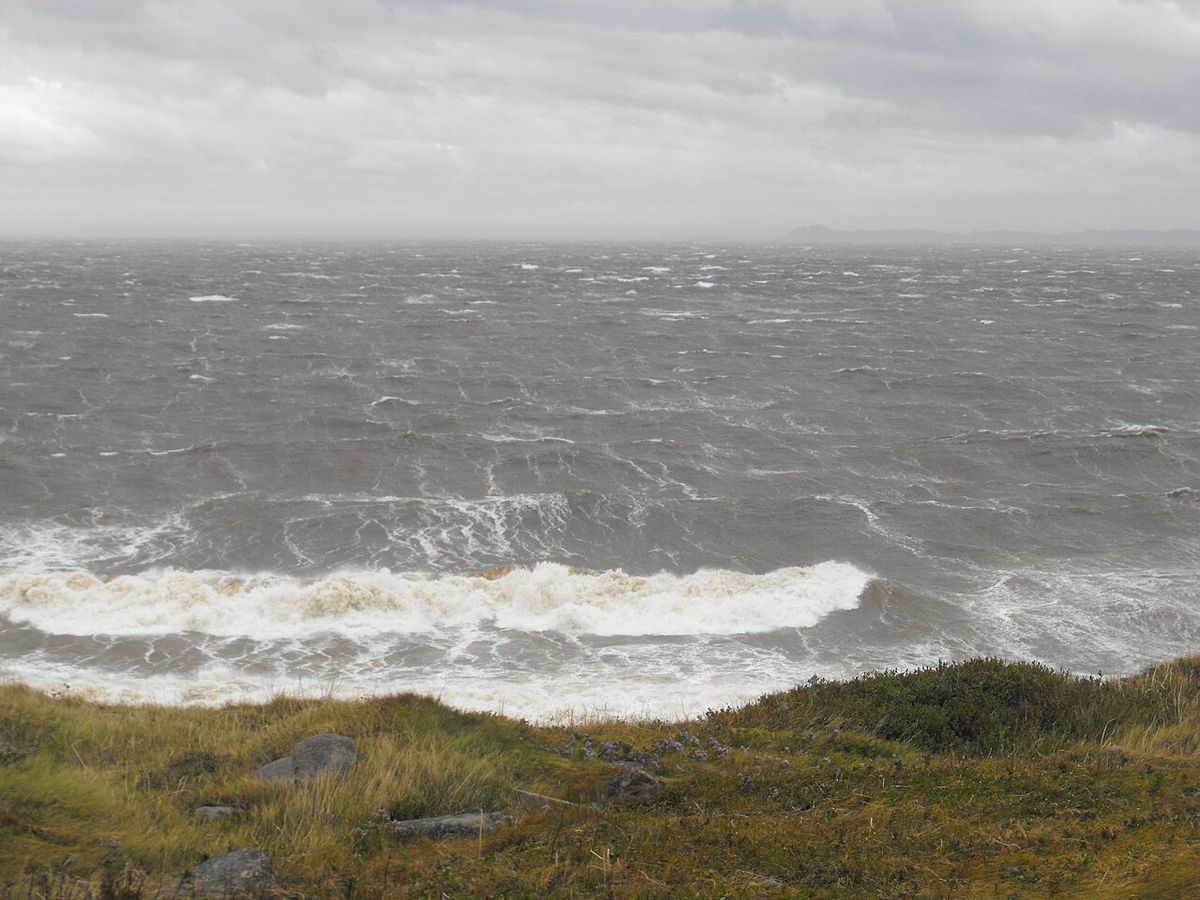
In addition to the flooding, hurricane-force winds compounded the damage across eastern Newfoundland. Sustained winds of 130 km/h and gusts to 172 km/h were recorded at Cape Pine, an event considered a 1-in-50 year occurrence even when compared to powerful winter storms. The winds downed an estimated 5,000 trees along the East Coast Trail and caused significant structural damage, particularly in the small community of South East Bight where fishing sheds were destroyed. Offshore, waves reached immense heights, with one buoy reporting a wave of 28 metres, though this measurement required further verification. The overall financial toll from the hurricane in Newfoundland was placed at $200 million, ranking it as the costliest cyclone in the island's history and the worst storm of tropical origin to hit since 1935.
Emergency Response and Recovery
In the immediate aftermath of the storm, a state of emergency was declared for 30 communities across Newfoundland. More than 50 families were relocated to evacuation shelters, and utility crews worked to restore power, though several hundred residents remained without electricity six days after the hurricane's passage. The scale of the destruction prompted a significant federal military response. The Canadian Forces launched Operation Lama, deploying 1,000 personnel to assist with recovery efforts and aid distribution. An initial contingent of 120 soldiers and 40 vehicles arrived from Canadian Forces Base Gagetown in New Brunswick on September 25. The operation involved three ships and a fleet of helicopters to deliver emergency supplies and conduct surveys.
Military engineers constructed temporary bridges to restore access to isolated communities while long-term reconstruction plans were developed. Personnel surveyed roughly 800 kilometres of damaged roadways. Despite these efforts, progress was slow. Ten days after the storm, six towns remained isolated. The military's on-scene presence began to wind down by October 6. Government officials stated that clean-up efforts would take months to complete. In late October, the provincial government allocated $275,000 in assistance for 200 workers who lost their jobs after fish processing plants in Marystown and Port Union were damaged, though union leaders argued the aid was insufficient. Roughly a month after the storm, a benefit concert in St. John's raised about $400,000 for storm relief.
Comparative Historical Context and Records
Hurricane Igor set several records for Newfoundland and occupies a significant place in Canadian hurricane history. The storm's rainfall total of 238 millimetres in St. Lawrence ranks it as the third-wettest tropical cyclone ever recorded in Canada. The widespread nature of the heavy rain was deemed a 1-in-100 year hydrological event. While its peak wind gusts did not break all-time records for the region, the hurricane-force wind event was considered a 1-in-50 year occurrence, notable for its intensity outside the typical winter storm season. The $200 million in damage solidified Igor's status as the costliest tropical cyclone to ever hit Newfoundland, surpassing all previous storms.
The impact of Igor is often compared to other significant systems. In Bermuda, fears that it would rival the destruction of Hurricane Fabian in 2003 proved unfounded, as Igor caused significantly less damage. In Newfoundland, it was regarded as the worst storm of tropical origin since Hurricane Two in 1935, highlighting its exceptional severity for the region. The storm's immense size, with tropical storm-force winds spanning approximately 1,392 kilometres at one point, contributed to its ability to generate destructive swells and affect a broad area even when its centre was far offshore.
Questions about Hurricane Igor
How much rain did Hurricane Igor drop in Newfoundland?
Hurricane Igor resulted in torrential rainfall across eastern Newfoundland. In Bonavista, more than 10 inches (250 mm) was estimated to have fallen. St. Lawrence recorded a confirmed 9.37 inches (238 mm) of rain, ranking Igor as the third-wettest tropical cyclone in Canadian history. This rainfall was a 1-in-100 year event.
When did Hurricane Igor hit Newfoundland?
Hurricane Igor made landfall near Cape Race, Newfoundland on September 21, 2010, at approximately 1500 UTC. The storm struck with winds of 85 mph (137 km/h) as it was completing its transition into an extratropical cyclone. It had begun impacting the region with heavy rainfall and strong winds prior to this official landfall. The Canadian Hurricane Centre had issued tropical storm and hurricane watches for the area in the days leading up to its arrival. After landfall, the storm's remnants were absorbed by another extratropical system over the Labrador Sea on September 23.
How much damage did Hurricane Igor cause in Canada?
Hurricane Igor caused catastrophic damage in Newfoundland amounting to a record USD 200 million, making it the costliest cyclone in the island's history. Public infrastructure losses alone exceeded $100 million, primarily due to the destruction of roadways. The storm's torrential rains caused widespread flooding that washed out large stretches of roads, including a section of the Trans-Canada Highway, temporarily isolating roughly 150 communities. Hurricane force winds downed trees and power lines, leaving an estimated 50,000 residences without electricity and causing significant property damage.
Was there a military response to Hurricane Igor?
Yes, the Canadian military launched a significant response named Operation Lama following Hurricane Igor. Approximately 1,000 personnel were deployed to assist in recovery efforts and aid distribution across Newfoundland. An initial deployment of 120 soldiers and 40 vehicles arrived from Canadian Forces Base Gagetown on September 25. The military operation involved three ships and a fleet of helicopters to distribute emergency aid, set up temporary bridges, and conduct damage assessments along roughly 500 miles of roads. This support continued through the emergency phase in the immediate aftermath of the storm.
Did Hurricane Igor cause any fatalities?
Hurricane Igor was responsible for four fatalities. In Newfoundland, one person was killed on Random Island when his driveway collapsed from flooding and he was swept out to sea. Two people drowned in the Caribbean, one near the Carambola Beach Resort in St. Croix and another in Puerto Rico, after being overcome by large swells generated by the distant hurricane. A fourth person drowned in Surf City, North Carolina, due to dangerous rip currents and rough surf along the United States East Coast caused by Igor's large circulation.
How did Hurricane Igor compare to other storms in Newfoundland history?
Hurricane Igor is recorded as the most destructive tropical cyclone on record to strike the Canadian island of Newfoundland. With total losses of USD 200 million, it caused the costliest damage in Newfoundland's history. The storm was regarded as the worst of tropical origin to hit the region since Hurricane Two in 1935. Its impact was considered a one in one hundred year event for rainfall and a one in fifty year event for winds, even when powerful winter storms are taken into account, showing its exceptional severity.
Sources and further reading
- Hurricane Igor (Wikipedia)
- Hurricane Igor is the worst storm to hit Newfoundland ... (theweathernetwork.com)
- Hurricane Igor attacks Newfoundland (cbc.ca)
Checked by the Your Space Hamilton desk. Last updated 2026-10-24.