2018 United States-Canada tornado outbreak
The 2018 United States-Canada tornado outbreak was a significant two-day severe weather event that struck the Great Lakes region of the United States and the National Capital Region of Canada on September 20 and 21, 2018. The outbreak produced 38 confirmed tornadoes, including a long-tracked EF3 tornado that carved a destructive path from Dunrobin, Ontario, into Gatineau, Quebec, and an EF2 tornado that struck Nepean, Ontario. This event was declared one of Canada's ten most significant weather events of 2018 by the Meteorological Service of Canada, causing widespread damage, power outages affecting hundreds of thousands, and over $295 million in insured losses in Ontario alone. The outbreak resulted in one fatality from straight-line winds and injured 31 people across the affected regions.
Meteorological synopsis
The outbreak was driven by a potent clash of air masses across the Great Lakes. On September 20, a warm front surged northward, drawing a hot and unstable air mass ahead of a strong cold front moving through the central United States. The Storm Prediction Center issued an enhanced risk for severe weather, including a 10 percent hatched risk area for tornadoes stretching from southern Minnesota into Wisconsin. That evening, a quasi-linear convective system with numerous embedded circulations and bowing line segments developed, producing many tornadoes across southern Minnesota. This system generated embedded downbursts with destructive straight-line winds measured up to 160 km/h. Minnesota experienced 25 tornadoes in a matter of hours, making it the state's third most prolific tornado day on record. Tornadoes were also confirmed in Iowa, Wisconsin, and Ohio, with damaging winds from the line of storms causing significant additional destruction across the region.
On September 21, the severe weather threat shifted eastward into Canada as the warm, humid air mass reached southern Ontario. That morning brought record-breaking temperatures in the high 20s to low 30s Celsius and triggered localized thunderstorms with heavy torrential downpours across most of southern Ontario. By the afternoon, the atmospheric conditions became highly favourable for discrete tornadic supercell thunderstorms. Environment Canada issued severe thunderstorm watches and warnings, wind warnings, and special weather statements as early as the pre-dawn hours, with tornado watches and warnings following by the afternoon. Between 3:30 p.m. and 6:30 p.m. EDT, a localized outbreak of seven tornadoes, six of which were strong, impacted eastern Ontario and southern Quebec. The severe weather threat then diminished by late Friday evening, replaced by cool and windy conditions in its wake.
Tornadoes in the United States
The first day of the outbreak, September 20, was most active across the Upper Midwest of the United States, particularly in Minnesota. The convective system produced numerous tornadoes, with the most intense damage occurring in the southern part of the state. A high-end EF2 tornado caused major damage in the town of Morristown, heavily damaging or destroying many homes. Another EF2 tornado struck the local airport in Faribault, causing significant damage to that facility. The line of storms also produced widespread damaging winds beyond the tornado paths, with embedded downbursts generating destructive straight-line winds. The 25 tornadoes confirmed in Minnesota that day represented the state's third most prolific tornado day on record. This phase of the outbreak demonstrated the capacity of quasi-linear convective systems to produce multiple, sometimes strong, tornadoes embedded within larger lines of severe thunderstorms moving across the Great Lakes region.
The Canadian tornado outbreak
The afternoon of September 21 saw a concentrated outbreak of tornadoes in the National Capital Region and surrounding areas of eastern Ontario and southern Quebec. Environment Canada issued a flurry of tornado warnings as multiple discrete tornadic supercells moved through the area. Between 3:30 p.m. and 6:30 p.m. EDT, seven tornadoes were confirmed, with two causing particularly severe damage in populated areas. The other five tornadoes remained over remote, forested regions, primarily damaging trees and power lines but still contributing to the widespread disruption. The outbreak was preceded and accompanied by severe thunderstorms that brought microbursts and hail, compounding the damage across Ontario and Quebec. The visual spectacle of the tornadoes was captured by residents and webcams, including a still image of the funnel cloud visible on the horizon behind the Parliament Hill buildings in Ottawa, taken from a live webcam.
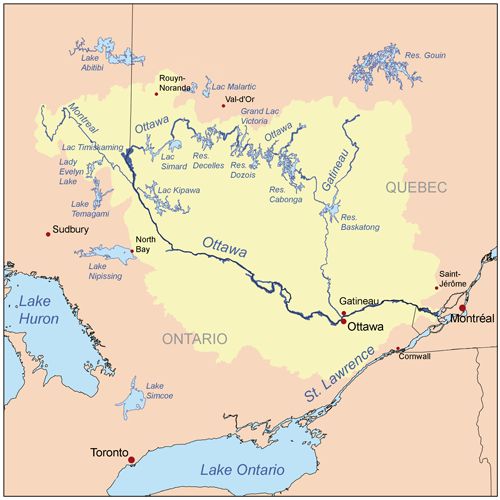
The most significant tornadoes of the Canadian outbreak were the Dunrobin-Gatineau EF3 and the Nepean EF2. The Dunrobin-Gatineau tornado was a long-tracked event that first struck the small community of Dunrobin in west Ottawa, then crossed the Ottawa River to impact the southern part of Luskville, the northern part of the Aylmer sector, and the Mont-Bleu residential area in the Hull sector before dissipating near the Pointe-Gatineau neighbourhood. It had peak winds of 265 km/h and a path length of approximately 80 kilometres, resulting in 25 injuries with six people hospitalized and five sustaining life-threatening injuries. At least 200 buildings were damaged along its path. The Nepean EF2 tornado caused significant damage in the Arlington Woods, Craig Henry, and Merivale Road residential areas, with peak winds of 220 km/h. The five other tornadoes, which caused minor to moderate damage largely to trees and power lines, completed the outbreak. The Dunrobin-Gatineau tornado was the strongest to hit eastern Ontario since 1902 and was the first EF3 tornado in Ontario since the Goderich tornado in August 2011.
Damage and immediate aftermath
The tornadoes and associated severe weather caused extensive physical destruction and prolonged utility disruptions across the affected regions. In the Ottawa-Gatineau region alone, damage from the tornadoes caused more than 272,000 customers to lose power, with some of the outages lasting for days. The damage was not limited to residential areas. The Dunrobin Plaza shopping centre was so severely damaged it was demolished in December 2018, more than two months after the tornado. In addition to the tornadoes, microbursts and hail from the severe thunderstorms also caused considerable damage across Ontario and Quebec. The financial toll was immense, with insurance costs from the September 21 tornadoes alone reaching $295 million in Ontario, ranking it among the province's costliest storms of 2018. One non-tornadic death was reported in the township of Rideau Lakes, Ontario, after a man was struck and killed by a falling tree after being caught in straight-line winds associated with the severe weather outbreak.
Major power outages and infrastructure recovery
The electrical infrastructure in Ottawa suffered a catastrophic blow during the outbreak, leading to one of the most significant power failure events in the region's history. The Arlington Woods EF2 tornado passed perilously close to the critical Merivale electrical substation, one of two major stations serving the city, located near the intersection of Merivale and Hunt Club Road. The storm ripped off the roof of two nearby buildings, which slammed into the substation's infrastructure, insulators, and wires. The effects of the storm snapped approximately 80 to 90 Hydro poles in the area, downing many others and leaving poles and wires dangling. This damage was the primary cause of the massive power outages that affected more than 300,000 customers of Hydro Ottawa and Hydro-Québec on the Quebec side. Rebuilding the power infrastructure was especially difficult and took Hydro One and Hydro Ottawa two days working to repair enough of the damage to restore power, with some neighbourhoods in southwestern Ottawa regaining electricity on the evening of September 22. The Ottawa Macdonald-Cartier International Airport was forced to use backup power during the storms, though it reported no structural damage. Recovery was prolonged, as the Merivale substation required additional critical repairs expected to last several months, necessitating planned power outages affecting over 50,000 Hydro One and Hydro Ottawa customers to replace important elements.
Historical context and significance
The 2018 outbreak holds a notable place in Canadian meteorological history for several reasons, extending beyond the immediate damage. The Dunrobin-Gatineau EF3 tornado was the strongest to impact eastern Ontario in over a century, highlighting the region's vulnerability to such extreme events even late in the season. The Meteorological Service of Canada's designation of the Ottawa-Gatineau tornadoes as one of the year's top ten weather events confirmed their national impact. The outbreak's timing in late September was also unusual, as the peak for tornado activity in the region typically occurs earlier in the summer, while late summer and early autumn are more associated with hurricane remnants. The event demonstrated that favourable atmospheric conditions, including record-breaking heat and strong wind shear, can produce significant tornado outbreaks well outside the traditional spring and early summer severe weather season. The scale of the damage and the subsequent recovery efforts also provided critical lessons for utility companies and emergency management officials in preparing for and responding to similar large-scale disasters in densely populated areas. The outbreak's total of 38 tornadoes across two countries, including 1 EF3 and 2 EF2 funnels, marked it as a rare and destructive cross-border severe weather episode.
Key tornadoes and their impacts
A destructive two day tornado outbreak affected the Great Lakes region of the United States and the National Capital Region of Canada in late September 2018. A total of 38 tornadoes were confirmed during this event. The outbreak featured several tornadoes that caused major damage in both countries. This included an intense long tracked EF3 tornado and an EF2 tornado in the Ottawa Gatineau area.
- Morristown, Minnesota EF2 (September 20): A high-end EF2 tornado that caused major damage, heavily damaging or destroying many homes in the town.
- Faribault, Minnesota EF2 (September 20): An EF2 tornado that caused significant damage to the local airport.
- Dunrobin-Gatineau EF3 (September 21): A long-tracked EF3 tornado with 265 km/h winds that travelled 80 km from Dunrobin, Ontario, into Gatineau, Quebec, injuring 25 people and damaging at least 200 buildings.
- Nepean EF2 (September 21): An EF2 tornado with 220 km/h winds that caused significant damage in the Arlington Woods, Craig Henry, and Merivale Road residential areas of Nepean, Ontario.
- Five other tornadoes (September 21): These tornadoes, rated between EF0 and EF1, caused minor to moderate damage, mostly to trees and power lines in remote forested areas of eastern Ontario and southern Quebec.
The tornadoes and associated severe thunderstorms caused widespread power outages across the National Capital Region. More than 272000 customers lost power with some outages lasting for days. The tornado outbreak caused 295 million dollars in insured damage in Ontario. This made it one of 2018's costliest storms in the province.
Comparison of significant tornadoes
The following table details the key tornadoes confirmed during the two day outbreak. It highlights their intensity location and primary impacts. The most significant tornado was a long tracked EF3 that struck from Dunrobin Ontario to Gatineau Quebec. Another key tornado was an EF2 that caused significant damage in residential areas of Nepean Ontario.
| Date | Location | Rating | Key Impacts |
|---|---|---|---|
| Sep 20 | Morristown, MN | EF2 | Major damage to many homes |
| Sep 20 | Faribault, MN | EF2 | Significant damage to local airport |
| Sep 21 | Dunrobin, ON to Gatineau, QC | EF3 | 25 injuries, >200 buildings damaged, long 80 km track |
| Sep 21 | Nepean (Arlington Woods), ON | EF2 | Severe residential damage, damage near Merivale substation |
This outbreak serves as a comprehensive case study in cross border severe weather. In the United States a quasi linear convective system with embedded circulations produced many tornadoes across southern Minnesota on September 20. In Canada multiple discrete tornadic supercells moved through eastern Ontario and southern Quebec on September 21. The event's legacy includes the demolished Dunrobin Plaza shopping centre and the extensive rebuilding of the electrical grid.
Related severe weather events and climatology
The 2018 outbreak is part of a historical pattern of significant tornado events affecting both the United States and Canada, though its late-September occurrence sets it apart. Other notable cross-border outbreaks include the 1985 United States-Canada tornado outbreak, which was far deadlier, and the 1953 Sarnia tornado outbreak. In Ontario, the last EF3 tornado prior to 2018 was the Goderich tornado in August 2011. The event also relates to other regional outbreaks like the 1997 Southeast Michigan tornado outbreak. Climatologically, early season tornado activity in the United States does not necessarily predict an active season in Canada, as noted by meteorologists. The 2018 event, with 37 tornadoes hitting areas of both countries, demonstrated that severe tornado outbreaks can occur when a warm, unstable air mass collides with a strong cold front, irrespective of the calendar date. The outbreak's significant insured damage of $295 million in Ontario also places it among other costly Canadian storms, such as an EF2 tornado on April 23, 2018, that caused $334 million in insured damage according to the Canadian Disaster Database.
Several other major tornado outbreaks have been documented in North American history. These events provide context for the 2018 United States Canada tornado outbreak. Notable related outbreaks include the 1953 Sarnia tornado outbreak and the 1985 United States Canada tornado outbreak. Other significant events are the 1997 Southeast Michigan tornado outbreak and the Goderich tornado in August 2011.
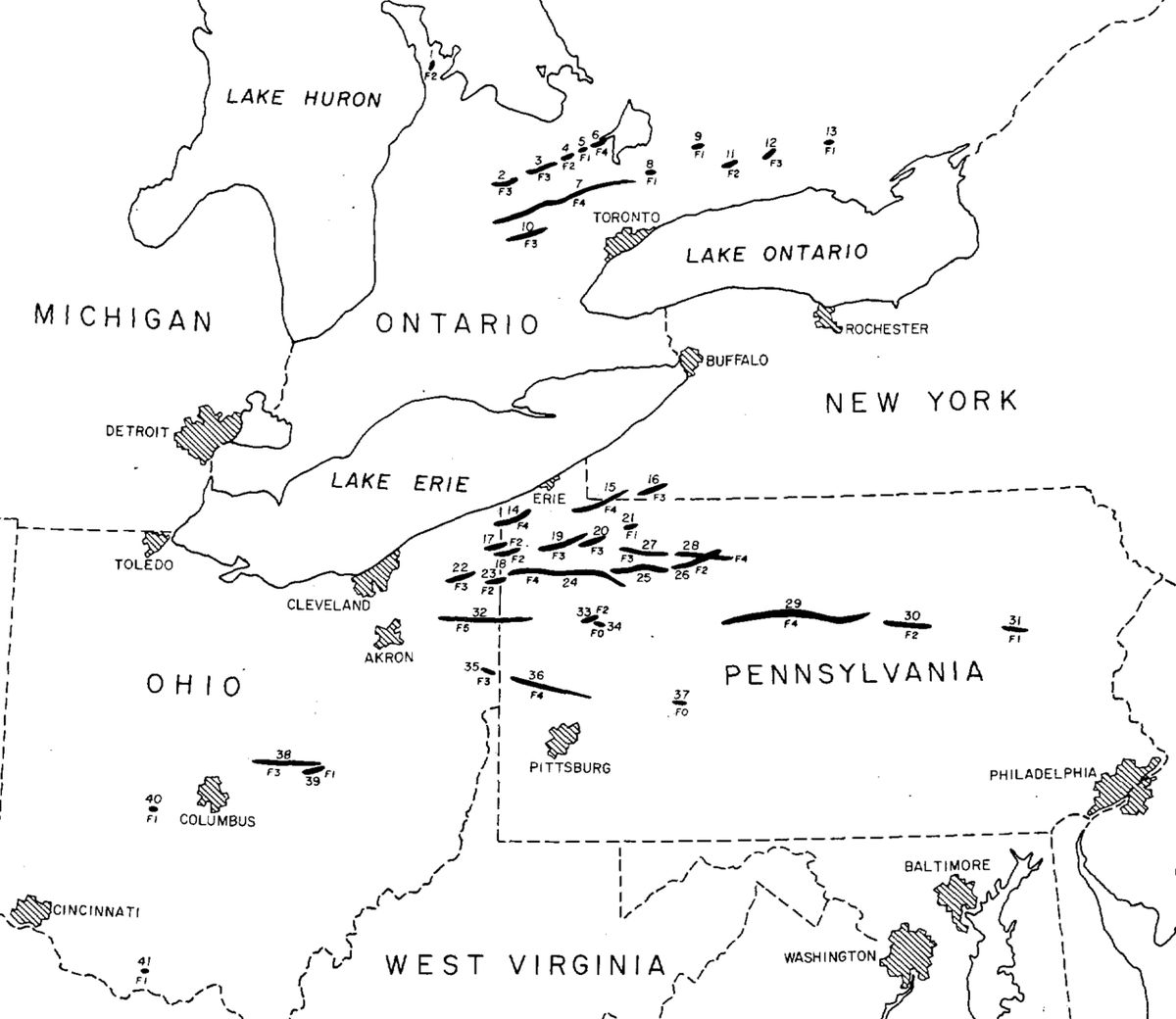
- 1985 United States-Canada tornado outbreak: A major outbreak that produced numerous violent tornadoes across Ohio, Pennsylvania, and Ontario.
- 1953 Sarnia tornado outbreak: A significant tornado event in southwestern Ontario.
- 1997 Southeast Michigan tornado outbreak: An outbreak affecting areas near the Canada-U.S. border.
- April 17, 2026 Upper Midwest outbreak: A significant tornado outbreak that produced over 10 tornadoes in southeast Minnesota and Wisconsin, with the La Crosse NWS office issuing 26 tornado warnings.
- March 5-10, 2026 outbreak: An outbreak that produced 11 EF2 or stronger tornadoes across seven U.S. states.
- The 2026 Super Outbreak (May Day): Referenced as one of the largest, costliest, and deadliest tornado outbreaks ever recorded in the eastern United States.
These events illustrate the recurring threat of severe tornado outbreaks in the Great Lakes region and adjacent areas. The 2018 outbreak was a significant late season event. The Dunrobin Gatineau EF3 tornado was the strongest to hit eastern Ontario since 1902. The outbreak was declared one of the ten most significant weather events of 2018 in Canada.
Questions about 2018 United States-Canada tornado outbreak
How many tornadoes were in the 2018 United States-Canada outbreak?
The outbreak produced a total of 38 confirmed tornadoes over the two days. On September 20, 25 tornadoes touched down in Minnesota alone, along with others in Iowa, Wisconsin, and Ohio. On September 21, seven tornadoes were confirmed in eastern Ontario and southern Quebec, including the significant EF3 and EF2 tornadoes that struck the Ottawa-Gatineau region. The Storm Prediction Center had highlighted the risk with a 10 percent hatched area for tornadoes on the first day.
What was the strongest tornado in the 2018 outbreak?
The strongest tornado was the long-tracked EF3 that struck Dunrobin, Ontario, and Gatineau, Quebec, on September 21. It had estimated peak winds of 265 km/h and travelled approximately 80 kilometres from near Dunrobin to the Pointe-Gatineau neighbourhood. This was the strongest tornado to hit eastern Ontario since 1902 and caused 25 injuries, life-threatening injuries to five people, and damaged at least 200 buildings along its path. A still image of this funnel was captured from a live webcam behind Parliament Hill.
How much damage did the tornado outbreak cause?
The insured damage in Ontario from the September 21 tornadoes reached $295 million, making it one of the province's costliest storms of 2018. This figure covers property damage but does not include uninsured losses or costs associated with infrastructure repair and power restoration. The physical damage included hundreds of damaged or destroyed homes and businesses, with the Dunrobin Plaza shopping centre being demolished in December 2018. Microbursts and hail from the associated thunderstorms caused considerable additional damage across Ontario and Quebec.
Why were the power outages in Ottawa so widespread and long-lasting?
The power outages were catastrophic because the storm severely damaged critical electrical infrastructure. An EF2 tornado damaged the area around the major Merivale electrical substation, with debris slamming into its infrastructure. The storm also snapped 80 to 90 Hydro poles in the area. This damage knocked out power to over 300,000 customers in the Ottawa-Gatineau region. Restoring service took crews two days of intensive work, and full repairs to the substation were expected to last several months, requiring planned outages for over 50,000 customers.
Was anyone killed in the 2018 tornado outbreak?
Yes, there was one fatality, but it was not caused by a tornado. The death occurred in Rideau Lakes, Ontario, as a result of straight-line winds associated with the severe thunderstorms. A man was struck and killed by a falling tree after being caught in the winds. In total, 31 people were injured during the outbreak, with 25 of those injuries resulting directly from the Dunrobin-Gatineau EF3 tornado, including five people with life-threatening injuries.
Why was this tornado outbreak considered significant for Canada?
The outbreak was significant for Canada because it produced the strongest tornado in eastern Ontario in over a century. The Dunrobin Gatineau EF3 tornado was the strongest to hit eastern Ontario since 1902. The tornadoes in Ottawa Gatineau were declared one of the ten most significant weather events of 2018 in Canada by the Meteorological Service of Canada. The event caused 295 million dollars in insured damage and led to massive power outages affecting hundreds of thousands of customers in the National Capital Region.
Sources and further reading
- 2018 United States-Canada tornado outbreak (Wikipedia)
- The rare outbreak that brought 37 tornadoes to Canada ... (theweathernetwork.com)
- Environment Canada: Weather Information (weather.gc.ca)
Checked by the Your Space Hamilton desk. Last updated 2026-10-28.