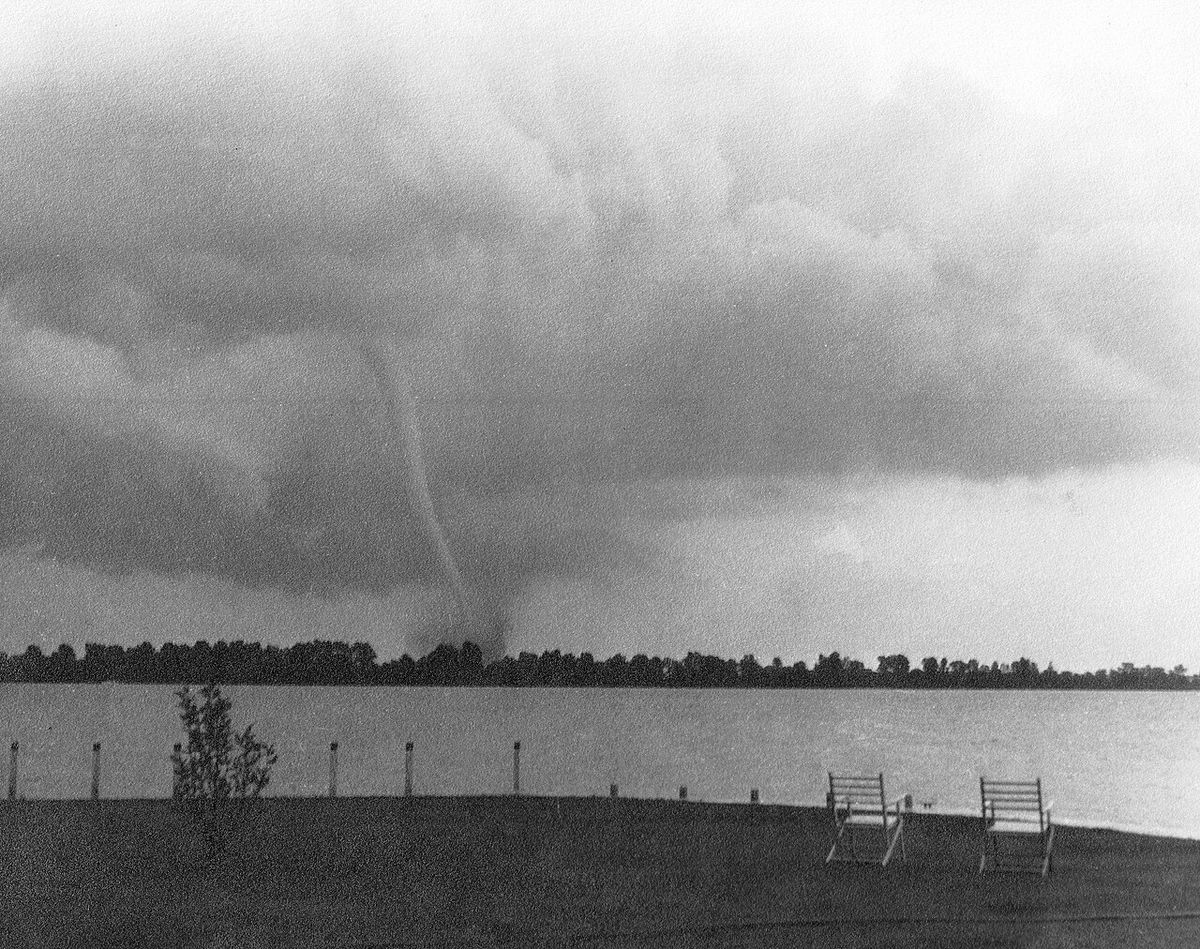
1946 Windsor-Tecumseh tornado
The 1946 Windsor-Tecumseh tornado was a catastrophic F4-rated tornado that struck southwestern Ontario on the evening of June 17, 1946. It remains the most powerful tornado ever recorded in Windsor and the third deadliest in Canadian history, resulting in 17 fatalities and hundreds of injuries. The storm carved a 60-kilometre path of destruction from Brighton Beach in Windsor through Sandwich West Township, now LaSalle, and into Tecumseh before dissipating over Lake St. Clair. With damage estimated at $9.663 million and approximately 400 homes damaged or destroyed, the event left a major and lasting impact on the region.
Storm Formation and Path
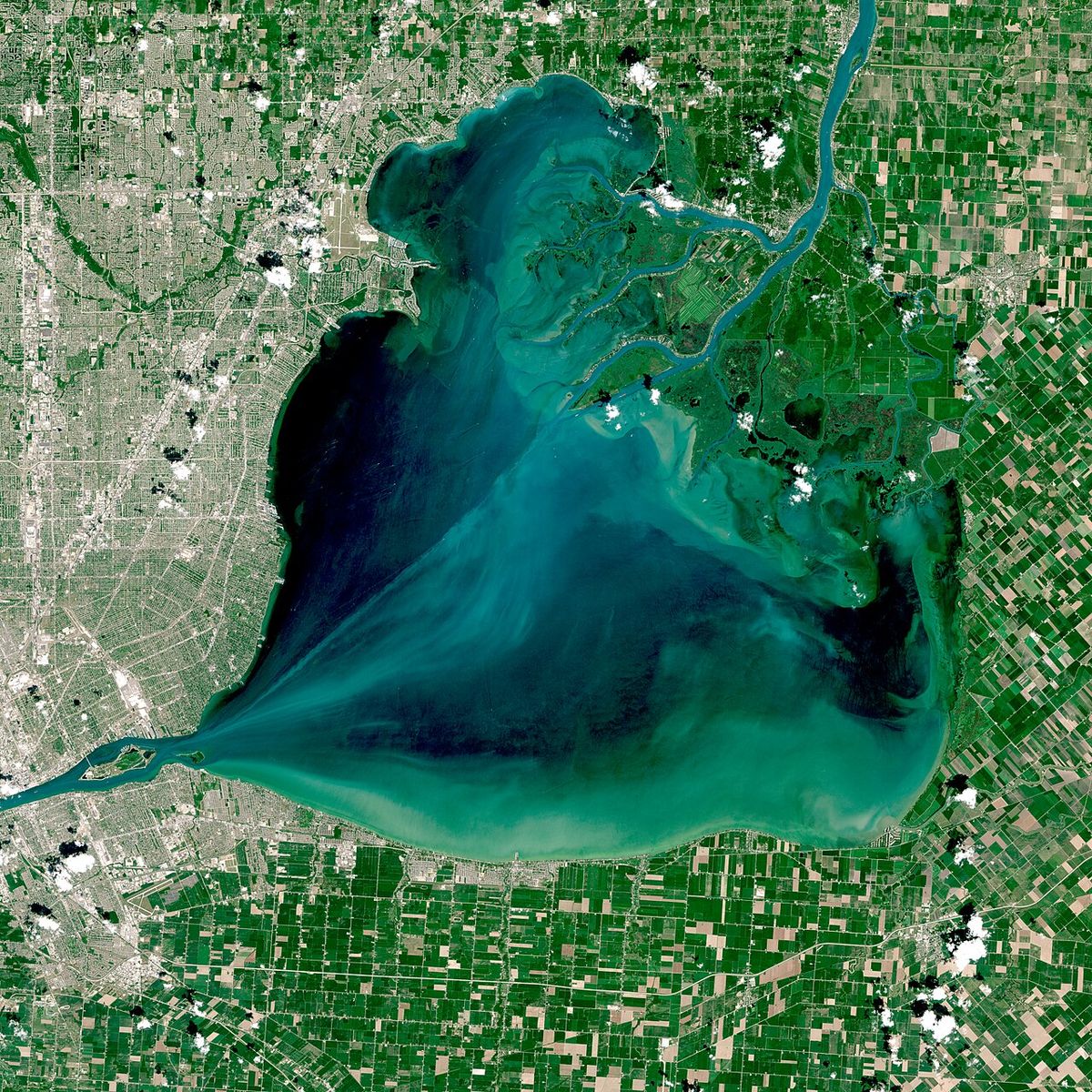
The tornado formed over the United States, touching down initially near River Rouge, Michigan, in the late afternoon of June 17. It then crossed the Detroit River, making its Canadian landfall in Windsor's Brighton Beach neighbourhood. The storm maintained a northeastward trajectory, cutting across southern Windsor and the northern sections of Sandwich West Township, an area now part of the Municipality of LaSalle. Its path was remarkably narrow, averaging about 30 metres in width, and it largely followed the course of Turkey Creek after entering Ontario. The tornado narrowly missed Windsor Airport, located just south of its route, before continuing through the northwest part of Tecumseh and finally dissipating over Lake St. Clair. The total track length was approximately 60 kilometres from its Michigan origin to its end over the lake.
Intensity and Damage Assessment
The tornado produced damage consistent with F3 to F4 intensity on the Fujita scale, with some indicators suggestive of even more extreme force. Researchers later estimated peak wind speeds between 270 and 310 kilometres per hour, placing the storm at the upper end of the F4 classification. The damage was both widespread and severe, impacting residential, agricultural, and industrial infrastructure. Approximately 400 homes were either damaged or completely destroyed, with some structures lifted clean off their foundations. Railroad boxcars were thrown from their tracks and flipped onto their sides, illustrating the tornado's tremendous power. The agricultural sector suffered heavily, with orchards uprooted and 15 farm buildings destroyed. Environment Canada later investigated the tornado as a potential candidate for an upgrade to an F5 rating due to the extreme nature of some damage indicators, but the upgrade was not granted due to insufficient conclusive evidence.
Casualties and Immediate Impact
The human toll of the tornado was severe, with 17 people killed and hundreds more injured. The storm knocked out power to most of Windsor for about a day, crippling communication and emergency response efforts. The disruption was so significant that the main printing offices of the Windsor Star lost power, forcing the newspaper to rely on the assistance of the Detroit News, which offered its printing facilities to help publish reports of the disaster. One particularly harrowing account documented by the Western University Northern Tornadoes Project archive states that an airplane was picked up by the tornado in Detroit and came down on a house in Windsor, killing the residents inside. The event overwhelmed local resources and created a scene of widespread devastation that required a coordinated recovery effort.
Aftermath and Recovery
In the wake of the disaster, civic order was quickly restored by local police forces. Public information became a critical tool for managing fear and uncertainty in the community. Radio station CKLW, which was Windsor's CBC radio affiliate at the time, broadcast many firsthand accounts and official updates about the tornado and the recovery. The Ontario Provincial Government even used the airwaves to explain the meteorological conditions favourable for tornado development, aiming to alleviate public fears of an "epidemic of tornadoes" following the event. This public education effort was particularly poignant as, just one week later, another tornado struck the towns of Fort Frances and International Falls. The physical and psychological recovery for survivors was a long process, with many families, like that of Don Sigrist, losing everything they owned.
Historical Context and Records
The 1946 Windsor-Tecumseh tornado holds a significant place in Canadian meteorological history. It is ranked as the third deadliest tornado ever recorded in Canada and remains the deadliest tornado on record for the province of Ontario. The storm's $9.663 million in damage, equivalent to roughly $141 million in modern currency, illustrates its severe economic impact. Archival records of the event are held by the CBC Archives in Toronto, which contain reports on damages, fatalities, incidents of looting, and eyewitness testimonies. Notably, while CKLW broadcast to the affected area, no recordings of their coverage from the incident exist in their own archives today, making the CBC collection a primary historical source.
Tornadoes in Modern Windsor-Essex
The Windsor-Essex region has experienced several tornadoes since the 1946 disaster, though none have matched its intensity or deadly impact. Significant events include an EF-2 tornado on August 24, 2016, with winds around 220 km/h, which struck areas including Kautex Drive and E.C. Row. More recently, researchers with Western University's Northern Tornadoes Project confirmed an EF-1 tornado with maximum winds of 165 km/h struck Windsor on September 3, 2026, causing damage along Jefferson Boulevard. This tornado was a continuation of an EF-2-rated tornado that moved through Detroit and crossed the Detroit River. Other confirmed tornadoes in the area since 2016 include an EF-1 tornado on July 24, 2021, with 125 km/h winds tracking south of Tecumseh Road East. The summer of 2023 saw three tornadoes on two separate dates, with two striking on June 25 and another on August 23, all rated EF-1 with winds between 90 and 125 km/h. These events highlight that while severe, modern tornadoes in the region have been less powerful than the historic 1946 storm, which continues to define the area's extreme weather history.
- July 24, 2021: An EF-1 tornado with 125 km/h winds tracked just south of Tecumseh Road East.
- June 25, 2023: Two tornadoes struck. One with 90 km/h winds south of Tecumseh Road West, and a second with 125 km/h winds through Forest Glade.
- August 23, 2023: An EF-1 tornado with 125 km/h winds tracked just east of Huron Church Road in South Windsor.
Comparative Tornado Data for Windsor-Essex (2016 to 2026)
The following table lists confirmed tornadoes in the City of Windsor between the significant 2016 event and the tornado confirmed in 2026, providing a comparison of their dates, ratings, and maximum wind speeds. This data, compiled from investigations by the Northern Tornadoes Project and Environment Canada, illustrates the frequency and intensity of tornado activity in the region in recent years. The 2016 EF-2 tornado was the strongest of this period, while the others were all in the EF-1 category. The 2026 tornado was notable for being a direct continuation of a storm that crossed the international border from Detroit. The table shows the path areas for each event, from the industrial zones hit in 2016 to residential neighbourhoods affected in later years.
| Date | Fujita/Enhanced Fujita Rating | Maximum Wind Speed | General Path Area |
|---|---|---|---|
| August 24, 2016 | EF-2 | 220 km/h | Kautex Drive, E.C. Row, Fontainebleau |
| July 24, 2021 | EF-1 | 125 km/h | South of Tecumseh Road East |
| June 25, 2023 | EF-1 | 90 km/h | South of Tecumseh Road West |
| June 25, 2023 | EF-1 | 125 km/h | Forest Glade (Windsor/Tecumseh) |
| August 23, 2023 | EF-1 | 125 km/h | East of Huron Church Road, South Windsor |
| September 3, 2026 | EF-1 | 165 km/h | Jefferson Boulevard area, continuation from Detroit |
This record shows that the Windsor region remains vulnerable to tornadoes. There was one EF-2 tornado event on August 24, 2016, with wind speeds around 220 km/h. Other confirmed tornadoes occurred in 2021 and 2023, with maximum wind speeds ranging from 90 to 165 km/h. All these modern events have been markedly less intense than the historic F4 storm of 1946, which had estimated winds between 270 and 310 km/h.
Questions about 1946 Windsor-Tecumseh tornado
What areas did the 1946 tornado affect?
The tornado first touched down near River Rouge, Michigan, before crossing the Detroit River into Canada at Windsor's Brighton Beach neighbourhood. Its path cut across southern Windsor and the northern part of Sandwich West Township, now LaSalle. It then moved through the northwest section of Tecumseh before finally dissipating over Lake St. Clair. The total path length was approximately 60 kilometres.
Has Windsor been hit by tornadoes since 1946?
Yes, Windsor has experienced several confirmed tornadoes in recent decades, though none as powerful as the 1946 event. Notable ones include an EF-2 tornado in 2016 and an EF-1 tornado in 2026 that crossed from Detroit. Other EF-1 tornadoes struck in 2021 and 2023. These are all tracked and verified by the Northern Tornadoes Project in collaboration with Environment Canada.
How many people died in the 1946 Windsor-Tecumseh tornado?
The 1946 Windsor-Tecumseh tornado killed 17 people. This makes it the third deadliest tornado in Canadian history and the deadliest ever recorded in Ontario, with hundreds more people injured. The fatalities occurred as the powerful F4 storm cut a destructive path through residential areas. The tornado damaged or destroyed approximately 400 homes along its route from Windsor to Tecumseh. The significant loss of life and property cemented its place as one of Canada's most severe tornado disasters.
What was the strength of the 1946 Windsor tornado?
The 1946 Windsor tornado was rated F4 on the Fujita scale, making it the most powerful tornado to ever strike Windsor. Researchers estimated its peak wind speeds were between 270 and 310 kilometres per hour, placing it at the upper end of the F4 range. Due to the extreme nature of the damage, including houses lifted off their foundations, Environment Canada later investigated it as a candidate for an F5 rating. However, the upgrade was not granted due to insufficient evidence, so it remains officially classified as an F4 event.
How much damage did the tornado cause?
The tornado caused an estimated $9.663 million in damage, which is equivalent to about $141 million today. It damaged or destroyed roughly 400 homes in Windsor and the surrounding area. The storm also uprooted orchards, destroyed 15 farm buildings, and threw railroad boxcars from their tracks. The tornado knocked out power to most of the city for about a day, severely disrupting normal life and necessitating the use of printing facilities from the Detroit News after the Windsor Star lost power.
Sources and further reading
- 1946 Windsor-Tecumseh tornado (Wikipedia)
- Tornado, 1946 - Windsor, Ontario (windsorpubliclibrary.com)
- Researchers Confirm 165km/h Tornado Hit Riverside, East ... (windsorite.ca)
Checked by the Your Space Hamilton desk. Last updated 2026-10-27.