The Black Tusk
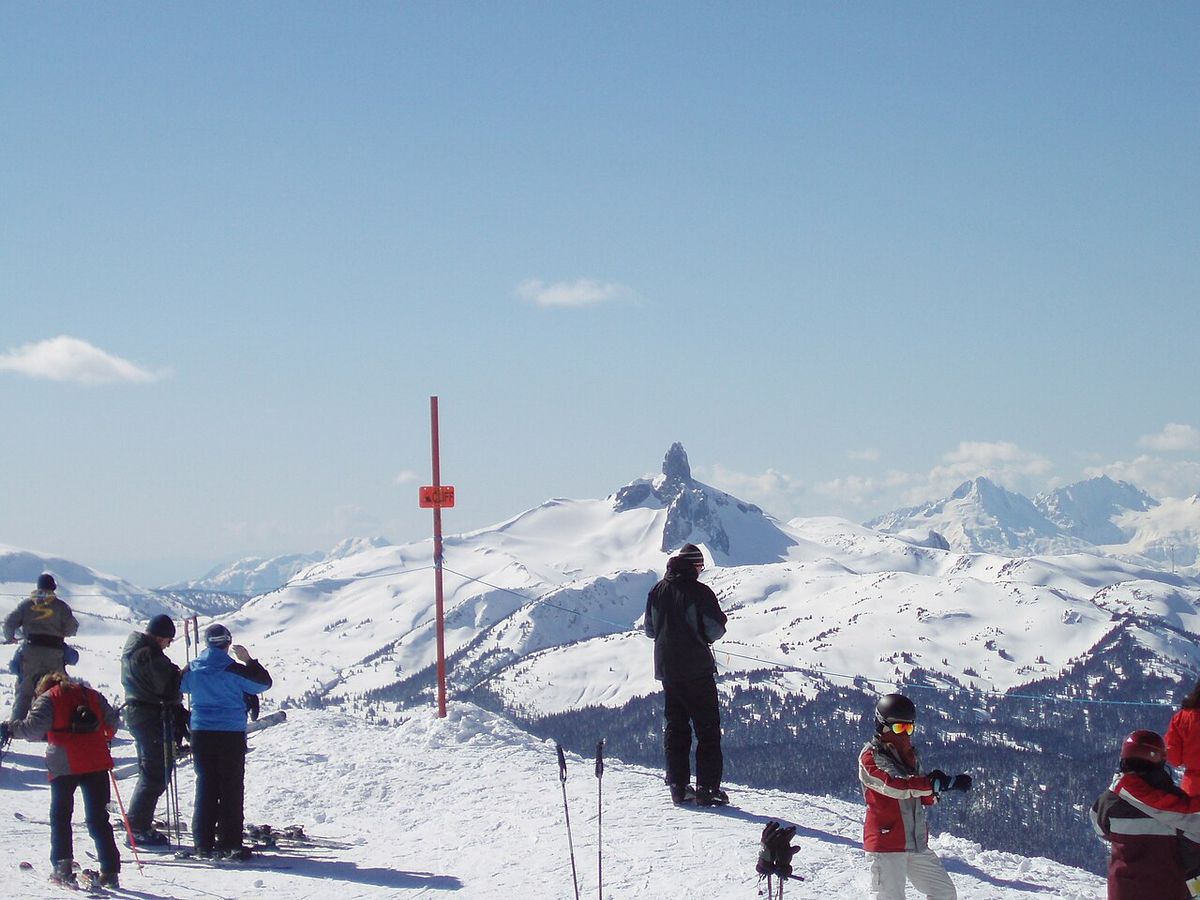
The Black Tusk is a distinctive stratovolcano and natural landmark located within Garibaldi Provincial Park in the Coast Mountains of British Columbia. With an elevation of 2,319 metres, its stark black pinnacle is a prominent feature visible from the Sea-to-Sky Highway and surrounding regions. The mountain holds deep cultural significance for local First Nations and is a premier destination for backcountry hiking and scrambling. Its unique geology and challenging terrain make it one of the most recognizable and visited peaks in the Garibaldi Ranges.
Indigenous Significance and Names
The Black Tusk is situated on the traditional border between the Squamish and Lil'wat Nations. To the Squamish people, the mountain is known as T'ákt'akmúten tl'a Ín7inyáx̱a7en, which translates to "Landing Place of the Thunderbird." This name references the supernatural Ín7inyáx̱a7en, or Thunderbird, a powerful figure in Coast Salish cosmology. The mountain's jagged, blackened appearance is attributed to the lightning of the Thunderbird, a belief shared with the nearby Mount Cayley. The St'at'imcets name, Q̓elqámtensa ti Skenknápa, further denotes the mountain's enduring presence within Indigenous oral histories and territorial boundaries. The mountain traditionally formed part of the border line between these two nations, marking a significant geographical and cultural divide.
Geology and Physical Features
The Black Tusk is the remnant core of an extinct andesitic stratovolcano that first formed between 1.3 and 1.1 million years ago. After being heavily eroded by glaciers, a final phase of volcanism occurred approximately 170,000 years ago, creating the lava dome and flow that constitute its current summit pinnacle. Natural Resources Canada describes the formation as perhaps being the solidified lava conduit within a cinder-rich volcano, with the surrounding softer material having eroded away. The exposed rock is a loose, friable, and characteristically black lava, which gives the mountain its name and stark appearance. To the east, Cinder Cone produced a nine-kilometre lava flow during the late Pleistocene or early Holocene period. The mountain currently hosts two significant glaciers, in large cirques carved into the northeastern and northwestern flanks of the broad cone below the lava pinnacle.
Both glaciers start from about 2,100 metres and flow northwards to below 1,800 metres. The glaciers are heavily covered in rocky debris due to the crumbling nature of the Tusk's unstable rock. The Black Tusk is a member of the chain of volcanic peaks that run from southwestern British Columbia to northern California, known as the Garibaldi Volcanic Belt. This belt is a segment of the Canadian Cascade Arc, which formed over the past 35 million years from the subduction of the Juan de Fuca, Gorda, and Explorer plates beneath the North American Plate at the Cascadia subduction zone. The mountain's distinct profile is a direct result of this volcanic history followed by extensive glacial dissection.
Hiking and Scrambling Routes
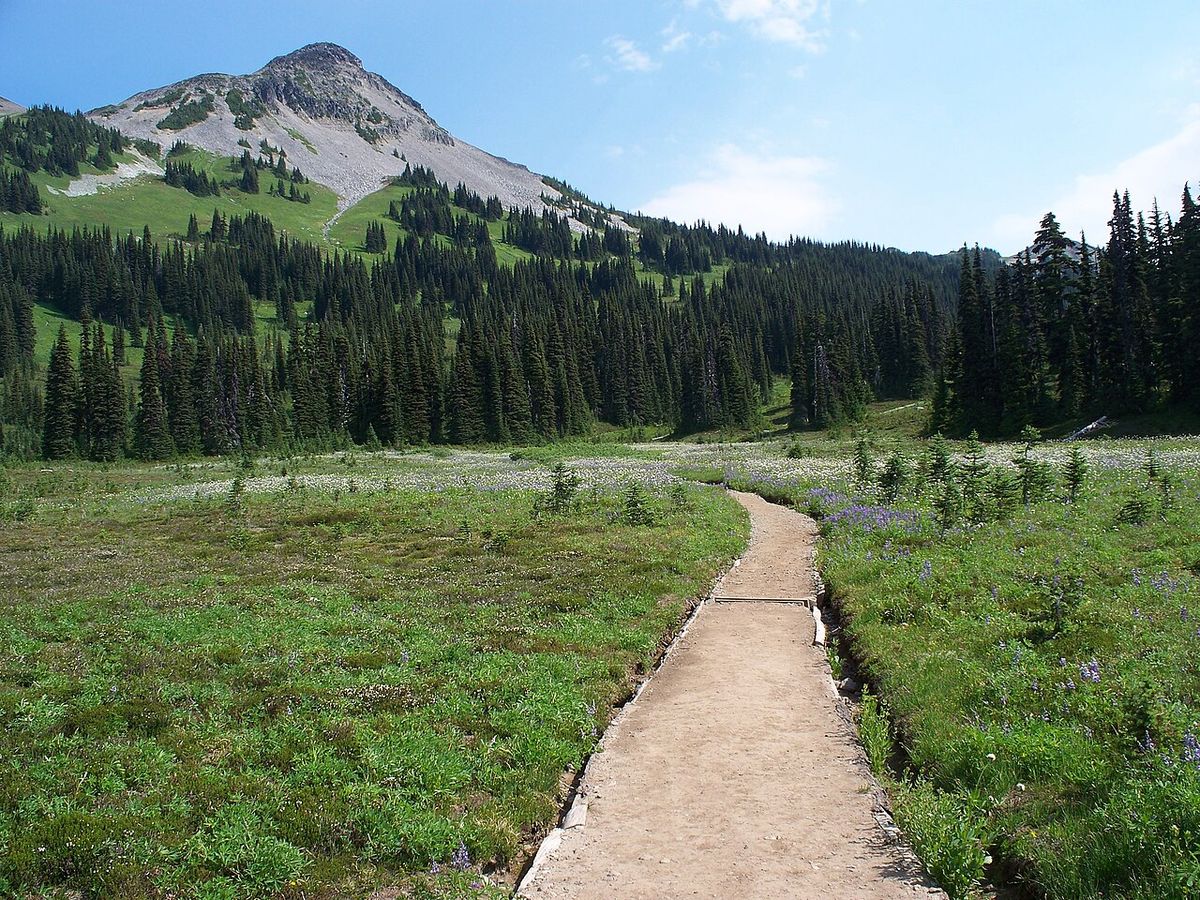
The Black Tusk is a premier backcountry destination, typically accessed via the Rubble Creek trailhead off the Sea-to-Sky Highway approximately 37 kilometres north of Squamish. The most common approach for hikers is via the Taylor Meadows campground to the south, near Garibaldi Lake, though a second route from the north travels by way of Helm Lake. The full hike to the Black Tusk viewpoint is a challenging endeavour, with a round-trip distance of approximately 29 kilometres and an elevation gain of about 1,740 metres, often requiring 10 to 12 hours to complete. Many visitors choose to break the journey into a multi-day trip by camping at designated sites at Taylor Meadows or Garibaldi Lake. The trail initially climbs steadily through forest for about six kilometres before reaching a junction, where the left fork leads to Taylor Meadows. The trail continues to climb gradually, eventually emerging into open meadows filled with alpine flowers in late summer.
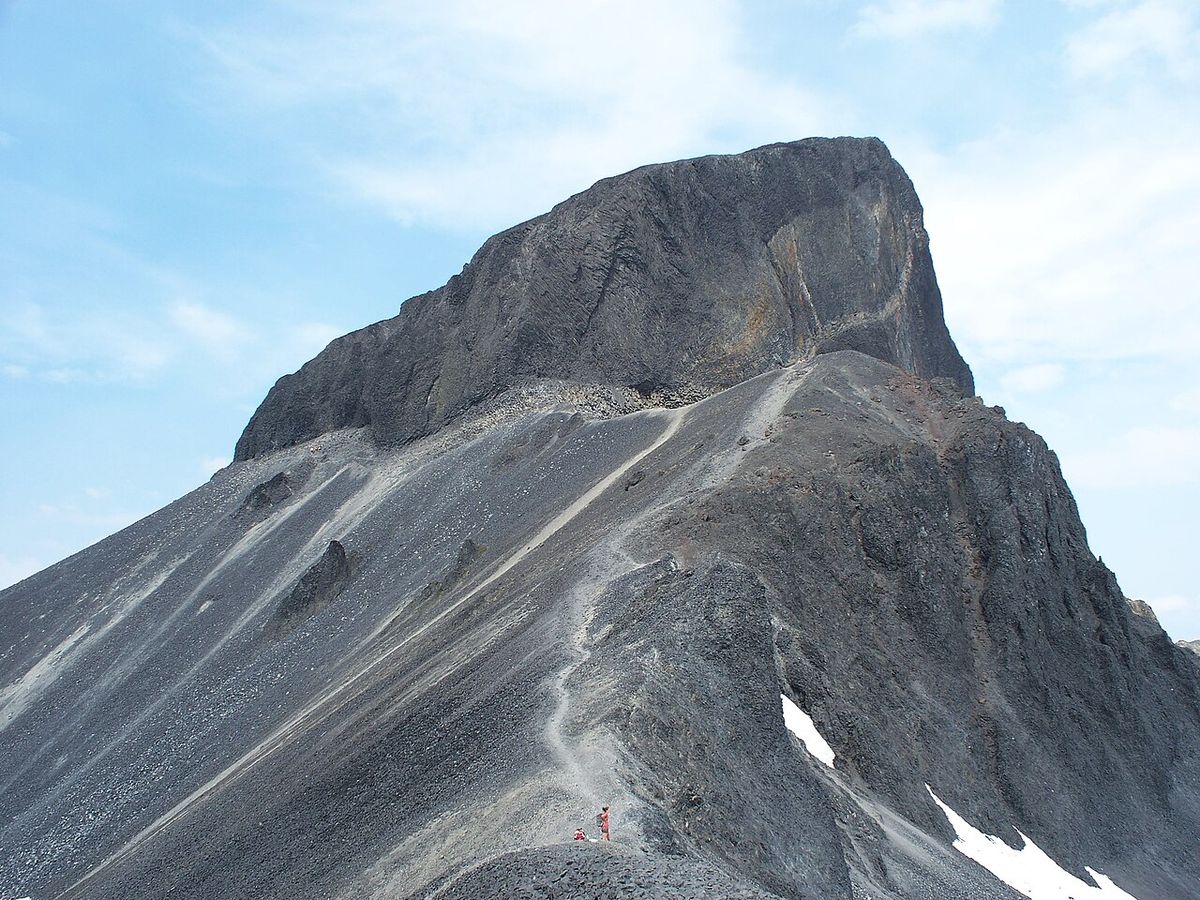
After passing through the Taylor Meadows camping area, hikers reach a junction with a map and bench, continuing straight before taking a signed trail on the left that points toward The Black Tusk. This trail climbs quickly over rocky terrain and runoff streams, eventually giving way to completely rocky ground. The trail emerges onto a small ridge at a BC Parks sign with a full view of The Black Tusk ahead. Beyond this sign, BC Parks does not maintain a trail, though a visible path remains from frequent use. The final section is a scramble over loose shale toward the base of the Tusk, where the slope is steep and the footing unstable. Most hikers end their hike at the ridge next to the base of the Tusk, which offers a wide view of Garibaldi Lake and the surrounding area.
The upper summit area at the top of the lava column can only be reached by scrambling up a short but exposed rock chimney to reach the south summit. The true summit, only about a metre higher, lies just to the north across a precipitous drop. It is rarely climbed, requiring a rappel of about 10 metres into a notch followed by a loose and dangerous reascent up the crumbling lava. On the northern side of the north summit stands an isolated and intimidating rock formation known as the "Bishop's Mitre", which is rumoured to be unclimbed. BC Parks discourages attempts on the true summit due to the extreme hazard, and climbers attempting the chimney must be experienced and prepared for the consequences of rockfall.
Park Management and Visitor Access
To manage high visitation and protect the natural environment, BC Parks implements a day-use pass system for the Garibaldi Lake area, including the Rubble Creek trailhead for The Black Tusk. For the 2026 season, vehicle day-use passes are required at the Rubble Creek parking lot on Fridays, Saturdays, Sundays, Mondays, and holidays from June 12 to October 12. Passes are free, booked online through the BC Parks day-use pass website up to two days in advance starting at 7 AM Pacific Time, and are limited based on parking capacity. The Rubble Creek lot has designated space for 200 vehicles, and roadside parking is also used to accommodate overflow. Passes cannot be booked through the camping reservations website or by phone. Each vehicle requires one pass, valid for up to 12 people, and children aged 12 or younger when accompanied by an adult with a valid pass do not need a pass.
Visitors with a valid backcountry camping reservation for the area do not need a separate day-use pass for their stay, but must carry their reservation details. Backcountry camping is a popular way to experience the area, with fees for the 2026 season set at $25 per night per adult and $5 per night for children aged 5 to 15. Campers must park in the designated P1 lot at Rubble Creek. The park has issued advisories about increased bear activity throughout the area, reminding visitors to practice proper food storage and wildlife safety. The Diamond Head area of the park, offering access to Elfin Lakes, also requires day-use passes on a similar schedule, with parking for 55 vehicles. The Cheakamus Lake trailhead requires passes every day from June 13 to September 7, and then on a Friday-to-Monday schedule until October 12.
Key Attractions and Nearby Features
Garibaldi Provincial Park offers a wealth of natural attractions within proximity to The Black Tusk. The area is a hub for alpine recreation, featuring landscapes shaped by volcanic and glacial activity. The dark, jagged edges of The Black Tusk make it one of the most scenic and unique hikes in southwestern British Columbia, and it is considered the most spectacular mountain in the Garibaldi Lake area. The scenic region surrounding Garibaldi Lake forms the heart of the park, containing several outstanding natural features within a small radius.
- Garibaldi Lake: A large, turquoise alpine lake approximately 18 kilometres round trip from the Rubble Creek trailhead, offering camping and views.
- Panorama Ridge: A hiking destination providing an aerial view of Garibaldi Lake and The Black Tusk.
- Taylor Meadows: A scenic alpine campground and area of subalpine meadows known for wildflower displays in late summer.
- Helm Glacier and Lake: Located on the northern side of The Black Tusk, accessible via the Helm Lake trail.
- Cinder Cone: A volcanic feature east of The Black Tusk, source of a notable Pleistocene lava flow.
- Elfin Lakes and Shelter: Accessed from the Diamond Head trailhead, this area features a backcountry hut and alpine lakes.
- Mount Garibaldi and Atwell Peak: Volcanic peaks visible from Squamish, located in the Diamond Head region.
- The Table, Sentinel Glacier, Sphinx Glacier, and Castle Towers: Other notable geological features in the immediate vicinity.
The park's terrain supports diverse year-round activities. In summer, the Diamond Head area offers hiking to Red Heather Hut and Elfin Lakes, while in winter it becomes a destination for ski mountaineers, snowshoers and backcountry skiers. Mountain bikers can ride to Elfin Lakes on a separate trail but are not permitted beyond that point. The Rubble Creek parking lot is not cleared of snow in winter, and chains are required to access the Diamond Head lot during the colder months.
Safety Considerations and Hazards
Attempting to hike or climb The Black Tusk involves significant risks that require careful preparation and respect for the mountain environment. The final approach to the base of the Tusk is a steep scramble over unstable shale and scree, where hikers can slide backward with each step. BC Parks explicitly states that the route beyond their warning sign is unmaintained and travel is at one's own risk. The rock chimney leading to the south summit is exposed and requires scrambling skill, while the true summit ascent is considered extremely dangerous due to loose rock and the need for technical climbing and rappelling equipment. The "Bishop's Mitre" formation remains a formidable and likely unclimbed challenge. Weather in the alpine can change rapidly, and the long approach means hikers must carry ample food, water, and emergency supplies.
Cell phone service is limited throughout the park, so visitors must be self-sufficient and prepared for self-rescue. Proper footwear, navigation tools, and an early start are essential for anyone attempting this demanding route. Hikers should be aware of the potential for serious injury or death from falls on the loose cliffs near the base of the Tusk. The park has noted increased bear activity, requiring proper food storage and bear awareness practices. For winter visits, the Rubble Creek parking lot is not cleared of snow, and the Diamond Head access road requires chains and a four-wheel drive vehicle. Visitors should always check the BC Parks advisories page for the latest information on trail conditions, closures, and wildlife warnings before heading out.
Planning Your Visit
Successful visits to The Black Tusk require advance planning due to the park's popularity and management systems. The first step is to determine if a day-use vehicle pass is required for your chosen date, which for the 2026 summer season at Rubble Creek is Fridays through Mondays and holidays from June 12 to October 12. Passes are released online two days in advance at 7 AM PT and can be booked for a maximum of four passes per transaction per day for trail passes, or one vehicle pass per time slot per day. If passes are sold out, it is recommended to check back later as cancellations can free up space. Since cell service is limited at the park, you must download, screenshot, or print your pass before arriving. Passes cannot be transferred to another date, time, location, or person, so cancellations should be made if plans change.
For overnight trips, backcountry camping reservations must be secured through the BC Parks camping reservation system. Camping is available at Taylor Meadows and Garibaldi Lake, with fees set at $25 per adult and $5 per child aged 5 to 15 per night for 2026. Campers must park in the P1 lot and carry their reservation confirmation. The hike is a major physical undertaking, so assessing personal fitness and allowing ample time is crucial. Many hikers prefer to camp overnight to break the 29-kilometre round trip into two days. Essential gear includes sturdy hiking boots, layers for changing weather, at least three litres of water, food, a first-aid kit, a headlamp, and bear spray. Checking the weather forecast and the Garibaldi Park advisories page for updates on trail conditions, snow levels, and wildlife activity is a mandatory final step before departure.
Questions about The Black Tusk
How do I get a day-use pass for hiking The Black Tusk in 2026?
Free day-use vehicle passes for the Rubble Creek trailhead are required on Fridays, Saturdays, Sundays, Mondays, and holidays from June 12 to October 12, 2026. Passes are booked online through the BC Parks day-use pass website up to two days in advance, starting at 7 AM Pacific Time. Each vehicle requires one pass, valid for up to 12 people. If you have a confirmed backcountry camping reservation, you do not need a separate day-use pass for the duration of your stay. Passes are limited based on the 200-vehicle parking capacity at Rubble Creek.
Can you climb to the very top of The Black Tusk?
Reaching the true summit of The Black Tusk is a dangerous technical climb that is strongly discouraged by BC Parks. Most hikers stop at the south summit, which is accessible via a scrambling route up an exposed rock chimney. The true summit, about a metre higher, requires a rappel of about 10 metres into a notch and a hazardous ascent up crumbling lava rock. An isolated formation called the "Bishop's Mitre" on the north side is also considered a major challenge and is rumoured to be unclimbed. These climbs should only be attempted by experienced mountaineers with proper equipment.
What is the best time of year to hike The Black Tusk?
The prime hiking season for The Black Tusk is typically from mid-July to late September, when the snow has melted from the high alpine trails and the weather is more stable. This period also coincides with the blooming of alpine wildflowers in Taylor Meadows. Early season hikers may encounter significant snowpack, and the day-use pass system is in effect from mid-June to mid-October to manage summer and early fall crowds. Winter access is possible for ski mountaineering, but the Rubble Creek parking lot is not cleared of snow.
Are there camping facilities near The Black Tusk?
Yes, backcountry camping is available at Taylor Meadows and Garibaldi Lake, both of which serve as base camps for hiking The Black Tusk. For the 2026 season, camping fees are $25 per night per adult and $5 per night for children aged 5 to 15. Reservations are required and can be made through the BC Parks camping website. Campers must park in the designated P1 lot at the Rubble Creek trailhead. These campsites provide tent pads and access to pit toilets, but all food must be stored properly due to active bear populations in the area.
What does the name 'The Black Tusk' mean in Indigenous languages?
The Squamish name for the mountain is T'ákt'akmúten tl'a Ín7inyáx̱a7en, meaning "Landing Place of the Thunderbird. The St'at'imc name is Q̓elqámtensa ti Skenknápa. The mountain's black, jagged shape is culturally explained as being scorched by the lightning of the supernatural Thunderbird, a significant figure in local First Nations traditions. The same explanation is given for the appearance of Mount Cayley farther north. The mountain traditionally marked the border between Squamish and Lil'wat territories.
How long and difficult is the hike to The Black Tusk?
The hike to the Black Tusk viewpoint is very challenging, with a round-trip distance of approximately 29 kilometres and an elevation gain of about 1,740 metres. It generally takes experienced hikers 10 to 12 hours to complete as a day hike. The route includes a long forest climb, travel through alpine meadows, and a final strenuous scramble over loose shale. Many hikers opt for an overnight trip to break up the journey, camping at Taylor Meadows or Garibaldi Lake. The final scramble section is unmaintained and involves significant hazard from loose rock and exposure.
Sources and further reading
- The Black Tusk (Wikipedia)
- Day-use passes (bcparks.ca)
- Black Tusk hike in Garibaldi Provincial Park near Whistler ... (vancouvertrails.com)
- Garibaldi Provincial Park (exploresquamish.com)
Checked by the Your Space Hamilton desk. Last updated 2026-10-26.