Peace Arch Park
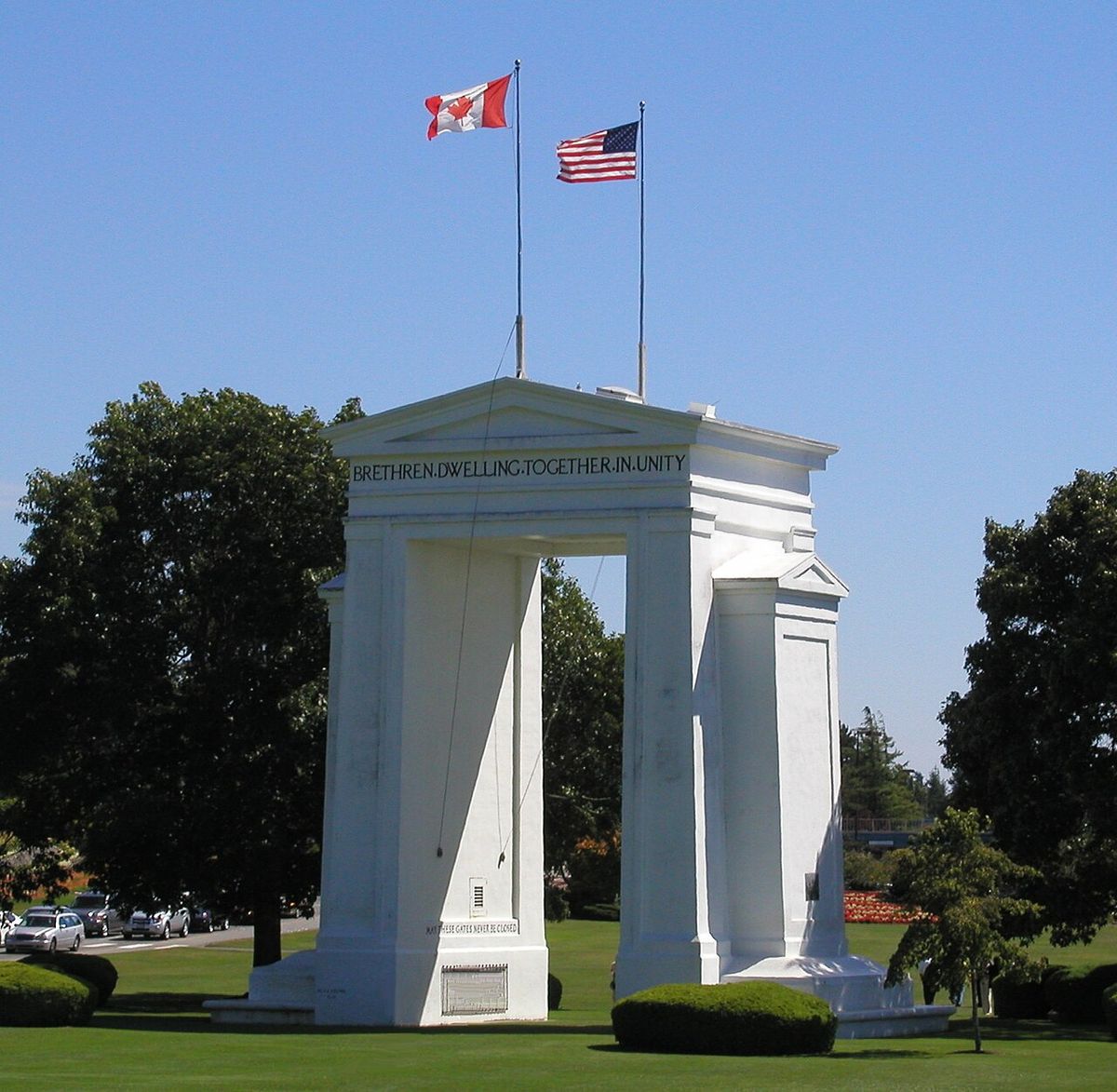
Peace Arch Park is a unique international park straddling the Canada-United States border between Surrey, British Columbia, and Blaine, Washington. Its central feature is the 20.5-metre-tall Peace Arch, a monument dedicated in 1921 to commemorate the Treaty of Ghent and the enduring peace between the two nations. The park consists of two contiguous sections: Peace Arch Provincial Park in Canada and Peace Arch Historical State Park in the United States, jointly managed by BC Parks and the Washington State Parks and Recreation Commission. It is situated at the Peace Arch Border Crossing, one of the busiest land crossings between the two countries, and attracts approximately 500,000 visitors annually who come to experience its symbolic openness and formal gardens.
History and Construction
The concept for the Peace Arch originated with American lawyer and businessman Sam Hill, who organized an international fundraising campaign beginning in 1914. American architect Harvey Wiley Corbett donated the design for the structure, and construction by volunteers commenced in 1920. The arch was dedicated on September 6, 1921, before a crowd estimated at 15,000 people. It was considered one of the first earthquake-resistant structures built in North America. The monument specifically commemorates the signing of the Treaty of Ghent in 1814, which ended the War of 1812, and the subsequent Rush-Bagot agreement that fostered an unguarded border.
The land for the surrounding park was acquired through further fundraising, including donations from school children in both countries. The United States portion was established as a state park in 1931, while the Canadian side was formally dedicated as Peace Arch Provincial Park on November 7, 1939. The arch itself was added to the Canadian Register of Historic Places in 1939 and to the U.S. National Register of Historic Places in 1996. The park's location has long been a site of border inspection services, predating the arch's construction.
Monument Design and Symbolism
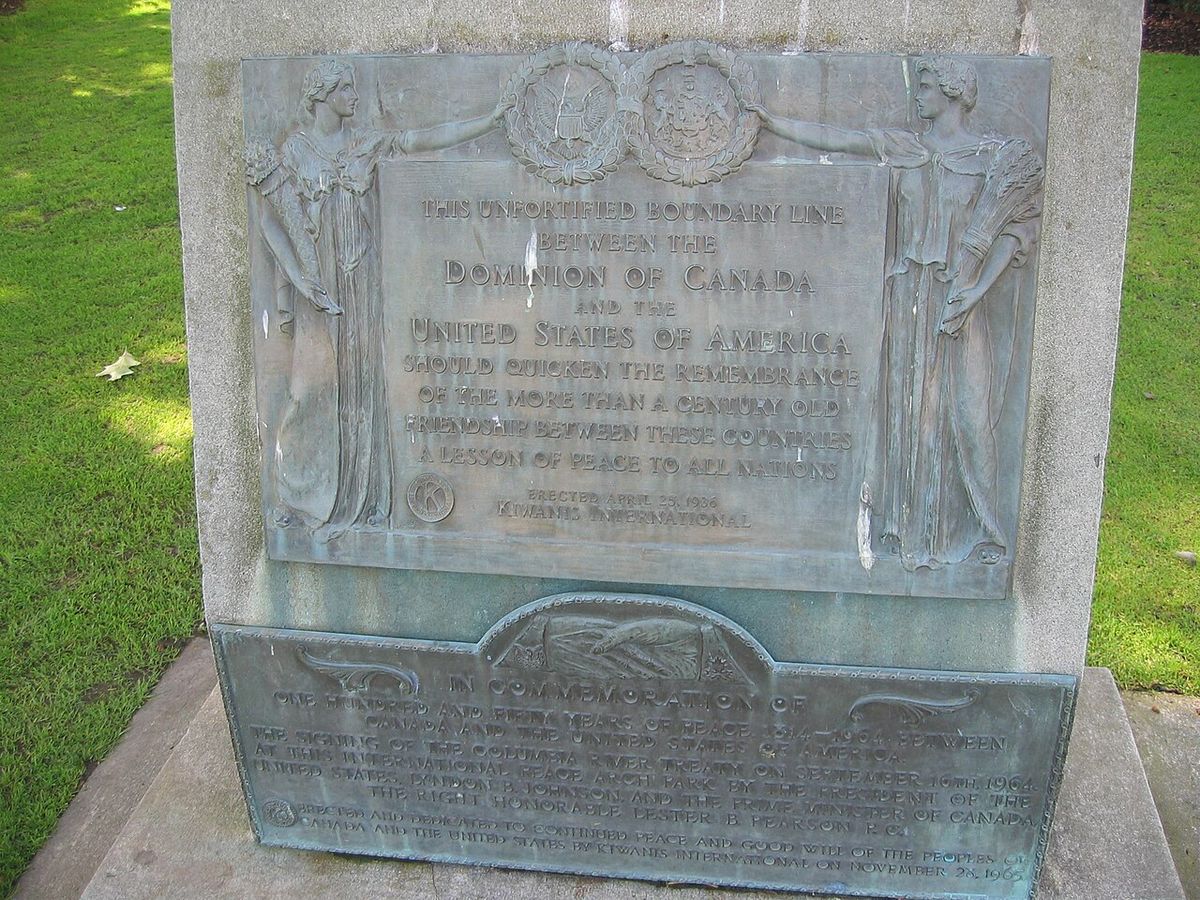
The Peace Arch is a 20.5-metre (67-foot) tall white structure built directly on the international boundary, with the 49th parallel running precisely beneath it. The flags of the United States and Canada are mounted on the ridge of its roof. The arch features significant inscriptions carved into its frieze that encapsulate its message of unity. On the side facing the United States, the inscription reads 'Children of a common mother,' referring to the two nations' shared origins from the British Empire. The side facing Canada bears the phrase 'Brethren dwelling together in unity,' a line from Psalm 133:1. Within the archway, two iron gates are mounted on the boundary line itself. The inscription above the gate on the east side reads 'May these gates never be closed,' while the inscription on the west side reads '1814 Open One Hundred Years 1914.' These gates are perpetually left open as a physical symbol of the peaceful relationship. The monument's base contains a special compartment holding a steel box made from metal of a captured slave ship, inside which were placed pieces of the historic ships Beaver and Mayflower.
Park Features and Recreation
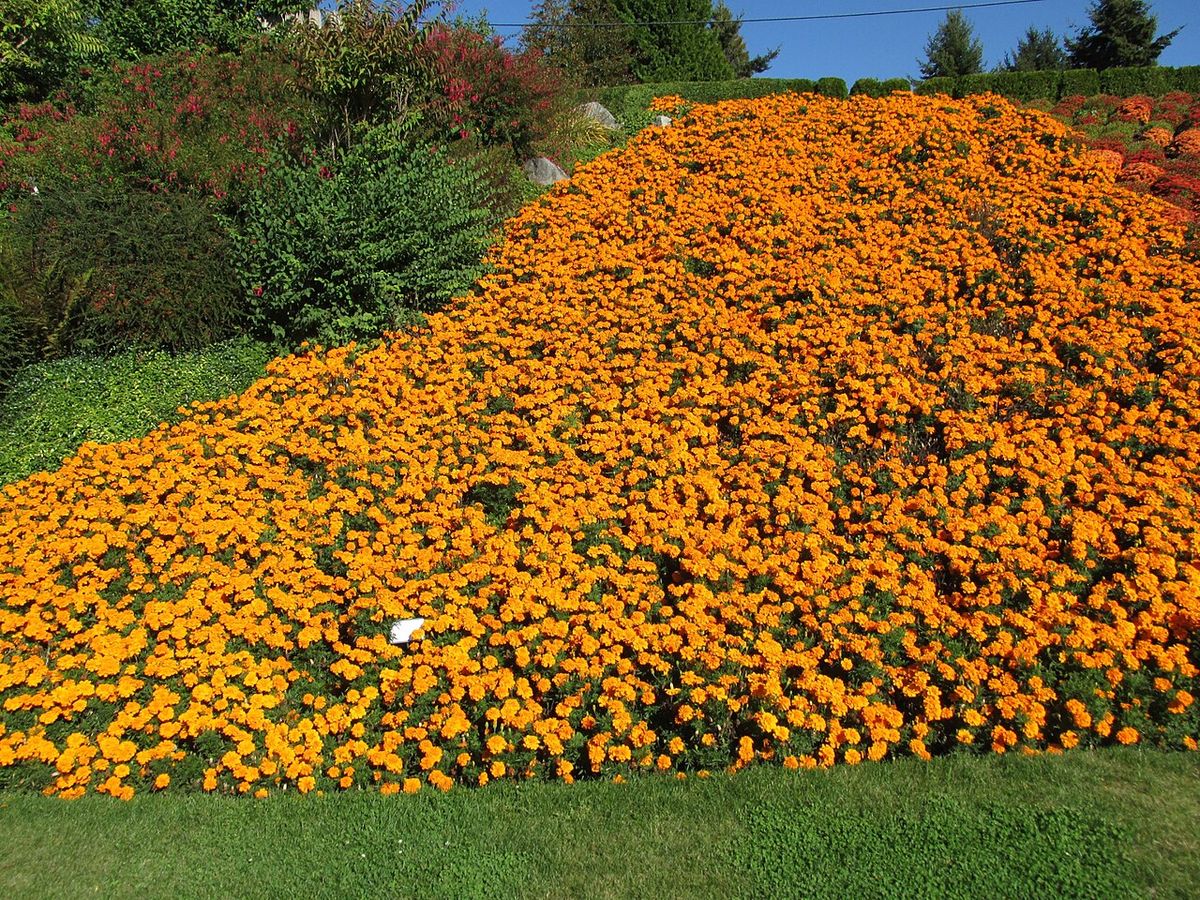
Peace Arch Park encompasses formal lawns, manicured gardens, and horticultural displays on both sides of the border. The Canadian side features a flower garden arranged in the shape of the Canadian flag, a lily pond, and broad grassy areas ideal for walking and picnicking. The park is strictly a day-use area with no camping or overnight stays permitted, though temporary sun or rain shelters without walls are allowed for day use. Recreational activities are simple and contemplative, focused on the park's symbolic nature and serene environment. Key amenities and features include a playground with a swing set and play field for children, approximately 79 unsheltered picnic tables available on a first-come, first-served basis, and indoor and outdoor picnicking facilities available for rental.
- Interpretive panels with audio that provide historical context and highlight views of the arch and Semiahmoo Bay.
- Wheelchair-accessible washrooms and paved paths connecting the parking area to the main grounds.
- Birdwatching opportunities due to the park's proximity to water and its tall trees.
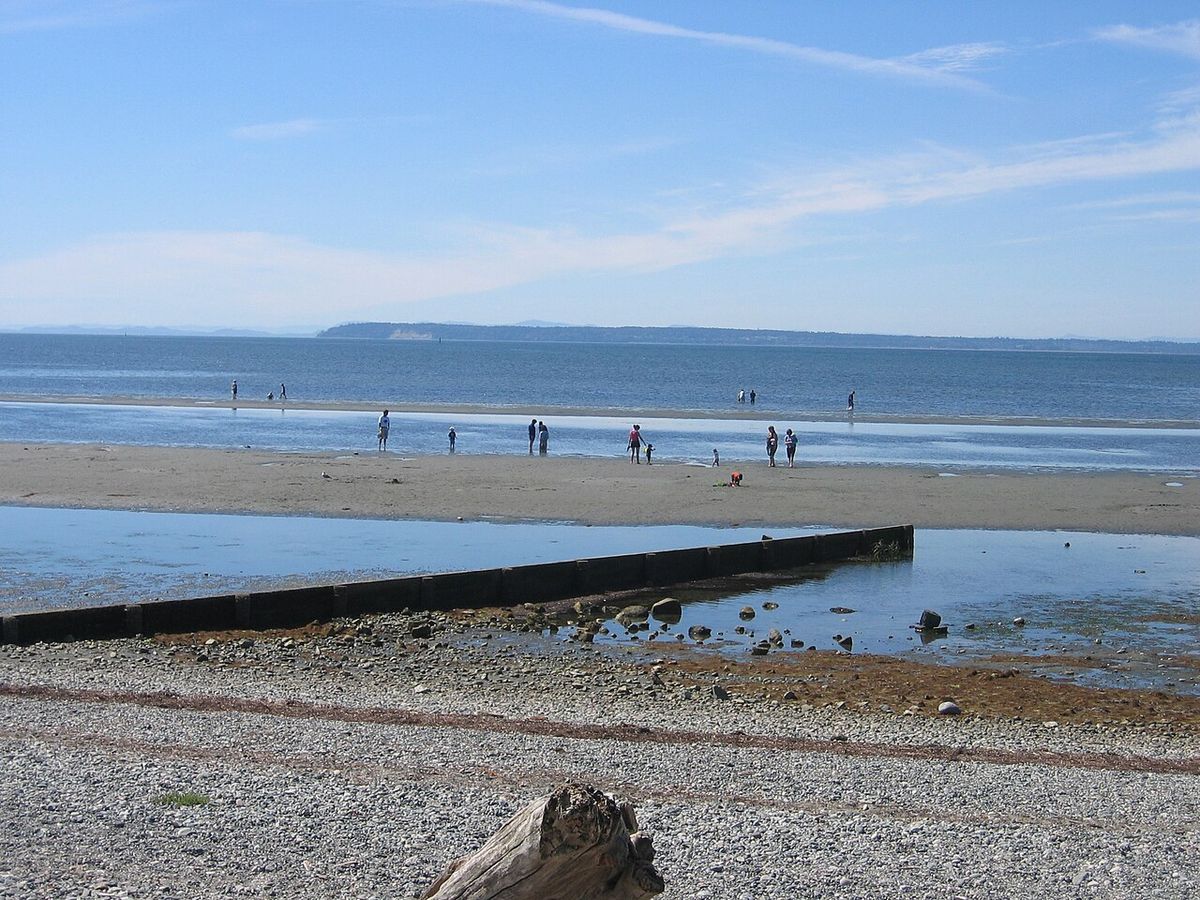
Visitors are allowed to explore both sides of the Canada-United States border inside the park. They are warned not to cross the boundary of the park to enter the adjacent country without being cleared to enter by the respective customs authority. Steep bluffs and cliffs border the edge of the picnic grounds, so visitors must use caution. There is no access from the park to the beach. United States Border Patrol agents in cars, on bikes, and on foot inside and steerable cameras on poles outside watch the park.
Operational Details and Access
The Canadian portion of Peace Arch Provincial Park operates seasonally from April 1 to October 31, with gates open from 8:00 a.m. to 8:00 p.m. daily. The American side, Peace Arch Historical State Park, is open year-round from 8:00 a.m. until dusk. Access to the parking lot on the Canadian side is only available when the park gate is open. This parking lot is situated on Semiahmoo First Nation land, which BC Parks subleases for public use. There is no parking permitted on Beach Road or the park access road. Visitors to the U.S. side require a Washington State Discover Pass for vehicle access, which can be purchased as a one-day or annual pass at automated pay stations in the park. While the park itself is open and accessible, all visitors should be prepared to show identification to border officials from either the Canada Border Services Agency or U.S. Customs and Border Protection, who patrol the area.
The park provides no beach access, and steep bluffs border the picnic grounds, requiring caution. Dogs are welcome but must be leashed and are not allowed in building interiors or beach areas. The park is about 40 kilometres south of Vancouver at the junction of Highway 99 and Interstate 5. From April to October, reservations for the Heritage Hall picnic shelter can be made through the BC Parks reservation service, and the American Kitchen facility on the U.S. side is also available for day-use rental for events.
Historical and Cultural Events
Peace Arch Park has served as a stage for significant cultural and political events throughout its history. In 1952, during the Red Scare, African-American singer and activist Paul Robeson, who was banned from international travel, performed a series of concerts from a flatbed truck on the American side to an audience gathered in Canada. The park was also a site of protest during the Vietnam War, when it was vandalized with paint by demonstrators against the Cambodian campaign on May 9, 1970. On February 9, 2010, the north side of the park hosted the Vancouver 2010 Olympic Torch Relay, where then-Premier Gordon Campbell and Washington Governor Christine Gregoire addressed a crowd of several hundred people.
The park is also known for its role during the COVID-19 pandemic border closures, becoming a common location for 'border weddings' where separated couples and families could meet. In 2020 alone, the park saw 140,000 visitors, and during the Valentine's Day weekend in 2021, 78 temporary shelters were counted within the grounds for such gatherings. The International Peace Arch Association, a nonprofit organization, hosts regular events and activities, including an annual International Sculpture Exhibition featuring work by American and Canadian artists. The park's unique status continues to make it a focal point for cross-border community events and commemorations.
Border Management and Recent Developments
The park exists at the Peace Arch Border Crossing, also known as the Blaine-Douglas crossing, where Highway 99 in British Columbia meets Interstate 5 in Washington State. It is one of the busiest border crossings between Canada and the United States and the busiest west of Detroit. Border officials from both nations actively monitor the park using patrols on foot, in vehicles, and via steerable cameras on poles outside the park boundaries. Visitors are expressly warned not to cross from the park into the adjacent country without official clearance. The COVID-19 pandemic led to significant changes in park use, with the Canadian side ordered closed in June 2020 while the U.S. side remained open, creating a complex situation for cross-border meetings.
In preparation for the FIFA World Cup 2026, which was co-hosted by Vancouver and Seattle, temporary belt barriers were installed inside the memorial arch and along the border within the park on game days throughout June and July 2026. Washington State Parks confirmed these were for crowd management and safety between pedestrians and vehicles. BC Parks noted that visitors could expect increased border official and RCMP presence during this period due to anticipated higher visitor numbers. An immigration attorney had previously cited the 1814 Treaty of Ghent, which is understood to prevent the erection of a permanent barrier on the boundary line where the park sits.
Visitor Guidelines and Responsibilities
All visitors to Peace Arch Park are expected to adhere to guidelines that preserve the park's heritage and ensure safety. Fires are permitted only in designated fire pits and grills, and propane or gas grills are allowed. The principles of Leave No Trace outdoor ethics must be followed, which includes disposing of all waste properly and minimizing impact on plant and animal life. Operating drones within BC Parks is illegal without specific permission, which is rarely granted. Reservations for the Heritage Hall picnic shelter on the Canadian side are available from April through October via the BC Parks reservation service. The American Kitchen facility on the U.S. side can also be rented for events, with an interior capacity of 85 people and a combined grounds rental capacity of 300.
Some special activities may require a permit from Washington State Parks. BC Parks acknowledges that the park resides on traditional Indigenous territories and is working in partnership with Indigenous Peoples to better represent their history and connection to the land on its informational resources. Visitors are reminded to be considerate of others and to follow all posted rules to maintain the park's peaceful character. Always follow the detailed guides for visiting responsibly to ensure activities are safe, respectful, and ecologically friendly within this unique international space.
Questions about Peace Arch Park
Can you legally cross the border inside Peace Arch Park?
Visitors are permitted to walk freely on the park grounds on both the Canadian and American sides, allowing them to stand directly on the international border line beneath the arch. However, leaving the park boundaries to enter either country without going through the official Peace Arch or Douglas border crossing is strictly prohibited and treated as an unauthorized crossing. Border officials actively monitor the area, and violators are subject to prosecution. The park is designed for symbolic access, not for legal entry into either nation.
What do the inscriptions on the Peace Arch mean?
The inscriptions on the Peace Arch carry deep symbolic meaning about the relationship between Canada and the United States. On the American-facing side, 'Children of a common mother' references the two nations' shared historical origins from the British Empire. On the Canadian-facing side, 'Brethren dwelling together in unity' is a direct quote from Psalm 133:1 in the Bible. Inside the arch, above the open iron gates on the boundary, the inscriptions read 'May these gates never be closed' and '1814 Open One Hundred Years 1914,' commemorating the century of peace following the Treaty of Ghent.
Is there camping allowed at Peace Arch Park?
No, camping and overnight stays are never permitted anywhere within Peace Arch Park on either the Canadian or American side. The park is strictly a day-use area. Visitors are allowed to set up temporary sun or rain shelters without walls for day use, but these must not be used for overnight accommodation. The park gates on the Canadian side close at 8:00 p.m. daily during the operating season (April to October), and the U.S. side closes at dusk.
Why were there barriers placed at the park in 2026?
Temporary belt barriers were installed inside the Peace Arch and along the border within the park in June and July 2026. Washington State Parks confirmed these barriers were implemented in anticipation of larger crowds visiting the park during the FIFA World Cup 2026, which was co-hosted by Vancouver and Seattle. The barriers are in place on game days to assist with crowd management and ensure safety between pedestrians and vehicles. Visitors were also advised to expect an increased presence of border officials and RCMP personnel during this period.
What happened at the park during the COVID-19 border closure?
During the COVID-19 pandemic border closures starting in March 2020, the Canadian side of Peace Arch Park was ordered closed on June 18, 2020, while the U.S. side remained open. The park became a famous site for 'border weddings' and family reunions, as it allowed people from both countries to meet in the same location without a physical separation. In 2020, the park recorded 140,000 visitors despite the closure. Canadians could access the U.S. park from 0 Avenue in Surrey but were still required to report to the Canada Border Services Agency upon return to avoid penalties.
Who was responsible for building the Peace Arch?
The Peace Arch was the brainchild of American lawyer and businessman Sam Hill, who organized the international fundraising campaign starting in 1914. The architectural design was donated by American architect Harvey Wiley Corbett. Construction was carried out by volunteers beginning in 1920, and the arch was dedicated on September 6, 1921. It was built as one of the first earthquake-resistant structures in North America. The land for the surrounding park was later purchased through donations, including contributions from school children in both Canada and the United States.
Sources and further reading
- Peace Arch Park (Wikipedia)
- Peace Arch Park (bcparks.ca)
- U.S.-Canada border barriers in place on FIFA World Cup ... (peacearchnews.com)
- Peace Arch Historical State Park | Washington State Parks (parks.wa.gov)
- Peace Arch Provincial Park: A Local's Guide to the BC Border ... (whiterocklocal.ca)
Checked by the Your Space Hamilton desk. Last updated 2026-10-27.