Surrey, British Columbia
Surrey is a city in British Columbia, Canada, located south of the Fraser River on the Canada-United States border. It is a member municipality of the Metro Vancouver regional district and metropolitan area. Mainly a suburban city, Surrey is the province's second-largest by population after Vancouver and the third-largest by area after Abbotsford and Prince George. Seven neighbourhoods in Surrey are designated town centres: Cloverdale, Fleetwood, Guildford, Newton, South Surrey, and City Centre encompassed by Whalley.
History and Development
The area now known as Surrey sits upon the traditional lands of the Katzie, Kwantlen, and Semiahmoo Indigenous nations. The city was incorporated in 1879, named by Englishman H.J. Brewer for its resemblance to his native County of Surrey in England. Early settlement was focused on farming, fishing, and small commerce in areas like Cloverdale and South Surrey. A significant shift occurred with the 1937 opening of the Pattullo Bridge, which connected Surrey to New Westminster and facilitated expansion. The post-war 1950s saw North Surrey develop as a bedroom community for commuters to Vancouver and Burnaby. Unprecedented growth began in the 1980s and 1990s with increased immigration from across Canada and the world, particularly Asia. This rapid growth has continued into the 21st century, with a 2026 estimated population of 733,760. Metro Vancouver projections from September 2025 estimate Surrey will surpass Vancouver's population by 2038, though some private forecasts suggest this could happen as early as 2027.
Geography and Climate
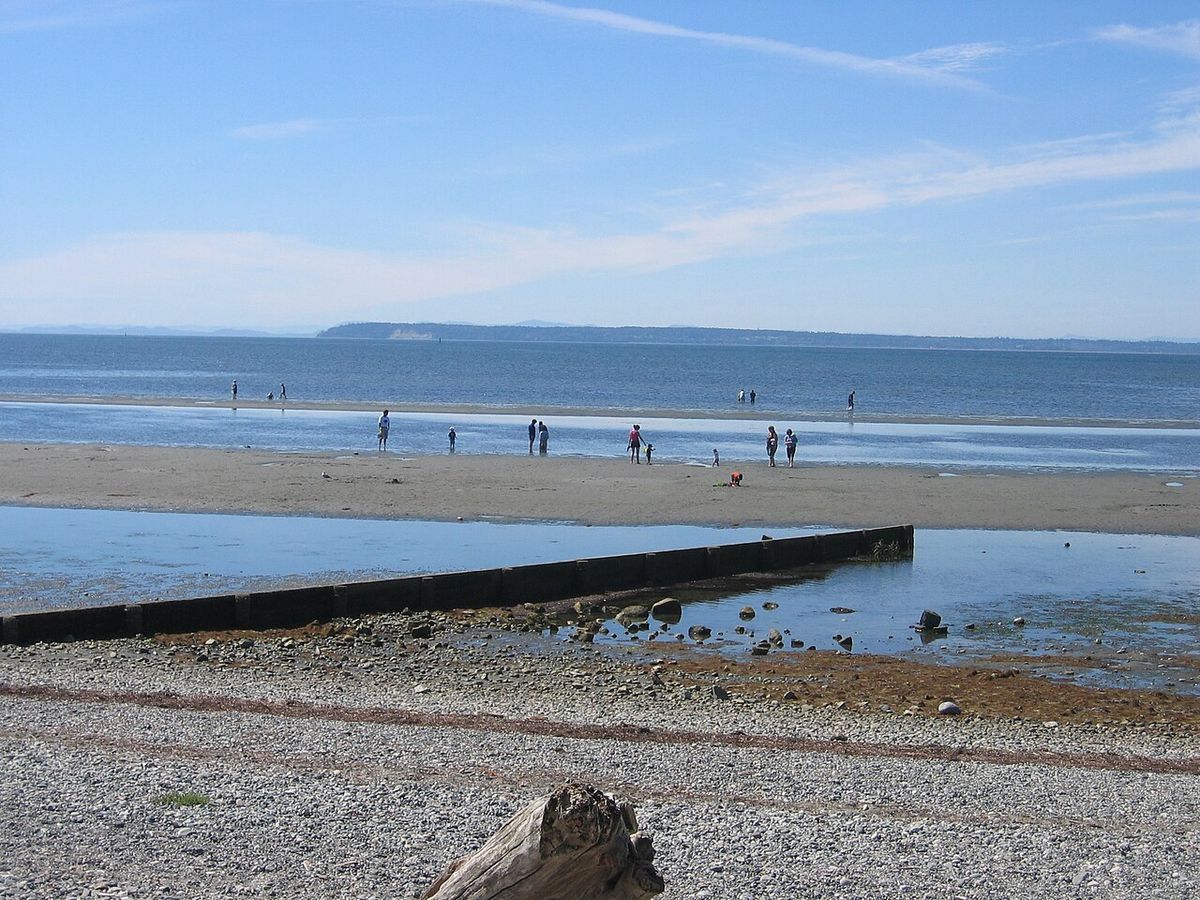
Surrey is characterized by low-density urban sprawl, with residential, commercial, and light industrial areas, and is prone to strip mall development. A significant portion of its land, approximately 2,465 hectares or 27 percent, is designated as part of the Agricultural Land Reserve and is reserved for farming. The city's topography consists mostly of hills and flatlands, with the latter found in areas like Tynehead, Hazelmere, south Cloverdale, and Colebrook. Surrey experiences an oceanic climate typical of the Pacific Northwest, featuring wet, rainy winters that extend into early spring, chilly but not frigid temperatures, mild and sunny summers, and cool, cloudy autumns.
Demographics and Diversity
According to the 2021 Canadian census, Surrey had a population of 568,322, making it the 11th largest city in Canada and the fifth-largest in Western Canada. The city forms an integral part of Metro Vancouver, serving as its largest municipality by land area and its secondary economic core. Surrey is notably ethnically and linguistically diverse, a transformation that accelerated with immigration beginning in the 1980s. In 2021, 38 percent of inhabitants were of South Asian heritage, with significant communities also including East Asians (10.9 percent) and Southeast Asians (9.7 percent). Surrey was home to the largest Black population in British Columbia, comprising roughly 21 percent of the province's total. Approximately 52 percent of residents do not speak English as their first language. The city's neighbourhoods reflect this diversity, with South Asians forming majorities in Newton and Whalley, while areas like South Surrey and Cloverdale have larger proportions of residents of European heritage.
The religious makeup of Surrey is equally diverse. In 2021, the top reported affiliations were Christianity (170,115 people or 30.2 percent), Irreligion (161,860 or 28.6 percent), Sikhism (154,415 or 27.4 percent), Islam (31,095 or 5.5 percent), and Hinduism (30,455 or 5.4 percent). Surrey has the largest Sikh population percentage of any census subdivision in Canada. Economically, Surrey has shown strong indicators, with a 2010 median family income of $78,283, above the provincial and national medians at the time. The South Surrey area, particularly the neighbourhood of Rosemary Heights, had the highest average household income in the city and the broader Metro Vancouver region, with a median income more than twice the regional average.
Economy and Major Sectors
Surrey is one of British Columbia's largest industrial centres, with a diverse economy spanning high technology, clean energy, advanced manufacturing, health, education, agriculture, and the arts. The city is a significant hub for film production, hosting 189 productions in 2017, including 15 at the city hall plaza. In 2018, it opened a $68 million biofuel facility, the first of its kind in North America. Major employers with over 1,000 staff in the province as of 2017 included Fraser Health with 25,000 employees, School District 36 with 10,560, the City of Surrey with 3,400, Coast Capital Savings with 1,738, Starline Windows Group with 1,400, and Kwantlen Polytechnic University with 1,332.
Agriculture remains a foundational sector, with approximately one-third of Surrey's land preserved as farmland. In 2015, this sector employed 3,300 people, or 1.6 percent of the city's overall labour force. Farming has been strongly attached to the economic well-being of Surrey, which has fostered a strong culture of local food production. Manufacturing is also a highly diversified sector, including lumber production for BC logging firms and wind turbine manufacturing for the clean energy sector. The health care sector is a major economic contributor, with nearly 900 health-related businesses and a focus on life sciences such as infectious diseases and oncology. Surrey Memorial Hospital is the city's second-largest employer with an annual operating budget of $149.2 million, and Fraser Health employs more than 4,100 people there. Due to regional population growth, a new hospital in Cloverdale was projected in 2021 to be completed by 2026.
Government and Politics
Surrey is governed by an elected mayor and an eight-member city council. As of the October 15, 2022 election, the mayor is Brenda Locke. The city councillors are Linda Annis, Harry Bains, Mike Bose, Doug Elford, Gordon Hepner, Pardeep Kooner, Mandeep Nagra, and Rob Stutt. Federally, Surrey has been represented by several Members of Parliament. In 2004, Nina Grewal and her husband Gurmant Grewal became the first married couple to serve concurrently in the Canadian Parliament. Following the 2015 federal election, the Liberal Party of Canada won three of Surrey's four seats in the House of Commons. A notable by-election occurred in 2017 in South Surrey, White Rock, where Liberal candidate Gordie Hogg won the seat formerly held by Conservative MP Dianne Watts, who resigned to seek the leadership of the BC Liberal Party.
Culture, Attractions, and Events
Surrey has a variety of cultural institutions and annual events. The Museum of Surrey, reopened in September 2018 after a renovation that added 12,000 square feet, is affiliated with the CMA, CHIN, and Virtual Museum of Canada. The Surrey Art Gallery, opened in September 1975, is the second-largest public art museum in Metro Vancouver. The historic Surrey Municipal Hall complex in Cloverdale includes Heritage Square and the Cenotaph, the Surrey Museum, and the Cloverdale Library. The Surrey City Centre Public Library in Whalley is the second largest in the region by size. Public art includes the bronze statue "REMEMBRANCE" by André Gauthier in Heritage Square, depicting a World War I kneeling soldier in remembrance of fallen comrades.
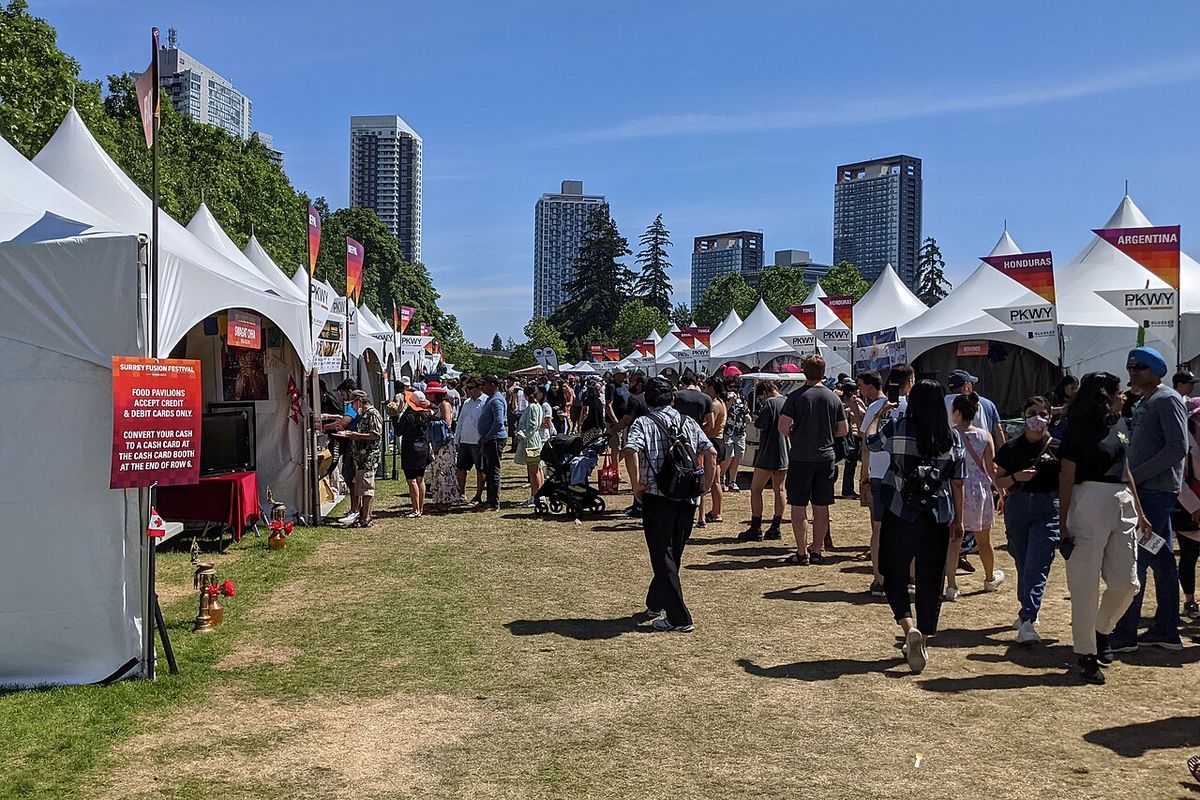
The city's calendar is marked by several major events. Every February, WinterFest attracts 15,000 people to Central City Plaza for live music, sports, food, and fireworks. The annual Cloverdale Rodeo and Country Fair, Canada's second largest rodeo, is held every May long weekend at the Cloverdale Fairgrounds. The Sikh community celebrates Vaisakhi on April 13 with a large parade, which is the largest Vaisakhi parade outside India. Every October since 1991, Surrey has hosted the Surrey International Writers' Conference. A lesser-known event is the annual Nicomekl River Race in early June, where homemade boats race from Nicomekl Park to Blackie Spit Park.
- WinterFest: Held every February at Central City Plaza, attracting 15,000 people with music, sports, food, and fireworks.
- Cloverdale Rodeo and Country Fair: Held every May long weekend since 1888, it is Canada's second-largest rodeo and features 150 acres of family entertainment including a parade and tradeshow.
- Vaisakhi Parade: Celebrated on April 13, it is the largest Vaisakhi parade outside India, with attendance growing from 100,000 in 2008 to over 500,000 in 2019.
- Surrey International Writers' Conference: Held every October since 1991, attracting writers, agents, editors and publishers from around the world.
- Nicomekl River Race: An annual early June event where teams race handmade boats from Langley to Crescent Beach, with proceeds benefiting the BC Cancer society.
Surrey is served by local news media including The Surrey Now-Leader and Peace Arch News, and ethnic media such as ReD-FM radio and the Asian Journal. The first Surrey-based English-language radio station, Pulse FM 107.7, began broadcasting in 2014, and Radio India also has offices in the city. There are three live theatre venues in the city: the Bell Centre for Performing Arts, the Chandos Pattison Auditorium, and the Surrey Arts Centre. The Surrey Arts Gallery, which opened in September 1975, is the second largest public art museum in the Metro Vancouver region.
Sports and Recreation
Surrey offers extensive recreational facilities and hosts numerous sporting events. The Green Timbers Urban Forest is a large park within the city. The Canada Cup International Women's Fastpitch Tournament, begun in 1993, is a summer event that attracted 93,000 attendees over nine days in 2004. The Surrey Eagles of the British Columbia Hockey League (BCHL) are a prominent junior hockey team based at the South Surrey Arena. The Eagles have won the BCHL's Fred Page Cup championship in 1997, 1998, 2005, 2013, and 2024. The Doyle Cup in 1997 and 1998. And the national Royal Bank Cup in 1998. The Pacific Junior Hockey League expanded to two Surrey teams in 2025 with the creation of the Cloverdale Hockey Club, which plays at the Cloverdale Sport & Ice Complex, joining the Surrey Knights who relocated to North Surrey in 2016.
Other athletic activities and teams in the city include baseball at Whalley Park, home to the Whalley Chiefs and Whalley Little League, which has hosted national qualifying tournaments. The White Rock Tritons of the BCPBL also play in Surrey at South Surrey Athletic Park. Surrey is home to Canada's first kabaddi-specific stadium. The dance companies "Brotherhood" and "PraiseTEAM" from Surrey have won gold and silver trophies, respectively, at the World Hip Hop Dance Championships. Cricket is popular, with over 85 teams in the local league and more than 20 pitches across the city, though only one turf pitch is in West Newton. The Surrey Sharks field hockey team plays at Tamanawis Park. Rugby union is represented by the Surrey Beavers and the Bayside Sharks, with the latter's facility at South Surrey Athletic Park hosting the 2026 BC Rugby Union Finals. Surrey also hosted the 2016 Women's Softball World Championship.
Transportation
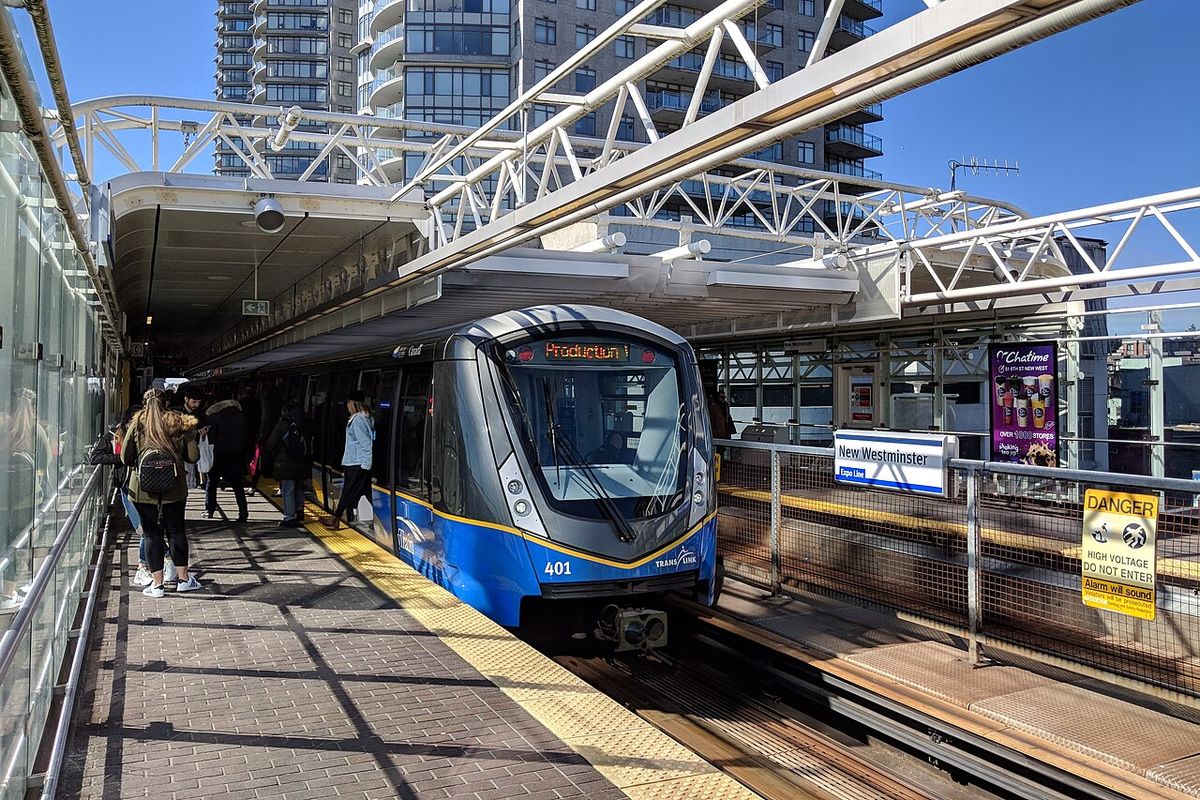
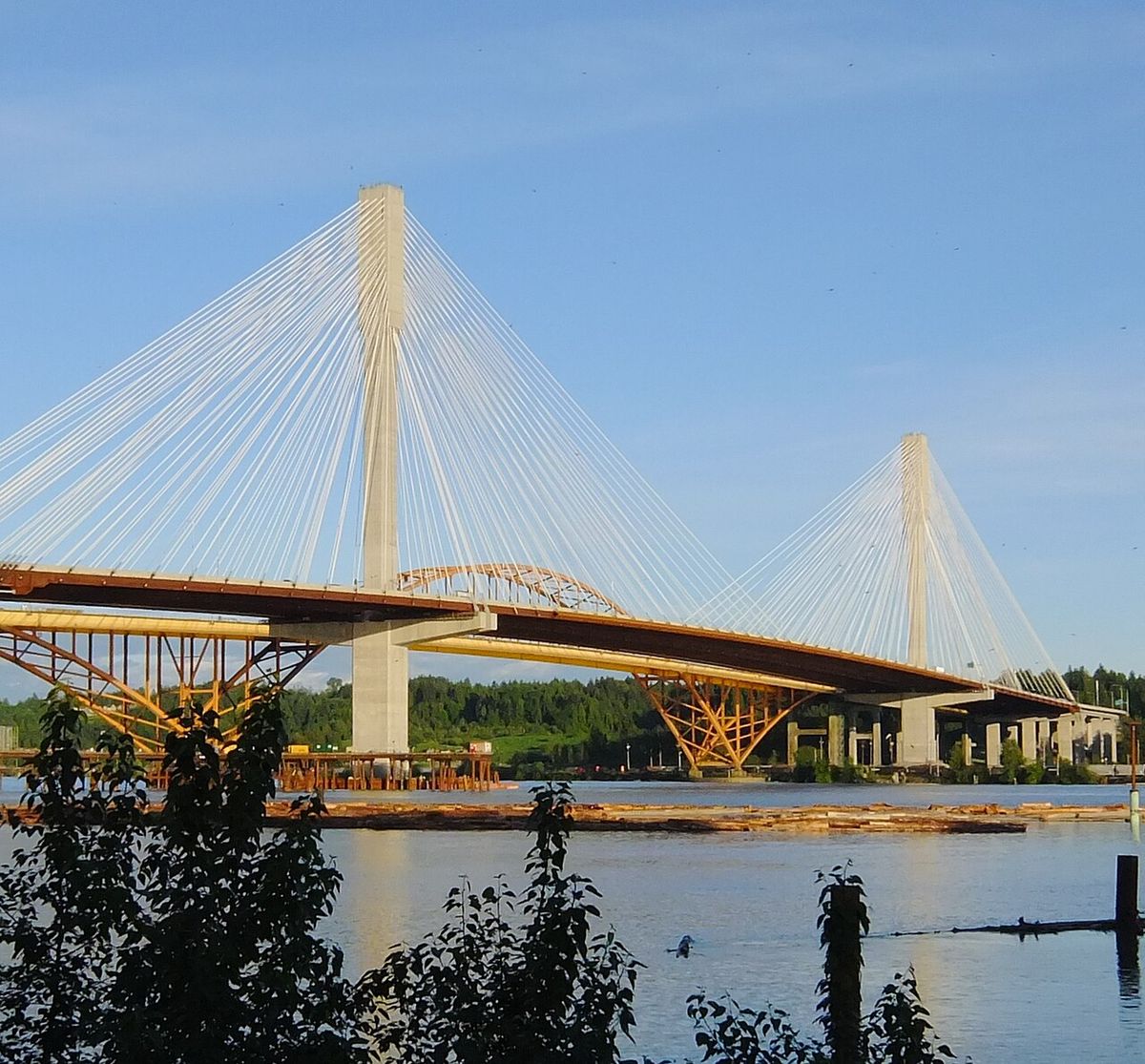
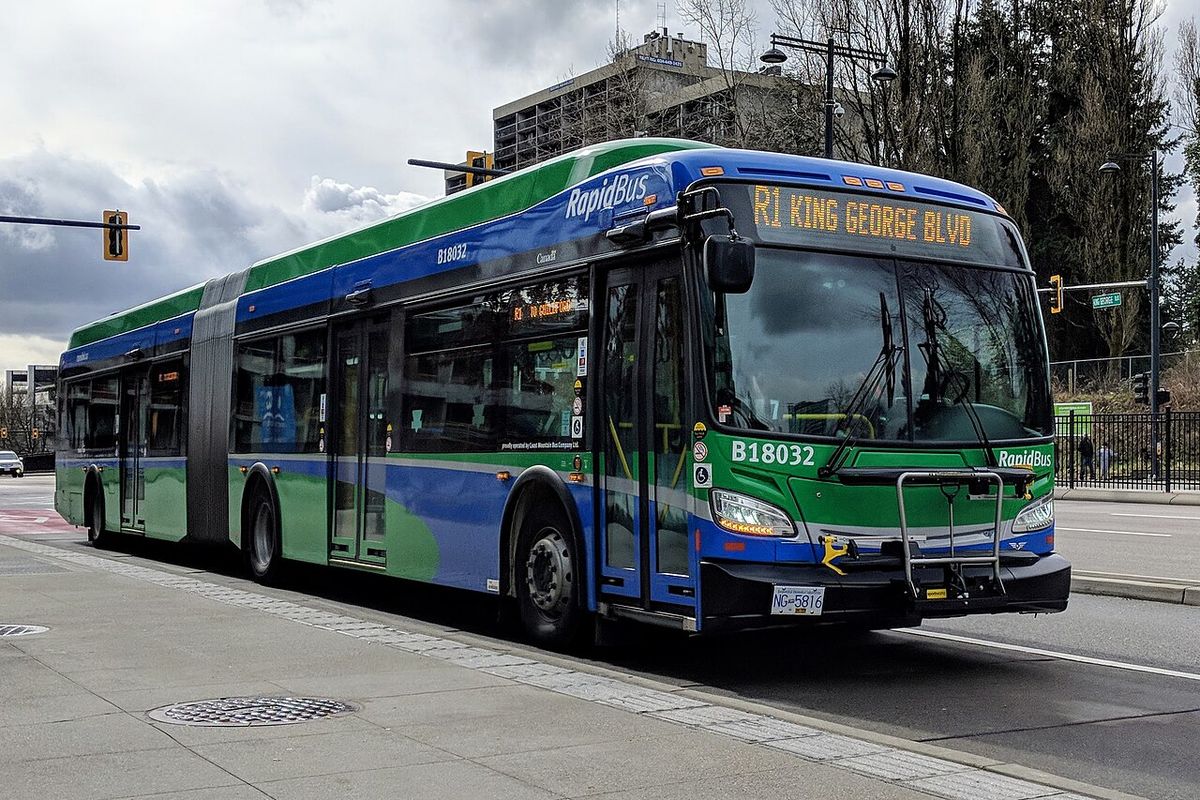
Surrey's transportation network has evolved significantly from early trails to modern bridges and transit. The first non-Indigenous settlements were near Crescent Beach and Bridgeview. Early routes like the 1861 Kennedy Trail, built to connect New Westminster to pasture land, and the 1873 Semiahmoo Wagon Road encouraged settlement. The 1904 New Westminster Rail Bridge allowed vehicle and rail crossings, enabling the BC Electric Railway's Interurban electric commuter line, which began service in 1910 and ran through Kennedy, Newton, Sullivan, and Cloverdale. The two-lane Pattullo Bridge opened in 1937, linking Surrey to New Westminster. The decline of the Interurban in the early 1950s increased road traffic, leading to the construction of highways like Highway 10 (1953), Highway 15 (1957), Highway 401/Port Mann Bridge (1964, later Highway 1), and the George Massey Tunnel/Highway 99 (1959). Rail transit returned in the early 1990s with the SkyTrain Expo Line expansion into Surrey, adding Scott Road, Gateway, Surrey Central, and King George stations. In 2026, the four-lane stal̕əw̓asəm Bridge opened, replacing the aging Pattullo Bridge as the primary link to New Westminster. Public transit throughout Metro Vancouver, including Surrey's extensive bus network, is operated by TransLink.
Questions about Surrey, British Columbia
What are the main cultural or religious groups in Surrey?
Surrey is one of Canada's most ethnically diverse cities. As of the 2021 census, approximately 38 percent of its inhabitants are of South Asian heritage, with other significant groups including East Asians (10.9 percent) and Southeast Asians (9.7 percent). Religiously, the top affiliations are Christianity (30.2 percent), Irreligion (28.6 percent), Sikhism (27.4 percent), Islam (5.5 percent), and Hinduism (5.4 percent). Surrey has the largest Sikh population percentage of any census subdivision in Canada.
What major events are held in Surrey?
Surrey hosts several major annual events. These include the Cloverdale Rodeo and Country Fair every May, which is Canada's second-largest rodeo. The Vaisakhi parade in April is the largest outside India, attracting over 500,000 people in 2019. WinterFest in February draws 15,000 people to Central City Plaza. The Surrey International Writers' Conference occurs every October, and the Canada Cup International Women's Fastpitch Tournament is held each summer.
What are the main economic sectors in Surrey?
Surrey's economy is diverse and includes high technology, clean energy, advanced manufacturing, health, education, agriculture, and the arts. It is a major industrial centre within British Columbia. Significant employers include Fraser Health, School District 36, and the City of Surrey. Agriculture remains important, with about one-third of the city's land preserved as farmland. The health sector is strong, with nearly 900 health-related businesses and a new hospital planned for Cloverdale by 2026.
What professional sports teams are based in Surrey?
The premier sports team in Surrey is the Surrey Eagles of the British Columbia Hockey League (BCHL), based at the South Surrey Arena. The Eagles have won multiple league and national championships. The city also hosts junior hockey teams in the Pacific Junior Hockey League, including the Surrey Knights and, as of 2025, the new Cloverdale Hockey Club. Surrey is home to baseball teams like the Whalley Chiefs, rugby clubs like the Surrey Beavers and Bayside Sharks, and has Canada's first kabaddi-specific stadium.
How is Surrey connected to the rest of Metro Vancouver?
Surrey is connected to the regional transportation network by several key bridges and transit lines. The stal̕əw̓asəm Bridge, opened in 2026, replaced the Pattullo Bridge as the primary road link to New Westminster. The SkyTrain Expo Line, expanded into Surrey in the early 1990s, provides rapid rail transit to Vancouver via stations like Surrey Central and King George. An extensive bus network operated by TransLink serves the city. Major highways, including Highway 1 (via the Port Mann Bridge) and Highway 99 (via the George Massey Tunnel), connect Surrey to other parts of the Lower Mainland.
What is the population of Surrey, BC?
According to the 2021 Canadian census, Surrey had a population of 568,322. This represents a 9.7 percent increase from its 2016 population of 517,887. The city's rapid growth is projected to continue, with an estimated population of 733,760 in 2026. Metro Vancouver Regional District baseline projections from September 2025 estimate that Surrey will surpass Vancouver's population by 2038. Some private economic forecasts project this population crossover could occur as early as 2027. Surrey is the second largest city in British Columbia by population and the 11th largest city in Canada.
Sources and further reading
- Surrey, British Columbia (Wikipedia)
- City of Surrey: Home page (surrey.ca)
- Cities Near Me, Surrey, British Columbia (travelmath.com)
- City of Surrey, British Columbia | PreventionWeb (preventionweb.net)
- About Surrey, Travel Tips and Fast Facts (discoversurreybc.com)
Checked by the Your Space Hamilton desk. Last updated 2026-10-22.