Golden shiner
The golden shiner (Notemigonus crysoleucas) is a species of freshwater minnow native to eastern North America, including southeastern Canada from Quebec west to Manitoba. It is a small, laterally compressed fish known for its silvery to golden sides and is the sole member of its genus. The species holds significant economic importance as the most widely pond-cultured bait fish in the United States and is a popular choice for anglers targeting game fish like trout and bass. Its adaptability to various habitats and its role in aquatic food webs make it a familiar species in lakes, ponds, and quiet rivers across its range.
Taxonomy and Description
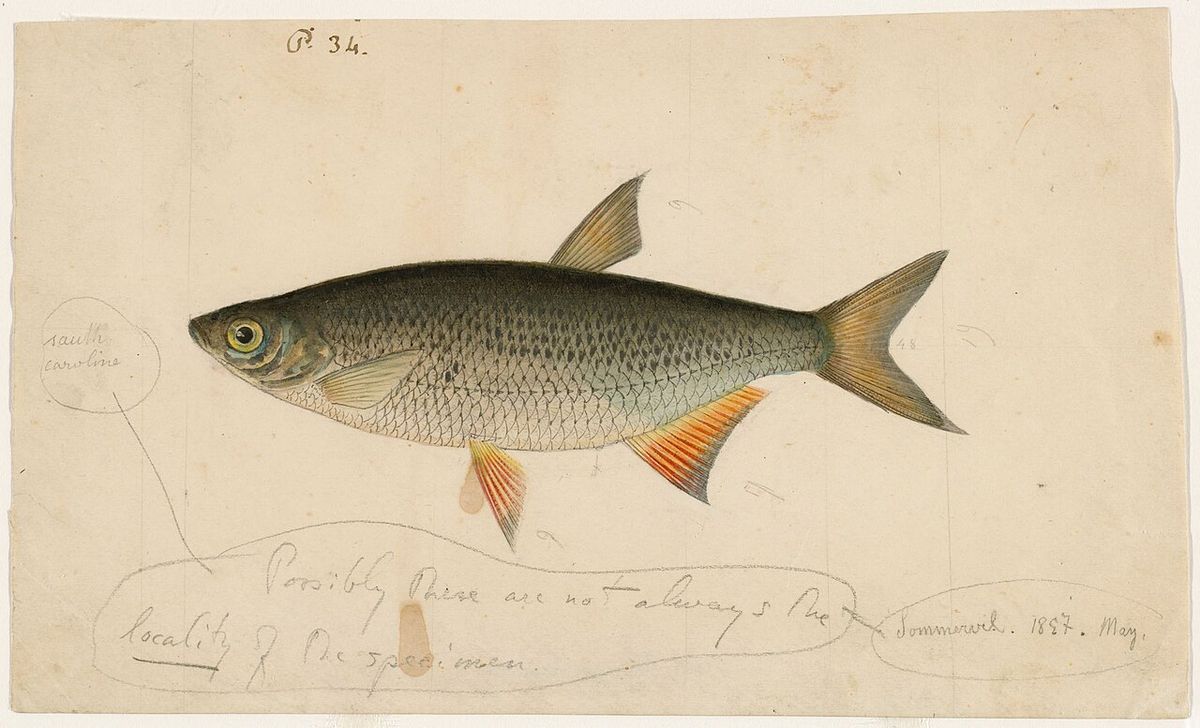
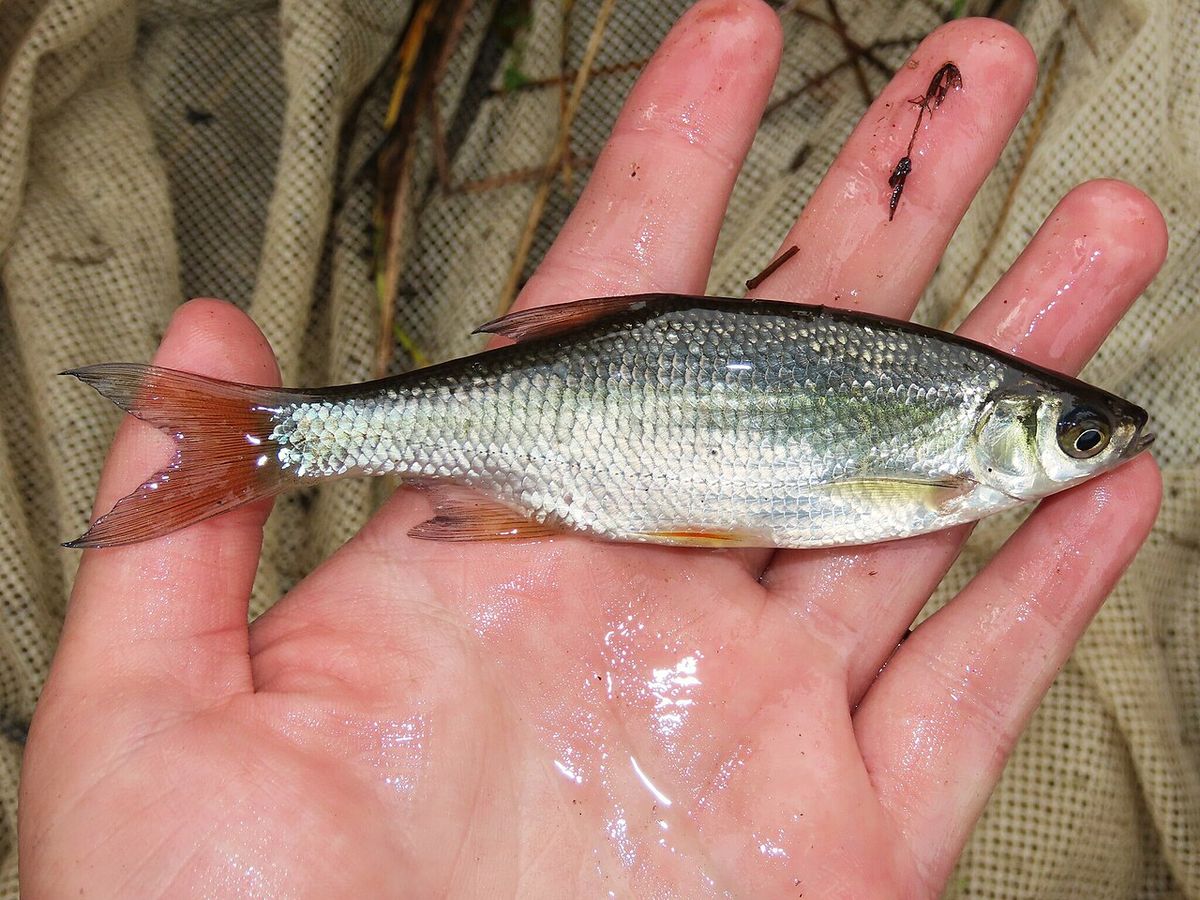
The golden shiner is the only North American member of the subfamily Leuciscinae, a group otherwise found exclusively in Eurasia, and occupies a relatively basal position within it. Fossil evidence indicates the genus Notemigonus has been present since the Late Miocene, with remains recovered from sites like the Montbrook fossil site in Florida. This fish is easily recognized by its deep, laterally compressed body, which is dark green or olive on the back and transitions to a silvery white belly. The sides exhibit a notable colour variation, appearing silver in smaller fish or clear water but taking on a distinct golden hue in larger individuals living in stained water. The mouth is small and upturned, and the eyes and median fins are typically yellow-green, though spawning males can develop orange coloration in their fins.
Two key anatomical features distinguish the golden shiner from all other North American minnows. First, its lateral line has a pronounced downward curve, with the lowest point situated just above the pelvic fins. Second, and most diagnostically, a fleshy keel on the belly between the pelvic fins and the anal fin is completely devoid of scales. This scaleless keel is crucial for differentiating it from the non-native rudd (Scardinius erythrophtalmus), a similar-looking European species that has a scaled keel. The two species can hybridize where their ranges overlap, and the resulting hybrids often display a few scales on their midventral keel. The golden shiner's anal fin is large with 8 to 19 rays, while the dorsal fin typically has eight rays out of a possible seven to nine.
Distribution and Habitat
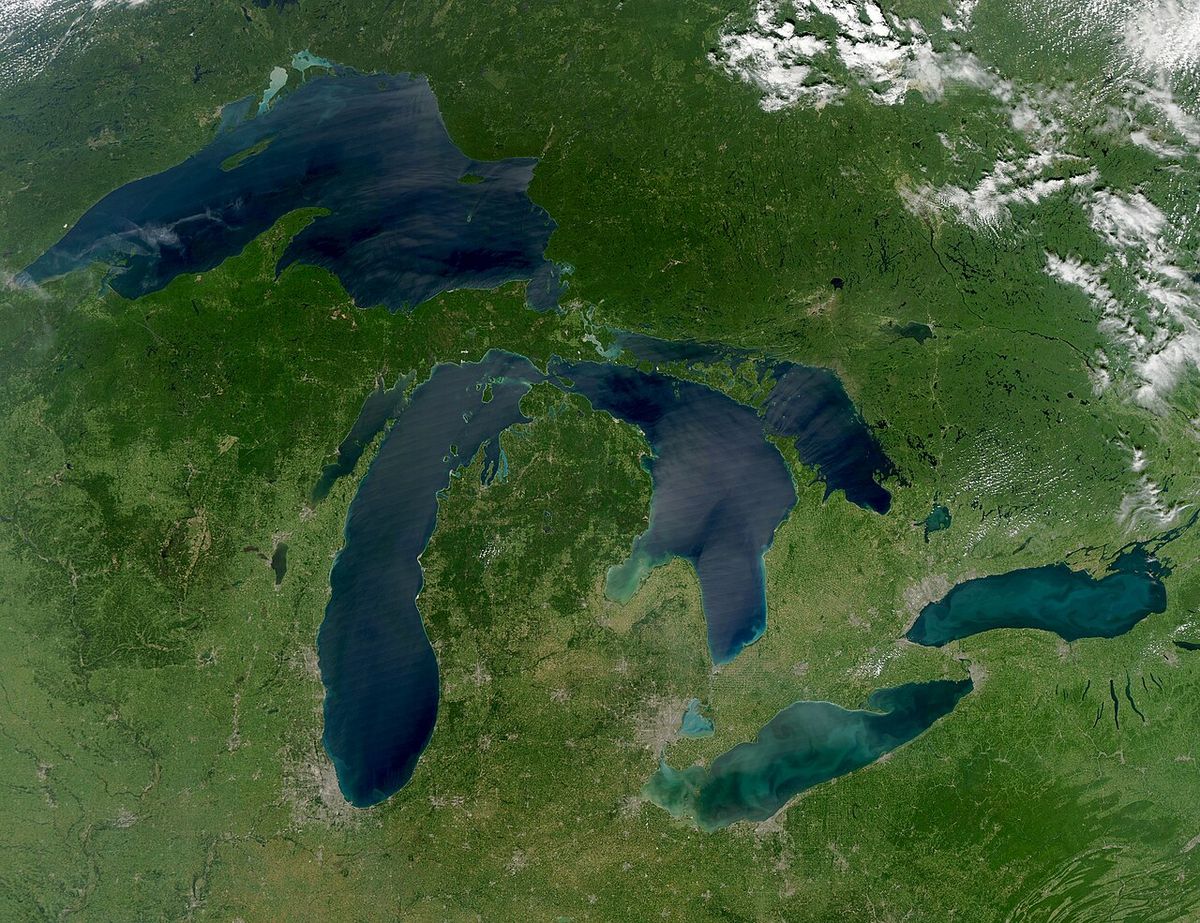
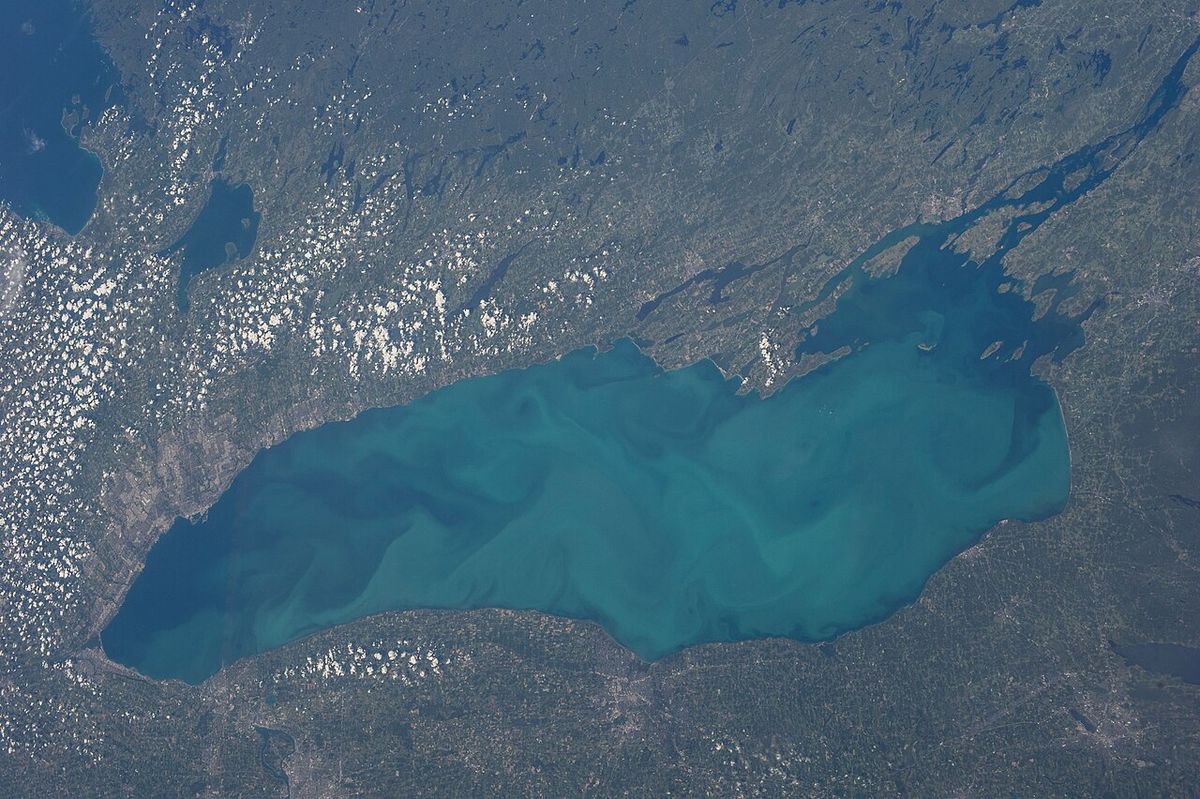
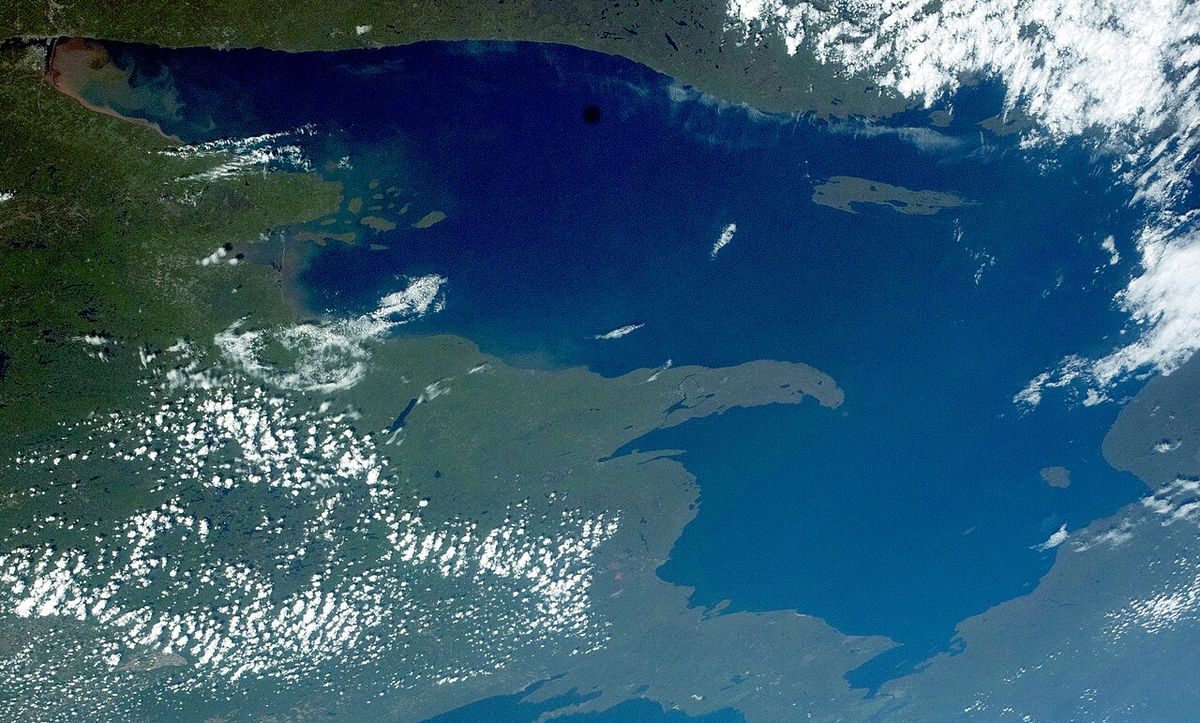
The native range of the golden shiner spans the eastern half of North America, from the St. Lawrence River and Great Lakes basin north to Lake Winnipeg, and west to the Dakotas and Texas. It is found as far south as Florida and Texas. Due to its extensive use as live bait, it has been introduced far beyond this native range, particularly into western North America, including states like Montana. In Canada, its range extends from Quebec through southeastern Canada westward to Manitoba or Saskatchewan. The species thrives in quiet, vegetated waters and shows a strong preference for lakes, ponds, sloughs, and ditches. It is occasionally found in the slow-moving sections of rivers but consistently seeks out weedy areas that provide cover and foraging opportunities.
Golden shiners are notably tolerant of challenging environmental conditions that would stress other species. They can survive in waters with low oxygen content, high turbidity, and a degree of pollution. Most remarkably, they can tolerate water temperatures as high as 40 degrees Celsius (104 degrees Fahrenheit), an unusually high threshold for a North American minnow. This hardiness contributes significantly to their success in aquaculture and their ability to colonize new habitats following introduction, which explains their widespread presence in varied water bodies across the continent.
Diet and Ecological Role
Golden shiners are omnivorous, crepuscular planktivores, meaning they are most active during dawn and dusk and feed on a mix of plant and animal matter suspended in the water column. Their diet is highly varied and includes zooplankton, phytoplankton, microcrustaceans, insects, filamentous algae, and other aquatic plants. They are versatile feeders, capable of foraging at the surface, in mid-water, or along the bottom. They can locate prey visually or switch to filter-feeding in dense zooplankton clouds without relying on sight. This dietary flexibility allows them to exploit different food resources as conditions change throughout the seasons.
Ecologically, the golden shiner plays a dual role as both consumer and prey. Its feeding habits help regulate plankton communities in the lakes and ponds it inhabits. More significantly, it is a crucial forage fish for a wide array of popular game species. It serves as a primary food source for trout, black bass, temperate bass, and many other predators. This role as a high-energy food item is the foundation of its immense popularity and economic value as a bait fish. Anglers routinely use live golden shiners to catch larger sport fish, creating a direct link between shiner populations and recreational fishing success across North America.
Reproduction and Life Cycle
The age of first reproduction in golden shiners varies with latitude and climate. In the southern parts of its range, individuals can mature and spawn as early as one year old. In cooler Canadian waters, sexual maturity is typically delayed until about three years of age. Spawning involves females laying up to 200,000 adhesive eggs each, which they attach to submerged vegetation. There is no parental care provided to the eggs or fry after they are deposited. A fascinating reproductive strategy observed in this species is egg dumping, a form of brood parasitism where golden shiners will occasionally deposit their eggs into the active nests of other fish species, such as pumpkinseed, largemouth bass, or bowfin.
This behaviour is analogous to that of cuckoo birds, as the shiner eggs benefit from the protection and aeration provided by the host fish guarding its own nest. Unlike in avian parasitism, however, the host's own eggs do not suffer from the presence of the shiner eggs. In fact, they may benefit from a dilution effect, where the sheer number of eggs in the nest reduces the odds of any single egg, including the host's, being eaten by a predator. The eggs hatch without parental intervention, and the young fry begin feeding on microscopic organisms in the water column, growing rapidly under favourable conditions until they reach maturity.
Behaviour and Social Dynamics
Golden shiners are highly social fish that form large, roaming shoals. Research has shown that the movement of these shoals is often directed by a minority of informed or highly motivated individuals at the front. In experiments, a single fish that knows the location and timing of a food source can lead an entire group to it. Even within groups of equally knowledgeable fish, certain individuals consistently take leading positions, possibly due to higher hunger levels or greater motivation. Smaller fish are also observed at the front of shoals more often than larger ones, likely because their higher metabolic rates drive them to seek food more actively.
Like other minnows, golden shiners possess a sophisticated alarm system. Specialized skin cells contain an alarm substance called schreckstoff. When a predator injures a fish, this substance is released into the water, triggering a fright reaction in nearby shiners that causes them to flee the area. Remarkably, this chemical signal can remain intact in a predator's feces. Golden shiners have been shown to react strongly to water containing feces from snakes that have eaten other shiners, but not to feces from snakes that have eaten fish lacking the alarm substance. This allows them to detect the presence of a minnow-eating predator indirectly and avoid areas of high risk.
The species also demonstrates advanced cognitive abilities related to time and place. They have an excellent daily time sense and can anticipate scheduled daily feedings, positioning themselves near the food source in advance. Naive individuals can observe and join these anticipating fish to access food. They are capable of time-place learning, where they associate different locations with different times of day. In laboratory settings, they have been trained to feed in one specific area of a tank in the morning and a different area in the afternoon. This capacity for learning and memory enhances their foraging efficiency in complex environments and contributes to their survival success.
- They have an excellent daily time sense and can anticipate scheduled daily feedings, positioning themselves near the food source in advance.
- Naive individuals can observe and join these anticipating fish to access food.
- They are capable of time-place learning, where they associate different locations with different times of day.
- In laboratory settings, they have been trained to feed in one specific area of a tank in the morning and a different area in the afternoon.
Economic Importance and Aquaculture
The golden shiner is arguably the most important bait fish in North America, underpinning a significant segment of the recreational fishing industry. In the United States, it is the most widely pond-cultured fish for this purpose. The demand for golden shiners is particularly high among ice anglers, who rely on them during the winter fishing season. This demand has at times outstripped supply, leading to shortages in key markets. For example, a recent project in Minnesota highlighted an annual shortage estimated at 10,000 gallons (approximately 80,000 pounds) of golden shiners. Because Minnesota prohibits the import of live baitfish, this shortage has spurred local research into commercial aquaculture solutions.
A collaborative project from 2022 through 2024, involving Minnesota Sea Grant, the state's Department of Natural Resources, Central Lakes College, and baitfish producers, tested various aquaculture methods to establish viable local production. The recreational fishing industry in Minnesota alone generates about $6 billion annually, with roughly 70 percent of anglers using baitfish. The project tested four distinct production systems to demonstrate feasibility for prospective farmers. All four approaches produced market-sized fish, offering flexibility for producers with different resources and capital.
| Aquaculture System | Time to Market Size | Key Finding |
|---|---|---|
| Indoor Recirculating System | 6-7 months | Produced market-sized fish consistently. |
| Aquaponics System | Approx. 9 months | Combined fish and plant production successfully. |
| Outdoor Ponds & Tanks (young fish) | 5-6 months | Viable for producers with existing pond infrastructure. |
| Outdoor Ponds & Tanks (feed-trained fish) | 5-6 months | Utilized fish pre-adapted to commercial feed. |
The success of these aquaculture trials in Minnesota indicates a future where increased domestic production can help meet angler demand. This approach can reduce pressure on wild baitfish populations. It can also support state fish-stocking programs that use baitfish to raise sport fish. The research concluded that local commercial production is a practical solution for the state. Minnesota faces a substantial annual shortage of golden shiners, a popular baitfish. The project demonstrated that several aquaculture systems can successfully produce market-sized fish within the state.
Environmental Threats and Sensitivity
Despite their general hardiness, golden shiners are vulnerable to specific environmental contaminants, with methylmercury being a particularly well-studied threat. Long-term exposure to this toxicant has been shown to cause significant dysfunction across multiple biological systems. Research indicates methylmercury can impair the nervous, reproductive, immune, and endocrine systems of golden shiners. For instance, exposure inhibits the function of the hypothalamus, pituitary, and gonads, leading to a measurable decline in reproductive success. The chemical tends to bioaccumulate, with studies often finding higher concentrations in the brain tissue than in the rest of the body.
Behavioural changes are a critical indicator of toxicity. Fish exposed to high levels of methylmercury exhibit altered anti-predator responses, such as a significant delay in reforming protective shoals after a simulated predator attack. In some cases, it took exposed fish nearly three times longer to return to normal pre-exposure shoaling behaviour compared to control groups. Histological analysis has also revealed a positive correlation between total mercury concentration in muscle tissue and the area of macrophage aggregates in the spleen. These aggregates are indicators of tissue damage and immune system activity, providing a physical marker of the sub-lethal damage caused by mercury contamination in their habitat, which can impact overall population health.
Questions about Golden shiner
Where can you find golden shiners in Canada?
Golden shiners are native to southeastern Canada, with a range that extends from Quebec westward through the Great Lakes region to Manitoba and possibly Saskatchewan. They inhabit quiet, vegetated freshwater habitats such as lakes, ponds, sloughs, and the slow-moving sections of rivers. Their French common names in Canada are Méné jaune or Chatte de l'Est. They are often found in weedy areas that provide cover and foraging opportunities.
Why are golden shiners so popular as bait fish?
Golden shiners are extremely popular as live bait because they are a preferred natural food source for major game fish like trout, bass, and walleye. Their lively movement and flashy appearance make them highly effective at attracting strikes. They are hardy, tolerating handling and various water conditions well, which makes them practical for anglers to transport and use. Their widespread culture in ponds ensures a relatively steady supply for the bait industry across North America.
What is the difference between a golden shiner and a rudd?
The golden shiner and the introduced European rudd look very similar. The most reliable distinguishing feature is the keel on the belly between the pelvic fins and the anal fin. The golden shiner's keel is fleshy and completely lacks scales, while the rudd's keel is covered in scales. The two species can hybridize where they co-occur, and the hybrids may show an intermediate condition with a few scales on the keel. Observing this belly feature is the best way to tell them apart.
How do golden shiners reproduce?
Female golden shiners lay up to 200,000 sticky eggs amid aquatic vegetation, with no subsequent parental care. In Canada, they typically first spawn at three years of age. A unique behaviour called egg dumping sees them sometimes lay eggs in the active nests of other fish species like bass or bowfin. The host fish then guards the mixed clutch, inadvertently providing care for the shiner eggs, which may benefit the host's own eggs by diluting the risk from predators during incubation.
What did recent aquaculture research in Minnesota discover?
A recent project from 2022 to 2024, led by Minnesota Sea Grant and partners, tested four aquaculture systems for raising golden shiners. The research found that indoor recirculating systems, aquaponics, and outdoor pond systems could all produce market-sized fish. Fish reached market size within five to nine months depending on the system. The project demonstrated that local commercial production of golden shiners is feasible in Minnesota. This offers a practical solution for a state that prohibits importing live baitfish and faces an annual shortage.
How does pollution affect golden shiners?
While tolerant of turbidity and low oxygen, golden shiners are sensitive to certain chemical pollutants like methylmercury. Long-term exposure can damage their nervous, reproductive, and immune systems, and disrupt endocrine function. It causes behavioural changes, such as impaired shoaling responses to predators. Histological evidence also links mercury exposure to increased tissue damage, visible as macrophage aggregates in organs like the spleen, which indicates chronic physiological stress.
Sources and further reading
- Golden shiner (Wikipedia)
- Minnesota's golden shiner shortage is pushing the bait ... (greatlakesecho.org)
Checked by the Your Space Hamilton desk. Last updated 2026-10-27.