Winnipeg
Winnipeg is the capital and largest city of the Canadian province of Manitoba. It is centred on the confluence of the Red and Assiniboine rivers, a location historically known as The Forks. With an estimated population of 850,260 in 2025, it is Canada's sixth-largest city and its metropolitan area is the eighth-largest. The city functions as a major railway and transportation hub with a diversified economy, and it is home to a significant Indigenous population and numerous cultural festivals and professional sports franchises.
Etymology and Indigenous Significance
The city is named after nearby Lake Winnipeg, located 65 kilometres to the north. The name Winnipeg originates from Western Cree words, win-nipi or wīnipēk, meaning 'muddy water' or 'murky water'. French explorer and trader La Vérendrye recorded the lake as Lac Ouinipigon when he built the first forts in the area in the 1730s. The region was a central trading and gathering place for Indigenous peoples long before European contact, serving as a crossroads for canoe routes. It is the traditional territory of the Anishinaabe (Ojibway), Ininew (Cree), Oji-Cree, Dene, and Dakota peoples. The area is also recognized as the birthplace of the Métis Nation, formed from the descendants of French fur traders and First Nations women.
Historical Development from Fort to City
The first European establishment was Fort Rouge, built by Sieur de La Vérendrye in 1738 for the fur trade. Control of the territory passed to the British Hudson's Bay Company after France's defeat in the Seven Years' War. The Selkirk settlers established the Red River Colony in 1812, creating the nucleus of the future city. Rival trading posts, Fort Gibraltar (North West Company) and Fort Douglas (Hudson's Bay Company), were built in the area, leading to fierce competition. This tension contributed to the Battle of Seven Oaks in 1816 between Métis fighters and the settlers. After the merger of the two companies in 1821, Fort Gibraltar was rebuilt and renamed Fort Garry in 1822, becoming the region's leading Hudson's Bay Company post until a flood destroyed it in 1826.
Winnipeg was the site of the Red River Rebellion in 1869-70, led by Louis Riel against incoming eastern Canadian settlers. The subsequent Manitoba Act of 1870 made Manitoba Canada's fifth province. Treaty 1 was signed on 3 August 1871 between the Crown and local First Nations, including the Brokenhead Ojibway, Sagkeeng, and Peguis communities. The City of Winnipeg was formally incorporated on 8 November 1873, with James McKay, a Métis legislator, naming the city. Its mandate was to provide municipal services to the growing settlement, which was positioned on the trade route between Upper Fort Garry and Saint Paul, Minnesota.
20th Century Growth, Strike, and Transformation
The arrival of the Canadian Pacific Railway in 1881 triggered rapid development and solidified Winnipeg's role as the 'Gateway to the West'. By 1911, it was Canada's third-largest city. The opening of the Panama Canal in 1914 reduced reliance on rail for international trade, contributing to a relative economic decline as Vancouver grew. Social tensions erupted in the Winnipeg General Strike of May 1919, involving over 30,000 workers. The strike ended violently on 21 June 1919, known as Bloody Saturday, when Royal Canadian Mounted Police charged strikers, resulting in two deaths and numerous injuries. Strike leader J. S. Woodsworth later founded the Co-operative Commonwealth Federation, a precursor to the New Democratic Party.
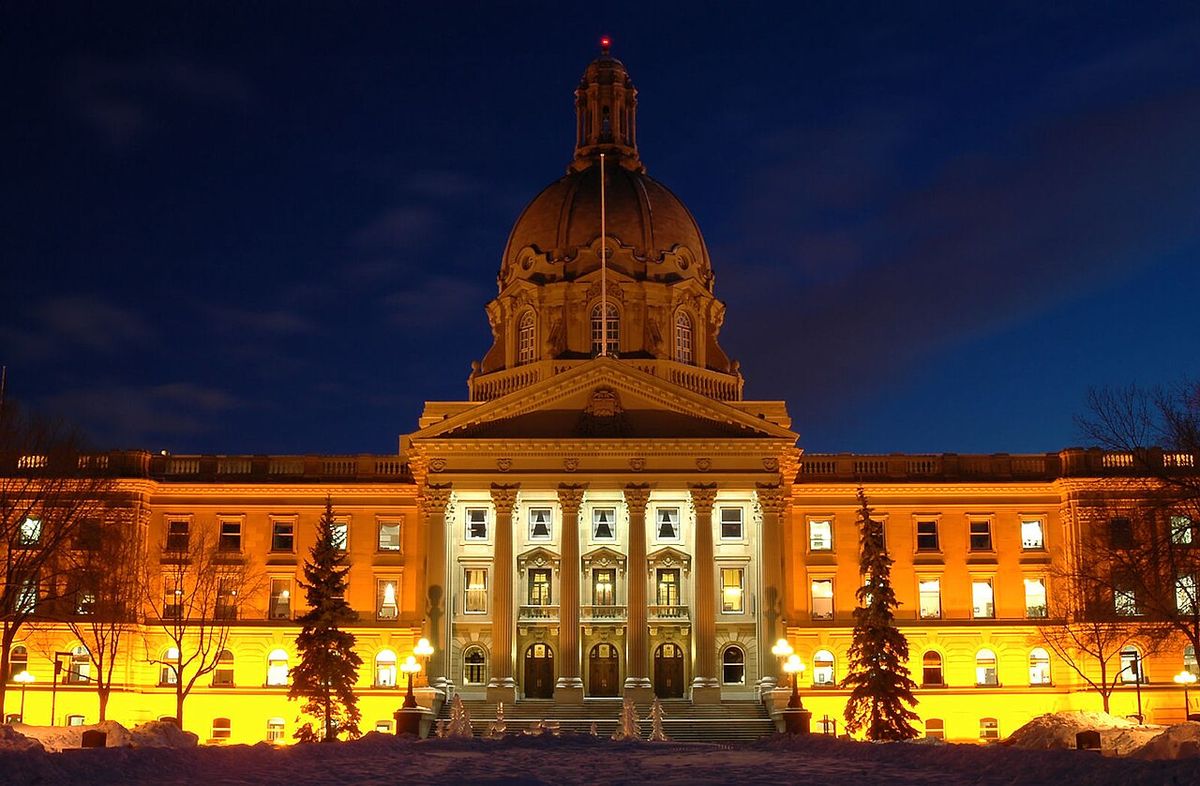
The Manitoba Legislative Building, constructed of Tyndall stone, opened in 1920, crowned by the golden 'Eternal Youth and the Spirit of Enterprise' statue. The city endured the Great Depression, which was followed by wartime contributions from units like The Winnipeg Grenadiers in the Battle of Hong Kong. A post-war housing boom was interrupted by the devastating 1950 Red River flood, which caused an estimated $26 million in damage and prompted Premier Duff Roblin to champion the construction of the Red River Floodway. In 1972, the city underwent a major amalgamation, merging with twelve surrounding municipalities to form a unified metropolitan government under the City of Winnipeg Act.
Physical Geography and Urban Landscape
Winnipeg lies at the bottom of the flat Red River Valley flood plain on the eastern edge of the Canadian Prairies. It is bordered by tallgrass prairie to the west and south and aspen parkland to the northeast, though most native grasses have been removed for agriculture. The city contains North America's largest extant mature urban elm forest. Its four major rivers have historically caused severe flooding, leading to the construction of the Red River Floodway after the 1950 flood. The city's flat terrain and clay soil contribute to significant mosquito populations in wet years. Winnipeg's official 237 neighbourhoods include the downtown core centred on Portage and Main, where over 72,000 people work.
The Exchange District, a 30-block National Historic Site, contains North America's most extensive collection of early 20th-century terracotta and cut stone architecture, stemming from its time as the grain exchange hub from 1880 to 1913. Other major areas are the Forks, a reclaimed rail yard turned tourist attraction, Central Park, Broadway-Assiniboine, and Chinatown. Residential expansion is strongest to the south and west. Major parks include Assiniboine Park, home to the zoo and Leo Mol Sculpture Garden, Kildonan Park, and St. Vital Park. Commercial districts are found at Polo Park, Kildonan Crossing, and the Pembina Strip, while cultural hubs include Osborne Village, Corydon Village, the Exchange District, and Old St. Boniface.
Climate and Environmental Characteristics
Total annual precipitation averages just over 521 millimetres. The highest temperature ever recorded was 42.2 °C on 11 July 1936 during the North American heat wave. A notable humidex reading of 48.0 °C was measured on 12 July 2026. The frost-free season is comparatively long given the harsh winters, lasting on average from 23 May to 22 September. The city's climate presents challenges like extreme cold, which has resulted in fatalities, and heat bursts amplified by humidity during the summer months.
Demographic Composition and Trends
In the 2021 census, Winnipeg's city population was 749,607 with a density of 1,623.3 persons per square kilometre. The census metropolitan area population was 834,678. The city contains 54.9 percent of Manitoba's population, the highest concentration in a single city of any Canadian province. Winnipeg has the highest Indigenous population of any major Canadian city, at 12.4 percent or 90,995 people in 2021. It also has the largest Métis population nationally, at 6.5 percent or 47,915 people. Between 2001 and 2006, the Indigenous population grew by 22 percent, significantly faster than the city's overall growth rate of 3 percent.
Immigrants comprised 27.3 percent of Winnipeg's population in 2021. The top countries of origin were the Philippines (30.9% of immigrants), India (13.7%), and China (4.4%). The city receives over 10,000 net international immigrants annually and has the highest percentage of Filipino residents (11.3%) of any major Canadian city. Visible minorities made up 34 percent of the population in 2021. Over a hundred languages are spoken, with 95 percent of residents learning English first. The average age of a Winnipegger is 40.3 years, with 16.6 percent of the population aged 14 or younger and 17.0 percent aged 65 or over.
Municipal Governance and Fiscal Planning
The City of Winnipeg operates under the City of Winnipeg Charter, following the 1971 amalgamation that created a unified metropolitan government. The city uses a multi-year budget framework, with the 2026 update to the 2024 to 2027 budget focusing on sustainable infrastructure renewal. The draft 2026 budget proposed a capital spending increase of 76 percent to $1.19 billion, up from $677 million in 2025. It includes a property tax increase of 3.5 percent, described as one of the lowest among major Canadian cities for 2026. A central fiscal measure is reducing the utility transfer to general revenue from 11 percent to 10 percent to prioritize infrastructure funding.
A primary infrastructure project is the North End Water Pollution Control Centre (NEWPCC). The 2026 budget proposes financing one-third of the third phase through long-term, rate-backed debt to keep water and sewer rates affordable while meeting environmental standards and enabling future development. The six-year, $3.8-billion capital plan also includes early design funding for replacing the Route 90 bridge and land acquisition for the Chief Peguis Trail extension to improve trade corridors. Public safety investments in the 2026 budget build on previous years, funding additional police, firefighters, paramedics, and an expansion of the Neighbourhood Action Team by 17 full-time equivalent positions.
Cultural Institutions and Community Life
Winnipeg hosts a wide range of annual festivals that are central to its community life. These include the Festival du Voyageur, celebrating French-Canadian and Métis heritage, the Winnipeg Folk Festival, the Jazz Winnipeg Festival, the Winnipeg Fringe Theatre Festival, and Folklorama, a major multicultural festival. The city was the first Canadian host of the Pan American Games in 1967. Recreational programming is detailed in the city's seasonal Leisure Guide, such as the Fall 2026-Winter 2027 edition. Canada Day celebrations focus on family, community, music, and storytelling.
The city is home to several professional sports franchises, including the Winnipeg Blue Bombers for Canadian football, the Winnipeg Jets for ice hockey, the Manitoba Moose for ice hockey, the Winnipeg Sea Bears for basketball, and the Winnipeg Goldeyes for baseball. The main cultural and nightlife areas are the Exchange District, the Forks, Osborne Village and Corydon Village in Fort Rouge, and Sargent and Ellice Avenues in the West End. The Exchange District is a National Historic Site of Canada with an extensive collection of early 20th-century terracotta and cut stone architecture. The city's many parks, such as Assiniboine Park, Kildonan Park, and St. Vital Park, provide venues for public gatherings and artistic expression throughout the year.
Questions about Winnipeg
What is the significance of The Forks in Winnipeg?
The Forks is the historic confluence of the Red and Assiniboine rivers, serving as a traditional meeting place for Indigenous peoples for thousands of years. It was a crossroads for canoe routes and a site for trade and camping. In the modern city, it is a major tourist attraction, having been redeveloped from former CNR rail yards in 1989. The area includes parks, markets, and cultural sites, symbolizing the city's origins and ongoing role as a gathering place.
How did the Winnipeg General Strike end?
The Winnipeg General Strike ended on 21 June 1919, a day known as Bloody Saturday. After many arrests and deportations, the Riot Act was read. Royal Canadian Mounted Police officers charged a group of strikers, resulting in the deaths of two strikers and injuries to at least thirty others. This violent confrontation polarized the city's population and marked the conclusion of the strike, which had begun in May and involved over 30,000 workers.
What is the Red River Floodway and why was it built?
The Red River Floodway is a major artificial channel built to divert floodwaters around Winnipeg. It was constructed on the initiative of Premier Duff Roblin following the devastating 1950 Red River flood, which caused millions of dollars in damage and mass evacuations. The floodway was designed to protect the city from future flooding. It performed this function effectively during the 1997 Red River flood, where Winnipeg suffered limited damage compared to cities without such flood control structures.
What are the details of Winnipeg's 2026 budget priorities?
The proposed 2026 budget update prioritizes major infrastructure investment and public safety. It increases capital spending to $1.19 billion, focusing on the North End Water Pollution Control Centre project, which is deemed urgent for environmental compliance and future development. The budget funds one-third of this project through long-term debt to maintain affordability. It also allocates money for trade corridor projects like the Route 90 bridge replacement and funds additional police, firefighters, paramedics, and neighbourhood service teams.
What architectural feature is the Manitoba Legislative Building known for?
The Manitoba Legislative Building, opened in 1920, is known for its dome which supports a bronze statue finished in gold leaf. The statue is titled 'Eternal Youth and the Spirit of Enterprise' but is commonly known as the 'Golden Boy'. The building itself is constructed mainly of Tyndall stone. This statue is a prominent architectural feature and landmark of the building and the city.
Sources: Wikipedia and current public reporting, checked by the Your Space Hamilton desk. Last updated 2026-10-18.