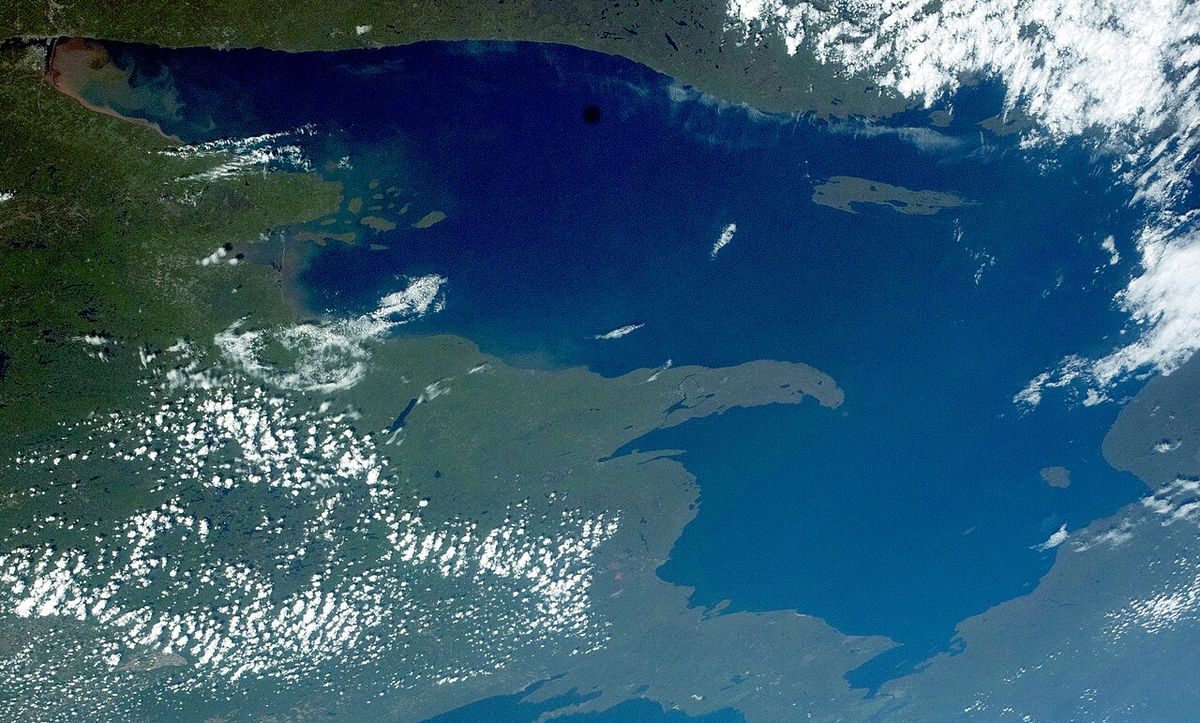
Burlington Bay James N. Allan Skyway
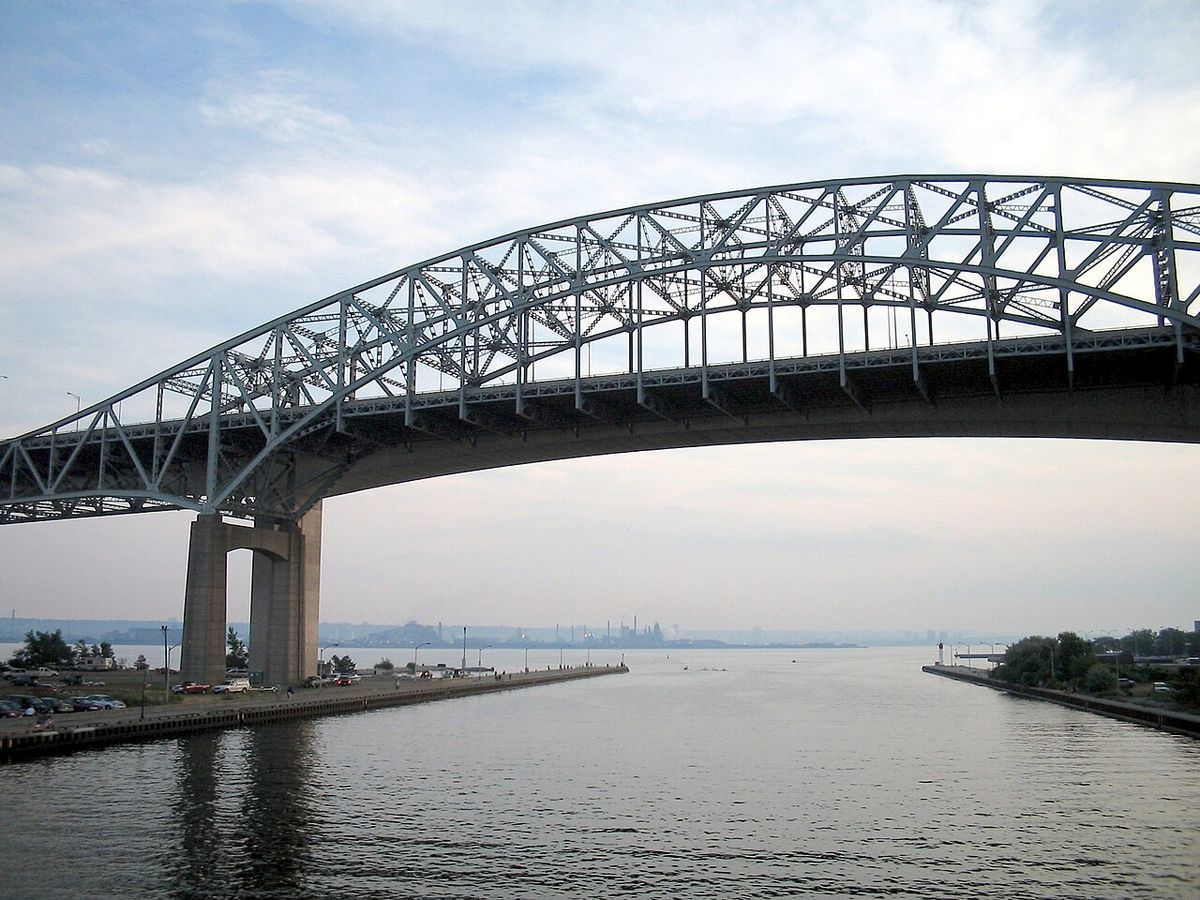
The Burlington Bay James N. Allan Skyway is a critical piece of transportation infrastructure in southern Ontario, consisting of a pair of high-level freeway bridges that carry the Queen Elizabeth Way (QEW) over the Burlington Bay Canal. Located between the cities of Hamilton and Burlington, the Skyway facilitates the uninterrupted flow of road traffic between Toronto and the Niagara Peninsula while allowing Great Lakes shipping to pass beneath. The crossing comprises two distinct structures: an original steel through-arch truss bridge opened in 1958 and a twin concrete box girder bridge added in 1985. Known locally simply as the Burlington Skyway, it is a landmark engineering feat and a vital artery for the Golden Horseshoe region, with its eight lanes handling immense daily traffic volumes.
Design and Construction
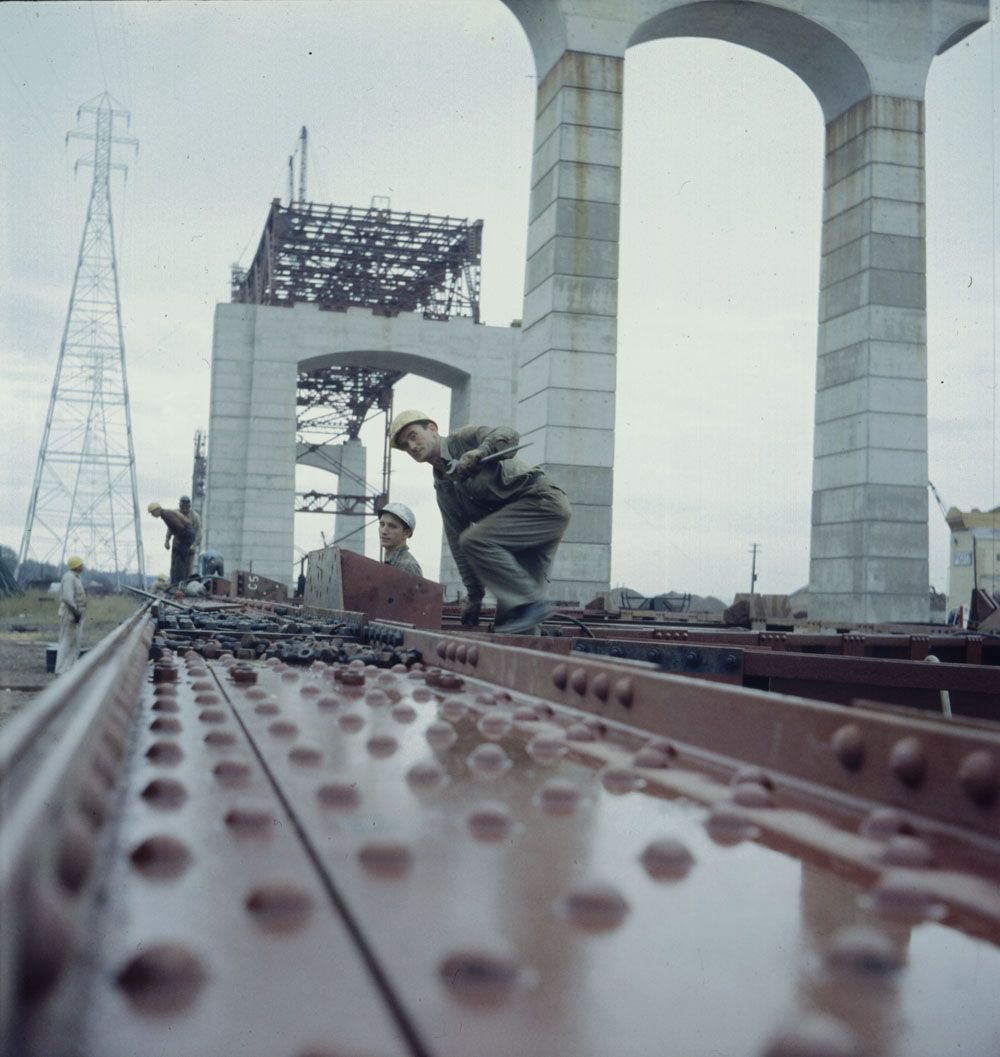
The Burlington Skyway is an engineering project built in two major phases, each utilizing different construction materials and techniques. The original 1958 bridge is a suspended deck through-arch truss bridge, a design that provides the necessary clearance for shipping while maintaining structural integrity over a long span. The main span measures 151 metres, flanked by two back spans each 83.7 metres long, with a total of 72 approach spans bringing the overall length to 2,560 metres. The bridge's designer was John Turner Bell, and its construction required 20,000 short tons of steel and 90,000 cubic yards of concrete. The 1985 twin bridge, built to alleviate traffic congestion, is a more conventional precast concrete box girder structure. This newer bridge is 335 metres shorter than the original steel span but matches its 30-metre roadway width. Both bridges provide a vertical clearance of 36.7 metres below the deck, ensuring unimpeded passage for lake freighters and other large vessels entering Hamilton Harbour.
Historical Development and Tolls
The history of the Skyway is marked by its opening, a period of toll collection, and subsequent expansion. The first bridge officially opened to traffic on October 30, 1958, creating a vital high-level crossing over the narrow bar separating Hamilton Harbour from Lake Ontario. To help finance its construction, tolls were implemented at a plaza located near Tower's Drive. These tolls, however, proved highly unpopular and created significant traffic bottlenecks, particularly as truck drivers avoided the bridge due to the combined cost of the toll and extra fuel needed to ascend the structure. Consequently, the tolls were removed on December 28, 1973. Following the removal of tolls, trucks were banned from using the alternative surface route, Beach Boulevard, to protect that residential roadway. The original name for the crossing was the Burlington Bay Skyway, but after twinning, it was officially renamed in 1988 to honour James Noble Allan, the Ontario Minister of Highways who championed the initial 1958 project.
Twinning and Modernization
By the early 1980s, traffic volumes on the four-lane original bridge had exceeded its capacity, necessitating a major expansion project. The solution was to twin the crossing, leading to the construction of the concrete box girder bridge which opened on October 11, 1985. During this project, traffic was temporarily rerouted onto the new bridge so the 1958 steel structure could undergo extensive rehabilitation, work which was completed on August 22, 1988. The twinning project was far more than just adding a second bridge. It involved a comprehensive upgrade of the QEW approaches. The highway was widened to eight lanes from Burlington Street to Highway 403, and modern Parclo interchanges were built at Burlington Street, Northshore Boulevard, and Fairview Street. This section also became the site of Ontario's first freeway traffic management system, incorporating traffic cameras and changeable message signs, and it features a variable lighting system to combat the frequent fog in the area. In fall 2008, many of the original overhead sign gantries installed in the late 1980s were replaced with newer triangular truss designs.
Recent Rehabilitation and Incidents
The Skyway requires ongoing maintenance and has been the site of significant rehabilitation work and one major accident. A major incident occurred on July 31, 2014, when a dump truck with its box raised crashed into the bridge frame on the Toronto-bound lanes. The bridge was closed for a weekend for temporary repairs, with permanent structural repairs taking seven months and costing $1.224 million. The driver was convicted of dangerous driving in March 2016 and sentenced to one year in jail, a conviction later upheld by the Ontario Court of Appeal. More recently, a major rehabilitation project focused on the Niagara-bound lanes of the Skyway began. Key details of this project include:
- The Ministry of Transportation contract (#2024 to 2011) was awarded to Alliance Verdi Civil Inc. as contractor.
- AECOM Canada ULC was retained to provide construction administration and oversight.
- Construction started in May 2024 and was originally anticipated for completion in December 2026.
- The project involved rehabilitating the 2.2 km Niagara-bound bridge and upgrading illumination in both directions.
- The work zone extended from north of Northshore Boulevard to south of the Skyway bridge.
- The goal was to extend the service life of the QEW Niagara-bound lanes.
According to recent reports, the major rehabilitation project for the Niagara-bound lanes of the Burlington Bay James N. Allan Skyway has been completed ahead of its original December 2026 schedule. This project, under Ministry of Transportation contract #2024 to 2011, involved rehabilitating the 2.2 km bridge and upgrading illumination. The work necessitated periodic lane and ramp closures to proceed safely. These closures included partial weekend closures of the Niagara-bound lanes for activities such as temporary barrier relocation.
Related Community Infrastructure
While distinct from the bridge itself, the Skyway name is also associated with new community infrastructure in Burlington. The Skyway Community Centre and Park, located at 129 Kenwood Ave, held its grand opening celebration on Saturday, September 20. The event featured an opening ceremony, a public art unveiling, a synchronized skating performance, a sledge hockey demo, and free public skating. This 47,000-square-foot facility is one of the largest and most environmentally advanced projects in Burlington's history. The centre's features and the grand opening schedule included several key elements:
- Two community rooms with kitchenettes for programs, meetings, and pickleball.
- A 275-foot baseball diamond with bleachers and dugouts.
- The public art installation 'Ephemeral Reverie' by artist Xiaojing Yan.
- Accessible pathways and shaded gathering areas.
- An opening ceremony and public art unveiling at 1 p.m. on September 20.
- A Nexxice synchronized skating performance at 1:30 p.m.
- A sledge hockey demo and free public skating starting at 2 p.m.
- A ceremonial first puck drop at 2:30 p.m.
The public art installation at the Skyway Community Centre is crafted from different hues of coloured concrete. It is titled 'Ephemeral Reverie' and represents melting icebergs to echo the climate's distress call. The piece is meant to ignite discussions on environmental challenges and our shared responsibility to act. The project received funding from the federal Green and Inclusive Community Building Program, and Mayor Marianne Meed Ward along with Councillor Paul Sharman were among the officials present for the grand opening on September 20.
Traffic and Operational Details
The Skyway functions as a critical component of the QEW, with its operations carefully managed to balance traffic flow with necessary maintenance. The bridge routinely handles heavy volumes of commuter and commercial traffic moving between the Greater Toronto Area and the Niagara region. To manage this flow and ensure safety, the Ministry of Transportation employs a traffic management system with cameras and electronic message signs. Maintenance and construction work often require carefully planned lane reductions. A standard traffic configuration during recent rehabilitation work involved closing one middle lane (lane three of four) on the Skyway bridge for extended periods, while keeping two lanes open on the mainline QEW. Standard procedures during these partial closures include several specific measures:
- The Eastport Drive collector ramp to the Skyway is closed at specified times, such as from 10 p.m. Friday to 7 a.m. Saturday.
- One lane to the Burlington Skyway remains accessible through the Eastport Drive collector ramp at other times.
- Lane widths are reduced in the work zone with 'Narrow Lane' signage in place.
- All ramps at the Northshore Boulevard interchange remain open.
- Eastport Drive remains fully open as an alternate route to re-enter the QEW Niagara-bound.
During the rehabilitation work, measures such as partial lane closures and temporary ramp closures were implemented. These measures were designed to minimize disruption to traffic flow on this vital transportation link. The goal was to allow the essential rehabilitation and illumination upgrade work to proceed safely. For instance, during partial weekend closures, two lanes typically remained open for drivers continuing along the mainline QEW.
Questions about Burlington Bay James N. Allan Skyway
When was the Burlington Skyway built?
The Burlington Skyway was built in two phases. The original steel through-arch truss bridge opened on October 30, 1958. Due to increasing traffic, a second, concrete twin bridge was constructed and opened on October 11, 1985. The original bridge was then rehabilitated, with the entire eight-lane crossing fully operational by August 22, 1988.
What happened in the 2014 Skyway crash?
On July 31, 2014, a dump truck with its box raised crashed into the overhead bridge frame on the Toronto-bound lanes. The bridge was closed for a weekend for temporary repairs. Permanent structural repairs took seven months and cost $1.224 million. The driver was convicted of dangerous driving in March 2016 and received a one-year jail sentence, a decision upheld on appeal.
Why is it called the James N. Allan Skyway?
The bridge is officially named the Burlington Bay James N. Allan Skyway to honour James Noble Allan, the former Ontario Minister of Highways who championed the original 1958 bridge project. This official name was adopted in 1988 following the completion of the twinning project. Earlier proposed names, such as the James N. Allan Skyway and the James N. Allan Burlington Bay Skyway, were initially rejected. The name change occurred after the new concrete bridge opened in 1985 and the original steel bridge was rehabilitated. The structure is still commonly referred to locally as the Burlington Skyway or simply The Skyway.
Is the Burlington Skyway tolled?
No, the Burlington Skyway has not been tolled since December 28, 1973. Tolls were originally implemented when the first bridge opened in 1958 to help finance its construction. They were removed because they were found to heavily impede traffic flow, causing significant congestion. The toll plaza was located near Tower's Drive. Truck drivers had notably refused to use the bridge due to the full toll cost and the extra fuel required to ascend the structure. Following the removal of tolls, trucks were subsequently banned from using the alternative Beach Boulevard route.
Has there been recent construction on the Skyway?
Yes, a major rehabilitation project for the Niagara bound lanes of the QEW Burlington Bay Skyway began in May 2024. This project, under Ministry of Transportation contract #2024 2011, involves rehabilitating the 2.2 km long bridge and upgrading illumination systems in both directions. The work extends from north of Northshore Boulevard to south of the bridge in Burlington and Hamilton. It was originally anticipated to be completed in December 2026, but recent reports indicate the project has been finished ahead of that schedule. The goal of the rehabilitation is to extend the service life of the Niagara bound lanes of this critical highway link.
What is the Skyway Community Centre?
The Skyway Community Centre and Park is a new municipal recreation facility located at 129 Kenwood Avenue in Burlington, Ontario. It is unrelated to the bridge but shares its geographic name. The centre grand opened on September 20 with a public ceremony that included a public art unveiling and remarks from local officials. This 47,000 square foot facility is one of Burlington's largest and most environmentally advanced projects, featuring community rooms, a 275 foot baseball diamond, and accessible pathways. A key feature is the public art installation 'Ephemeral Reverie', crafted from coloured concrete to represent melting icebergs and spark discussion on environmental challenges.
Sources and further reading
- Burlington Bay James N. Allan Skyway (Wikipedia)
- QEW Burlington Bay Skyway: Home (burlingtonskyway.ca)
- Niagara-bound Burlington Skyway faces partial weekend ... (chch.com)
Checked by the Your Space Hamilton desk. Last updated 2026-10-29.