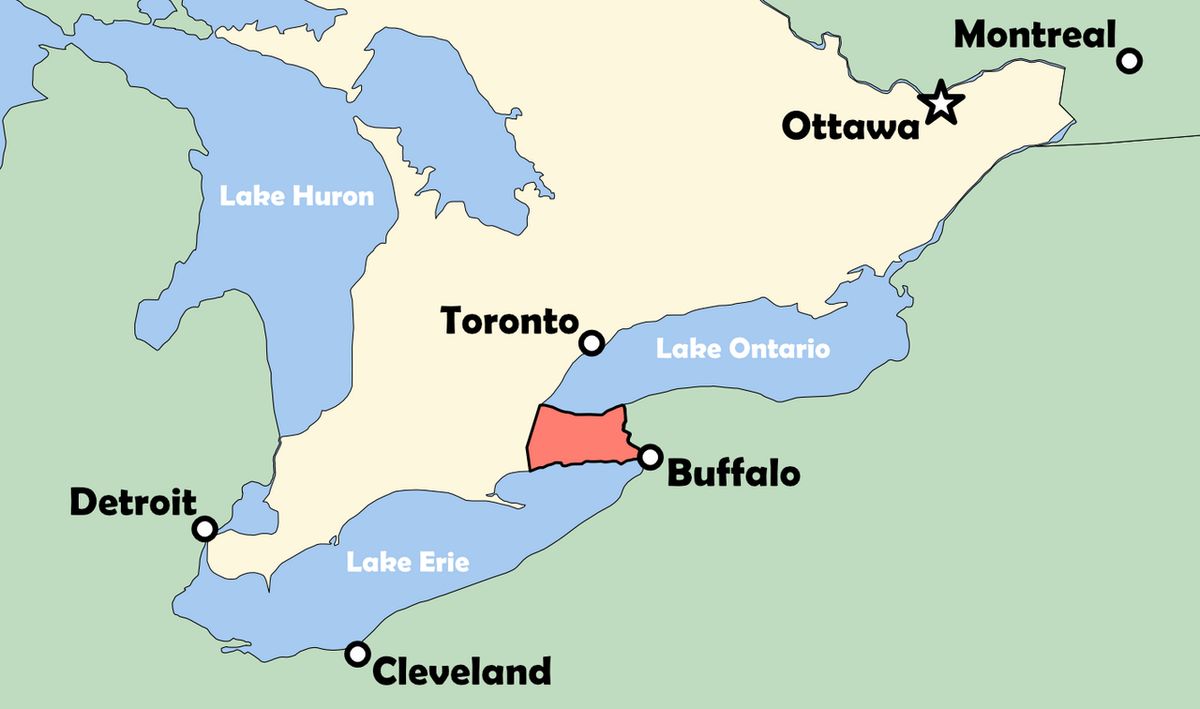
Battle of Lake Erie
The Battle of Lake Erie, fought on 10 September 1813, was a major naval engagement of the War of 1812. Nine vessels of the United States Navy, commanded by Master Commandant Oliver Hazard Perry, defeated and captured a six-vessel squadron of the British Royal Navy under Commander Robert Heriot Barclay. The American victory secured control of Lake Erie for the remainder of the war, a strategic outcome that enabled the recovery of Detroit and contributed to the subsequent American victory at the Battle of the Thames. The battle, one of the largest naval clashes of the conflict, remains a significant event in the military history of the Great Lakes region.
Strategic Context and Early War
The outbreak of the War of 1812 found the British in firm control of Lake Erie through a small force of warships operated by the Provincial Marine. This control was instrumental in Major-General Isaac Brock's successful siege of Detroit in August 1812, where he cut American supply lines and forced a surrender. The only American warship on the lake, the brig Adams, was captured at Detroit and briefly renamed Detroit by the British before being destroyed. American efforts to establish a naval presence began in late 1812 when Secretary of the Navy Paul Hamilton dispatched mariner Daniel Dobbins to Presque Isle in Erie, Pennsylvania, to establish a base and construct gunboats. Commodore Isaac Chauncey, commanding American naval forces on the Great Lakes, approved the site but focused his primary efforts on Lake Ontario, leaving the Lake Erie squadron to develop separately.
In January 1813, new Secretary of the Navy William Jones ordered the construction of two brigs at Presque Isle, with shipwright Noah Brown taking charge. The vessels, later named Lawrence and Niagara, were crudely built with wooden pegs due to nail shortages but were modelled on the contemporary USS Hornet. Their heaviest armament had to be transported with great difficulty from Chesapeake Bay foundries. Master Commandant Oliver Hazard Perry was appointed to command the Lake Erie squadron in March 1813, supplanting Lieutenant Jesse Elliott. Perry immediately set about organizing the defense of Presque Isle and journeyed to Lake Ontario to secure reinforcements of seamen from Commodore Chauncey.
Naval Buildup and Blockades
The British naval command on Lake Erie fell to Commander Robert Heriot Barclay, who arrived at Amherstburg on 10 June 1813 with only a handful of experienced sailors. His squadron was critically undermanned, relying on personnel from the Provincial Marine, the Royal Newfoundland Fencibles, and soldiers from the 41st Foot acting as landsmen. Barclay faced severe supply shortages, as American control of Lake Ontario and the Niagara Peninsula forced all materials to be carried overland from York. The construction of his flagship, the ship-rigged corvette HMS Detroit, was hampered by the loss of its intended carronades at the Battle of York, requiring it to be armed with a miscellany of guns from Amherstburg's fortifications. Barclay repeatedly requested men and supplies from Commodore James Lucas Yeo on Lake Ontario but received very little.
By mid-July, Perry's squadron at Presque Isle was nearly complete but still short-handed, with Perry claiming only 120 men fit for duty. Barclay imposed a blockade of the harbour for ten days from 20 to 29 July, but the shallow sandbar at the entrance prevented him from attacking directly. When Barclay lifted the blockade due to supply shortages and bad weather, Perry immediately began the arduous task of moving his vessels across the bar by offloading guns and using camels. Upon Barclay's return four days later, Perry's fleet was largely free and formed a confident defensive line. Perry then moved his squadron to Sandusky to join forces with Major General William Henry Harrison's army before establishing a base at Put-in-Bay, Ohio, effectively blockading Barclay at Amherstburg for five weeks and strangling British supply lines.
Forces and Preparation for Battle
Perry's squadron ultimately consisted of nine vessels. His flagship was the brig USS Lawrence, named for his friend Captain James Lawrence, and the brig USS Niagara was commanded by Lieutenant Jesse Elliott. The fleet was completed by the brig USS Caledonia and several schooners and gunboats, including the Somers, Ohio, Trippe, Scorpion, Ariel, Porcupine, and Tigress. Reinforcements of 130 sailors arrived under Elliott in August, with at least 50 experienced men drafted from the USS Constitution. Perry also incorporated volunteers from the Pennsylvania militia and Harrison's army. On the eve of battle, Perry was presented with a famous battle flag bearing the dying words of Captain Lawrence, 'DONT GIVE UP THE SHIP', sewn by women of Erie.
Barclay's British squadron comprised six vessels. His flagship was the hastily completed HMS Detroit, supported by the brig HMS Queen Charlotte, the schooner HMS Lady Prevost, the brig HMS General Hunter, and the recently added schooner HMS Chippeway and sloop HMS Little Belt. The crews were a mix of few Royal Navy sailors, Provincial Marine personnel, and soldiers. Critical shortages persisted, with Barclay later claiming his guns lacked proper firing mechanisms. By early September, supplies in Amherstburg were exhausted, and Barclay, after a last-minute reinforcement of 36 sailors from Quebec, was compelled to seek battle to reopen his supply lines for Procter's troops and the large number of Indian warriors and their families.
The Engagement of 10 September
The battle commenced on the morning of 10 September 1813 when Barclay's squadron was sighted heading for the American anchorage at Put-in-Bay. The wind was light and variable, initially favouring the British. The British line, with Detroit at the centre, opened fire at 11:45. Perry's flagship Lawrence bore the brunt of the initial attack from Detroit's long guns for nearly twenty minutes before she could close to effective carronade range. Once engaged, Lawrence's fire was less effective than hoped, possibly due to overloaded carronades. Meanwhile, the Niagara, under Elliott, remained far out of effective range, a point of later controversy. The British Queen Charlotte, after losing its commander and first lieutenant, engaged the beleaguered Lawrence at close range.
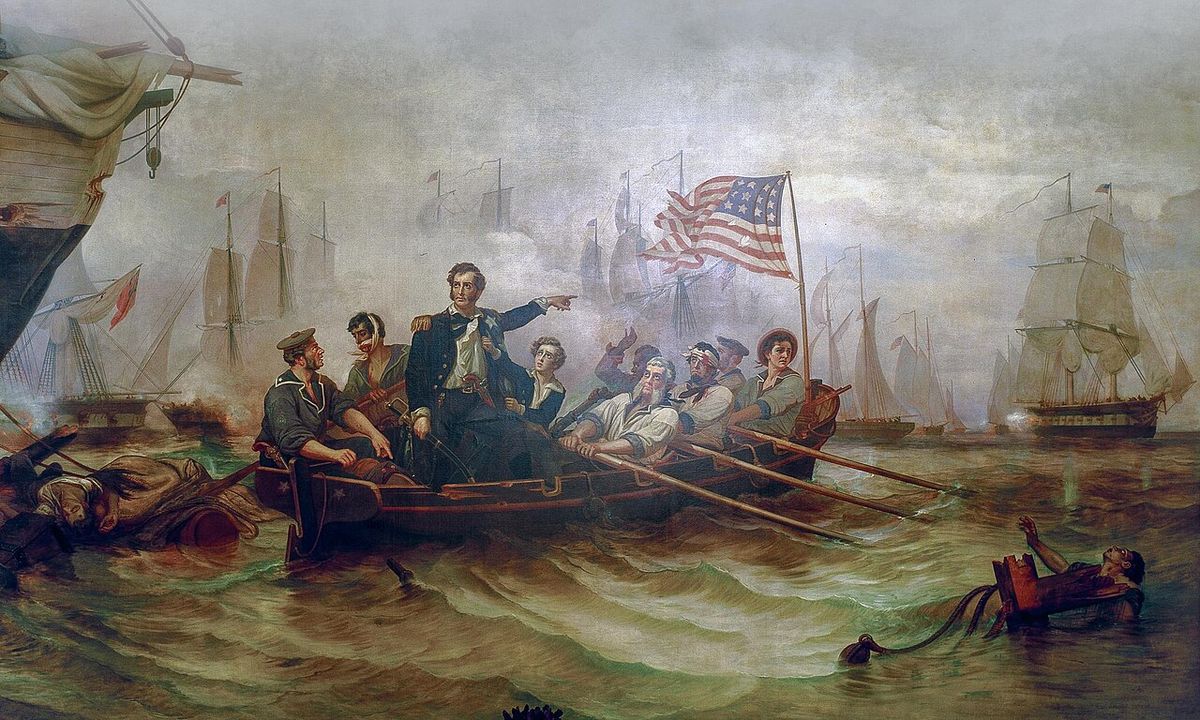
Despite support from American gunboats firing long-range raking shots, Lawrence was reduced to a wreck, with four-fifths of her crew killed or wounded. After the last of Lawrence's guns fell silent, Perry decided to transfer his flag. He was rowed under heavy fire half a mile to the Niagara, while Lawrence struck her colours. Once aboard Niagara, Perry took decisive command as the wind freshened. He sent Elliott to bring up the schooners and steered Niagara directly at the British line, which was in disarray after Detroit and Queen Charlotte had collided. Niagara broke through the British line, firing raking broadsides, supported by Caledonia and the gunboats.
Casualties and Immediate Aftermath
The battle resulted in significant casualties for both squadrons. The British suffered 41 killed and 94 wounded, with Commander Barclay himself severely wounded, losing a leg and part of his thigh. The surviving British crews, numbering 306, were captured. American losses totaled 27 killed and 96 wounded, with two of the wounded later dying. The most damaged vessels, Lawrence, Detroit, and Queen Charlotte, were converted into temporary hospital ships. A severe gale on 13 September further dismasted the two British prizes, reducing them to hulks, while Lawrence was restored to service for 1814.
Following the victory, Perry composed his famous dispatch to General William Henry Harrison, scrawled on the back of an envelope, which read, 'We have met the enemy and they are ours. Two ships, two brigs, one schooner, and one sloop.' He also sent a formal report to Secretary of the Navy William Jones. After making hasty repairs near West Sister Island, Perry's squadron ferried 2,500 American soldiers from Harrison's Army of the Northwest to Amherstburg. Amherstburg was captured without opposition on 27 September, and Detroit was recaptured around the same time by American mounted troops moving overland. This set the stage for the pursuit of Major General Henry Procter's retreating army and the subsequent American victory at the Battle of the Thames.
Strategic Consequences
The American victory had immediate and far-reaching strategic consequences. Control of Lake Erie was secured for the duration of the war, severing British supply lines to the western frontier. This forced Major-General Henry Procter to abandon Amherstburg and Detroit and retreat up the Thames River, despite the protests of his Indian ally Tecumseh. General Harrison's army pursued and decisively defeated Procter's force at the Battle of the Thames on 5 October 1813, where Tecumseh was killed, effectively breaking the Indian confederation allied with Britain. The control of the lake also removed the threat of British attacks on Ohio, Pennsylvania, or western New York and contributed to American successes on the Niagara Peninsula in 1814. Not all subsequent operations were successful. An American expedition to recapture Mackinac Island in 1814 was repulsed with heavy losses. The United States also lost eight of its smaller vessels on the lakes in separate incidents after the battle, including four destroyed at Black Rock and four captured on Lake Erie and Lake Huron. The post-war period was marred by a protracted and bitter public quarrel between Perry and Elliott over their respective conduct during the engagement, mostly fought in the press.
Key Vessels Involved
The Battle of Lake Erie featured a mix of purpose-built warships and converted merchant vessels. The core of each squadron consisted of brigs and schooners armed with a combination of long guns and short-range carronades. The American flagship was the brig USS Lawrence, which suffered catastrophic damage and most American casualties. Its sister brig was the USS Niagara, commanded by Elliott, which Perry boarded to secure victory. The American brig USS Caledonia was a former North West Company vessel captured in 1812. The British flagship was the hastily built ship-rigged corvette HMS Detroit, armed with a mixed battery. The British brig HMS Queen Charlotte lost its commander early in the action, and the schooner HMS Lady Prevost had been constructed at Amherstburg at the war's start. American gunboats, including the schooners Scorpion, Ariel, Somers, Ohio, Porcupine, Tigress, and sloop Trippe, provided crucial long-range fire support during the battle.
The American fleet, or squadron, was composed of nine vessels. The two largest were the brigs Lawrence and Niagara, which were close copies of the contemporary USS Hornet. The Lawrence served as Perry's flagship for much of the battle. Other vessels included the brig Caledonia, which had been captured from the British earlier in the war, and several converted gunboats such as the schooners Somers and Ohio and the sloop-rigged Trippe. These gunboats, armed with long guns, played a key role by firing raking shots at the British ships from a distance during the battle.
- USS Lawrence: 20-gun brig, Perry's initial flagship, engaged Detroit and Queen Charlotte.
- USS Niagara: 20-gun brig, commanded by Elliott, entered the battle late but decisively.
- USS Caledonia: 3-gun brig, captured from the North West Company in October 1812.
- USS Scorpion: Schooner, one of the gunboats providing long-range fire.
- USS Ariel: Schooner, part of the American gunboat line.
- USS Somers: Schooner, purchased by the U.S. Navy and converted into a gunboat.
- USS Ohio: Schooner, another purchased vessel converted for naval service.
- USS Trippe: Sloop-rigged vessel, also purchased and converted at Black Rock.
Commanders and Legacy
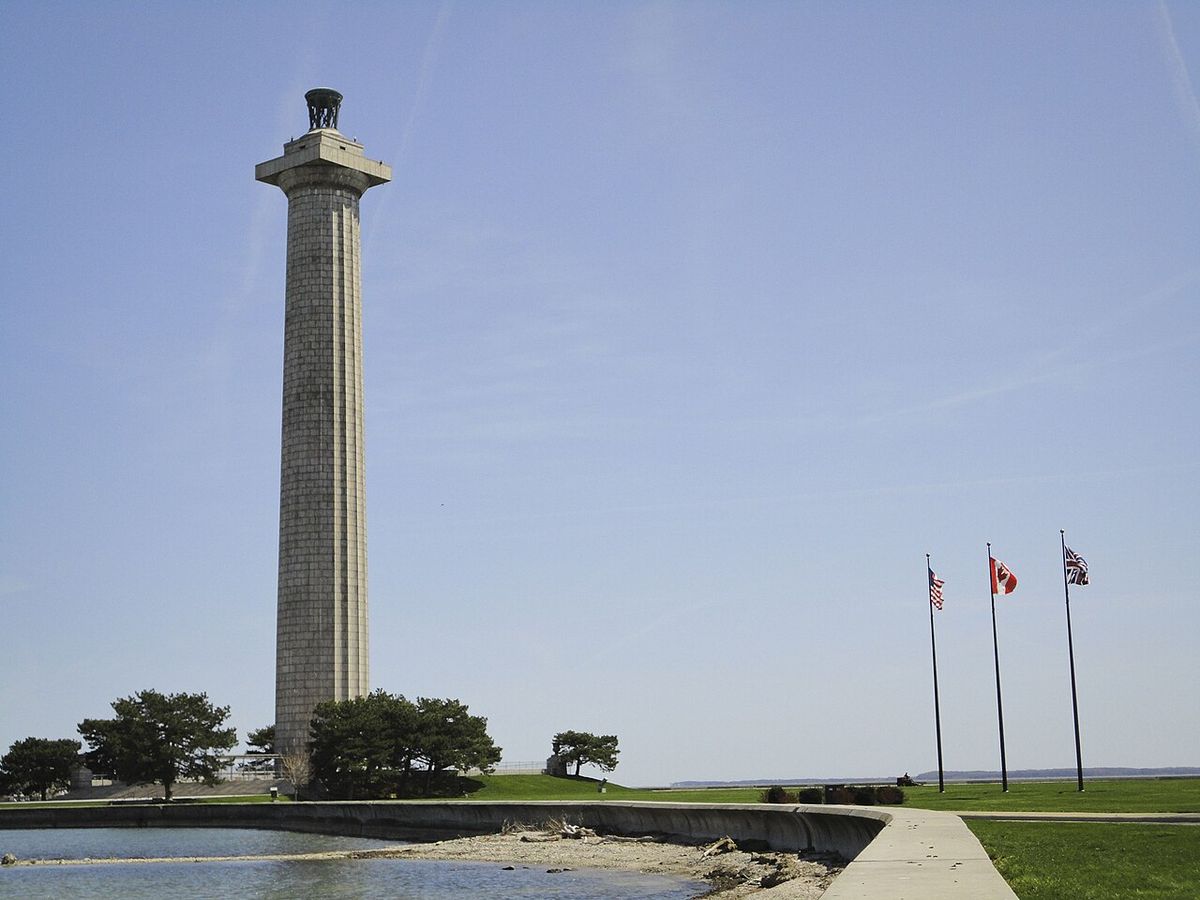
Oliver Hazard Perry emerged from the battle as an American national hero, celebrated for his tenacity and the famous phrase 'Don't give up the ship.' His decision to transfer his flag from the crippled Lawrence to the fresh Niagara demonstrated critical initiative. Robert Heriot Barclay, though defeated, was recognized for his courage in facing overwhelming difficulties, including critical shortages of men and supplies. He was honourably acquitted at his subsequent court-martial. The command dynamic on the American side was fractured, as Lieutenant Jesse Elliott's delayed engagement in Niagara sparked a lasting feud with Perry that played out for years after the war. The battle's legacy is cemented in American naval tradition, with Perry's battle flag becoming a powerful symbol. The victory is commemorated at Perry's Victory and International Peace Memorial on South Bass Island, Ohio, a monument to the battle and subsequent long peace between the U.S., Britain, and Canada. Strategically, the battle highlighted the importance of naval control on the Great Lakes during the War of 1812 and directly enabled American victories on land that reshaped the conflict in the Old Northwest.
Comparative Battle Statistics
The following table summarizes key statistics from the opposing squadrons at the Battle of Lake Erie, highlighting the composition and outcomes for the major vessel types. The data illustrates the American success in capturing the entire British squadron. While the number of major vessels was comparable, the American advantage in functional armament and, ultimately, in wind and positioning during the latter stage of the battle proved decisive. The British losses in personnel were higher, and their entire force was taken as prizes, a clear indicator of the completeness of Perry's victory.
| Category | American Squadron | British Squadron |
|---|---|---|
| Total Vessels | 9 | 6 |
| Brigs | 3 (Lawrence, Niagara, Caledonia) | 2 (Queen Charlotte, General Hunter) |
| Schooners/Sloops | 6 (e.g., Scorpion, Ariel) | 4 (e.g., Lady Prevost, Chippeway) |
| Killed in Action | 27 | 41 |
| Wounded in Action | 96 | 94 |
| Prizes Captured | 6 | 0 |
Key Events and Timeline
The path to the Battle of Lake Erie was shaped by a series of critical events in 1812 and 1813. When the war broke out in 1812, the British immediately seized control of the lake with a small force of warships. This control allowed them to defeat the American army at the Siege of Detroit. The Americans began constructing a fleet at Presque Isle in Erie, Pennsylvania, later in 1812 under Daniel Dobbins. In 1813, Master Commandant Oliver Hazard Perry was appointed to command the American squadron on Lake Erie. He had vessels from Black Rock towed up the Niagara River to join the new ships built at Presque Isle. The British commander, Commander Robert Heriot Barclay, faced severe shortages of men and supplies as he attempted to complete his own squadron, including the corvette HMS Detroit, at Amherstburg.
- August 1812: British forces under Major-General Isaac Brock capture Detroit, seizing the American brig Adams.
- 9 October 1812: American sailors led by Lieutenant Jesse Elliott capture the brigs Detroit and Caledonia near Fort Erie.
- Late 1812: Daniel Dobbins begins establishing a U.S. naval base and building gunboats at Presque Isle, Erie, Pennsylvania.
- January 1813: Secretary William Jones orders construction of the brigs Lawrence and Niagara at Presque Isle.
- End of March 1813: Oliver Hazard Perry arrives at Presque Isle to take command of the Lake Erie squadron.
- 10 June 1813: Commander Robert Heriot Barclay arrives at Amherstburg to take command of the British squadron.
- 20-29 July 1813: Barclay blockades Presque Isle, which Perry breaks after the blockade is lifted.
- 10 September 1813: The Battle of Lake Erie is fought, resulting in an American victory.
- 27 September 1813: American forces recapture Amherstburg and Detroit following the naval victory.
- 5 October 1813: The Battle of the Thames is fought, where Tecumseh is killed.
Questions about Battle of Lake Erie
What was the significance of the Battle of Lake Erie?
The battle was strategically crucial. American control of Lake Erie severed British supply lines to their western frontier forces. This forced the British army under Major-General Henry Procter to retreat from Amherstburg and Detroit, enabling American forces to recapture those settlements. The pursuit led to the American victory at the Battle of the Thames in October 1813, where the Shawnee leader Tecumseh was killed, breaking the Indian confederation allied with Britain and securing the region for the United States.
What was the 'Don't Give Up the Ship' flag?
On the eve of the battle, Perry was presented with a special battle flag intended to signal his fleet to engage. The flag bore the dying words of his friend, Captain James Lawrence of the USS Chesapeake: 'DONT GIVE UP THE SHIP'. It was sewn by women from Erie, Pennsylvania. Perry flew this flag from his flagship, USS Lawrence, during the battle, and it has since become a well-known symbol of American naval determination and resilience.
What happened to the commanders after the battle?
Oliver Hazard Perry was hailed as a hero in the United States. Robert Heriot Barclay, the British commander, was severely wounded, losing a leg. He faced a court-martial upon his return to Britain, where he was honourably acquitted, as the court recognized he had done his duty despite crippling shortages of men and supplies. A bitter post-war feud developed between Perry and his subordinate, Lieutenant Jesse Elliott, over Elliott's conduct during the battle, which played out publicly for years.
Who won the Battle of Lake Erie?
The United States Navy won the Battle of Lake Erie. On 10 September 1813, nine American vessels under Master Commandant Oliver Hazard Perry defeated and captured six British Royal Navy ships commanded by Commander Robert Heriot Barclay. This victory ensured American control of the lake for the remainder of the War of 1812. The American success allowed them to recover Detroit and later win the Battle of the Thames, breaking the Indian confederation of Tecumseh. The battle was one of the largest naval engagements of the war. American control of Lake Erie also removed the threat of British attacks on Ohio, Pennsylvania, and Western New York.
What did Oliver Hazard Perry say after the battle?
After the battle, Oliver Hazard Perry wrote a famous dispatch to General William Henry Harrison. He stated, 'We have met the enemy and they are ours. Two ships, two brigs, one schooner, and one sloop.' This message, scrawled in pencil on the back of an old envelope, reported the capture of the entire British squadron. Perry also sent a report to Secretary of the Navy William Jones. His victory message became an well-known part of American naval history, symbolizing the decisive nature of the American triumph which resulted in the capture of all six British vessels.
Where did the Battle of Lake Erie take place?
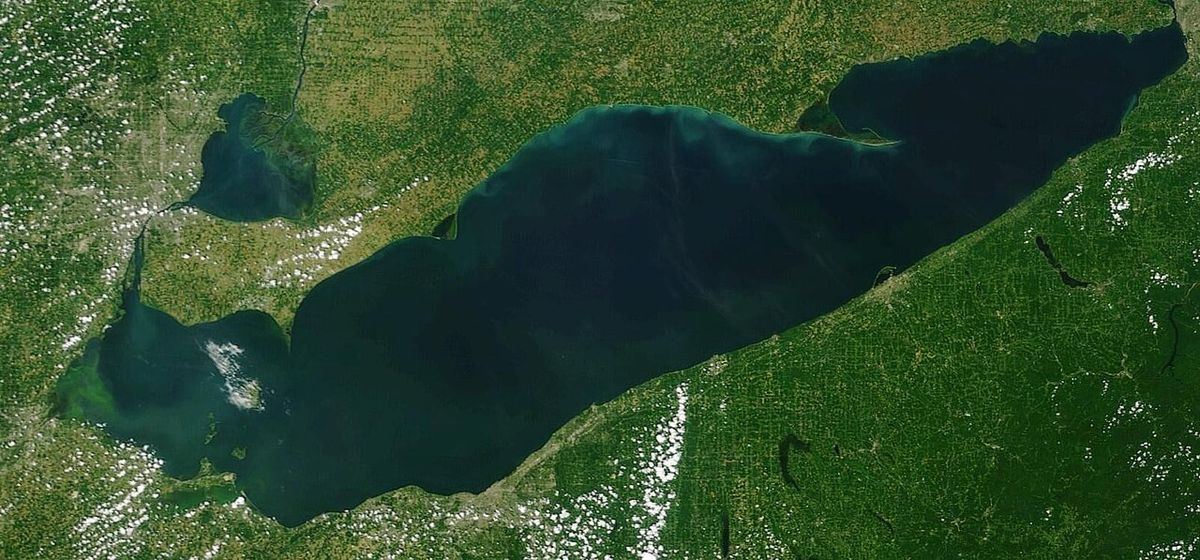
The Battle of Lake Erie took place on Lake Erie off the shores of Ohio on 10 September 1813. Prior to the engagement, the American squadron was anchored at Put in Bay on South Bass Island. For this reason, the conflict is also known as the Battle of Put in Bay. The American vessels got under way from this anchorage when they saw Barclay's squadron heading for them. The battle ensured subsequent American operations on the lake, including the transport of troops to Amherstburg and the recapture of Detroit.
Sources and further reading
- Battle of Lake Erie (Wikipedia)
- The Battle of Lake Erie (nps.gov)
- Battle of Lake Erie (Battle of Put-in-Bay) (thecanadianencyclopedia.ca)
- Battle of Lake Erie, Erie Maritime Museum (eriemaritimemuseum.org)
- Perry's Victory & International Peace Memorial (nationalparks.org)
Checked by the Your Space Hamilton desk. Last updated 2026-10-21.