Willowdale, Toronto
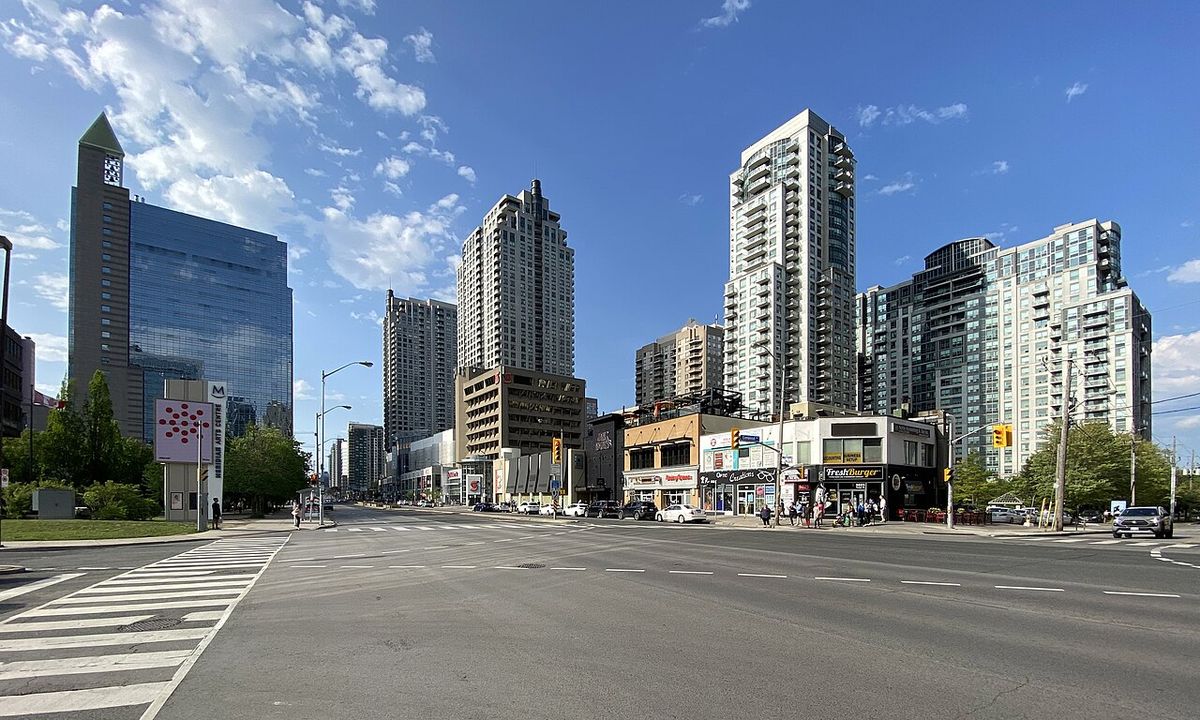
Willowdale is a neighbourhood in the city of Toronto, Ontario, located in the former township and present district of North York. Historically formed from the amalgamation of three postal villages, its core is centred around the intersection of Yonge Street and Empress Avenue, an area known as North York City Centre. The neighbourhood is characterized by a mix of single-family homes, townhouses, and a dense corridor of high-rise condominium towers along Yonge Street. As one of Toronto's most ethnically diverse communities, with a significant immigrant population, Willowdale serves as a major residential and commercial hub in the city's north end.
History and Development
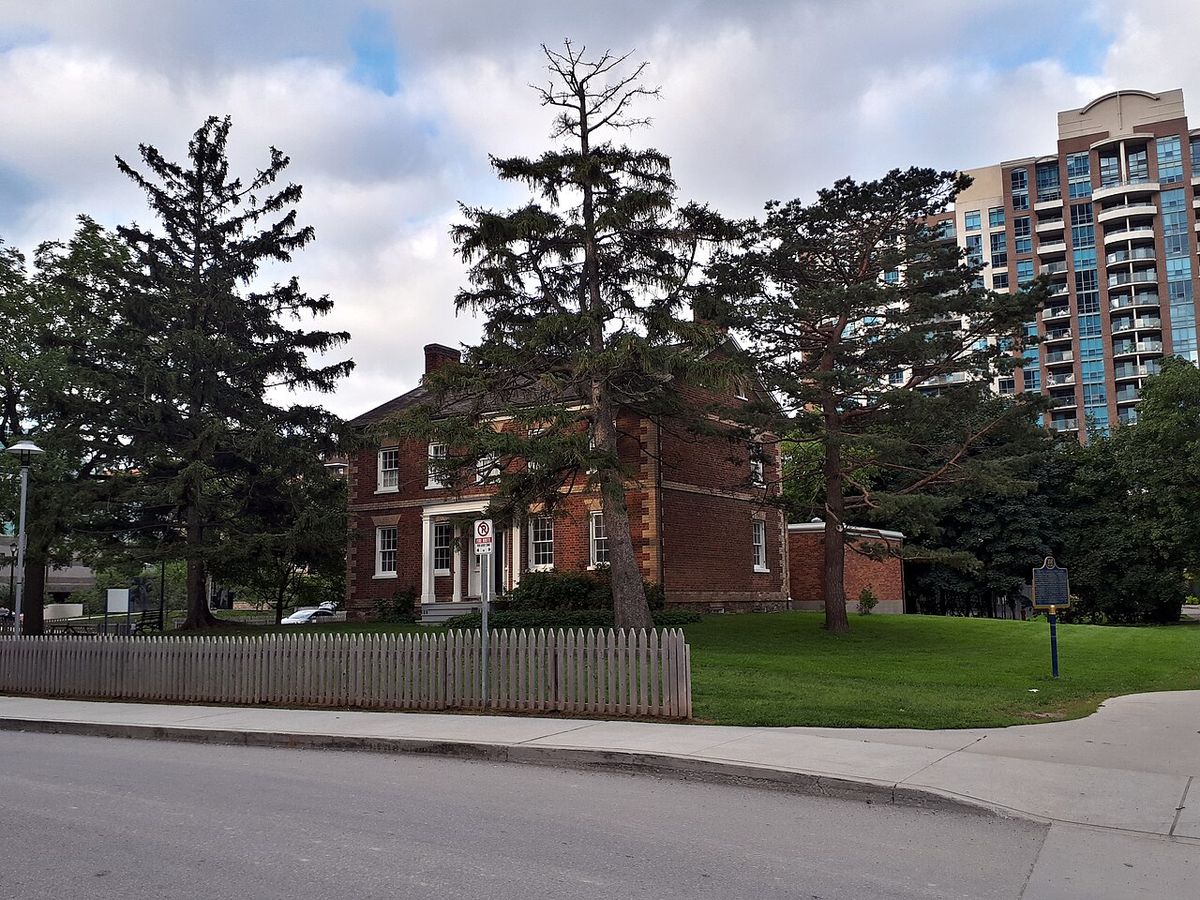
The area now known as Willowdale was first settled by Jacob Cummer, a mill owner on the Don River, a tinsmith shop proprietor on Yonge Street, and a self-trained doctor and veterinarian who immigrated from the United States in 1797. Another key early figure was land surveyor David Gibson, who participated in the Upper Canada Rebellion of 1837 and fled to the United States where he worked as the First Assistant Engineer on the Erie Canal before receiving a pardon and returning in 1851. Upon his return, Gibson helped establish the "Willow Dale" post office, named for the willow trees prevalent in the district, which gave the neighbourhood its eventual name. The historic Gibson House, built by Gibson in 1851 in the Georgian Revival style, still stands at 5172 Yonge Street and operates as a museum, with members of the Gibson family living there into the 1920s as subdivision began. The original settlement grew from three postal villages: Newtonbrook, Willowdale, and Lansing, which were later consolidated under the Willowdale name within the Township of North York after the Lansing post office closed and a new one was built in Willowdale.
Residential subdivision began in earnest in the 1920s, with housing initially consisting of modest one- and two-storey pre-war houses and one-and-a-half-storey postwar houses constructed from the 1910s to the 1950s. A significant shift occurred beginning on a large scale in the 1990s, when many of these original houses were replaced by very large two-storey luxury homes, a trend that originated the term "monster homes" in Toronto. The neighbourhood also became the site of York Cemetery, which opened in 1948 in its southwest sector and is the final resting place for notable figures such as Grand Duchess Olga Alexandrovna of Russia and businessman Tim Horton. In 2018, Willowdale was the location of the Toronto van attack, the deadliest vehicle ramming attack in Canadian history, which occurred along its streets.
Religious and Community Landmarks
The first place of worship in Willowdale was the non-denominational Cummer Chapel, a log meeting house built by Jacob Cummer in 1816 on part of his farm at what is now the northwest corner of Yonge Street and Churchill Avenue. Cummer and other early congregants are buried in a cemetery that remains on the east side of Yonge Street, with the Cummers being among the first German loyalists and farmers from Pennsylvania with Lutheran roots who integrated with Methodist neighbours. This log structure was replaced in 1856 by a large yellow brick and stucco church with a tall spire, which operated as the Methodist Episcopal Church and later became part of the United Church of Canada in 1925, known as Willowdale United Church. Between 1931 and 1932, the church's front was altered due to the widening of Yonge Street, requiring the removal of the west-facing front end and the relocation of the main entrance to the south side of the building.
Following the Second World War, minister Rev. Welburn Jones initiated a building program for the growing congregation of veterans and their families, leading to the construction of a substantial new church on Kenneth Avenue in 1954. His successor, Rev. Lindsay G. King, who served for 27 years, completed this program in 1966 and spent the rest of his ministry at Willowdale United Church. Rev. King was a prominent community figure, writing a regular column for the community paper and appearing frequently on radio and television broadcasts for CTV and CBC. In 1973, driven by his interest in bringing psychology, religion and health together, he founded the Family Life Foundation of Willowdale, a registered charity focused on fostering healthy community and family life.
Demographics and Housing
Willowdale is a densely populated and rapidly growing community, with the ward population reaching 118,800, reflecting an 8.3 percent increase since the 2011 census. It is an exceptionally diverse neighbourhood, with immigrants constituting 70 percent of all residents as of 2021, making it a primary destination for new Canadians in the city. The largest ethnic groups include those of Chinese descent at 22 percent, Korean at 9.35 percent, and Iranian at 8.77 percent, reflecting strong East Asian and West Asian communities. Language diversity is similarly pronounced, with English reported as the mother tongue for only 31.4 percent of the population, which highlights the multicultural character of the area. Other widely spoken languages include Chinese languages at 12.3 percent, Persian at 11.1 percent, and Korean at 8.9 percent, indicating substantial linguistic communities that use languages other than English at home.
The neighbourhood contains 49,955 households, with a significant portion of its housing stock being relatively new. 43 percent of houses were constructed between 2001 and 2016, pointing to a period of intense development and renewal. Homeownership is predominant, with 61 percent of residents owning their dwelling, while 39 percent are renters, a split that reflects the mix of condominium and rental apartment stock. The built form is dominated by high-density residential structures, with apartment buildings of five storeys or more making up 61.2 percent of all dwellings, a figure that defines the neighbourhood's skyline along Yonge Street. Single-detached houses account for 24.5 percent of housing, representing the older, lower-density sections of the community where the original subdivisions and subsequent "monster home" replacements are found.
Education and Schools
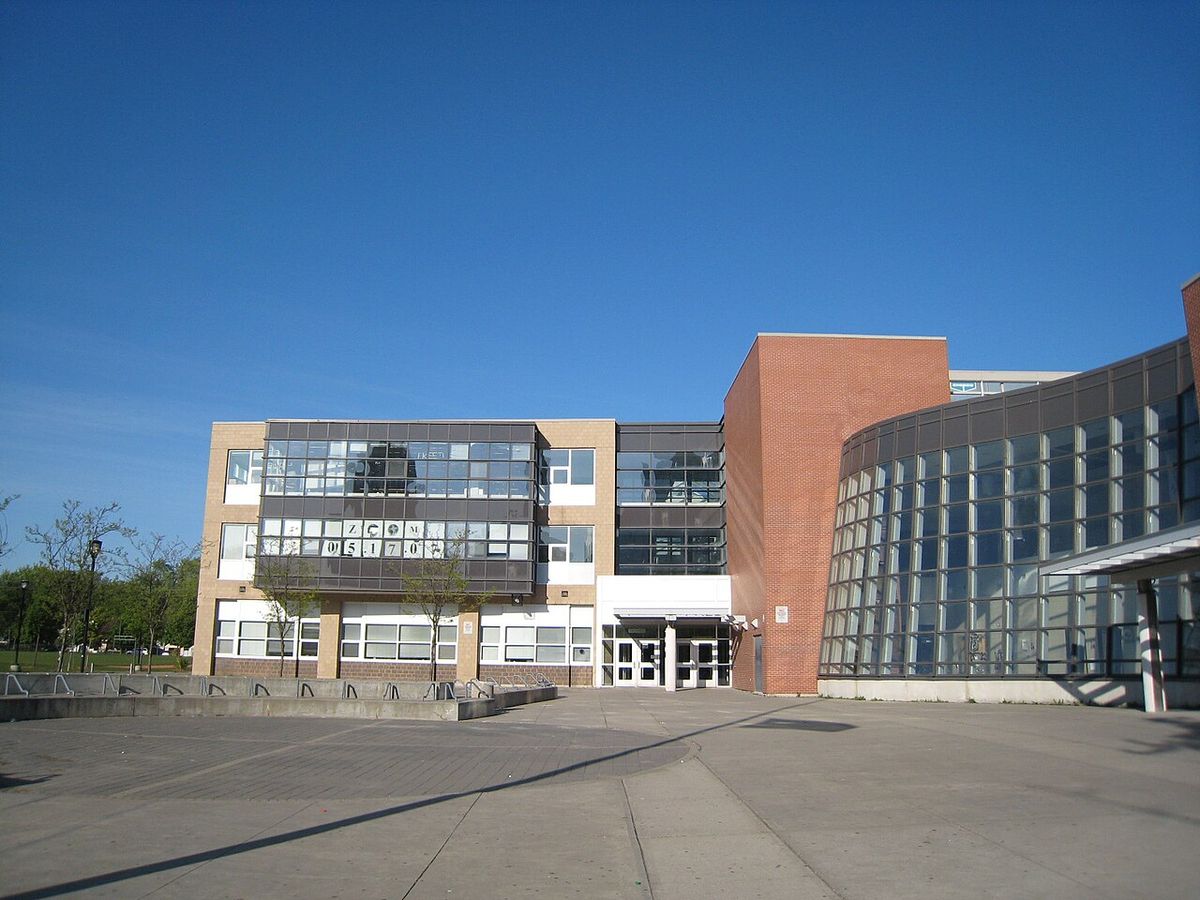
Willowdale is served by two main public school boards: the secular Toronto District School Board (TDSB) and the separate Toronto Catholic District School Board (TCDSB). Notably, the administrative headquarters for both of these large boards are located within the neighbourhood, making it a central point for public education administration in the city. Both boards operate numerous public elementary and middle schools throughout the area, providing a range of educational options for local families from kindergarten through grade eight. For secondary education, TDSB operates two schools locally: Earl Haig Secondary School and Drewry Secondary School, which serve the academic needs of many teenagers in the community. TCDSB operates a specialized arts-focused school for grades 7 through 12 within Willowdale, while other Catholic secondary school students typically attend institutions in adjacent neighbourhoods, as the local Catholic board does not operate a comprehensive high school in the area.
French-language education is provided by the public secular board Conseil scolaire Viamonde (CSV) and the separate Catholic board Conseil scolaire catholique MonAvenir (CSCM), which offer schooling to applicable residents of Willowdale. Monseigneur-de-Charbonnel, a French-language Catholic secondary school for grades 7 through 12 operated by Conseil scolaire de district catholique Centre-Sud, is located on Drewry Avenue within the neighbourhood. Eligible students may also attend CSV or CSCM schools located in other parts of Toronto, depending on program availability and catchment areas. This multi-board system ensures that residents have access to public education in both official languages within the secular and separate school systems, catering to the diverse population.
- Toronto District School Board (TDSB) headquarters is in Willowdale.
- Toronto Catholic District School Board (TCDSB) headquarters is in Willowdale.
- TDSB secondary schools: Earl Haig Secondary School and Drewry Secondary School.
- TCDSB operates a specialized arts school for grades 7-12 within the neighbourhood.
- French Catholic secondary school: Monseigneur-de-Charbonnel on Drewry Avenue.
- French public boards: Conseil scolaire Viamonde and Conseil scolaire catholique MonAvenir serve eligible residents.
- Both TCDSB and TDSB operate public elementary and middle schools in Willowdale.
Recreation and Public Amenities
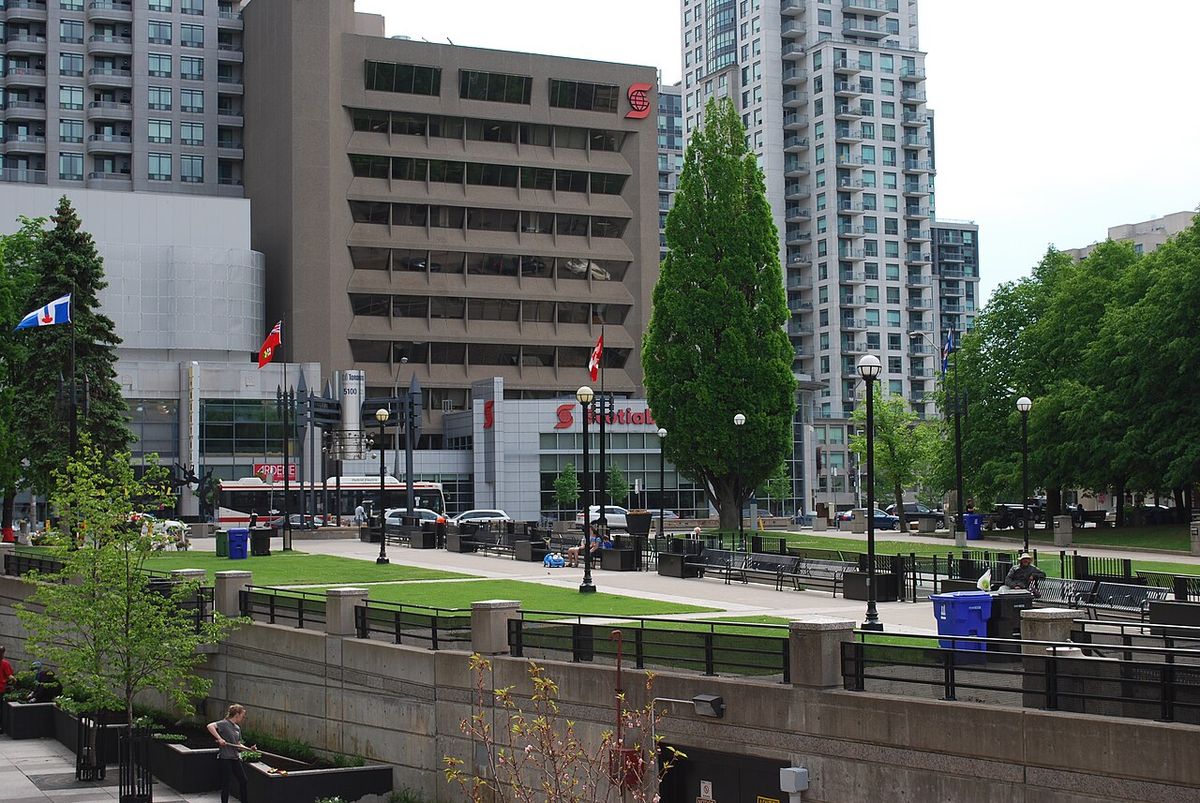
Willowdale offers a variety of public recreational spaces managed by the Toronto Parks, Forestry and Recreation Division, which are integral to community life and outdoor activity. These include Bathurst Park, Edithvale Park, the Finch Avenue Hydro Corridor, and Sheppard East Park, providing green space for sports, playgrounds, and leisure across the neighbourhood. A major cultural and civic hub is centred around Mel Lastman Square, a public square on Yonge Street that hosts numerous community events and is adjacent to the North York Civic Centre, a key municipal government building used by the city administration. The square is also near the Toronto Centre for the Arts, a prominent performing arts venue that hosts theatre, music, and other events. The North York Central Library, a major branch of the Toronto Public Library system, is another significant public resource located in the area, offering extensive collections and services to residents of all ages.
In addition to public amenities, the neighbourhood is also home to Empress Walk, a condominium and retail complex that includes an IMAX cinema operated by Cineplex Entertainment. The neighbourhood is home to several public parks, including Bathurst Park, Edithvale Park, Finch Avenue Hydro Corridor, and Sheppard East Park. The City of Toronto government also manages North York Central Library, a branch of the Toronto Public Library. Located on Yonge Street, Mel Lastman Square is a public square that hosts a number of events next to the North York Civic Centre. The Toronto Centre for the Arts is also located nearby.
- Public Parks: Bathurst Park, Edithvale Park, Finch Avenue Hydro Corridor, Sheppard East Park.
- Civic Hub: Mel Lastman Square adjacent to North York Civic Centre.
- Cultural Venue: Toronto Centre for the Arts.
- Library: North York Central Library (Toronto Public Library).
- Private Complex: Empress Walk condominium and retail with IMAX cinema.
- All parks are managed by the Toronto Parks, Forestry and Recreation Division.
- The North York Civic Centre is a building used by the municipal government.
Transportation and Infrastructure
Willowdale is defined and served by several major roadways that structure its layout and provide connectivity across the Greater Toronto Area. Yonge Street functions as the primary north-south commercial and arterial road through its centre, acting as the historical and commercial spine of the neighbourhood. Bathurst Street forms the definitive western boundary, while Bayview Avenue serves as the eastern boundary, with the area east of Bayview historically being the separate village of Oriole. The northern limit is the Finch Avenue Hydro Corridor, situated just north of Finch Avenue, and Highway 401, a major east-west controlled-access highway, bounds the southeastern part of the neighbourhood. Other significant east-west thoroughfares include Sheppard Avenue, which runs through the heart of the community and intersects with Yonge Street at a major node.
Public transportation in Willowdale is comprehensive, served by the Toronto Transit Commission (TTC), GO Transit, and York Region Transit (YRT), providing multi-modal connections for commuters and residents. The TTC operates four subway stations within the neighbourhood, providing extensive rapid transit access: Sheppard-Yonge station is a major interchange between Line 1 Yonge-University and Line 4 Sheppard, North York Centre and Finch stations provide access to Line 1, and Bayview station provides access to Line 4. In addition to the subway, numerous TTC bus routes operate throughout the area, with connections available at subway stations and local bus stops, facilitating local travel within North York and to other parts of Toronto. GO Transit and YRT bus routes also serve the area, primarily connecting at Finch and Sheppard-Yonge stations, offering regional transit options to York Region and beyond, which is essential given the high density and population of the area.
| Subway Station | Subway Line(s) | Primary Function |
|---|---|---|
| Sheppard-Yonge | Line 1, Line 4 | Major interchange station |
| North York Centre | Line 1 | Local service in the urban core |
| Finch | Line 1 | Northern terminus of Line 1 |
| Bayview | Line 4 | Local service on Line 4 Sheppard |
Notable Residents
Willowdale has been home to a wide array of notable individuals from various fields including music, sports, literature, and entertainment, reflecting its diverse community. The neighbourhood is famously associated with two members of the progressive rock band Rush: bassist, keyboardist, and lead singer Geddy Lee and lead guitarist Alex Lifeson, who both grew up there and are referenced as "men of Willowdale" in the opening line of the Rush song "The Necromancer." Other prominent musicians from Willowdale include singer David Clayton-Thomas of Blood, Sweat & Tears, the hip hop group Dream Warriors, and singer, musician, and actor Henry Lau. In comedy and television, figures such as Howie Mandel and Harland Williams hail from the area, alongside actor Corey Haim who starred in films like The Lost Boys.
The neighbourhood's residents have also made marks in sports, literature, fashion, and business, representing a broad spectrum of achievement. Olympic wrestler Andy Borodow, National Hockey League players Kirk McLean, Mark Napier, and Steve Shutt, Canadian Football League player Dick Shatto, and NASCAR driver Frog Fagan all have roots in Willowdale. Author Joseph Boyden, fashion designers Dean and Dan Caten of DSQUARED2, businessman and philanthropist Seymour Schulich, and former CTV news anchor Lloyd Robertson are also former residents. The list includes individuals from diverse backgrounds, such as architect Jimenez Lai who lived on Cummer Avenue, racing driver Vic Parsons, and convicted Nazi war criminal Haralds Puntulis, who was living in Willowdale when convicted in absentia in 1965.
In Popular Culture
Willowdale holds a distinctive place in popular culture primarily through its connection to the legendary Canadian progressive rock band Rush. This lyric is a direct nod to two of the band's members, Geddy Lee and Alex Lifeson, who both grew up in the Willowdale area and spent their formative years there. The inclusion of their hometown in the song's narrative weaves the neighbourhood into the mythic fabric of the band's early conceptual work, cementing its place in rock music history. This reference is a point of local pride and a fun fact for music fans, linking the suburban Toronto neighbourhood to one of Canada's most successful and influential musical exports.
Questions about Willowdale, Toronto
Where is Willowdale located in Toronto?
Willowdale is a neighbourhood located in the district of North York, in the northern part of the City of Toronto. Its core, known as North York City Centre, is centred at the intersection of Yonge Street and Empress Avenue or Park Home Avenue. The neighbourhood's boundaries are generally Bathurst Street to the west, Bayview Avenue to the east, the Finch Avenue Hydro Corridor just north of Finch Avenue to the north, and Highway 401 to the southeast. It historically developed from the postal villages of Newtonbrook, Willowdale, and Lansing, which were consolidated along Yonge Street.
What is Willowdale known for?
Willowdale is known for its high-density urban core along Yonge Street, featuring numerous high-rise condominium and office towers that constitute North York City Centre. It is recognized as one of Toronto's most ethnically diverse communities, with a very high immigrant population of 70 percent. Historically, it is the area where the term "monster homes" was coined in the 1990s to describe large luxury homes replacing smaller original houses. The neighbourhood is also notable as the childhood home of Rush members Geddy Lee and Alex Lifeson and is referenced in their music, and it contains historic sites like the Gibson House museum and York Cemetery.
What are the main demographics of Willowdale?
As of 2021, Willowdale is an exceptionally diverse community with immigrants making up 70 percent of its ward population of approximately 118,800, which grew by 8.3 percent since 2011. The largest ethnic groups are Chinese (22 percent), Korean (9.35 percent), and Iranian (8.77 percent). Linguistically, only 31.4 percent report English as their mother tongue, with significant numbers speaking Chinese languages (12.3 percent), Persian (11.1 percent), and Korean (8.9 percent). The housing stock is predominantly high-density, with over 61 percent of dwellings being apartment buildings of five storeys or more, and 61 percent of residents are homeowners.
What public transportation serves Willowdale?
Public transportation in Willowdale is served by GO Transit, the Toronto Transit Commission (TTC), and York Region Transit (YRT). The TTC operates the Toronto subway with four stations in Willowdale: Bayview, Finch, North York Centre, and Sheppard-Yonge station. Bayview station provides access to Line 4 Sheppard, while Finch and North York Centre stations provide access to Line 1 Yonge-University. Sheppard-Yonge station is a major interchange station for Line 1 and Line 4. The TTC also operates bus routes in Willowdale, and bus routes operated by GO Transit and York Region Transit may be accessed at Finch and Sheppard-Yonge stations.
What schools are in Willowdale?
Willowdale is served by the Toronto District School Board (TDSB) and the Toronto Catholic District School Board (TCDSB), both of which have their headquarters in the neighbourhood. TDSB operates Earl Haig Secondary School and Drewry Secondary School, along with several elementary and middle schools. TCDSB operates a specialized arts school for grades 7-12 locally, with other Catholic secondary students attending schools in adjacent neighbourhoods. French-language education is provided by Conseil scolaire Viamonde and Conseil scolaire catholique MonAvenir, with the French Catholic secondary school Monseigneur-de-Charbonnel located on Drewry Avenue.
Sources and further reading
- Willowdale, Toronto (Wikipedia)
- Willowdale (toronto.ca)
- Willowdale, Toronto Neighbourhood guide (neighbourhoodguide.com)
- Willowdale East Neighbourhood Guide (hoodq.com)
- Who lives in Toronto neighbourhood Willowdale? (thegreenline.to)
Checked by the Your Space Hamilton desk. Last updated 2026-10-21.