St. Boniface, Winnipeg
St. Boniface is a historic city ward and neighbourhood in eastern Winnipeg, Manitoba, and the largest francophone community in Western Canada. Founded as a Roman Catholic mission in 1818, it serves as the cultural and institutional heart of the Franco-Manitoban community. The area is known for landmarks such as the St. Boniface Cathedral, the Université de Saint-Boniface, and the Royal Canadian Mint, and is the birthplace of Métis leader Louis Riel. With a population of 58,520 as of the 2016 Census, St. Boniface blends deep historical roots with active contemporary cultural life, anchored by events like the Festival du Voyageur.
History and Development
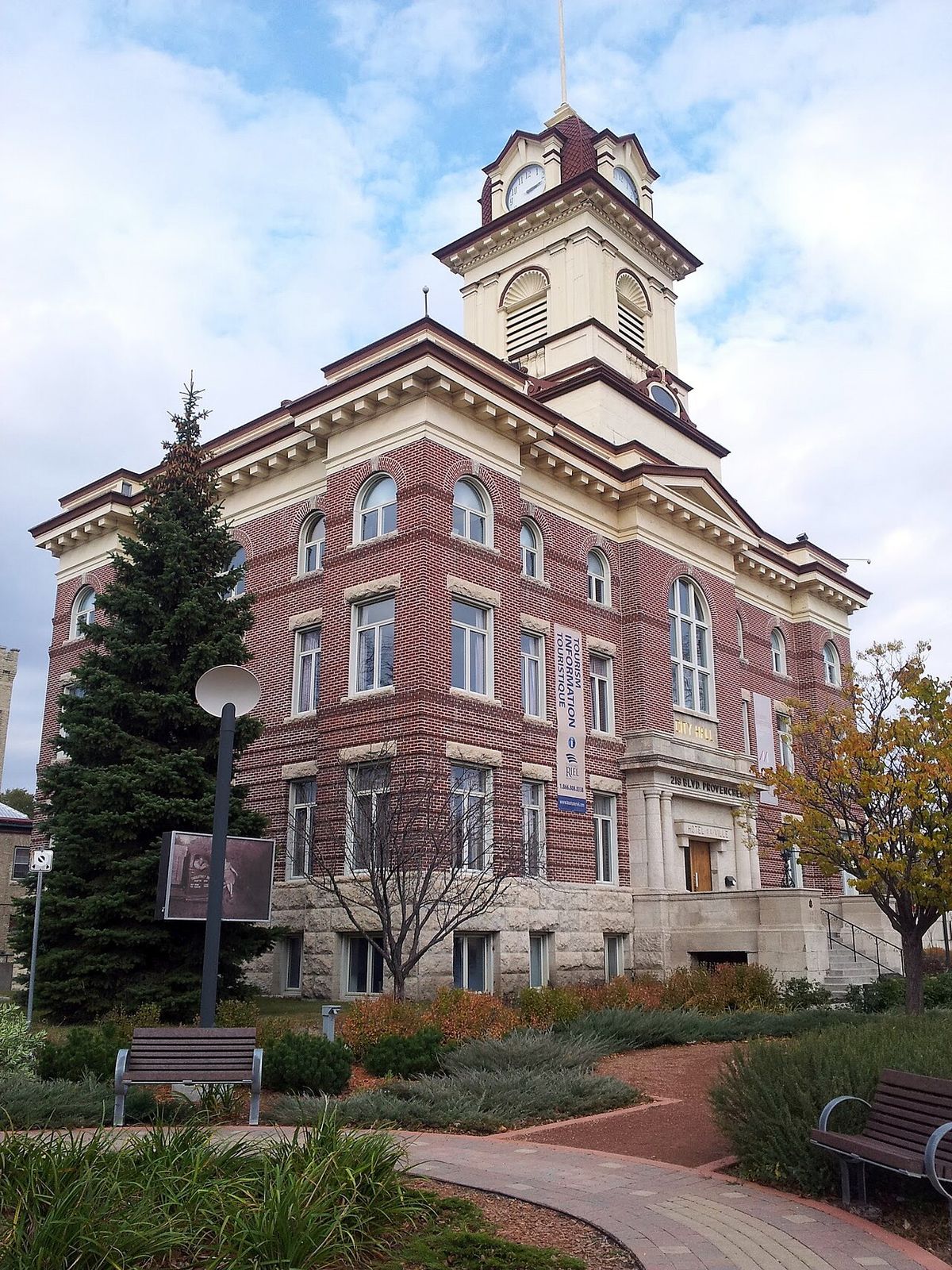
The area now known as St. Boniface has a long history of Indigenous occupation, notably by Ojibwe peoples, prior to European contact. Its modern history began with the founding of a Roman Catholic mission in 1818 by Bishop Provencher, establishing its role as a mother parish for French settlements across Western Canada. Early development was driven by French-speaking religious orders, most notably the Grey Nuns who arrived in 1844 and founded St. Boniface Hospital, the first hospital west of the Great Lakes. The mission also founded an educational institution that would evolve into the Collège de Saint-Boniface and later the Université de Saint-Boniface. St. Boniface was officially incorporated as a town in 1883 and achieved city status in 1908, operating independently for much of the 20th century.
The local economy was initially agricultural but industrialized rapidly in the early 1900s. A major driver was the 165-acre Union Stockyards, developed between 1912 and 1913, which became the largest livestock exchange in Canada and spurred a significant meat-packing industry. Throughout the mid-20th century, the community expanded residentially with the development of neighbourhoods like Windsor Park and Southdale, which had populations of 10,050 and 6,450 respectively by 2016. The area has been a centre for political and cultural advocacy, being a focal point of resistance during the Manitoba Schools Question of 1890 which sought to abolish French as an official provincial language. The independent City of St. Boniface was amalgamated into the City of Winnipeg in 1972, along with several other surrounding municipalities, marking the end of its formal political independence.
Geography and Neighbourhoods
The St. Boniface city ward encompasses a large portion of eastern Winnipeg, stretching from the Red River eastward and is represented on Winnipeg City Council by Councillor Matt Allard. The ward's official neighbourhoods are diverse, ranging from historic central areas to modern suburban developments, and its composition includes several distinct communities each with its own character. The ward's neighbourhoods include Archwood, Central St. Boniface, Dufresne, Holden, Island Lakes, Maginot, The Mint, Mission Industrial, Niakwa Park, Niakwa Place, North St. Boniface, Norwood East, Norwood West, Southdale, Stock Yards, and Windsor Park. For broader statistical purposes, the St. Boniface community area extends further east past Lagimodière Boulevard to Plessis Road, incorporating additional neighbourhoods such as Dugald, Royalwood, Sage Creek, Southland Park, St. Boniface Industrial Park, and Symington Yards.
Sage Creek is noted for its environmental design, featuring 13 naturalized stormwater ponds and two back flood basins to manage water from the Seine River which runs through the community. The redevelopment of the historic Union Stockyards site into a mixed-use housing and retail area, led by Olexa Developments of Calgary, was scheduled to begin in 2020 with an initial phase of 600 housing units. The area also contains major transportation infrastructure like the Canadian National Railway's Symington Yards, a major rail-handling facility. The Seine River cuts through the area running south-north and is surrounded by parklands, including the Bois-des-Esprit with its walking trails and distinctive tree carvings, providing significant green space for recreation.
Cultural Institutions and Landmarks
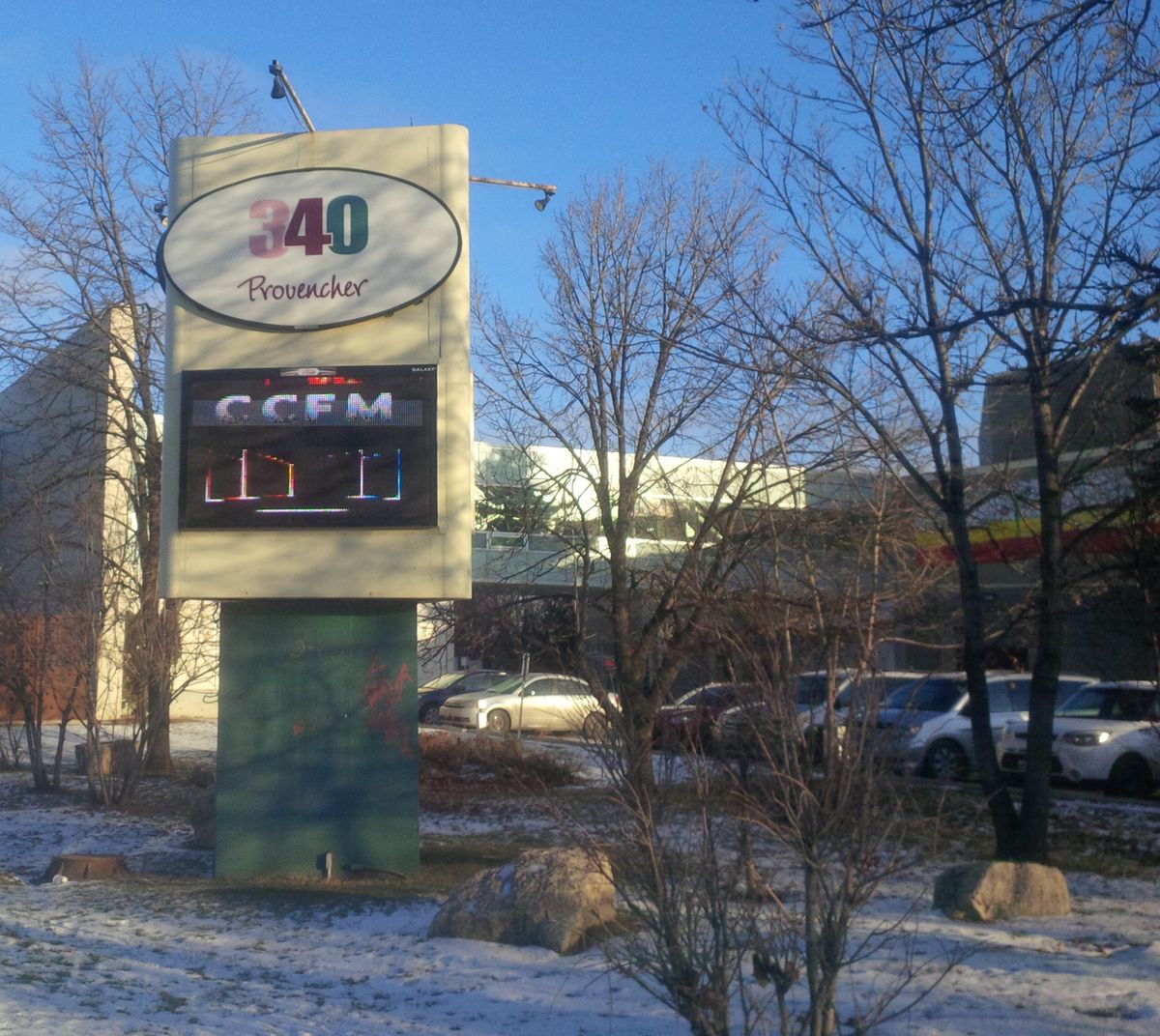
St. Boniface is the definitive centre for Franco-Manitoban culture, hosting a dense concentration of institutions dedicated to preserving and promoting French language and heritage. The Centre culturel franco-manitobain (CCFM) serves as a major hub, containing an art gallery, theatres, meeting rooms, and the community radio station CKXL-FM. Le Musée de Saint-Boniface Museum, housed in Winnipeg's oldest building which was originally the Grey Nuns' Convent, is dedicated to Franco-Manitoban and Métis history and features a special exhibit on Louis Riel. The Centre du Patrimoine houses the largest Franco-Manitoban archives in the province and is home to the Société historique de Saint-Boniface, the oldest historical society in Western Canada. Theatre is represented by Le Cercle Molière, Canada's oldest continuously operating theatre company, which performs in French.
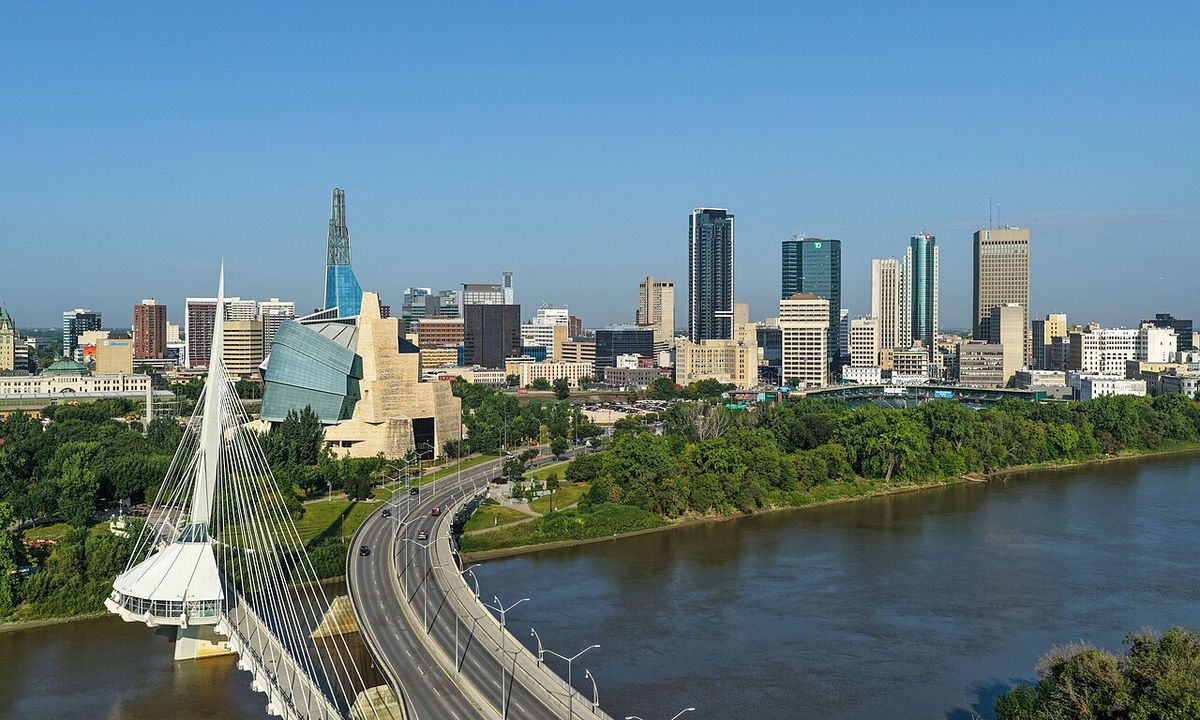
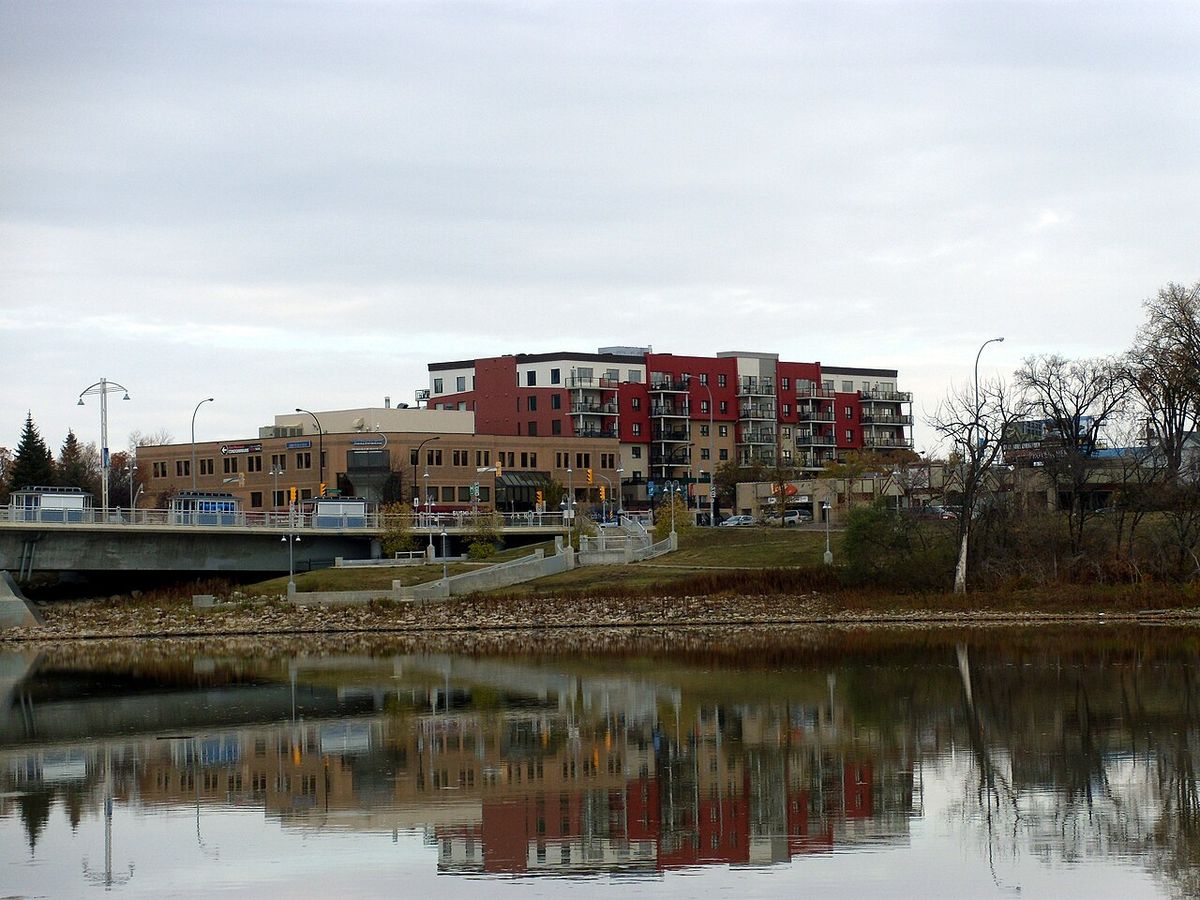
The neighbourhood's physical landscape is marked by many landmarks. The St. Boniface Cathedral, with its preserved facade from the 1908 building destroyed by fire in 1968, is a major architectural site and the burial place of Louis Riel. The adjacent Esplanade Riel pedestrian bridge connects St. Boniface to downtown Winnipeg and The Forks. Other significant sites include Fort Gibraltar, a reconstructed North-West Company fur trade post originally built around 1810. The House of Archbishop Alexandre-Antonin Taché, one of the oldest stone buildings in Western Canada now used for archdiocesan administration. And the Royal Canadian Mint. The area is also defined by its main thoroughfares, Boulevard Provencher and Marion Street, which are lined with shops, cafes, and restaurants offering French cuisine, such as Resto Gare located in a refurbished train car and bakeries operated by bakers from France.
Festivals and Community Life
Community life in St. Boniface is animated by annual events that celebrate its unique heritage. The premier event is the Festival du Voyageur, Western Canada's largest winter festival, held each February since 1970. Based primarily at Whittier Park and Fort Gibraltar, this 10-day festival celebrates Franco-Manitoban culture and the voyageur era with outdoor activities, music, and historical re-enactments by costumed interpreters. Another key cultural event is Cinémental, Winnipeg's annual francophone film festival. The community also participates in broader city-wide events, such as Nuit Blanche Winnipeg, an all-night celebration of art. For Nuit Blanche 2026, a projection mapping show titled 'The Wolf and the Lamb' was scheduled to illuminate the facade of Saint Boniface Cathedral as part of an international collaboration hosted by the RRC Polytech Schroeder Institute of Entertainment and Media Arts.
Daily cultural engagement is supported by local businesses that cater to the francophone community. These include À la Page, which offers the largest selection of French books in Winnipeg, and Chocolatier Constance Popp, known for artisan bon bons, bars, and truffles. The area's French character is evident in its bilingual signage and the presence of three licensed francophone radio stations: CKXL-FM, CKSB-10-FM, and CKSB-FM, a legacy from when St. Boniface was a separate city. The weekly newspaper La Liberté is also based in the neighbourhood. Community fundraising events are common, including the Coldest Night of the Year walk, a family-friendly winter fundraising walk in support of local charities serving people in need.
Sports and Recreation
St. Boniface offers a wide array of recreational facilities and is home to several notable sports organizations. The St. Boniface Riels hockey team, founded in 1971, competes in the Manitoba Major Junior Hockey League (MMJHL). The team plays its home games at the Southdale Arena and has won five MMJHL championships in the 1971 to 1972, 1972 to 1973, 1984 to 1985, 1985 to 1986, and 2014 to 2015 seasons. Golf is a popular pastime, with three courses located within the area: the fully private Niakwa Country Club, the semi-private St. Boniface Golf Club situated along the Seine River, and the public Windsor Park Golf Course. The Niakwa Country Club has hosted the professional Manitoba Open tournament associated with PGA development tours 11 times.
Curling is a major winter activity, centred at the Heather Curling Club which features eight indoor sheets and has hosted both provincial championships and national invitational tournaments. For outdoor enthusiasts, the Seine River provides a natural corridor for parklands, including Lagimodière-Gaboury Park and the Bois-des-Esprit with its walking trails and distinctive tree carvings. The Windsor Park Nordic Centre offers cross-country ski rentals and lighted night trails during winter months. The neighbourhood's extensive park system and river pathways, including areas like Whittier Park which hosts the Festival du Voyageur, support year-round recreation for residents and visitors alike.
Notable Residents
Throughout its history, St. Boniface has been the birthplace or home to many individuals who have made significant contributions to Canadian politics, culture, arts, and sports. Its most famous historical figure is Louis Riel, the Métis leader who is recognized as a founder of Manitoba and is buried in the St. Boniface Cathedral cemetery. His sister, Sara Riel, was the first Métis member of the Grey Nuns. The neighbourhood has also produced a remarkable number of professional hockey players, reflecting Manitoba's strong hockey culture, including players from the early days of the sport to modern NHL stars.
- Louis Riel, Métis leader and founder of Manitoba.
- Gabrielle Roy, Acclaimed French-language author.
- Len Cariou, Renowned Broadway theatre actor.
- Bob Hunter, Co-founder of the environmental organization Greenpeace.
- Jonathan Toews, Professional hockey player and captain of the Chicago Blackhawks.
- Jennifer Jones, Canadian and World Champion curler.
- Jim Peebles, Cosmologist and Nobel Prize winner in Physics.
- Robert Houle, Influential Saulteaux artist.
- Mud Bruneteau, Professional hockey player.
- Butch Goring, Professional hockey player.
- Lucille Starr, Singer.
- George R. D. Goulet, Best-selling Métis author.
Other notable residents from various fields include lawyer and judge Louis Bétournay and radio disc jockey Bryan Fustukian. Early hockey player Tony Gingras and Métis military leader Ambroise-Dydime Lépine are also from the area. The community has produced writer and nutritionist Earl Mindell, actress Dorothy Patrick, and sprinter Valerie Jerome. This collection of individuals from diverse fields shows the wide impact of the St. Boniface community.
Demographic and Economic Profile
As the largest francophone community in Western Canada, St. Boniface has a distinct demographic character within Winnipeg. The 2016 Census recorded a population of 58,520 for the St. Boniface ward, which includes its many constituent neighbourhoods. The community area used by Statistics Canada, which extends further east to include neighbourhoods like Royalwood and Sage Creek, would have a larger total population. The economy has historically been rooted in agriculture, industrialization, and specifically the Union Stockyards and associated meat-packing industry. While that industrial base has transformed, the area remains a significant employment centre with major institutions like St. Boniface Hospital, the Université de Saint-Boniface, and the Royal Canadian Mint providing numerous jobs.
The real estate market in St. Boniface is varied, reflecting its mix of historic central neighbourhoods and newer suburbs. As of recent listings, the average market price for a house in the community was approximately $392,100. Residential areas range from the established, higher-end homes in neighbourhoods like Norwood and Niakwa Park to the modern, family-oriented subdivisions of Sage Creek and Island Lakes. The ongoing redevelopment of former industrial lands, such as the Stock Yards site, points to continued residential growth and diversification of the local economy towards mixed-use and retail sectors. The area's industrial past is still present in zones like the St. Boniface Industrial Park and the Mission Industrial neighbourhood.
Media and Communications
St. Boniface maintains a strong French-language media presence, a legacy from its time as a separate city. Winnipeg's three francophone radio stations are all licensed to St. Boniface: CKXL-FM, CKSB-10-FM, and CKSB-FM. These stations broadcast from the area and serve the Franco-Manitoban community across the region. The French-language weekly newspaper La Liberté is also based in St. Boniface, providing news and commentary focused on the community's interests and events. This media infrastructure supports the preservation and promotion of the French language in Manitoba, offering local programming and journalism that reflects the area's unique cultural perspective.
Beyond traditional media, cultural communication happens through various institutions and events. The Centre culturel franco-manitobain includes facilities for community radio and serves as a gathering place for artistic and cultural activities. Annual festivals like the Festival du Voyageur and Cinémental are major platforms for cultural expression and storytelling that attract visitors from across the province and country. The area also engages with new media forms, as seen in the planned projection mapping show for Nuit Blanche 2026, which involved digital storytelling projects by students and industry professionals from an international collaboration. This blend of established media and innovative cultural projects helps maintain St. Boniface's role as the communicative heart of Manitoba's francophone community.
Questions about St. Boniface, Winnipeg
What is St. Boniface known for?
St. Boniface is known as the centre of the Franco-Manitoban community and the largest francophone community in Western Canada. It is famous for landmarks such as St. Boniface Cathedral, the Royal Canadian Mint, and the grave of Louis Riel. The area hosts the Festival du Voyageur, Western Canada's largest winter festival. It is also known for institutions like St. Boniface Hospital, the Université de Saint-Boniface, and Le Musée de Saint-Boniface Museum.
When was St. Boniface founded?
St. Boniface began with the founding of a Roman Catholic mission in 1818. It was incorporated as a town in 1883 and later as a city in 1908. In 1972, St. Boniface was amalgamated into the City of Winnipeg. The mission founded in 1818 started its role in Canadian religious, political and cultural history.
What are the main neighbourhoods in St. Boniface?
The St. Boniface city ward includes neighbourhoods such as Norwood West, Norwood East, Central St. Boniface, Windsor Park, and Southdale. It also consists of Archwood, Dufresne, Island Lakes, Niakwa Park, and Sage Creek. The ward includes Stock Yards and other areas. The broader community area also includes Royalwood, Southland Park, and Symington Yards.
What cultural attractions are in St. Boniface?
Cultural attractions include the Festival du Voyageur, held annually in February at Whittier Park and Fort Gibraltar. The area hosts the Centre culturel franco-manitobain, which features an art gallery and theatres. Le Musée de Saint-Boniface Museum is a local museum dedicated to Franco-Manitoban culture and history. Le Cercle Molière is a French-language theatre group and Canada's oldest theatre company.
What sports teams are based in St. Boniface?
St. Boniface is represented by the St. Boniface Riels hockey team, which plays in the Manitoba Major Junior Hockey League. The St. Boniface Riels were founded in 1971 and play at the Southdale Arena. The area is home to three golf courses: Niakwa Country Club, St. Boniface Golf Club, and Windsor Park Golf Course. Curling is popular at the Heather Curling Club, which has eight indoor sheets.
Who is the city councillor for St. Boniface?
The city councillor for St. Boniface is Matt Allard, a member of Winnipeg City Council. He represents the St. Boniface city ward, which covers a large area of eastern Winnipeg. The ward includes numerous neighbourhoods such as Norwood West, Norwood East, Central St. Boniface, and Windsor Park. This administrative area also corresponds to the neighbourhood clusters of St. Boniface East, Southeast, and Central used for demographic purposes. Councillor Allard is the elected official responsible for this diverse and historic part of the city.
Sources and further reading
- St. Boniface, Winnipeg (Wikipedia)
- St Boniface Neighbourhood (tourismwinnipeg.com)
- St. Boniface | Places To Go (travelmanitoba.com)
- St. Boniface (liveinwinnipeg.com)
Checked by the Your Space Hamilton desk. Last updated 2026-10-29.